TVs
TCL QM7K Review: A 98-Inch Mini LED TV That Earns Its Size
A 2025 QD Mini LED 4K television with reference-grade Filmmaker mode, serious brightness headroom, and a size advantage that reshapes the value math.
Introduction
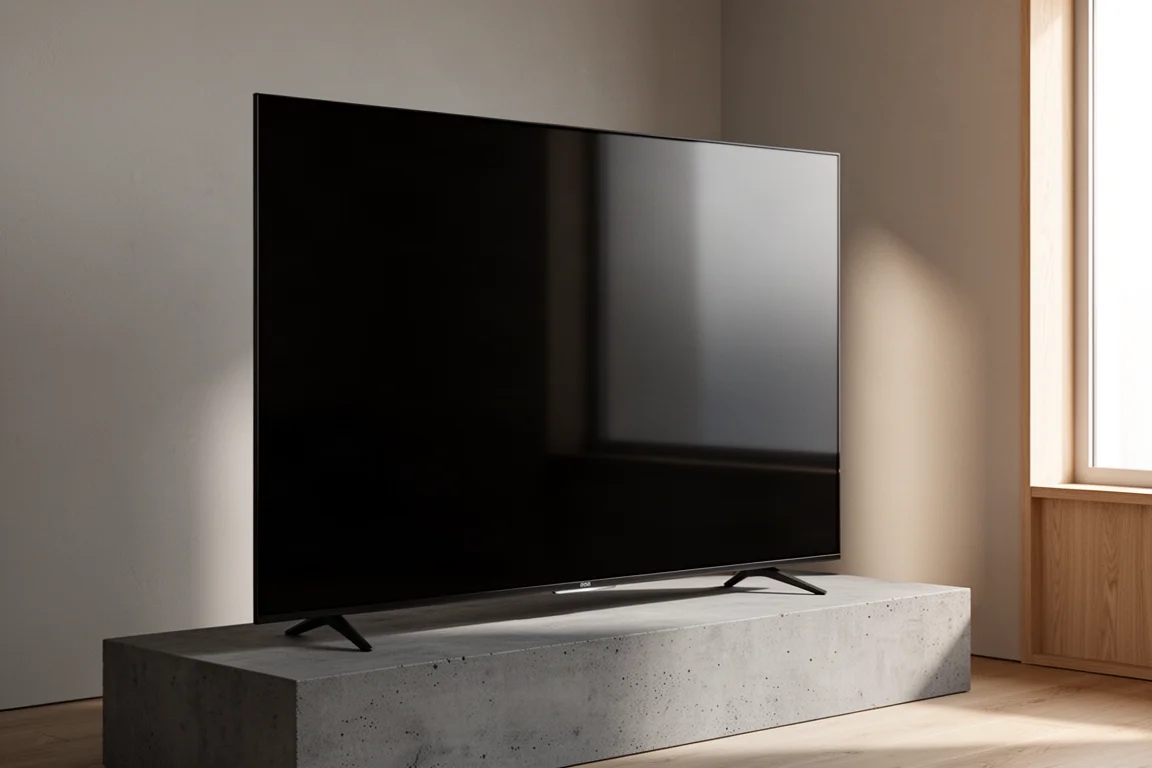
The TCL QM7K is a 2025 full-array QD Mini LED 4K television available in six screen sizes from 55 to 115 inches diagonal. TCL positions it as delivering near-OLED color and contrast while keeping the brightness advantages of an LED backlight, and the company has reworked both the backlighting system and the processing behind it.
The headline numbers are ambitious. TCL quotes up to 3,000 nits of real-world brightness, and the set carries a 144 Hz refresh rate with VRR, ALLM, FreeSync and G-Sync support for gaming. It also supports Dolby Vision and Dolby Atmos, runs Google TV, and includes a speaker system developed with Bang & Olufsen.
The more interesting question is where a set like this lands against established competition. A 98-inch QM7K costs roughly half of a 98-inch Sony X90L, which Sony was still selling in 2025 at just under $6,000, and it undercuts the 98-inch Sony Bravia 5 at its $6,500 MSRP by a wide margin. This review looks at what you actually get for that.
Who the TCL QM7K Is For
This is a television for people who want a very large screen without paying flagship money. The 98-inch configuration makes the value argument most clearly: it delivers a level of accuracy and brightness that keeps pace with far more expensive sets, and it does so at a size most flagship models do not offer at all. Sony’s Bravia 9, for instance, tops out at 85 inches.
It also suits buyers who care about a calibrated image but would rather not pay for a professional calibration. Both the Movie and Filmmaker picture profiles are accurate straight from the factory, with Filmmaker mode measuring a delta E of 1.2 for grayscale and 0.9 for color. Those are figures normally associated with a set after calibration, not before it.
And it works well for mixed households. Film and series viewing, streaming, and console gaming all get proper attention here. Four HDMI inputs are provided, two of them HDMI 2.1, and the eARC port does not consume one of those 2.1 inputs, so a soundbar or receiver can be connected without sacrificing a high-bandwidth port that a console would otherwise want.
Main Strengths
The QM7K’s biggest strength is that it is accurate without being difficult. In Filmmaker mode, colors look true to life with good saturation and contrast and no obvious bias toward any single primary color, which keeps the picture even and balanced. Detail in skin, hair, and clothing comes through with real texture rather than artificial edge enhancement.
That accuracy does not come at the cost of brightness, and it does not require a calibration visit to unlock. A brief calibration did bring the set to a delta E of essentially zero for both grayscale and color, but the factory Filmmaker profile is already close enough that professional calibration is easy to skip.
Accuracy Straight Out of the Box
Picture standards exist for a reason, and the QM7K is unusual in how closely it follows them before anyone touches a setting. The default Standard profile is tuned for impact rather than reference accuracy, measuring a delta E of 10.5 for grayscale and 7.7 for color. That is not disastrous, but it sits well outside the margin of error of three that defines a reference-accurate image.
Switch to Movie or Filmmaker and the picture changes character. Filmmaker mode is the most accurate of the group at 1.2 for grayscale and 0.9 for color, and the difference shows in real content. In standard dynamic range, a live-action feature looked genuinely impressive, and a streaming title was convincing enough that it did not read as a stream at all.
Brightness and Backlight Control
Filmmaker mode is not the brightest profile by default. With brightness set at 30 as an eco-friendly default, real-world output hovered around 200 nits, which is dim for daytime viewing. Raising brightness to 100 brought that to roughly 800 nits, which is plenty for everyday viewing and more than enough at night.
The set has considerably more headroom. Adjusting peak luminance and setting dynamic backlighting to low pushed the QM7K comfortably past 1,000 nits, with the best measurement landing just under 1,800 nits in standard definition and reaching 2,000 nits with a Dolby Vision test signal. That is remarkable output for a 98-inch panel. It is not the brightest television on the market, but it is far from dull, and light uniformity and backlight control are near perfect from edge to edge with virtually no ghosting, vignetting, or blooming.
Gaming Performance
The QM7K handles consoles well. It passed every benchmark test a PlayStation 5 could throw at it, and the combination of a 144 Hz refresh rate with VRR and ALLM keeps input response and motion handling from becoming a compromise. Long sessions in a story-driven title and in a golf simulation both felt immersive rather than merely playable.
Built-In Bang & Olufsen Sound
The internal speakers, developed with Bang & Olufsen, outperform most built-in TV speakers. Dialogue intelligibility is first rate, and a Bang & Olufsen sound preset appears in the quick menus. It is worth being clear about what this is: the QM7K does not include a standalone Bang & Olufsen soundbar, and buyers who want a dedicated audio system will still benefit from one. But for anyone who would rather not add a soundbar at all, the built-in system is a genuine step up.
Things to Consider Before Buying
The screen has a glossy coating, and it does not respond well to direct side lighting or to lights positioned toward the back of the room that remain in line with the screen. This is common to many televisions rather than something unique to the QM7K, but it is worth planning around before you mount it.
Off-axis viewing has improved over previous generations without becoming perfect. Across the width of a nine-foot sofa there was no shift in color or contrast. Standing well off to the side, however, color saturation, black levels, and overall clarity did suffer.
Finally, at maximum brightness while watching Dolby Vision content, minor shadow-like halos or outlines can appear around actors with darker skin tones when they are set against bright backgrounds. This showed up twice during a bright HDR film and has been observed on a growing number of televisions when brightness is pushed hard, so it is not exclusive to TCL. Keeping the dynamic luminosity and contrast settings at standard or low removes the issue without giving up much brightness.
Buying Advice
The QM7K is easy to recommend because the setup that gets you the best picture is also the simplest. Start in Filmmaker mode, raise the brightness to taste, and adjust peak luminance and dynamic backlighting settings as needed. Leave the dynamic brightness and contrast aids off, or at least set them to low. A professional calibration is not necessary here, which keeps the total cost of ownership lower than the spec sheet might suggest.
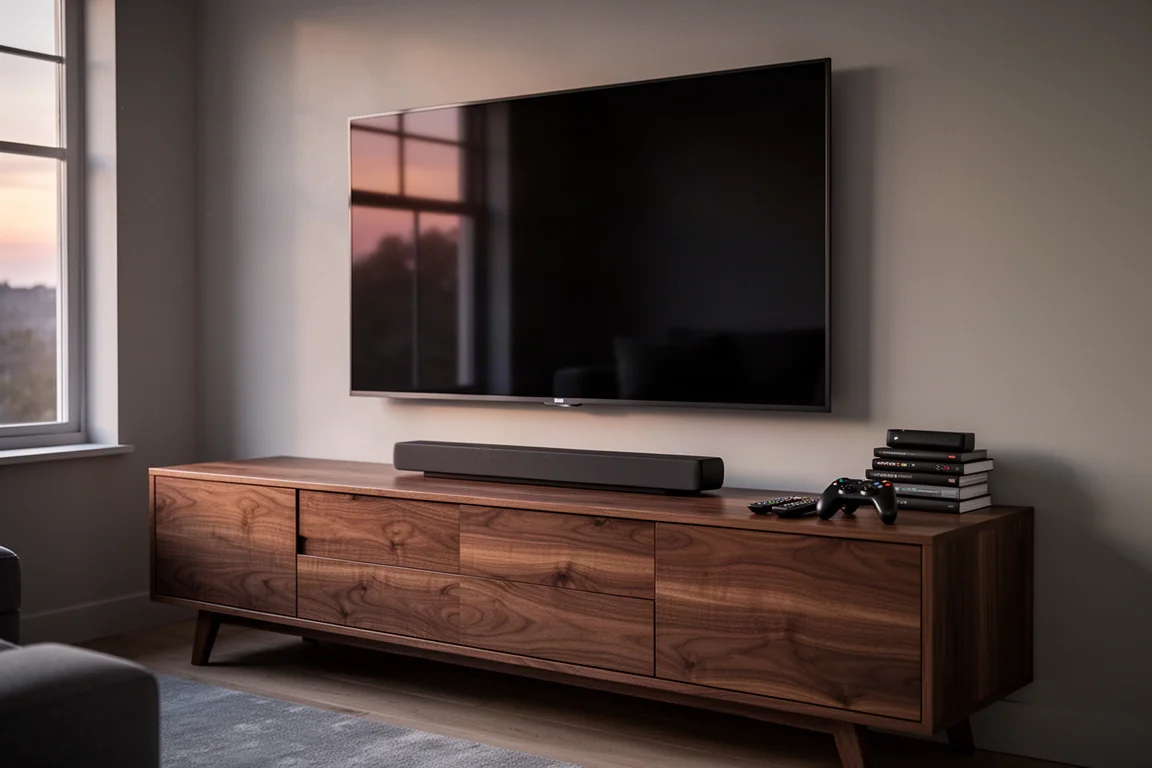
The size decision matters more than any setting. At 98 inches, this set responded more quickly to remote commands, was more accurate out of the box, and was better sounding and better for gaming than the Sony Bravia 7 it was measured against. For the price of Sony’s 85-inch Bravia 7, you can have a 98-inch QM7K without giving up much of anything in performance.
Against the Sony Bravia 9, the comparison is closer. The Bravia 9 holds a slight edge in scaling signals below 1080p, looks a touch more three-dimensional with 4K and 4K HDR content, and has marginally better off-axis performance. It also tops out at 85 inches. The QM7K matched it for accuracy and calibrated better and quicker, with lower margins of error for both grayscale and color. Those differences are measurable rather than visible to the naked eye.
Conclusion
The TCL QM7K makes a persuasive case that you no longer need to spend flagship money to get flagship-adjacent performance, particularly if you want a very large screen. It is accurate out of the box, capable of serious brightness, well controlled across the panel, and genuinely good for gaming and everyday viewing without adding a soundbar. The caveats are real but manageable: a glossy screen that dislikes certain lighting, imperfect extreme off-axis viewing, and a possible halo artifact when brightness is pushed to the maximum with HDR. None of them are unique to this television, and all of them have straightforward workarounds. For buyers who want size, accuracy, and value in the same package, the QM7K is a strong place to start.
Product link
View more details for TCL QM7K
This product is mentioned in the review. Check the specifications, options, and compatibility before buying.
View more details for TCL QM7KFurther reading
Related Reviews
TVs
Best Sony XR TVs Compared: X90K, X95K, A80K, A90K, A90J, A95K and Z9K
A practical guide to Sony's XR television range, from the value-focused X90K to the 8K Mini LED Z9K, with clear advice on which model suits which room.
TVs
Hisense 100UR8SG Review: A 100-Inch RGB Mini-LED That Takes On OLED
A 100-inch RGB mini-LED television with measured peak brightness of 3,850 nits, wide color volume, and a price far below large-format OLED.
TVs
Hisense U9 vs Hisense U8 vs Samsung S90C OLED: Which TV Is Worth Buying?
A practical comparison of two Hisense RGB Mini-LED televisions and an OLED alternative, with real strengths, trade-offs and a clear buying recommendation.