TVs
TCL 98R754 Review: A 98-Inch QLED That Makes Front Projection Think Twice
The TCL 98R754 puts 98 inches of QLED, Google TV and 4K 120 gaming into a living room. Here is what it does brilliantly, and where it still asks for a compromise.
Introduction
For years, anyone who wanted genuine cinema scale at home had essentially one route: a front projector. Flat panels kept growing, but they never quite reached the sizes that make a room feel like a theater, and the ones that did carried prices that put them out of reach for most households.
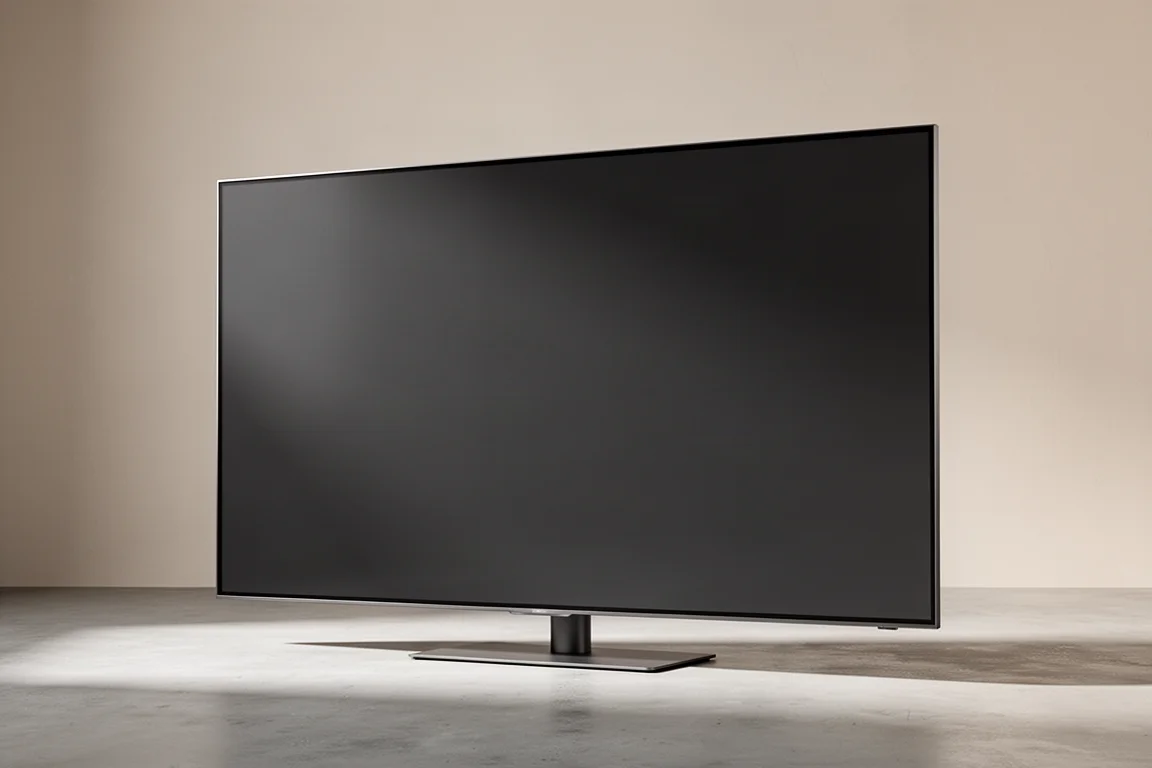
The TCL 98R754, part of the brand’s XL series, is the clearest attempt yet to close that gap. It is a 98-inch, Google-powered 4K smart TV with a 120Hz panel, full array local dimming across a reported 192 zones, and QLED technology capable of displaying HDR content including Dolby Vision. It also carries the gaming features people now expect at this level: auto low latency mode and variable refresh rate.
The interesting part is not the specification list. It is the positioning. A 98-inch screen at a price that sits below the ultra-large flagship models from other brands changes the conversation from “someday” to “possibly this year”. Whether that trade-off holds up in daily use is what this review covers.
Who This TV Is For
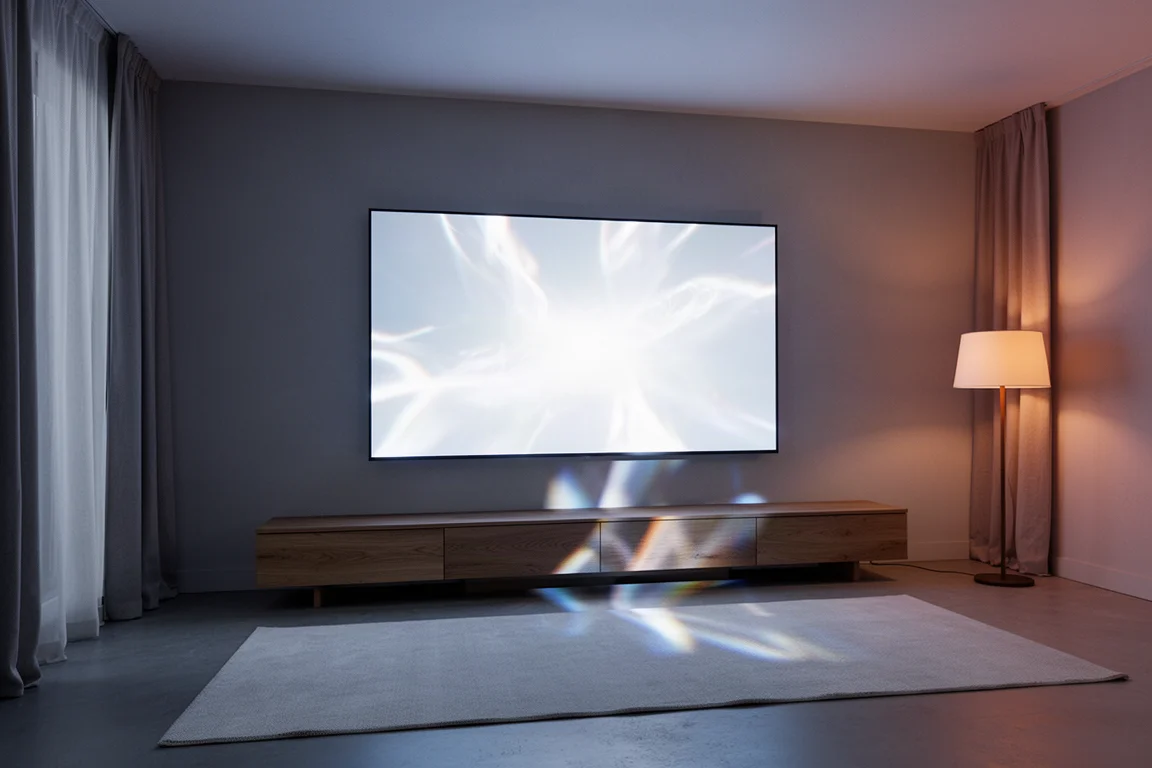
The 98R754 makes the most sense for people who want a cinematic experience without giving up the practical advantages of a flat panel. It works in mixed lighting, it does not require a dedicated darkened room, and it does not demand the alignment rituals that come with an ultra short throw projector setup.
Gamers have a clear case here too. With HDMI 2.1 inputs, variable refresh rate and 4K at 120Hz in HDR, it can serve as a large-format console display as comfortably as it serves as a movie screen.
The one group that should think carefully is heavy live-sports viewers. The set handles 4K film and gaming motion beautifully, but broadcast sports in HD occasionally show choppy motion, and that is worth knowing before committing to a screen this size.
On the question of scale itself: compared with an 85-inch television, the jump to 98 inches feels enormous at first. After about a week, it starts to look simply normal, which is a useful thing to understand about your own tolerance before you buy.
Design and Setup
The design is deliberately minimal. The near edge-to-edge screen keeps the focus on the image, and the frame around it stays out of the way. At roughly four inches deep, the chassis is thicker than an OLED would be, but given the sheer surface area involved, that depth is genuinely impressive.
The television ships with feet for tabletop placement. If you plan to wall mount it, professional installation is the sensible route. TCL advertises the XL series as VESA mount compatible, and that is technically accurate, but the pattern is not one most articulating mounts support. In practice, a basic low-profile flush mount turned out to be the practical solution after several other mounts did not line up. That is a real consideration rather than a footnote, because a screen this large is not something you want to lift twice.
Once it is on the wall, setup is straightforward. Anyone already familiar with Google TV will find the process second nature, and moving over from another Google TV set involves essentially no learning curve.
Picture Quality and Accuracy
Out of the box, the 98R754 boots into a low-power eco mode. It is plenty bright, but accuracy is not its strength there: a measured Delta E of around 10, where a value of 3 or less is generally considered calibrated.
Switching to the Movie picture profile transforms the result. That profile measured 423 nits with an average Delta E of 1.5 across both color and grayscale, which is calibrated territory. With further adjustment, a Delta E of roughly 1 is achievable, though the visible difference between that and the Movie profile is not really noticeable. If you want a television that looks accurate without paying for a professional calibration, this is a genuinely strong option.
What that accuracy produces on screen is a natural-looking image. Skin tones are particularly realistic, color accuracy is excellent, and detail is impressive straight out of the box. One adjustment is worth making early: the default sharpness setting is far too high, which introduces artifacts around fine details such as hair. Dropping sharpness to 10 or below removes the artifacts while leaving the picture plenty sharp.
Colors track the source faithfully. Next to smaller displays that push eye-watering brightness, the TCL can come across as slightly muted, but that is a deliberate consequence of prioritizing accuracy over saturation. If you want the punchier look, Vivid mode delivers it immediately.
Brightness, Contrast, and Viewing Angles
This television will not require sunglasses indoors, but it is bright enough for properly exposed HDR and Dolby content, including in a brightly lit room. Using HDR test patterns, real-world brightness measured 766 nits in the Vivid profile and 708 nits in the Movie profile. For a screen of this size, that is a strong result.
Glare is worth mentioning simply because of the surface area involved. The matte screen finish diffuses light sources well, which keeps reflections manageable, though that same coating has some effect on perceived brightness.
Black level performance is solid. A measured black level of 0.06 nits means this is not an outright black, and complex low-light scenes give the 192 local dimming zones real work to do. They handle it well in most cases, but blooming can appear in rare moments, and poorly mastered HDR or SDR content may show less than reference low-light detail. Neither issue is severe enough to undermine the experience, but both are honest limitations of the technology.
Viewing angles are excellent straight on and remain consistent across the full width of a long three-seater sofa. Move well off to one side, or watch from a kitchen, and the image becomes noticeably cloudier with muted colors and contrast. In extreme cases, mild posterization effects and a purple tint in the blacks can appear. This is a screen that rewards a central seating position.
Motion and Processing
For 4K films and gaming, motion is buttery smooth with or without motion interpolation enabled. The picture holds together well in fast-moving scenes, and the panel clearly prefers a native 4K signal.
Broadcast sports in HD are the exception. Regardless of network or signal quality, there were occasional moments of choppy motion during live events. The practical fix is to turn off the motion interpolation aids entirely and set dynamic backlighting and contrast to off or low. That eases the load on the processor and produces smoother motion, particularly for feeds arriving in 720p or 1080p.
Scaling is handled by the AiPQ engine, which does an admirable job bringing lesser signals up to 4K, though it is not the best in the business. HD content looks softer next to native 4K material. On a smaller display that softness would be easier to hide; at 98 inches, it is more visible. A more powerful processor would be a welcome upgrade in a future generation, and that is arguably the single area most worth improving.
Gaming and Connectivity
Connectivity is generous where it matters. There are two HDMI 2.1 inputs and two HDMI 2.0 inputs, with ARC and eARC support giving access to Dolby Atmos content through compatible AV receivers. Auto low latency mode and variable refresh rate round out the gaming feature set, and 4K at 120Hz in HDR worked without issue.
The set performed reliably across three different HDMI 2.1 receivers, and additional sources including a 4K streaming box and a current-generation console all behaved as expected. Google TV handles the smart platform, with support for Google Assistant, Chromecast, Alexa and Wi-Fi.
How It Compares to Other Big-Screen Options
TCL is not alone in the ultra-large category, and the pricing context matters. One major brand’s 98-inch model sits around $15,000, while a 110-inch modular display runs into the $150,000 range. Against those numbers, the 98R754 looks like a relative bargain.
Setting size aside and judging purely on picture performance, the picture is competitive. On factory-setting accuracy, the TCL scores higher than both the LG C2 OLED and the Samsung S95B, finishing second only to the Sony X95K, which is high praise. The Sony has similar challenges with backlighting and extreme off-axis viewing, but no motion issues and a class-leading processor that produces a more dimensional, sharper image from any source. The LG C2 is arguably perfect once fully and professionally calibrated, but it is far less accurate out of the box. The Samsung S95B brings brightness and immediate wow factor, yet once it is wrangled into an accurate picture, it loses much of that excitement.
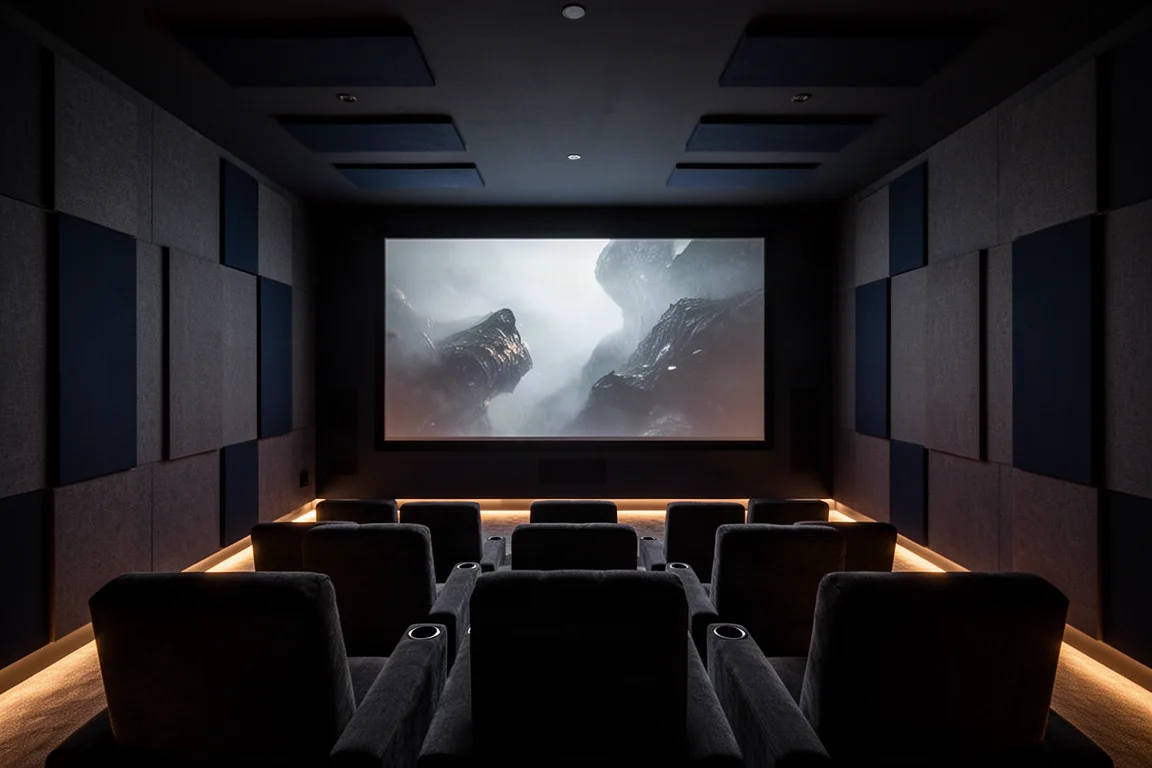
Against front projection, the argument is different. A projector can always go bigger, and a very cheap one can be had for under a thousand dollars. But matching this level of 4K and HDR fidelity with projection costs about as much as the TCL, if not more, and even then it will not handle ambient light the way a flat panel does. There is also the practical side: no alignment anxiety, no concern about someone bumping the projector, and no struggle over where to place a center channel or soundbar.
Things to Consider Before Buying
Size is the first consideration, and it is not a trivial one. Ninety-eight inches dominates a room, so measure the wall and the viewing distance before you commit.
Wall mounting deserves planning. The VESA pattern is not well supported by articulating mounts, and a large flush mount plus professional installation is the realistic path. This is not a one-person job.
Out of the box, the television runs in eco mode with poor accuracy. Plan on switching to the Movie profile immediately, and reduce the sharpness setting to 10 or below to eliminate artifacts around fine detail.
Live sports in HD can show occasional choppy motion, and disabling the motion aids is the workaround rather than a cure. Upscaling of HD content is competent but not class-leading, which is more noticeable at this size.
Off-axis viewing degrades the picture noticeably, so a room with widely spread seating will not flatter it. Finally, the price remains the biggest hurdle. It is expensive, even if it undercuts the ultra-large competition by a wide margin, and it does go on sale from time to time.
Buying Advice
The 98R754 is best understood as a specific answer to a specific problem: how to get genuine cinema scale without accepting the compromises of projection. In mixed lighting, with the lights on, with family watching, it wins clearly. Turn the lights down and the experience improves further.
If your viewing is mostly 4K films, streaming and gaming, the motion limitation barely applies and this becomes an easy recommendation. It delivers accurate, natural picture quality without a professional calibration, it handles HDR and Dolby Vision well, and it does things a projector simply cannot.
If you are a heavy live-sports viewer, go in with realistic expectations about broadcast HD motion. And if you are considering this against a projector at a similar price, the deciding factor is usually light control: this screen does not need any.
At a price just below $5,000, with occasional discounts that make it considerably more attainable, the value case is strong for anyone who has the wall space and the seating position to support it.
Conclusion
The TCL 98R754 is not perfect. Its processor is not the most powerful in its class, HD upscaling is merely good, broadcast sports motion can stumble, and off-axis viewing is a genuine limitation. None of those issues are disqualifying at this price point.
What it delivers is scale that changes how you watch. Big-screen ownership has historically been reserved for people willing to spend five or six figures or to build a dedicated projection room. This set makes a 98-inch screen feel like a living room product rather than an installation project, and it does so with accurate, natural picture quality that holds up to scrutiny.
For anyone who has been waiting for a flat panel large enough to replace a projector without giving up the practicalities of a television, this is the most persuasive argument yet.
Product link
View more details for TCL 98R754
This product is mentioned in the review. Check the specifications, options, and compatibility before buying.
View more details for TCL 98R754Further reading
Related Reviews
TVs
Best Sony XR TVs Compared: X90K, X95K, A80K, A90K, A90J, A95K and Z9K
A practical guide to Sony's XR television range, from the value-focused X90K to the 8K Mini LED Z9K, with clear advice on which model suits which room.
TVs
Hisense 100UR8SG Review: A 100-Inch RGB Mini-LED That Takes On OLED
A 100-inch RGB mini-LED television with measured peak brightness of 3,850 nits, wide color volume, and a price far below large-format OLED.
TVs
Hisense U9 vs Hisense U8 vs Samsung S90C OLED: Which TV Is Worth Buying?
A practical comparison of two Hisense RGB Mini-LED televisions and an OLED alternative, with real strengths, trade-offs and a clear buying recommendation.