Smart Trainers
Tacx NEO 3M Review: A Motion Smart Trainer Built Like a Beast
The newest Tacx NEO unit adds built-in motion plates, refined low-speed accuracy, and the best structured workout response we have tested, all at a premium price.
Introduction
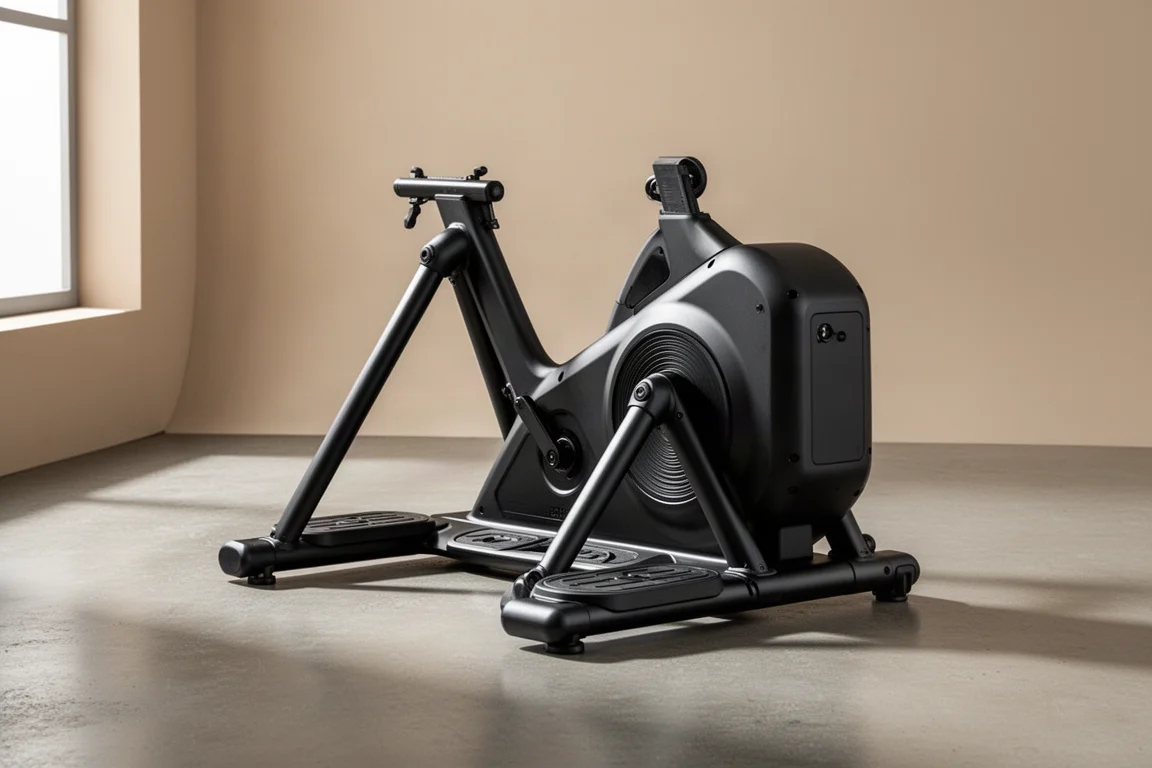
Some trainers arrive and blend into the corner of a pain cave. The Tacx NEO 3M does not. After roughly a month of use, it comes across as an absolute beast of a machine, physically and technically, and the reason is twofold: Tacx has stuffed the external power supply into the rear housing, and the internal cooling components have grown to expand what the brand calls the working area, meaning how well the trainer holds resistance at different speeds.
On paper, the specs look virtually identical to the NEO 2T that came before: 25% gradient simulation, plus or minus 1% accuracy, and a maximum resistance of 2,200 watts. The differences only become clear under testing, and there are some interesting twists along the way.
Unboxing and Setup
The unboxing experience starts with a genuinely delightful touch: the shipping box has a cardboard zipper. Pull it, unzip the case, and the trainer sits folded up inside with a pile of adapters for different thru-axle and quick-release combinations. Notably, those adapters screw into the trainer instead of falling out like on most trainers, and a small blue tool is included to help, though any toolbox tool works too.
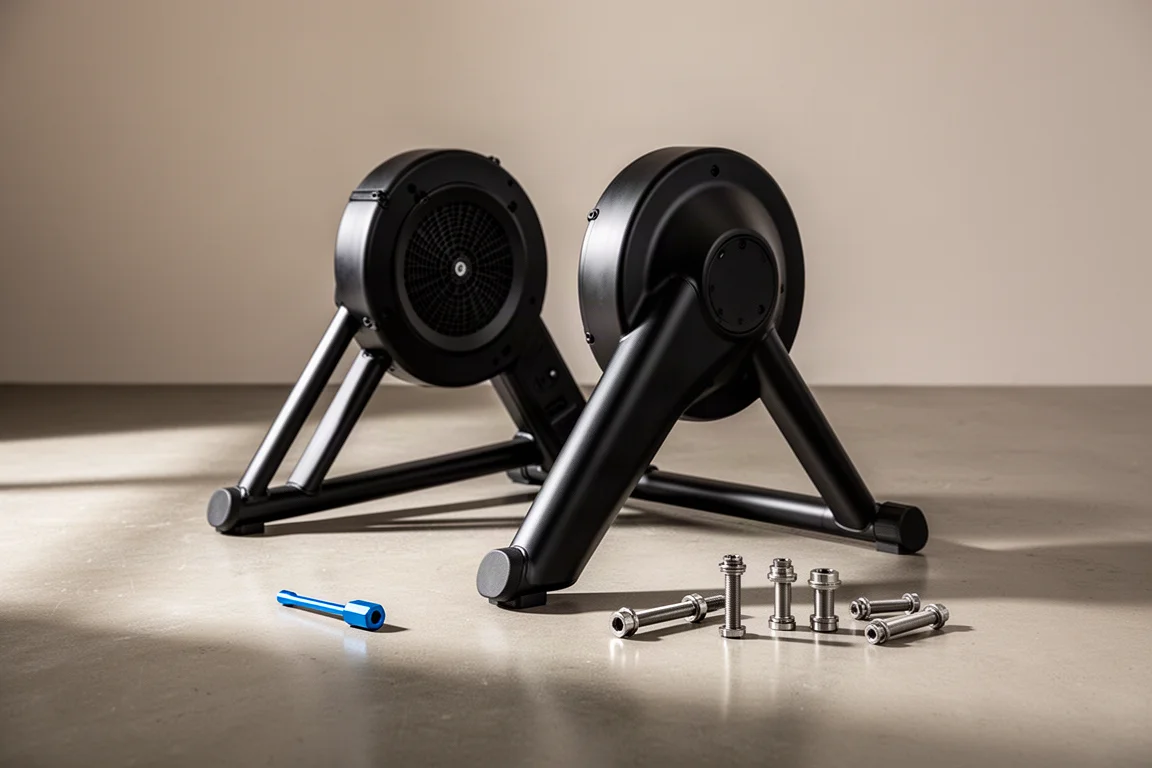
Two design points stand out. First, the trainer finally has a carry handle, which was long overdue. Second, there is a built-in 11-speed cassette. At this price, that feels a step behind, even if the majority of consumers still ride 11-speed bikes.
One practical caveat: the bulky case and frame edge can interfere with a long rear derailleur cage during mounting unless you are in the smallest gear. Once sorted, the bike mounts as on any direct drive trainer.
Connectivity and the Wi-Fi Question
The NEO 3M pairs over two concurrent Bluetooth channels plus unlimited ANT+ channels, so connecting to virtually any training app is effortless.
The optional Wi-Fi adapter, which also carries an ethernet port, plugs into the back of the trainer and is configured through the free Tacx app. It costs $129, and honestly, it is hard to understand why Wi-Fi is not built into a trainer at this level and price, especially since competitors have done exactly that. The good news: it is entirely optional. Most testing was done without it, and the trainer works perfectly fine over Bluetooth or ANT+ alone.
Motion: The Headliner Feature
The M in NEO 3M stands for motion, and it moves in a few ways. The most obvious is forward and back: 2.5 cm each direction, using the same design as the Tacx NEOmotion plates sold a few years ago, now simply molded into the bottom of the trainer. Rear lockouts let you switch motion on or off instantly.
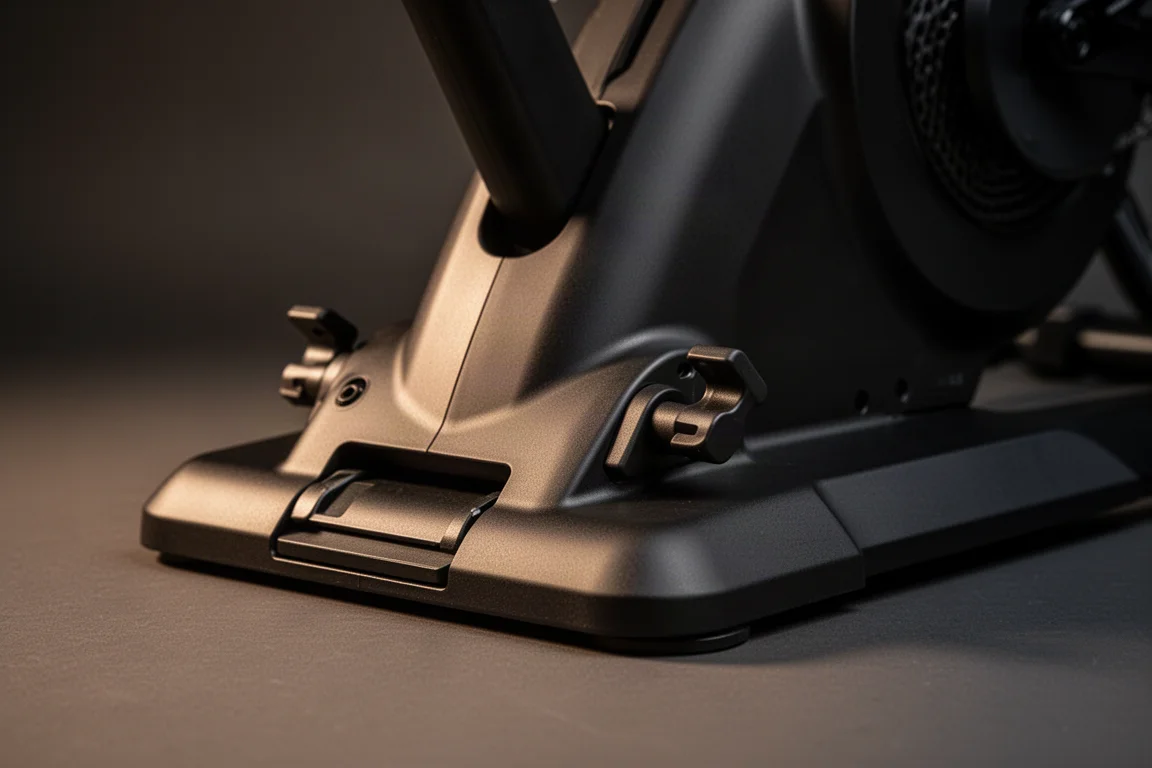
The purpose of motion is reducing fatigue on longer workouts by forcing your body to make small continuous adjustments on the saddle, something studies have long supported. Compared with the Wahoo KICKR MOVE’s up to 14 cm of travel, the 5 cm total range here is modest, and it matters most when sprinting, where any motion system is admittedly awkward. There is also side-to-side tilting, present on NEO trainers for years as an engineering accident, now made slightly more purposeful and symmetrical.
Beyond physical movement, the NEO series remains the only trainer that simulates road surfaces. Using 32 magnets stuttering the motor at millisecond levels, it recreates gravel, cobblestones, cattle grates and more, half a dozen surfaces or so. It is not transformative, but the first time you feel it, it is genuinely convincing.
Ride Feel, Noise, and Inertia
Inertia replication is superb. Acceleration and deceleration feel natural, and if you blindfolded riders on this versus its closest rival, most people, even industry insiders, would struggle to tell the difference. Both are simply that good at road feel.

Noise is close to a non-issue. The main sound you hear is your own drivetrain. At very high intensities, an internal cooling fan kicks on, but it sits well below your fan and your own breathing, a faint whir you will rarely notice while gasping through an interval.
One clever extra: Downhill Drive. Plugged in, the trainer forward-drives the flywheel on descents in simulation apps, keeping it spinning and adjusting speed with the steepness of the hill. It is a fun realism touch, and the trainer also runs fully self-powered without any plug at all.
Accuracy: Where It Gets Impressive
The claimed accuracy matches the NEO 2T at plus or minus 1%, but that single spec line hides what testing reveals. Using a standard 30x30 structured workout test repeated on every trainer tested over a decade, the NEO 3M overshoots its target power by a mere 1 to 3 watts. Most trainers on the market overshoot by 15 to 70 watts. It reaches within about 20 watts of the set point in three seconds, then uses the final second to arrive smoothly, like a train gliding into the station. The structured workout crown has clearly moved here.

Against reference power meter pedals, the trainer tracks like a shadow. Simulation mode is equally strong: spot-on at high flywheel speeds on the flats, clean through 800 to 950 watt sprints, and stable over a 25-minute climb at around 290 watts average with no drift. Cadence tracking held from 180 RPM down to 19 RPM, dropping out below that as most trainers and power meters do.
Things to Consider Before Buying
The elephant in the room is the price: $1,999.99, effectively $2,000, which is $400 more than the Wahoo KICKR MOVE at $1,599.99. The KICKR MOVE includes built-in Wi-Fi, longer motion travel, race mode at launch, and KICKR CLIMB integration (that last one costs extra). The NEO 3M counters with Downhill Drive, road surface simulation, and clearly superior structured workout finesse; race mode is expected to come after launch.
Buying Advice
If you have the budget, this is a great trainer and hard to go wrong with. The engineering effort is obvious, though arguably some of it might have been better spent on built-in Wi-Fi and race mode, features that would benefit a wider set of users. Choose the NEO 3M if workout-mode precision and surface simulation matter most to you; look elsewhere if built-in connectivity and longer motion travel top your list.
Conclusion
The Tacx NEO 3M is an impressive beast of a machine with arguably the finest structured workout response on the market, genuine motion built in, and superb inertia replication. Its premium price and missing built-in Wi-Fi are the main trade-offs, but for riders who value accuracy finesse above all, it sets a new benchmark.
Product link
View more details for Tacx NEO 3M
This product is mentioned in the review. Check the specifications, options, and compatibility before buying.
View more details for Tacx NEO 3MFurther reading
Related Reviews
Smart Trainers
Pinnacle HC Review: An Affordable Direct Drive Smart Trainer
A close look at the Pinnacle HC, a £500 direct drive smart trainer with a 2,200W ceiling, a 5.7kg flywheel, and a quiet, stable ride feel for indoor training.
Smart Trainers
Wahoo Kickr Core vs Zwift Hub: Which Budget Direct Drive Smart Trainer Should You Buy?
A practical head to head between the Wahoo Kickr Core and the Zwift Hub, covering price, flywheel weight, setup, noise, connectivity, and power accuracy.
Smart Trainers
Elite Avante Review: A Smart Trainer That Punches Above Its Hardware
The Elite Avante pairs mid-range trainer hardware with high-end software features like built-in Wi-Fi and heart rate bridging. Here is how it holds up after months of riding.