Indoor Cycling Trainers
Tacx Indoor Trainers Compared: Seven Options From Entry Level to Flagship
A practical comparison of seven Tacx indoor trainers, from budget rollers and wheel-on models to direct drive smart trainers and a flagship indoor bike.
Introduction
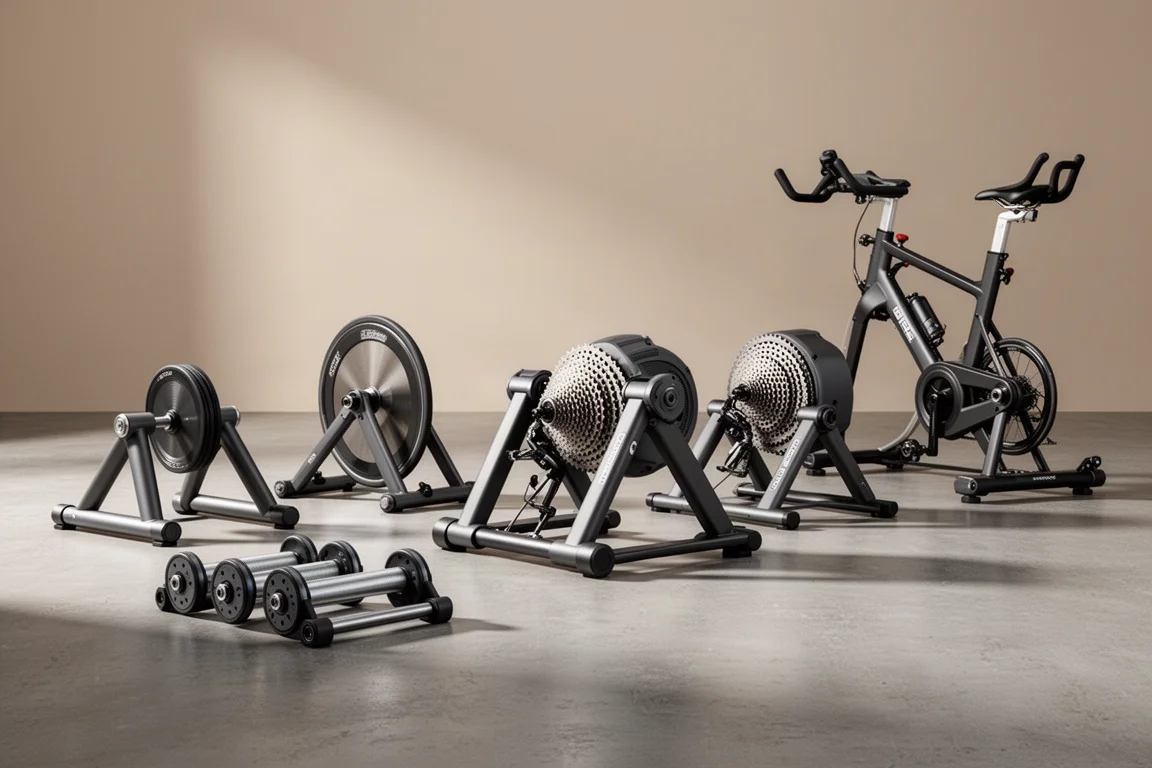
Indoor trainers cover a huge range, from simple rollers that cost a couple of hundred to fully integrated smart bikes that cost more than most people’s road bikes. This comparison looks at seven Tacx trainers spanning that range, so you can see where the extra money actually goes and which features are worth paying for.
Every trainer here was rated across five categories: features, value for money, setup, usability, and ride feel, with a maximum score of 50. The scores are a guide rather than a verdict. A trainer that finishes lower overall can still be the right purchase if it matches the way you actually ride.
How These Trainers Were Assessed
Five categories were used for every trainer: features, value for money, setup, usability, and ride feel. Each was scored out of 10, giving a total out of 50.
The categories measure different things rather than being weighted by price. Features and ride feel matter most to riders who train indoors seriously, while setup and usability matter more to anyone who stores a trainer between sessions or shares it with other people in the house.
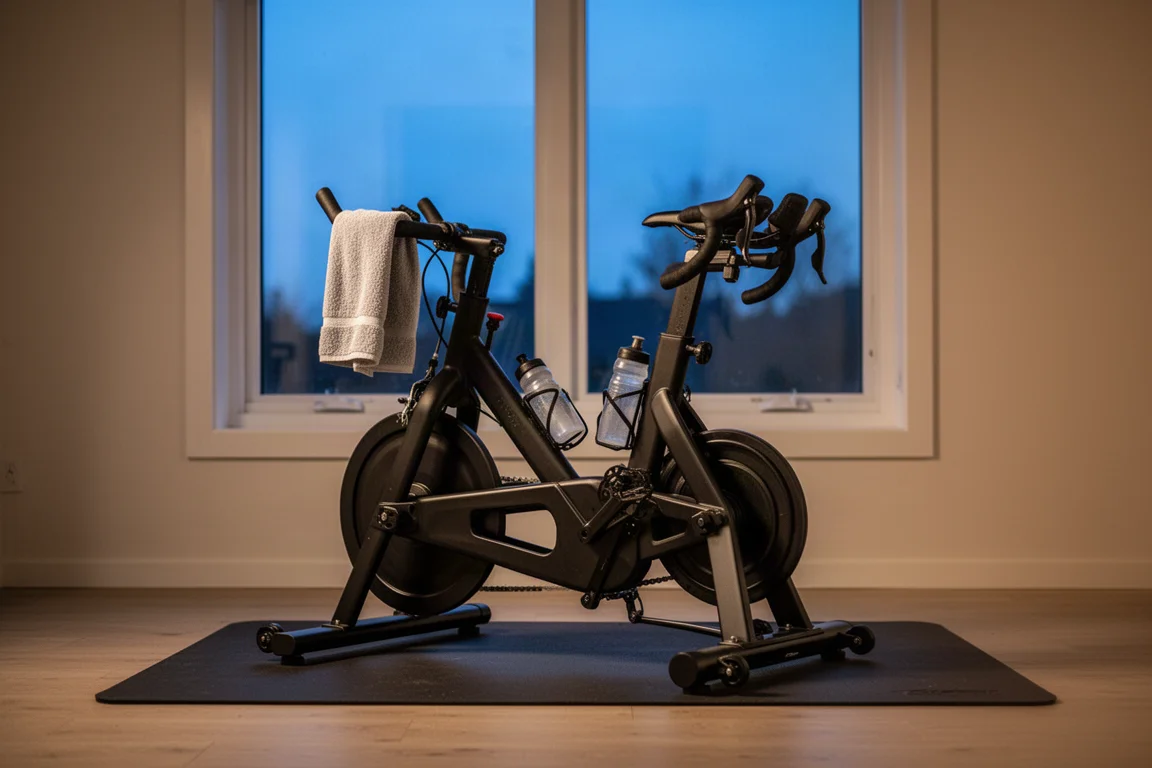
Value for money is the most subjective of the five, because a trainer that costs twice as much is only worth it if you use the features you are paying for. A lower-priced trainer that gets used three times a week is a better purchase than a flagship model that stays folded in a corner.
Tacx Antares Rollers: The Cheapest Way Into Indoor Training
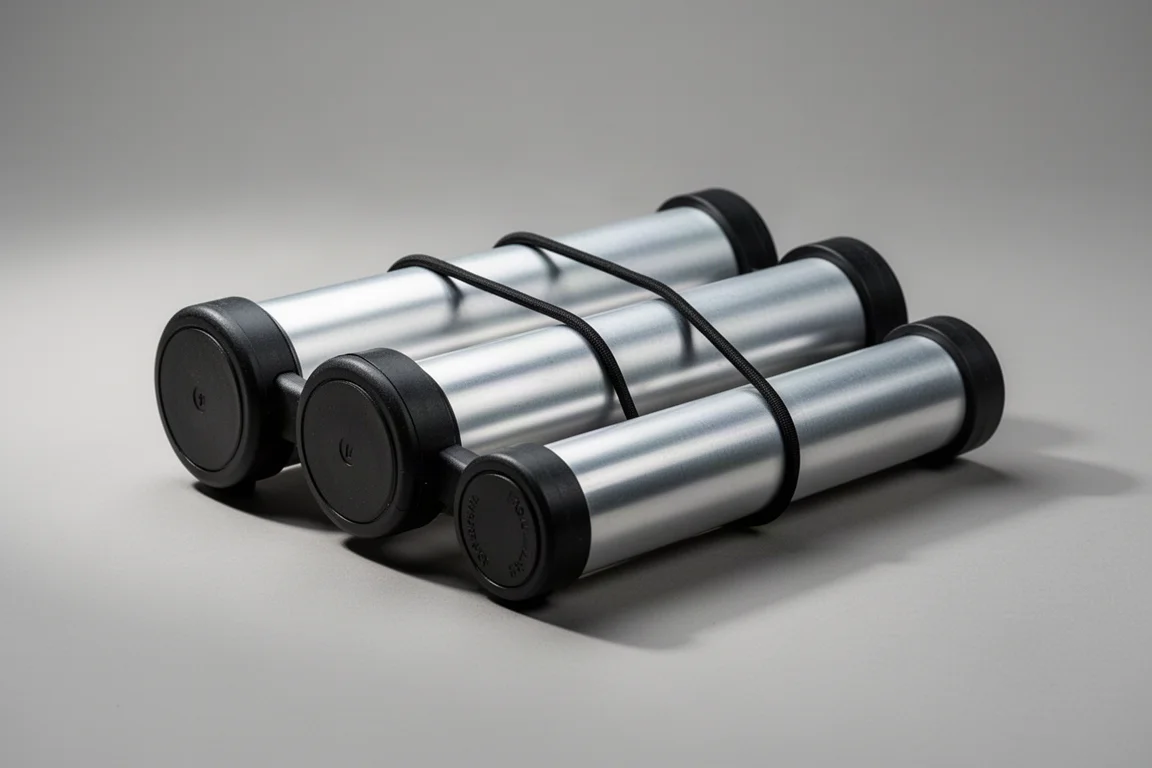
The Antares is the most affordable trainer in this group, at around $169.99. It consists of three cylinders joined by an elastic band, and the bike is balanced on top rather than attached to anything.
Rollers are popular with racers because they are light and easy to carry, which makes them convenient for warming up at a crit circuit or a road race. They are also notoriously difficult to learn. Balance takes practice, the front wheel moves around, and some riders never get comfortable on them.
Features score 1 out of 10, since the only thing rollers do is let you ride a bike. The concave shape of the cylinders pushes the bike towards the centre of the roller, which helps a little, though flat rollers let you ride off the side more easily. Value for money scores 5 out of 10: they are well priced, and there is enough resistance for a zone two ride, although how much depends on your fitness and gearing.
Setup is simple both out of the box and before each session, earning 8 out of 10. Usability is 5 out of 10 because a portion of riders simply will not get on with them. For those who do, they are small, light, and easy to take anywhere.
Ride feel is the strongest category at 8 out of 10. Rollers are the only trainer here where you use the handlebars and balance the bike, which makes them the closest thing to riding outdoors. The overall score is 27 out of 50.
There is also a slightly more expensive version called the Galaxia, which adds a rocker plate so the bike moves forwards and backwards a little. That would add a point or two to ride feel, but the two sets of rollers are otherwise very similar.
Tacx Boost: A Basic Wheel-On Trainer
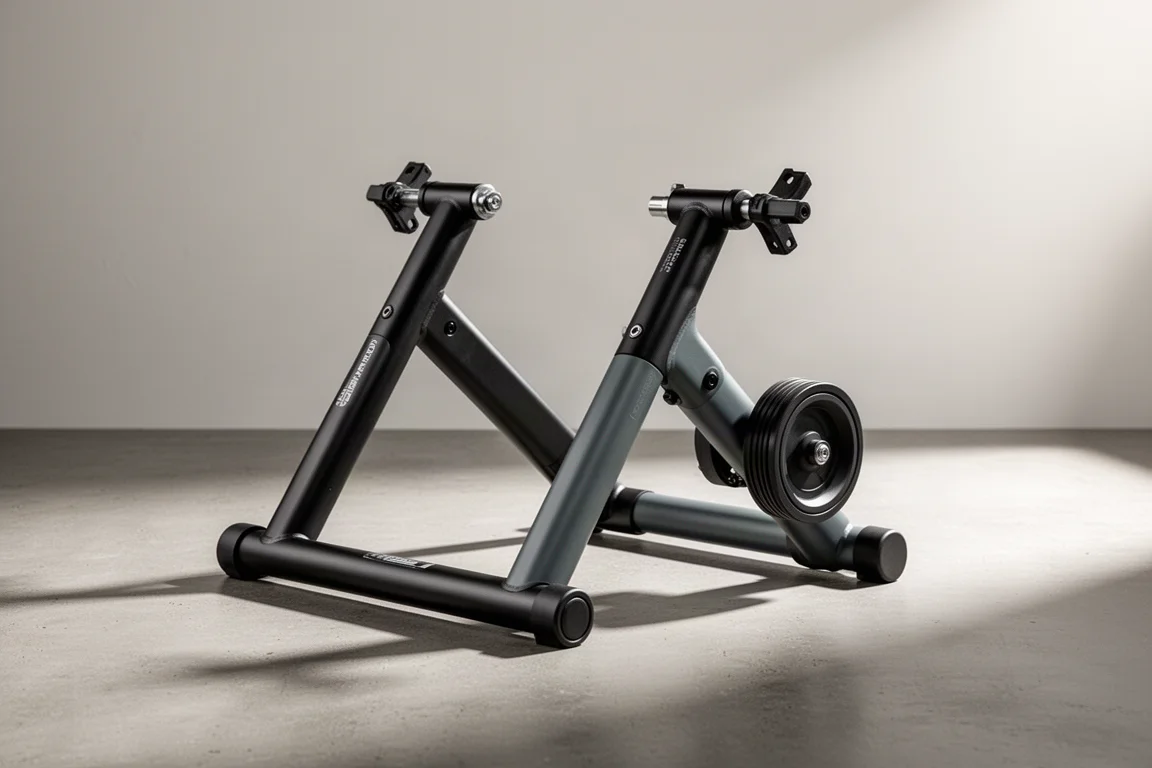
The Boost is a wheel-on trainer, which means the rear wheel stays on the bike and rubs against a roller at the back. It costs around £229.
It is not a smart trainer. Resistance is controlled manually with a small lever that clips onto the handlebars, offering 10 levels and going up to 150 watts. You can also change resistance by shifting gears, in the same way as on rollers.
Features score 3 out of 10, because there are not many of them. Value for money is 4 out of 10. Setup is 3 out of 10 and usability 6 out of 10: it is a reasonable entry-level product, and the lever keeps things simple, but direct drive trainers are easier to live with day to day.
Ride feel is the lowest in the group at 2 out of 10. A tyre running on a roller does not feel like a real bike; it feels like a static bike that does not respond in a realistic way. It makes sense if you only want to replicate resistance, have limited space, and want something you can put away easily. The overall score is 18 out of 50.
Tacx Flow: Smart Resistance On A Budget
The Flow is another wheel-on trainer, priced at around £299.99, but it adds the single biggest upgrade available at this price: it is smart. That means it measures power and connects to training apps such as Zwift and TrainerRoad, which control the resistance you feel as you ride.
That opens up a much wider range of training options and is considerably less boring than riding a basic trainer. It holds steady up to 800 watts and simulates inclines up to a 6 percent gradient.
Features score 5 out of 10, and value for money is the highest in this comparison at 8 out of 10. For riders who want smart training without spending a lot, it is likely to be more than enough, and it works with the main training platforms.
Setup scores 4 out of 10. A through-axle adapter has to be bought separately, the unit needs mains power, and you will need to pair power sensors, a computer, and a heart rate monitor if you want the smart functions. None of it is difficult, but it is all part of the process.
Ride feel is 3 out of 10: only marginally better than the Boost, but the smart resistance makes indoor training far more enjoyable. The overall score is 27 out of 50.
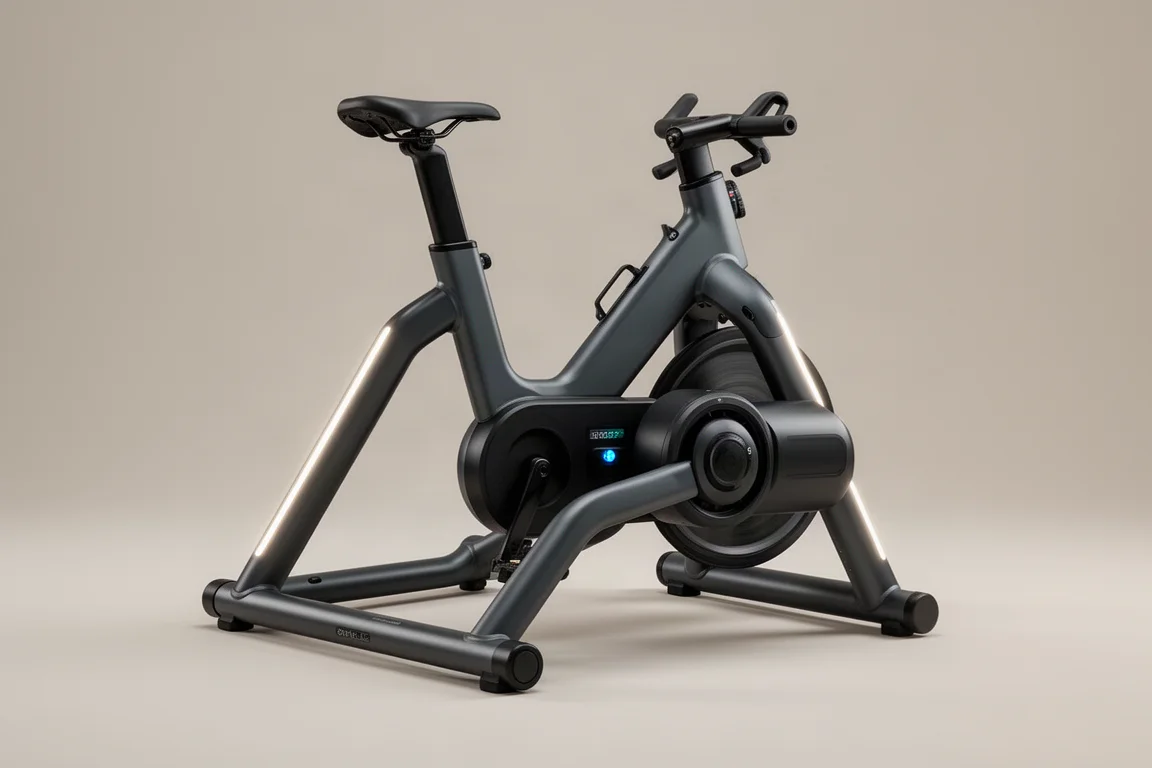
Tacx Flux S: The First Direct Drive Option
At around £599.99, the Flux S is the first direct drive trainer here. The rear wheel comes off the bike and the frame slots onto the trainer, which has its own built-in cassette.
Direct drive is the main reason this trainer feels more realistic. Resistance arrives directly through the cassette, so the bike responds more naturally under load, and the unit is notably quieter than the wheel-on models above. That matters if you live in a flat and need to keep noise down.
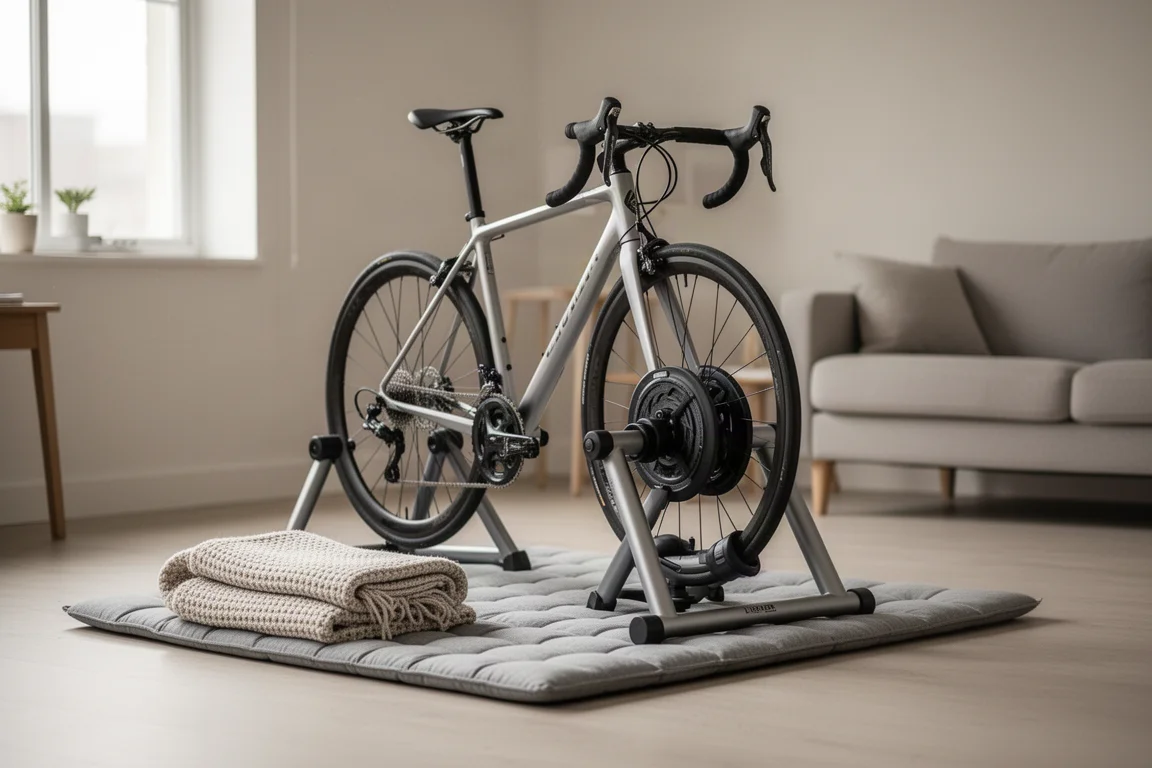
Because it is a heavy piece of equipment, a mat of some kind is worth having, and it does not have to be an official one. Padding protects the carpet from sweat and reduces the vibration that would otherwise travel through the floor.
The Flux S measures power, speed, and cadence with 3 percent accuracy, holds steady up to 1,500 watts, and simulates gradients up to 10 percent. It does not fold and has no handles, so moving it takes some getting used to, and it does need to be plugged in.
Features score 7 out of 10 and value for money 6 out of 10, since it costs a good deal more than the wheel-on options. Setup is 4 out of 10 and usability 7 out of 10. Ride feel, at 6 out of 10, is the best of the trainers covered so far, giving an overall score of 30 out of 50.
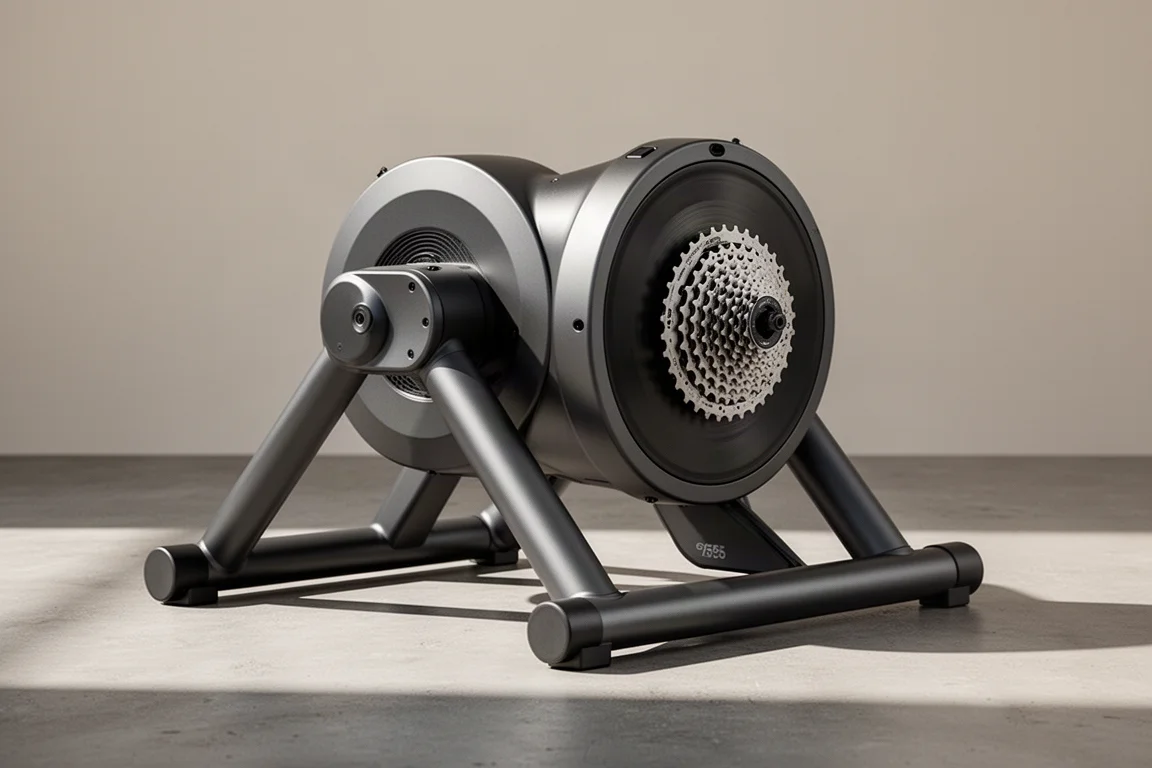
Tacx Neo 2T: High Power And Descent Simulation
The Neo 2T costs around £1,199.99, and it is the first trainer here whose capabilities go beyond what most riders can produce. It holds steady up to 2,200 watts, simulates gradients up to 25 percent, simulates descents, and measures with 1 percent accuracy.
The cassette sits on multi-directional movement plates, which add a small amount of float and make the bike more comfortable to ride. Coloured lights indicate how hard you are working, and the trainer does not need to be plugged in at all: it can be placed on the ground and used as it is. The immersive features, including descent simulation, do require mains power.
It is direct drive and smart, with the usual connectivity. It is also heavy, which makes setup more of a task. On the plus side, the larger base is noticeably more stable than a smaller trainer when you are putting down serious power in sprint or VO2 max sessions.
The movement plates can also simulate gravel and cobbles on compatible training platforms, which is very much a love-it-or-leave-it feature.
Features score 8 out of 10, a significant step up from the Flux S. Value for money is 7 out of 10, held back by the price, and setup 6 out of 10 because of the weight. Usability is 8 out of 10: once it is set up at home, mounting a bike takes seconds and it does not even need plugging in. Ride feel is 7 out of 10, helped by the cobble simulation and the side-to-side movement. The overall score is 36 out of 50.
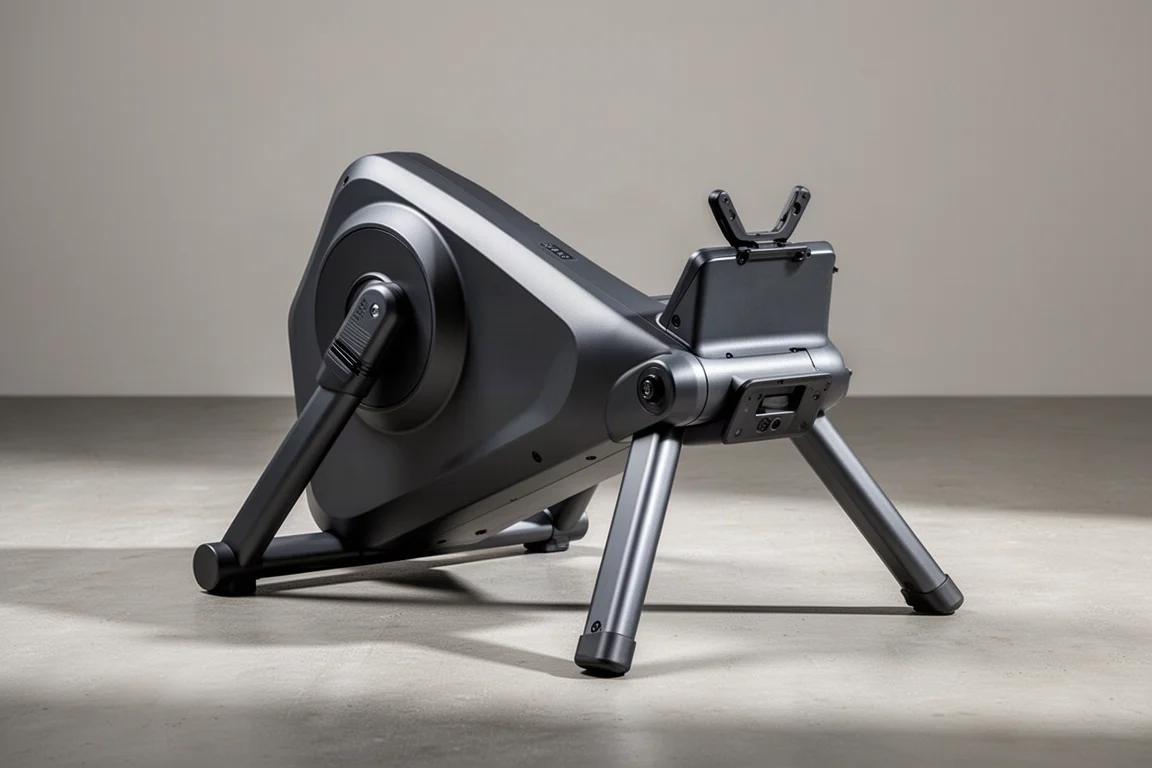
Tacx Neo 3M: The Most Complete Smart Trainer
The Neo 3M is priced at around £1,749.99 and is the highest-scoring trainer in this comparison. Setup is remarkably quick: the legs snap into place, the cassette is already fitted, the correct axle for a through-axle bike is already installed, and the front wheel support flips over to suit road, gravel, or mountain bike tyres.
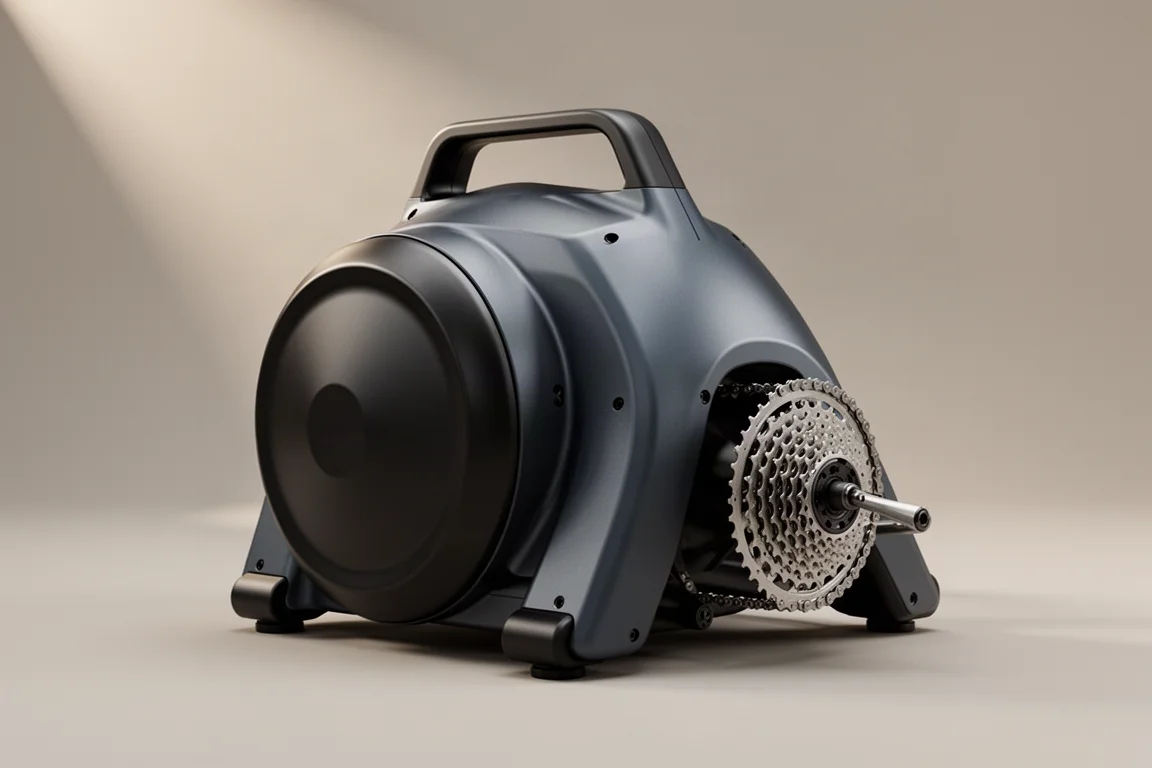
Features score 9 out of 10. It offers 2,200 watts of maximum power, 1 percent accuracy for speed, power, and cadence, simulated gradients up to 25 percent, and connection to the full range of smart training platforms. It does not need a power source, it comes with a cassette and all the adapters you are likely to need, it has coloured lights to show power output, and it has a handle for moving it.
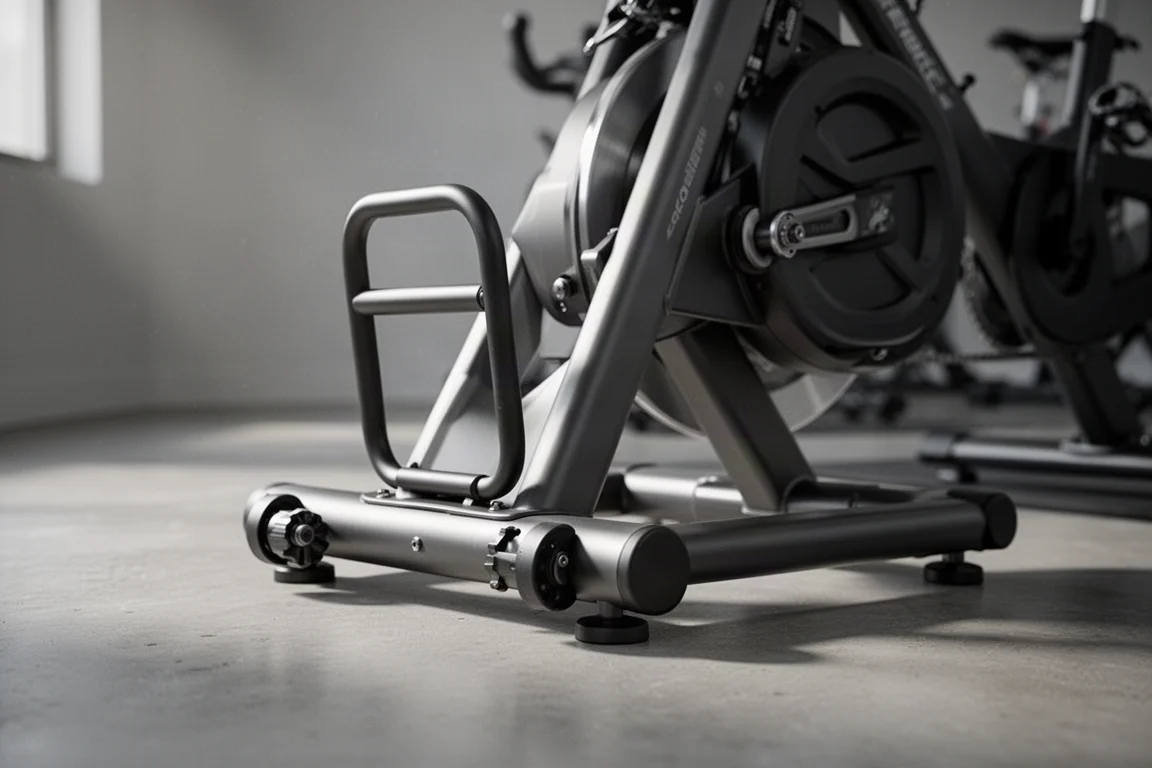
What separates it from the Neo 2T is built-in motion. The trainer rocks back and forth as well as side to side, and the fore and aft movement can be switched on or off with two twist controls. Leaving it on gives a more comfortable, more realistic ride.
Value for money scores 6 out of 10, a little lower than the Neo 2T because it costs a good deal more. Setup scores 9 out of 10, with the only mark against it being that it arrives in a box rather than fully assembled. Usability is 9 out of 10, with the weight the main drawback. Ride feel is a perfect 10 out of 10: it is the most realistic turbo trainer experience available, not identical to riding outdoors, but as close as it currently gets. The overall score is 43 out of 50.
Tacx Neo Bike Plus: A Dedicated Indoor Bike
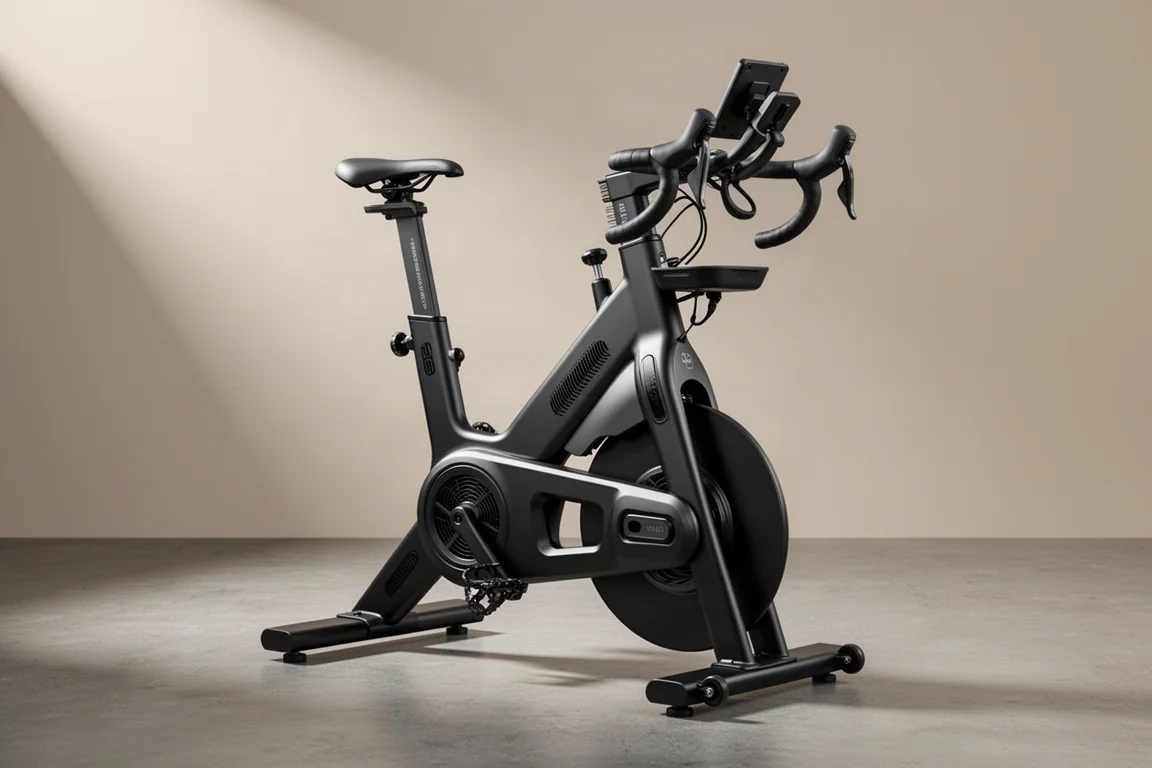
The Neo Bike Plus costs around £3,499.99, more than many complete bikes. It is not really a turbo trainer in the usual sense; it is a dedicated indoor training machine, and it is best understood as a tool for riders who want detailed data and a permanent setup.
Pedal analysis is the headline capability, showing where each leg is in the pedal stroke in far more detail than other devices. There is no traditional drivetrain, but it has working shifters that move through a range of gears, and it can be programmed to feel and behave like Shimano, SRAM, or Campagnolo groupsets.
It is a niche product aimed at households with several people training indoors, or at serious athletes who want a trainer they never have to mount a bike onto. Fit is highly adjustable: saddle fore and aft, saddle height, crank length via different mounting holes, different saddles, and handlebar position can all be changed. By recording those numbers, every rider in the house can return the bike to their own position.
The list of features is extensive, and it still scores 9 out of 10 rather than a perfect score because it lacks the ride feel of the other high-end trainers. There are no motion plates, either fore and aft like the Neo 3M or around the cassette like the other smart trainers, so it does not ride as nicely.
Value for money is 5 out of 10. Setup is 4 out of 10: it weighs roughly 70 kilograms and has to be assembled, so it needs commitment and a plan for getting it into the room where it will live. Usability is 8 out of 10, since once it is in place it simply works, with no cassette or axle compatibility to think about and no need to plug it in if you do not want to. Ride feel is 8 out of 10, helped by the fully adjustable position and the surprisingly realistic shifting. The overall score is 34 out of 50.
Choosing The Right Indoor Trainer For Your Setup
The Neo 3M tops the table, but it is not automatically the best trainer for everyone. The right choice depends on the riding you actually do, the features that matter to you, and the amount you are willing to spend.
If space is tight and you want something you can put away, the rollers or the Boost make sense for basic resistance work. If you want structured training with apps, the Flow delivers smart resistance at a much lower price than any direct drive unit. If realistic feel and quiet operation matter most, the Flux S is where direct drive begins, and the Neo 2T adds power headroom, descent simulation, and the option to run without mains power.
For a permanent setup shared by several riders, the Neo Bike Plus removes the need to mount a bike at all and offers the most detailed fit adjustment and pedal data.
One practical point applies to every option here: the used market for indoor trainers is strong, so buying a lower-priced model and upgrading later is a realistic path. Entry-level trainers hold enough value to sell on once you know how much indoor riding you really want to do.
Conclusion
Across seven trainers and a price range running from around $169.99 to £3,499.99, the pattern is consistent. More money buys quieter operation, more accurate measurement, higher resistance ceilings, better ride feel, and more convenience. The Neo 3M scores highest overall at 43 out of 50, the Flow offers the best value in the group, and the Antares rollers remain the cheapest way to ride indoors.
Matching the trainer to your space, your training habits, and your budget matters more than chasing the top score.
Further reading
Related Reviews
Indoor Cycling Trainers
Best Indoor Smart Trainers 2026: Five Options From Budget to Best Overall
Five indoor smart trainers compared on resistance, power accuracy, connectivity and value, from the budget Van Rysel D100 to the Wahoo Kickr Core 2.
Indoor Cycling Trainers
Wahoo Kickr Roller Review: Smart Resistance Meets Classic Rollers
The Wahoo Kickr Roller adds app-controlled resistance and a front stabilizer to the traditional roller format. Here is what it does well and where it asks for compromises.

Backpacking Gear
Building a 10 lb Base Weight: An Ultralight Backpacking Gear List
A practical walkthrough of the ultralight pieces behind a 10 lb base weight, from a 765 g pack and a roomy one-person tent to a full camp chair and a dependable water filter.