Fountain Pen Inks
Taccia Midori Ink Review: A Straight-Down-the-Middle Green
Taccia Midori is a well-behaved, saturated true green fountain pen ink that stays green in every nib and paper combination we tested.
Introduction
Finding a genuinely neutral green fountain pen ink is harder than it sounds. Most greens lean teal, blue, yellow, or brown, and the further you go down the rabbit hole of ink catalogs, the rarer a straight-up “green green” becomes. That gap is exactly what Taccia Midori was purchased to fill, and after extended use, it fills it remarkably well.
The name itself is fitting: Midori literally means green in Japanese. This was a first experience with Taccia inks, despite long-standing interest in their well-regarded browns and reds, and it leaves a strong impression.
First Impressions and Bottle Design
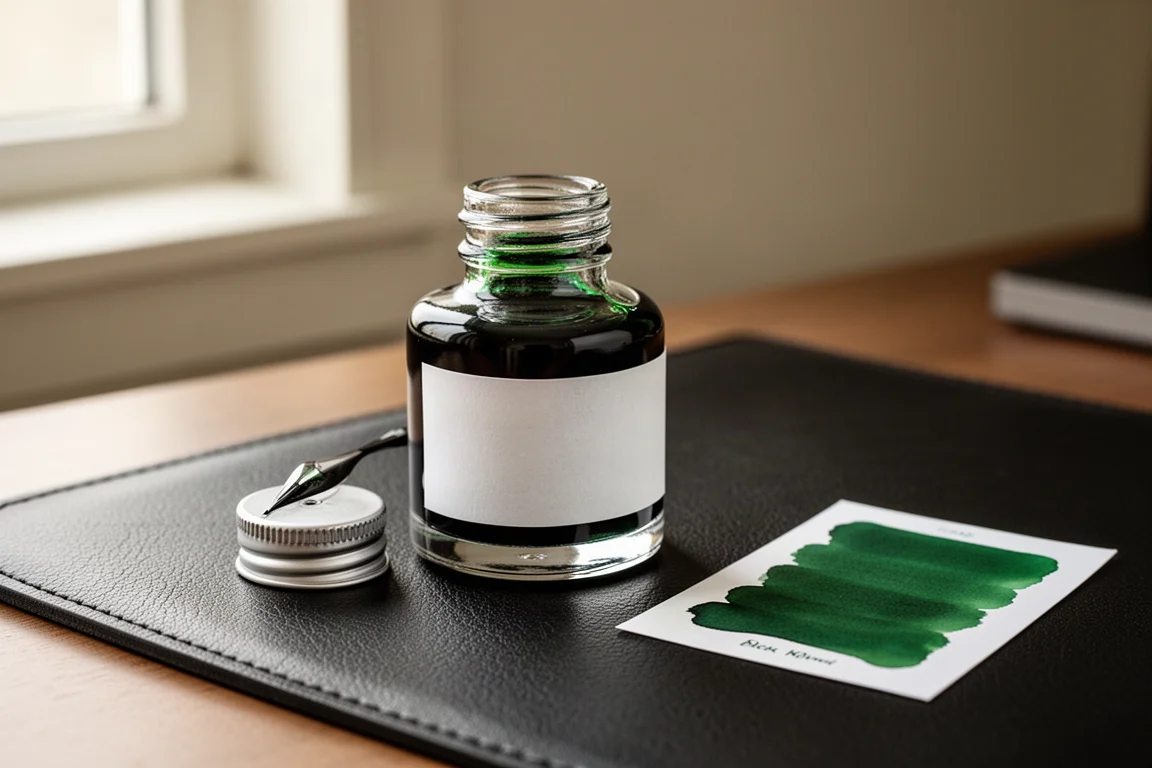
The packaging is simple and honest. The bottle holds 40 ml and has a squat, slightly compressed shape reminiscent of the older Sailor bottles, which actually helps: the wide, shallow mouth makes it easy to get most pens in there, even longer cartridge-converter bodies. There is no inkwell or complicated mechanism inside, so filling stays straightforward.
One thoughtful touch deserves a mention. Each bottle ships with a small sticker on the cap showing the ink name printed in the actual ink color. For anyone who stores bottles loose in a drawer, that makes identification instant. The sticker color is a decent representation, though the ink itself reads a touch darker in person.
There is a small labeling quirk worth knowing. Taccia is a Japanese brand whose bottles state “born in California,” but the ink is made in Japan by Nakabayashi, a Japanese ink maker that also produces pens using Sailor nibs. Whether the ink itself is produced by Sailor or a shared manufacturer is not stated, but the Japanese origin is clear on the label.
Writing Performance and Behavior
Midori is a very wet, free-flowing, well-lubricated ink. It was tested in a Pilot Decimo with an extra fine nib, a combination that can sometimes be feedback-heavy and stingy, and it performed flawlessly. The ink keeps up with the nib, never dries out in the pen, and shows no hard starts even after sitting.
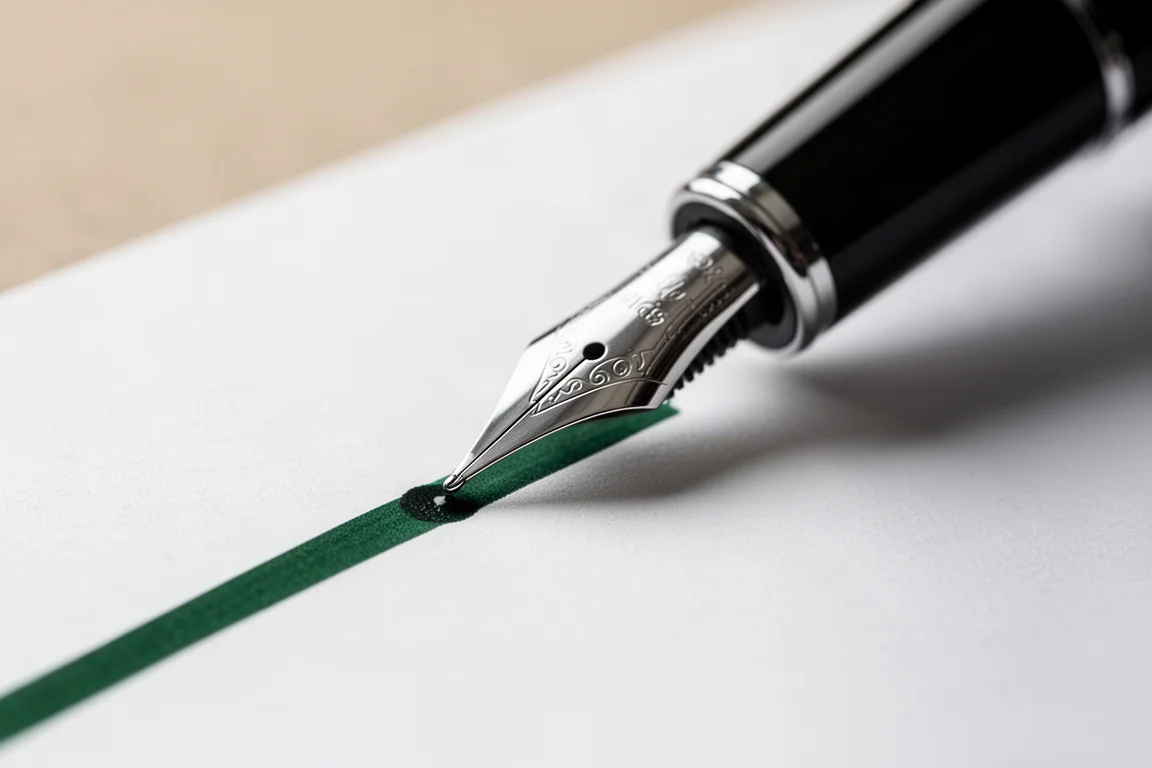
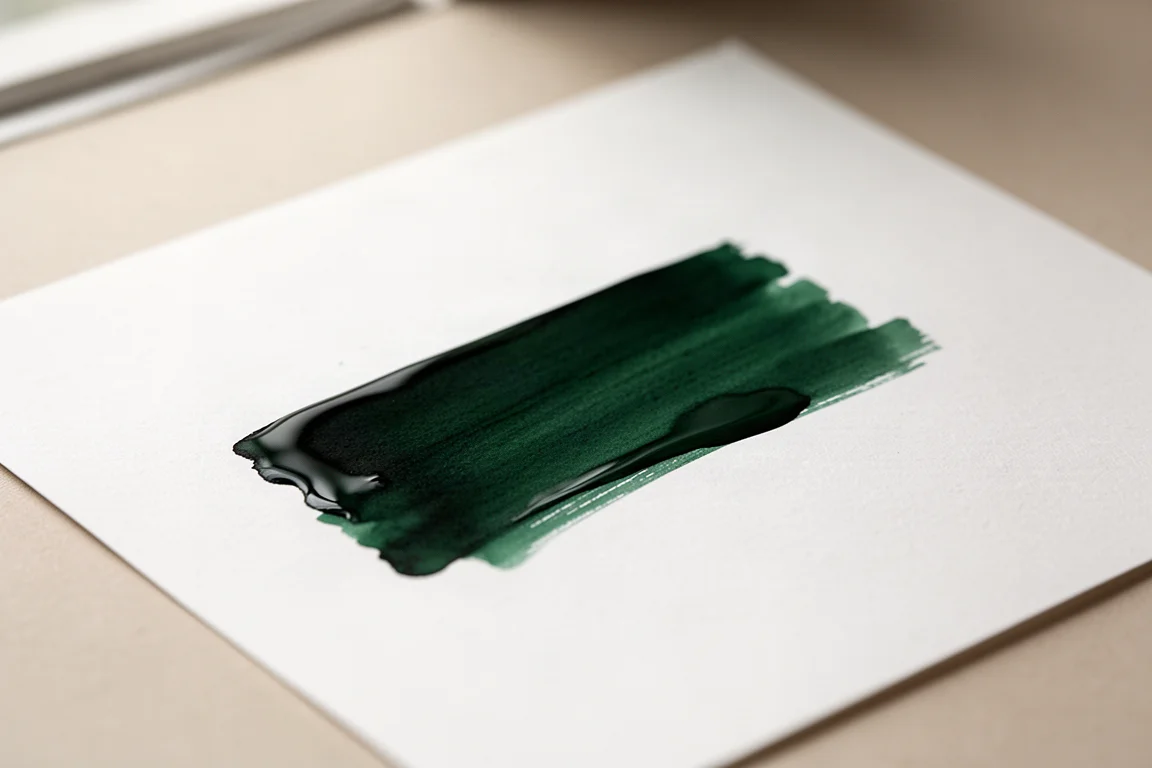
On 80 GSM Rhodia paper, the color is exactly what the name promises: a saturated, neutral green. When the nib runs lighter, it does not drift toward teal or blue. When it lays down wetter, it does not shift toward yellow or brown. It stays green from one end of the swatch to the other, with only a hint of shading in lighter strokes and a slight darkness at the very wettest points.
Behavior on paper is equally solid. There is no bleed-through on standard notebook paper, the smear test shows the ink holding its green character rather than lightening, and it is easy to read in everyday use. It has handled sticky notes, notebooks, and office paper without complaint.
How It Compares to Other Greens
Part of what makes Midori appealing is how clearly it occupies a gap. Compared against other greens in a collection, the difference is obvious: California Teal leans greeny-teal and is a higher-maintenance ink, Vert Empire is an unsaturated blue-green-gray, Diamine Meadow is a yellow-green, and darker options like Monteverde Olivine carry a yellow-brown tint.
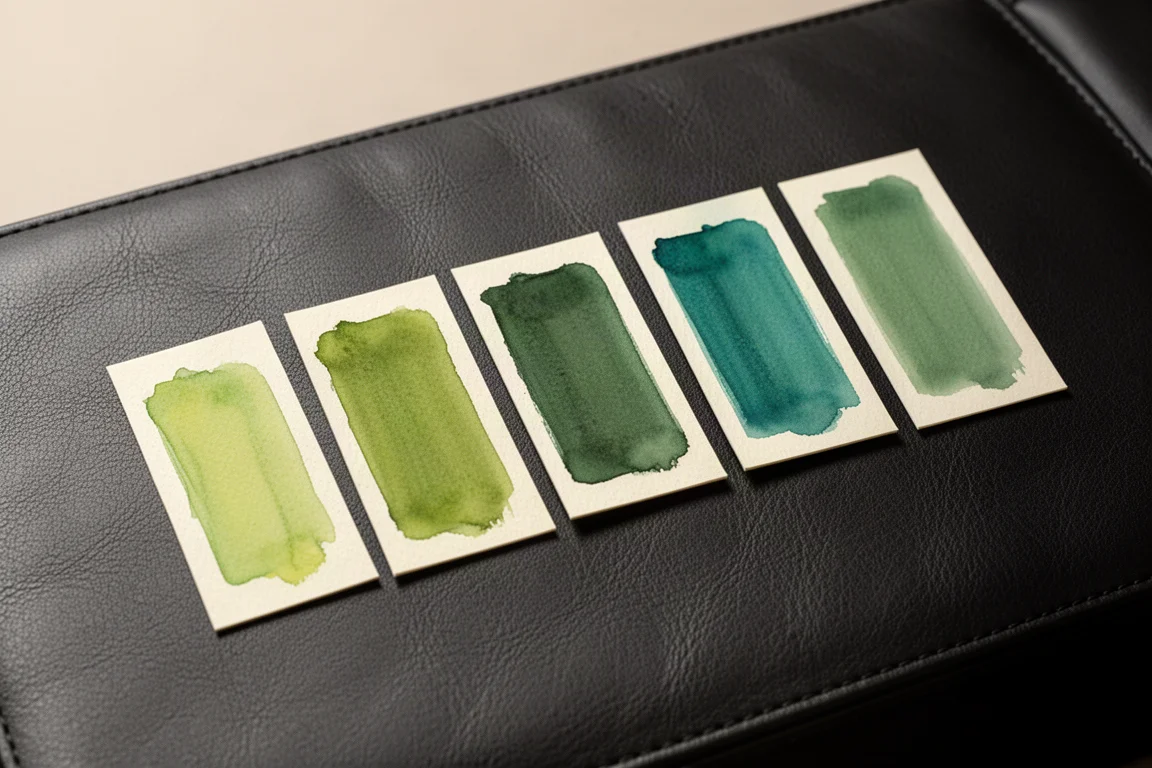
Mont Blanc Irish Green was also considered during the search, but it leans a little teal in its lighter shades. Midori does not. On brighter cardstock it even looks a touch more vivid, but the character remains a straight, dependable green. For anyone hunting that specific middle-of-the-road shade, this is one of the few that delivers.
Value and Buying Advice
At roughly $15 for 40 ml, the pricing is very reasonable for the quality on offer, and it makes this an easy no-brainer purchase for a daily green. It has already earned a spot as a daily driver ink, paired with a red pen for a festive everyday combination, and there is no hesitation in recommending it both specifically and as an entry point into the wider Taccia line.

The Taccia catalog is worth exploring beyond this bottle. Their browns and reds are well regarded, and the Artist Series colors such as Sabi Midori are frequently praised. For anyone building out a collection, this ink is a confident first step into the brand.
Conclusion
Taccia Midori does one thing and does it well: it is a true, saturated, well-behaved green that stays green on every paper and in every nib tested. With smooth wet flow, no bleeding, sensible shading, and a friendly price, it is an easy recommendation for anyone searching for a dependable everyday green ink.
Product link
View more details for Taccia Midori Ink
This product is mentioned in the review. Check the specifications, options, and compatibility before buying.
View more details for Taccia Midori InkFurther reading
Related Reviews
Fountain Pen Inks
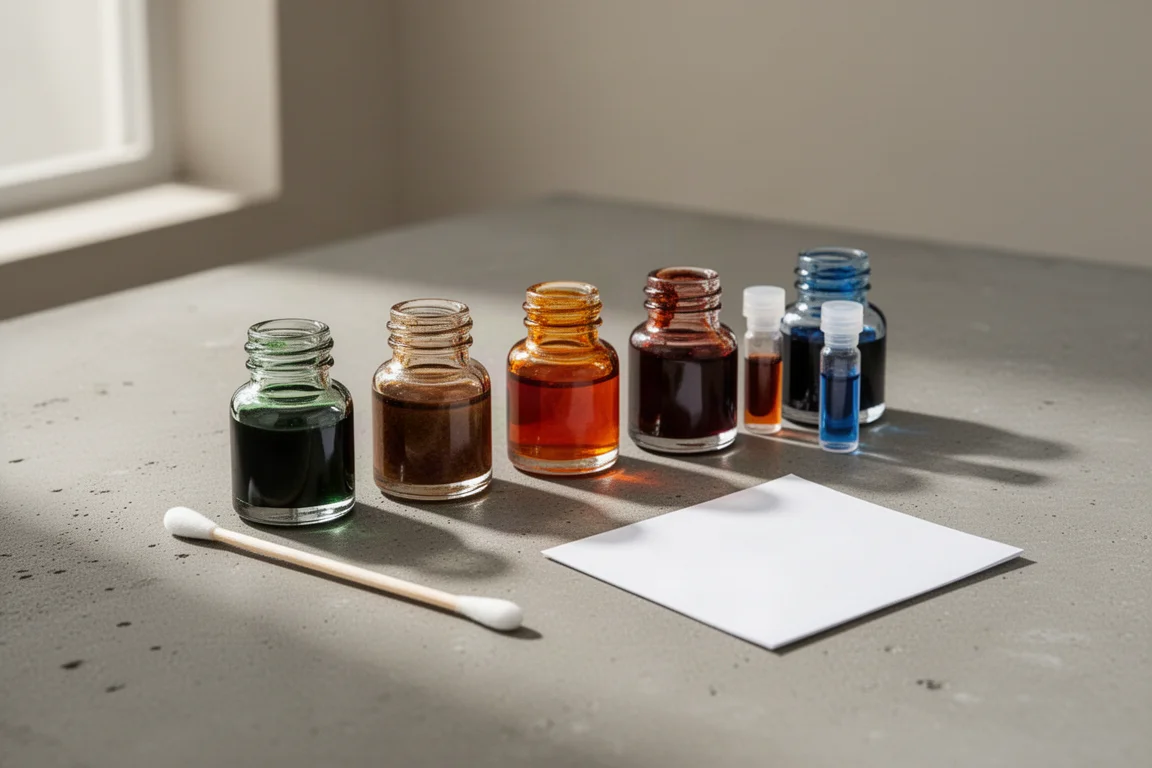
Six Fountain Pen Day Ink Picks Worth a Second Look
From a true sepia to a soft Delft blue, these six inks cover browns, greens, oranges, and blues with shading worth watching.
Fountain Pen Inks
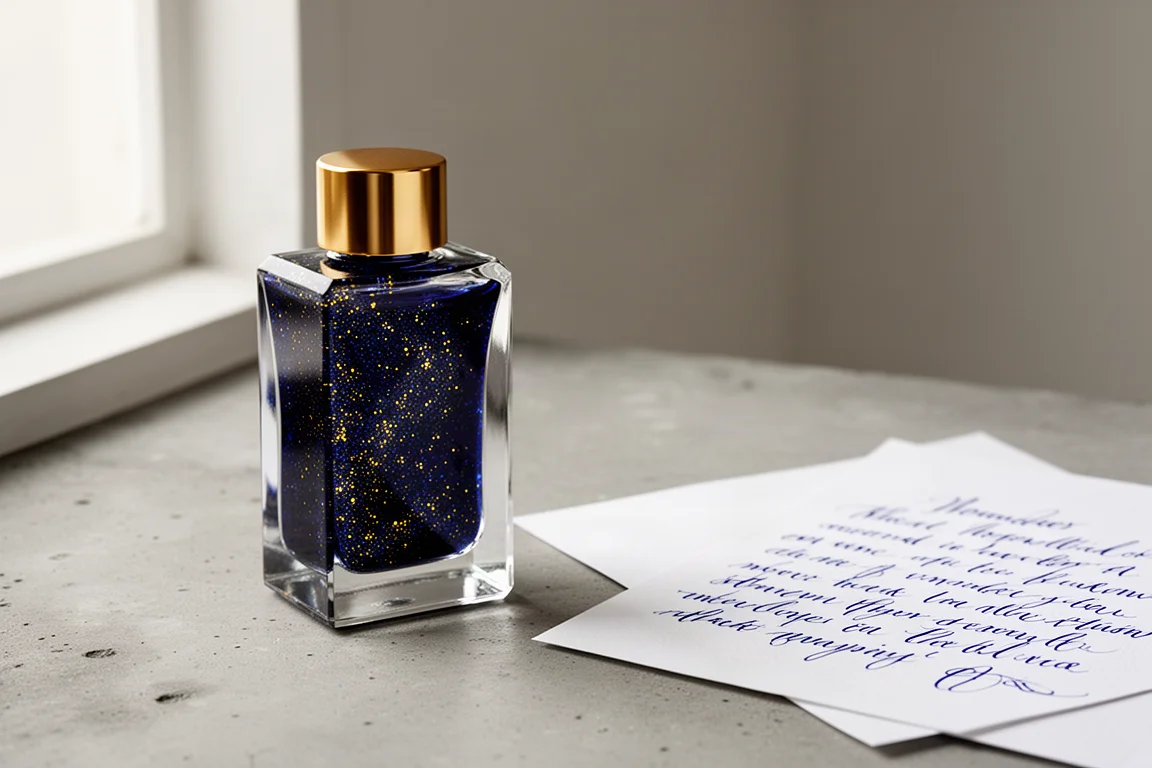
Pelikan Edelstein Golden Lapis Review: A Deep Blue Ink Loaded With Golden Shimmer
Pelikan's 2024 Ink of the Year delivers a true medium blue with an enormous amount of gold shimmer, with a few practical trade-offs to weigh before buying.
Fountain Pen Inks
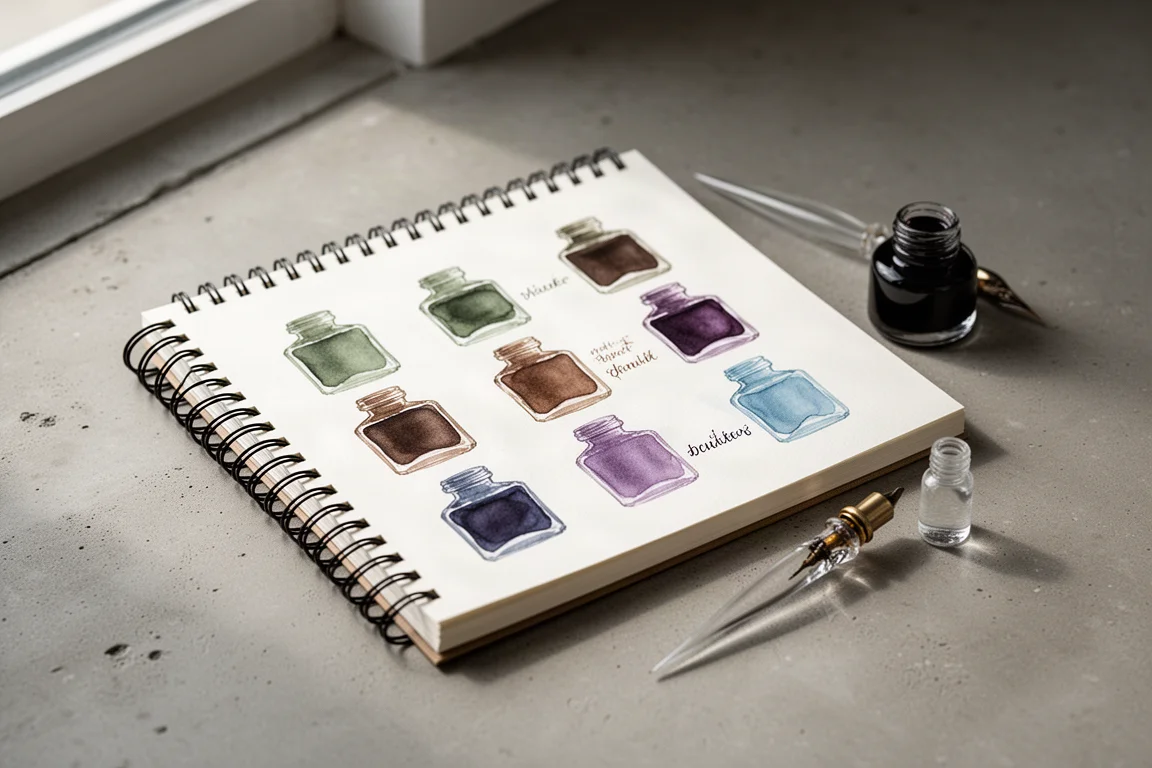
Kittywink Pot Ink Samples: 23 Shades Swatched and Reviewed
A full first look at 23 Kittywink Pot fountain pen inks, from muted greens and smoky browns to dual-shading purples, swatched and compared on paper.