E-Bike Conversion Kits
Swytch Go Kit and Swytch Air Kit: Which E-Bike Conversion Kit Fits Your Bike?
A practical guide to two pedal-assist conversion kits that turn an existing bike into an e-bike, covering price, installation, battery choices, and who each kit suits.
Introduction
If you already own a bike that spends most of its time in the shed, a conversion kit can be a more sensible route to pedal-assist commuting than buying a complete e-bike. Complete e-bikes tend to be heavy, and they are definitely expensive, and they replace the bike you already know and like.
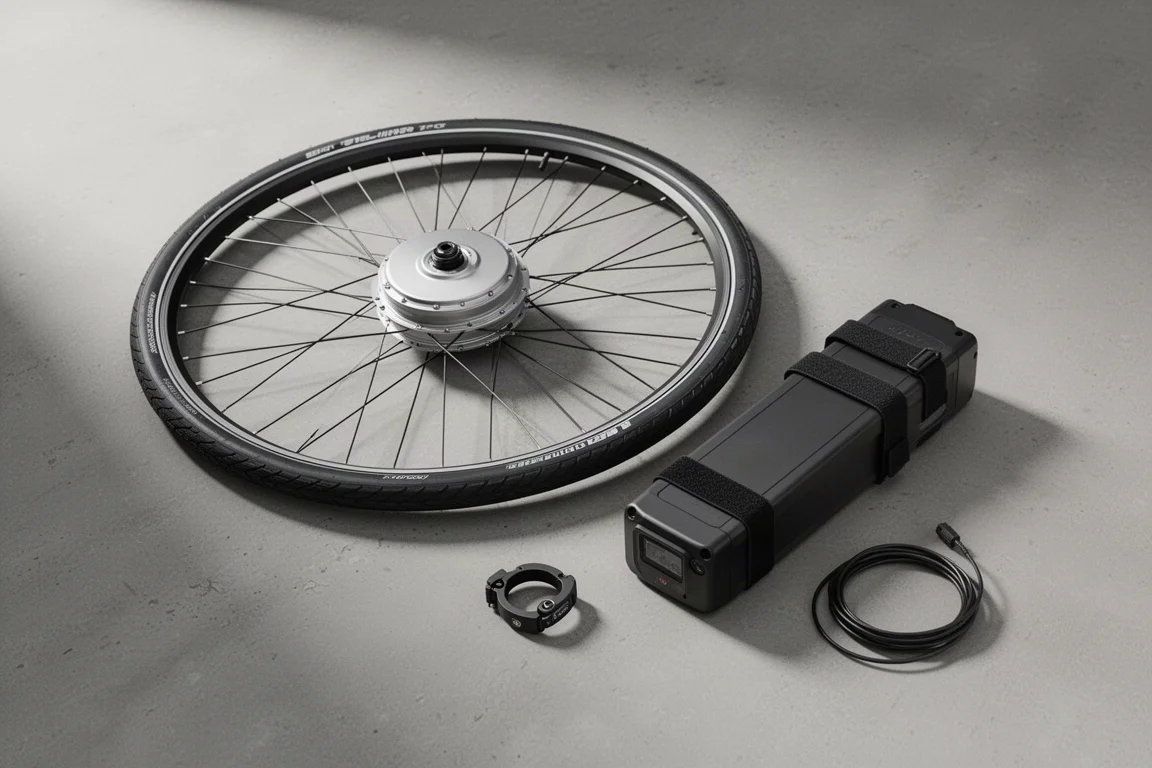
The Swytch Go Kit and the Swytch Air Kit take the opposite approach. They add a front-wheel motor, a pedal sensor, and a battery to the bike you already own, and both are built so the motor only assists while you are pedalling. The Go Kit is the simpler, lower-cost option. The Air Kit sits above it, with a neater bar-mounted battery and support for smaller wheels.
This guide covers what each kit includes, how installation works, and which one makes more sense for a given bike and commute.
What Both Swytch Kits Share
Both kits use a 250W front hub motor. The hub is a low-drag design, so when you are not running the motor the bike still feels much like a normal bike to pedal. That matters if you plan to ride some days without assistance, or if you simply want the option of riding unassisted on flatter ground.
Power delivery is pedal assist only. The motor works while you are pedalling and stops when you stop, which is what makes the system legal for use in the UK. Both kits are IPX6 waterproof, so commuting through typical wet weather is not a problem. The batteries in both kits comply with the highest UL safety regulations, which is a meaningful point given that not every budget aftermarket conversion kit can claim the same.
The two kits also share the same upgrade path: different battery capacities, plus accessories such as an OLED display, so the system can grow with your riding.

Both kits wire up through a single cable, which keeps the finished install tidy and makes the system easier to move between bikes if you change frames later.
Swytch Go Kit: The Lower-Cost Conversion Kit
The Go Kit is the affordable entry point. In its basic form it is priced at £299 for riders who are happy to join a waitlist and accept delivery later in the year. If you would rather not wait, it is £599, or available on a payment plan at £28 a month. That makes it one of the cheapest legal e-bike conversion kits on the market, and it is certainly cheaper than buying a complete e-bike. A Go Kit plus a secondhand bike can easily cost less than many new e-bikes.
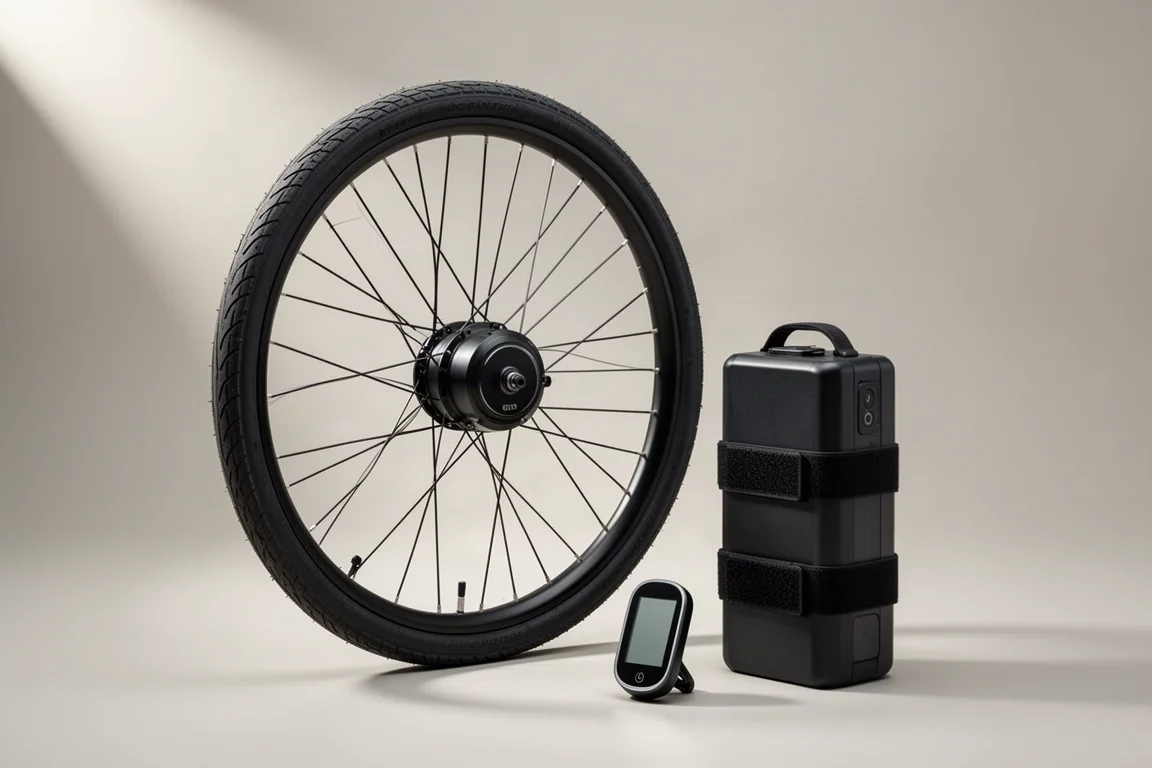
The kit ships with a 700c front wheel, and versions are also available for 26-inch and 27.5-inch wheels. The Go Kit keeps battery mounting simple in order to hold the price down: the battery attaches with velcro straps that can be repositioned, so you can move it to different parts of the frame to suit your bike.
Three battery sizes are available, with capacity for up to 20, 40, or 60 miles of riding. Larger batteries bump up the price, but having the choice is a genuine advantage. The smallest and cheapest battery covers plenty of short, flat commutes, and you can step up later if your rides get longer.
Swytch Air Kit: The Tidier Bar-Mounted Option
The Air Kit sits one step above the Go Kit and costs more. Its most visible difference is the battery, which mounts on the handlebar in a noticeably tidy arrangement rather than on the frame.
The Air Kit is also the version to choose if your bike has wheels smaller than 26 inches, such as a folding bike. The Go Kit covers 700c, 26-inch, and 27.5-inch wheels; anything smaller requires the Air Kit.
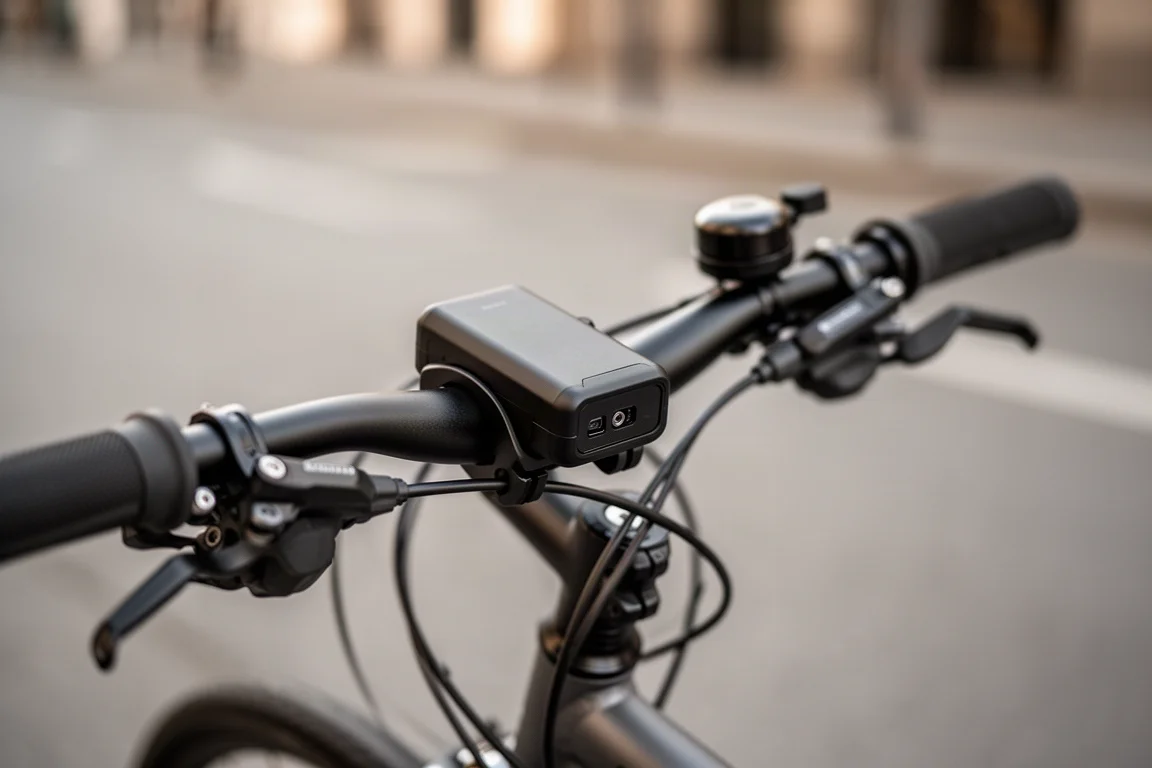
For riders who care about clean lines and a bar-mounted battery position, the Air Kit is the more polished of the two systems. Beyond battery placement and small-wheel support, both kits follow the same overall approach: front hub motor, pedal sensor, single cable, and the same family of battery and display upgrades.
Installation: Fitting the Kit to Your Bike
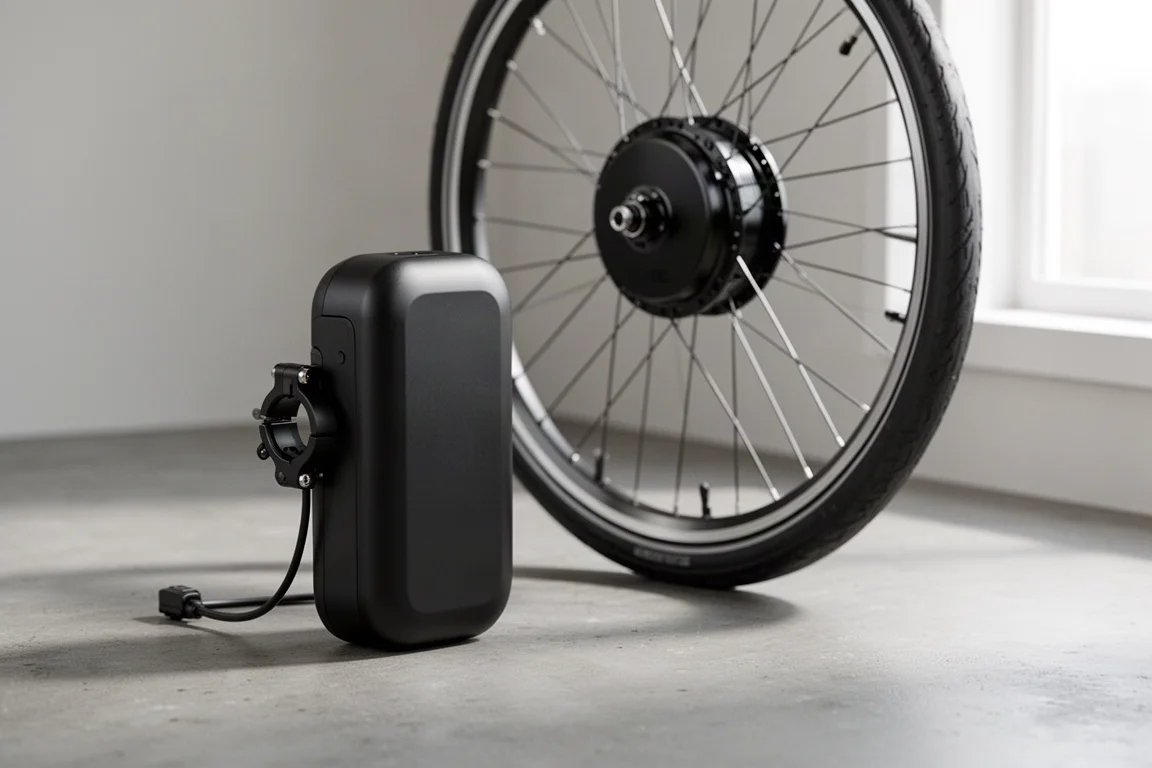
Fitting the kit is genuinely approachable. A front wheel swap, a pedal sensor by the crank, the battery, and one cable add up to roughly half an hour of work. A detailed manual is included, and the manufacturer also offers free video calls with its mechanics if you would like someone to talk you through the process.
The one part that needs checking is the pedal sensor. It requires a little clearance between the frame and the crank, and on one bike the fit was snug enough that the non-drive side crank had to come out by about 3mm to make room. That is a quick job, but it is worth checking your frame and crank clearance before you buy rather than after.
Everything else is straightforward. The battery straps on, the cable runs to the motor and sensor, and the system is ready to ride.
Battery Range and Assistance Levels
Battery choice has the biggest effect on how the kit feels day to day. The three capacities cover up to 20, 40, or 60 miles, with the larger batteries adding cost. For a short, flat commute, the smallest battery is usually enough. Longer or hillier routes make the bigger options worth considering.
Assistance is adjustable through the controls, with levels that let you dial effort up or down. A flat route can sit at a low setting to conserve battery, while a steep climb can be handled at the top setting. An optional OLED display shows assistance level, speed, distance covered, and remaining battery, so you can see how much range you have left.
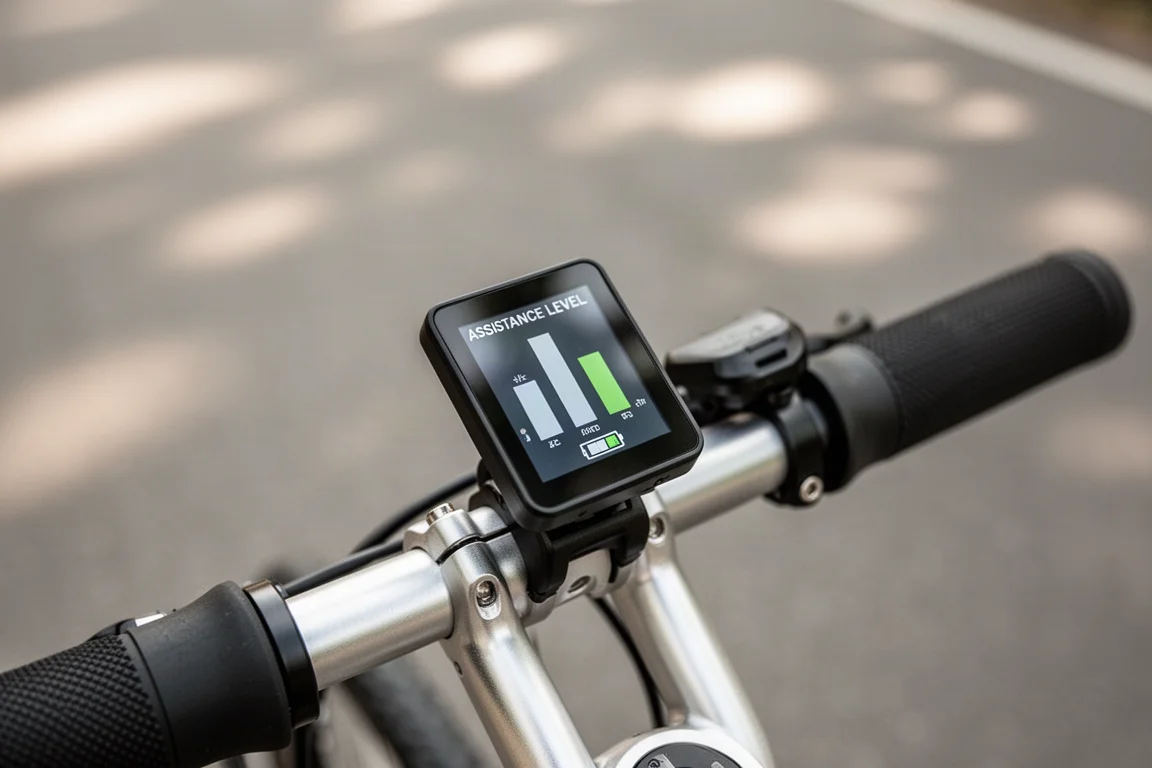
That combination of selectable battery sizes and adjustable assistance is what makes the system adaptable: the same kit can serve a short city commute and a longer ride with climbs, depending on how you configure it.
Riding Feel and Everyday Commuting
On the road, the 250W motor provides assistance that is immediately noticeable. Hills that would normally slow a commute down become manageable, and keeping pace with other riders without breaking a sweat is realistic.
Because the hub is low drag, riding without assistance still feels like riding a normal bike, so you are not carrying a penalty when the motor is off or the battery is empty. That flexibility is the core appeal for commuters: assistance on the way to work, and an ordinary ride at the weekend.
The point of a kit like this is not to turn every ride into a motor ride. It is to make the commute practical, arriving at the office, the shops, or anywhere else without needing a change of clothes.
Overall Buying Advice
Choose the Go Kit if price is the priority and your bike has a 700c, 26-inch, or 27.5-inch wheel. The lower entry price, the repositionable strap-mounted battery, and the choice of three battery sizes make it an easy recommendation for a first conversion, particularly for short and moderate commutes.
Choose the Air Kit if you want the tidier bar-mounted battery arrangement, or if your bike has wheels smaller than 26 inches. It costs more, but it solves the two things the Go Kit does not: a cleaner battery position and compatibility with small-wheel bikes.
Whichever you pick, check your bike first. Confirm your wheel size, and check the clearance between the frame and the crank for the pedal sensor. If both look fine, installation is a half-hour job with a good manual and support available if you get stuck.
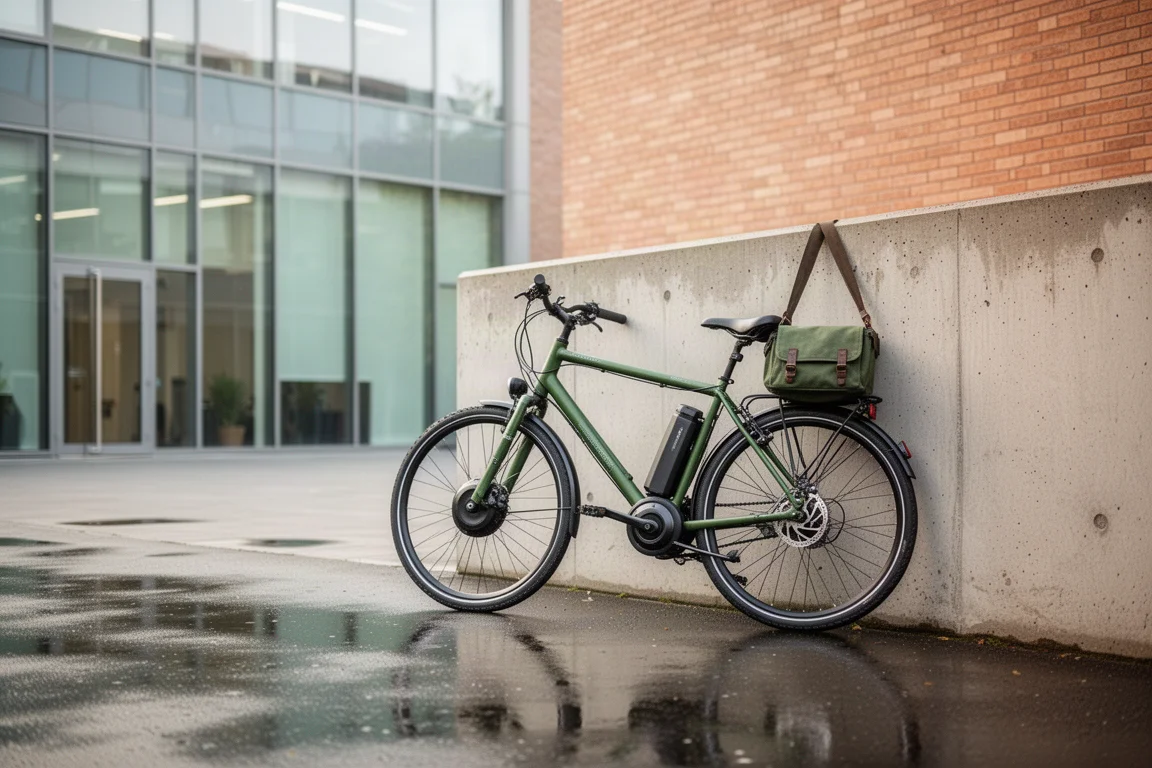
One more consideration: both kits are upgradeable, so you do not have to get every choice right on day one. Battery capacity and accessories such as the display can be added later as your commute changes.
Conclusion
The Swytch Go Kit and the Swytch Air Kit both turn a bike you already own into a legal pedal-assist e-bike without the weight and cost of buying a complete one. The Go Kit is the value option, with a simple adaptable battery mount and three battery sizes. The Air Kit adds a tidier bar-mounted battery and supports smaller wheels. Match the kit to your wheel size, check your crank clearance, and either one makes a practical case for commuting by bike.
Further reading
Related Reviews
E-Bike Conversion Kits
Best E-Bike Conversion Kits: Swytch Max Plus, Boost and Skarper Compared
Three e-bike conversion kits compared on fit, power delivery, range and price, plus the pitfalls to check before you convert an old bike.
E-Bike Conversion Kits
Boost E-Bike Conversion Kit Review: A Tidy Route to an Electric Bike
A rear-wheel conversion kit that turns a sound drop-bar bike into a smooth, cleanly finished electric bike for far less than a new one.
E-Bike Conversion Kits
Eagor E-Bike Conversion Kit Review: Carbon Wheels for Road Bikes
A carbon road bike conversion kit with smooth, quiet assistance, a real weight penalty, and one serious fault that keeps it from a recommendation.