E-Bike Conversion Kits
Best E-Bike Conversion Kits: Swytch Max Plus, Boost and Skarper Compared
Three e-bike conversion kits compared on fit, power delivery, range and price, plus the pitfalls to check before you convert an old bike.
Introduction
E-bike conversion kits can be an ideal way to breathe new life into a bike that has been sitting unused. A long forgotten favorite can become a fast commuter for a sweat-free ride to work, and a kit makes sense if you do not have room for another bike or do not want the expense of a dedicated e-bike.
The three systems here take very different approaches. One drives the front wheel, one drives the rear wheel, and one clips on and off in minutes. Each has a clear set of strengths and each has trade-offs worth understanding before you commit.
What to Check Before Buying an E-Bike Conversion Kit
There are three pitfalls worth knowing about before you spend anything.
The first is very cheap import kits. They may not carry the right certification, and you cannot be sure the battery or the charger is safe to use. Choosing a system that has been properly engineered and supported is the sensible route.
The second is warranty. Some manufacturers will not honour a bike’s warranty once it has been modified, and fitting a motor hub wheel or a fixed battery mount counts as a modification. In practice, most conversions happen on older bikes that are already outside their warranty period, or on bikes from brands that are no longer trading.
The third is reversibility. Most conversion kits are permanent once fitted. Replacing a wheel, routing a wiring loom and mounting a battery take real time, and very few owners ever strip everything back off.
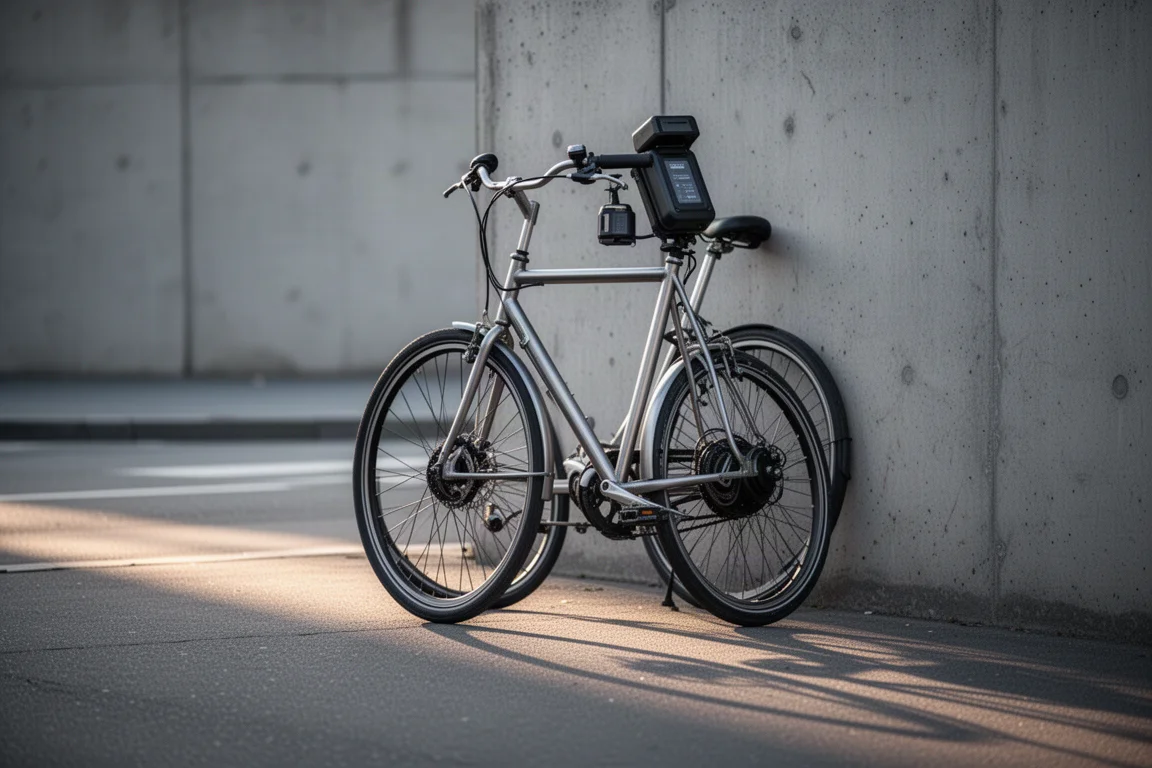
Battery size is the other number to watch. Conversion systems generally carry a smaller battery than a standard e-bike, which is commonly around 500 Wh, so it pays to think in terms of the riding you actually do rather than chasing the largest possible figure. For most commutes, a modest pack paired with an efficient motor covers the distance comfortably.
Swytch Max Plus: A Simple Front-Wheel System for Commuters
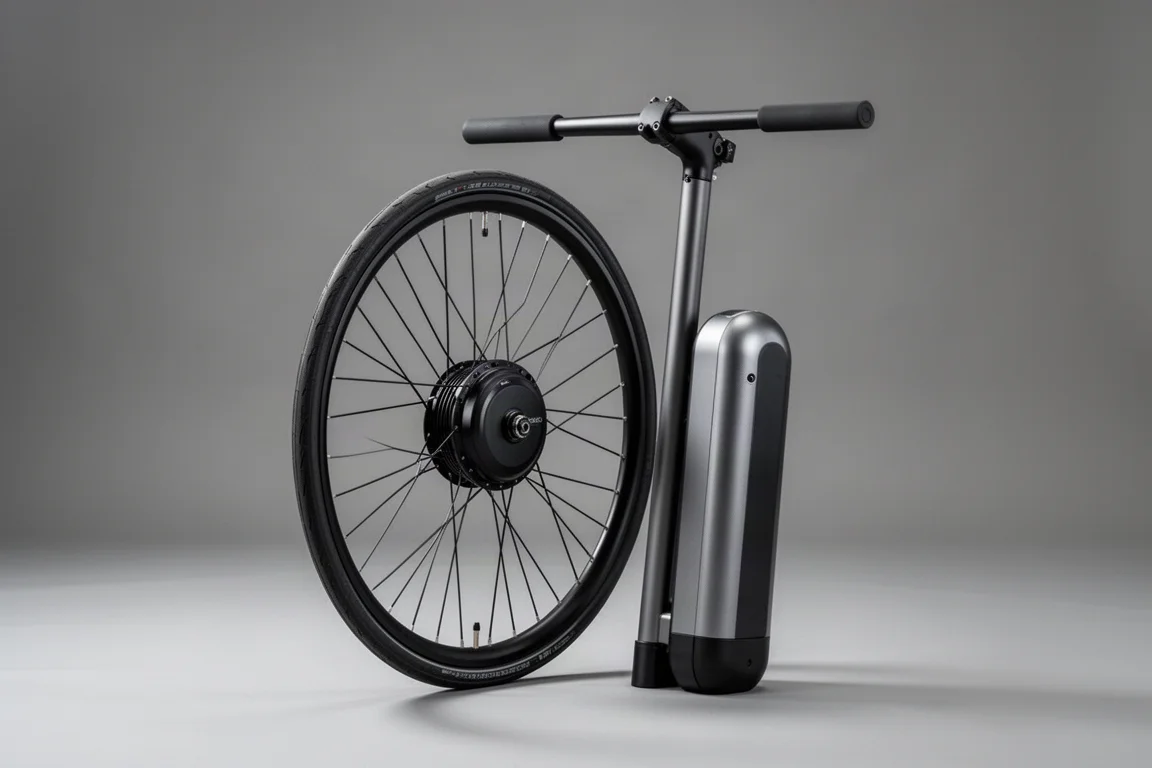
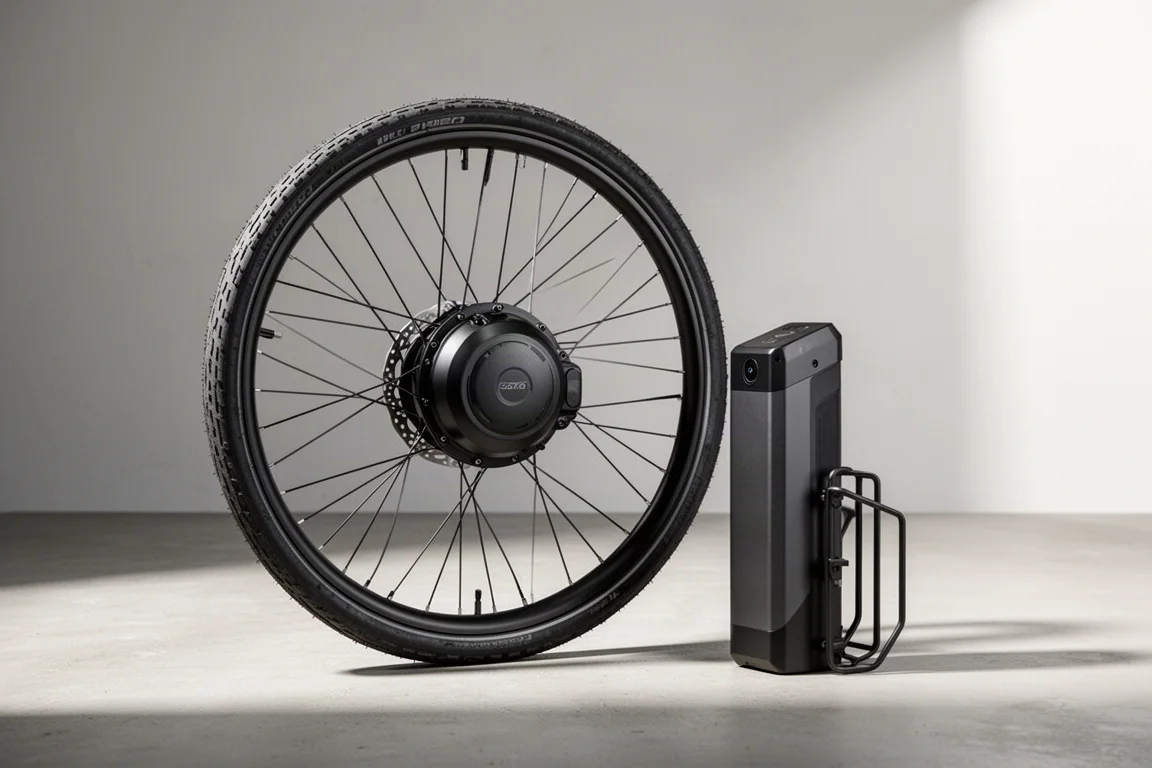
The Swytch Max Plus is straightforward to fit, easy to use, and a neat way to repurpose an underused or unloved bike. The kit consists of a front wheel with a hub motor, cables running up to a bar-mounted battery, and a further cable running back to a crank sensor.
Swytch offers the Max kit in a range of wheel sizes, for rim and disc brakes, and with different battery capacities. The standard Max is rated for up to 32 km, this Max Plus for up to 65 km, and the top Max Plus Plus for up to 95 km. Whichever capacity you choose, the battery is housed in the same stylish pack.
The battery is the standout part of the package. It incorporates a ring light that adds front and side illumination for safety, and a USB-C output on the back. On a ten day camping trip it kept two phones charged for a week with capacity to spare. The Max Plus battery holds 272 Wh, which is enough for a decent mid length commute of around 20 miles a day, and the supplied fast charger refills it in a little over four hours.
Fitting takes slightly more work than some rival systems because of the crank sensor, but the whole job took about half an hour on a small 20 inch wheel bike. A 700c disc equipped bike was trickier, mainly because the motor’s hub spacing was a little wider than the hub it replaced, which required some brake facing and a few spacing washers. Budget for plenty of zip ties and electrical tape to keep the cabling tidy.
Riding the Max Plus is easy, with a simple controller showing battery information and the current mode. There are five modes, from eco at the bottom up to turbo at the top. On a small wheel folder the higher levels are worth using because the extra pep helps you stay ahead of traffic, and small wheel bikes accelerate well from a standstill. The trade-off is that front wheel drive does not feel quite as natural as the rear wheel systems here. You can feel the bike being pulled, and on a 700c bike the motor could tramline through corners and understeer slightly, so you need to be more involved when turning. On steep, wet climbs there is also a risk of front wheel spin if your weight sits too far back.
Range landed close to expectations. With a 272 Wh battery and roughly 30 km predicted, a test ride returned 33 km, which is more than enough for the kind of commute this kit suits.
Boost E-Bike Conversion Kit: Rear-Wheel Drive at a Keen Price
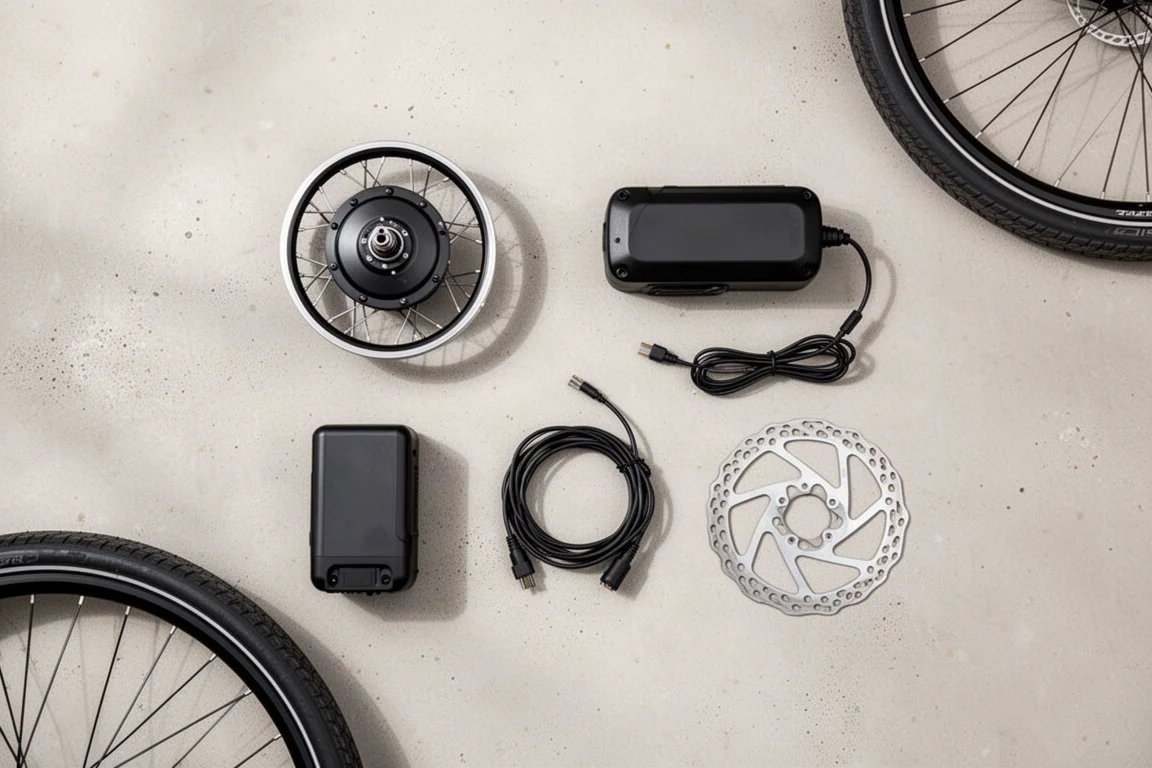
The Boost e-bike conversion kit is simple to fit, easy to use and keenly priced, and it feels noticeably more natural than front wheel systems. It is available in a wide range of wheel sizes and hub spacings, so there is usually an option to suit a given bike. You can order through a network of dealers if you would rather not fit it yourself, order a wheel built to match your bike, or buy just the hub and system to build your own wheel.
Fitting is quick. Once the rear wheel arrives it goes straight in, and Boost provides a downloadable chart you can print out at full size to work out where the battery and cage will sit on your frame before you begin. With minimal tools, the kit can be unboxed, built and ridden in around 30 minutes.
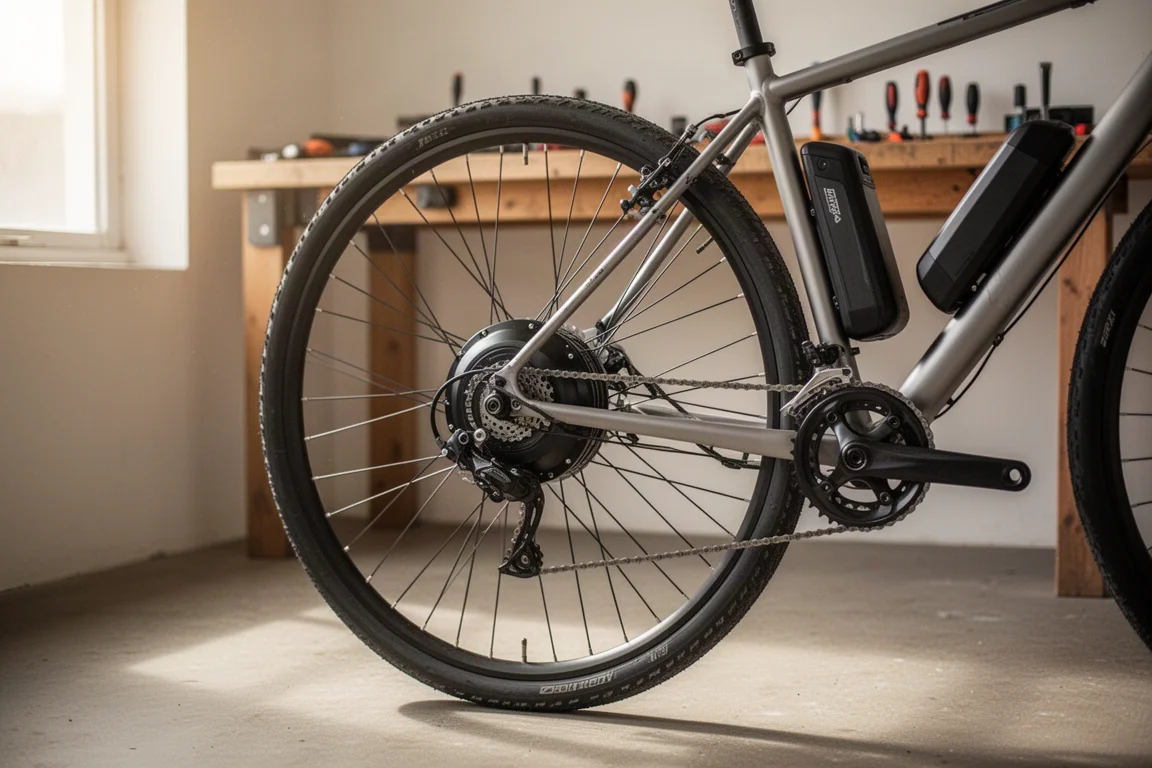
The complete kit adds roughly 4 kg to a bike. A 10.3 kg steel single speed cross bike became a 14.5 kg e-bike, which is light for an e-bike. The battery holds 216 Wh, includes a USB output and has an independent on and off switch, so it can double as a power bank on trips away. An optional wireless head unit is worth adding, because it gives a more accurate battery reading and faster mode switching.
The 250 W rear hub motor is claimed at 42 Nm of torque with peak power around 500 W, which lines it up with the rear hub motors used on fully fledged lightweight e-bikes. Power delivery is smooth, and because there is no cadence sensor the system responds more to the power you are putting in than to your pedalling. That makes it feel very efficient on flat and rolling roads, though it can feel a little underpowered on climbs because it does not see as much of your effort. On a geared bike that is not a problem, but on a single speed you may find yourself grinding at the limits of your gear.
The good news is Super Boost mode, a 20 second flash of full power that is ideal at the start of a climb. Because all the drive goes through the rear wheel, the bike feels natural and peppy, accelerates well from the lights and does not suffer the front end understeer of a front wheel system. Range also exceeded expectations: 64 km with more than 400 m of climbing from a modest 216 Wh battery, mostly on flat towpaths and bike paths. With the battery removed the bike stays clean and minimal, with no excess cabling on show. The one thing to accept is that the conversion is permanent, as with most kits of this type.
Skarper Disc Drive: The Most Refined System
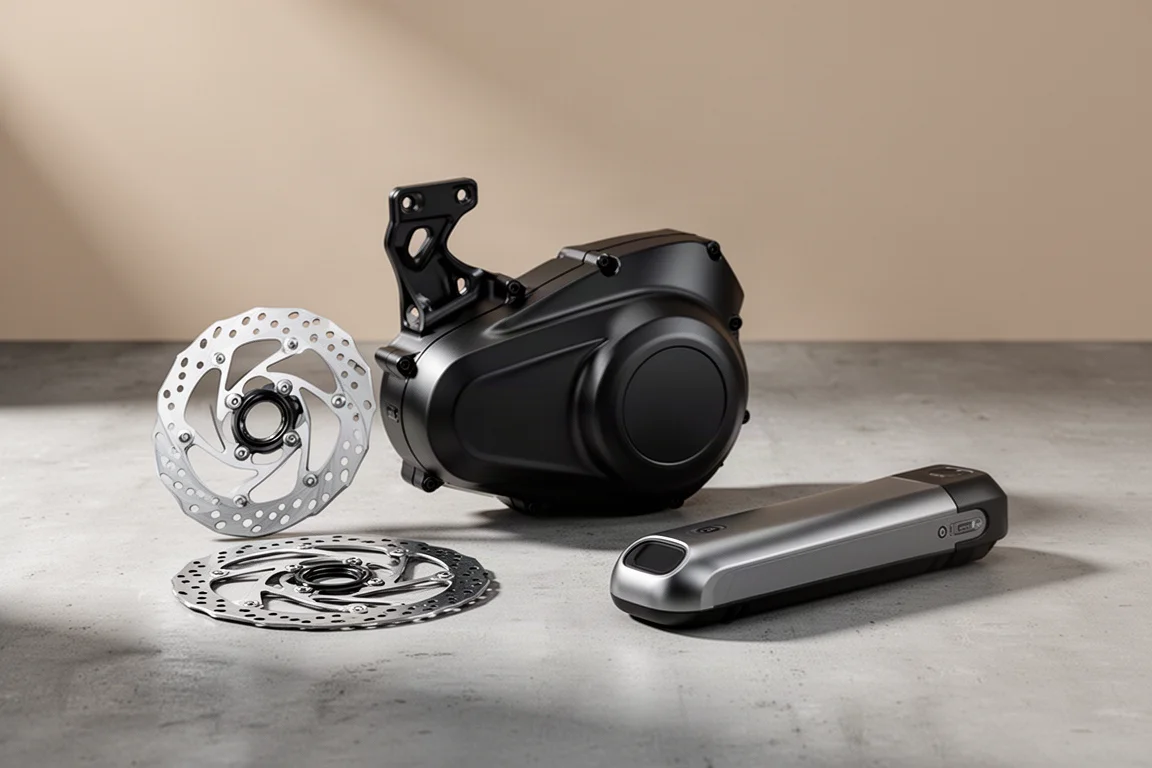
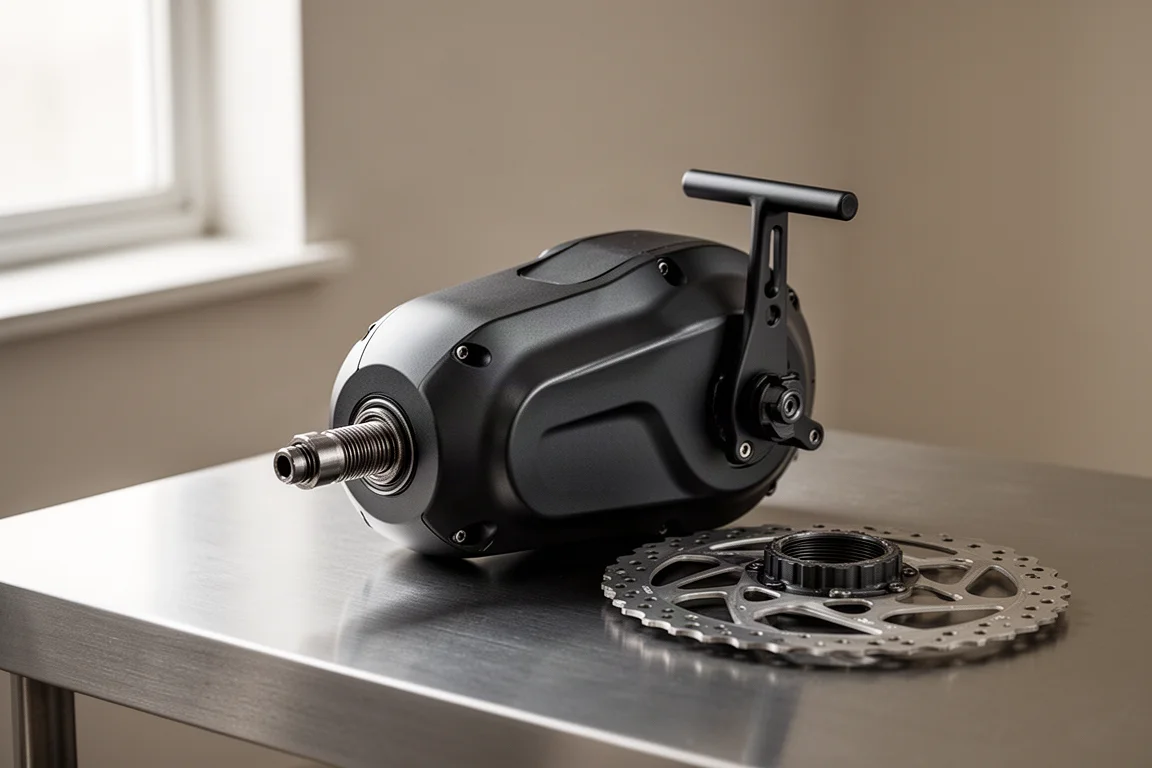
The Skarper Disc Drive is less a conversion kit and more an accessory. It clips on and off quickly, and the only thing left on the bike once the unit is removed is a rear disc rotor, which contains a full planetary gearbox that converts motor energy into drive at the rear wheel. It was engineered by Skarper in collaboration with Red Bull Advanced Technologies.
The unit is self contained, with motor, battery and control electronics in one compact body. It attaches through a drive that inserts into the disc rotor, plus a T-bar that interlocks with the front of the motor. Because the chainstay is a removable component, it acts as a torque arm when the motor drives the wheel forward, so almost no stress is placed on the frame. Skarper’s research puts the torque applied to the chainstay at less than a quarter of what the rear brake produces.
Fitting could hardly be easier. You replace your standard centre lock rotor with the Skarper disc drive, which uses the same lock ring and the same torque settings, then fit a simple T-bar to the chainstay. The unit clips in with a turn, the small wireless cadence sensor is attached, and you are ready to ride. The first fitting took around five minutes.
Control comes from the Skarper app, which is simple to use, with a clear full colour screen, three settings covering eco, cruise and turbo, battery levels, and swipe control between modes. Power delivery is the real strength, because driving the rear wheel means every bit of motor energy goes into forward motion with no losses through the drivetrain. It comfortably matches full power lightweight e-bikes. On a 7.5 kg gravel bike the complete build came in under 11 kg.
The programming is clever enough that the modes are rarely needed. Speed and power delivery are managed by the cadence sensor along with other sensors and algorithms, including an incline sensor, so even in eco mode on a steep hill the system measures your torque and the gradient and gradually increases power to match. Turbo tends to get used mainly for letting friends have a go. There is also an energy saving sleep mode: a couple of back pedals at the top of a climb let the system sleep for the descent, and a couple more wake it up again.
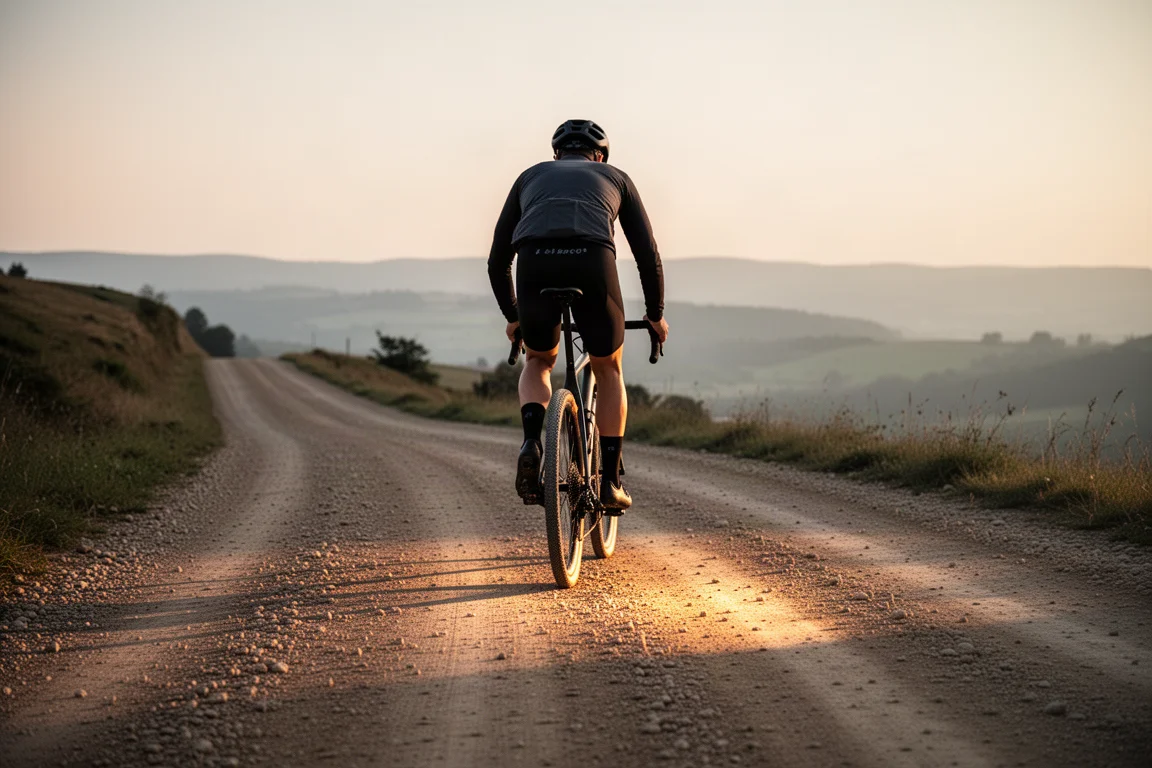
Range is where the design really pays off. The battery is around 275 Wh, similar to the other systems here, yet on a pure gravel ride it returned roughly 72 to 73 km with about 900 m of climbing, and on road that rose to about 95 km with over 1,000 m. The reason is the bike it can be fitted to. Because it can go on your best bike, and because you are usually riding above the assistance limit, the motor is not working most of the time, so battery is saved for when it is genuinely needed.
The main drawback is the price, which is high compared with the Boost and Swytch systems. The system costs 1,495 pounds for the motor, sensor and rotor. The counter argument is flexibility: buy an additional rotor and the same unit can be shared across your bikes or your family’s bikes, so it works as an accessory rather than a commitment to one machine.
Range, Weight and How These Kits Feel to Ride
The three systems deliver their power in very different ways, and that shapes how each one feels out on the road.
A front wheel hub motor pulls you along from the front, which is effective but noticeable, particularly on larger wheels where cornering needs more input. A rear hub motor drives from behind, which feels natural and leaves steering behaviour unchanged. The Skarper unit also drives the rear wheel, with no drivetrain losses at all, and it matches the feel of lightweight e-bikes.
On range, all three systems use a battery in the 216 to 275 Wh region, well below the roughly 500 Wh of a standard e-bike. Tested figures came in around 33 km for the Swytch Max Plus, 64 km for the Boost kit with more than 400 m of climbing, and 72 to 95 km for the Skarper depending on terrain. Efficiency and how a system responds to your own effort matter as much as raw capacity, which is why the smaller packs here can still cover a working week of commuting.
Weight is the other practical consideration. The Boost kit adds about 4 kg, while the Skarper system kept a light gravel build under 11 kg. Lighter systems are easier to live with day to day and easier to ride once assistance cuts out on a descent.
Living With a Conversion Kit Long Term
It is worth being honest about commitment. Once most kits are fitted, they stay fitted. The wiring, the battery mounts and the motor wheel are not something you will want to reverse on a Friday evening, so the decision should be made with the long term in mind.
That said, there are ways to keep things tidy. Removing the battery leaves a Boost-equipped bike looking much like an ordinary bike, with no excessive cabling on show. The Swytch battery doubles as a power bank thanks to its USB-C output, which is genuinely useful away from home. The Skarper system is the exception to the rule entirely, because the unit lifts off and leaves only the rotor behind.
If you want the flexibility of one motor across several bikes, plan for it from the start. A spare rotor makes that possible with the Skarper system, while the other two kits are effectively tied to the bike they are fitted to.
Buying Advice: Matching a Kit to Your Bike
Start with the bike you already own, because that will narrow the choice quickly. A small wheel folder or a simple commuter suits the Swytch Max Plus, which is the simplest way to add assistance to a bike you like riding. Its battery is the most useful of the three as a standalone power bank, and the range figures are realistic for short daily trips.
If you want the most natural ride for the money, the Boost kit is the one to look at. Rear wheel drive, a keen price and a Super Boost mode for climbs make it a strong all-rounder, and ordering through a dealer network takes the fitting work off your hands if you prefer. Just accept that the bike becomes an e-bike for good.
The Skarper Disc Drive sits in a different bracket. It costs considerably more, but it fits in minutes, comes off in seconds, and can be shared across multiple bikes with an extra rotor. If you want to keep riding your best bike as a normal bike at weekends and add assistance during the week, it is the only one of the three that allows it.
Conclusion
All three kits solve the same problem in different ways. The Swytch Max Plus is the friendliest introduction to conversion, with a clever battery and a simple fitting process. The Boost kit delivers natural rear wheel assistance at a keen price and proved impressively efficient in testing. The Skarper Disc Drive is the most refined and the most expensive, and its clip-on design opens up a genuinely different way to think about assisted riding.
Whichever you choose, avoid uncertified budget imports, check your bike’s warranty position, and go in knowing that a conversion is usually permanent. Get those three things right and an old bike can become the commuter you actually want to ride.
Further reading
Related Reviews
E-Bike Conversion Kits
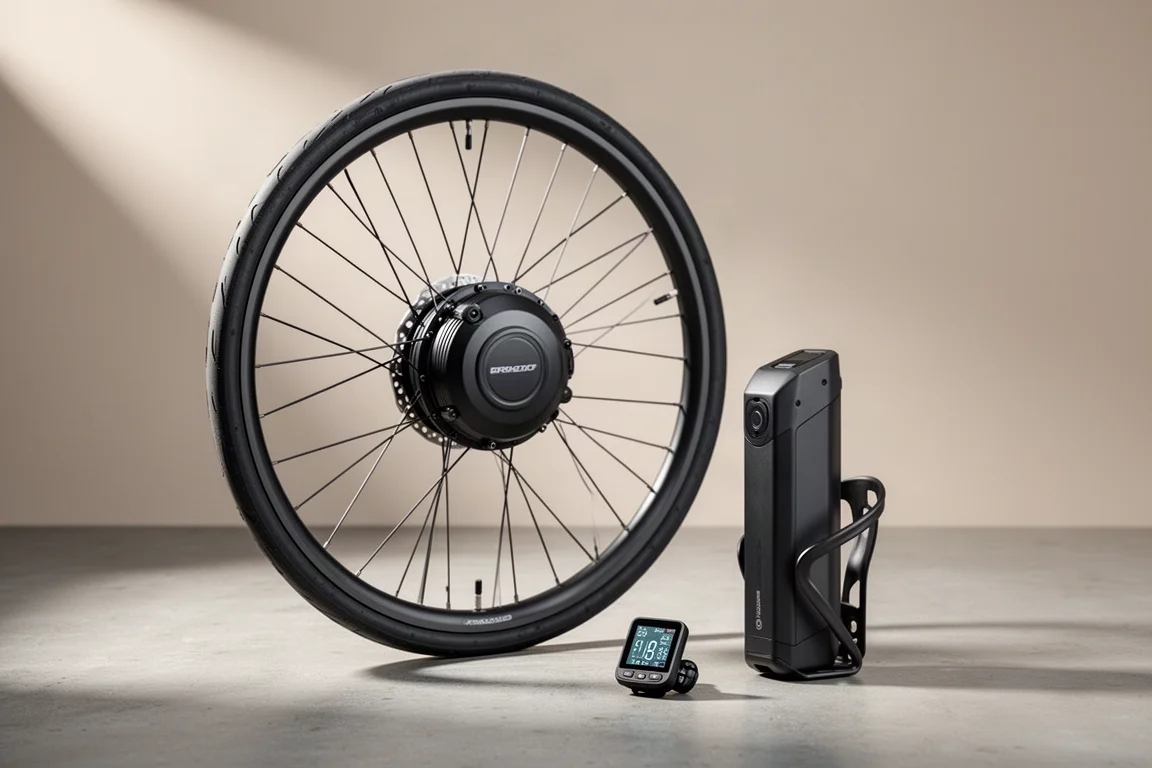
Boost E-Bike Conversion Kit Review: A Tidy Route to an Electric Bike
A rear-wheel conversion kit that turns a sound drop-bar bike into a smooth, cleanly finished electric bike for far less than a new one.
E-Bike Conversion Kits
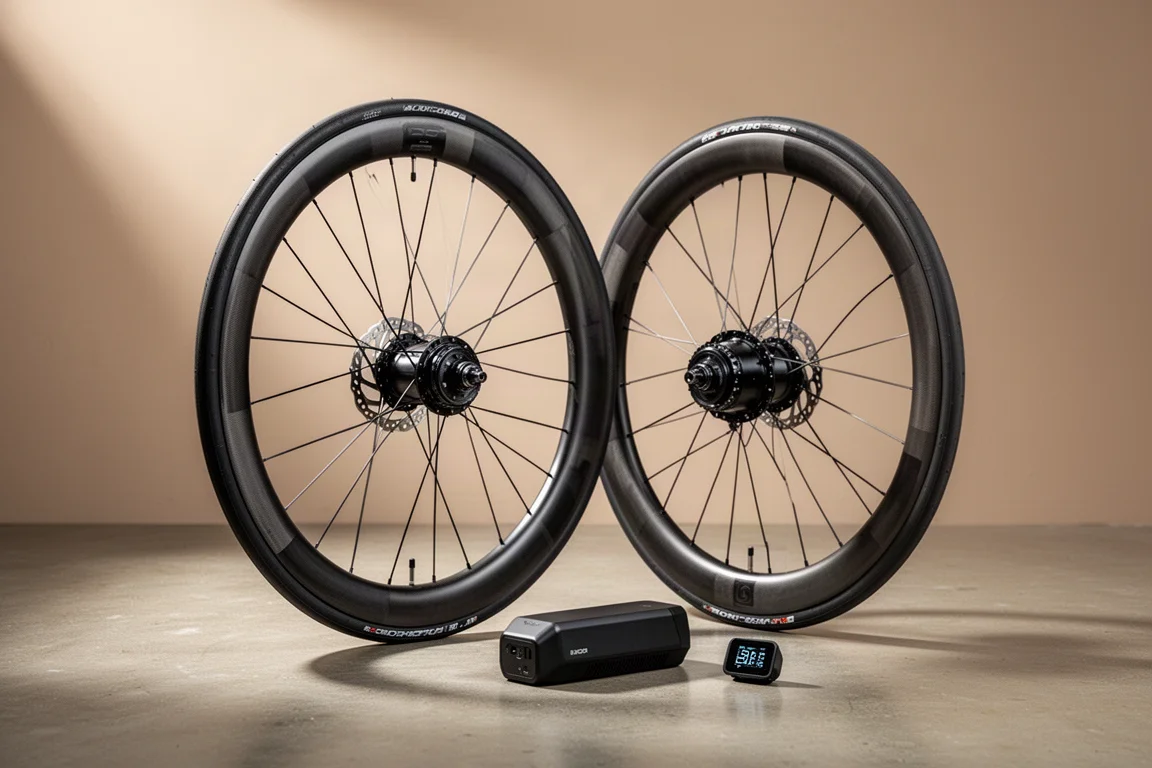
Eagor E-Bike Conversion Kit Review: Carbon Wheels for Road Bikes
A carbon road bike conversion kit with smooth, quiet assistance, a real weight penalty, and one serious fault that keeps it from a recommendation.
E-Bike Conversion Kits
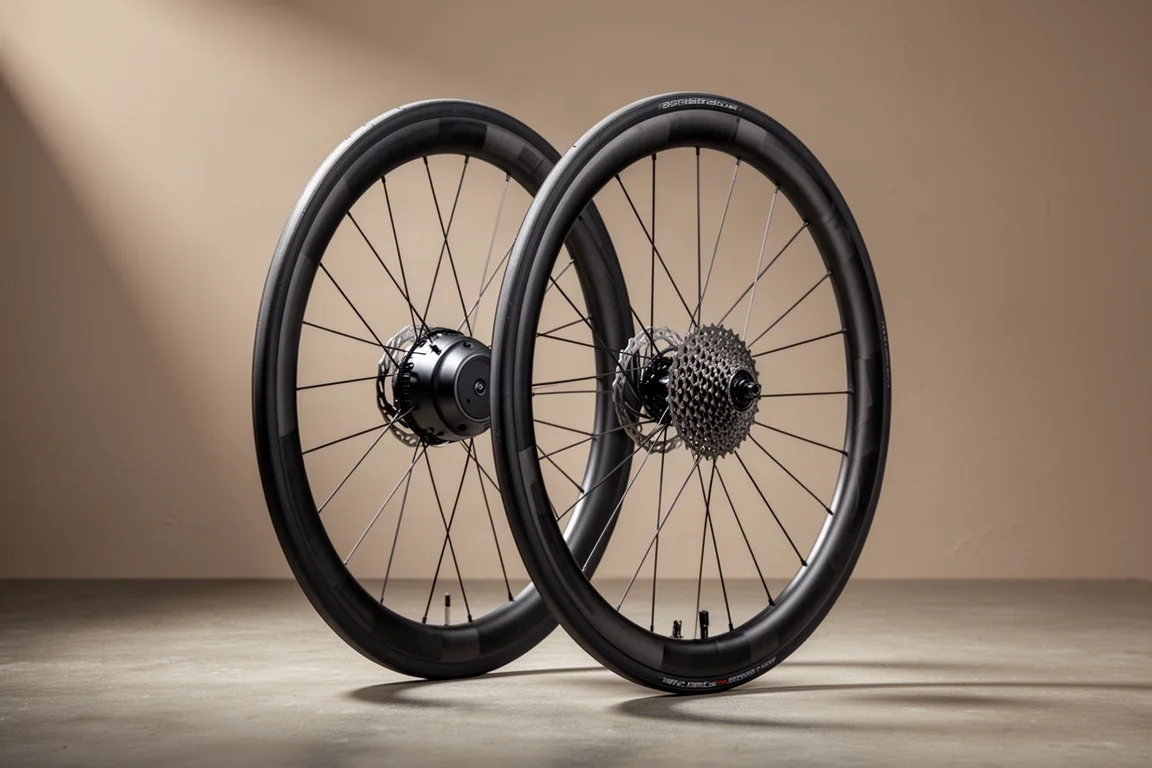
Eagor Electric Wheel Set Review: A Carbon Road Bike Conversion Kit Under the Microscope
A carbon electric wheel set that turns a road bike into an e-bike, with strong ride feel, a real range test, and one serious unresolved problem.