E-Bike Conversion Kits
Boost E-Bike Conversion Kit Review: A Tidy Route to an Electric Bike
A rear-wheel conversion kit that turns a sound drop-bar bike into a smooth, cleanly finished electric bike for far less than a new one.
Introduction
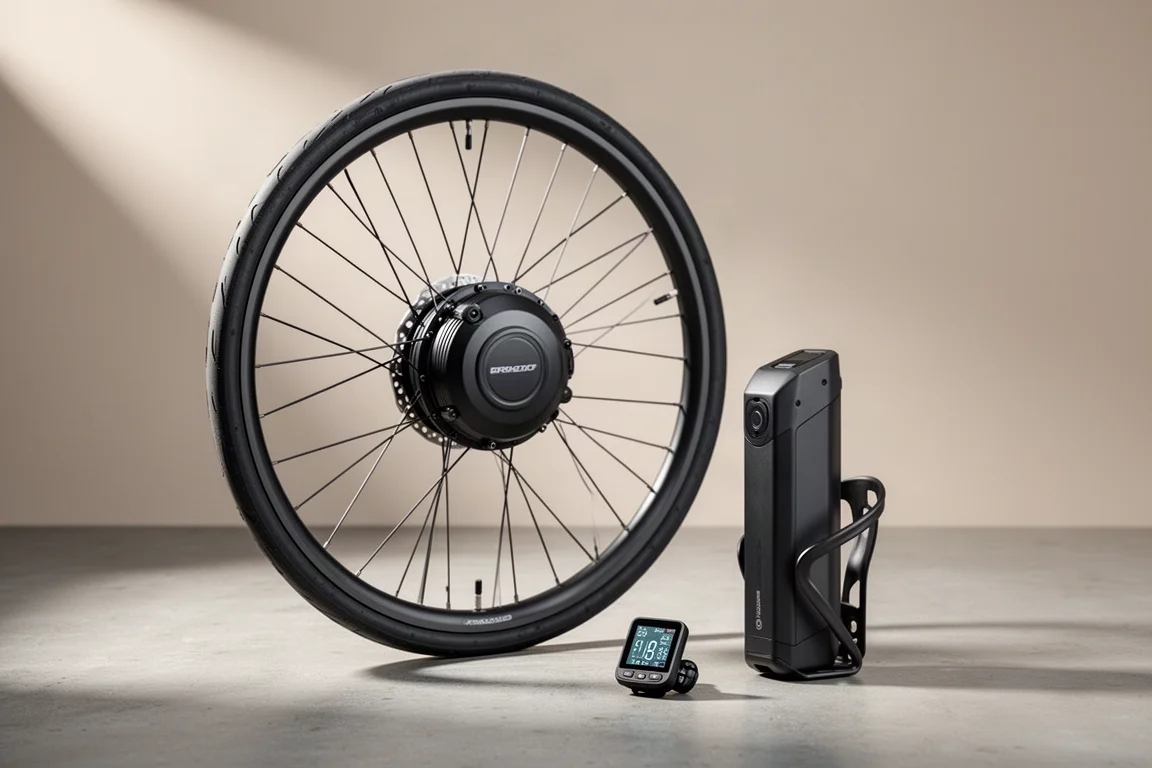
Turning a bike you already own into an electric bike is one of the more sensible ways to add motor assistance without paying new e-bike money. The Boost conversion kit is a rear wheel system built to suit almost any drop-bar bike, and the process is considerably more approachable than the phrase “e-bike conversion” tends to suggest.
The numbers make the case on their own. A used cyclocross bike with hydraulic disc brakes and 1x gearing was picked up for £300, and the Boost conversion system costs £649. Adding the optional wireless display at £59 brings the build to just over £700, or roughly £1,000 for a complete electric bike once the donor bike is included. The finished machine weighed around 14.5kg, with the system itself adding about 4kg.
What stands out afterwards is how ordinary the bike looks. There is no bulky external controller, no loose harness flapping around the frame, and no obvious visual cue that this is a conversion rather than something that left a factory that way. For riders who like the bike they already own, that restraint matters as much as the motor itself.
Who This Kit Is For
This kit is aimed at riders who already have a sound bike and would rather electrify it than replace it. Drop-bar bikes are the focus here, which covers commuters, gravel and cyclocross frames, and the many older road bikes that still ride well but no longer match a new e-bike on price.
It also suits anyone with a hilly route or a short daily trip. Assistance on climbs is where the system earns its keep, and a commute of a couple of miles each way is comfortably within the battery’s reach. Riders who want a low-effort, tidy electric bike without a second charger, second lock and second set of everything will find the logic appealing.
What it is not designed for is a frame with hidden damage. Before anything is fitted, the frame needs to be checked for corrosion, cracking or other structural problems. A conversion only makes sense on a bike that is fundamentally solid.
Main Strengths: A Smooth, Subtle Ride
The most impressive part of the Boost system is how the power arrives. Assistance builds gently over about a second rather than snapping on, and once it is there the delivery stays even. There is none of the surging forward that makes some conversions feel crude, where the bike lurches ahead of the rider instead of working with them.
That smoothness makes the finished bike feel closer to a production e-bike than a kit. On rolling terrain and steady climbs the assistance is quiet and easy to ride around, and on a hilly route it noticeably reduces the effort needed to keep moving. The motor is rated at 250W, which is modest but well matched to the way the power is metered out.
Hills are where this becomes genuinely useful. On a route with repeated climbs, the assistance does most of the work and leaves the rider free to spin rather than grind. For a hilly commute, that is the difference between arriving fresh and arriving wrecked.
Installation and Setup: What the Conversion Involves
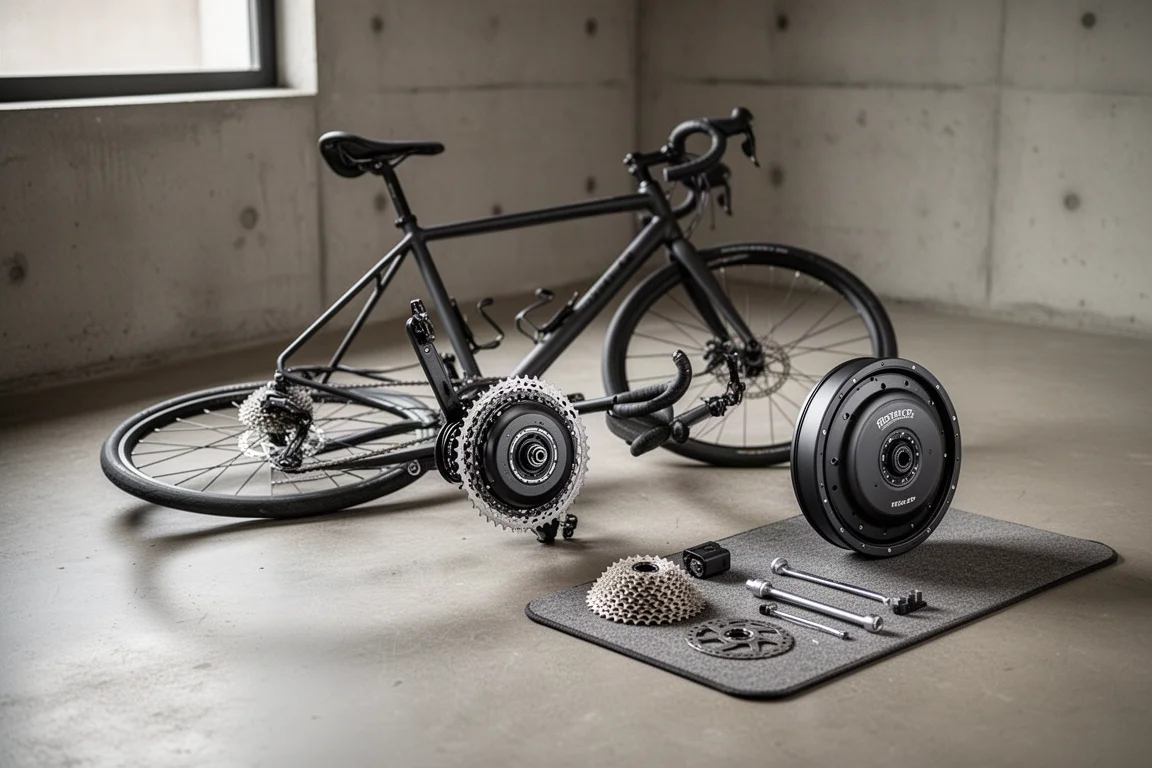
The conversion begins with the rear wheel coming off and the usable parts moving across. The tyre and the disc brake rotor transfer from the old wheel to the new one, so there is no need to buy replacements. The cassette is a different story on some bikes, and a wheel with an XD driver means the original cassette cannot be reused, so a new one is required.
Fitting the new wheel is easier with the bike upside down on the floor, which lets the wheel drop into place and line up without being held in mid-air. Boost supplies a quick release with the motor. Once the wheel is in, the disc brake caliper usually needs a slight realignment because the rotor sits in a marginally different position.
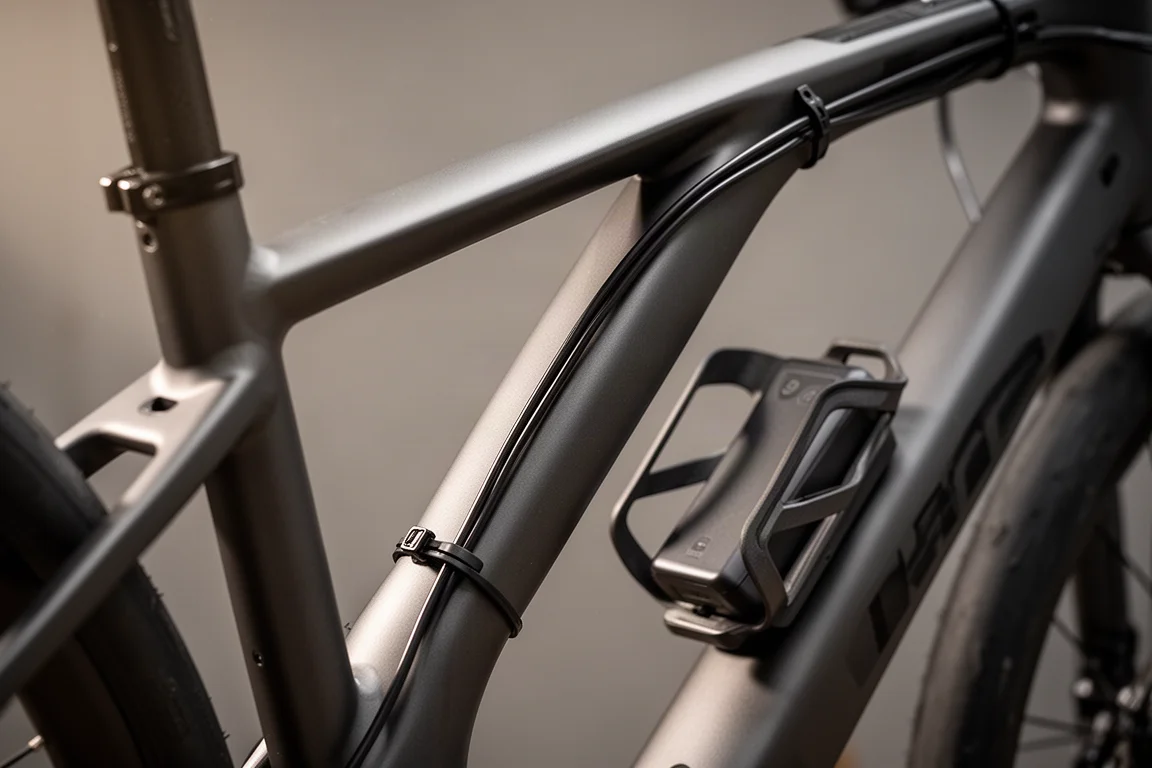
The battery cradle mounts to the standard bottle cage mounts on the frame and houses the controller, so all of the electronics sit neatly underneath. The battery then slides into the cradle and a single plug connects it to the motor. A short length of cable runs between the two and is tidied with zip ties so it stays clear of the rotor and the cranks. From there, the system runs in its default mode, or you can adjust power settings in the app, or add the optional wireless display for on-the-go control. The display connects wirelessly, so there are no extra cables running to the bars.
Compatibility and Drivetrain Notes
The motor is compatible with both quick release and through axle frames. Boost supplies a quick release as standard, and for a through axle frame it can provide a new skew with different spacers and adapters, which means the system can follow a rider to a newer bike rather than being tied to one frame.
Drivetrain support centres on Shimano, with a broad spread of cassette options available and 7 to 11 speed covering the majority of setups, plus some 12 speed Hyperglide cassettes. Because the kit replaces the rear wheel, anything unusual at the hub, such as an XD driver, needs a new cassette to go with it.

The practical takeaway is that compatibility is broad but not universal. A standard bottle cage mount on the frame is needed for the battery cradle, and the frame itself has to be structurally sound. Checking those two things first avoids most surprises.
Things to Consider Before Buying
The gentle power delivery is a deliberate design choice, and it will not suit everyone. Riders who want a strong shove away from the line will find the assistance understated, and it takes a moment to engage rather than responding instantly. That restraint is what makes the bike feel natural, but it is a different character from a punchy hub kit.
Weight is the other trade-off. The system adds around 4kg, which is noticeable when lifting the bike onto a rack or carrying it up steps. The battery is a 252Wh unit with an enhanced battery management system, an additional physical fuse in the circuitry and branded cells, and Boost states it meets applicable UK regulations. Range is quoted at roughly 30 to 35 miles, though hills, riding style and tyre choice all affect that figure, and draggy tyres cost more range than slick ones.
Finally, the wireless display is an optional extra at £59, and the battery should be charged with the charger supplied with it. Budget for both the kit and the accessories you actually want before committing.
Buying Advice: Cost, Range, and Real-World Value
At £649 for the conversion system, or just over £700 with the wireless display, the Boost kit lands well below the cost of a comparable new electric bike. The reference point here is a complete machine for around £1,000 including a £300 donor bike, against the £2,500 to £3,000 that an equivalent off-the-shelf e-bike would typically cost.
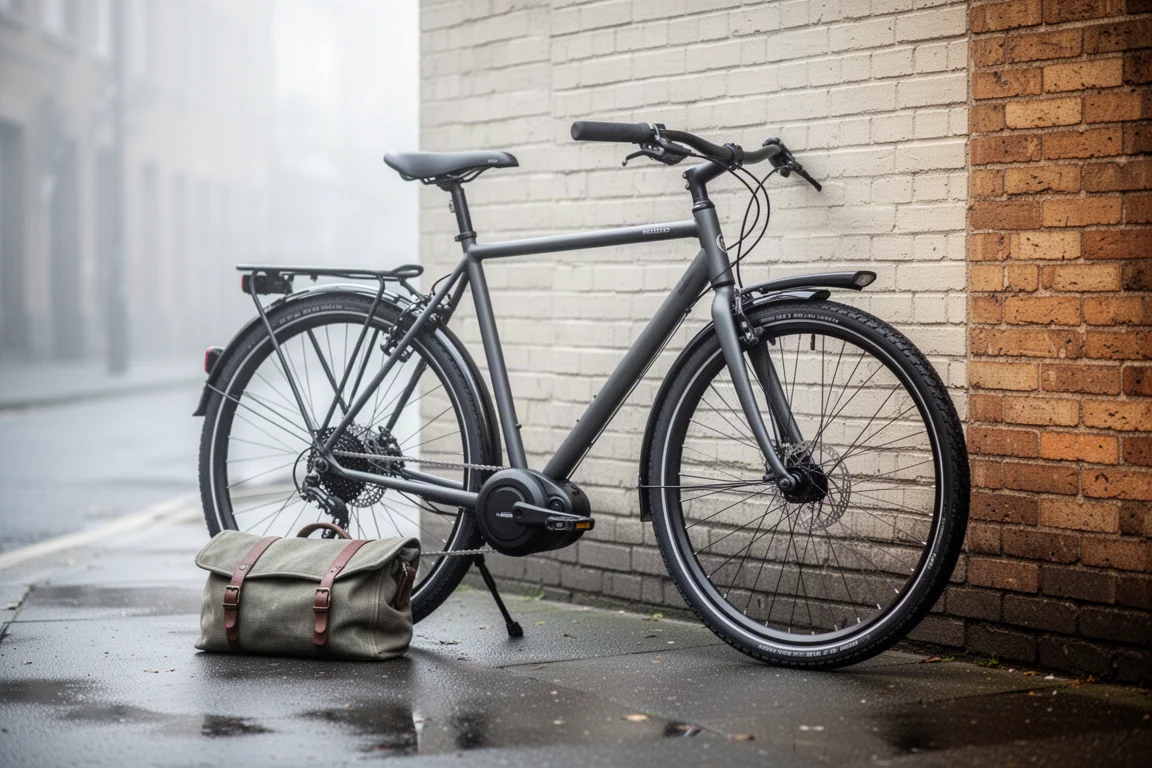
Range is realistic for everyday use rather than long touring. At 30 to 35 miles, a short commute of a couple of miles each way works out to roughly a week of riding between charges. The battery slides out of its cradle easily, so it can be carried inside and charged at a desk, which makes the whole system far more practical for anyone without a garage or power point near where the bike is parked.
The strongest case for this kit is a rider with a good frame sitting unused, or a bike they already love that could use assistance on the climbs. Add up the kit, any cassette the drivetrain requires and the display if you want it, compare that against a new e-bike, and the decision usually becomes straightforward.
Conclusion
The Boost conversion kit does two things well: it is simple to install for a rear wheel system, and the finished bike looks like it was meant to be electric. Smooth, subtle assistance makes it pleasant to ride on hills and around town, and the removable 252Wh battery keeps charging simple.
It is not the choice for riders chasing an aggressive surge of power, and the 4kg weight gain is real. For anyone with a sound drop-bar bike, a hilly route and a sensible budget, though, converting makes far more financial sense than replacing a perfectly good bicycle.
Product link
View more details for Boost E-Bike Conversion Kit
This product is mentioned in the review. Check the specifications, options, and compatibility before buying.
View more details for Boost E-Bike Conversion KitFurther reading
Related Reviews
E-Bike Conversion Kits
Best E-Bike Conversion Kits: Swytch Max Plus, Boost and Skarper Compared
Three e-bike conversion kits compared on fit, power delivery, range and price, plus the pitfalls to check before you convert an old bike.
E-Bike Conversion Kits
Eagor E-Bike Conversion Kit Review: Carbon Wheels for Road Bikes
A carbon road bike conversion kit with smooth, quiet assistance, a real weight penalty, and one serious fault that keeps it from a recommendation.
E-Bike Conversion Kits
Eagor Electric Wheel Set Review: A Carbon Road Bike Conversion Kit Under the Microscope
A carbon electric wheel set that turns a road bike into an e-bike, with strong ride feel, a real range test, and one serious unresolved problem.