Speakers
SVS Titan vs KEF R11 Meta: Four Tower Speakers Compared
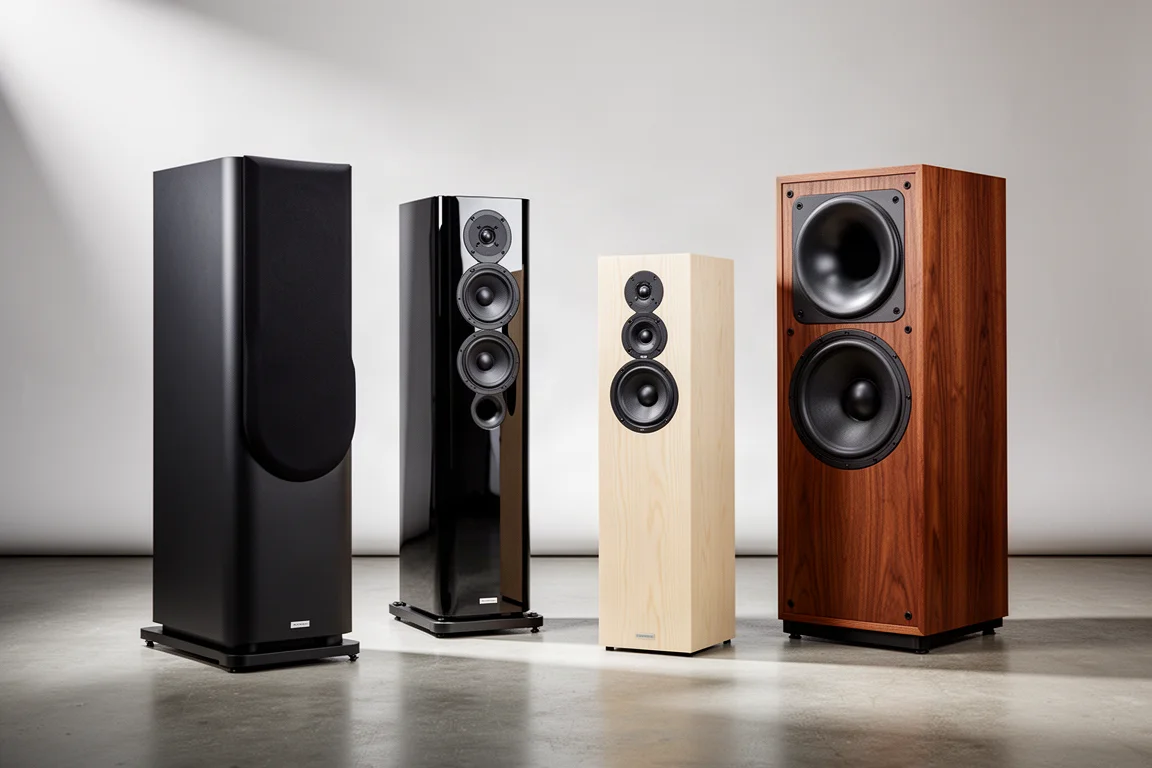
A practical comparison of four floorstanding speakers, from the lively SVS Titan and the neutral KEF R11 Meta to the Q Acoustics Concept 50 and Klipsch Cornwall IV.
Introduction
Four tower speakers, one long comparison, and no single winner for every listener. The headline is that the SVS Titan does not knock the KEF R11 Meta off its perch. Weighed equally across build quality, measured behaviour, and subjective listening, the R11 Meta remains the better overall loudspeaker. It keeps its place in a personal top five, and the Titan does not take a slot in it.
What the Titan does offer is a different set of priorities. It is a bigger, more open, more energetic speaker, and it is not difficult to fall for if your listening leans toward punch, scale, and a little extra energy up top. Alongside those two, the Q Acoustics Concept 50 and the Klipsch Cornwall IV cover listeners whose priorities sit elsewhere, whether that is dialogue intelligibility or a wide, heritage style presentation.
This comparison looks at what each speaker does well, where each one asks more of you, and which type of listener each one suits.
How These Four Speakers Compare
Three things carry most of the weight: build quality, objective behaviour, and subjective listening. Weigh them equally and the KEF R11 Meta comes out ahead of the SVS Titan. Weight them differently, or weight your own preferences more heavily, and the conclusion can reasonably change.
Treble behaviour matters more than the numbers suggest. Most speakers begin rolling off before 20 kHz, and it is not unusual for an in-room response to sit 1 to 3 dB below reference at 20 kHz, with the roll-off beginning somewhere around 1 to 2 kHz. Reaching 16 kHz convincingly often means overshooting 20 kHz in the design. A gradual, consistent roll-off tends to be read as clarity and intelligibility, while a faster drop can read as brightness or as a loss of air.
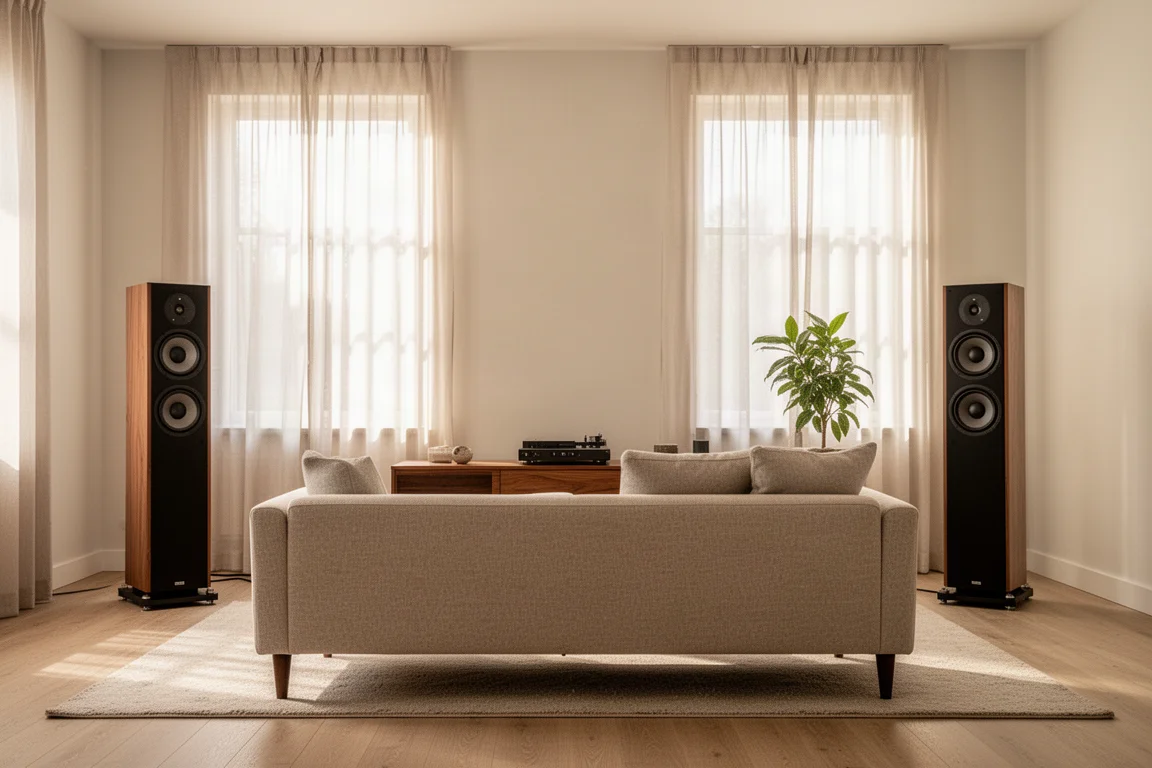
Bass behaviour splits the group as well. Boundary reinforcement can shift low-frequency output by roughly 2 to 3 dB depending on how close a speaker sits to a wall, which matters a great deal for a speaker that is already hot in the lower registers.
One broader note: the performance gap between flagship speakers and more affordable high-level models keeps narrowing. What separates them is less about raw capability and more about the character a designer chooses to build in.
SVS Titan: Big, Dynamic, and Easy to Drive
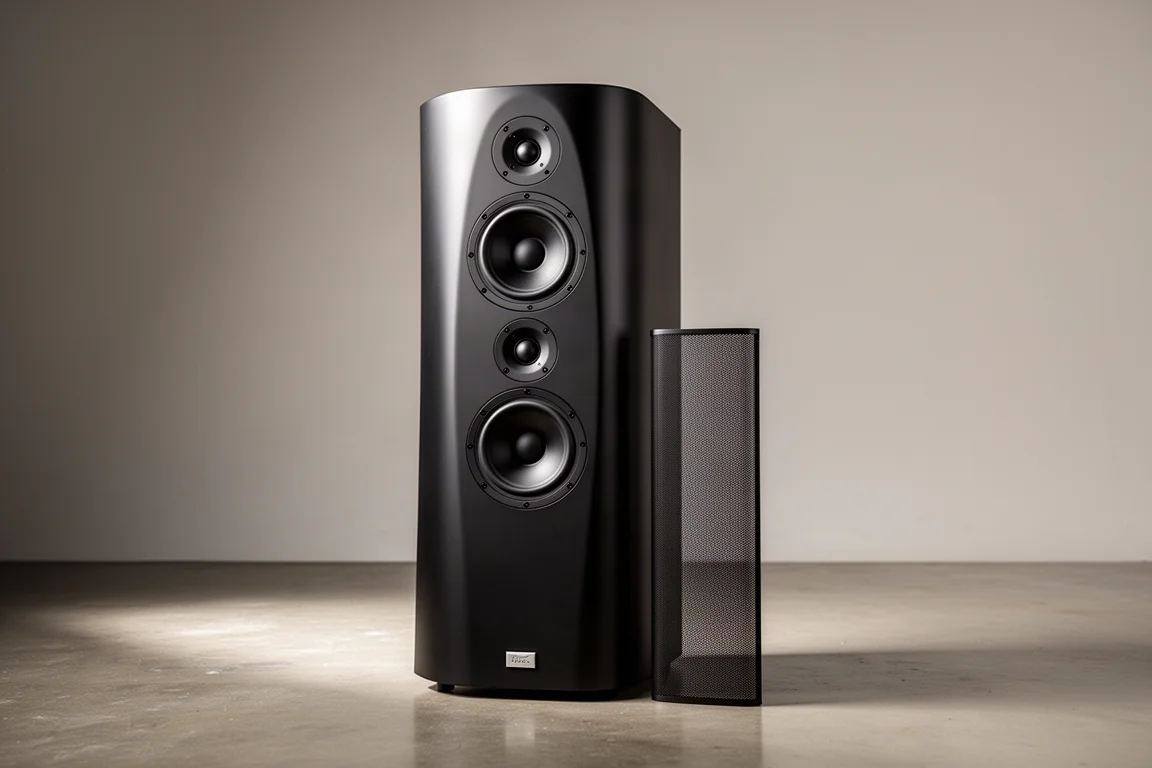
The Titan is a lively speaker. Its cabinet is not as inert as the KEF R11 Meta’s, and that shows up as a slightly less exacting, more energetic character. Where the R11 Meta aims for reference monitor neutrality with scale, the Titan aims for fun with a surprising amount of precision.
Its treble response stays essentially flat to around 5 to 6 kHz and then drops. That produces an immediate treble hit and a faster decay, which reads as vibrancy and instant dynamics. Electronic music, rock, cymbals, and kick drums all benefit. Listeners who are sensitive to that region may find it too much, depending on the room and the setup.
There is also a deliberate dip in the 1 to 2 kHz region, which SVS has confirmed is intentional. Dips of that kind are often the product of crossover behaviour or of voicing, and they create sonic contrast, so the initial treble hit arrives with a little more emphasis.
Bass is where the Titan separates itself from the R11 Meta. It plays lower, and in a home theater context it can carry the low end without a subwoofer. Its low-frequency output is already around 3 to 4 dB hot in places, so placement matters. Placed closer than about 12 inches to a wall, the bass becomes too much; 12 inches or more is the safer starting point.
Driving them is easy. The manual suggests starting at least 8 feet back, which is worth taking seriously in a small room, because nearfield use is not the Titan’s strength. Verticality is another consideration. Seated 8 feet or further back, standing above roughly 5.5 to 6 feet can shift the presentation, so multi-level stadium seating is not ideal.
In a phantom center arrangement, dialogue sits slightly behind the front baffle and reads as coming from the screen rather than from the speakers. A matching center channel was not available during this comparison, so phantom center was the only option tested. For big action films with a capable modern receiver, the Titan delivers a bold, punchy, genuinely entertaining performance.
KEF R11 Meta: The Neutral Reference With Scale
Taken as a whole, the R11 Meta is the better speaker here. Its cabinet is more inert, its behaviour is more exacting, and it delivers that reference studio monitor character with genuine scale. It measures better, and it stays in a top five.
The trade-offs are real. Its bass is harder and more expensive to control and it rewards good amplification. Even properly dialled in, it does not play as low as the Titan, and in a home theater it will want a subwoofer. It is also a large speaker, slightly taller than the Titan, so it is not a discreet option.
Its treble roll-off starts around 1 to 2 kHz, but it is so gradual and consistent that the speaker still reads as extended. That gradualness is why the R11 Meta never comes across as shrill. It backs off just enough to stay civil while keeping the top end linear.
Dialogue is a clear strength. Vocals come slightly forward and sound more detailed and precise than they do through the Titan. Across long listening sessions, the R11 Meta never once left a line of dialogue unintelligible.
As a critical listening tool it is also the more demanding and more revealing of the two, which is exactly why it works so well as a reference for evaluating other gear.
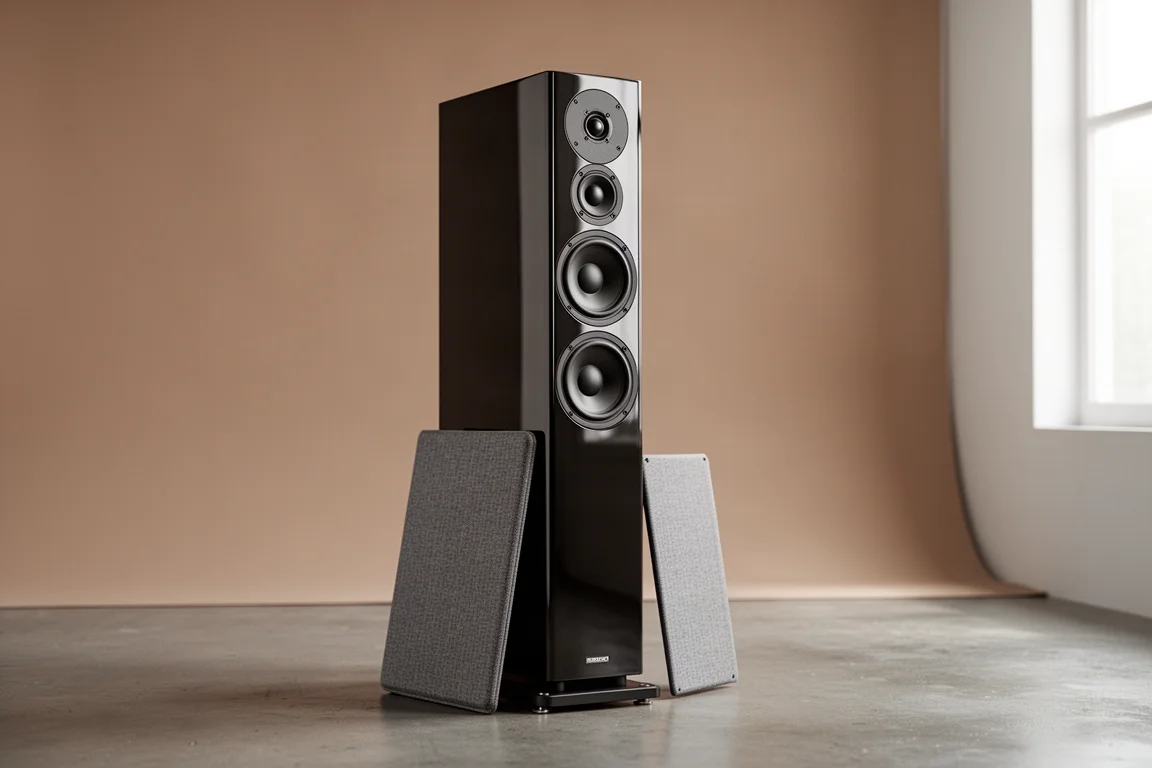
Q Acoustics Concept 50: Dialogue First
For dialogue clarity, the Concept 50 sits above the SVS Titan. Its roll-off is gradual in the same way the R11 Meta’s is, which keeps it consistent, intelligible, and free of brightness. Nothing about it feels forced or over-emphasised.
If dialogue intelligibility is the priority, this is the one that keeps coming back to the top of the list. It handles music well too, but its strongest argument is how reliably it keeps speech clear and easy to follow.
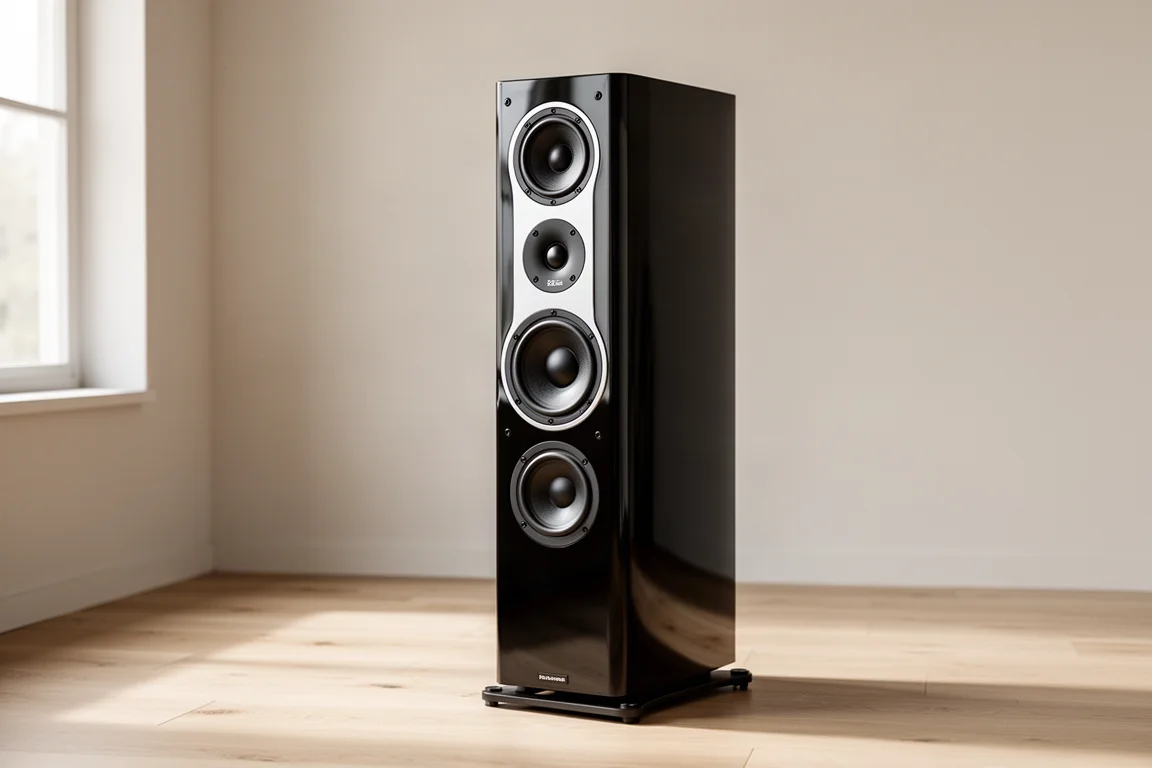
Klipsch Cornwall IV: Heritage Scale With Tuning Potential
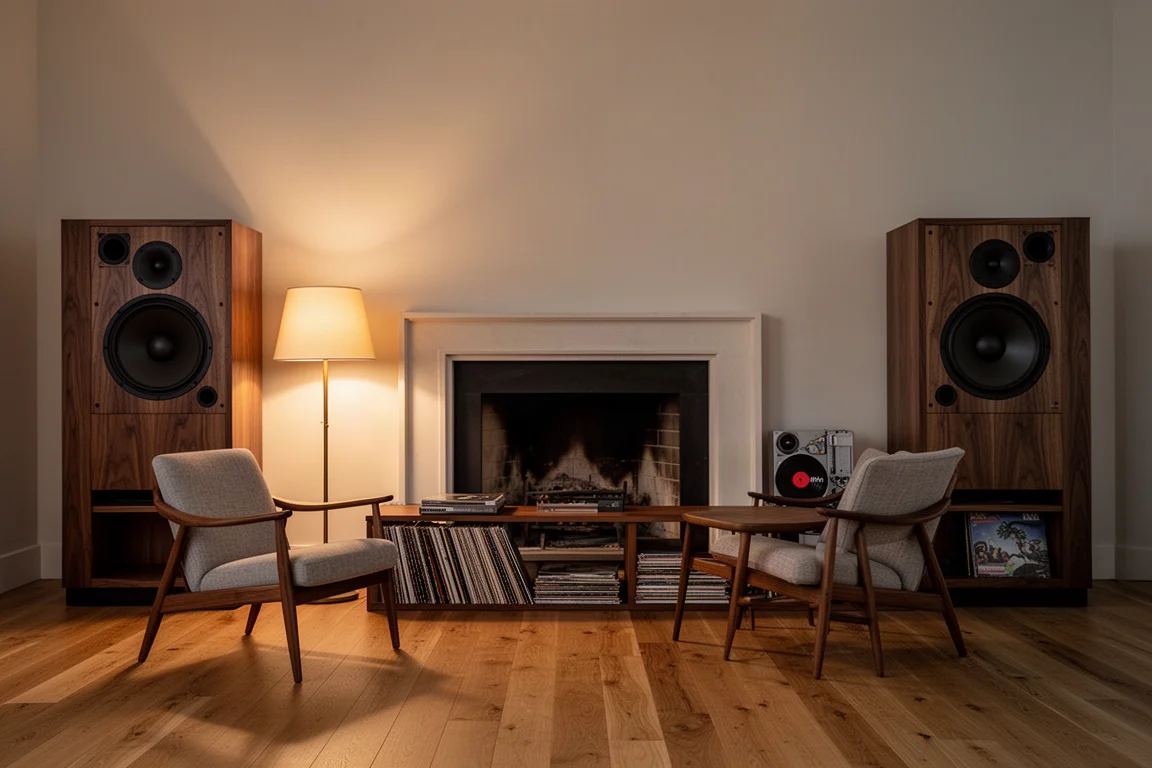
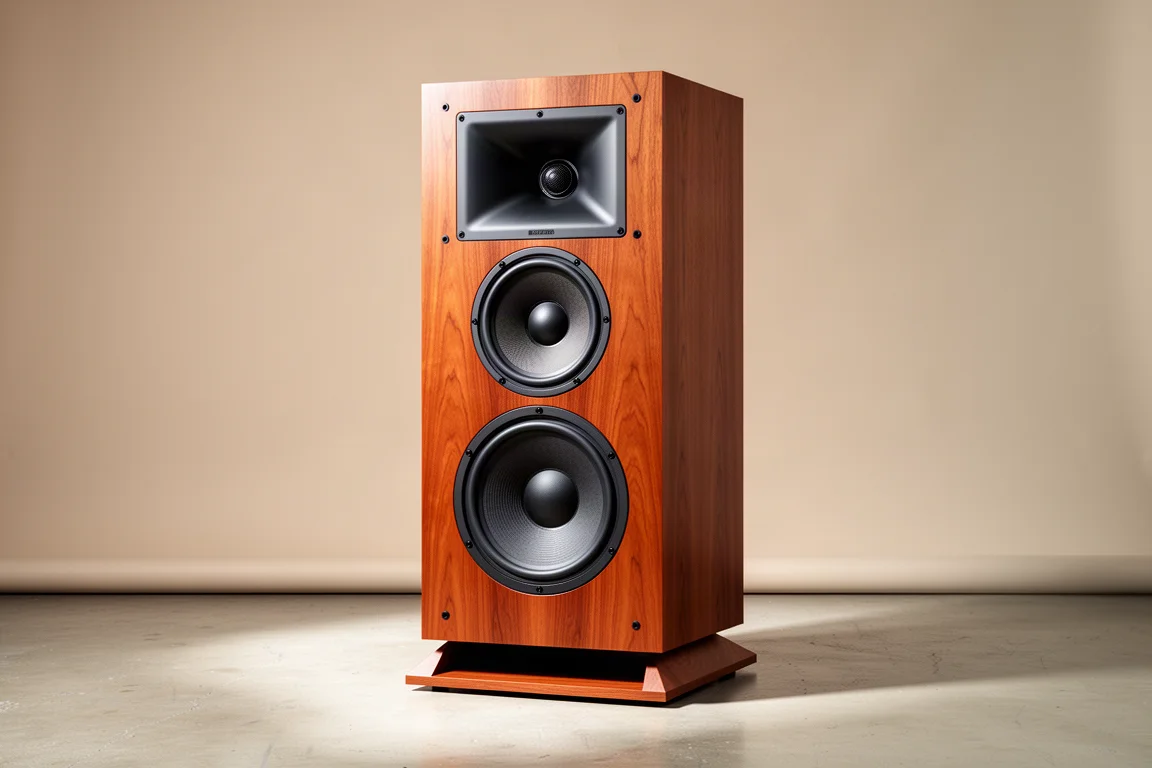
The Cornwall IV and the Titan share a family resemblance in intent: both excel at a big, bold, expansive sound. Where they differ is in how much work they ask of the owner.
The Cornwall IV is at its best after tuning with tools such as miniDSP and room correction software. Once dialled in, it gains a little more focus and is arguably even quicker than the Titan. Getting there takes effort, and the Titan does not ask for that effort in the first place.
For listeners who enjoy that process, the Cornwall IV rewards it. For listeners who would rather plug in and listen, the Titan is the more direct route to a similar sense of scale.
Both approaches are legitimate. The choice comes down to whether you want to tune a speaker into shape or start from a presentation that already suits the room.
Room, Power, and Placement Considerations
Room size and amplification change the answer less than people expect. If cost of ownership is removed from the equation entirely, for example because you already own separates that comfortably handle 2 ohm and higher loads, the recommendation does not change. The R11 Meta still asks more of an amplifier, and the Titan is still the easier load.
Placement is the bigger variable. The R11 Meta benefits from space, and the Titan does not like being pushed against a wall. Closer than about 12 inches, its bass output becomes excessive for many rooms. That said, rooms differ, and a placement that is too much in one space can be perfectly acceptable in another.
The 8-foot listening distance suggested for the Titan is worth heeding. If your room cannot provide that, a smaller speaker or a different design may serve you better.
Buying Advice: Matching the Speaker to the Listener
Preference decides more than any measurement here. Across a mixed diet of music and film, roughly 70 percent of listening leaned toward the Titan, but that is a preference outcome rather than an overall verdict. The R11 Meta is still the better speaker when everything is weighed equally.
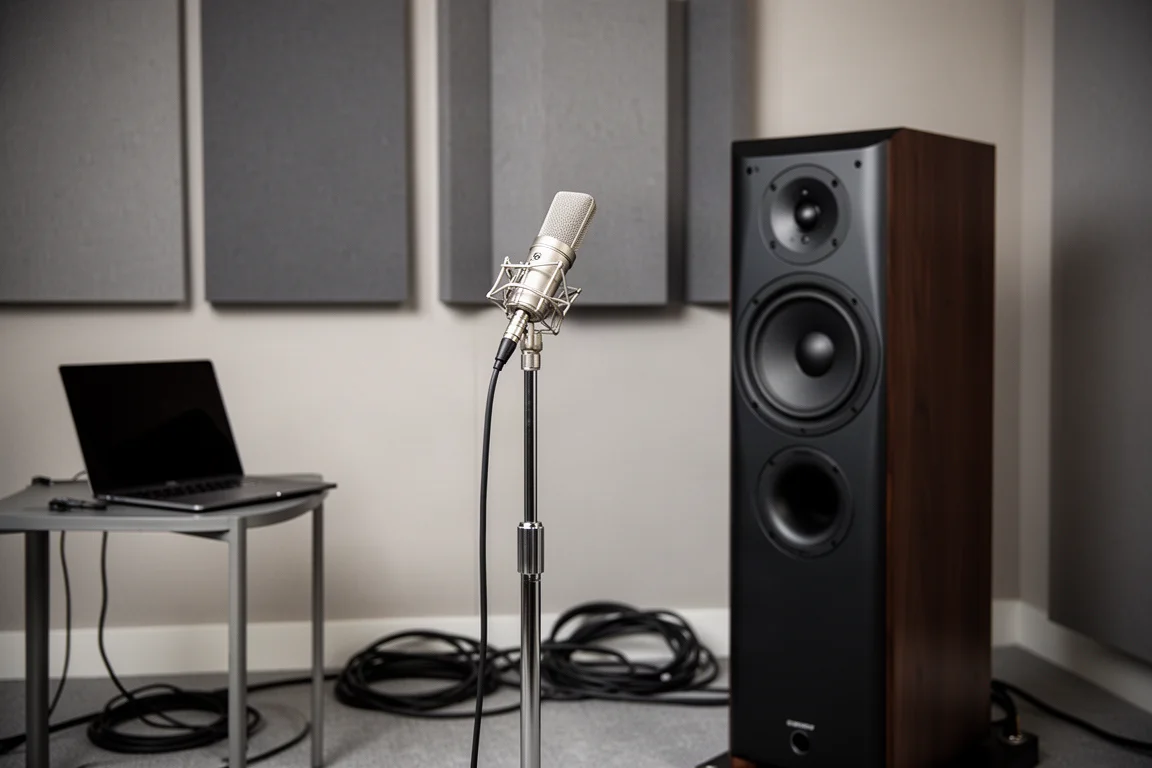
A practical way to choose comes down to your habits. If dialogue intelligibility is the priority, look at the Q Acoustics Concept 50 or step up to the KEF R11 Meta. If big action films and low-end presence matter most, and you would rather not add a subwoofer, the SVS Titan is the stronger fit. If you enjoy tuning a system to your taste, the Klipsch Cornwall IV gives you the most room to work with. If you care about measured behaviour above all, expect the Titan’s response to divide opinion.
There is also no urgency to treat any of these as final. New models arrive, and a speaker that suits you today may be superseded by something that suits you better later.
Conclusion
None of these four speakers is a straightforward failure or a straightforward win. The KEF R11 Meta remains the most complete package when build, measurement, and listening are weighted equally, and it stays the most useful reference for critical listening. The SVS Titan is the more entertaining speaker for a large share of everyday listening, and the easier one to drive. The Q Acoustics Concept 50 is the safest choice for dialogue, and the Klipsch Cornwall IV is the most rewarding if you are willing to tune it.
Match the speaker to the room, the amplification, and the way you actually listen, and any of the four can be the right purchase.
Further reading
Related Reviews
Speakers
13 Under-the-Radar Speakers Still Worth Buying
Thirteen speakers that quietly stayed in production while newer models took the spotlight, from budget bookshelf pairs to a full-size tower.
Speakers
Arendal 1528 Monitor 8 Review: A Three-Way Standmount With Serious Dynamic Headroom
A three-way standmount speaker with extremely low distortion, high output capability, and deep bass for its size, plus the setup details worth knowing before buying.
Speakers
Arendal 1723 Monitor S Review: A Compact Monitor With Serious Ambition
A close look at the Arendal 1723 Monitor S, a compact MTM monitor with a waveguide-loaded tweeter, an HDF cabinet, and flexible ported or sealed operation for music and home theater.