Speakers
Arendal 1528 Monitor 8 Review: A Three-Way Standmount With Serious Dynamic Headroom
A three-way standmount speaker with extremely low distortion, high output capability, and deep bass for its size, plus the setup details worth knowing before buying.
Introduction
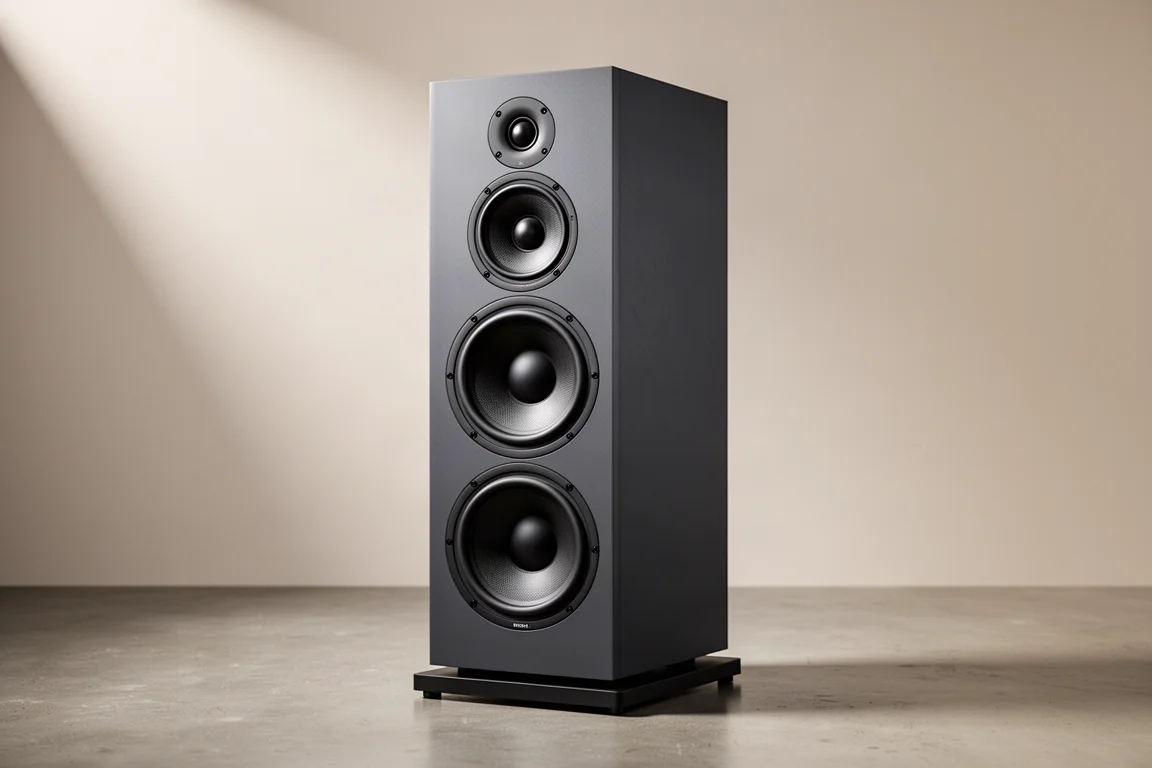
The Arendal 1528 Monitor 8 is a three-way standmount speaker that arrived with a great deal of expectation attached to it. Plenty of listeners assumed the praise was marketing noise. The measured performance tells a more interesting story: strong linearity, unusually high output capability, and very low distortion for the money. At roughly $5,900 USD per pair it sits in a bracket where compromises usually show up somewhere, and here they mostly do not. It also happens to be a good-looking speaker.
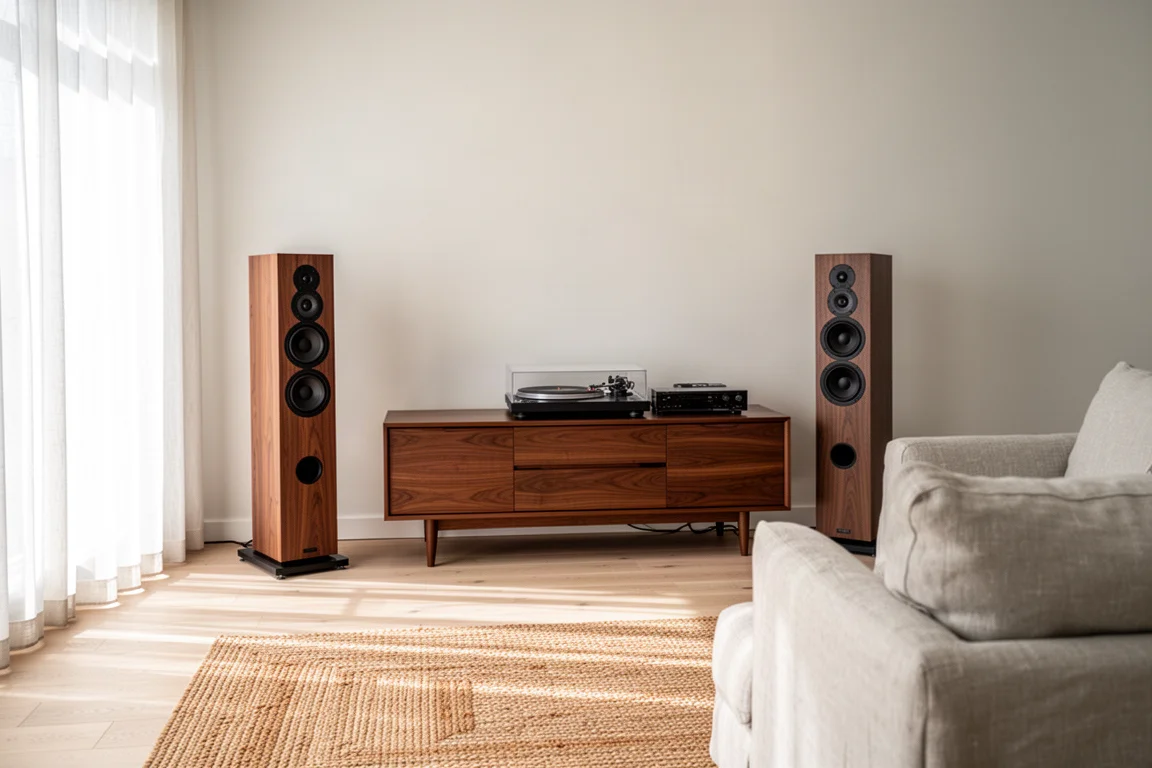
The cabinet stands about 32 inches tall and weighs approximately 104 lbs (47 kg) each, a figure that comes directly from its high-density fiberboard construction. The driver complement is a 28 mm tweeter, a 5 inch midrange, and two 8 inch midbass drivers, with a nominal impedance of about 4 ohms and a specified sensitivity of about 85 dB. It can be run ported or sealed, and a bung is supplied so the rear port can be closed off when a sealed alignment suits the room better.
Who This Speaker Is For
This is a speaker for listeners who care about dynamic capability first. It plays very loud with extremely low distortion and extremely low compression, which suits both two-channel listening at realistic levels and home theater duty where peaks arrive without warning. It also suits listeners who prefer a smooth, unexaggerated top end over a treble lift that can be mistaken for resolution.
Because the bass alignment is generous for a standmount, it also appeals to anyone trying to avoid adding a subwoofer. In most rooms it reaches down to around 35 Hz, which covers the majority of music. Listeners who want genuine output below 40 Hz will still want to supplement it.
It is a less natural fit for rooms where the speakers must sit tight against the wall in ported mode, and for setups with wide multi-row seating where a very tall vertical sweet spot is a priority.
Main Strengths
The headline strength is dynamic capability. Harmonic distortion measured at 86 dB, 96 dB, and even 102 dB is extremely low. Multitone distortion is extremely low, long-term compression over 30 second durations is extremely low, and short-term dynamic compression is extremely low as well. In those two areas this speaker is among the best measured at its price, and it outperforms some speakers costing roughly twice as much.
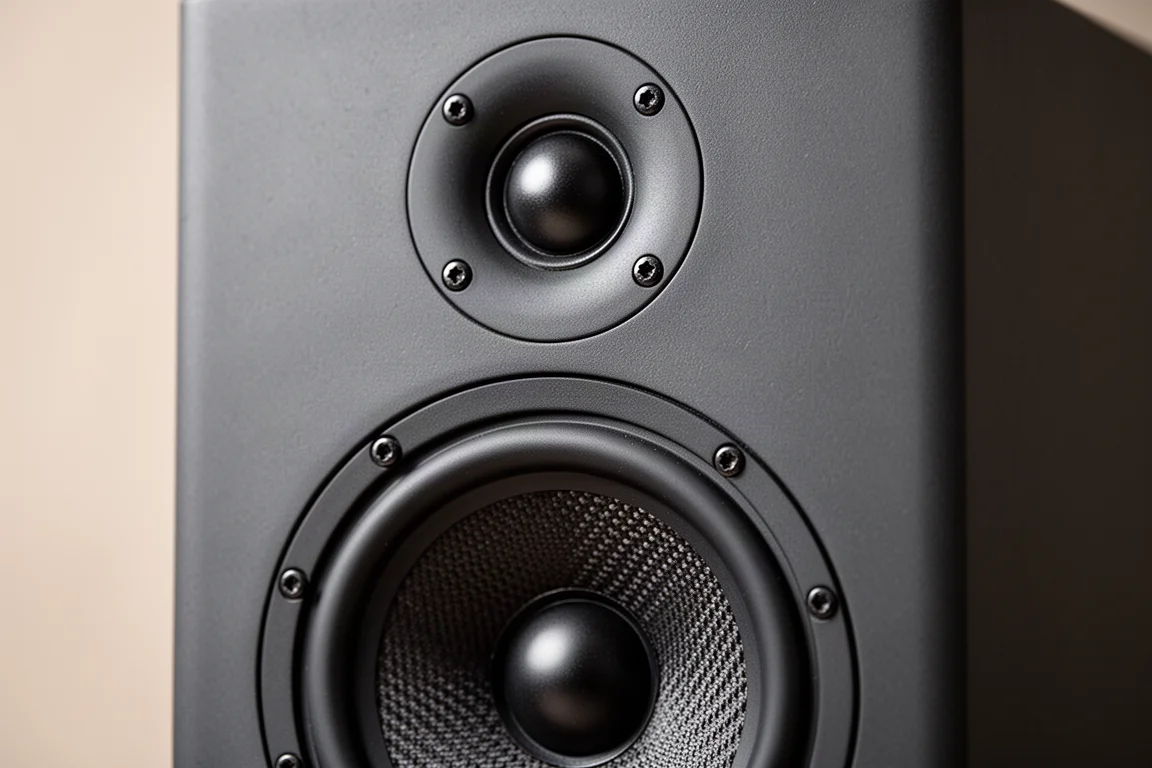
Bass extension is the second strength. Measured sensitivity is 84.4 dB, F3 lands at 41 Hz, and F10 sits at 26 Hz, with estimated in-room extension reaching about 35 Hz. The high frequency response is very smooth as well. It is not bright, shrill, or sharp. Listeners moving across from a speaker with an elevated top end may initially read that as a loss of detail, but it is the more honest presentation.
Stereo width is about plus or minus 60 degrees horizontally, which is a comfortable sweet spot for most rooms, and the horizontal contour plot tracks consistently from one side to the other. The result is stable imaging without a narrow, fussy listening window.
Things to Consider Before Buying
The clearest tonal caveat is a dip in the midbass region around 100 Hz. Direct comparison against a neutral reference monitor made it obvious: the missing energy takes some of the chestiness out of male vocals. It is not as pronounced as on some other speakers, but it is measurable and it shows up in side-by-side listening.
There is also a flare in the upper midrange and lower treble, tied to diffraction around 2 kHz that shifts directivity slightly between 1.5 kHz and 2 kHz. Absorption on the sidewalls helps smooth this out. Without it, the upper midrange can sound a touch forward. Home theater listeners in particular may want to plan for a little treatment.
Two minor resonances appear in the data. One near 400 Hz is high in Q and low in amplitude, and the other near 800 Hz is wider but negative in amplitude, so it reads as a dip rather than a peak and did not stand out during listening. Burst decay shows some midrange decay around 500 Hz and 1 kHz at relatively low levels. Vertically, the listening axis should place your ears between the tweeter and the midrange below it, which gives roughly plus or minus 20 degrees of usable vertical radiation. That is worth knowing before committing to multi-row seating.
Setup, Positioning, and Amplification
Placement matters more here than on many standmounts. In ported configuration the speaker wants to sit well away from the wall. Placed too close, the low end turns boomy. Sealing the port with the included bung is the practical fix when the room forces a closer position.
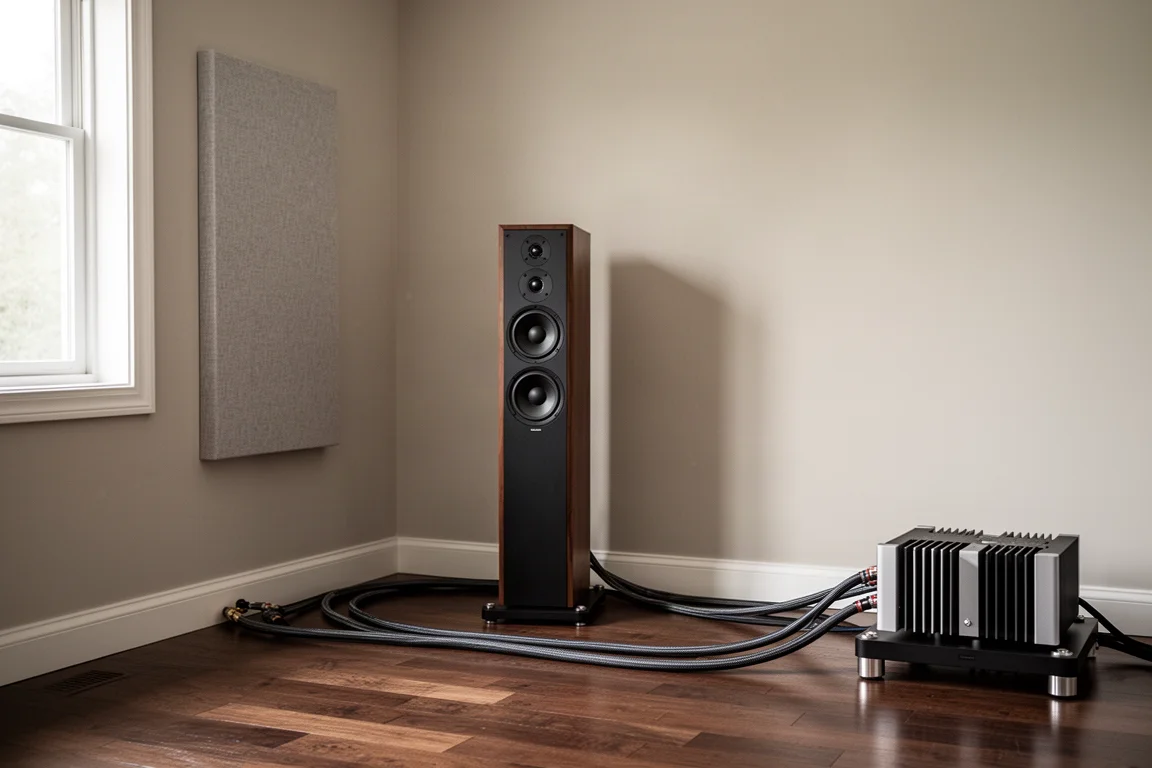
Aiming is worth experimenting with. Starting with the speakers pointed directly at the listening position and then working outward, a toe-out of about 10 degrees produced a good balance between stereo width and overall linearity.
Amplification deserves attention. A 4 ohm capable amplifier is the baseline requirement. With a class AB design, make sure it can drive a 4 ohm load comfortably, because the EPDR dips to about 1.9 ohms in two separate places, and running the speaker full range may introduce heating concerns. A class D amplifier is likely to be a simpler match. Finally, budget for stands: the cabinets weigh about 104 lbs each and need proper support, and the high-density fiberboard construction is the reason they are so heavy.
Buying Advice
The value case is straightforward. A speaker at roughly $5,900 per pair that matches or beats far more expensive designs on distortion and compression is doing something right, and the bass extension means many owners can skip a subwoofer entirely. The midbass dip and the upper midrange flare are real, but both are modest and both can be managed with placement, a port bung, and a little sidewall absorption.
It is worth knowing what else lives nearby. The MoFi SourcePoint 8 retails at about $5,000 per pair and offers a much wider vertical sweet spot, around plus or minus 60 degrees, along with more linear bass down low and no midbass dip. Its high frequency is somewhat more boosted, which can matter in a small reflective room. The KEF Reference One Meta sits closer to $10,000 per pair and delivers better linearity with consistent sound from nearly any seat, but it does not reach as low, so a subwoofer becomes more likely. The Arendal’s advantage over both is the combination of deep bass for a standmount and exceptional dynamic headroom.
Peace of mind is part of the purchase as well. The manufacturer offers an in-home trial through its own website, with the exact window listed there, and return shipping may apply if the speaker goes back. That removes most of the risk from a decision at this level.
Conclusion
The Arendal 1528 Monitor 8 earns its reputation. It pairs high output with extremely low distortion and strong bass extension for a standmount, in a cabinet that looks the part. The caveats, a midbass dip near 100 Hz and a slight upper midrange lift, are manageable rather than disqualifying. For listeners who want a speaker that stays composed at high volumes and does not need a subwoofer to feel complete, this is an easy recommendation, provided the amplifier and the room can support it.
Product link
View more details for Arendal 1528 Monitor 8
This product is mentioned in the review. Check the specifications, options, and compatibility before buying.
View more details for Arendal 1528 Monitor 8Further reading
Related Reviews
Speakers
13 Under-the-Radar Speakers Still Worth Buying
Thirteen speakers that quietly stayed in production while newer models took the spotlight, from budget bookshelf pairs to a full-size tower.
Speakers
Arendal 1723 Monitor S Review: A Compact Monitor With Serious Ambition
A close look at the Arendal 1723 Monitor S, a compact MTM monitor with a waveguide-loaded tweeter, an HDF cabinet, and flexible ported or sealed operation for music and home theater.
Speakers
Best Affordable Speakers 2026: Seven Stand-Mount Picks Worth Hearing
Seven stand-mount speakers plus one compact subwoofer, priced between roughly $500 and $1,500 a pair, with the strengths and system requirements that matter before you buy.