Speakers
Arendal 1723 Monitor S Review: A Compact Monitor With Serious Ambition
A close look at the Arendal 1723 Monitor S, a compact MTM monitor with a waveguide-loaded tweeter, an HDF cabinet, and flexible ported or sealed operation for music and home theater.
Introduction
The $2,000 to $3,000 speaker category is crowded with genuinely capable designs, and the Arendal 1723 Monitor S is one of the more interesting entries in it. Listed at around $2,500, it brings technology usually associated with far more expensive loudspeakers: a waveguide-loaded tweeter, a heavy HDF cabinet, and rhodium-plated copper binding posts. Arendal has announced a price increase effective August 15, so it is worth checking current pricing and availability before ordering.
Who This Speaker Is For
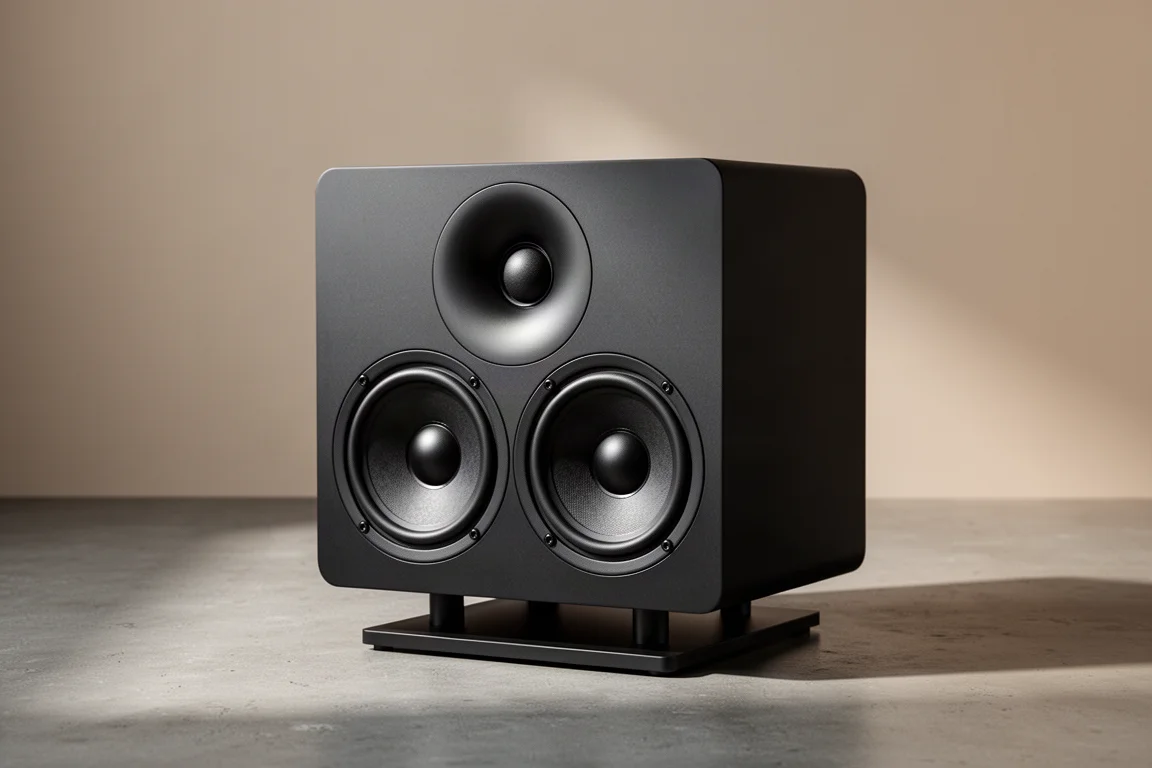
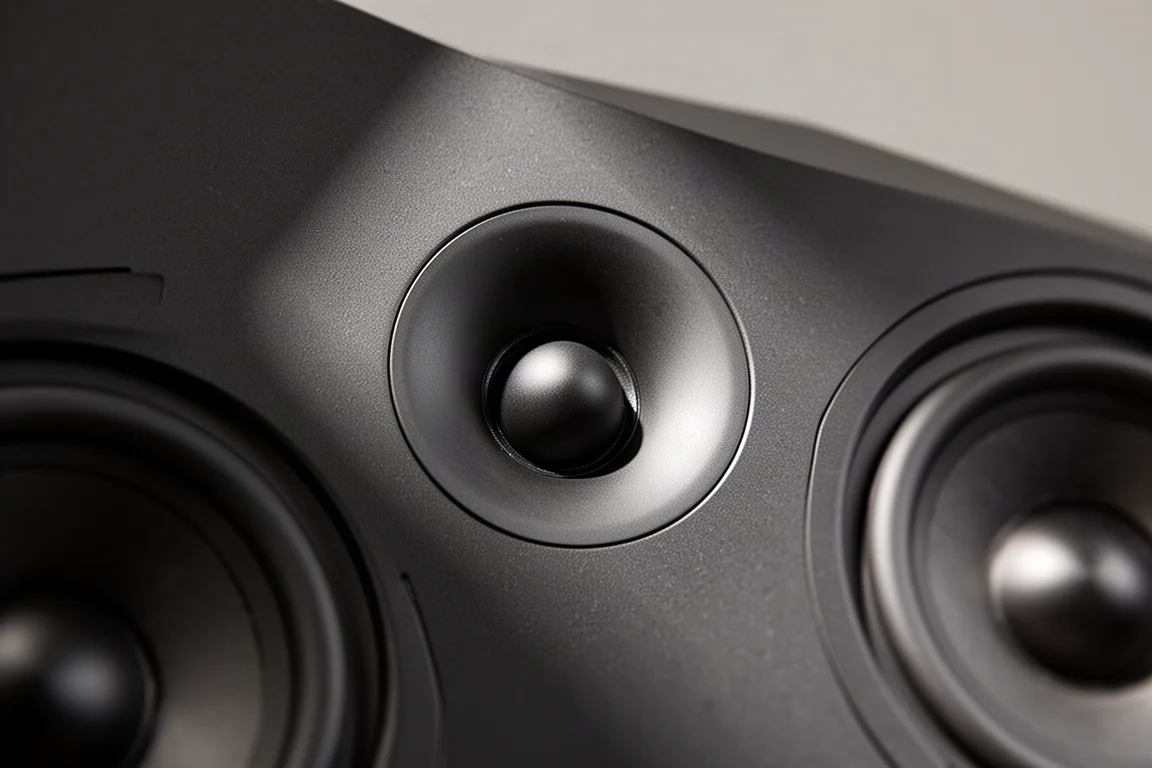
The 1723 Monitor S is the slimmer, smaller version of Arendal’s larger 1723 monitor. It is built for listeners who want a compact speaker that works just as well for music as it does in a home theater system. Its MTM driver layout, two 6.5-inch woofers flanking a 1.1-inch soft dome tweeter, keeps the cabinet narrow enough for a stand, a shelf, or a wall bracket while still delivering the scale and dynamics people expect from a serious compact design.
It suits listeners who plan to pair a compact monitor with one or more subwoofers, who want to tune low-frequency behavior to their room, and who value a neutral tonal balance over a deliberately colored one. It also makes sense for anyone building a home theater around a subwoofer-based bass strategy, where a monitor crossing over to a dedicated subwoofer is often the cleaner arrangement anyway.
On the other hand, if you want a single pair of speakers to deliver deep bass extension on its own, in a large room, without any subwoofer support, this is not the design for that job. The 1723 Monitor S is at its best when the lowest octaves are handled elsewhere.
Main Strengths
Several things stand out about this speaker, from the way it is put together to the way it behaves in a real room.
Tuning and Sound Character
The frequency response is notably flat, with a gentle dip through the upper midrange and a slight lift at the top end. That combination is what gives the 1723 Monitor S its character: midrange presence and vocal nuance without the forward, bright upper midrange that makes some speakers tiring over long sessions. Even at high volume levels, the detail and delicacy hold together.
Because the waveguide allows a low 1,500 Hz crossover, the tweeter handles a generous portion of the upper midrange. The practical result is more transparency and a finer sense of detail, plus a spacious, airy quality in the upper frequencies that adds atmosphere without changing the fundamental tone of the music. Bass in the mid region is quick, punchy, and dynamic, and it stays textured rather than clinical.
Soundstage and imaging are where this model pulls ahead of its larger sibling for many listeners. The presentation projects wide and deep, with a stable phantom center, clean side images, and a clear layering of instruments and voices from the listening position to the speakers.
Placement matters for that effect, but the horizontal off-axis response is strong, so the tonal balance holds up across a normal listening window rather than collapsing the moment you move off the sweet spot. Vertical off-axis behavior is similarly well controlled within the plane of the speaker, which makes the model forgiving of real-world seating.
Cabinet, Finish, and Build Quality
The cabinet is made from HDF rather than the more common MDF, which is a step up in rigidity and a material normally associated with more expensive designs. It measures as an inert enclosure with virtually no audible resonance, which is exactly what you want: the cabinet should disappear and leave only the drivers.
The matte black finish is excellent, and it holds up well in practice. The cabinet has been moved, measured, and even dropped without picking up scratches or dents, which says a lot about how the surface is applied. The binding posts are rhodium-plated copper, and they feel like hardware from a far more expensive loudspeaker, with the solid action you would expect at several times the price.
Arendal backs the speaker with a 10-year warranty and a 60-day trial period, so there is a real window to audition it in your own room and decide whether it works with your system.
Bass, Ports, and Subwoofer Flexibility
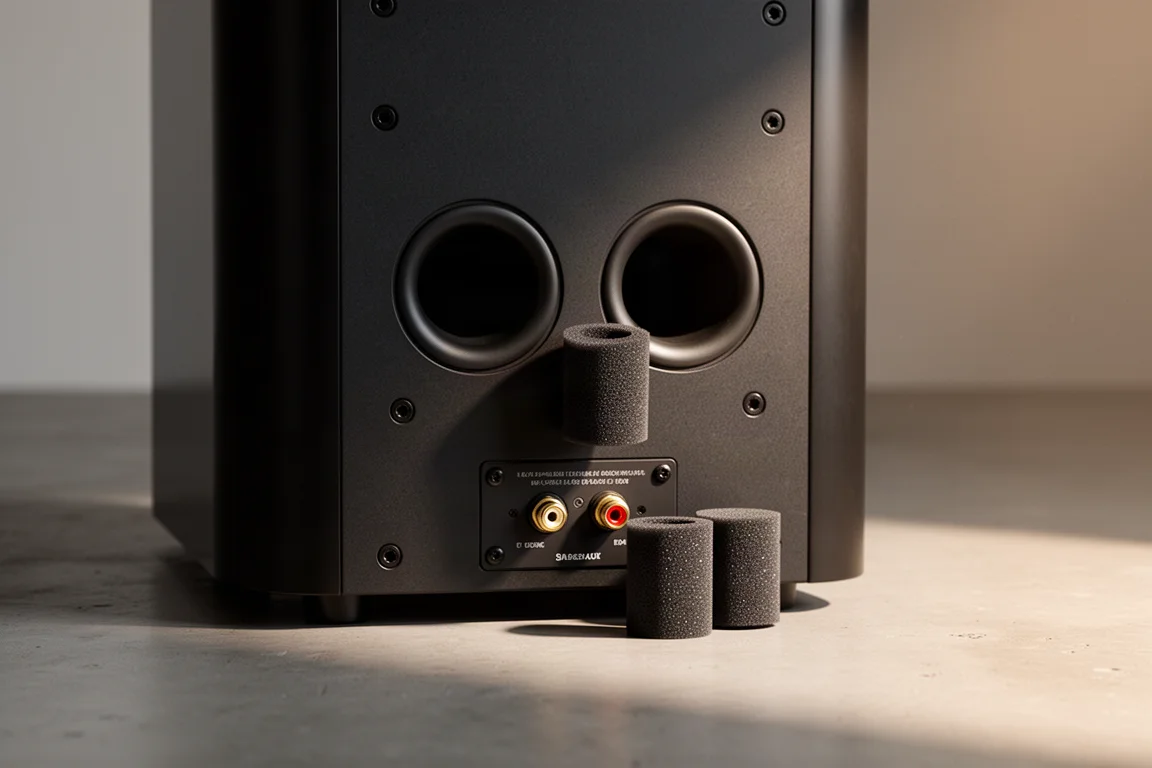
The 1723 Monitor S is unusual in that it can operate as either a ported or a sealed speaker. Two 1.5-inch ports sit on the rear of the cabinet, and Arendal includes foam plugs so you can close them. In ported form the speaker reaches roughly 75 Hz at F3. With the plugs in place you lose some bass output and extension, which is a useful trade in tight installations such as wall mounting or placement close to a wall.
That 75 Hz figure can look underwhelming on paper, but it describes the speaker in isolation rather than in a room. Room gain adds a substantial amount of perceived low-frequency energy, and the mid-bass remains dynamic and punchy enough to satisfy listeners who care about impact. Where the design asks for help is the very bottom of the range: in a large room, or for anyone who wants to feel the lowest octaves, a subwoofer is the right answer. Adding subwoofers also brings a flexibility advantage, since you can tune bass level and placement to suit the room instead of accepting a fixed floorstanding bass response.
For home theater use that arrangement is standard practice anyway, and crossing over to a subwoofer around the point where the monitor naturally rolls off keeps the system clean and dynamic.
Things to Consider Before Buying
A few practical points are worth planning for before you commit to this speaker.
Amplifier Pairing and Power Requirements
The 1723 Monitor S is rated at 88 dB sensitivity, so it reaches loud levels with modest power. What it also does is dip below 4 ohms at some frequencies, in both ported and sealed configurations, so it needs an amplifier that is comfortable with a low-impedance load. Modern home theater receivers generally handle 4-ohm loads, but it is worth confirming the specification with the manufacturer before pairing one.
In a small to medium room, a compact integrated amplifier in the $1,500 range can drive this speaker convincingly, with particularly strong bass authority. That kind of pairing tends to pull the soundstage back slightly, which some listeners will hear as extra depth and layering and others will find less immediate for dialogue in a home theater setting. If you want maximum output in a larger room, a high-power class AB amplifier is a better fit. Fast, neutral class D designs pair especially well because they offset the speaker’s relaxed upper midrange, and reference class D monoblocks deliver the largest soundstage and the finest layering, at a corresponding price. Tube integrated amplifiers add life and presence, though that is a matter of taste rather than accuracy.
Stands and Placement
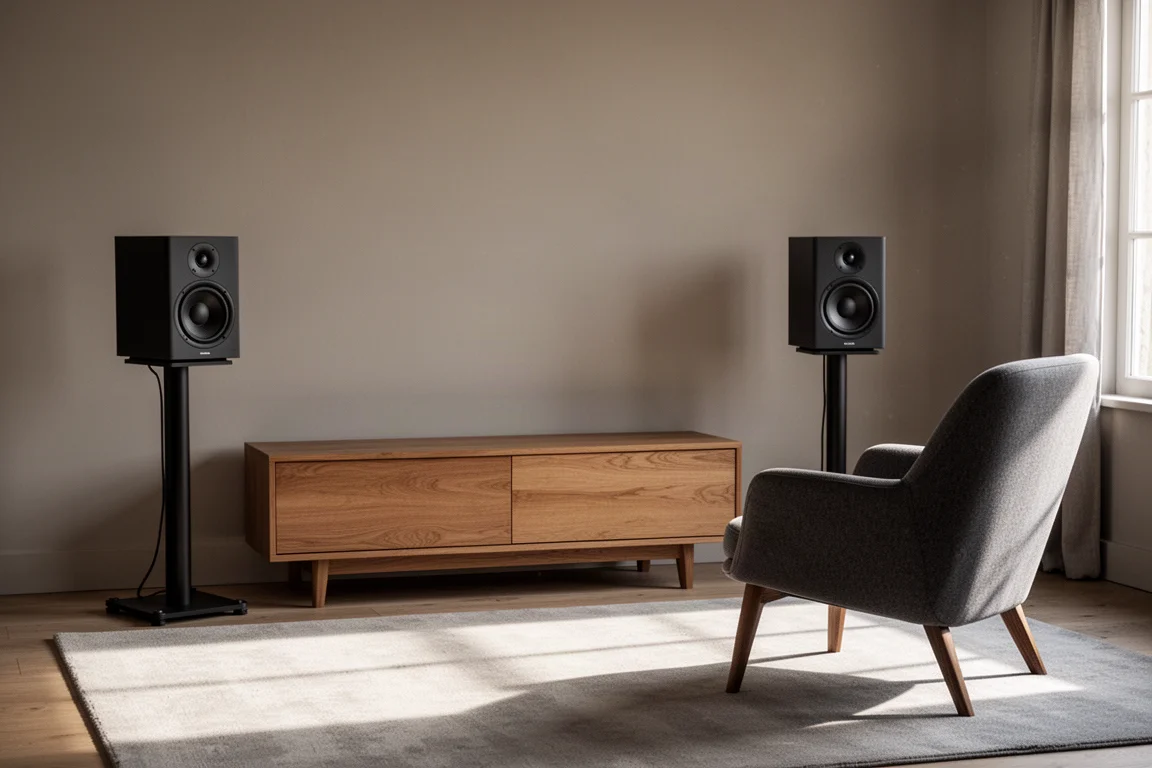
Because the 1723 Monitor S uses an MTM layout, it can be awkward to find a stand that both supports it properly and looks right in a living space. Any competent stand will do the job; the challenge is aesthetic. Arendal does not currently offer a matching stand for this monitor.
Vertical placement matters too. The speaker holds its tonal balance well within its own horizontal plane, and the ideal listening position puts the tweeter at ear height. If your seating places your ears well above the speaker plane, a dip around the 1,500 Hz crossover region becomes audible. Angling the speakers back so the tweeter aims upward solves that, and in most rooms a correctly sized stand with a sensible listening position is all that is needed.
Buying Advice
As a value proposition in the $2,000 to $3,000 range, the 1723 Monitor S is compelling. It borrows the driver technology, cabinet construction, and hardware quality of much more expensive designs, and it pairs that with a tuning that is easy to live with for both music and movies. The 10-year warranty and 60-day trial reduce the risk of buying a speaker you have not heard in person.
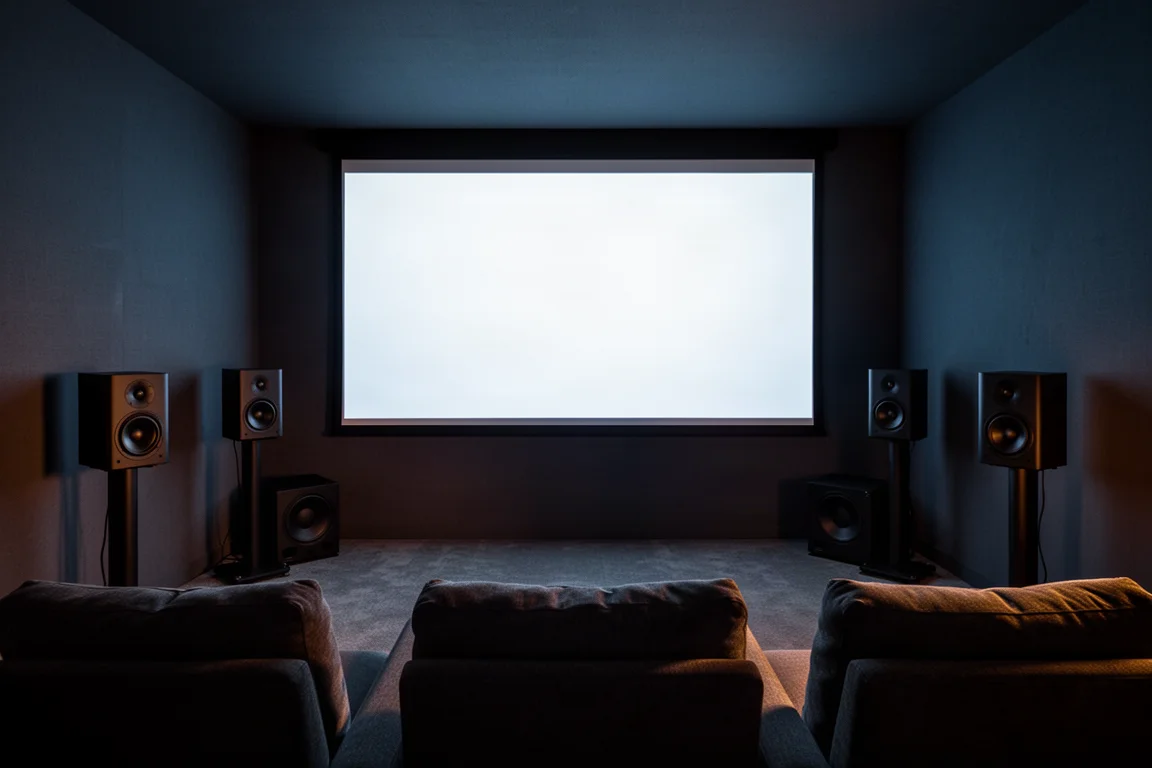
Budget for the system, not just the speaker. A capable amplifier, a solid pair of stands, and a subwoofer if you want genuine low-frequency extension will get far more out of the 1723 Monitor S than a more expensive speaker driven by an amplifier that cannot handle its impedance curve.
If you are weighing it against a floorstanding alternative, the decision usually comes down to bass strategy: the monitor plus subwoofers gives you adjustable, room-tuned bass, while a floorstander gives you a fixed response you either like or you do not. It is also worth checking current pricing, since Arendal has announced an increase, and remembering that the 60-day trial exists precisely so you can test the speaker in your own room.
Conclusion
The Arendal 1723 Monitor S is a compact monitor that behaves like a much more expensive speaker in the ways that matter: neutral tuning, a waveguide that keeps off-axis response consistent, a genuinely inert HDF cabinet, and hardware that feels out of place at this price. Its bass extension is limited on its own, and it wants a competent amplifier that can handle a low-impedance load. Pair it with a subwoofer and a suitable amplifier, and it becomes one of the more convincing options in its price class for both music and home theater.
Product link
View more details for Arendal 1723 Monitor S
This product is mentioned in the review. Check the specifications, options, and compatibility before buying.
View more details for Arendal 1723 Monitor SFurther reading
Related Reviews
Speakers
13 Under-the-Radar Speakers Still Worth Buying
Thirteen speakers that quietly stayed in production while newer models took the spotlight, from budget bookshelf pairs to a full-size tower.
Speakers
Arendal 1528 Monitor 8 Review: A Three-Way Standmount With Serious Dynamic Headroom
A three-way standmount speaker with extremely low distortion, high output capability, and deep bass for its size, plus the setup details worth knowing before buying.
Speakers
Best Affordable Speakers 2026: Seven Stand-Mount Picks Worth Hearing
Seven stand-mount speakers plus one compact subwoofer, priced between roughly $500 and $1,500 a pair, with the strengths and system requirements that matter before you buy.