GPS Sports Watches
Suunto Vertical: First Runs and Honest Early Impressions for Runners
A close look at Suunto's new outdoor-focused flagship, covering solar charging, dual-band GPS, topo maps, battery life, and how it stacks up for runners.
Introduction
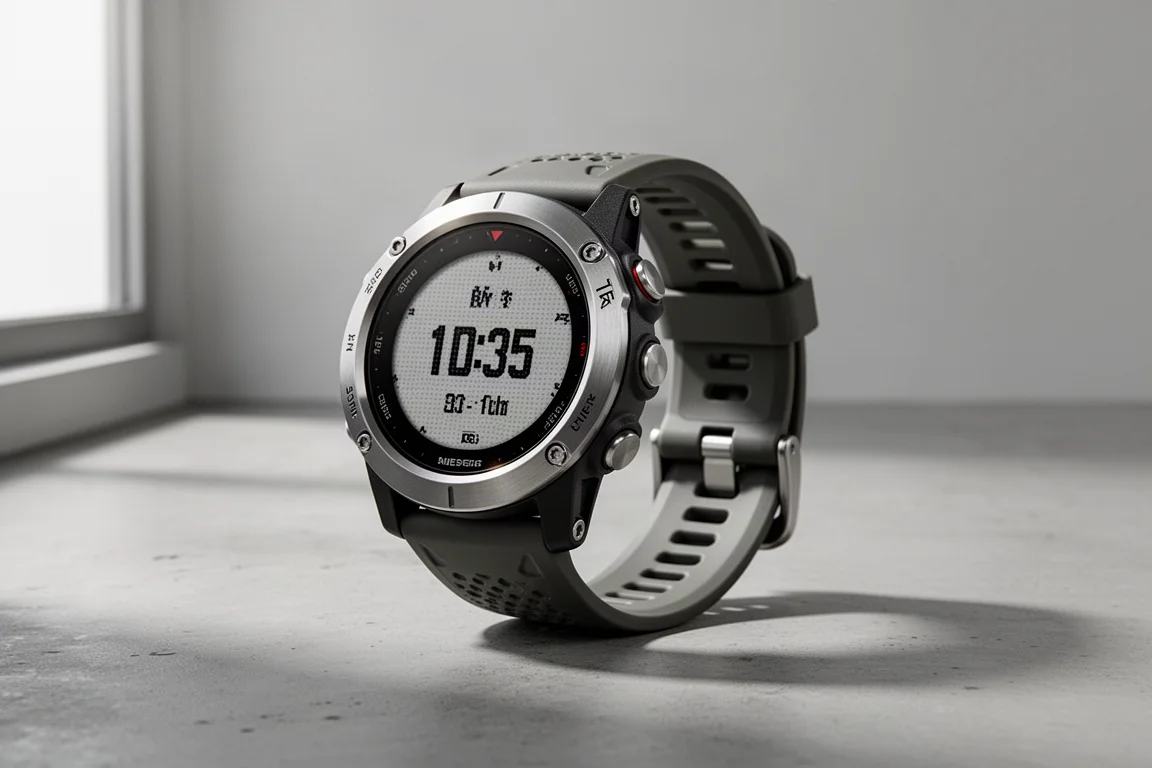
The Suunto Vertical is very much an outdoor-centric watch, sitting alongside the likes of the Garmin Fenix 7 range, Polar Grit X Pro, and Coros Vertix 2. But like every Suunto watch, it tracks your runs, and it brings several features that should appeal to runners: dual-band GNSS support, solar charging, a built-in flashlight, and full topographic maps on the wrist.
At £545 up to £745 depending on the version, it is not cheap. It plays against the Fenix 7 all the way up to the Fenix 7X, sits around the same price as the Coros Vertix 2, and costs more than the Suunto 9 Peak and Peak Pro, and significantly more than the Polar Grit X Pro. This review covers the key design points, running features, battery life, and honest first-run experiences to help you decide whether it deserves your money.
Design and Build
The Vertical is available with either a stainless steel or a titanium bezel, with the titanium option costing more. Both versions use a 49mm polymer case that places it just above the Fenix 7 in size, though not as large as the Vertix 2 or the Fenix 7X. You get three physical buttons, a 22mm removable strap that is refreshingly easy to swap, and a 1.4-inch dot-matrix touchscreen display rather than an AMOLED panel.
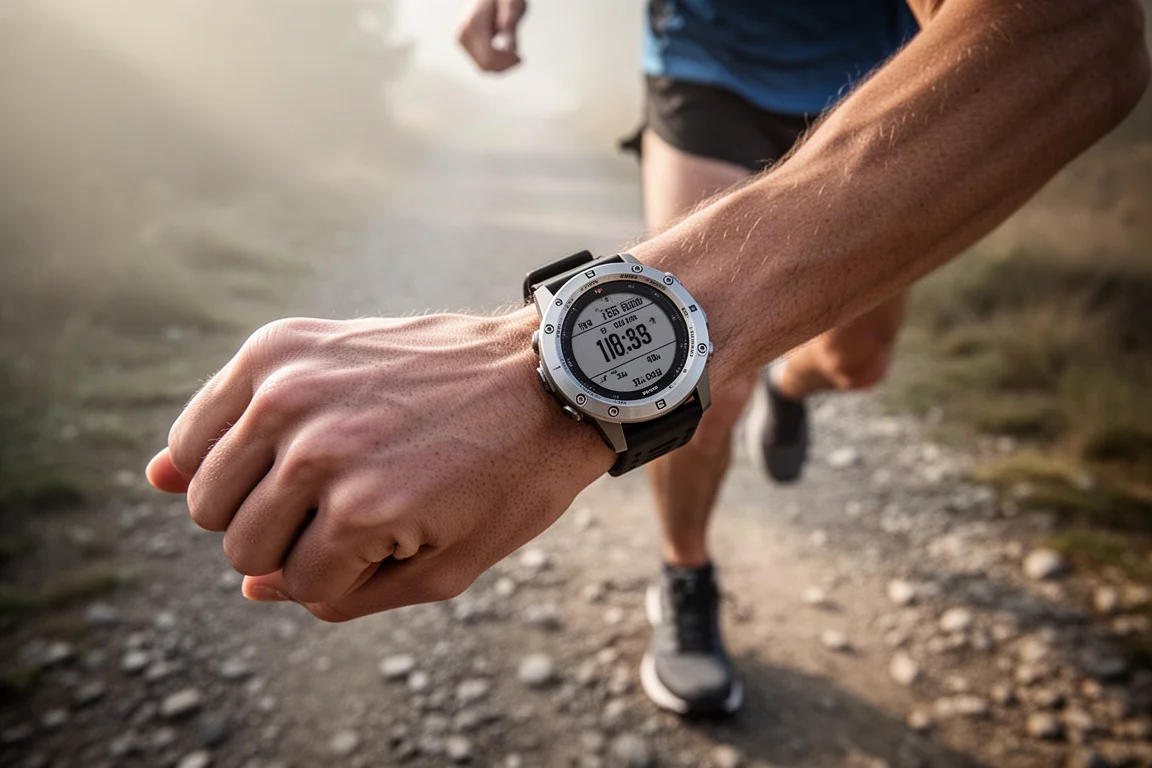
Solar charging makes its debut here, promising around a 30 percent battery boost across modes if you get enough sun exposure, and waterproofing carries over from previous Suunto watches, so showering and swimming are fine. On the wrist it is noticeable but not the heaviest out there: closer in feel to a Fenix 7 than a Fenix 7X or Vertix 2, and screen visibility outdoors is perfectly acceptable.
Running Features
Practically everything from the Suunto 9 Peak and Peak Pro carries over, plus a few sport extras that matter for runners. The headline addition is dual-frequency, multiband GPS mode, designed to improve tracking accuracy near tall buildings and in deep forest, bringing it in line with other top-end running watches.
You also get full topographic maps on the watch, loaded over Wi-Fi, plus wrist-based running power, Strava live segments, training recovery insights, interval training features, and all the running modes you would expect from a recent Suunto.
Maps and Navigation
To load maps or follow a route, you first upload the route in the Suunto app, then place the watch on the charger to sync it over Wi-Fi. From there you can select the route and follow it on the map. Compared with the breadcrumb navigation on previous Suunto watches, this is a genuine step up: terrain is now identifiable, and the mapping is well implemented overall.
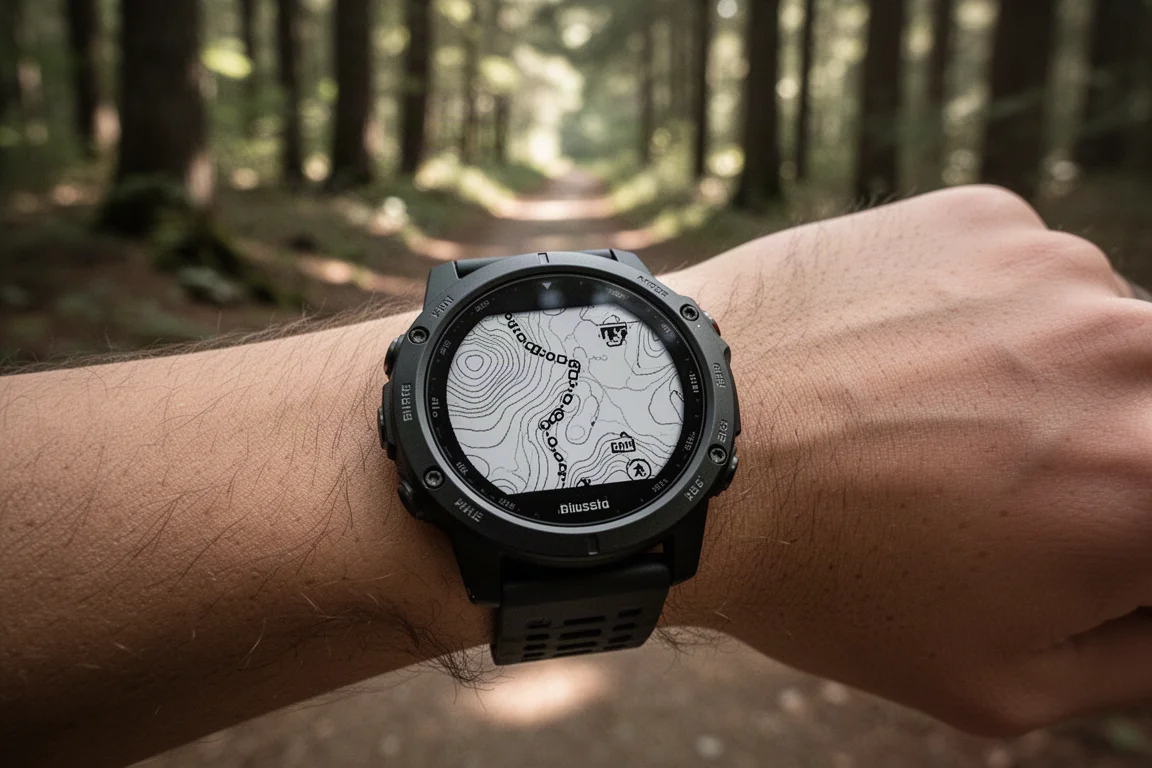
The caveat is detail. Against the depth of mapping available on Garmin watches, it falls short, and it is closer to the level of detail you get on the Coros Vertix 2. For outdoor routes it gives you a better sense of your environment, but if you mostly run on roads, the extra detail is limited.
Battery Life
Suunto watches typically deliver big battery life, and the Vertical pushes that further. On paper, the GPS and all-systems tracking figures are larger than what you get on the cheaper Fenix models, approaching parity with the Coros Vertix 2, while everyday smartwatch mode numbers sit in the same big-battery territory as its rivals.
On a 10-mile run split into two tracked segments, the Vertical dropped about 3 percent, while a comparable Garmin on the other wrist dropped 6 to 7 percent in similar modes. That is a genuinely encouraging sign. Just note the trade-off: sleep tracking and continuous blood oxygen monitoring are disabled out of the box, and once enabled, the battery fell from 100 percent to under 60 percent in a few days. If you want the headline numbers, you cannot run every intensive feature at once.
First Run Tracking Experience
On the wrist it is not a super-light watch, which is unsurprising for an outdoor model, though it is not as heavy or bulky as a Fenix 7X or Vertix 2. Viewing angles from the dot-matrix display were fine outdoors.
The core tracking was a mixed bag. Paired against a Garmin with a chest strap, both in multiband mode, the Vertical’s route tracking showed clear differences on relatively straight segments with corners and buildings nearby, suggesting some accuracy drop-off in those conditions. Heart rate performance was generally okay: the average ran slightly higher, but the max matched the chest strap closely.
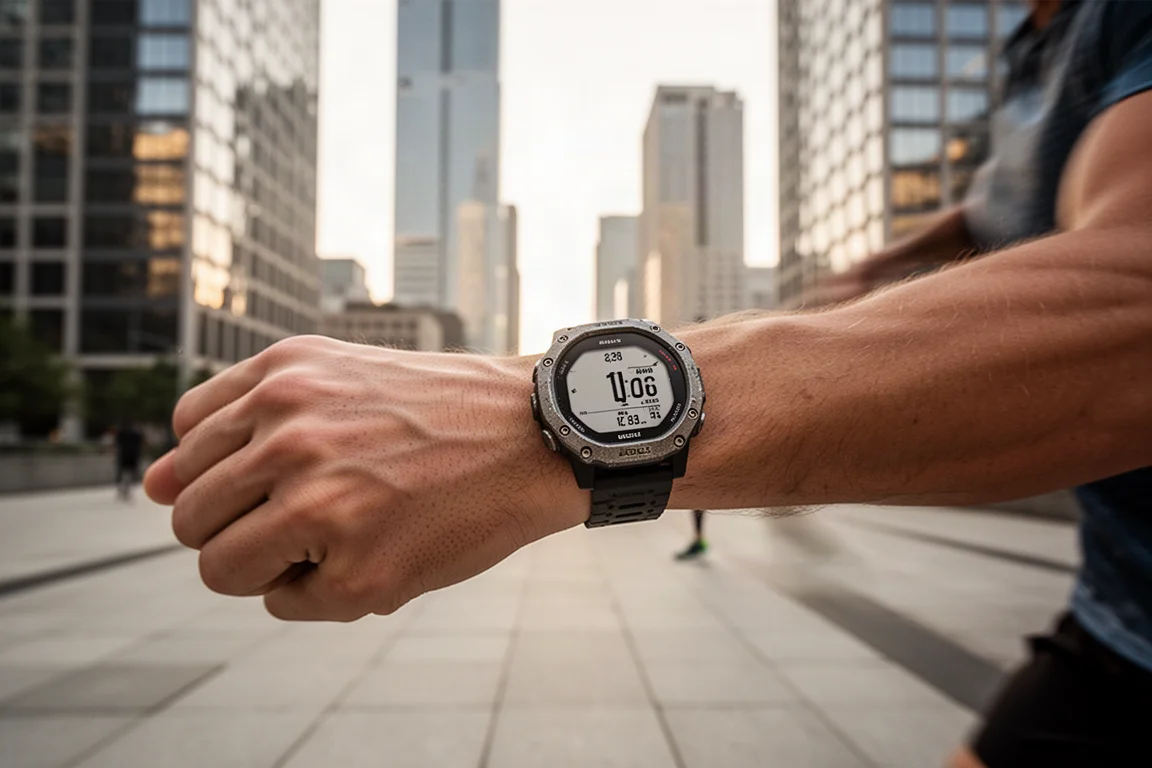
There was also one odd glitch: on the second half of the run, with identical settings, auto-lap began firing every few minutes without being enabled, and it never stopped, inflating the recorded distance. It is exactly the kind of thing you hope not to encounter on a flagship watch. The software experience also retains some familiar Suunto sluggishness: menus and the map can feel laggy and slow to respond to touches and buttons, which is disappointing at this price.
Buying Advice
Keep in mind this is an outdoor watch first; running is not its sole priority, but there is plenty here for runners. It feels like the nicest Suunto in years, and the battery and mapping additions are real strengths.
Against similarly priced Garmin watches, the Vertical promises more battery life than the cheaper Fenix models, but Garmin offers more detailed mapping and, so far, more polished tracking performance. Against the Coros Vertix 2, the Vertical is slimmer and easier to live with, offers comparable battery and mapping, and makes loading maps easier, though the Vertix 2 can be picked up for less if you skip the titanium version.
If free mapping, big battery life, and dual-frequency GPS matter most to you, the Vertical delivers on those fronts. If you want the most refined software and best-tested tracking accuracy in this price bracket, the alternatives remain compelling.
Conclusion
The Suunto Vertical is a step in the right direction: the best-feeling Suunto in a while, with genuinely useful mapping, dual-band GNSS, and battery life that holds up impressively in GPS mode. But the core run tracking did not blow us away, the auto-lap glitch raised an eyebrow, and the software still needs work to match the polish of rivals at this price. It has real promise, and more testing may show the tracking settling down. For now, it is easy to like and harder to recommend outright over the competition.
Product link
View more details for Suunto Vertical
This product is mentioned in the review. Check the specifications, options, and compatibility before buying.
View more details for Suunto VerticalFurther reading
Related Reviews
GPS Sports Watches
Polar Grit X2 Pro vs Vantage V3 vs COROS Vertix 2S: Which Flagship Adventure Watch Makes Sense
Polar's new flagship shares its internals with the Vantage V3 and goes up against the COROS Vertix 2S. Here is what two months of testing revealed about GPS, heart rate, navigation, and value.
GPS Sports Watches
Coros Apex 2 vs Garmin: Six GPS Sports Watches Worth Comparing
A practical look at the Coros Apex 2, Apex 2 Pro, Vertex 2, and three Garmin rivals, with what each does well and where the trade-offs sit.
GPS Sports Watches
Coros Apex 4 Hands-On: Titanium Build, Faster Mapping, and a Battery Built for the Mountains
A first look at the new Coros Apex 4 GPS sports watch, including its titanium construction, improved mapping, built-in speaker, and standout battery life.