Sports Watches
Suunto Vertical Review: Suunto's Strongest Hardware in Years
A big display, dual-frequency GPS, free topo maps and serious battery life finally give Suunto a flagship worth considering, with a few rough edges still to iron out.
Introduction
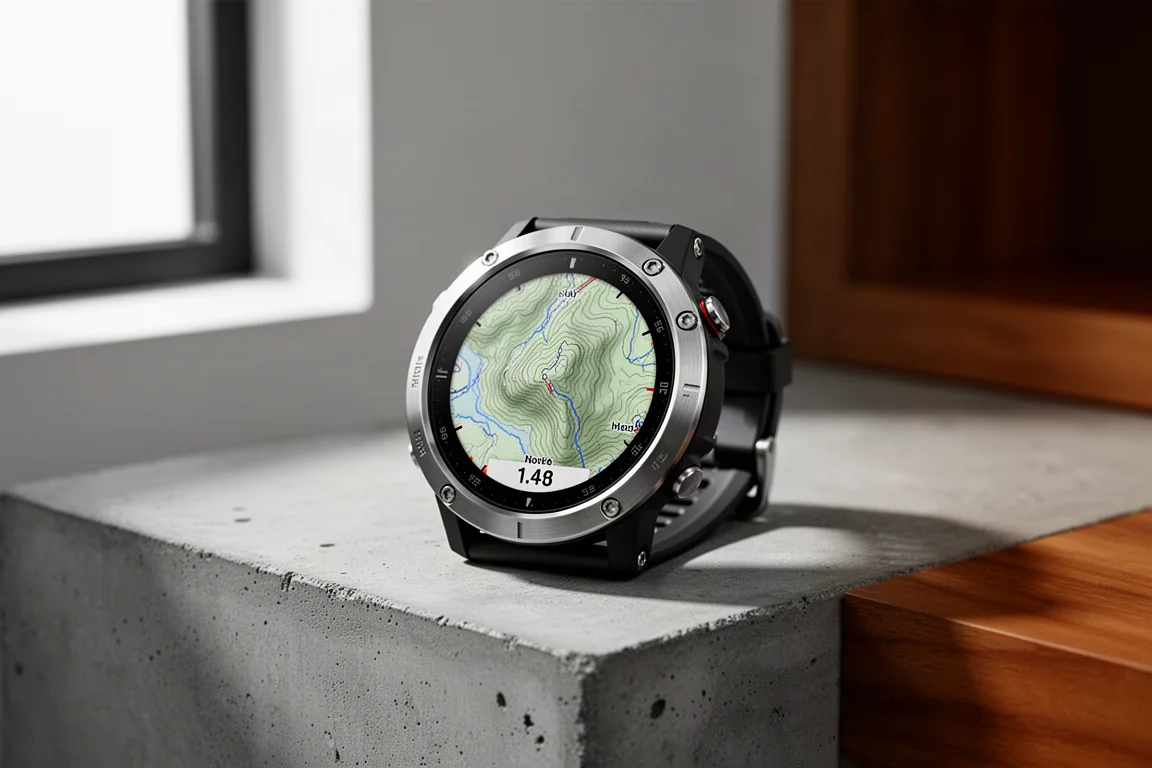
Suunto has needed a hardware reset for a long time, and the Suunto Vertical finally feels like it. After testing it through runs, hikes, open water swims, rides, and a non-stop trail run hike from the sea up to an 8,000-foot snow-capped mountain, it comes across as the best watch Suunto has made to date.
The package includes genuinely new features: solar charging on the titanium model, free downloadable topographic maps, a larger and much brighter display, and dual-frequency GPS. There are also a few rough edges worth knowing about before you buy.
Two Models, One Design
There are two versions of the Suunto Vertical. The base model uses a stainless steel case and costs $629, while the solar model steps up to a titanium case at $839 (US pricing). Unlike past Suunto models, there are no different case colors, sizes, or materials to choose between. Only the straps vary, aside from the two case materials themselves.
That simplified lineup keeps the buying decision easy: pick stainless or titanium solar, pick a strap, done. The size and weight sit right in the middle between older larger Suunto 9 watches and the compact 9 Peak series, which makes it comfortable for a wide range of wrists. It is also fully made in Finland with 100% renewable energy, and Suunto plants trees to offset the entire lifecycle of the watch, including charging cycles. Standard 22mm bands are compatible too, so existing straps carry over.
Solar Charging and Battery Life
The solar model’s main appeal is extra battery life, delivered through a solar panel integrated into the outer bezel edge. A new watch face shows solar gains in 10-minute slices, each displaying light intensity from zero to 100% of the panel’s 50,000 lux-hour rating. A dedicated solar widget adds the last seven days of gains, though that seven-day chart unfortunately resets every time the firmware updates.
Battery results in testing were genuinely impressive. On an eight-hour mountain hike under mixed sun, cloud, and snow, with dual-frequency GPS, mapping, navigation, phone notifications, and optical heart rate all running, the watch dropped just 10% (99% to 89%). That projects to around 80 hours of fully loaded GPS time. In daily use, 11 days passed with 20 to 25 hours of GPS activity, 24x7 wearing, sleep tracking, and multiple firmware updates, and the watch was still around 35%. That puts normal usage on track for two to three weeks per charge.
A Much Better Display
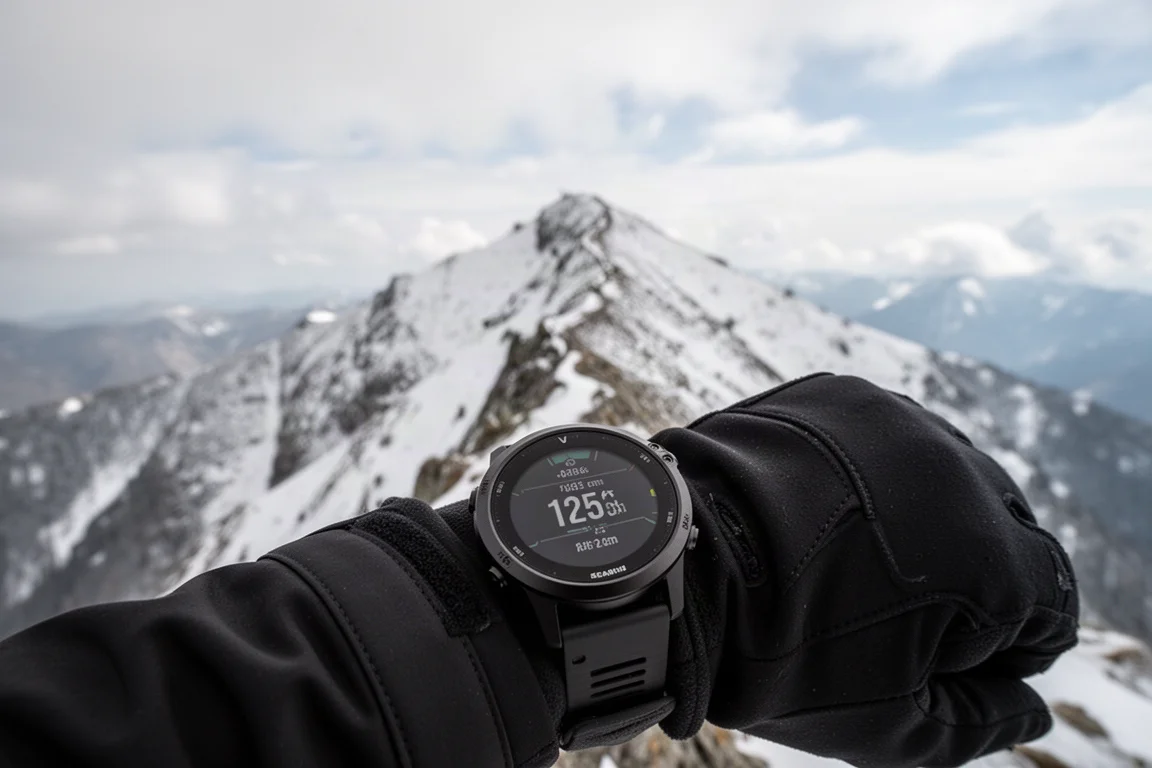
The display grows from 1.2 inches to 1.4 inches compared with the Suunto 9 Peak Pro, but size is only half the story. Earlier Suunto screens were often criticized for being dim and hard to read, and Suunto addressed this from several angles: additional LEDs behind the display for better illumination, tuned backlight brightness, fonts, and colors, plus a newer generation display panel entirely.
The result is clear. Across the whole testing period, including bright sun on a snowy mountain, in the trees, and at night, the screen was never a problem to read. The one remaining complaint is the user interface itself, which is occasionally laggy. It is a processor-side issue rather than a display one, not the worst seen recently, and hopefully something a firmware update can improve.
Free Topographic Maps
The Vertical adds full topographic shaded maps with 32GB of storage dedicated largely to map data. Maps are free, downloaded region by region through the Suunto app, and the region picker is unusually well designed, making it easy to identify unfamiliar regions when traveling. Downloads require a proper Wi-Fi connection (not a login-portal hotel network) and the watch sitting on its charger.
Each download bundles three map styles: the default outdoor orange, a high-contrast style, and a dark mode style, all switchable at any time. The maps are not routable, so the watch will not generate turn-by-turn directions to a new destination, but they show surrounding terrain, lakes, junctions, and features, which is very useful for route planning even mid-activity.
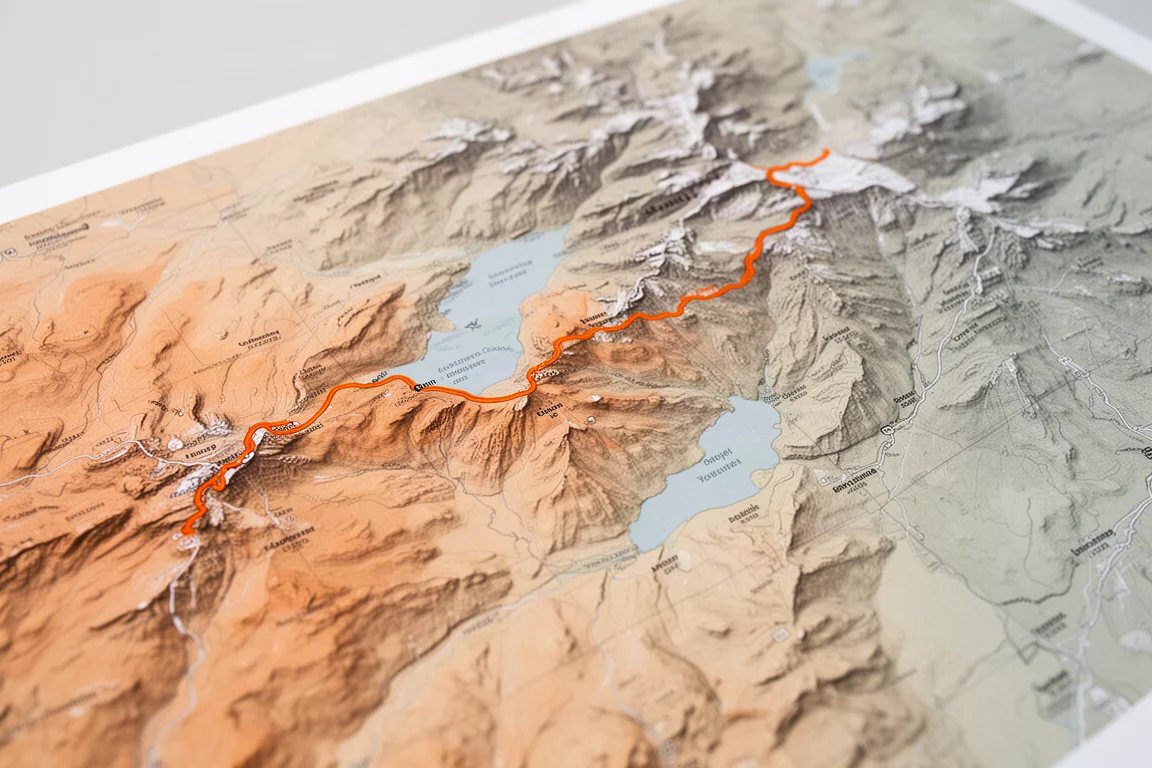
Zooming works with the buttons, though zoom out is capped at a 500-meter radius, which feels restrictive. Panning works with touch or buttons, and the whole map experience works outside of sport mode too, available directly from the menu in a couple of seconds.
Dual-Frequency GPS
Dual-frequency, multi-band GPS is widely considered the gold standard for track accuracy, and the Vertical finally has the antenna design to take full advantage of a chipset its predecessor already carried. Hardware alone does not guarantee results, so real-world testing matters here, and the Vertical mostly delivered.
On road runs and a peninsula loop, tracks were spot on. On a deep forest trail run, it matched reference units exactly where other dual-frequency watches have struggled. On the full sea-to-summit mountain hike, including cliffside scrambles and a snowy summit, tracks stayed accurate, and recorded elevation finished within 10 centimeters of the surveyed summit height. The major exception: open water swimming was a complete mess, a problem Suunto acknowledges and is working on, though not a quick fix.
Flashlight, Software Extras, and Daily Features
The flashlight uses the display itself rather than a front-facing LED. It is plenty bright in dark rooms, but activation requires pressing through the menu nine times, which is cumbersome, and it shuts off automatically after 30 seconds whether you want it to or not. Both issues sound like easy software fixes that Suunto has reportedly heard feedback on.

Elsewhere, the 24x7 optical heart rate polling rate improves from every 10 minutes to every second, aligning with the industry standard, though the app currently shows it in 10-minute averages until a future update. Strava live segments now work on the watch for Strava subscribers, and new weather pages add forecasts and air quality. Widget pages can now be toggled on or off individually, a small but welcome cleanup. Activity handling matches past Suunto watches, with battery mode selection, route navigation, map style, intensity zones, and data pages, syncing onward to some 200 partner platforms.
Should You Buy the Suunto Vertical?
Heart rate accuracy was a mixed bag in testing: indoor cycling intervals settled down to spot on after a rough start, trail runs were good except at the very beginning and end, and one long run was spot on, but outdoor cycling was poor. Open water swimming remains the biggest known weakness. Beyond accuracy, a few feature gaps stand out, such as the lack of a climb-by-climb elevation view for mountain routes, which currently only shows total remaining elevation for the whole route.
There is also a casual snorkeling mode that tracks shallow free dives to around 10 meters, handy for leisure use but not for actual diving. None of these complaints change the bigger picture, though: this is the hardware that finally gives people a reason to look at Suunto again.

Conclusion
The Suunto Vertical is the best hardware Suunto has produced, by a long shot. Strong battery life, a genuinely readable display, free topographic maps, and well-implemented dual-frequency GPS make it a credible choice for hikers, trail runners, and mountain athletes, provided you can live with the occasional UI lag, the finicky flashlight, and weak open water swim tracking. For land-based outdoor athletes, it is finally a Suunto with a clear future.
Product link
View more details for Suunto Vertical
This product is mentioned in the review. Check the specifications, options, and compatibility before buying.
View more details for Suunto VerticalFurther reading
Related Reviews
Sports Watches
Garmin Sports Watch Guide: Finding the Right Model for Your Fitness Level
A comprehensive overview of Garmin's sports watch lineup, from casual fitness trackers to advanced multisport devices, helping you choose the right model for your needs and budget.
Sports Watches
Coros Pace Pro Review: A Complete Overhaul That Finally Feels Premium
Coros rebuilt the Pace Pro from the ground up with an AMOLED display, onboard maps, and a new heart rate sensor. Here is how it all holds up in real use.
Sports Watches
Polar Vantage M3 Review: The Sweet Spot in Polar's New Watch Lineup
A closer look at the Polar Vantage M3, which brings an AMOLED display, dual-frequency GPS, offline maps and the same software platform as Polar's flagship watches at a friendlier price.