Sports Watches
Suunto Vertical Long-Term Review: Big Battery, Offline Maps and a Watch That Puts Suunto Back in the Game
Months of testing the Suunto Vertical: solar charging, offline topo maps, dual-band GPS, training insights, and the trade-offs worth knowing before you buy.
Introduction
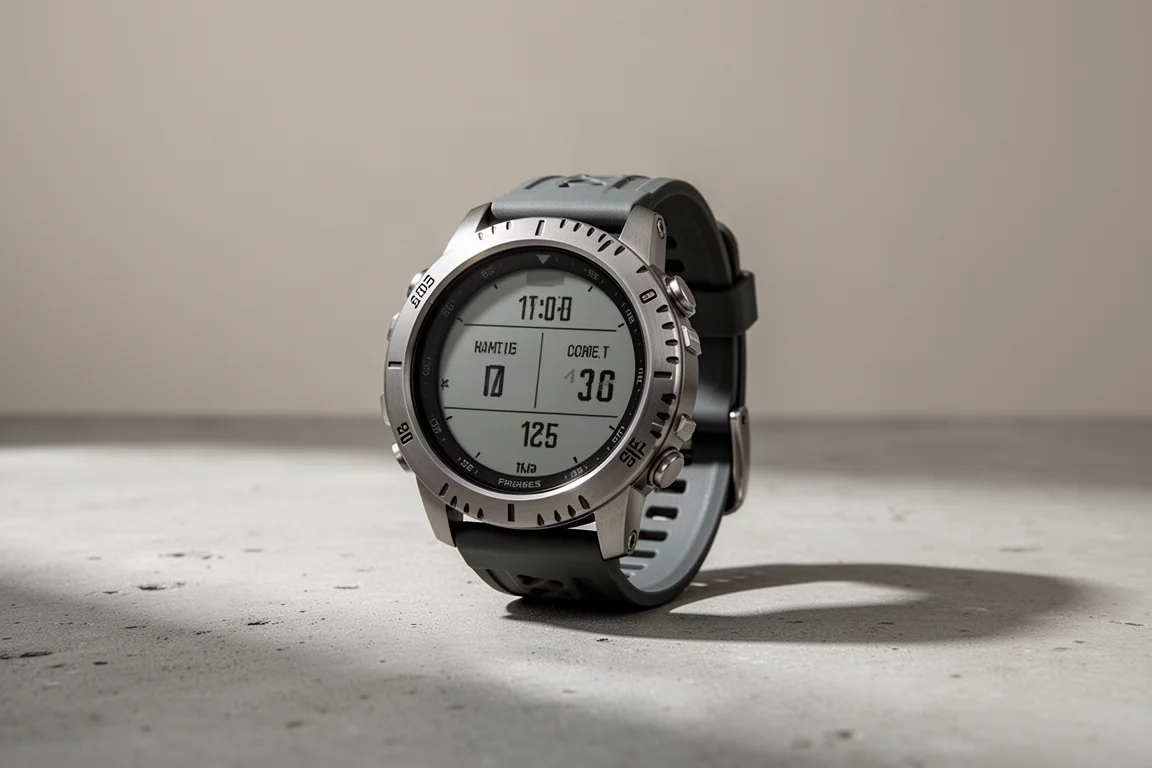
The Suunto Vertical is arguably Suunto’s most important watch in years. It arrived with a brand-new design and substantial new features like offline maps and solar charging, and it firmly put Suunto back in the conversation for outdoor-focused sports watches. Since launch, software updates have added more training and recovery feedback along with a revamped user interface borrowed from the Suunto Race, and some early issues have been fixed along the way.
After months of heavy rotation alongside other watches, this long-term review covers what has held up, what has improved, and what still needs work.
Versions and Pricing
At launch there were two versions: a stainless steel model without solar charging and a titanium version with solar charging. Since then Suunto added a stainless steel solar model that sits right in between, so if you want solar charging but prefer stainless steel, that option now exists, with a slightly different finish.
Current pricing runs $629 for the stainless steel version, $749 for the stainless steel solar model, and $839 for the titanium solar model. Those prices are not cheap against other sports watches with comparable features, or even against Suunto’s own Race, which shares many of the same features. The premium arguably comes down to build quality, the fact that the Vertical is fully made in Finland with 100% renewable energy, and tree planting used to carbon offset charging cycles over the lifetime of each watch.
Build Quality and Design
The build quality is a genuine highlight. This is a solid, well-constructed watch with a nice weight to it, and every button feels firm with little to no play. It has been durable across a long stretch of varied activities, and every version of the Vertical comes with a sapphire lens, which certainly helps.
The design is more of a personal-preference matter, but it feels well judged. The little notches on the side, the profile, and the rugged yet clean industrial look give it a distinct identity that does not blend in with other sports watches.
On weight, the titanium version comes in around 74g and the stainless steel version around 86g, both including bands. The titanium model feels solid on the wrist without being heavy, with enough presence that it never feels flimsy.
Battery Life and Solar Charging
Battery life is arguably one of the best features of the Vertical. For everyday use with 24/7 heart rate tracking and notifications enabled, Suunto advertises up to 30 days, and in practice it consistently delivered three weeks or more before needing a recharge, even with plenty of recorded activities.
For outdoor training, Suunto claims up to 60 hours in the highest accuracy performance mode, and up to 85 hours with enough solar exposure. In real use, ordinary outdoor activities without loaded routes comfortably exceeded the 60-hour mark, well over 70 hours in a mix of sunny and partly cloudy conditions. With routes loaded and the map page on the whole time, which draws more power since the map redraws constantly, an overcast outing still got close to 60 hours. A hike that started in clouds then turned very sunny, with navigation on and the map page used nearly the entire time, produced an estimate well over 70 hours. Cold weather skiing tests showed the numbers dipping somewhat, but the results remained impressive.
So does solar charging actually recharge the watch? Solar watches generally fall into two camps: some only delay discharge, while others can genuinely recharge and theoretically last indefinitely with enough exposure, like the Garmin Instinct Solar. The Vertical belongs to the delay-discharge camp, but only just barely. In direct sun, not worn (so the heart rate sensor and display are off), it gained roughly 1% every 4 hours. It will not recharge meaningfully while you wear it, but solar does make a real difference in extending battery life, especially if you live somewhere sunny.
Display
The Vertical uses a memory-in-pixel transflective display like previous Suunto watches, but with a new panel and a brighter backlight that is a big step forward. Older Suunto displays could look dull in many situations; this one is much easier to read indoors and out.
Bright direct sunlight, where transflective displays normally excel, is great. Cloudy conditions were occasionally trickier, with some glare at times that made it necessary to find just the right viewing angle, possibly related to the sapphire lens, which is very scratch resistant but can add a bit of glare. The backlight helps, though some angle-finding was still needed at times.
Indoors, the improved backlight gets genuinely bright. Medium brightness was plenty for everyday use, with three levels available, and you can set the wrist gesture to wake at a lower brightness at night so it is not jarring, then step up to full brightness once you start interacting.
User Interface and Usability
The Vertical changed significantly since launch with the new interface introduced on the Suunto Race. Previously, the middle button cycled through full-screen widgets one per press or swipe. Now, the lower right button or an upward swipe opens a glanceable widget menu showing a summary of each widget, which you can then open for details.
The middle button now toggles to a single pinned widget, your favorite, which feels underutilized; being able to pin and cycle through multiple widgets, as before, would be welcome. The new interface is noticeably snappier than the old one, which had considerable lag, though it is not blazing fast. Two spots still show slight delay: returning to the widget list, and the first moment of choosing a sport profile.
A handy extra is the flashlight mode, which turns the display entirely white for use in the dark. It can be assigned to a customizable long press of the upper right key.
Training and Recovery Features
The Vertical tracks daily energy levels through a metric called Resources, an indicator of your energy at a given time based on recovery including sleep and stress experienced during workouts. Early users reported oddities like sudden dips, but Suunto changed the underlying algorithms, and in use the values looked correct and correlated reasonably well with how things actually felt.
Sleep tracking consistently detected bedtime and wake time and total time in bed accurately, but was less reliable at tracking time spent awake, such as tossing and turning in the night. The Sleep Quality score also seemed generous at times, awarding 100% on a short, restless night.
On the training side, a major update brought widgets for Training Stress Balance, training load over time, and TSS (Training Stress Score), all licensed from TrainingPeaks. The TSS widget shows weekly training load, how recovery and gains affect your score, and a six-week TSS average. CTL (Chronic Training Load) reflects longer-term training trends from roughly the last six weeks of daily load and includes ramp rate, which indicates how quickly training load is increasing. TSB (Training Stress Balance) compares acute load over the last seven days against chronic load, useful for tapering before an event to arrive with a positive balance. Some users reported CTL bugs in forums, but nothing like that appeared on production software in testing.
The watch also tracks HRV during sleep, a valuable readiness indicator for serious athletes and anyone interested in general health alike, and offers running performance metrics like VO2 Max plus race predictions for common distances. The VO2 Max estimate lined up closely with other devices. The race predictions, however, are ambitious: the projected 10K and longer estimates looked harder to hit than realistic given actual training volume, so the predictor could better account for the distances you do and do not run.
Offline Topographic Maps and Navigation
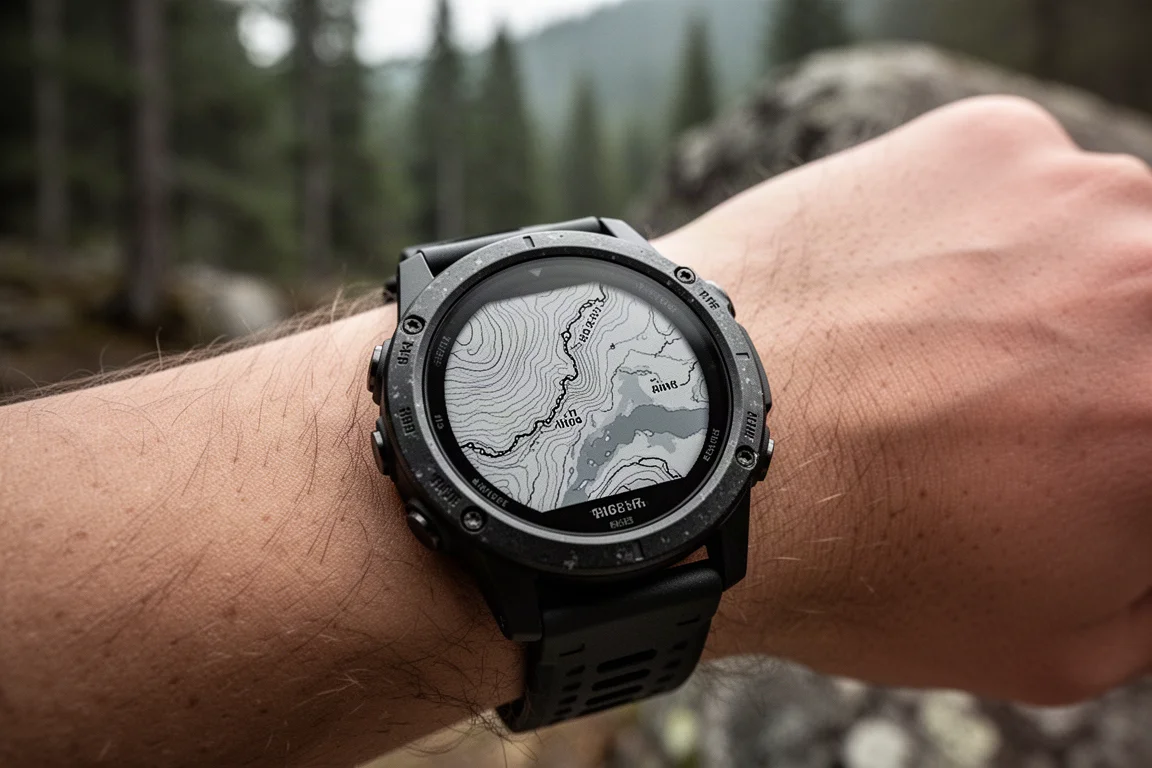
Offline shaded topographic maps showing roads, trails, and bodies of water add enormous context to where you are when venturing out. The maps are more like map images: they show streets, trails, parks, and water but without labels, unlike maps on some competitors such as Garmin devices.
Responsiveness is a highlight. The compass and map react to even slight orientation changes and redraw quickly, and panning and zooming at closer zoom levels is smooth. At broader zoom levels there is a moment or two of delay while the map redraws, though other watches show similar lag there.
The contour lines are genuinely useful for navigation, showing elevation differences that help choose the best path. A recent update removed contour lines at zoom levels beyond 500m, apparently to maintain responsiveness, with a possible rework of map detail at those levels to come.
For navigation, the Vertical provides a breadcrumb trail of your route during activities, and you can load routes to follow predetermined paths. Combined with the maps, it is a strong navigation tool, but note that it cannot reroute since the maps are not fully routable.
GPS Accuracy
GPS accuracy, or more precisely GNSS accuracy, is an absolute highlight. The Vertical uses a dual-band, multi-band satellite chipset that can access multiple frequencies simultaneously, which helps in challenging environments where signals bounce off objects like tall canyon walls, heavy tree cover, and tall buildings in urban settings.
Across a multitude of activities, there was never an issue with total distances, and elevation gain was very accurate too. The tracks themselves were consistently excellent: clean in the open and under heavy tree cover, tight next to tall rock faces, and crisp through switchbacks. This is one of the most accurate watches in this department.

Heart Rate Accuracy
Heart rate accuracy splits into two stories. For everyday all-day tracking and resting heart rate, the Vertical does just fine and closely matches other devices.
For sports, things are less rosy. On indoor cycling, steady-state rides produced usable results, though slightly shakier than usual. Intervals were mixed: some workouts started rough then settled, one had a large spike, and another missed an interval entirely. Running produced no huge spikes or drops but was not impressive either, with one run a notably different story. Outdoor cycling was good on one ride with a couple of small drops, then had major problems on the second half of another. Weight training, often the hardest case for wrist-based sensors, was surprisingly decent compared with other sensors.
Overall, sports heart rate accuracy is the weak point of the Vertical and the main complaint. An external heart rate monitor is recommended for sports; the watch pairs with Bluetooth external heart rate sensors, as well as speed and cadence sensors and power meters.
Everyday Health and Recovery Features
Day to day, the Vertical settles into being a reliable companion. Resources give a quick read on your energy as the day unfolds, sleep tracking captures your time in bed consistently, and HRV tracking adds a useful recovery signal each morning. None of these are perfect, but they form a coherent picture that helps you decide whether to push a workout or ease off.
Should You Buy It?
The Vertical is a big step for Suunto in the right direction: offline topographic maps, fantastic battery life, solar charging that makes a meaningful difference, excellent GPS accuracy, and, in my view, a great-looking design. Heart rate accuracy during sports is the notable weak point, easily worked around with an external strap.
At $629 to $839 depending on version, it is not cheap, and the Suunto Race offers many of the same features for less. But if you want the titanium build, solar charging, and topographic maps in a watch that is fully made in Finland with 100% renewable energy, the Vertical earns its premium and puts Suunto firmly back on the map for outdoor sports watches.
Conclusion
After months of use, the Suunto Vertical stands out as one of the most capable outdoor-focused sports watches available, with battery life and GPS accuracy as genuine highlights and a sports heart rate sensor that lags behind. If your priorities are long adventures, reliable navigation, and minimal charging, it is an easy recommendation; just plan on pairing it with an external heart rate monitor for serious training.
Product link
View more details for Suunto Vertical
This product is mentioned in the review. Check the specifications, options, and compatibility before buying.
View more details for Suunto VerticalFurther reading
Related Reviews
Sports Watches
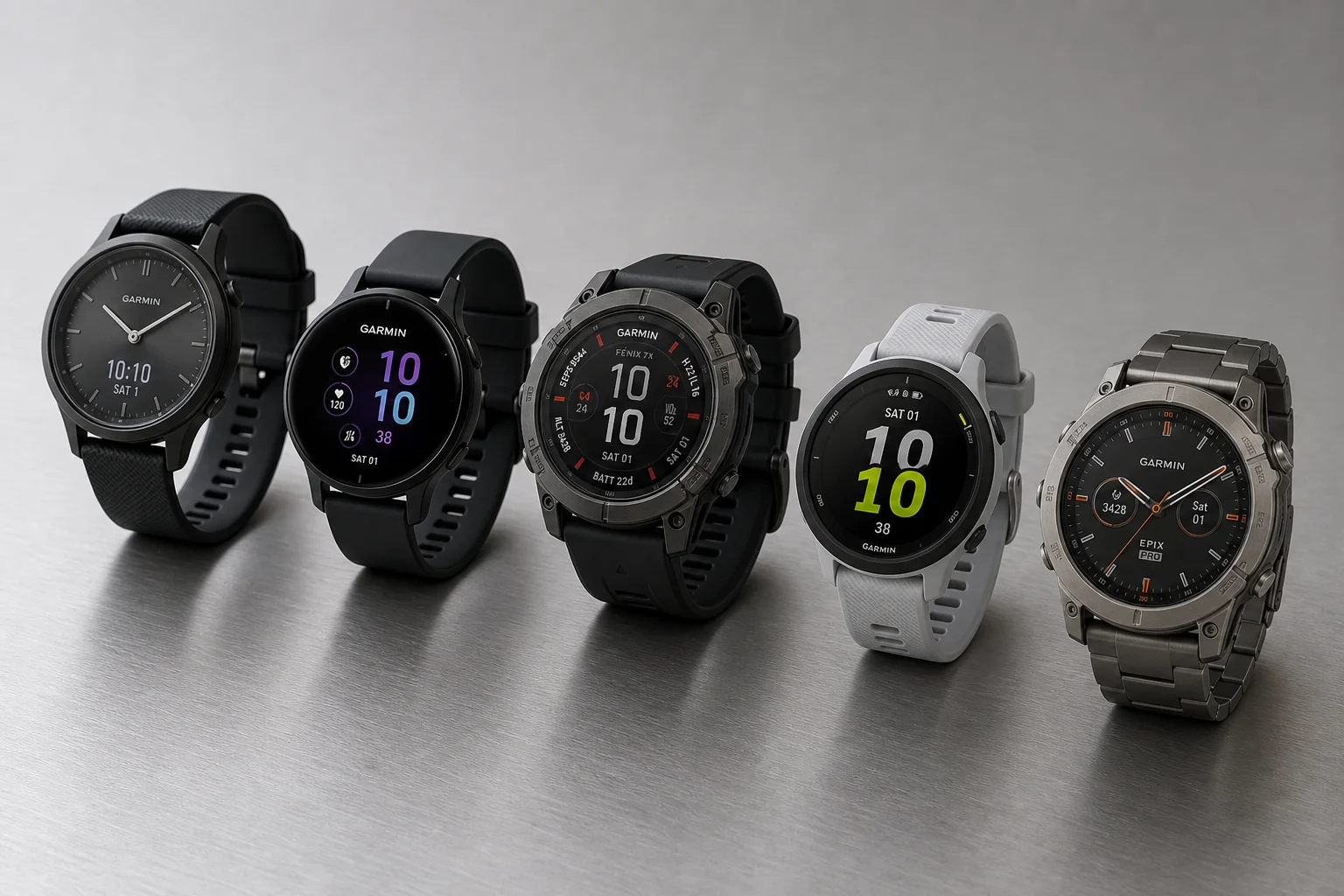
Garmin Sports Watch Guide: Finding the Right Model for Your Fitness Level
A comprehensive overview of Garmin's sports watch lineup, from casual fitness trackers to advanced multisport devices, helping you choose the right model for your needs and budget.
Sports Watches
Coros Pace Pro Review: A Complete Overhaul That Finally Feels Premium
Coros rebuilt the Pace Pro from the ground up with an AMOLED display, onboard maps, and a new heart rate sensor. Here is how it all holds up in real use.
Sports Watches
Polar Vantage M3 Review: The Sweet Spot in Polar's New Watch Lineup
A closer look at the Polar Vantage M3, which brings an AMOLED display, dual-frequency GPS, offline maps and the same software platform as Polar's flagship watches at a friendlier price.