Sports Watches
Suunto Race vs Garmin Forerunner 965 vs Polar Vantage V3: Which AMOLED Sports Watch Wins?
Three flagship AMOLED sports watches with maps and multiband GPS compared on design, GPS accuracy, heart rate, battery life and training analysis.
Introduction
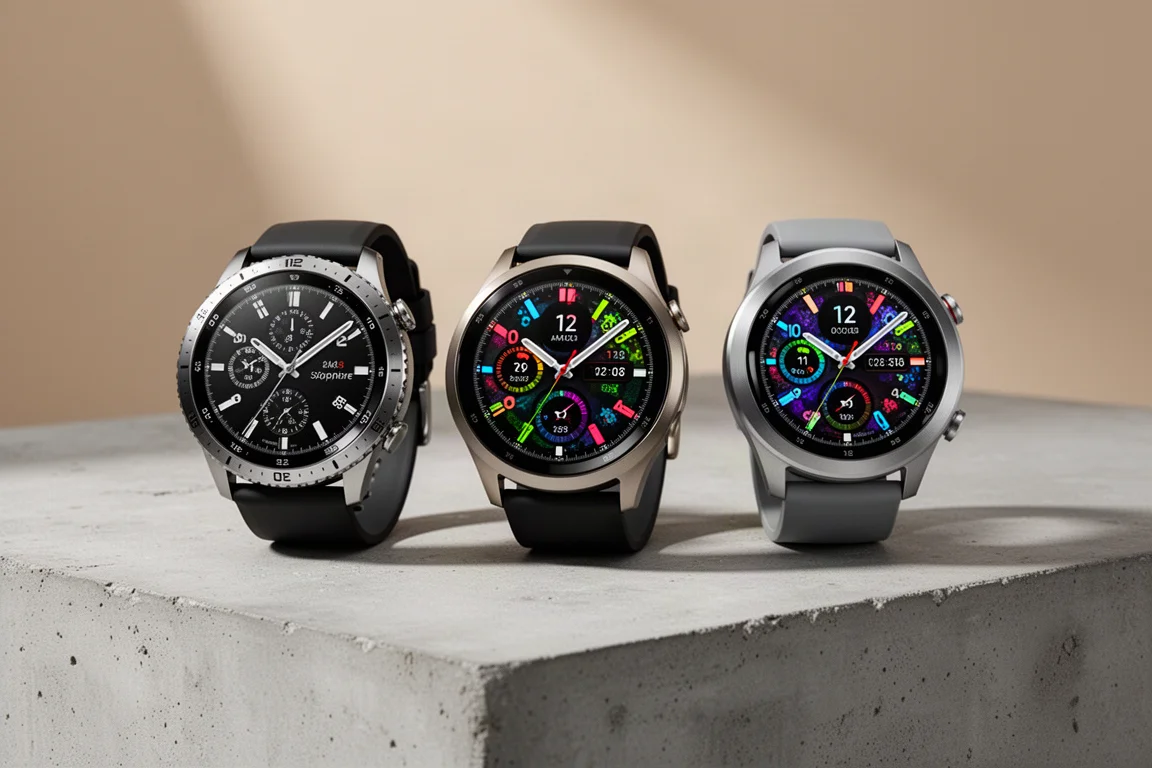
The Suunto Race, Garmin Forerunner 965 and Polar Vantage V3 are all AMOLED sports watches that sit in a similar price bracket and share a very similar feature set. If you are shopping for a colour touchscreen watch with offline maps and multiband GPS, these three are very likely the shortlist. This comparison looks at where they differ, where each one leads, and which one makes the most sense depending on how you train.
Design and Build
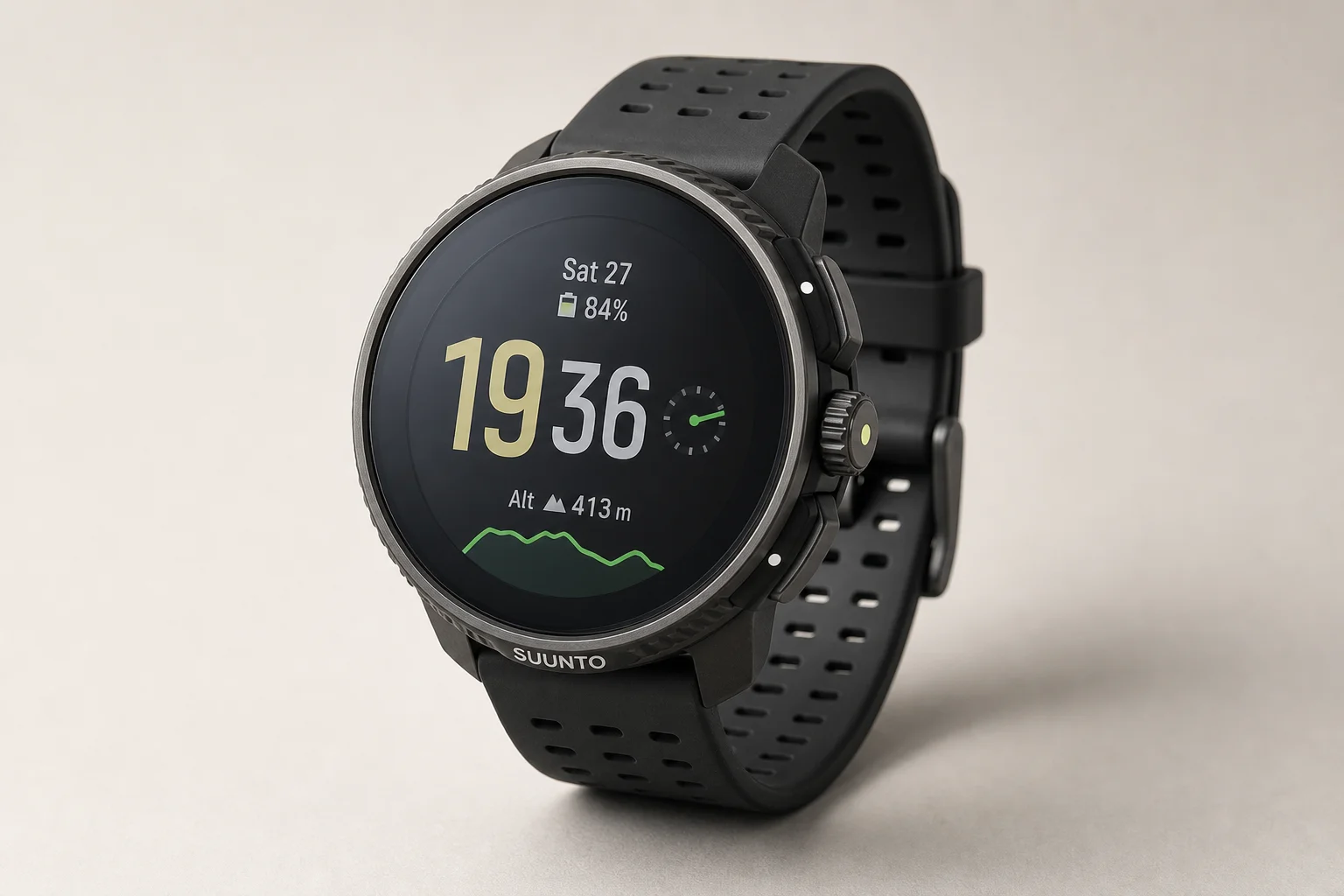
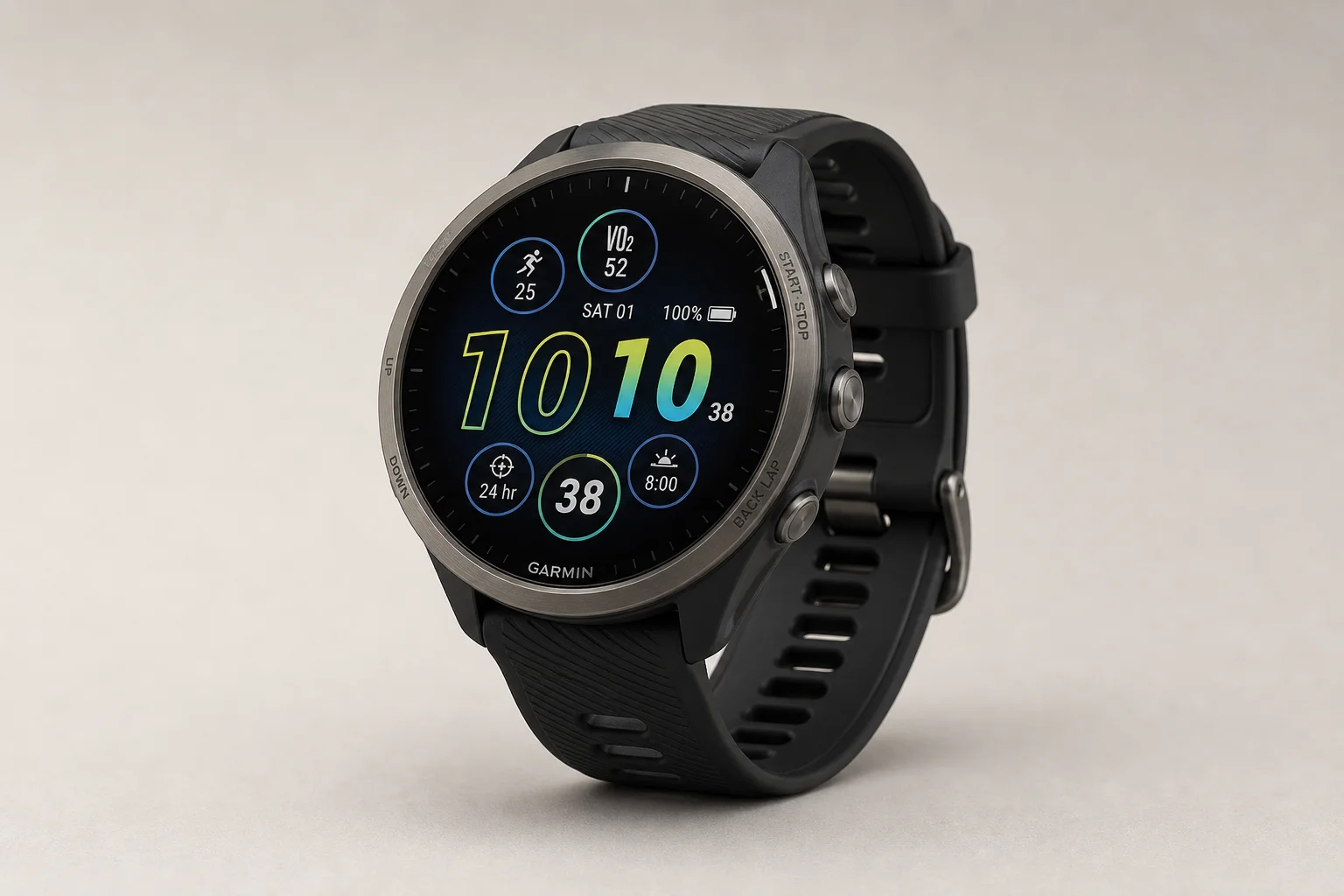
All three watches use around 1.4-inch AMOLED screens and similar case sizes. The Suunto Race is slightly larger but slightly thinner, and it uses more metal overall, available in steel or titanium versions. The Polar Vantage V3 has an aluminium bezel and case, while the Forerunner 965 uses a plastic case with a thin titanium bezel. The Polar and Garmin use Gorilla Glass; the Suunto steps up to a sapphire crystal screen, which is more durable. Water resistance is 100m on the Suunto versus 50m on the other two.
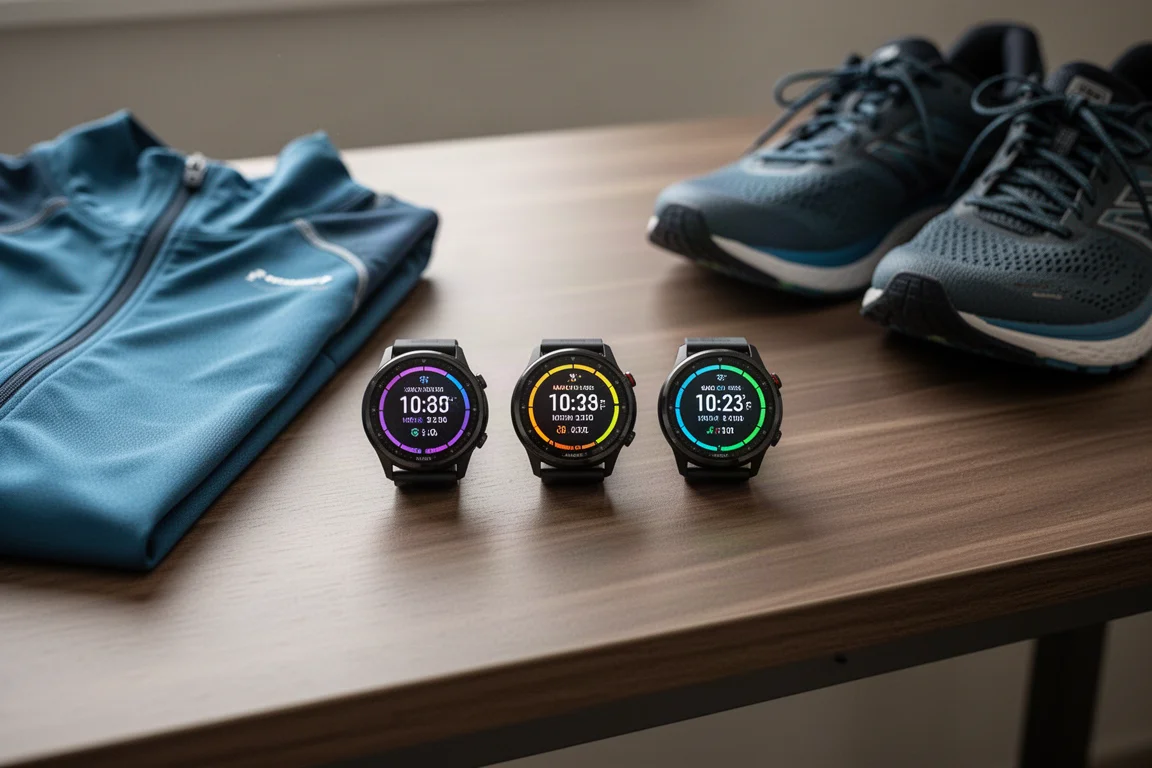
The Polar and Garmin use five physical buttons, while the Suunto goes with three buttons plus a digital dial. On the wrist, the Garmin and Polar feel lighter and more comfortable for 24/7 wear. The Suunto’s titanium bezel makes it the bulkiest of the three, though some will prefer that chunkier metal look. One durability note: the Forerunner 965 screen picked up a slight scratch during a long trail run, which is exactly the concern sapphire addresses.
On smart features, Garmin has a clear advantage: music storage, contactless NFC payments and the Connect IQ app store. Suunto and Polar stick to basic smart features such as notifications, weather and phone music controls, positioning themselves firmly as sports watches.
GPS Accuracy
In multiband mode, all three watches delivered very good positioning accuracy in testing. The Suunto and Garmin generally tracked most closely, though neither was immune to issues, and in some scenarios, such as running among tall buildings in central Frankfurt, the Vantage V3 and Suunto Race actually produced cleaner tracks than the Garmin. The Suunto occasionally added small switchbacks that were not run and struggled under underpasses, where the Garmin and Polar held up well.
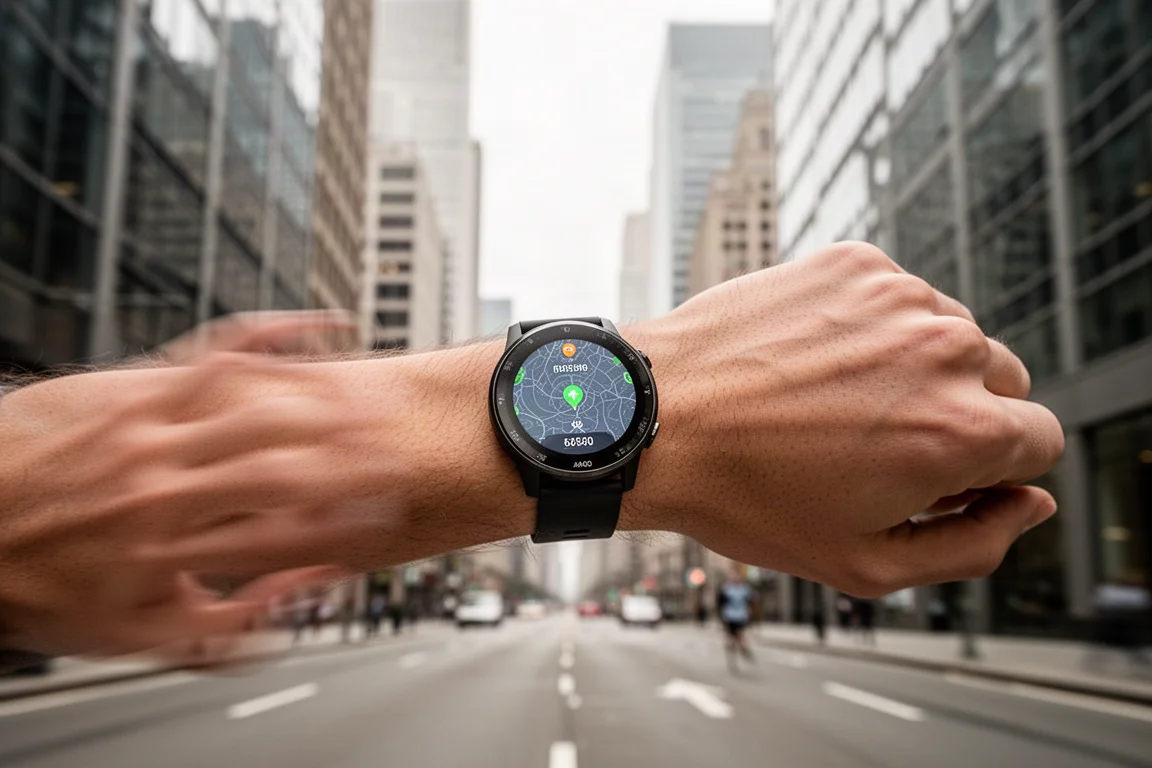
The Polar is prone to slightly more errors in challenging conditions: it can smooth corners, struggle with sharp turns, and its pacing can go wild momentarily when you make a dead turn. In one race it produced an odd route track while the Suunto stayed bang on course. In its lowest power-saving GPS mode, the Polar also drifted far enough on a couple of runs that distance tracking became meaningless, worth knowing if you plan to use its longest-runtime settings for an ultra.
Heart Rate Accuracy
Optical heart rate is the weakest area across all three. The Suunto performed worst, frequently inaccurate even at rest. The Polar came next, with good runs mixed with plenty where average and max heart rate fell short of a chest strap, despite the new Elixir sensor array. The Forerunner 965 was the most reliable and consistent of the three, likely helped by how it sits on the wrist.
The honest advice applies to all three: if heart rate data guides your training, pair a chest strap. Polar H10 and Garmin HRM Pro Plus straps paired without issues to all three watches.
Navigation and Mapping
All three offer free offline colour maps, which is great to see. Garmin leads with routable maps that know where you are, re-route when you go wrong, plus extras like points of interest, Around Me, on-watch round-trip course creation and the excellent ClimbPro feature, which breaks down climbs and gradients on your route.
Suunto’s navigation is strong too, with offline maps, points of interest, turn-by-turn guidance and a genuinely useful altitude view for mountain and coastal ultras. Polar’s native maps lack some of those tools, and turn-by-turn requires creating routes in Komoot, but the Komoot integration itself is excellent and makes route discovery easy.
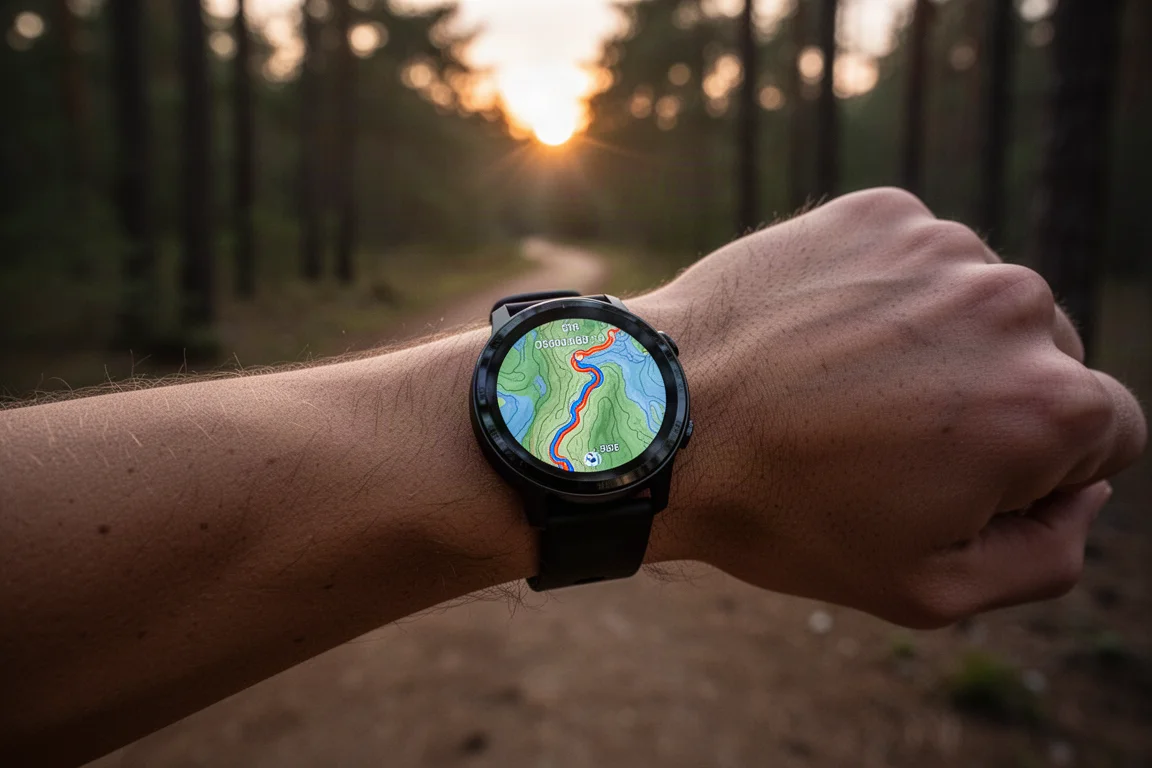
Getting maps onto the watch differs: Garmin maps come preloaded with cable or wireless options for adding more, Polar requires downloading via the web app and a computer sync, and Suunto syncs over Wi-Fi through the phone app, which takes a while. On screen, maps look brighter on the Gorilla Glass displays of the Polar and Garmin, while the Suunto’s sapphire slightly dulls colours but remains easy to read.
Battery Life
Real-world results put the Suunto ahead overall. With notifications, daily runs in multiband GPS and always-on screens enabled, the Garmin and Suunto both lasted around 7 days, while the Polar managed closer to 3 to 4 days. Polar’s listed stats are impressive on paper but were not fully borne out in testing, with the claimed 61 hours in max accuracy mode falling well short. It has largely fixed a battery-thirsty overnight issue, though.
For a 1-hour run in max GPS modes with the screen off, the Garmin burned roughly 3 to 4%, the Polar 3% and the Suunto 2%. For ultras, all claim at least 24 hours on regular GPS, but Suunto and Polar offer far more in their lowest power modes, making them better suited to multi-day adventures. Garmin’s granular GPS power options are a plus over Polar’s simpler satellite pulsing settings.
Training Analysis
Garmin and Polar stand out here. Garmin presents its wealth of data best, with clear, colourful use of the AMOLED screen and digestible snapshots like Training Readiness that distill everything into one meaningful number. Hill Score and Endurance Score add useful benchmarking.
Polar’s advantage is sleep tracking, the most accurate of the three, which feeds more reliable recovery insights. Extras like FuelWise for nutrition planning, an ECG-based orthostatic test using the new hardware in the buttons, and a clear weekly training-balance view round out a strong package.
Suunto delivers plenty of data but presents it less usefully, and its HRV recovery insights did not feel actionable in the same way. It is the weakest of the three for training analysis, though the fundamentals are covered.
Which Should You Buy?
If you want the best all-round watch of the three, the Forerunner 965 is the pick. It is the most polished package: the slickest software, the best navigation and mapping tools, smart features the others lack, strong battery life, great GPS accuracy and passable optical heart rate. If you cannot stretch to it, the Vantage V3 is the next best, a tidier overall package than the Suunto despite costing more.
The Suunto Race is the best value of the three. It is considerably cheaper, offers superior build quality with sapphire glass and titanium or steel, excellent battery life in multiband mode and great GPS accuracy. The software is not quite as refined, but on the fundamentals of sports tracking it does everything really well. The Vantage V3 lands third: a good watch, but it comes up slightly short on GPS accuracy, battery life and features compared to the other two, and Polar’s design will appeal to a narrower group than Garmin’s more neutral look.
Conclusion
Garmin still leads this class on overall quality, features and polish, with the Suunto Race as the compelling value pick and the Polar Vantage V3 best suited to runners who put Polar’s sleep and recovery tools first. All three are capable watches; the right choice comes down to how much you value smart features and software polish versus build quality and price.
Further reading
Related Reviews
Sports Watches
Garmin Sports Watch Guide: Finding the Right Model for Your Fitness Level
A comprehensive overview of Garmin's sports watch lineup, from casual fitness trackers to advanced multisport devices, helping you choose the right model for your needs and budget.
Sports Watches
Coros Pace Pro Review: A Complete Overhaul That Finally Feels Premium
Coros rebuilt the Pace Pro from the ground up with an AMOLED display, onboard maps, and a new heart rate sensor. Here is how it all holds up in real use.
Sports Watches
Polar Vantage M3 Review: The Sweet Spot in Polar's New Watch Lineup
A closer look at the Polar Vantage M3, which brings an AMOLED display, dual-frequency GPS, offline maps and the same software platform as Polar's flagship watches at a friendlier price.