Sports Watches
Suunto Race S Titanium Review: Which Race Watch Is Right for You?
Suunto's Race S Titanium swaps in a grade 5 titanium bezel for $100 more. We compare it against the stainless Race S and the larger 49 mm Race to find the best pick.
Introduction
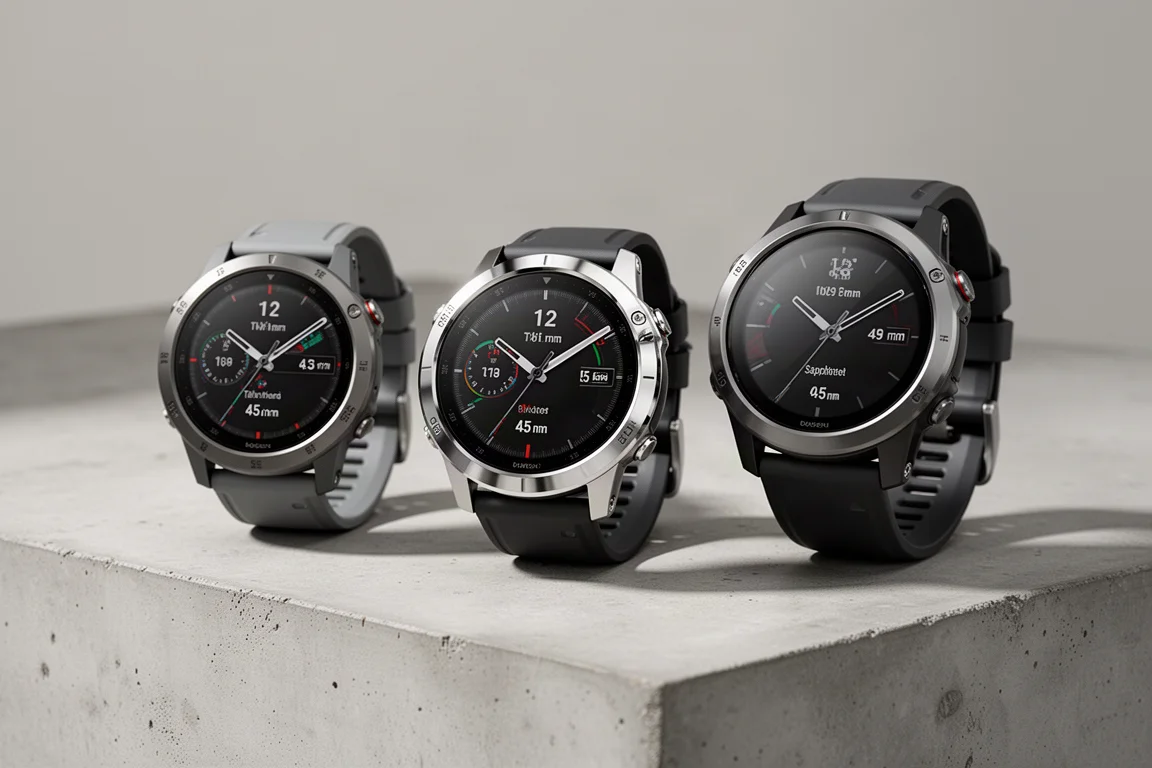
Suunto has been on a strong design run lately, and the Race S Titanium is the latest example. It takes the Race S, already one of the better value multisport watches around, and swaps the stainless steel bezel for grade 5 titanium. For $100 more you get a more premium look, a slightly lighter build, and otherwise the same watch.
The more interesting question is how it compares to the larger 49 mm Race. The titanium Race S lands at the same $449 price as the stainless steel 49 mm Race, so if you have that budget to spend, which one makes more sense? This guide breaks down the differences so you can pick with confidence.
What the Race S Titanium Adds
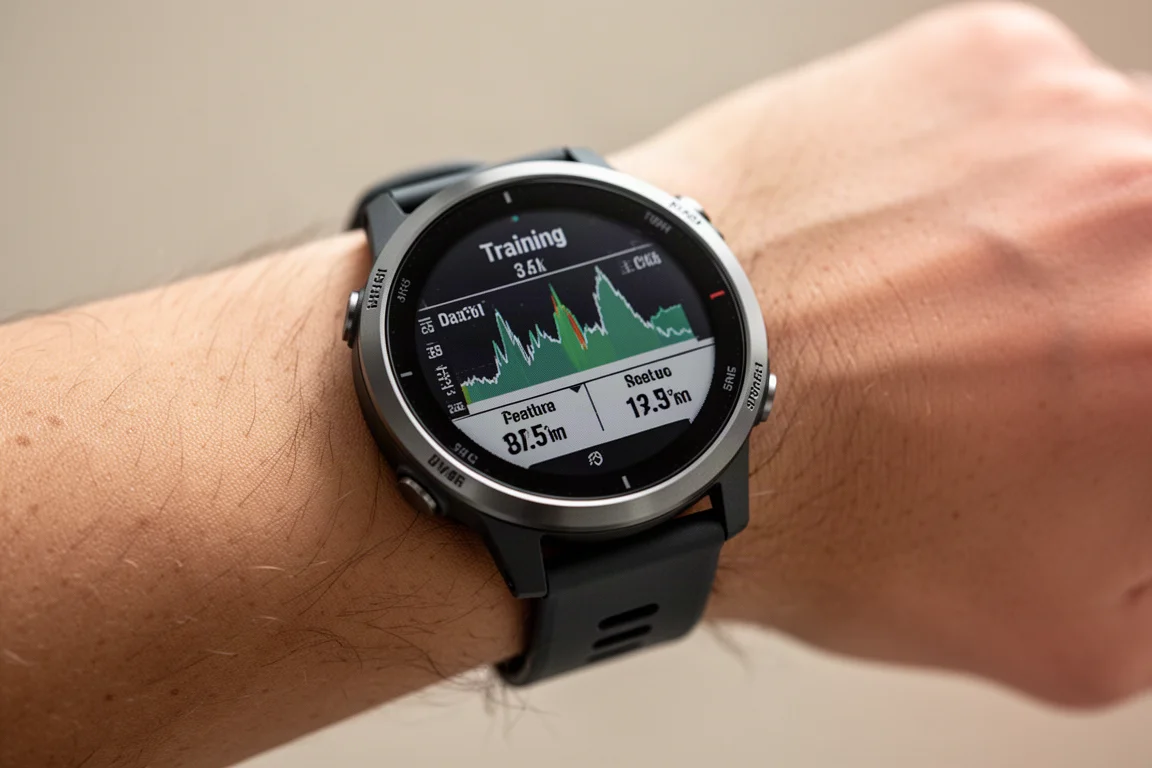
Compared to the stainless steel Race S, the change is simple: a grade 5 titanium bezel instead of stainless steel, for $100 more. Everything else is the same watch, right down to the unboxing. The titanium does make it slightly lighter, which you can notice on the wrist, but it is more of a bonus on top of the premium look than a reason to buy on its own.
And the look matters here. This is genuinely one of the most attractive watches in this category, with the same design language that made Suunto’s Vertical and the original Race stand out.
The one real miss is the lens. Both Race S versions use Gorilla Glass, and the titanium model does not step up to sapphire. With normal use Gorilla Glass should be fine; sapphire mainly pays off in mishaps like scraping against a rock or taking a spill on a mountain bike. A screen protector can help cover that gap.
Heart Rate Accuracy: The Main Caveat
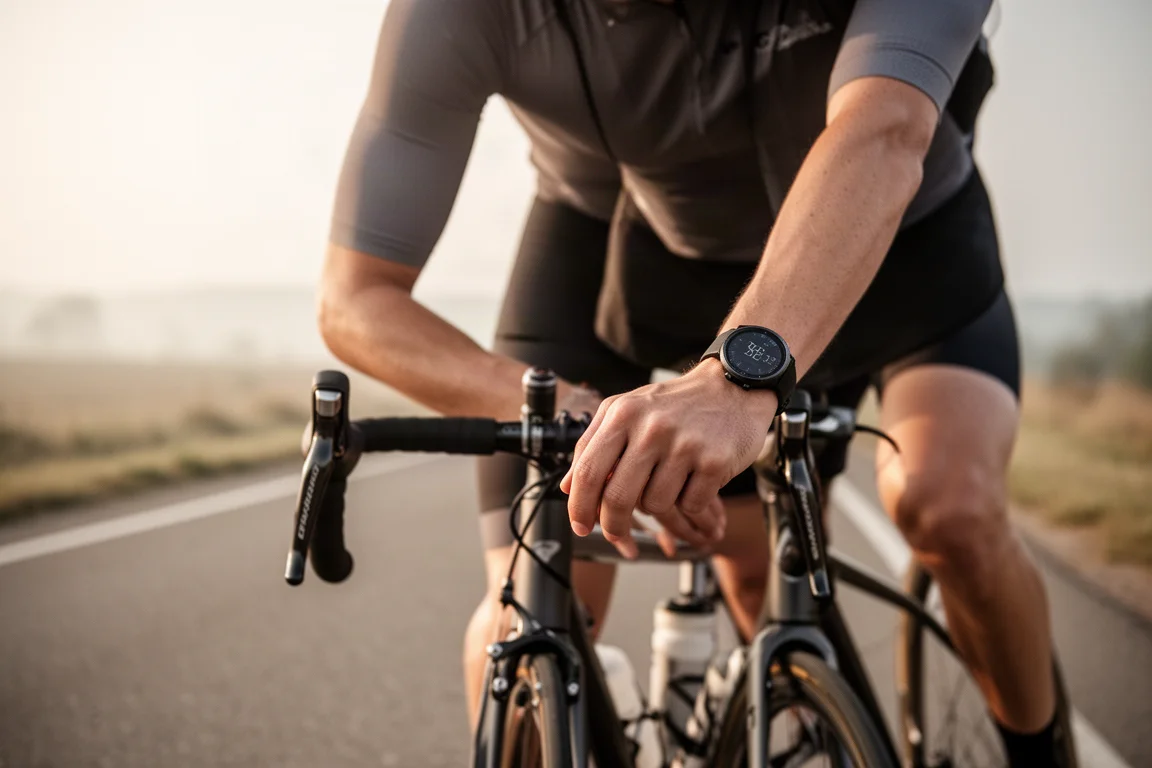
The Race S line carries an updated heart rate sensor compared to the original Race, and it does perform better. But it can still be inconsistent. Indoor cycling works reasonably well, while outdoor road riding produced mixed results across rides. On runs, there was one case of cadence lock early on, where the optical sensor latched onto footstep rhythm instead of heart rate. After a brief pause it settled and tracked intervals mostly well, though it still drifted at times.
The practical takeaway: plan on pairing the watch with an external heart rate strap for the most meaningful training feedback. Aside from that, the feature set is generous for the money.
Health and Sport Features
All Race and Race S models share a full multisport feature set. On the health side you get 24-hour heart rate tracking, calories burned, sleep tracking, and heart rate variability. On the sport side you can track nearly any activity, including triathlon, with training load and recovery tracking built in.
For outdoor use there are offline maps, navigation and routing, and a dual-band GPS chipset that is exceptionally accurate. Along with Suunto’s own Vertical, the Race family sits among the most accurate watches tested for GPS positioning, which is a genuine standout at this price.
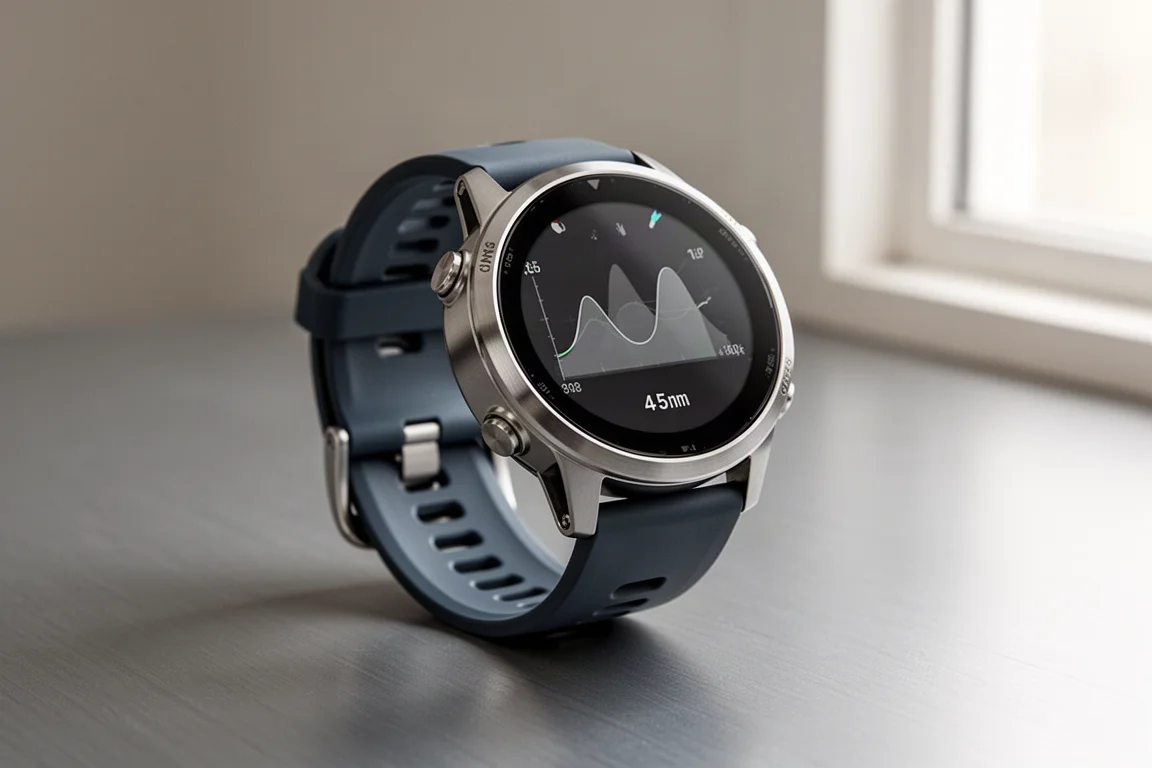
Race S Titanium vs the Larger Race: Size, Weight, Battery
Feature-wise, the titanium Race S and the stainless steel 49 mm Race are virtually the same, including the three-button layout with one rotating dial. The differences come down to size, weight, materials, and battery.
The 49 mm Race is a big watch and may not suit smaller wrists. The 45 mm Race S is a nice middle ground that works for more people, and it tends to be more comfortable for sleep tracking. On weight the gap is substantial: about 53 g for the titanium Race S, 60 g for the stainless Race S, and 83 g for the stainless Race. The lighter watch can matter during jarring activities like mountain biking, where a heavier watch bounces around more.
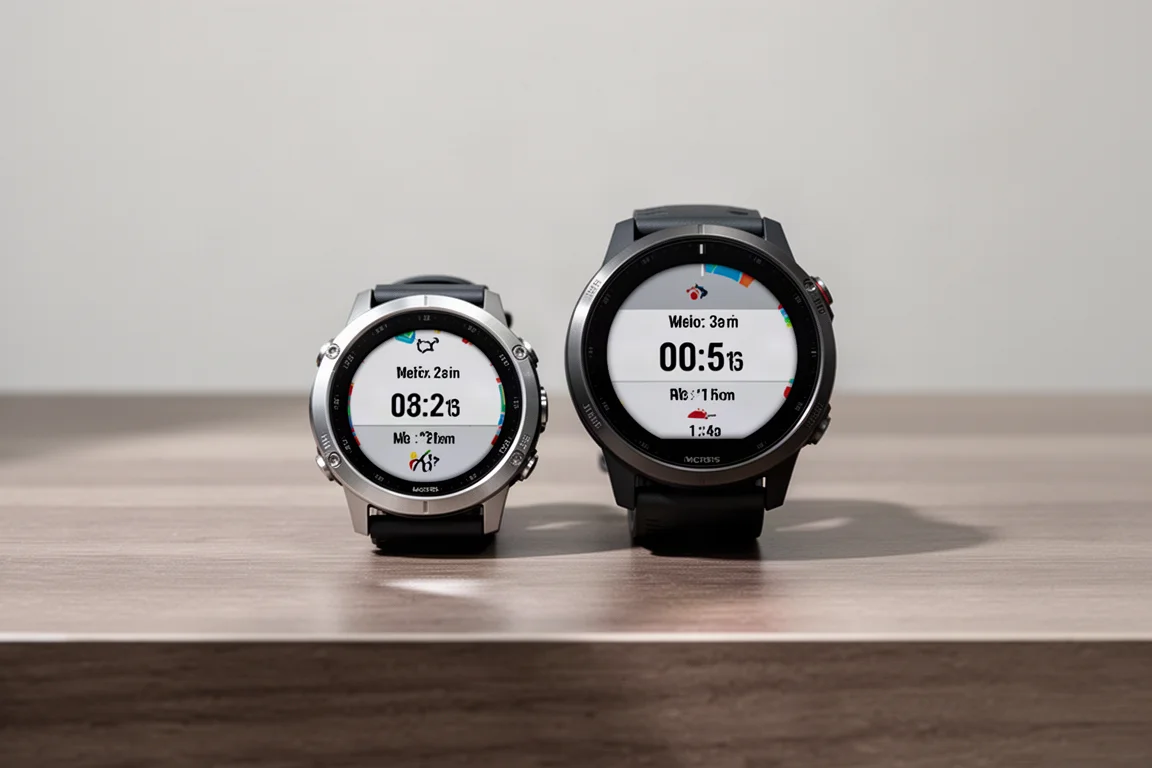
The larger Race fights back with battery life and display. It gets up to 16 days as a smartwatch versus 9 days for the Race S, with longer runtime across the board when recording outdoor activities. In practice the Race S still delivers roughly 4 to 5 days with the always-on display, or about 6 days with it off, including around an hour of outdoor activity per day. Both displays are excellent, and although the 49 mm screen is larger, it shares the same resolution, so real-world sharpness feels similar.
Protection differs too: the 49 mm Race uses a sapphire lens on both the stainless and titanium versions, while both Race S models use Gorilla Glass. The larger Race is also rated to 100 m water resistance versus 50 m for the Race S. One interesting reversal: both Race S variants carry 32 GB of map storage, while the stainless Race has 16 GB.
Software has improved on the larger Race since launch; early interface lag has been addressed with updates, and both feel good to navigate now, with the Race S just a touch snappier. Watch weight can also influence optical heart rate accuracy, since a larger, heavier watch may bounce more on the wrist.
View more details for Suunto Race
Which Suunto Race Should You Buy?
Even though the larger Race offers a sapphire lens, the Race S line is the easier recommendation for most people: it has the more accurate GPS and updated heart rate hardware, and the 45 mm case fits a wider range of wrists comfortably. If you prefer a bigger watch and longer battery life, the 49 mm Race remains a strong choice at the same $449 as the titanium Race S.

Choosing between the titanium and stainless Race S comes down almost entirely to materials and looks. The titanium version is a stunner and slightly lighter, but it is otherwise the same watch. If sapphire matters to you, a screen protector is a reasonable compromise.
View more details for Suunto Race S Titanium
Conclusion
Suunto’s Race family covers a clear spread of needs. The stainless Race S at $349 is the value pick with a full multisport feature set and excellent GPS. The titanium Race S adds premium materials and a lighter build for $100 more, minus sapphire. The 49 mm Race counters with a sapphire lens, longer battery life, and a bigger display for heavier wrists. For most riders and runners, the Race S in either finish is the smarter buy, ideally paired with a heart rate strap for training-grade data.
Further reading
Related Reviews
Sports Watches
Garmin Sports Watch Guide: Finding the Right Model for Your Fitness Level
A comprehensive overview of Garmin's sports watch lineup, from casual fitness trackers to advanced multisport devices, helping you choose the right model for your needs and budget.
Sports Watches
Coros Pace Pro Review: A Complete Overhaul That Finally Feels Premium
Coros rebuilt the Pace Pro from the ground up with an AMOLED display, onboard maps, and a new heart rate sensor. Here is how it all holds up in real use.
Sports Watches
Polar Vantage M3 Review: The Sweet Spot in Polar's New Watch Lineup
A closer look at the Polar Vantage M3, which brings an AMOLED display, dual-frequency GPS, offline maps and the same software platform as Polar's flagship watches at a friendlier price.