Sports Watches
Suunto Race S Review: A Smaller, Sharper Endurance Sports Watch at a Knockout Price
At $349 with a stainless steel case, dual-frequency GPS and a much-improved heart rate sensor, the Suunto Race S is one of the best-priced endurance watches available today.
Introduction
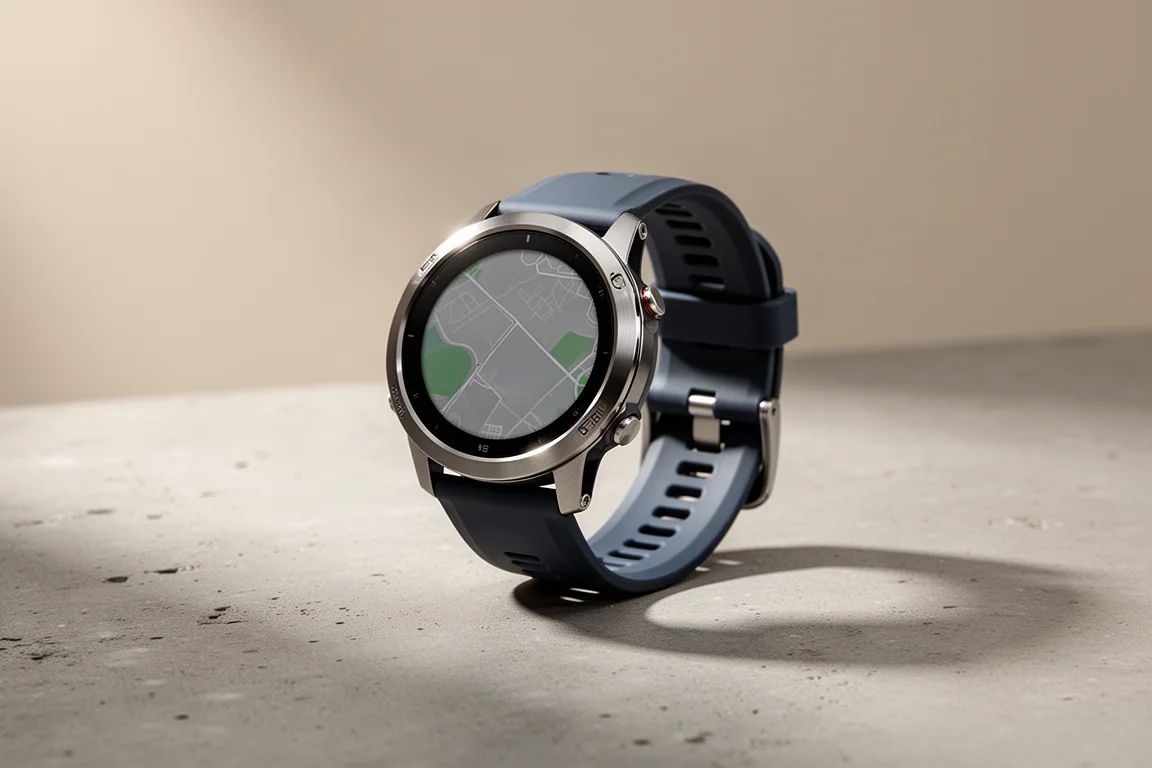
The Suunto Race S is Suunto’s latest endurance sports watch, and it is more than just a smaller version of the Suunto Race. Through a combination of hardware changes, algorithm updates and new software features, it has become one of the most impressively priced endurance sports watches on the market today. It has been put through its paces across swimming, cycling and running, as well as everyday smartwatch use, and the verdict is straightforward: at $349, with a stainless steel case, this watch undercuts the competition in a way that is hard to ignore.
This review covers what is new, how it compares with the larger Suunto Race, how it handles accuracy across sports, and whether it works as described in daily use.
What’s New in Hardware
The headline number is $349, which is $100 less than the $449 stainless steel edition of the original Suunto Race. This is not a plastic budget watch: the Race S uses a stainless steel case. Suunto is clearly targeting Polar and COROS pricing strategies with this one, undercutting both considerably.
The case measures 45mm compared to the 49mm of the larger Suunto Race, and the display is a 1.32-inch AMOLED panel versus the 1.43-inch AMOLED on the Race. The resolution is identical at 466 pixels across, which means the smaller unit actually has a higher pixel density. Weight drops from 83g on the stainless steel Race to 60g on the Race S. One trade-off: the glass is Gorilla Glass rather than the sapphire crystal on the larger Race, though in practice this has not proven to be much of an issue.

The most important hardware change sits on the back: a new optical heart rate sensor with double the LEDs of the previous generation. The original Suunto Race’s heart rate sensor was widely criticized, and this new sensor is a major step up. It is not quite at the level of Apple or Garmin, but it squeaks in just below, which is genuinely good news.
Storage increases from 16GB to 32GB, which is almost entirely used for maps since there is no music storage on the watch. Notably, the Race S is manufactured in Finland, with units for North America and Europe generally coming from Finland and units for Asia from China. The watch also keeps multiband dual-frequency GPS, 50-meter water resistance, and industry-standard 22mm swappable bands.
New Software Features: Climb Guidance and More
The flagship software addition is Suunto’s Climb Guidance, its answer to Garmin’s ClimbPro. When a route with climbs is loaded, the watch detects upcoming climbs and displays them with a dedicated screen showing elevation remaining and distance to the top, coloring in completed sections as you progress. In testing on a hilly run, the elevation profiles were accurate and the feature worked well.
Two tweaks would make it better: a full list of climbs shown when the route is loaded, and gradient-based coloring rather than a single continuous color, which makes it easier to see at a glance how steep the next section will be. Still, a strong first attempt.
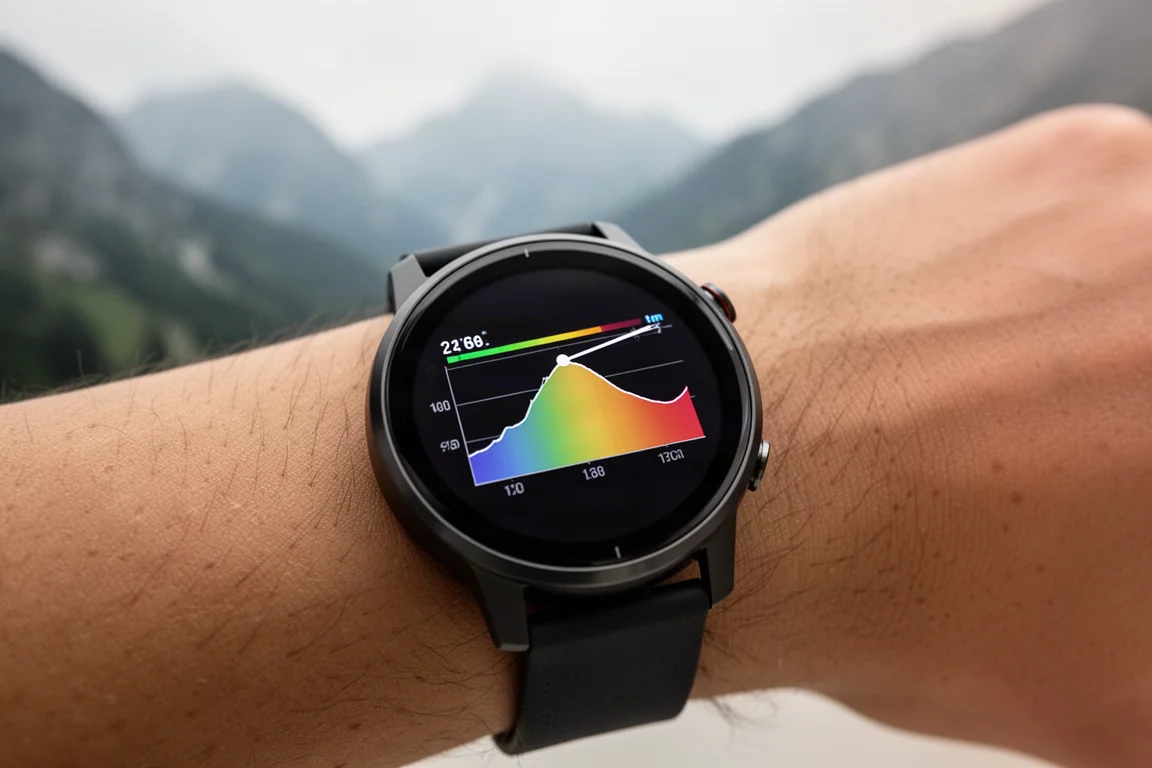
Beyond climb guidance, there are three new watch faces that can now be customized directly from the watch itself, including complications and colors. A faster UI brings virtually lag-free swiping through menus, a clear improvement over the larger Race. Smaller but meaningful updates include roughly four times more emoji, now in full color; map zoom extended from 2km out to 20km; sport-specific display settings; more compact turn-by-turn notifications; data page browsing while an activity is paused; Vietnamese language support; and menstrual cycle tracking added to the Suunto app, though currently manual logging only rather than automatic detection.
A Walk Through the Watch
The Race S offers both an always-on display mode and a gesture-based mode. Real-world battery life came in at roughly three to four days with always-on display and about four and a half to five days in gesture mode, a little below the optimistic chart on screen. GPS battery estimates, however, were accurate: around 29 hours without navigation and around 19 hours with navigation enabled.
Widgets include a log book, training load trending, performance stats, running estimates and HRV status gathered overnight. Sleep timing, including fall-asleep and wake-up times, proved accurate, though sleep stage data is not something worth judging too closely on any watch. A built-in flashlight mode is more than bright enough for finding your way around a dark hotel room at night.
On the sport side, there are plenty of customizable sport profiles, battery performance modes from Endurance to Ultra, route loading with navigation, light or dark map styles, structured workouts, and a large library of Suunto+ apps. Maps are free worldwide, broken into small regional chunks and downloaded over Wi-Fi.
One genuine weak point: sensor pairing. Only one power meter can be paired at a time, there is no support for multiple bikes or trainers without unpairing and repairing, and sensor names are not shown. This remains the biggest area Suunto needs to fix to be competitive.
Accuracy: Heart Rate, GPS and Swimming
The heart rate story is a dramatic turnaround. On steady-state runs, apart from a brief settling period in the first 60 to 90 seconds, readings were essentially perfect. Steeper runs with downhill sections avoided cadence lock entirely, and 800-meter hard intervals were tracked very solidly from start to finish.

Outdoor cycling, however, was not good at all. The Race S joins the long list of watches that struggle with wrist-based heart rate on the bike, so riders serious about cycling data will want a chest strap.
GPS accuracy, by contrast, is spot on. Across mountains, cities, running and cycling, every track tested looked excellent, matching the already-strong performance of the original Suunto Race. Open water swimming, which has been troubling on the larger Race, worked well on the Race S: the track sat close to the reference line and the watch handled treading water for 15 to 30 seconds without issue, something its bigger sibling still struggles with.
Where Suunto Stands
Over the past 14 months, Suunto has gone from teasing at the edges with the Vertical, to delivering an impressively priced watch with the Race, to now dropping the price again while packing in more features and better accuracy. They took a $449 watch, made it smaller, more accurate and more feature-rich, and priced it at $349, cheaper than virtually every competitor in the segment.
It is not flawless: cycling heart rate is poor, sensor pairing is clunky, and there is no music storage or playback. But for runners, swimmers and multi-sport athletes who want excellent GPS, strong running heart rate accuracy, free maps and a premium stainless steel build, the Race S is a genuinely outstanding value.
Conclusion
Suunto nailed it with the Race S. It delivers nearly everything people asked for, at a price that undercuts the competition, with accuracy that now ranges from very good to excellent depending on the sport. Runners and swimmers in particular should feel confident buying it; cyclists pairing a heart rate strap will get the most out of it. For the price, it is one of the best endurance sports watches available today.
Product link
View more details for Suunto Race S
This product is mentioned in the review. Check the specifications, options, and compatibility before buying.
View more details for Suunto Race SFurther reading
Related Reviews
Sports Watches
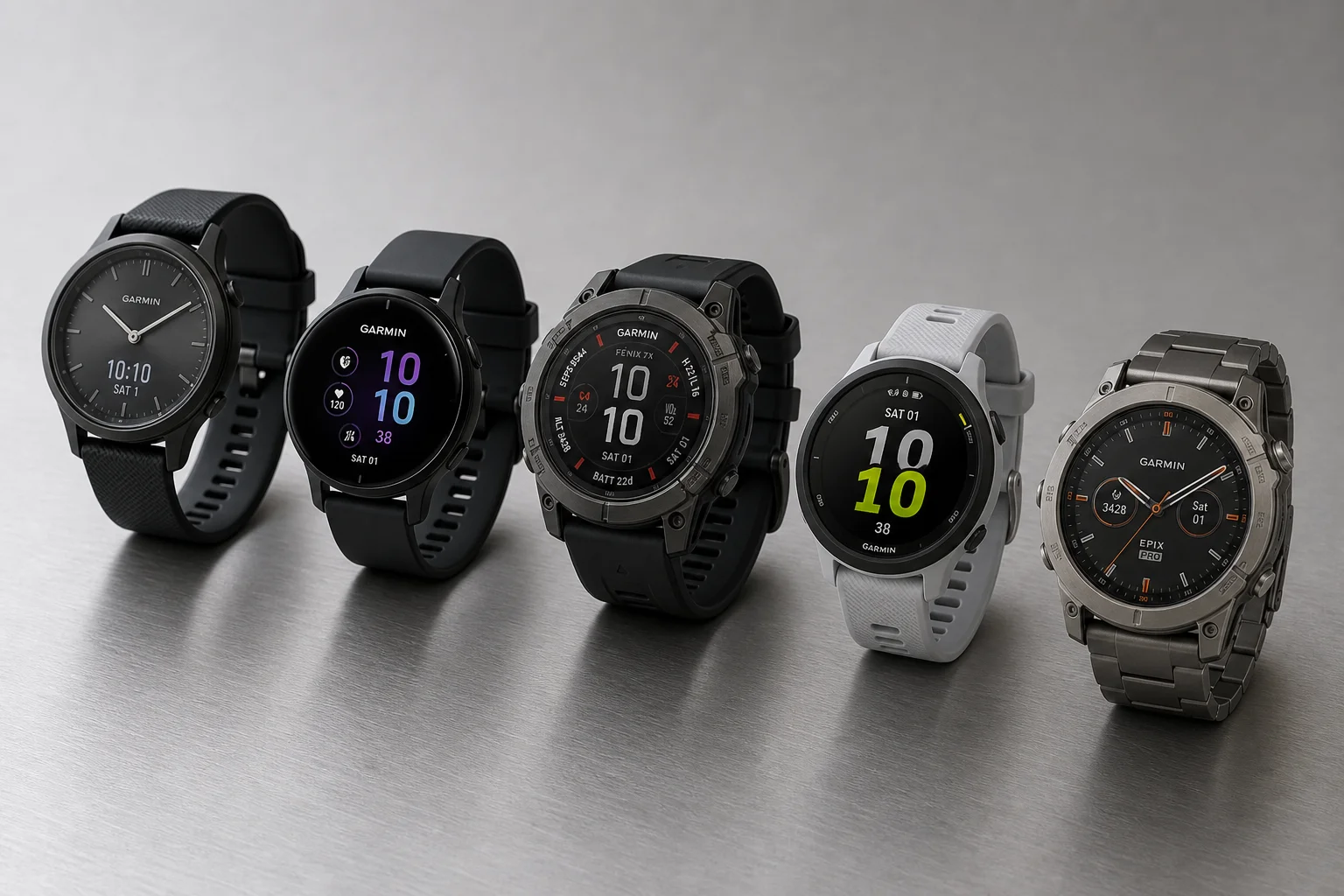
Garmin Sports Watch Guide: Finding the Right Model for Your Fitness Level
A comprehensive overview of Garmin's sports watch lineup, from casual fitness trackers to advanced multisport devices, helping you choose the right model for your needs and budget.
Sports Watches
Coros Pace Pro Review: A Complete Overhaul That Finally Feels Premium
Coros rebuilt the Pace Pro from the ground up with an AMOLED display, onboard maps, and a new heart rate sensor. Here is how it all holds up in real use.
Sports Watches
Polar Vantage M3 Review: The Sweet Spot in Polar's New Watch Lineup
A closer look at the Polar Vantage M3, which brings an AMOLED display, dual-frequency GPS, offline maps and the same software platform as Polar's flagship watches at a friendlier price.