Road Bikes
SuperSix Evo Hill Climb Build Review: A 5.8 kg Rim Brake Race Bike
A stripped-back SuperSix Evo hill climb build that drops roughly 25 percent of its frame weight, paired with Dura-Ace Di2, Cane Creek eeBrakes and a 5.8 kg total.
Introduction
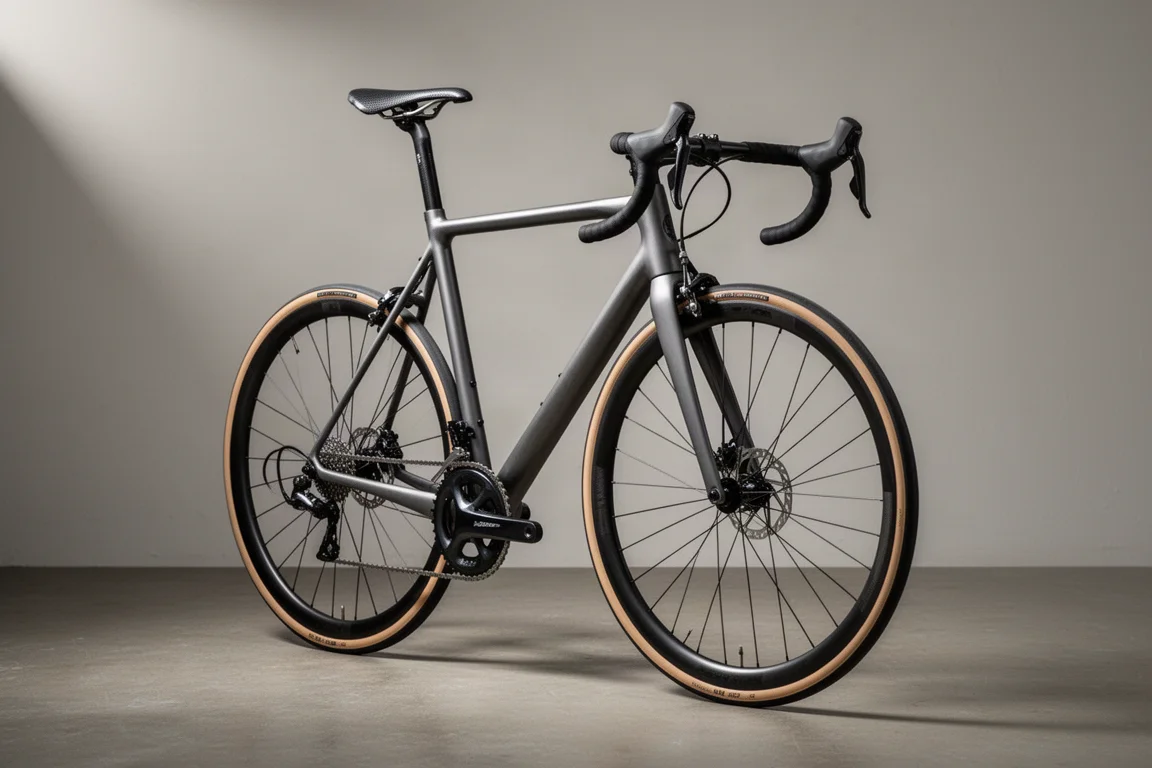
The SuperSix Evo is an older rim brake platform that has been taken about as far as a rim brake platform can go. The factory paint is gone, a measured amount of surplus carbon has been removed from the frame itself, and nearly every remaining part has been chosen with weight as the first priority. The finished bike weighed 5.80 kg on the scales.
The headline number is the frame. It went into the tuning process at 850 g and came out at just under 650 g, which is close to a 25 percent reduction on a frame that was already considered light. That single change shapes everything else about how this bike is built, how it rides, and who should consider something like it.
Who This Bike Is For
This is a hill climb build in the purest sense. It suits riders who treat gradient as the whole event, where every gram carried upward costs time and where a firmer, more direct ride is an acceptable trade for a lower number on the scale. It is also a build for riders who still prefer rim brakes and want the freedom that comes with them.
That freedom is practical rather than nostalgic. Because the frame uses conventional interfaces, the stem, handlebars and seatpost can all be swapped, which is not always possible on more modern disc brake bikes where much of the cockpit is integrated and choice is limited. For anyone who likes to tune position and parts over time, that flexibility is a genuine advantage.
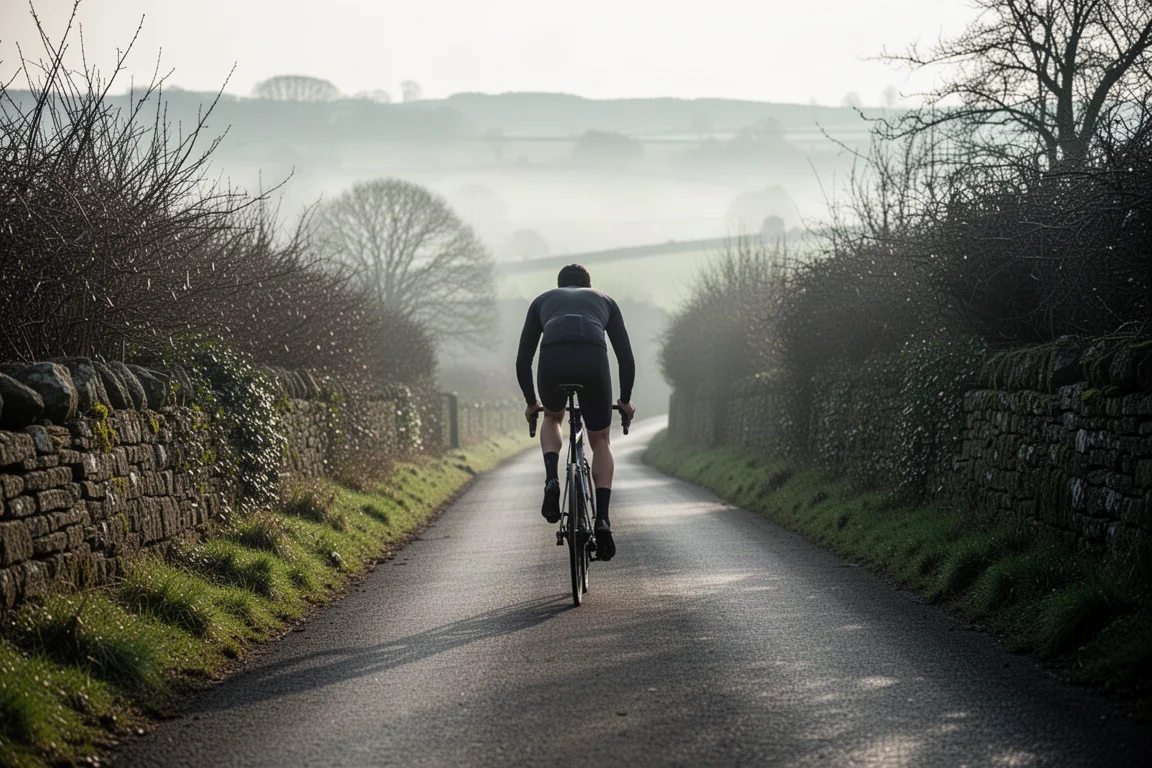
It is not a comfort-first or aerodynamics-first machine, and it is not aimed at riders who want one bike for everything. The appeal here is narrow and specific: minimum weight, a classic frame design, and a parts list assembled around that goal rather than around versatility.
Main Strengths
The strengths of this build are concrete. An unusually light frame, a carefully chosen component list, and a ride character that follows directly from both.
Frame Tuning and Paint Removal
The frame was taken to Carbon Bike Repair in Leatherhead, where all of the original factory paint was stripped and surplus carbon was removed from the structure. The work used computer modelling of the frame to work out where material was needed and where it could be taken out, and a robotic tool with an accuracy of around 0.03 mm handled the removal itself.
On modern carbon frames, tube walls can be only a few millimetres thick and sometimes thinner, so in some areas there was very little material left to remove. Even so, the frame went from 850 g to just under 650 g. That is a substantial saving on a component that already sits at the light end of the market.
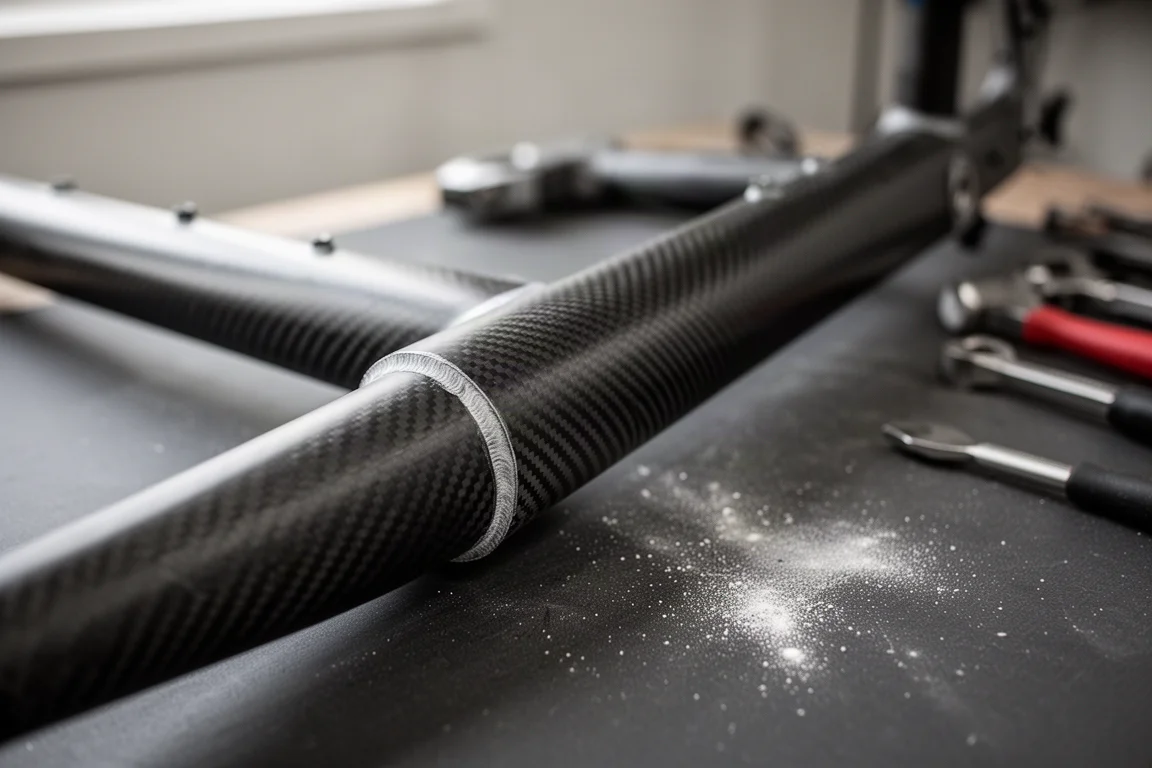
The result is a frame that has been turned into a dedicated hill climb tool rather than a general purpose race frame. It is a specialist process, and it is the part of this build that cannot simply be replicated by buying different parts.
The Component Build
The drivetrain is an 11-speed Shimano Dura-Ace Di2 groupset running a single ring at the front. The chainring is a standard 39-tooth item rather than a narrow-wide one-by profile, paired with an 11-28 cassette at the rear. The cranks are 172.5 mm, a length the rider has always used.
Braking comes from Cane Creek eeBrakes, which are around half the weight of a standard Dura-Ace caliper and stand out visually thanks to their bright anodised finish. A Rotor power meter with carbon cranks handles power measurement, chosen for consistency across bikes rather than for outright weight savings alone.
The cockpit and contact points follow the same logic. An MCFK carbon stem and matching seatpost keep the front end light, and a custom computer mount sits neatly against the carbon bars. A second-generation Di2 junction box is mounted just under the stem on a tidy bracket, a small detail that keeps the older 11-speed wiring discreet. The saddle is a short-profile carbon model, the type that looks far less comfortable than it rides once you are used to it.
The wheels are Hunt items at roughly 950 g for the set, which puts them in the same territory as the brand’s newer disc-specific hill climb wheels. They are fitted with tubular Vittoria Chrono CS tyres, a very light near-track design that is no longer available to buy new.
Real-World Weight
On the scales the complete bike came in at 5.80 kg with pedals fitted. Remove the pedals and the figure would drop to somewhere around 4.8 to 4.9 kg. For a road bike with a full groupset, a power meter and working brakes, that is an exceptional number.
The ride character matches the number. The bike feels light and responsive, and it is nimble to the point of feeling almost twitchy, a consequence of how little material and how many lightweight components are involved. It also transmits everything: every bump in the road surface arrives at the rider, and the frame is not quite as stiff as the disc brake LAB71 build that came in at 5.66 kg. The LAB71 feels more solid underneath, while this one feels lighter and more finely tuned.
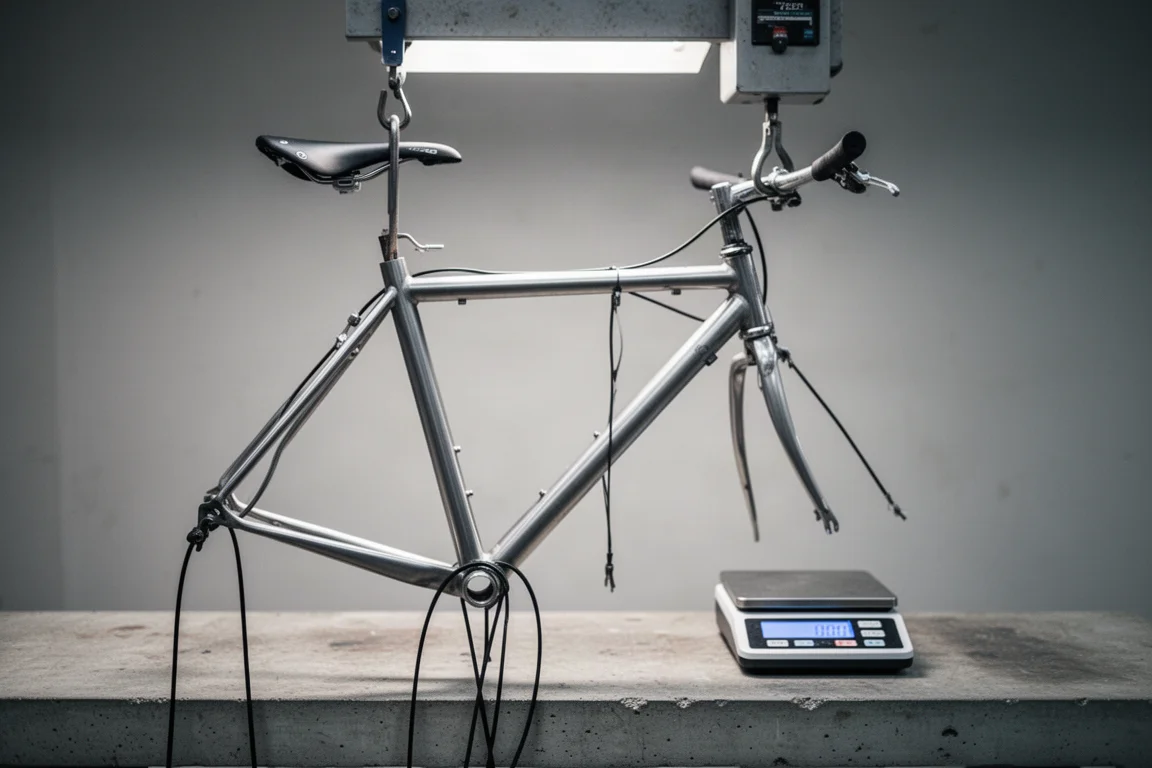
Weight is the dominant factor in a hill climb, but stiffness matters too. Riders who want the two together may find the firmer disc brake platform more reassuring, while riders chasing the lowest possible figure will accept the trade.
Things to Consider Before Buying
Comfort is the first thing to be honest about. A frame this light, with this parts list, does not filter out road buzz. Every bump is felt, and the short carbon saddle adds to that directness. Long days in the saddle are not what this build was designed around.
Stiffness is the second. Compared with the stiffer disc brake LAB71, this frame gives up some rigidity in exchange for weight. That is a deliberate choice rather than a flaw, but it changes how the bike feels under hard efforts.
Tyre supply is the third. The Vittoria Chrono CS tubulars are no longer available new, and secondhand sets are hard to find. The pair on this bike is at the end of its life, with one puncture and a failed valve, so any owner of a similar build will need to plan for replacements.
Finally, this is not an off-the-shelf bike. The frame tuning is a specialist service, and the build is assembled around a specific rider’s preferences. Anyone wanting to replicate it should expect to commission the frame work separately and to make their own component choices.
Buying Advice
This build makes the most sense for a rider whose season revolves around hill climbs and who wants the lightest reliable rim brake platform they can put together. If the goal is a low number on the scale and a direct, immediate feel on steep gradients, the approach here is close to the limit of what a rim brake frame can deliver.
The practical starting point is the frame. A SuperSix Evo with conventional stem, bar and seatpost interfaces gives you room to change position and parts over time, and the frame tuning work is what separates this bike from a standard lightweight build. The component list, from the Dura-Ace Di2 groupset to the Cane Creek eeBrakes, the Rotor power meter and the Hunt wheels, is made up of recognised lightweight parts, but the frame is the part that cannot be bought off the shelf in this state.
If stiffness matters as much as weight, the disc brake LAB71 alternative at 5.66 kg is the more solid ride and only slightly heavier. If absolute minimum weight is the priority and you accept a firmer, more talkative frame, this rim brake build is the more focused machine of the two.
Conclusion
The SuperSix Evo hill climb build is a genuinely specialist bike. Removing the paint and surplus carbon took the frame from 850 g to just under 650 g, and the rest of the build follows the same discipline, ending at 5.80 kg complete with pedals and around 4.8 to 4.9 kg without them.
It is not comfortable, it is not aero, and it is not cheap to put together. What it is, is one of the lightest rim brake race bikes you can realistically build, and for a rider whose goals are measured in gradient and seconds, that is exactly the point.
Product link
View more details for SuperSix Evo Hill Climb Build
This product is mentioned in the review. Check the specifications, options, and compatibility before buying.
View more details for SuperSix Evo Hill Climb BuildFurther reading
Related Reviews

Road Bikes
10 New Road Bikes Worth Watching: Aero, Titanium, Steel and Endurance Standouts
A practical roundup of 10 new road bikes, from aero flagships chasing single-watt gains to titanium, steel and endurance platforms built for real roads.
Road Bikes
2026 Tour de France Road Bikes: Six Race Machines Worth a Closer Look
Six race bikes from the 2026 Tour de France grid, reviewed for paint, silhouette, wheels and the specification details that matter to buyers.
Road Bikes
3T Strada Italia Review: A Radical Aero Road Bike That Rides Smooth
A made in Italy carbon aero road bike with a deep head tube, wide tire clearance and a genuinely comfortable ride. Here is what to know before buying.