Aquarium Kits
Superfish Scaper Cube 15 Review: A Complete 15 Litre Planted Cube
A compact 15 litre aquarium kit with a hang-on-back filter, a capable ScaperLine light and a 25 x 25 x 25 cm footprint that fits almost anywhere.
Introduction
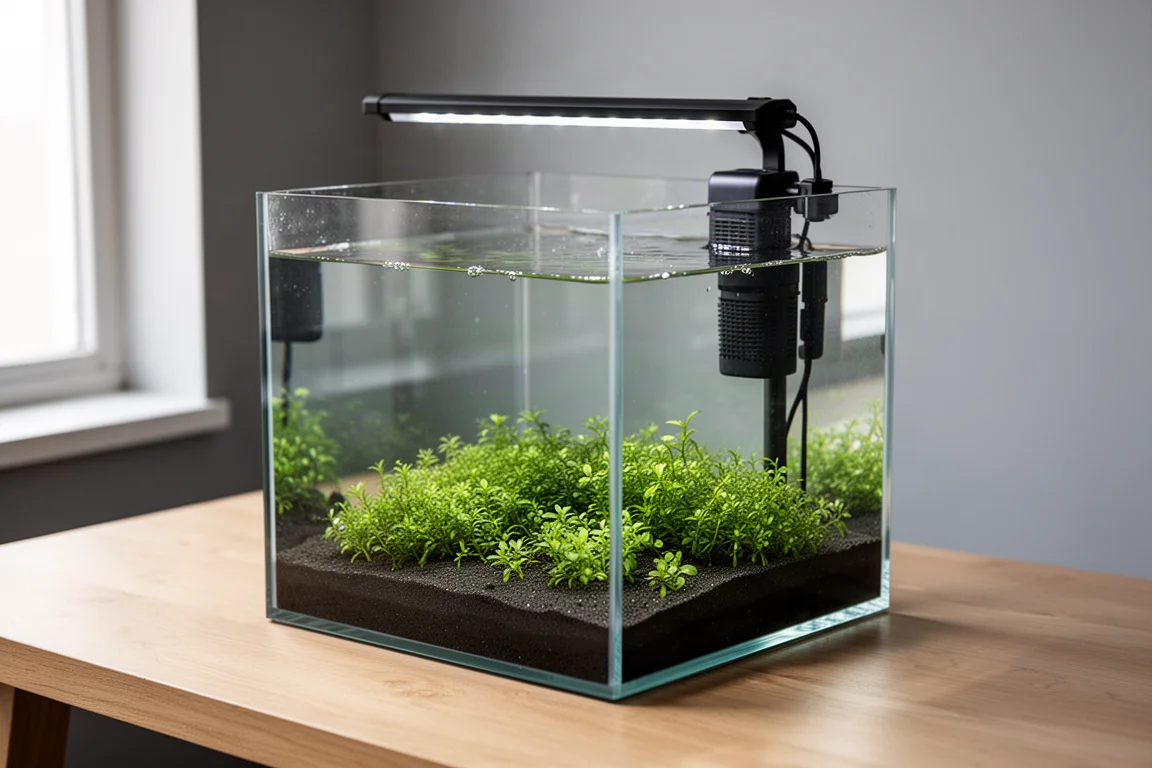
Not every aquascaper has space for a four foot tank, and not every budget stretches to one either. The Superfish Scaper Cube 15 tackles both limits at once. It is a 15 litre cube measuring 25 x 25 x 25 cm, sold as a complete kit with a hang-on-back filter and one of the smallest ScaperLine lights in the range. On a desk, a bedside table or a kitchen counter it takes up roughly the footprint of a hardback book.
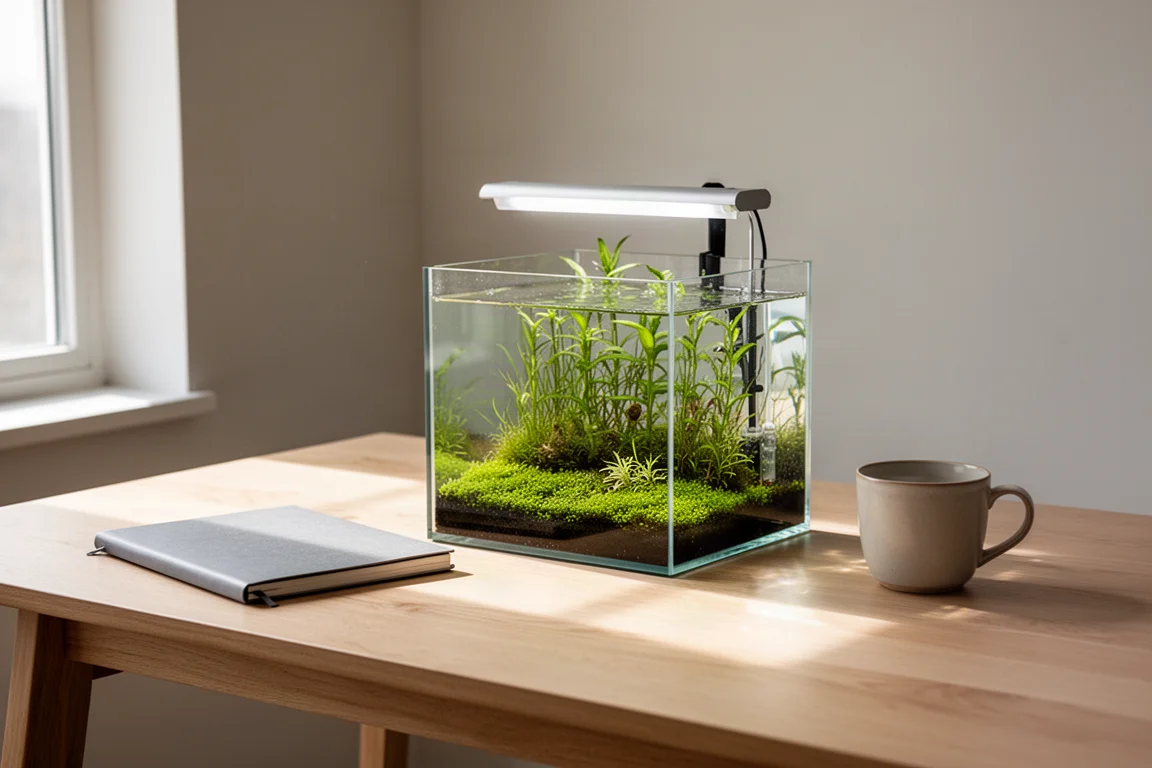
The appeal is how little is left to buy. Filter, light and a stick-on background panel all arrive in the box, so the remaining decisions come down to substrate, hardscape, plants and livestock. Anyone who has priced a planted tank from scratch will recognise how much that removes from the shopping list.
The Scaper range is a known quantity in small planted setups, and this 15 litre version keeps the same formula at the smallest scale in the line-up.
Who the Superfish Scaper Cube 15 Is For
This kit suits aquascapers who want a planted cube on a desk or a shelf rather than in a dedicated fish room. The 25 cm footprint fits where larger tanks cannot, and the low volume means small bags of substrate, a handful of hardscape pieces and a modest plant order will fill it.
It is also a sensible choice for a shrimp or snail setup. Neocaridina shrimp are hardy and settle into a wide range of water, and a tank this size is easy to plant densely enough for them to graze across the rockwork and the foreground carpet.
Finally, it works as a first planted tank. Everything needed to run water and grow plants is included, so a beginner can focus on substrate and planting technique instead of matching components.
Main Strengths
The kit is genuinely complete. The hang-on-back filter clips to the rear glass, the ScaperLine light sits on the rim, and the background panel presses onto the back of the tank in either black or white. Set-up is a matter of unpacking, slotting the parts together and switching on.
The light punches well above its size. It is the smallest unit in the ScaperLine range, yet it delivers enough output to drive demanding carpeting plants and colourful stems. In a tank this shallow, that intensity reaches the substrate where foreground plants need it most.
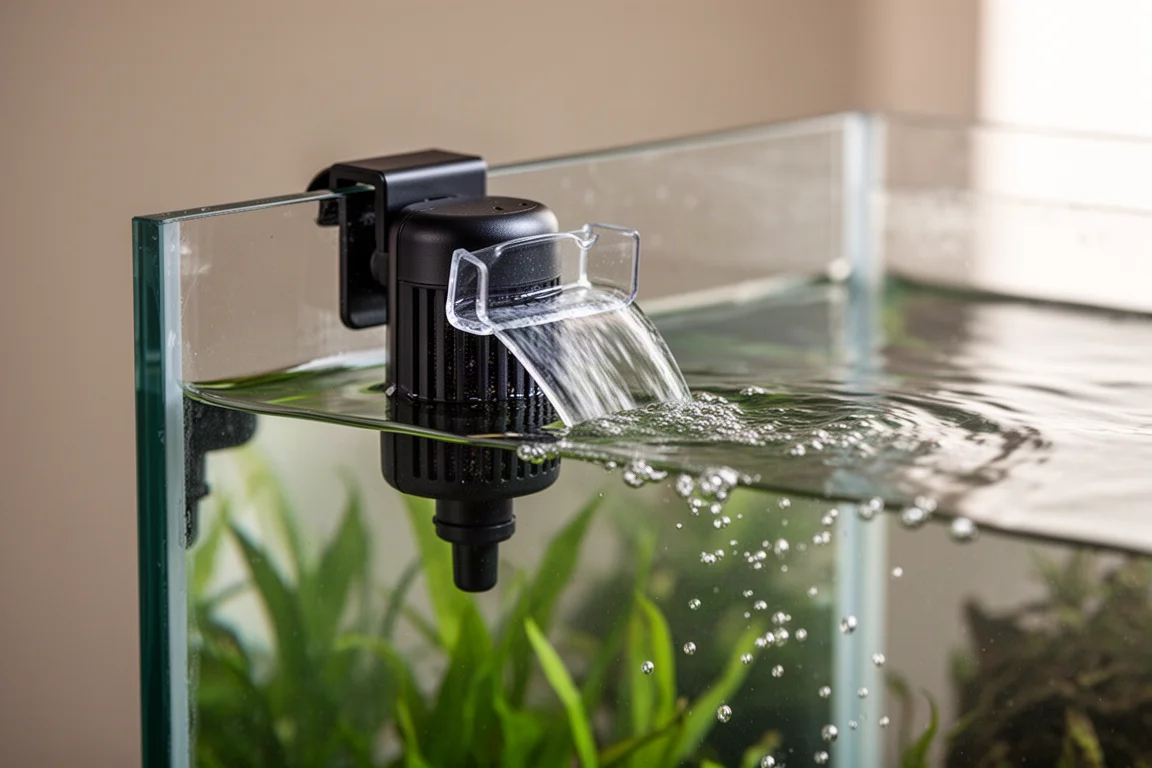
The filter is quiet and simple to live with. Once the rear chamber is filled to prime it, trapped air clears within seconds and the pump runs silently. Flow is adjusted with a small knob, and the cartridge uses fine filter floss that can be removed, taken apart and washed rather than replaced.
Because the tank is small, the running costs stay small too. Smaller substrate bags, fewer plants and shorter lengths of hardscape all cost less than their full-size equivalents, and the filter floss approach avoids a steady stream of replacement media.
Things to Consider Before Buying
Fifteen litres is a small volume, so stocking should stay light. Shrimp and snails are the natural fit; the tank rewards a low, stable population rather than a heavy fish load.
The kit does not include substrate, hardscape, plants or livestock, and those items still add up. A nutrient base layer, a bag of sand, a few pieces of stone and a handful of plant pots are the minimum for a planted scape, and the bill grows quickly if you buy generously.
The included surface skimmer pipework is optional. In a tank this size the surface agitation from the filter outlet is often enough on its own, and the extra pipework can be left in the box.
Substrate colour matters more than it looks. A light substrate reflects a high-output light back into the water and can encourage algae, which is why a dark sand cap is a safer match for the light supplied.
Plant condition is worth checking on arrival. Monte Carlo grown under weak light in a shallow container can look pale and collect algae on its leaves, and starting with fresh pots is usually less work than trying to recover tired plants.
Setting Up and Planting
The substrate comes first. A nutrient base layer gives the roots a food source, and a thin layer of aquatic compost on top adds organic matter that breaks down slowly inside the substrate. Both are then capped with sand, and the cap should sit higher at the back of the cube so the planting bed rises toward the rear glass.
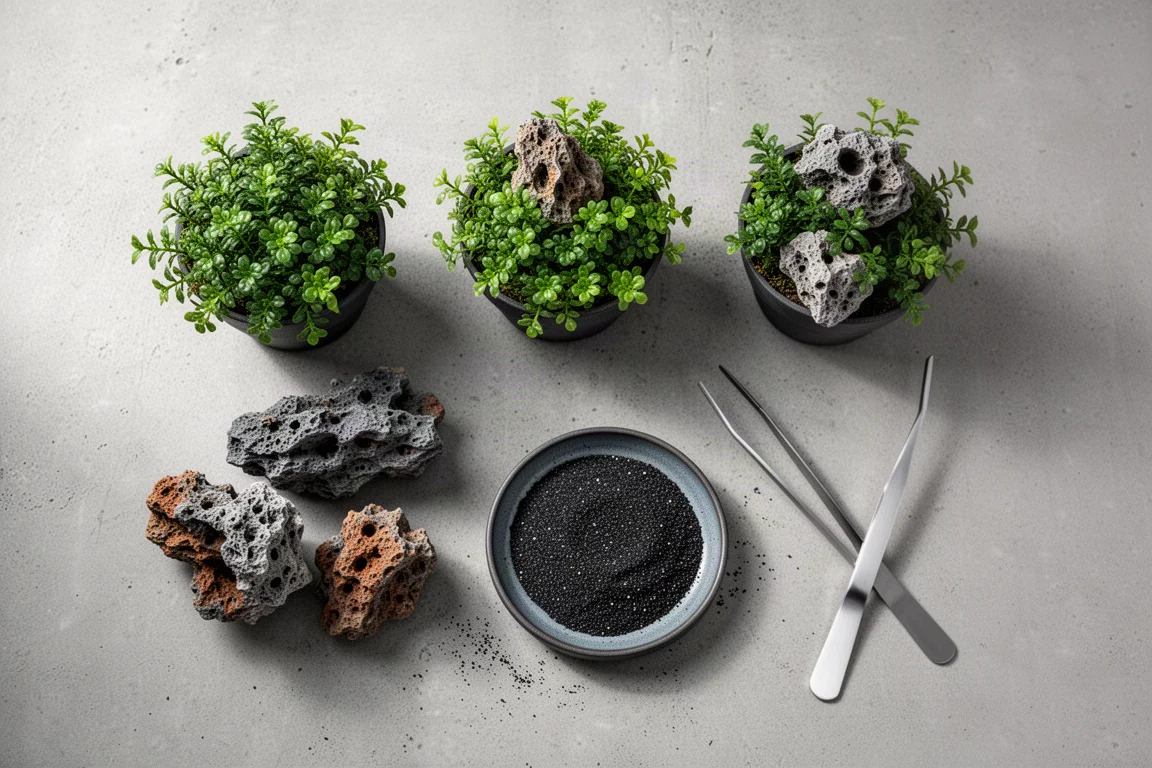
Hardscape comes next. Odd numbers of stones look more natural than even ones, and a single main piece placed slightly off centre gives the scape a focal point without crowding a 25 cm cube. Dragon stone is a good match here, though it holds pockets of clay and needs a gentle rinse so the softer sections do not crumble away.
Foreground plants go in before the tank is filled. A carpeting species such as Monte Carlo can be broken into small sections and pressed into the sand, where it will spread and tighten into a low mat. Stem plants are easier to position once the tank is full and the filter is running, because you can see immediately whether they are standing upright or being pushed around by the flow.
Priming the filter is straightforward. Filling the rear chamber with water submerges the impeller, and the pump pulls the remaining air through the pipe before settling into a steady flow. If the outlet pushes water down into the foreground, a small folded plastic lip hooked under the nozzle redirects it across the surface instead.
Livestock and Maintenance
Neocaridina shrimp are the standout choice for this volume. They are hardy, they graze constantly across rockwork and plants, and a densely planted cube gives them plenty of surface to work over. Snails settle in quickly alongside them and help keep the substrate turned.
New tanks offer little natural food at the start, so a small amount of algae wafer broken into tiny pieces is a useful first meal. It sinks into cracks and crevices where shrimp and snails can reach it, and the filter flow spreads it across the tank.
Water testing matters most in the first weeks. Ammonia and nitrite are the two readings to watch on a new system, and daily checks for a short period give early warning of any spike. With a light livestock load and plenty of actively growing plants, nitrate is unlikely to build up, but it is still worth tracking.
Maintenance is minimal. The filter floss cartridge lifts out for rinsing, the glass wipes clean, and trimming the stem plants keeps the background dense. Any wood added to the scape may grow a light fungal film in the first days, which brushes away easily or disappears on its own.
Buying Advice
The Scaper Cube 15 is widely available online, so a search for the kit name will bring up stockists. Before ordering, decide on the substrate approach, because the nutrient layer and the sand cap are best bought together with the tank.
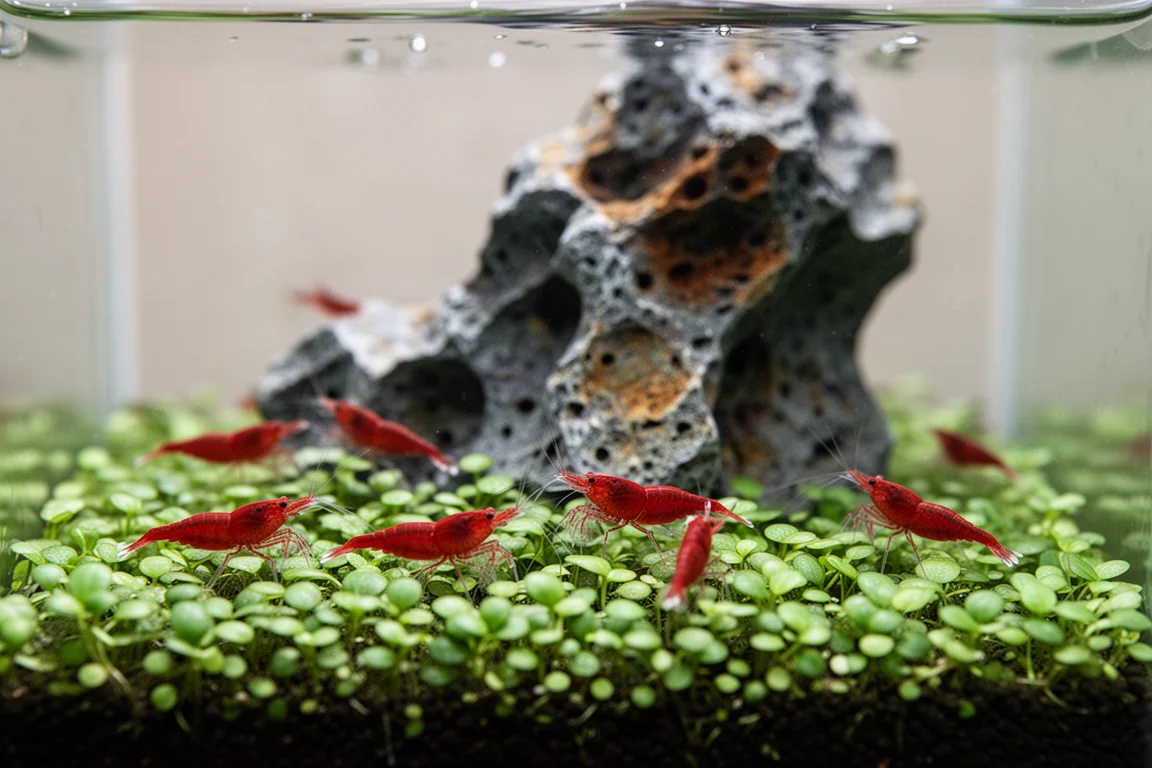
Planting can be staged to spread the cost. One pot of a carpeting species and one or two pots of stems will look sparse at first, but a small cube fills in faster than most people expect. Carpeting plants root and spread across the foreground within weeks, and stem plants can be trimmed and replanted to thicken the background. Buying generously simply shortens the wait.
Choose the background panel colour and the substrate tone as a pair. Black sand with the black panel keeps the light contained and makes green foliage stand out, while a lighter substrate will lift the brightness of the whole scape at the cost of more reflected light in the water.
Conclusion
The Superfish Scaper Cube 15 gets the small planted tank right. It arrives as a working kit with a capable light and a filter that is quiet, adjustable and easy to clean, and it fits on surfaces where a larger aquarium simply would not go. The trade-off is the same one every nano tank makes: less water volume means a lighter livestock load and more attention to water parameters in the early weeks. For aquascapers who want a compact, plant-focused cube without assembling a parts list from scratch, it is an easy kit to recommend.
Product link
View more details for Superfish Scaper Cube 15
This product is mentioned in the review. Check the specifications, options, and compatibility before buying.
View more details for Superfish Scaper Cube 15Further reading
Related Reviews
Aquarium Kits
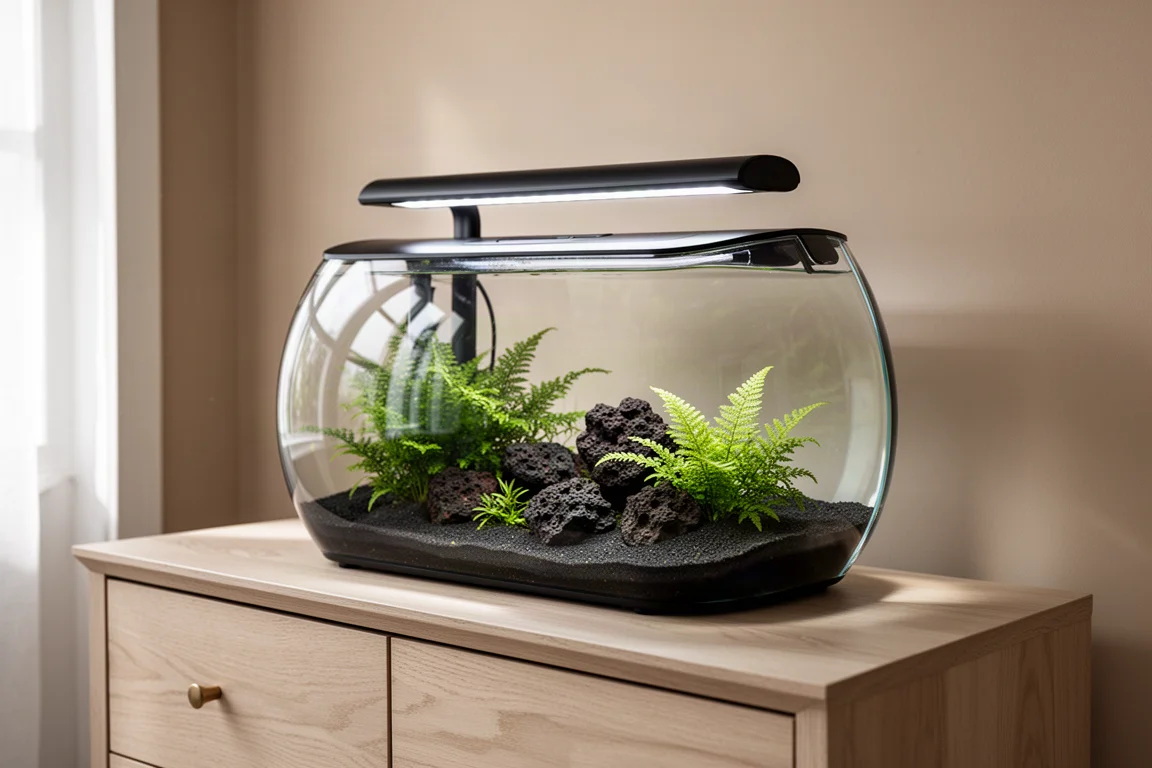
Fluval Flex 2.0 Review: A Compact All-in-One Aquarium That Impresses
A practical look at the Fluval Flex 2.0, covering its built-in filtration, RGB LED lighting, easy planted setup, and the trade-offs to check before buying.
Aquarium Kits
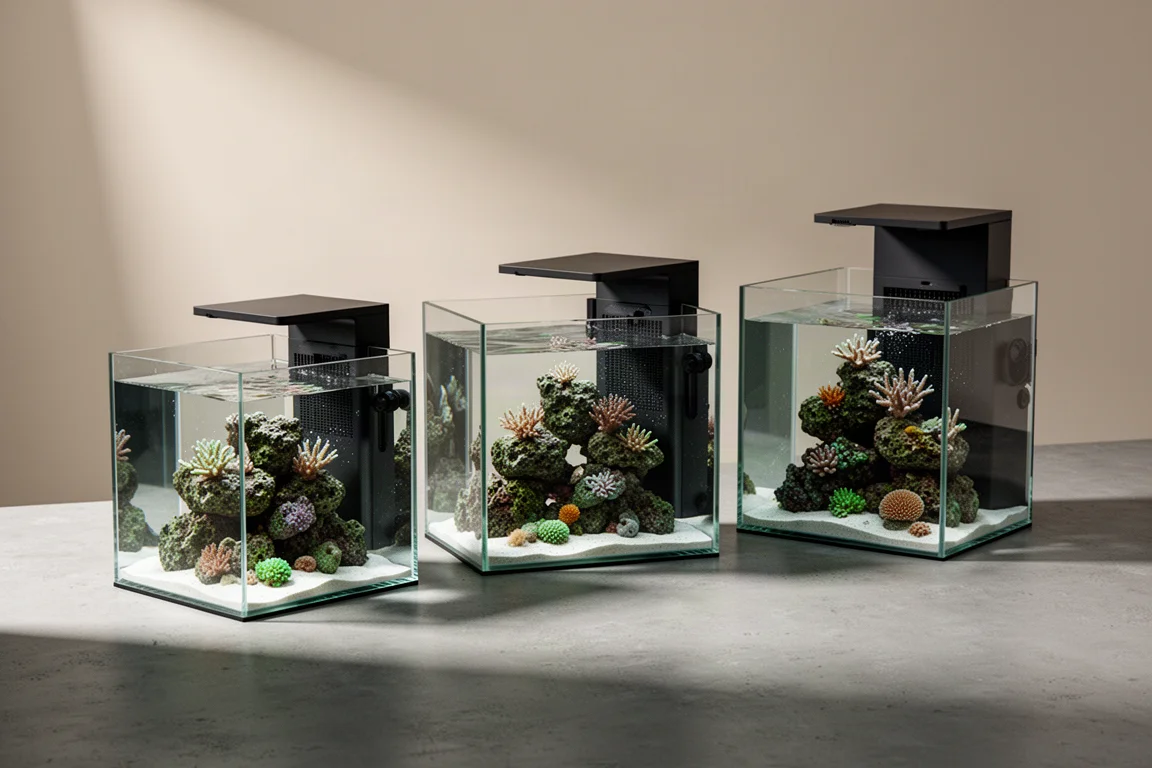
PNW Custom Nano Reef Tanks: Three Compact All-in-One Kits Compared
A closer look at three PNW Custom all-in-one reef tanks, from a 40 oz micro system to a 5 gallon kit, including what each one ships with and who it suits.
Aquarium Kits
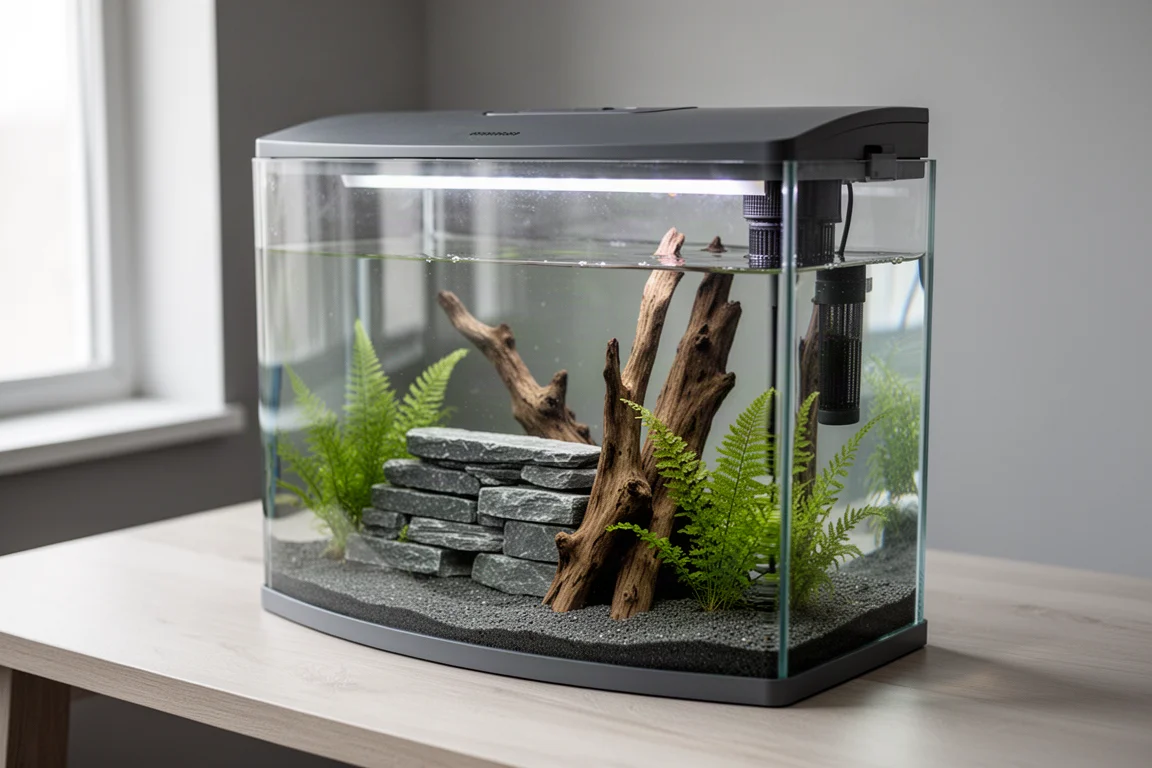
Superfish Panorama 35 LED Review: A Compact All-in-One Nano Aquarium Kit
A practical look at the Superfish Panorama 35 LED kit, its top filter and 6W LED, plus the Superfish Scaper LED 64 as a low-cost lighting upgrade.