Aquarium Kits
Fluval Flex 2.0 Review: A Compact All-in-One Aquarium That Impresses
A practical look at the Fluval Flex 2.0, covering its built-in filtration, RGB LED lighting, easy planted setup, and the trade-offs to check before buying.
Introduction
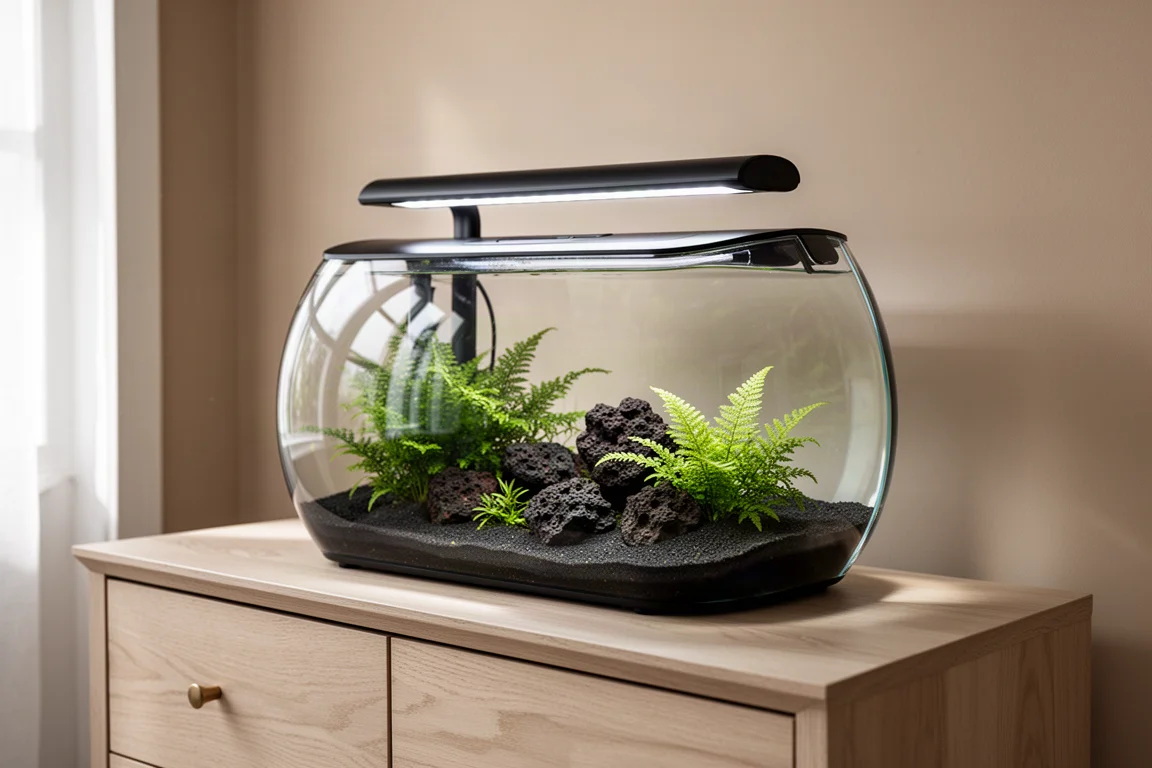
The Fluval Flex 2.0 is a compact all-in-one aquarium that gathers filtration, lighting and a lid into a single curved glass body. It arrives in a box inside a box, and a surprising amount of the hardware is already fitted by the time you lift the lid off.
That packaging approach matters more than it sounds. Kits in this category often cut corners on the light and leave you shopping for a replacement within a month. The Flex 2.0 takes the opposite route, with a rear filtration compartment that stays out of sight and an LED lid that turns out to be the most pleasant surprise of the whole package. This review walks through what comes in the box, how the light and filter behave in real use, how a simple planted setup comes together, and what is worth knowing before you commit.
Who the Fluval Flex 2.0 Is For
This tank is clearly aimed at people who are new or fairly new to the freshwater hobby. It suits anyone who wants something that looks deliberate in a living space, hides its equipment, and does not demand a workshop of tools and knowledge to get running.
The shape helps here. The body is roughly cube-like without being a true cube, and the curved front pane creates a gentle panoramic effect. Looking through the glass, the tank appears wider through the middle than at the edges, which makes the interior feel roomier than the footprint suggests.
Setup leans toward a planted style. With a nutrient base under a coarse sand cap, ferns and stem plants on the hardscape, and a modest group of small fish, the Flex 2.0 can settle into a low-maintenance rhythm rather than a weekly chore list.
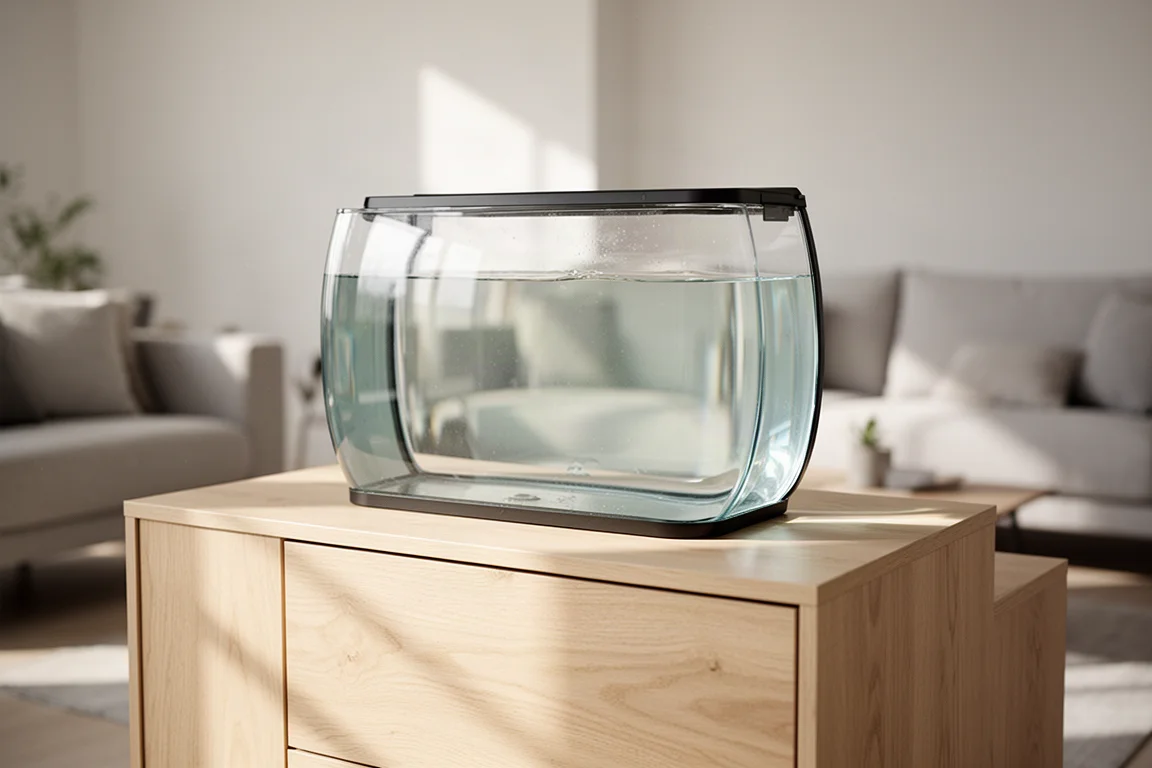
It is worth being realistic about what this tank is not. It is not a large-volume system, and it will not suit keepers who want to stock heavily or keep big, messy fish. Read it as a well-behaved starter aquarium that rewards restraint.
What Comes in the Box
Unpacking reveals a few thoughtful inclusions. A mat is supplied for the base, which saves the guesswork of finding something flat and protective to sit the tank on.
The filtration media is largely pre-fitted. Several sponges are already in place inside the rear compartment, and there is an additional basket at the bottom that slides in neatly. Spare baskets are included too, so if you want to load in extra biological media later, the slots are already there. Charcoal and fine filter pads slide into a side channel and sit flush once pressed in.
The pump sits in the rear compartment and comes with a rubber band wrapped around the body plus rubber feet. The intent is clear: keep the housing from knocking against the glass and cut down on vibration noise. It is a decent-sized pump, which is a good sign for circulation.
At the outlet you get a choice. A nozzle fitting is one option, a spray bar is the other, and switching between them is a quick job rather than a rebuild.
Lighting and Filtration: Where This Kit Impresses
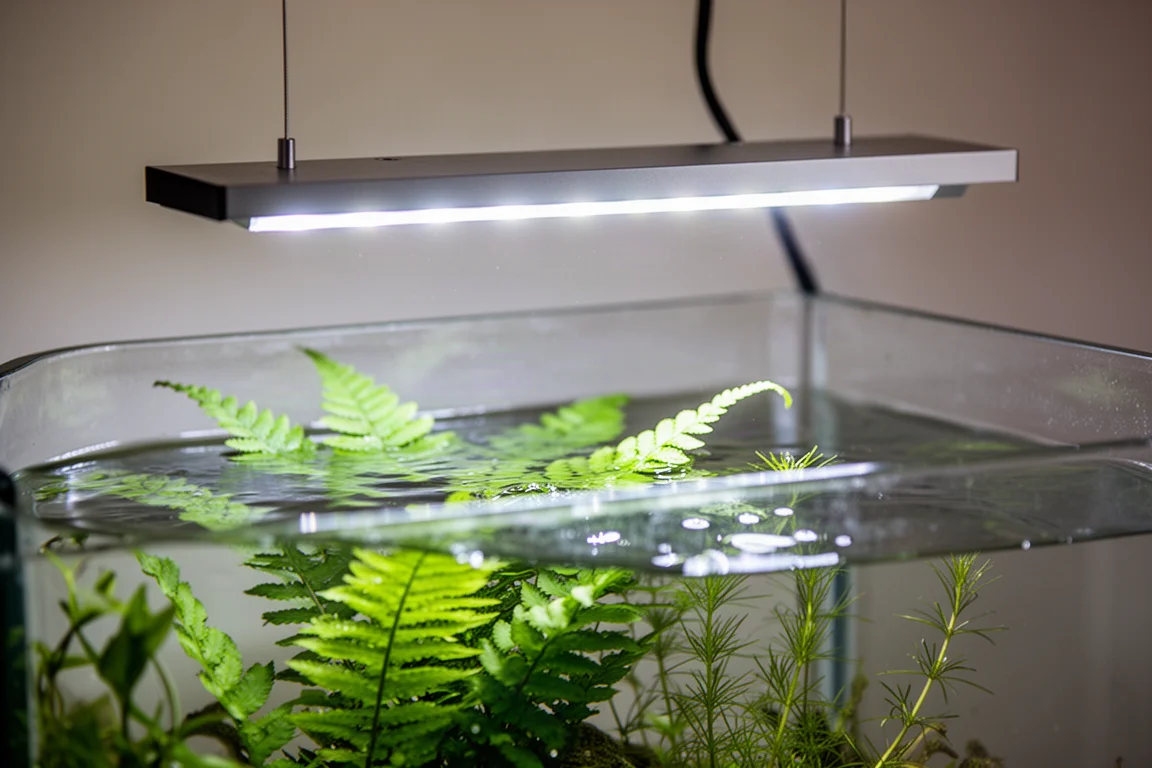
The lighting is the standout feature. The lid carries a slim strip that runs a clean white band around the outside while full-colour LEDs sit on the inside, and the colour can be set to whatever tone you want for the tank. There is a night mode as well for lower-light viewing. One small catch: the remote does not ship with a battery, so have one ready before you plan an evening of fiddling with colour settings.
Output is genuinely strong for a built-in fixture. The spread reaches across most of the footprint, leaving only the very front edge and the top back corner less lit, which in practice is where you would not plant anything anyway. Reds in stem plants hold their colour under it. For anyone who has owned an affordable kit with a weak stock light and ended up mounting something else over the top, this is the part that changes the calculation.
The filtration side holds up too. Water enters at one side of the rear compartment, passes through the sponges and the filter media, and is pumped back out at the other. It works as an internal sump hidden behind the scape. Flow is generous, and with the two outlet points you can aim one at the surface and one toward the bottom, which produces visible surface movement and good overall turnover.
Clarity arrives fast. Fine polishing pads at the back clear the water quickly, and within a day the tank looks settled rather than newly filled.
A small design detail worth noting is the honeycomb-style moulding near the top of the glass. It acts as a water line visor, so the level and any mineral deposits along the waterline are far less obvious from the front. It also reads as a deliberate part of the tank’s look rather than a functional afterthought.
Setting Up a Low-Maintenance Planted Scape
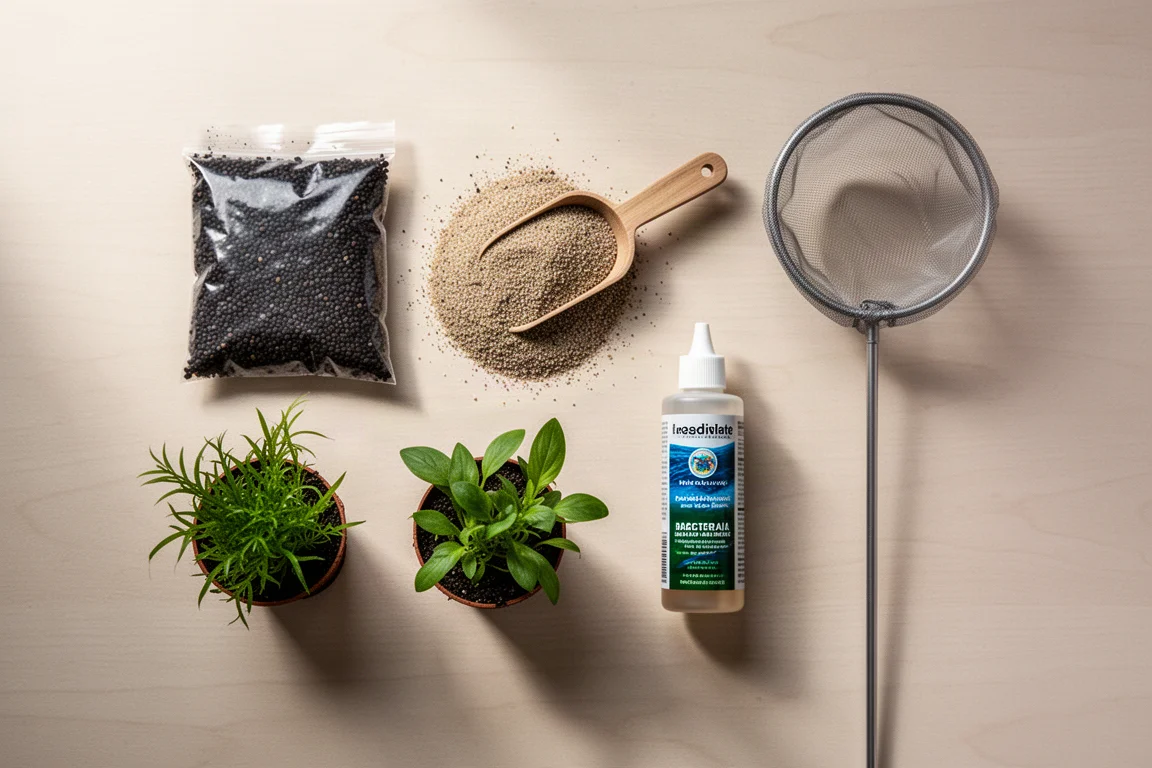
The foundation of a planted tank is the substrate, and the Flex 2.0 responds well to a layered approach. A nutrient-dense base gives roots what they need and helps plants keep the water clean as they grow. A simple version mixes an aquatic compost with gravel at roughly two parts gravel to one part compost, which is enough on its own if that is all you have to hand.
Capping is the step that matters most. A coarse or medium-grain sand locks the nutrient layer down so the water does not turn brown when you fill the tank. Very fine play sand is best avoided. It compacts so tightly that waste and debris sit on the surface instead of working their way into the substrate, unless you keep bottom-dwelling fish that stir it.
Over that, an island composition suits the shape well. A single spine of hardscape running up the middle, built from interlocking black lava rock, leaves open swimming and planting space at both the front and the back. Because the nutrient layer is already in place, you can build the rockwork with visible gaps without worrying about substrate spilling through. Driftwood with upward prongs adds height, and smaller offcuts can be placed separately so the arrangement does not read as one heavy mass.
Plants go in two ways. Ferns such as trident fern and narrow leaf java fern, along with anubias, simply sit attached to the wood and draw nutrients from the water column. Stem plants need to be rooted into the sand. Filling the tank with water first makes that easier, because wet sand grips the base of each stem and holds it upright while you work. Bunching stem plants and weighing them temporarily is one shortcut, but planting straight into the sand works just as well and the roots will find their way down.
If you are building this from scratch, a realistic shopping list is three or four pots of java fern, a couple of pots of anubias, and three or four pots of easy stem plants such as rotala or ludwigia. A modest starting plant mass is fine. It grows in, and you can trim and replant as it fills out.
Living With It: Stocking and Maintenance
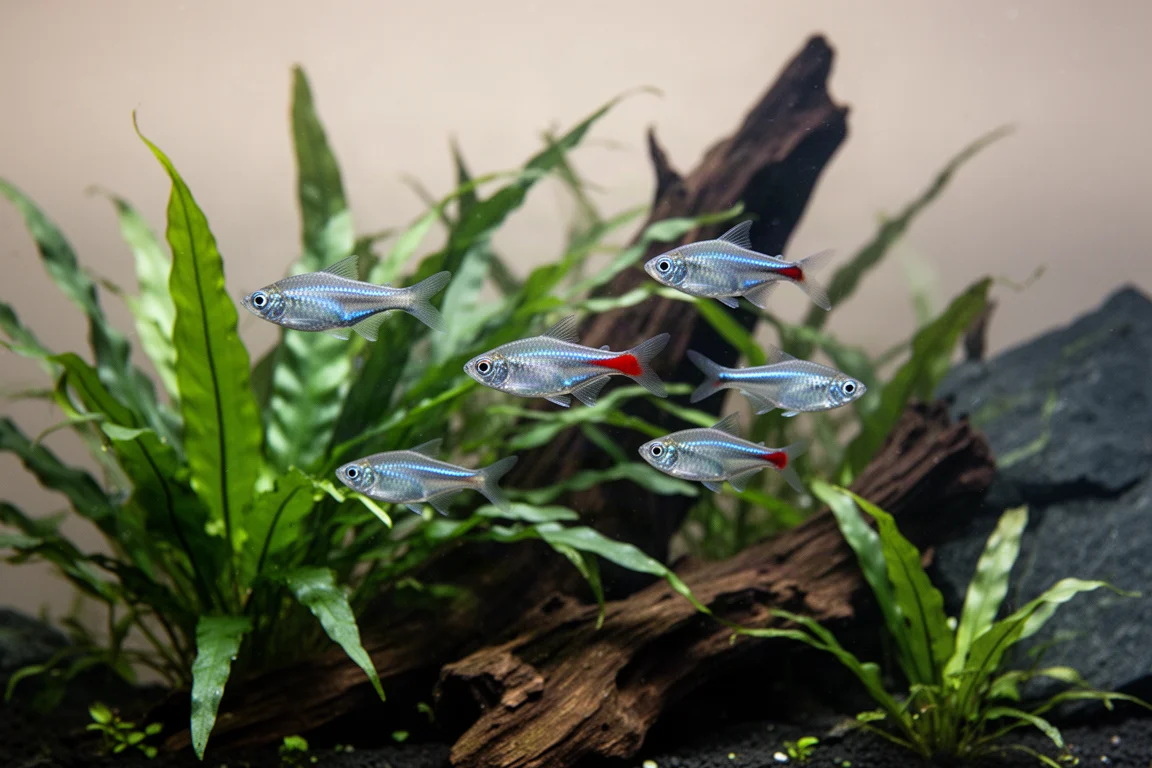
Stock lightly and the tank largely takes care of itself. A small group of neon tetras is a sensible starting point, and guppies add colour near the surface. Bottom-dwellers such as corydoras are an option once the tank has matured. Snails are a useful addition to a planted setup and fit naturally into the ecosystem.
Bettas deserve a note of caution. They do well in a tank this size, and many will ignore small tetras entirely, but individual temperament varies widely. Some tolerate tankmates, others do not. If you want a betta, plan for it to be the decision that shapes the rest of your stocking rather than an addition on top of it.
Temperature is easy to manage. In a room held around 22 to 23 degrees Celsius, no heater is needed for tropical fish. If your room sits closer to 20 degrees, a small heater is worth adding, and the rear compartment hides it completely.
The daily routine is light. Water changes are a matter of drawing the level down by half and refilling with dechlorinated water. Adding a liquid beneficial bacteria supplement when new fish go in helps the biological filter establish faster, and dosing it into the sponge area lets the flow carry it through the whole filter. If this is your first aquarium, give it a couple of weeks before adding fish, let the bacteria colonise, and start with snails. Monitoring water parameters daily for the first stretch is worthwhile regardless of how well planted the tank is.
Things to Consider Before Buying
A few points are worth weighing before you order.
The remote for the lighting needs a battery that is not included, which is a minor annoyance rather than a real obstacle.
Coverage from the built-in LED is excellent but not absolute. The very front edge and the top back corner receive less light. Plan your planting accordingly and it will never be an issue.
Volume is modest. The more fish you add, the more waste they produce and the harder the tank becomes to keep balanced. A small fish load behind a dense wall of plants is what keeps maintenance low, and that trade-off is worth accepting from the start.
Substrate choice affects long-term results more than most people expect. Skipping the sand cap or using a very fine sand will make the tank harder to keep clean later.
Plant selection matters too. Demanding red stem plants may not hold their colour in every setup, though easy species such as rotala and ludwigia perform well and are far more forgiving.
Finally, this is a kit, not a complete starter package. You will still want substrate, plants, dechlorinator, beneficial bacteria and possibly a heater, so budget for those alongside the tank itself.
Buying Advice
Buy the Flex 2.0 if you want a single purchase that solves the two hardest parts of a small planted aquarium: usable light and hidden filtration. Both are handled well enough that you should not need to add anything to the lid or the back.
Spend your remaining budget on the substrate system and plants rather than on extra hardware. A nutrient base, a coarse sand cap, and a generous initial plant mass will do more for how the tank looks and behaves than any accessory.
Stock gradually. Start with a small group, let the tank settle, then add another small group a couple of weeks later if you want more activity. Keep an eye on parameters through the early weeks and add beneficial bacteria at each introduction.
If the room you plan to keep it in runs cool, add a small heater at the same time and slot it into the rear compartment. It costs little, stays out of sight, and removes one variable from the equation.
Conclusion
The Fluval Flex 2.0 gets the fundamentals right. The built-in RGB LED delivers more light and better spread than most all-in-one kits manage, the rear filtration compartment is quiet, effective and invisible, and the curved front pane gives the tank a presence that flat-sided glass does not.
It is not a large system and it will not suit heavy stocking, but that is part of why it works. Load it with plants, keep the fish count modest, and it turns into a genuinely low-maintenance display that looks established quickly. For anyone stepping into planted freshwater aquariums, or for an experienced keeper who wants a tidy second tank, it is an easy recommendation.
Product link
View more details for Fluval Flex 2.0
This product is mentioned in the review. Check the specifications, options, and compatibility before buying.
View more details for Fluval Flex 2.0Further reading
Related Reviews
Aquarium Kits
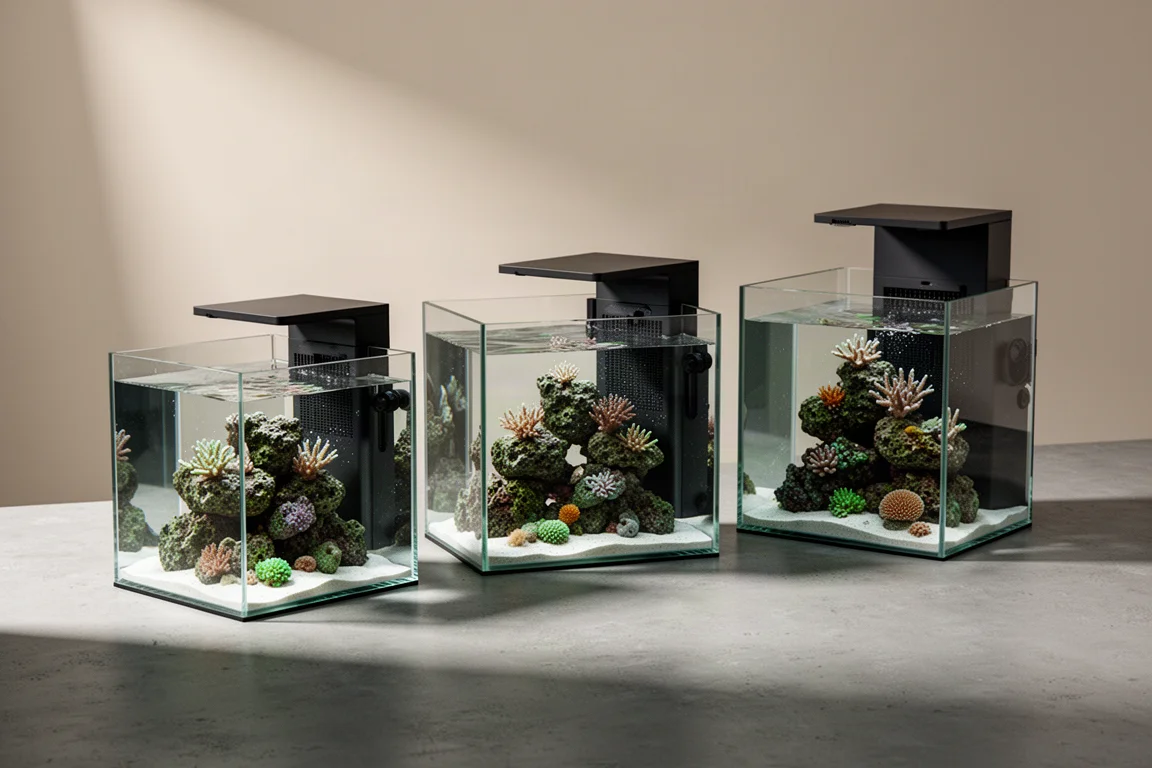
PNW Custom Nano Reef Tanks: Three Compact All-in-One Kits Compared
A closer look at three PNW Custom all-in-one reef tanks, from a 40 oz micro system to a 5 gallon kit, including what each one ships with and who it suits.
Aquarium Kits
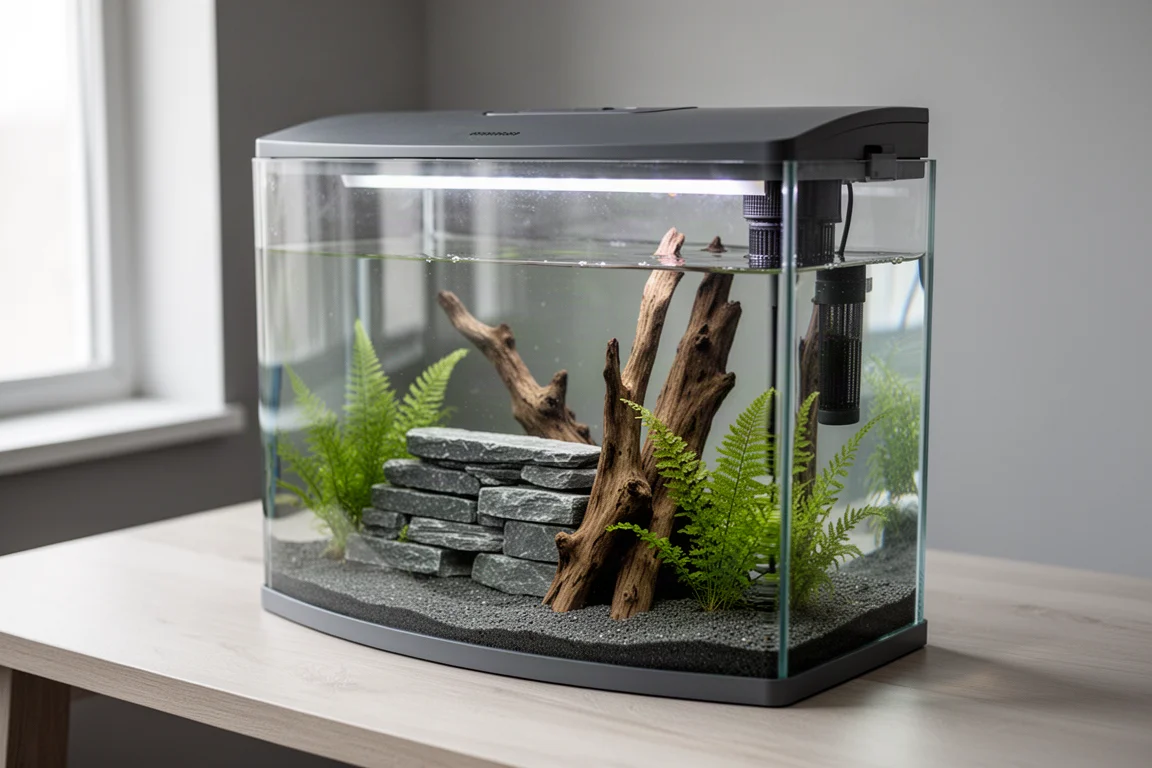
Superfish Panorama 35 LED Review: A Compact All-in-One Nano Aquarium Kit
A practical look at the Superfish Panorama 35 LED kit, its top filter and 6W LED, plus the Superfish Scaper LED 64 as a low-cost lighting upgrade.
Aquarium Kits
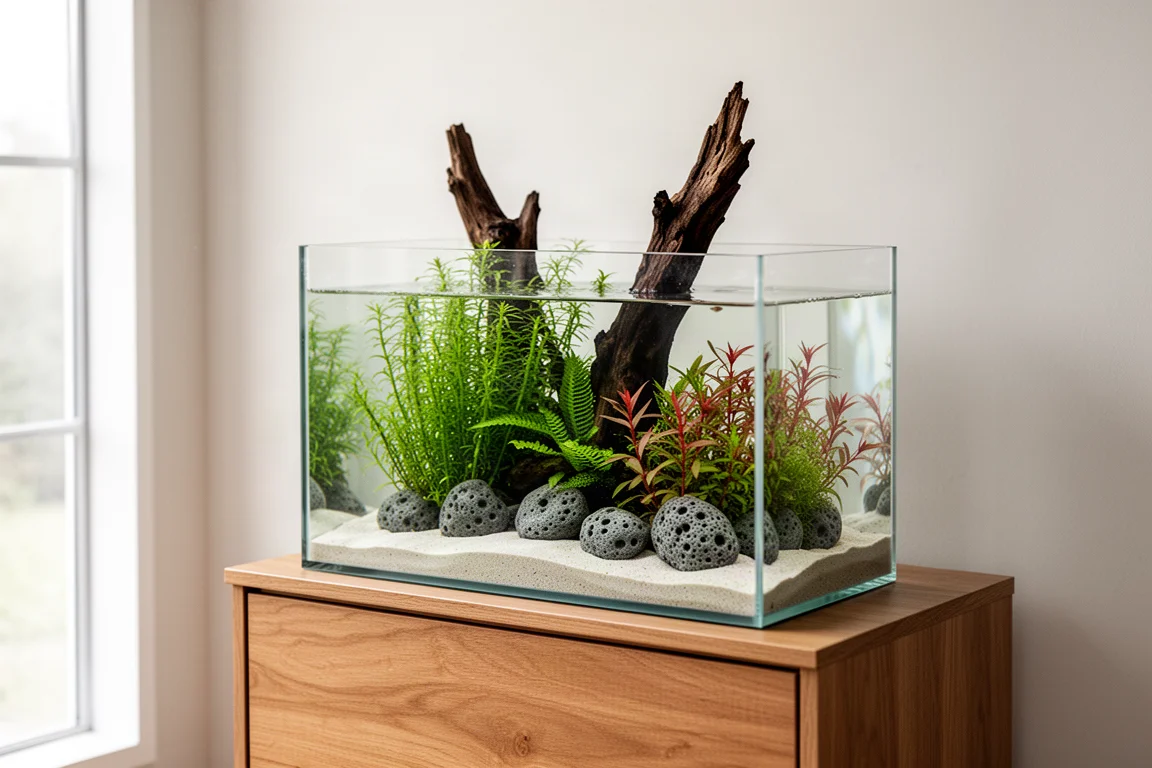
Superfish Scaper 60 Review: A Complete Low-Tech Starter Aquarium
A practical look at the Superfish Scaper 60, covering the Scaper LED 60 light, the hang-on-back filter, the cabinet, and what it really takes to run a low-tech planted tank.