Aquarium Kits
Superfish Panorama 35 LED Review: A Compact All-in-One Nano Aquarium Kit
A practical look at the Superfish Panorama 35 LED kit, its top filter and 6W LED, plus the Superfish Scaper LED 64 as a low-cost lighting upgrade.
Introduction
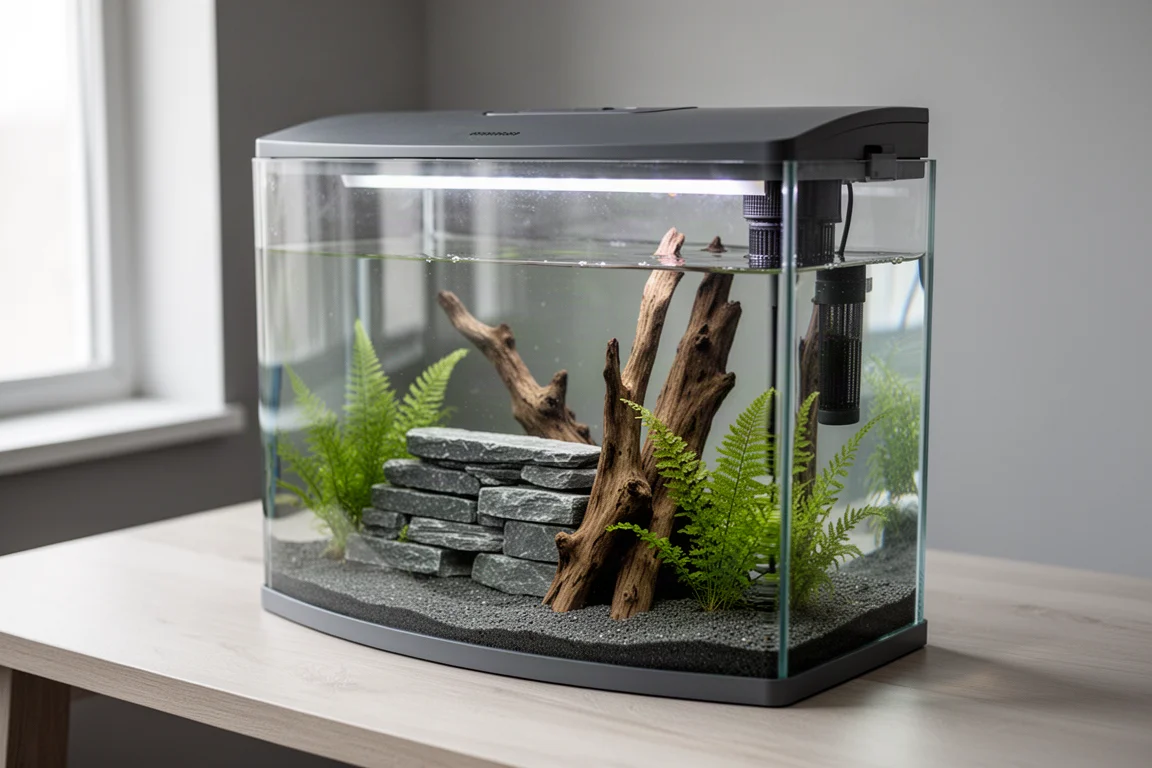
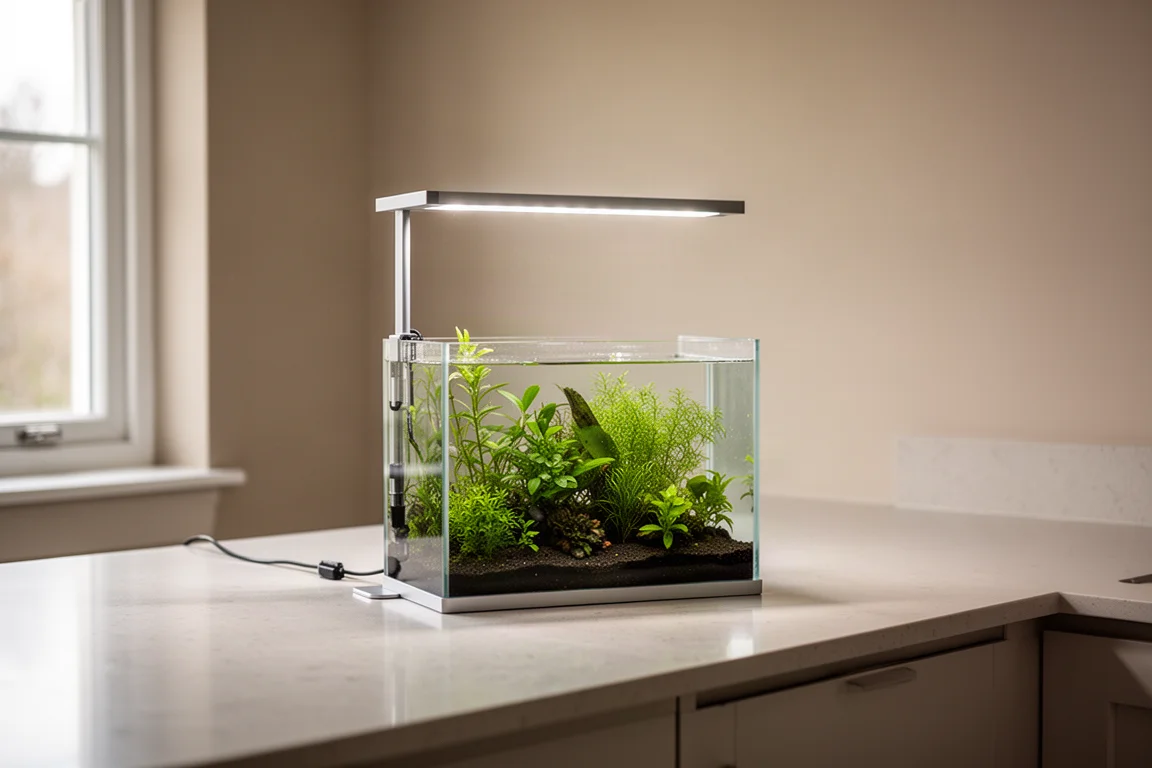
All-in-one aquarium kits appeal because they bundle the tank, filter, and lighting into a single purchase. The Superfish Panorama 35 LED is a compact example: curved front glass, a top-mounted filter, and a 6W waterproof LED, sold in Europe for around £70, roughly $90. It is aimed at anyone starting a small planted tank without spending a lot to find out whether the hobby sticks.
This guide covers what the kit includes, how the filter and light behave in practice, how to build a simple nature aquarium inside it, and what the Superfish Scaper LED 64 adds if you later want a warmer light.
What Comes in the Superfish Panorama 35 LED Kit
The kit arrives as a complete set: the tank with its curved front pane, a lid, a small LED light, a filter cartridge, a pump, and a plug. The top filter runs a Crystal Clear cartridge, and a printed background poster is included for anyone who wants a quick backdrop without covering the rear glass. That poster is taped at the edges, so it lifts away easily if you would rather do something else.
The glass has plastic rims at the top and bottom that do not come off, which is worth knowing if you plan to paint the back of the tank yourself. Masking those rims keeps the finish clean, and a painted rear panel can be removed later with a blade held flat against the glass.
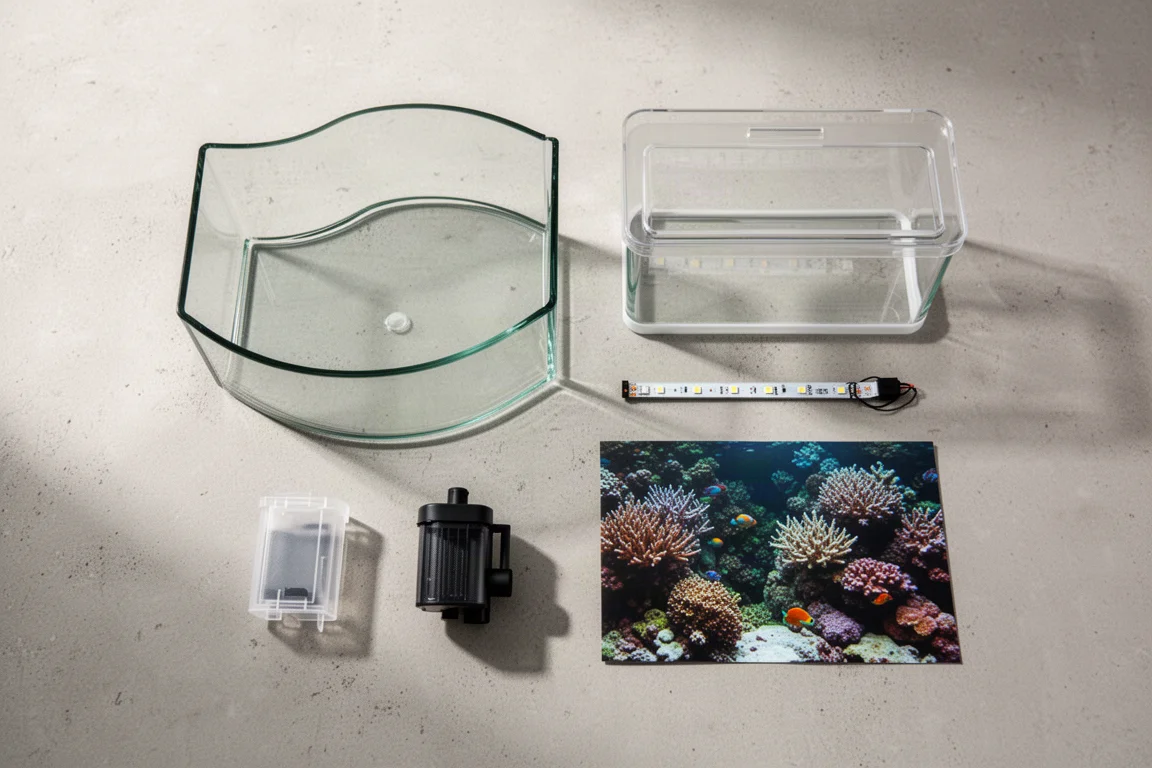
A slot in the top section also accepts a heater if the room runs cool. For tropical fish that slot matters, while a betta in a warm room can often rely on ambient temperature alone.
Filter, Lid, and Lighting Performance
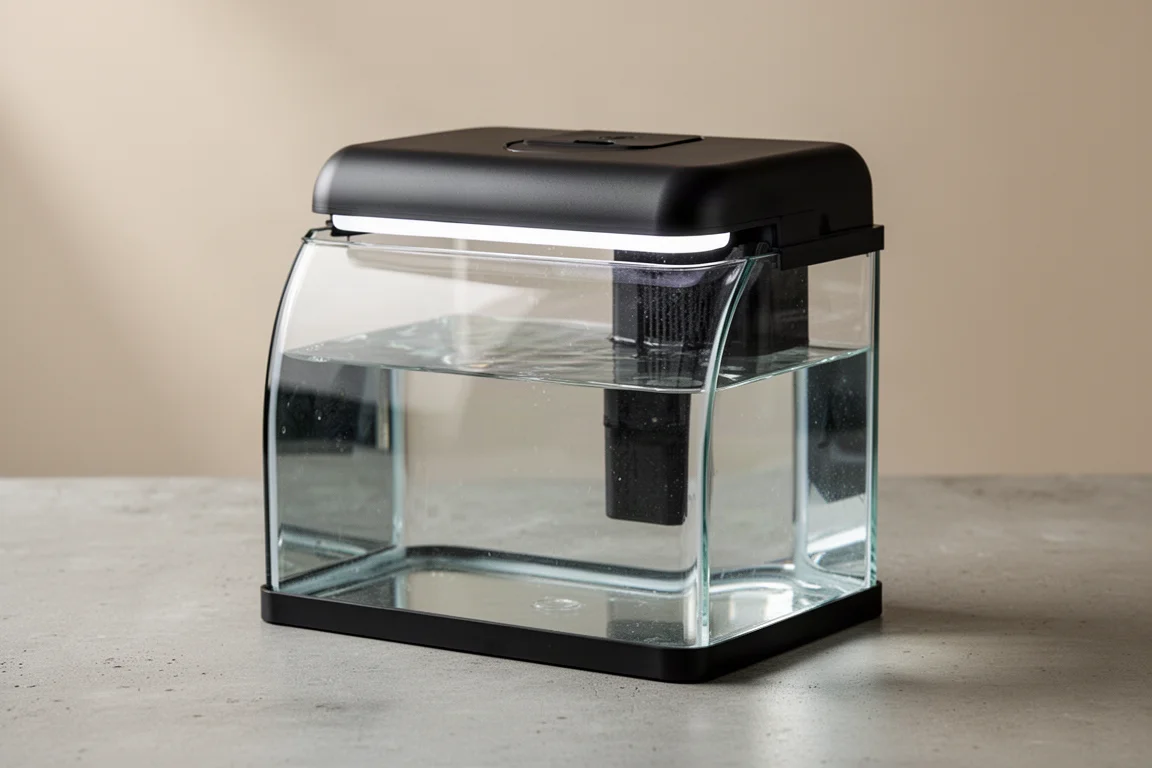
The top filter is the strongest part of the design. It keeps the pump and cartridge out of the water column, so the inside of the tank stays clear, and maintenance is straightforward: lift the housing, turn it, and pull the cartridge out to clean. The light sits below the filter housing rather than clipping to the lid, which is why it slots in underneath. It is fully waterproof, and a notch routes the cable so the lid closes neatly.
The 6W LED uses six blue LEDs and 12 white LEDs. Output is quite cool in tone, and in an empty tank it can read slightly blue. If that colour is not to your taste, covering some of the blue LEDs shifts the light towards white, and an optional dimmer adapter is available for finer control. For a betta, a dimmed setting is usually more comfortable than full output.
Building a Simple Nature Aquarium
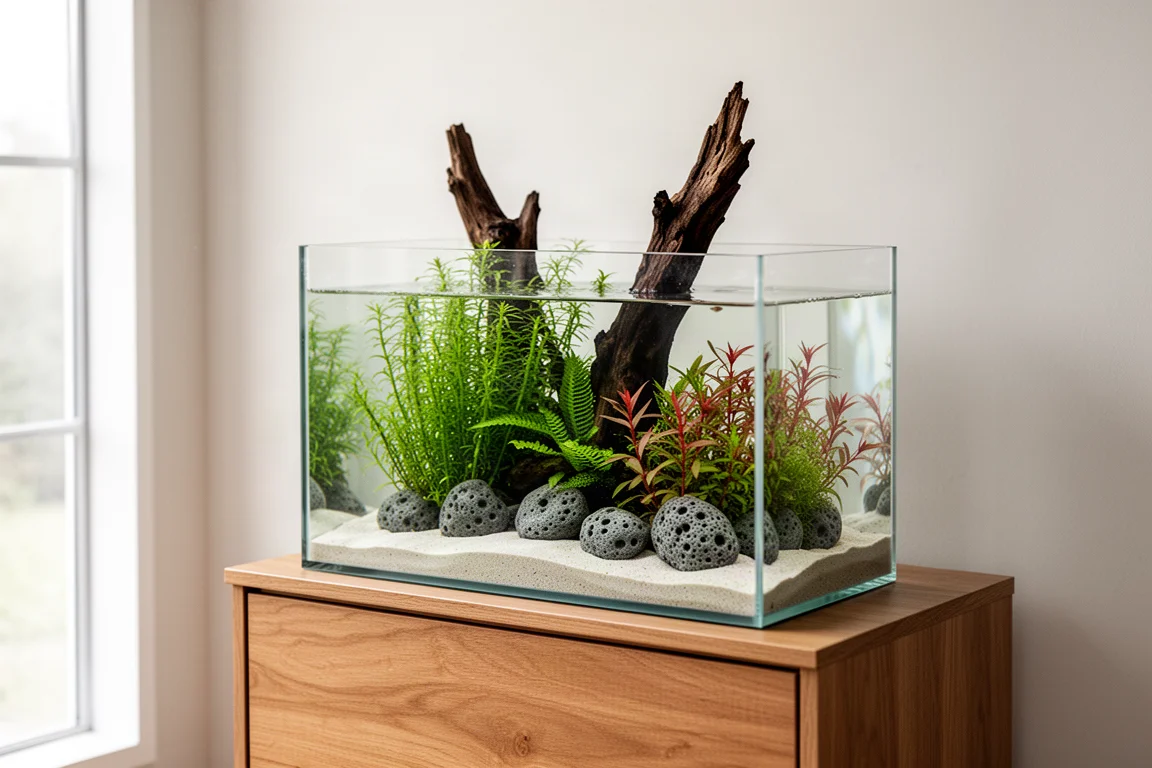
A small tank suits a simple layout: a retaining wall of stone, a few upright pieces of wood, ferns, a little Anubias, and stems behind them. Seiryu stone works well here because the grey sits nicely against a light sand foreground, and a scatter of decorative gravel in front softens the transition between stone and sand.
Substrate can be as basic as sand, which is the cheapest route, though roots take longer to reach nutrients and algae is more likely in the early weeks. A layered mix of a nutrient-rich base, a little pond soil, and sand on top gives plants a faster start. Banking the substrate higher at the back adds visual depth in a tall tank and lifts background plants without extra effort.
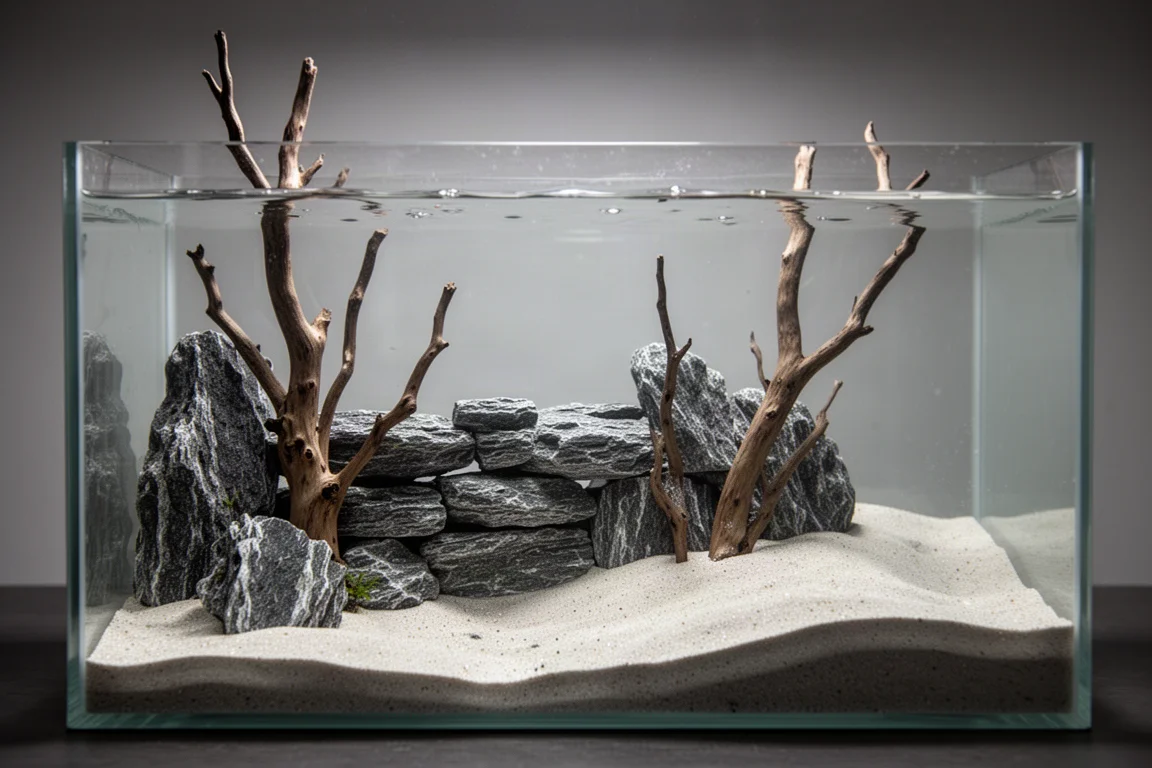
Wood that floats needs gluing to stone. A super glue gel applied at contact points holds it in place, and an accelerator sets it instantly instead of waiting for the gel to cure through. Check clearance against the filter housing before fixing anything, and trim or angle a piece if it sits too high.
Easy Plants That Suit a Small Tank
Planting does not need to be complicated. Limnophila sessiliflora grows fast, Bolbitis heudelotii adds texture, Java fern attaches easily to wood and stone, Hydrocotyle tripartita works as fine foreground detail, and Hygrophila polysperma brings a larger leaf and a stem that can be trimmed and replanted. All of them are undemanding.
Potted plants are quick to prepare. Rock wool comes away from the roots with a gentle pull, and any loose leaves should be removed before planting. Ferns pushed into gaps in the stone stay put and grow forward, while stems planted on either side of a central gap eventually merge into a dense green wall.
Capping a nutrient-rich substrate with a lighter sand has a practical benefit as well: a pale foreground bounces light back into the tank, so the space looks brighter than the light output alone would suggest.
Adding a Betta and Snails Safely
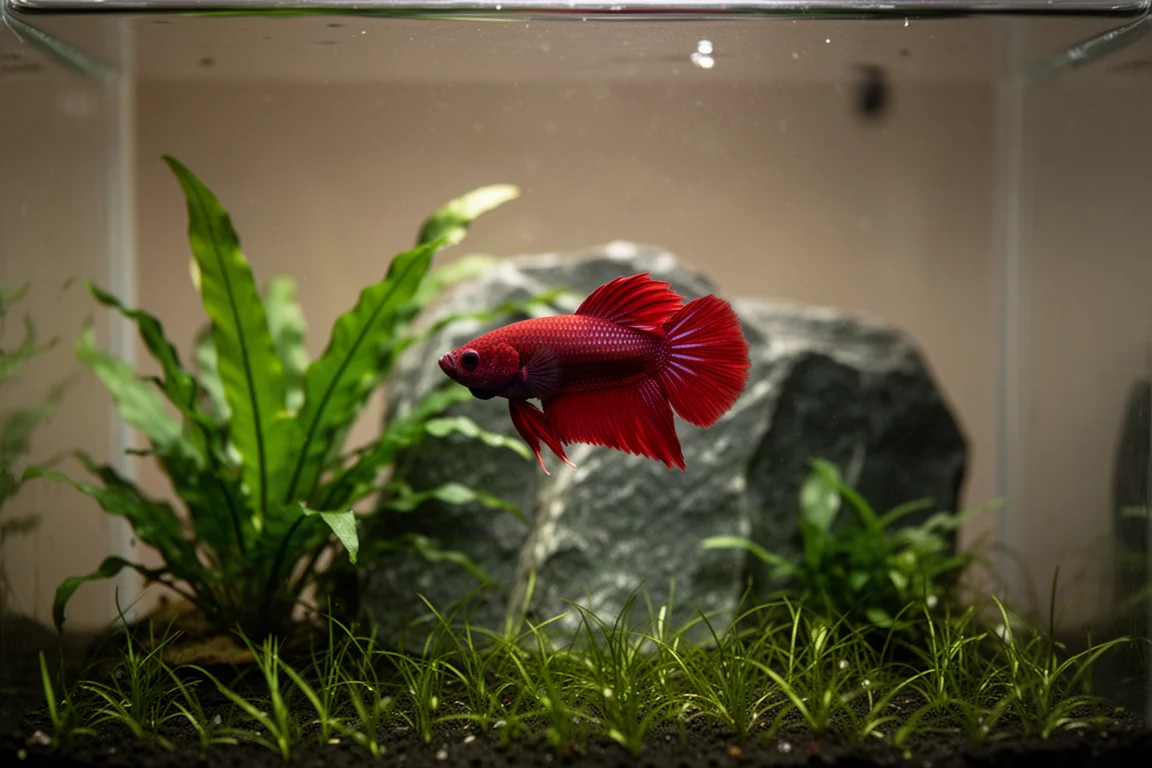
A single betta suits this setup well. The filter flow is steady rather than forceful, which bettas tolerate better than a strong current, and a dimmed light keeps them comfortable. Red coloration stands out against a green and grey layout, so there is no need for red plants to carry the colour.
A brand new tank has no established beneficial bacteria, so a fish-in cycle needs attention. Adding a bacterial starter at the same time as the fish gives the colony something to feed on. Stocking should stay very light, plants help absorb waste, and the water should be tested the following morning. If ammonia or nitrite shows up, a water change resets the tank while the filter colony builds.
Snails are a useful addition in a planted tank. They consume waste, work through degrading plant matter, and stir the substrate. Provided the tank is not overfed, the population tends to control itself.
Upgrading the Light: Superfish Scaper LED 64
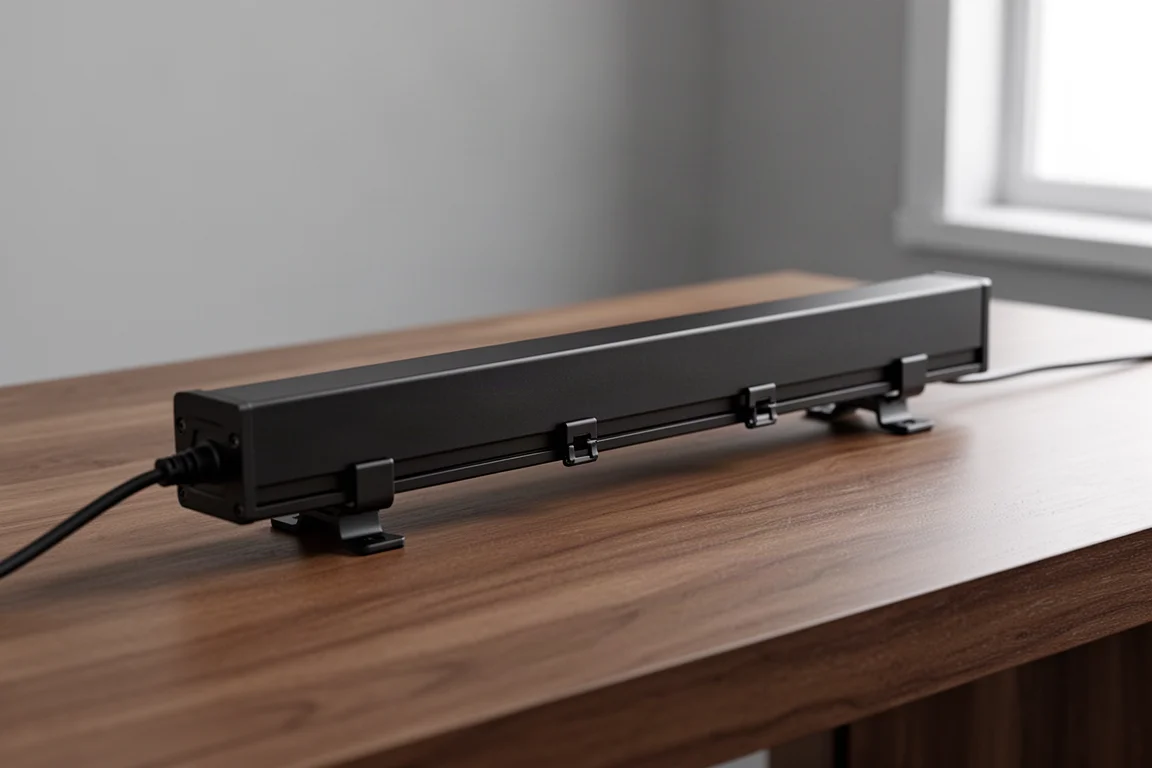
The included lighting grows undemanding plants, but keepers who want a warmer, more natural colour can switch to the Superfish Scaper LED 64. It costs very little, looks stylish, and fixes to the rim of the tank with small sliders that hold it securely, with the cable routed behind the tank.
The trade-off is that the Scaper LED 64 overhangs the edge, so the lid cannot be used at the same time. That suits an open-top setup in a kitchen or dining area, and it is a straightforward change if you like the tank itself but want a different light tone. There is also space on the internal ledges for other lights, so the choice stays open.
Who Should Buy the Panorama 35 LED
This kit makes sense for anyone starting out who wants a complete package at a low price. The top filter is genuinely well designed, the curved glass looks contemporary, and the plants that suit a beginner will grow under the included light. Keepers who already own lighting, or who want precise control over colour and intensity, may prefer to build a setup around the Scaper LED 64 instead.
Buying Advice
Buy the Panorama 35 LED as a kit if you want one purchase that covers tank, filter, and light, and plan a simple layout with easy plants. Add a bacterial starter on day one, keep stocking low, and test the water before assuming the tank has settled. If the cool light tone is not to your taste, an optional dimmer helps, and the Scaper LED 64 is a low-cost upgrade path later on.
Availability is worth checking before you commit. The kit is sold in Europe, and Superfish does not currently ship to the United States.
Conclusion
The Superfish Panorama 35 LED gets the fundamentals right: a top filter that keeps the tank tidy and is easy to clean, a waterproof LED that will grow undemanding plants, and a price that lowers the barrier to starting. Its light is cool in tone, and the lid cannot be combined with the Scaper LED 64, but neither point is a problem for a first planted nano tank. For a beginner betta setup, it is a sensible place to start.
Further reading
Related Reviews
Aquarium Kits
Fluval Flex 2.0 Review: A Compact All-in-One Aquarium That Impresses
A practical look at the Fluval Flex 2.0, covering its built-in filtration, RGB LED lighting, easy planted setup, and the trade-offs to check before buying.
Aquarium Kits
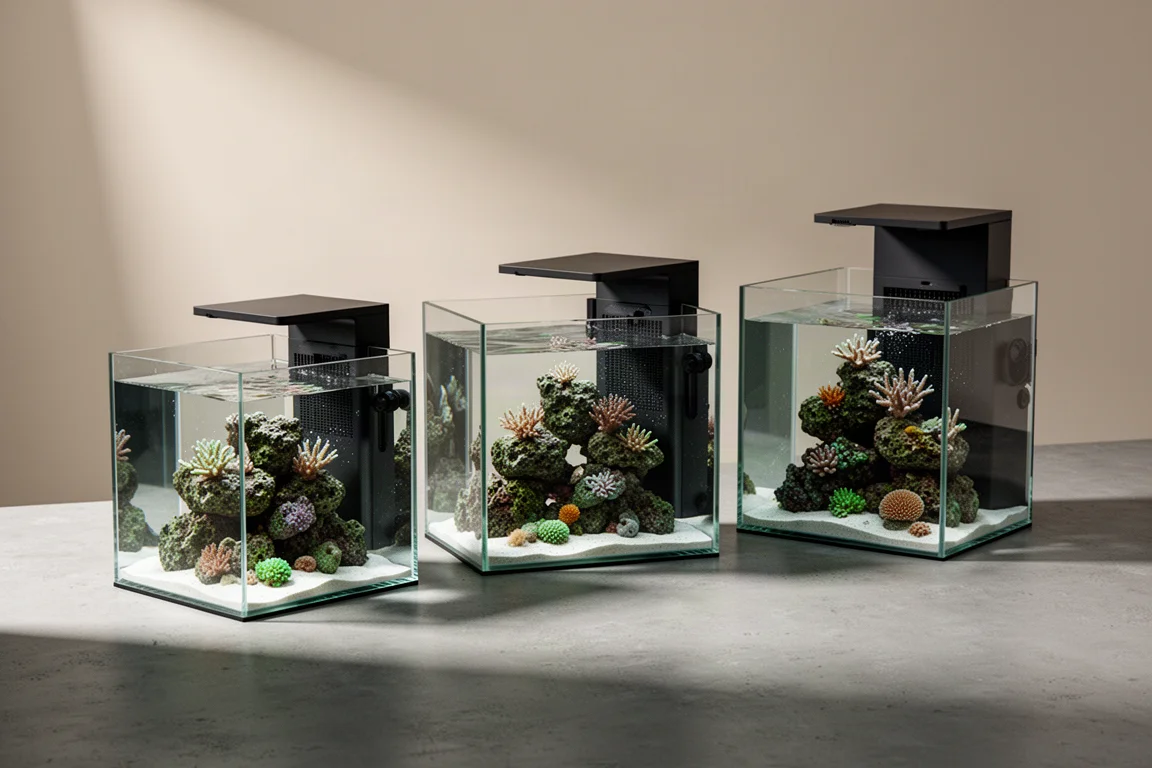
PNW Custom Nano Reef Tanks: Three Compact All-in-One Kits Compared
A closer look at three PNW Custom all-in-one reef tanks, from a 40 oz micro system to a 5 gallon kit, including what each one ships with and who it suits.
Aquarium Kits
Superfish Scaper 60 Review: A Complete Low-Tech Starter Aquarium
A practical look at the Superfish Scaper 60, covering the Scaper LED 60 light, the hang-on-back filter, the cabinet, and what it really takes to run a low-tech planted tank.