Aquarium Kits
Superfish Scaper 60 Review: A Complete Low-Tech Starter Aquarium
A practical look at the Superfish Scaper 60, covering the Scaper LED 60 light, the hang-on-back filter, the cabinet, and what it really takes to run a low-tech planted tank.
Introduction
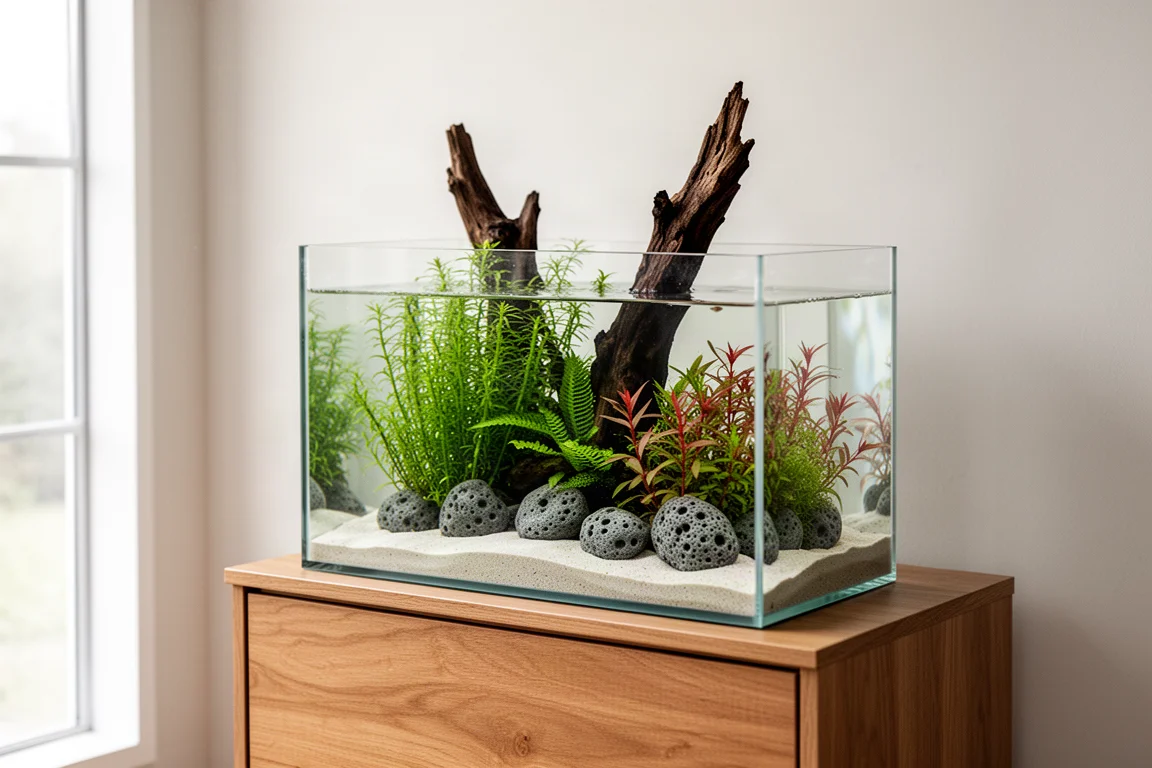
Starting a planted aquarium does not have to begin with carbon dioxide injection, high-output lighting, and a four-foot tank. The Superfish Scaper 60 takes the opposite approach: a compact 60-litre aquarium, roughly 50 cm wide, supplied with the light, filtration, and plant care basics already in the box.
The kit sits in the low-tech, entry-level corner of the hobby. It is aimed at people who want to grow real plants, keep a small group of fish, and learn how a planted tank behaves before deciding whether to invest in a more advanced setup later.
That is a sensible starting point for most beginners, because expensive equipment only pays off once you understand what plants actually need.
Who the Superfish Scaper 60 Is For
This tank suits anyone setting up a first planted aquarium. At 50 cm wide and 60 litres, it is small enough to fit on a sideboard, a desk return, or a corner of a living room, but large enough to build a real layout with wood, stone, and a proper planting scheme.
It is also a good fit for people who have kept fish before but have never grown plants seriously. The kit removes most of the guesswork about which light and filter to buy, and the size keeps maintenance manageable.
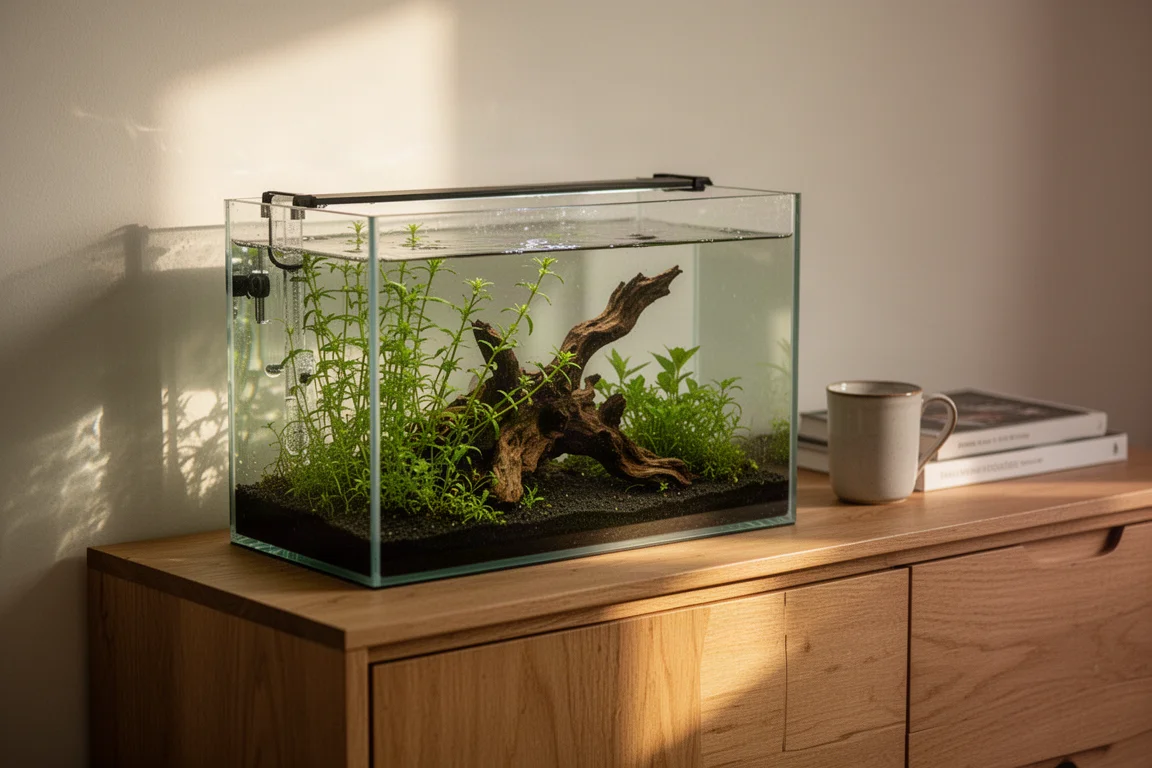
It is less suited to anyone who already runs a high-energy tank and wants more control. The light is fixed, the filter is a starter unit, and there is no CO2 system in the box. This is a kit for learning, not for pushing demanding species.
If your goal is a calm, planted display that looks good with modest weekly attention, the Scaper 60 is aimed squarely at you.
Main Strengths: Light, Filtration, and Plant Growth
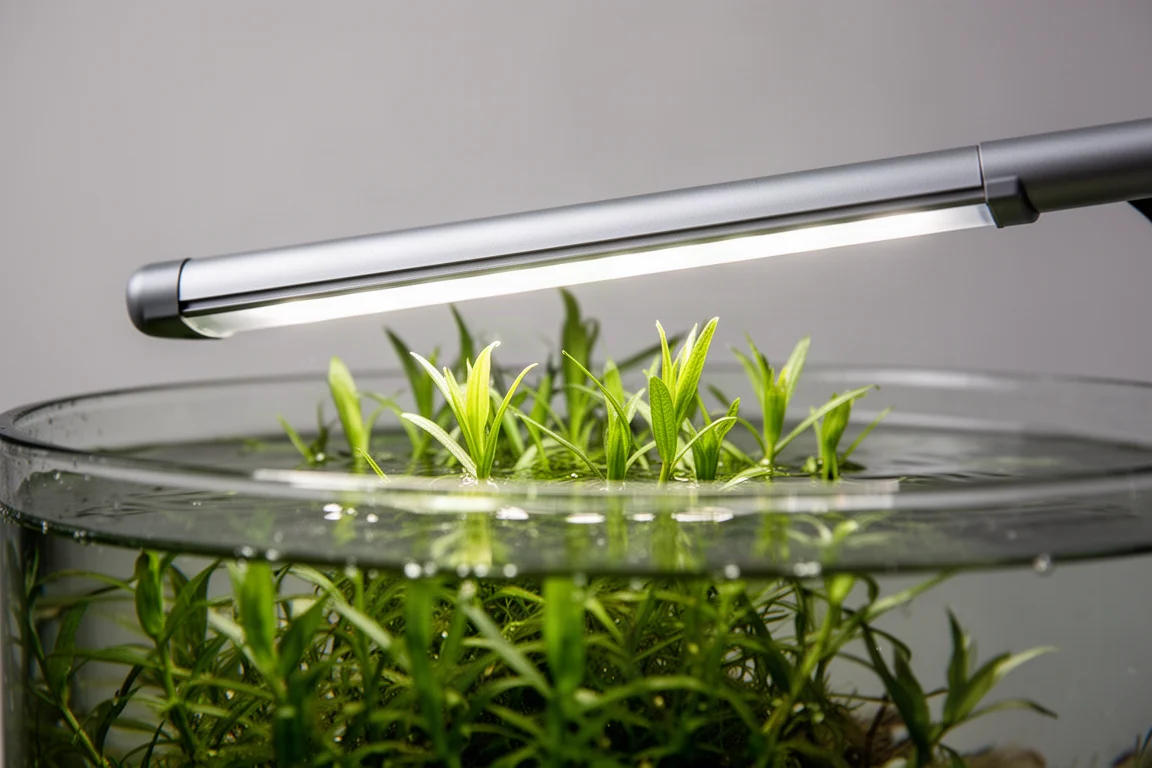
The Scaper LED 60 is the most important part of the kit. Its colour rendition is close to natural sunlight, so greens look green and reds look red without heavy adjustment. There is no channel control and no way to tune the spectrum, but the output is strong enough to drive fast growth from undemanding plants.
Reds in particular come through well. Stem plants grown close to the light develop noticeably deeper colour, and growth rates stay high across a mixed planting.
The filter is a hang-on-back unit that handles mechanical and biological filtration in one body. It includes a surface skimmer, which keeps the water surface clear of the film that builds up in planted tanks, and the flow is adjustable. The cartridges lift out for cleaning or replacement, and the unit is simple enough to live with long term without much fuss.
Also in the box are a liquid carbon supplement and a fertiliser, which together cover the basics of feeding plants in a low-tech tank.
What Comes in the Kit
Everything needed to start is included apart from a heater: the 60-litre aquarium, the cabinet, the Scaper LED 60 light, the hang-on-back filter, liquid carbon, and fertiliser. The cabinet has shelving inside and a clean, simple design that keeps the setup looking tidy rather than improvised.
The background is reversible. One side is black and the other white, and it can be flipped without peeling or re-gluing anything, which makes it easy to try both and see which suits the room. Black hides the filter body and pipework; white lifts the wood and reflects more light into the tank.
A heater is deliberately left out, on the basis that not every room needs one. If your space runs cool, or you keep species that prefer stable warmth, budget for one separately.
Setting Up the Tank: Substrate, Wood, and Stone
The base layer is an all-in-one planted substrate that looks like coarse sand and gravel but carries freeze-dried beneficial bacteria and a range of additives designed to make the substrate fertile from day one. It is a straightforward way to start, and a scoop is enough for a tank this size.
Root tabs go in on top of it for extra nutrition. That matters in a tank meant to run for years rather than months, because substrate nutrients are slowly used up while the plants keep growing.
For hardscape, two pieces of mangrove wood were chosen with the intention of going oversized: one hooked over the rim so it does not need to balance, the other on the opposite side. The result is a tank that reads as larger than its water volume suggests. Dark, pitted stone was used to pin the wood down and to add height, with smaller pieces worked into the foreground for detail.
The wood is held in place with a gel glue and an instant-setting spray, which means work can continue immediately rather than waiting for a set. A coarse sand and fine gravel blend covers the foreground, and the nutrient-rich layer is pushed toward the back. Plants grown in the rear can send runners forward into the lean foreground, which keeps the front shallow and clean while still filling in naturally.
How the Plants Were Chosen for Low-Tech Water
Without injected CO2, plant selection does most of the work. Water chemistry matters more than many beginners expect: at a pH around 8 with hard water and high dissolved solids, there is less free CO2 available, so only certain species thrive. Softer, lower-TDS water at neutral pH gives plants a much easier ride.
The practical approach is to test your own water, watch which plants do well, and buy more of those. Species that struggle in your conditions rarely improve without adjusting the water or adding CO2.
The planting list here leans on reliable, undemanding choices: narrow-leaved Java fern as a focal point, small Anubias nana bonsai tucked into the joins between rock and wood, several Cryptocoryne species for the shadier side areas, and fast-growing stems such as Ludwigia palustris super red and Limnophila sessiliflora for height and colour at the back. Helanthium tenellum and Helanthium quadricostatus run along the foreground and spread over time.
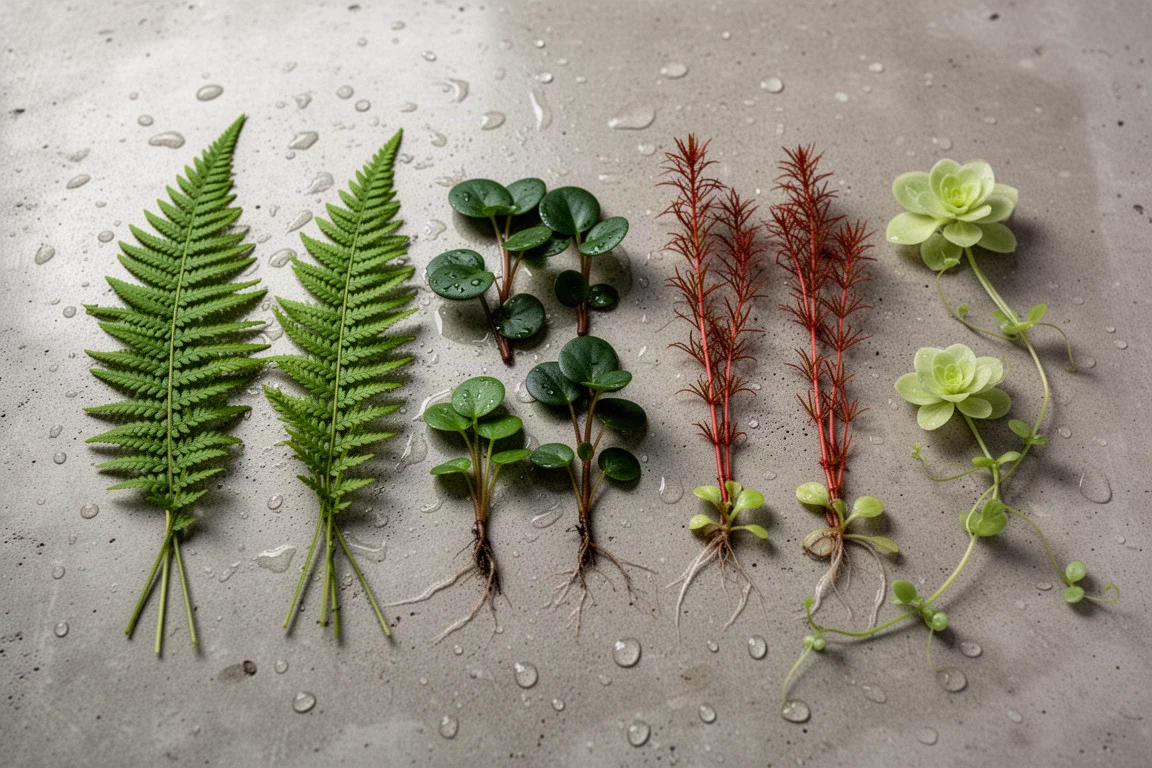
Mosses and small Bucephalandra pieces are glued to the wood to break up the brown and add detail at eye level. Around ten pots went in at the start, with a few more added later.
Planting density is the part beginners most often get wrong. Filling the tank properly from day one makes the whole setup more stable than a sparse planting, even though it costs more up front.
Things to Consider Before Buying
There is no heater in the kit, so factor that in if your room is cool. The light cannot be tuned, which is fine for the plants listed here but limiting if you later want to keep more demanding species.
The filter is a capable starter unit rather than a high-end one. It does the job and can be upgraded later, but it is not the component you buy this kit for.
The biggest additional cost is the hardscape and plants. Expect the wood, stone, and planting to add meaningfully to the total, and expect the plants to be the larger share of that.
Growth in a low-tech tank is also slower than in a CO2 system. The layout takes longer to fill in, and that patience is part of the deal rather than a fault in the kit.
Finally, stock lightly at the start. A new tank has no established balance, and a heavy fish load from day one means more waste and more maintenance. A small group of male Endler guppies suits this size well, and more can be added gradually as the plants establish.
Buying Advice
As a complete starting point, the Scaper 60 covers the equipment that beginners usually get wrong: a light that actually grows plants, filtration with a surface skimmer, and the basic supplements. For the money, that combination is hard to assemble piece by piece.
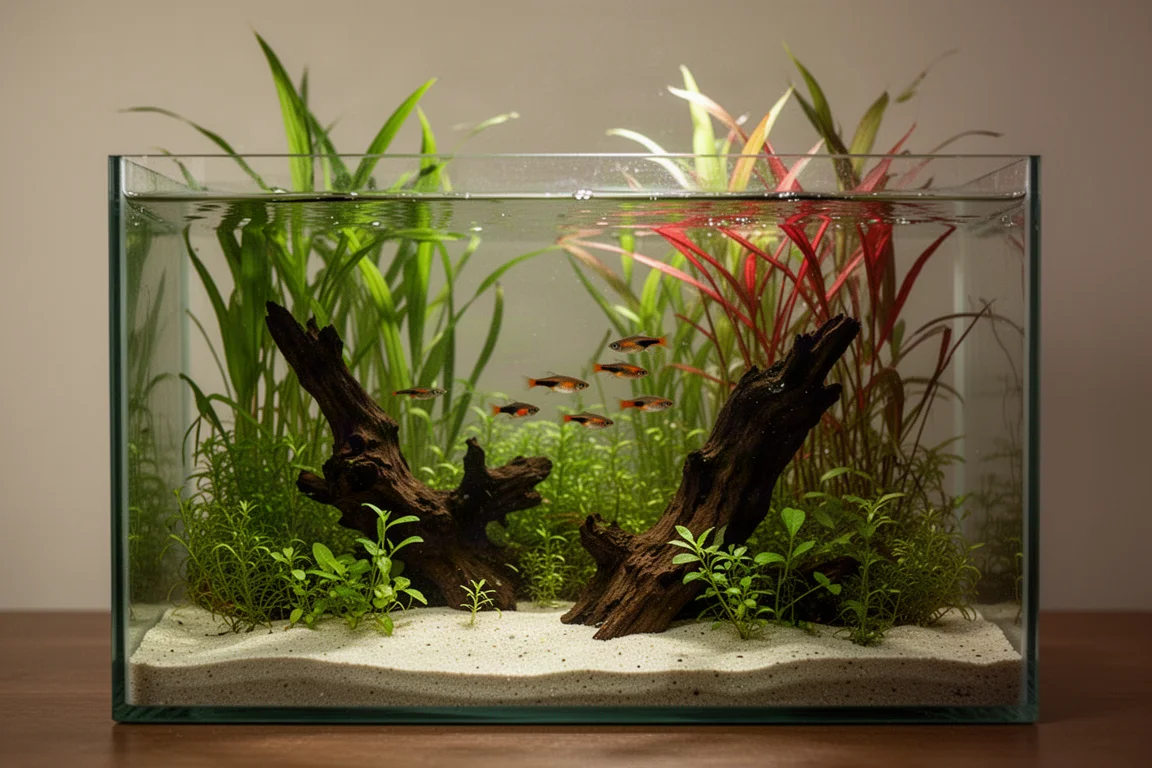
You do not need a powerful, expensive light to grow the plants described here. A modest unit over a well-planted tank produces healthy growth, and that is worth remembering if you are tempted to spend more on lighting than on the tank itself.
If the kit is still beyond your budget, buying second-hand is a reasonable route into the hobby. The important thing is to start with something you can actually maintain, then upgrade once you know you enjoy it.
When you do upgrade, the natural next step is a CO2 system, a more demanding planting scheme, and more ambitious hardscape. That progression makes far more sense after you have grown plants successfully in a simple tank first.
Conclusion
The Superfish Scaper 60 is a well-judged entry point into planted aquariums. It bundles a sensible tank size, a light that performs above its class, and filtration that suits a low-tech setup, then leaves you to choose your own hardscape and plants.
It is not the tank for someone chasing maximum control or rare species. It is the tank for someone who wants to learn how plants grow, keep a small group of fish, and end up with a display that looks deliberate rather than improvised.
Start simple, plant heavily, stock lightly, and the upgrade path will look after itself.
Product link
View more details for Superfish Scaper 60
This product is mentioned in the review. Check the specifications, options, and compatibility before buying.
View more details for Superfish Scaper 60Further reading
Related Reviews
Aquarium Kits
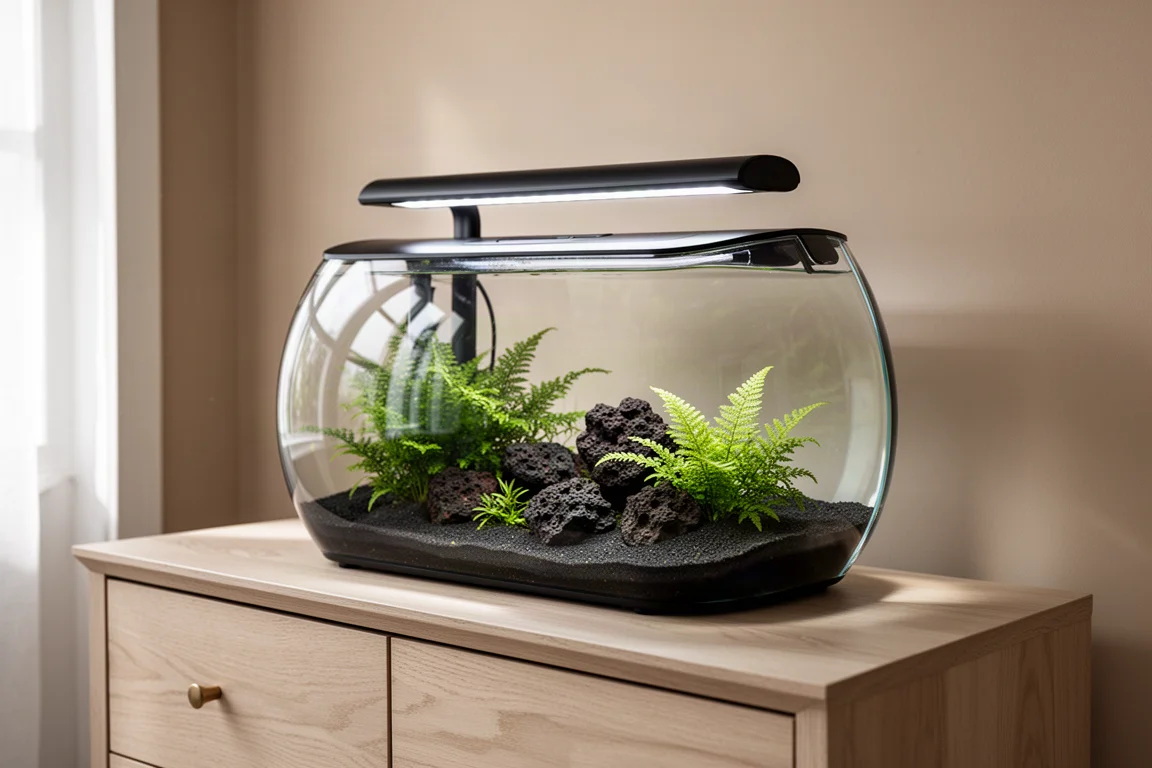
Fluval Flex 2.0 Review: A Compact All-in-One Aquarium That Impresses
A practical look at the Fluval Flex 2.0, covering its built-in filtration, RGB LED lighting, easy planted setup, and the trade-offs to check before buying.
Aquarium Kits
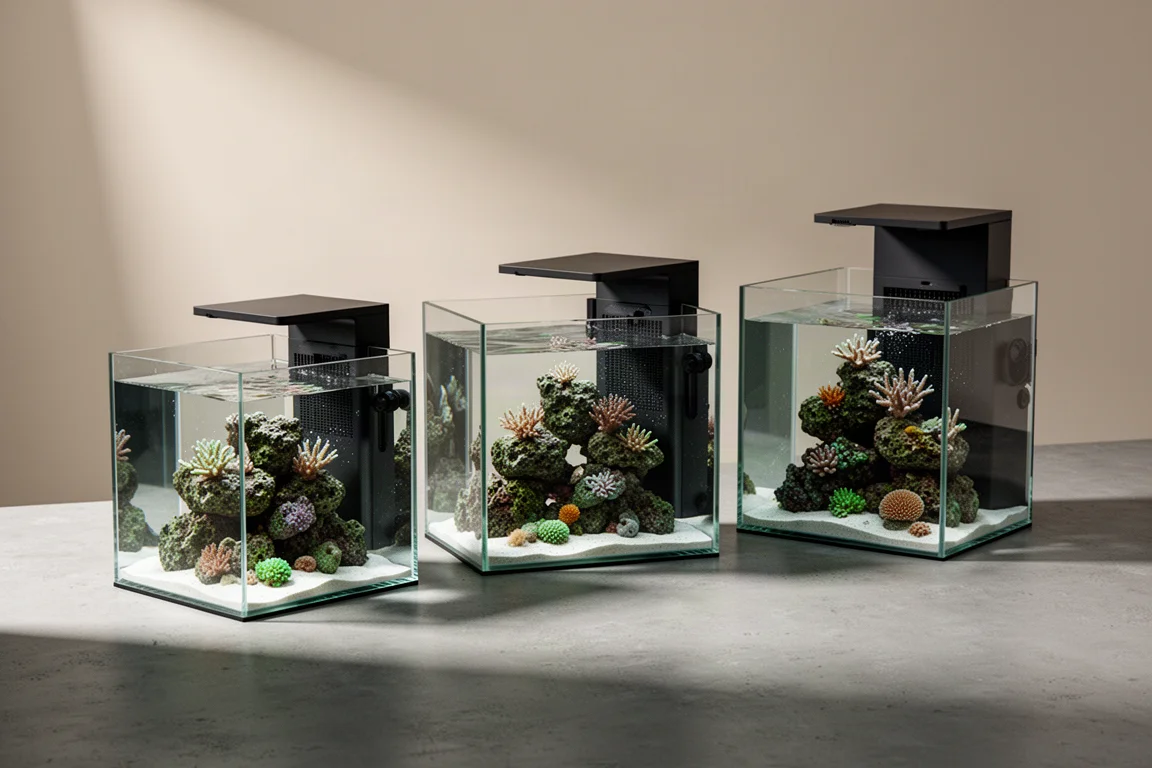
PNW Custom Nano Reef Tanks: Three Compact All-in-One Kits Compared
A closer look at three PNW Custom all-in-one reef tanks, from a 40 oz micro system to a 5 gallon kit, including what each one ships with and who it suits.
Aquarium Kits
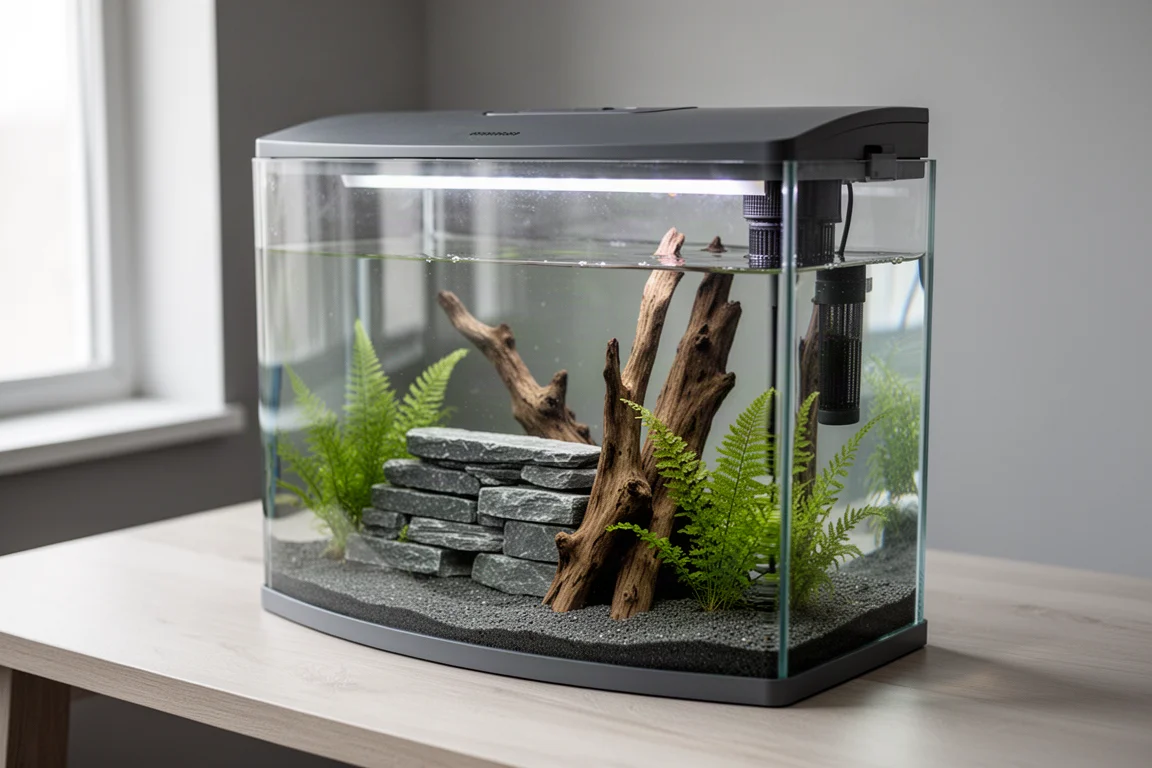
Superfish Panorama 35 LED Review: A Compact All-in-One Nano Aquarium Kit
A practical look at the Superfish Panorama 35 LED kit, its top filter and 6W LED, plus the Superfish Scaper LED 64 as a low-cost lighting upgrade.