Aquarium Equipment
Superfish Escape Up 140 Aquarium Kit: Tank, Light, and Substrate Reviewed
A practical look at the Superfish Escape Up 140 aquarium, the Scaper LED 93 light, and Colombo Nutribase substrate, and how the three work together in a planted freshwater setup.
Introduction
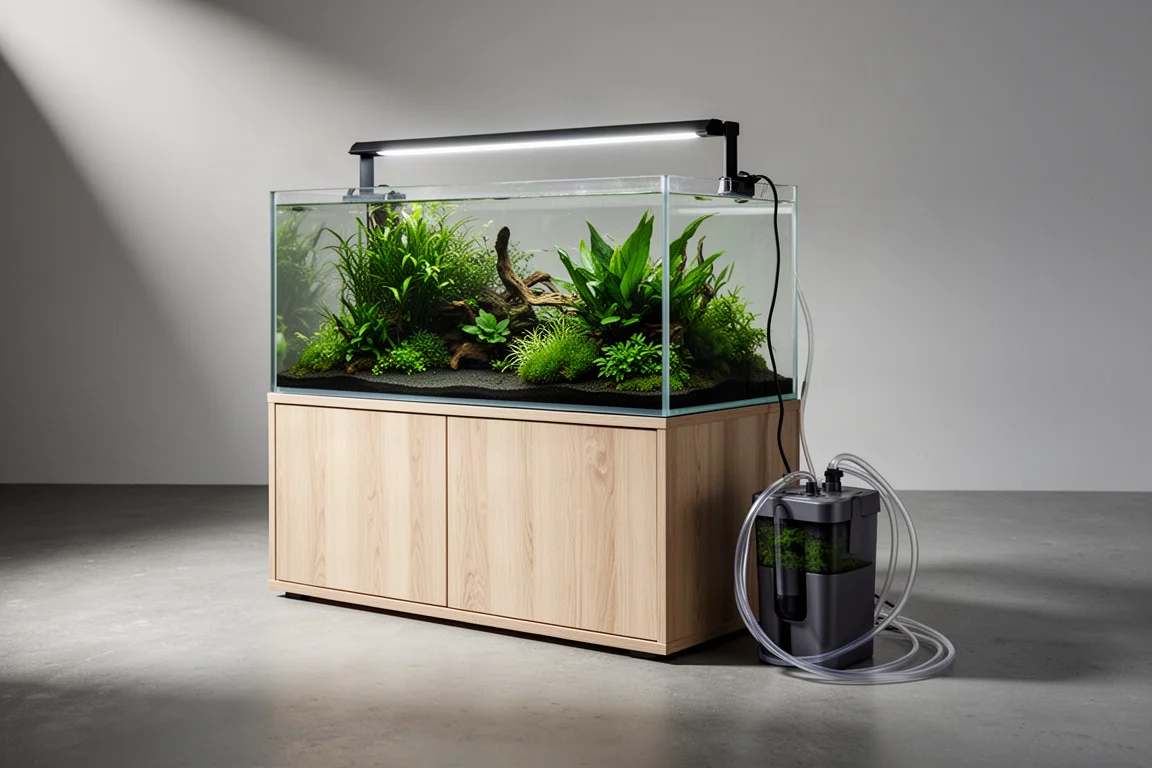
The Superfish Escape Up 140 arrives as a complete freshwater package rather than a bare glass box. It pairs a 138 litre aquarium with a matching cabinet, a compact canister filter, a full width LED light, liquid fertiliser, a liquid carbon supplement, a base mat and an optional black background. That is the appeal: most of the decisions that normally stall a first planted build have already been made for you.
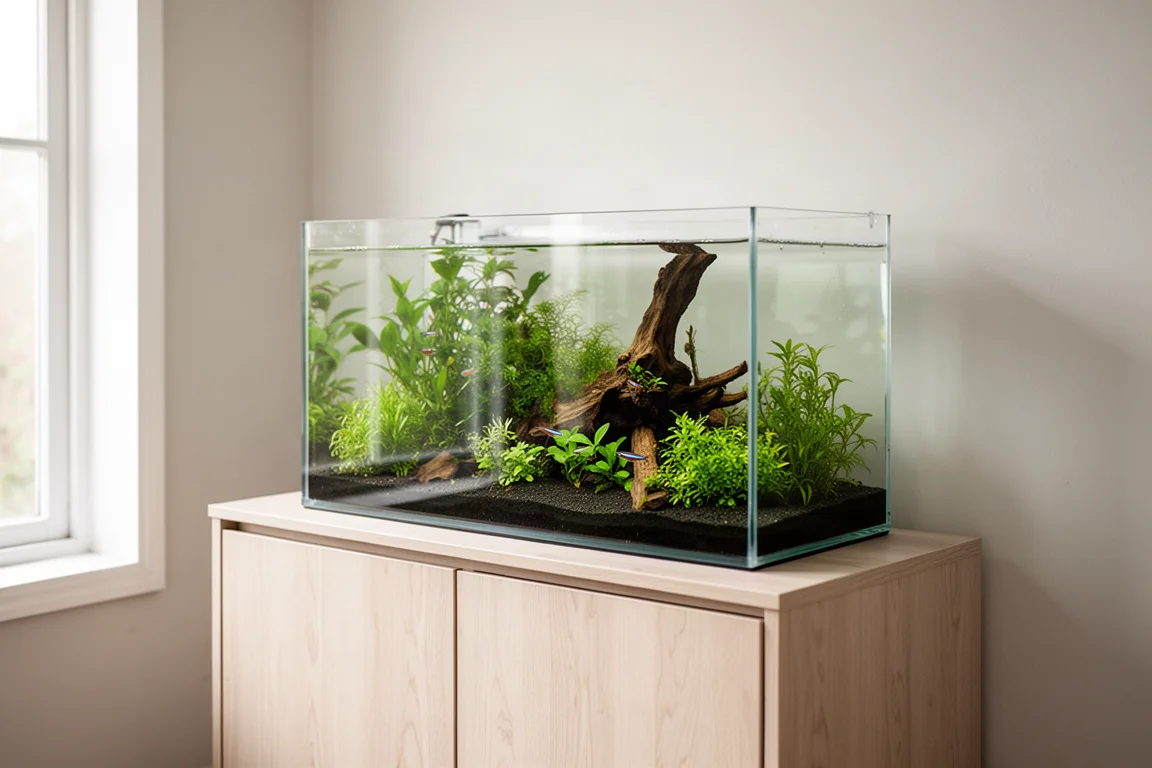
The tank itself measures 77 cm long, 45 cm deep and 40 cm high. The shallower height is a deliberate choice and it works in your favour. Light reaches the substrate with less effort, which suits carpeting plants, and the low profile keeps the aquarium from taking over the room it sits in.
What Makes This Setup Worth a Look
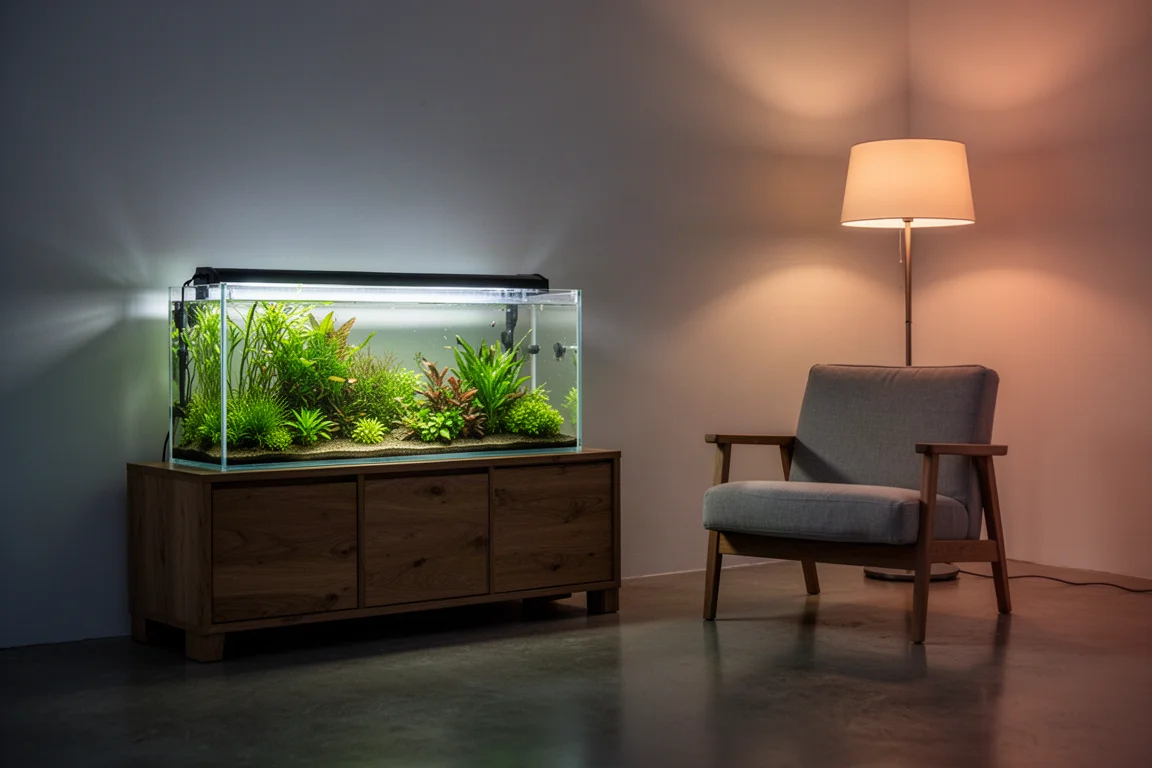
Three things stand out. The aquarium and cabinet are supplied together, so the cabinet footprint matches the tank instead of being guessed at. The included canister filter is small enough to live inside the cabinet, which keeps the display free of visible equipment apart from an inlet and an outlet pipe. And the light spans the full width of the tank, so there is no immediate pressure to shop for an upgrade.
Cost sits in the middle of the market rather than at the budget end. This is not the cheapest route into the hobby, and it is not a budget setup, but it is positioned as affordable for what arrives in the box: cabinet, filter, lighting, fertiliser, carbon supplement, mat and background film. For anyone who has priced those items separately, the maths is easy to follow.
The Tank: Superfish Escape Up 140
At 138 litres, the Escape Up 140 gives a useful amount of swimming room without demanding a large footprint. The cabinet arrives flat packed and goes together in around twenty minutes, with straightforward instructions and a tidy finish. The doors are soft close, and there is a shelf that slides forward so pipework can run behind it while the doors still shut properly. A cutout at the back handles hose routing.
Two small details are worth knowing before you fill it. The doors may need a light adjustment once the tank is full, because a cabinet shifts slightly under the weight of water and substrate. And the supplied background is black film, which is entirely optional. Against a pale wall, running the tank clear can look cleaner and lets more light bounce around the room.
The kit also includes a mat for under the aquarium, a liquid fertiliser and a liquid carbon supplement, so a new planted setup can start without a separate shopping list.
The Light: Superfish Scaper LED 93
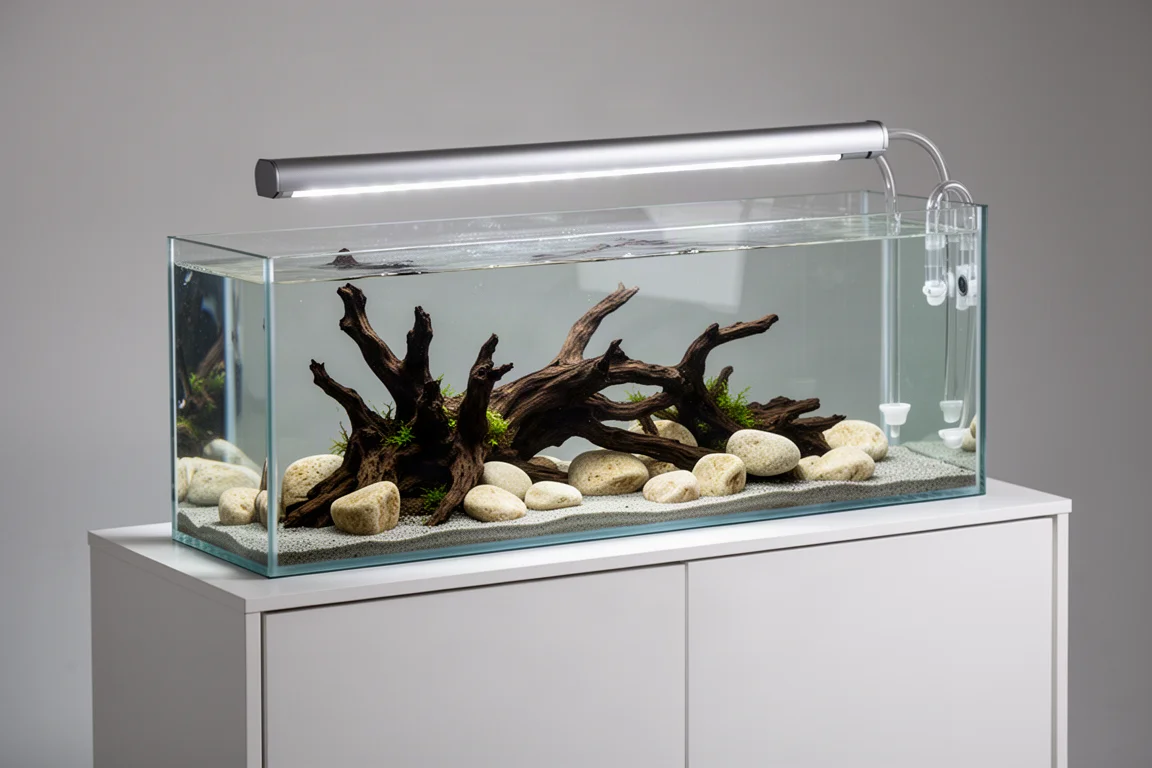
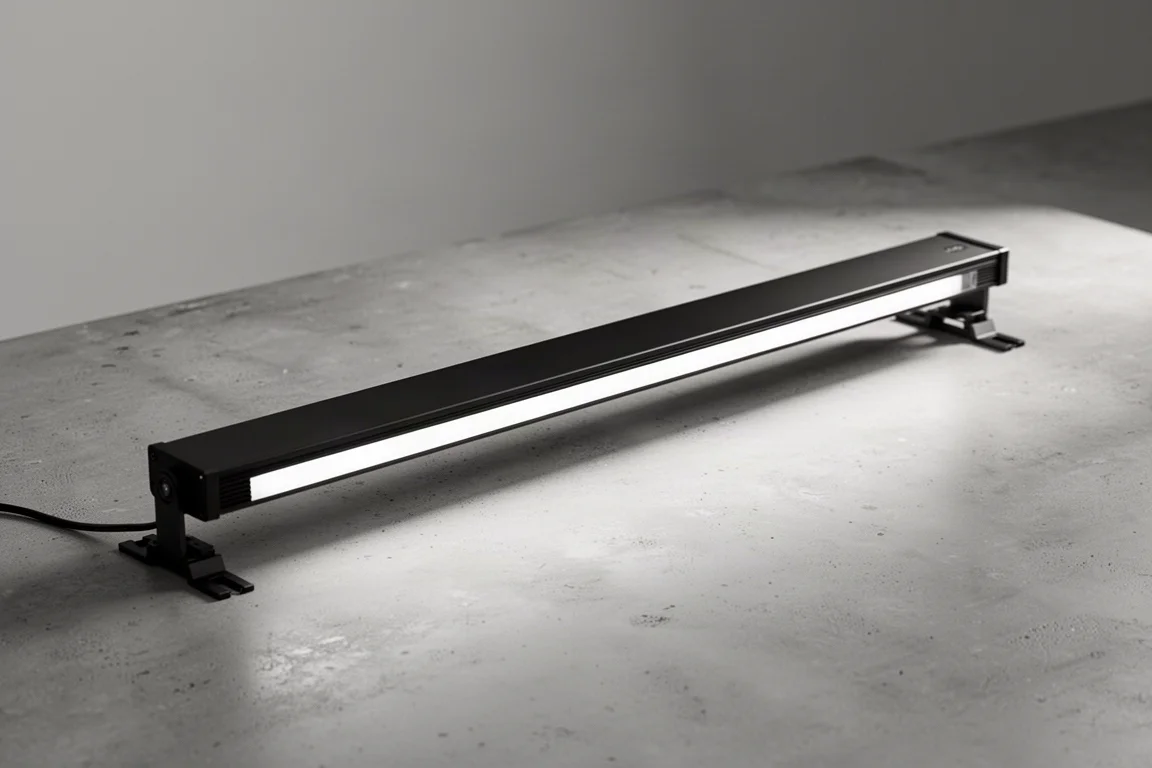
The Scaper LED 93 extends from 74 cm to 93 cm, which covers this aquarium with room to spare and also suits a four foot tank. Two mounting sets are included. One rests on the rim of the aquarium, and the other allows a flush fit for tanks running under a hood.
Output is strong for a light of this size. Over a pale substrate that can be a lot of intensity to manage, and the fixture can be slid forward or back to change how much shadow falls across the front of the scape. A separate in line dimmer is available that sets intensity as a percentage and includes a timer, which is a sensible addition if you want the light running on a schedule.
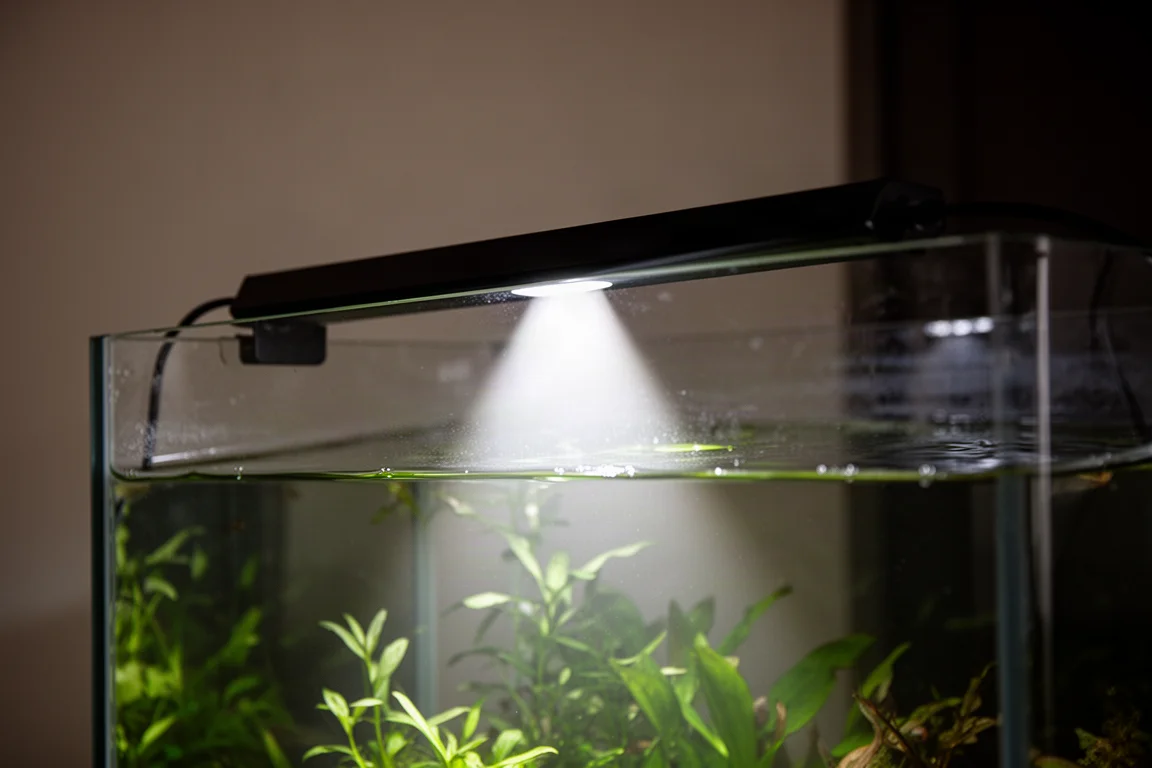
Because the fixture is adjustable rather than fixed, it can sit closer to the front glass for a brighter foreground or be pushed back to leave the front of the tank in softer light. That flexibility matters more than raw output on a shallow tank, where light has less water to travel through before it reaches the plants.
The Substrate: Colombo Nutribase
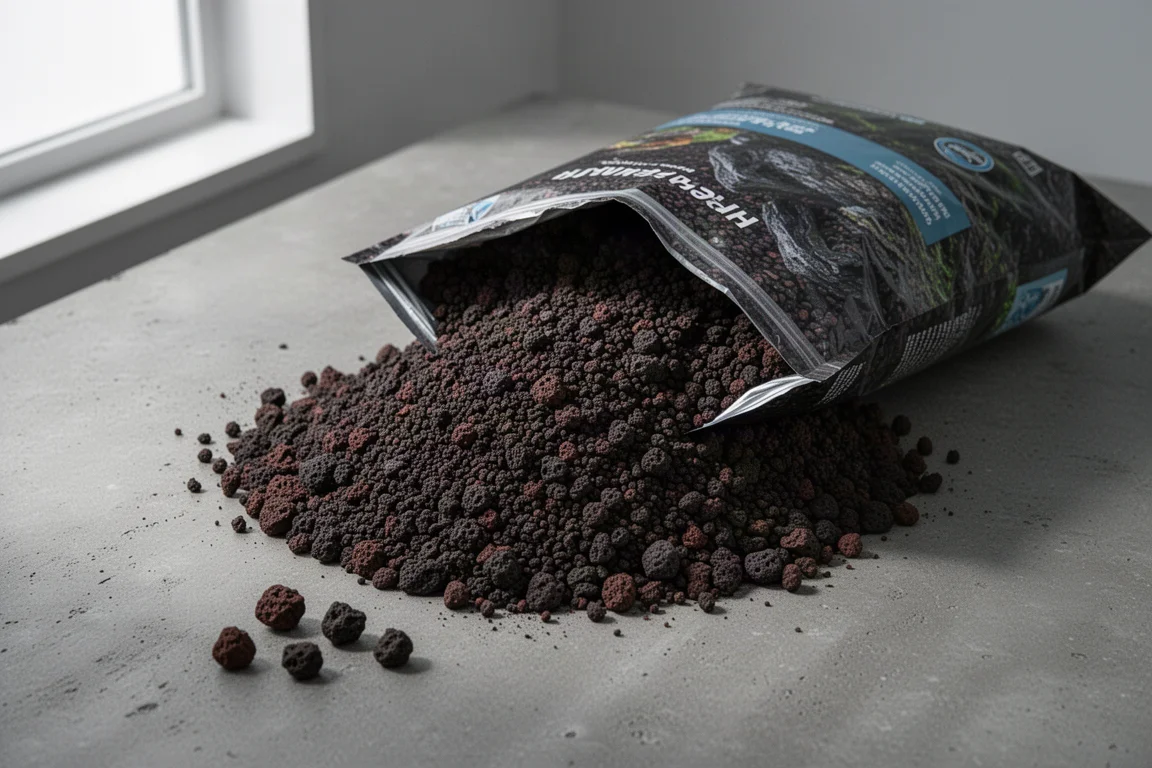
Nutribase is a base layer rather than a decorative top layer. It combines dormant bacteria, crushed lava rock and added nutrients, and it sits underneath whatever growing medium you choose. A typical build lays it down first, follows with an aquatic compost or an aquasoil, and finishes with a decorative sand or fine gravel cap in the foreground.
The advantage of a dedicated base layer is that nutrients stay locked down near the roots instead of drifting into the water column. Plants that creep across the front of the scape can root into it over time, and heavier feeding plants benefit from having something richer beneath them than plain gravel.
Planting and Stocking Notes
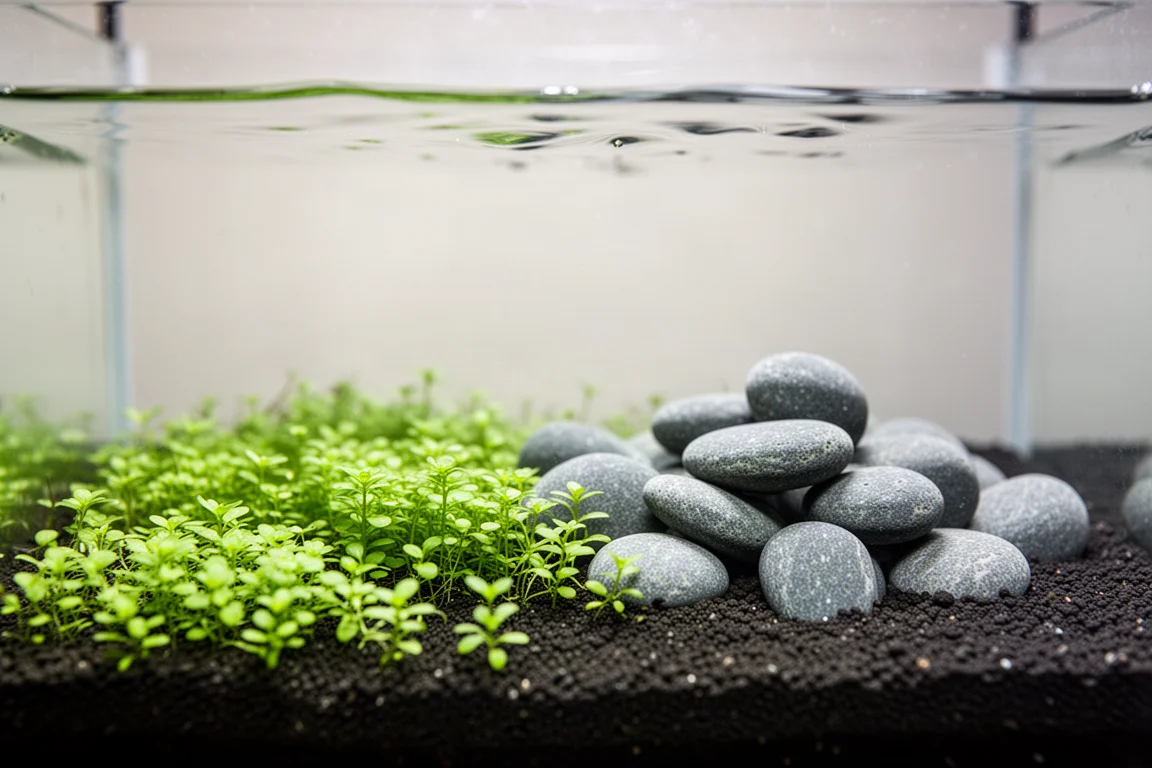
A shallow tank rewards a simple planting plan. Short green carpeting plants and fine grass like species suit the open foreground, crypts and ferns handle the midground, and epiphytes such as anubias and bucephalandra can be attached directly to the wood so they do not need substrate at all. A single feature plant behind the main piece of hardscape gives the eye somewhere to rest, and fast growing stems in the background help absorb nutrients while the tank settles.
Fish selection follows the same logic. A generous open swim area in the front third keeps midwater species visible, while a shaded channel under the wood gives shy or territorial fish somewhere to retreat. Cichlids in particular settle faster when they have a defined refuge to claim, and they colour up quickly once they feel secure. Cleanup crews such as small plecos and otocinclus will graze the wood and glass, though it is worth adding algae wafers while the tank is still maturing.
Filtration and Maintenance in Practice
The supplied filter is a compact canister designed to sit inside the cabinet, which is the main reason the display stays clean. Internally, three sponges step from coarse to fine, topped with filter floss, and a plate at the bottom stops the media from compacting under flow. The kit includes two reels of hose, an inlet with a strainer, an outlet, a ball valve for flow control and a spray bar as an alternative to the standard spout.
Priming is done by starting a siphon, which floods the canister before the pump is switched on. It is a simple process, though it is worth double checking that the inlet and outlet hoses are connected the right way round before you open the valve.
Because a new aquarium has no established bacteria, the first week or so is about monitoring rather than admiring. Dosing a beneficial bacteria starter and testing daily for ammonia and nitrite is the standard approach, with a water change whenever either reading climbs. A heavily planted tank with fast growing stems and floating plants tends to settle faster, and readings usually level off within about a week.
Buying Advice: Is This Setup Right for You
This setup suits someone who wants a planted freshwater aquarium in a room where floor space and visual bulk matter. The 40 cm height keeps the tank low, the cabinet keeps equipment out of sight, and the light is capable enough that a newcomer can grow demanding plants without immediately upgrading.
It is less compelling if you already own a light and a filter you are happy with, or if you want a tall tank for long stem plants. The shallower profile is a strength for aquascaping, but it does limit how much vertical growth you can show off.
Budget matters too. The Escape Up 140 is not a budget setup, so if the aim is simply to get water moving in a small tank, a basic aquarium will cost less. The case for this kit is how much arrives with it, and the fact that the tank, the light and the substrate base are designed to work as one system rather than as three separate purchases.
Conclusion
Taken together, the Superfish Escape Up 140, the Scaper LED 93 and Colombo Nutribase form a coherent starting point for a planted freshwater tank. The aquarium brings a shallow, scaping friendly shape and a cabinet that hides the hardware. The light is adjustable and strong enough for a demanding planting scheme. The substrate base layer gives roots something to work with while the decorative cap keeps the foreground tidy.
If the goal is a considered display that looks settled from the first week, this combination is worth a close look. If you already have lighting and filtration sorted, buy only the pieces you actually need.
Further reading
Related Reviews
Aquarium Equipment
Abyzz Professional DC Pumps: A100, A200, and A400 Reviewed
A closer look at three German-made DC return pumps built for large reef systems, with titanium internals, fine flow control, and a 10-year warranty.
Aquarium Equipment
AdaptiveReef Controller Accessories: Three Tactile Upgrades for Your Reef Controller
A practical look at three AdaptiveReef add-ons that put physical switches, at-a-glance status lights, and a loud alarm within arm's reach of your reef tank.
Aquarium Equipment
Adaptive Reef Controller Boards: Basic vs Deluxe for Cleaner Aquarium Gear
A practical look at the Adaptive Reef Basic and Deluxe controller boards, what each one includes, and how to choose the right size for your tank gear.