Chainsaws
Stihl MSA 120 C Review: The Entry-Level Battery Chainsaw That Punches Above Its Price
Stihl's least expensive battery chainsaw handles yard cleanup and storm debris well, with surprisingly strong battery life and a few trade-offs worth knowing about.
Introduction
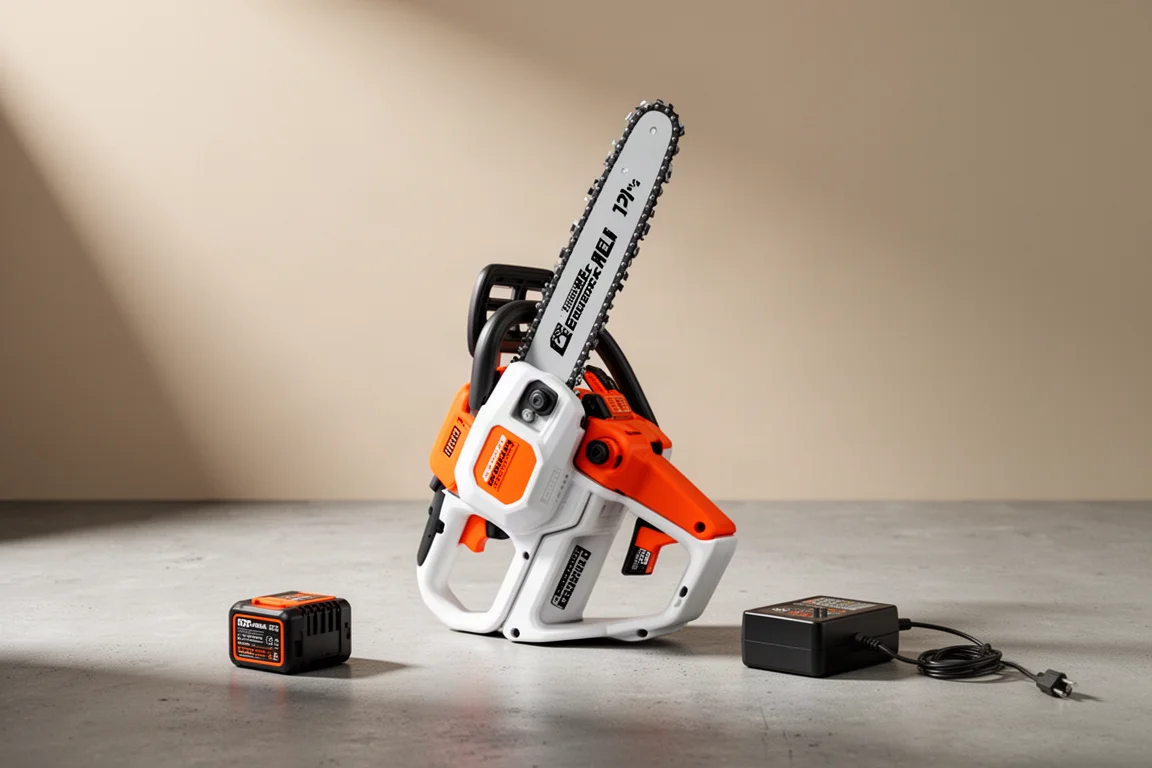
The Stihl MSA 120 C is the least expensive battery-operated chainsaw in Stihl’s lineup, and it is very much aimed at homeowners rather than professionals. It shares its motor family with the MSA 140 C, which uses a 14-inch bar instead of the 12-inch bar found here, and with the MSA 60 and 70 C, which are essentially the same motors with slightly different ergonomics.
If you are shopping for a saw to clean up your yard, cut firewood chunks, or handle storm damage on smaller trees, this review walks through what it does well and where you will feel its limits.
First Impressions and Design
The MSA 120 C is a homeowner saw through and through, but the build quality feels better than its entry-level position suggests. It includes a chain brake, which some lesser saws skip, and that is a safety feature worth insisting on in any saw you buy.
The bar adjustment is tool-free, which sounds convenient but is not the easiest to use with gloves on. You unscrew the cover, tighten everything down, and push it into place. Some people will like it, most people probably will not, but it works.
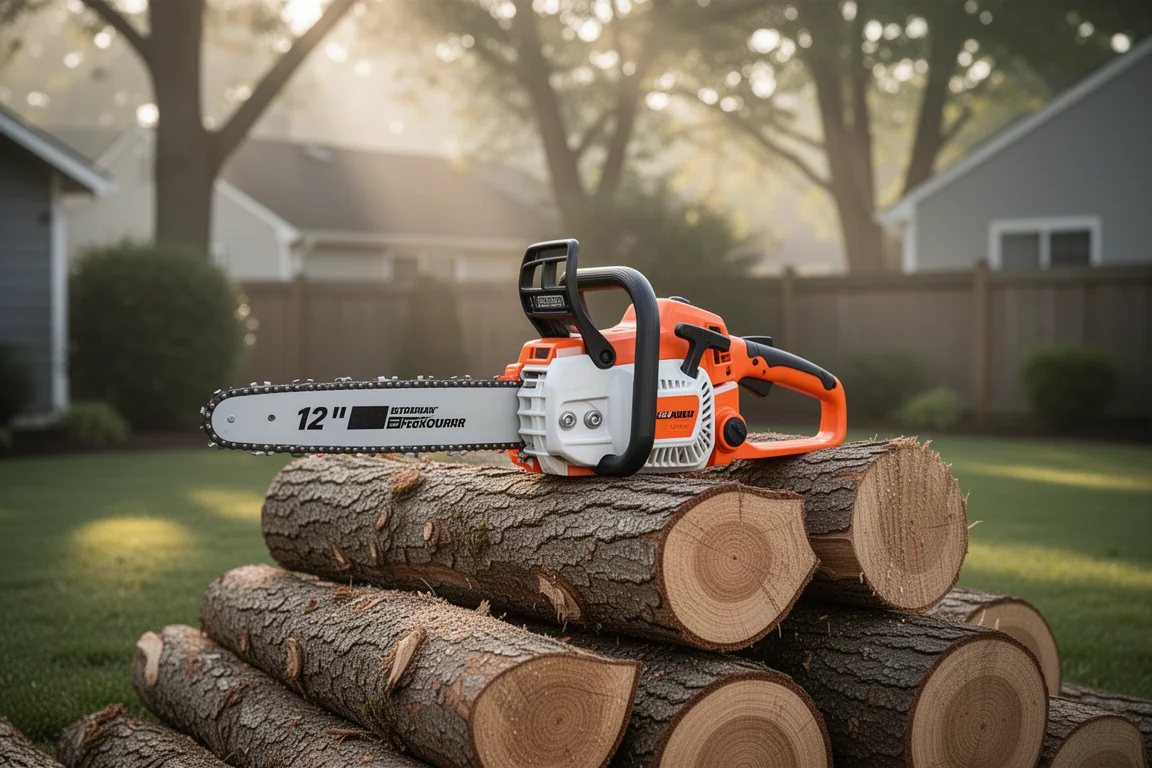
Operation is simple: press in the safety button, then pull the trigger, which feels like a gas saw trigger but requires a long pull with noticeable creep before the chain starts. It is a one-speed saw, not variable speed, something many homeowners will not mind at all.
Cutting Performance
In dry ash hardwood, the saw stalls out if you push it the way you would push a larger gas saw. Letting it cut under its own weight works far better, and once you learn the saw’s rhythm, it cuts through hardwood just fine. It bogs when forced, but with patience it keeps going, and it remains smooth and comfortable while doing it.
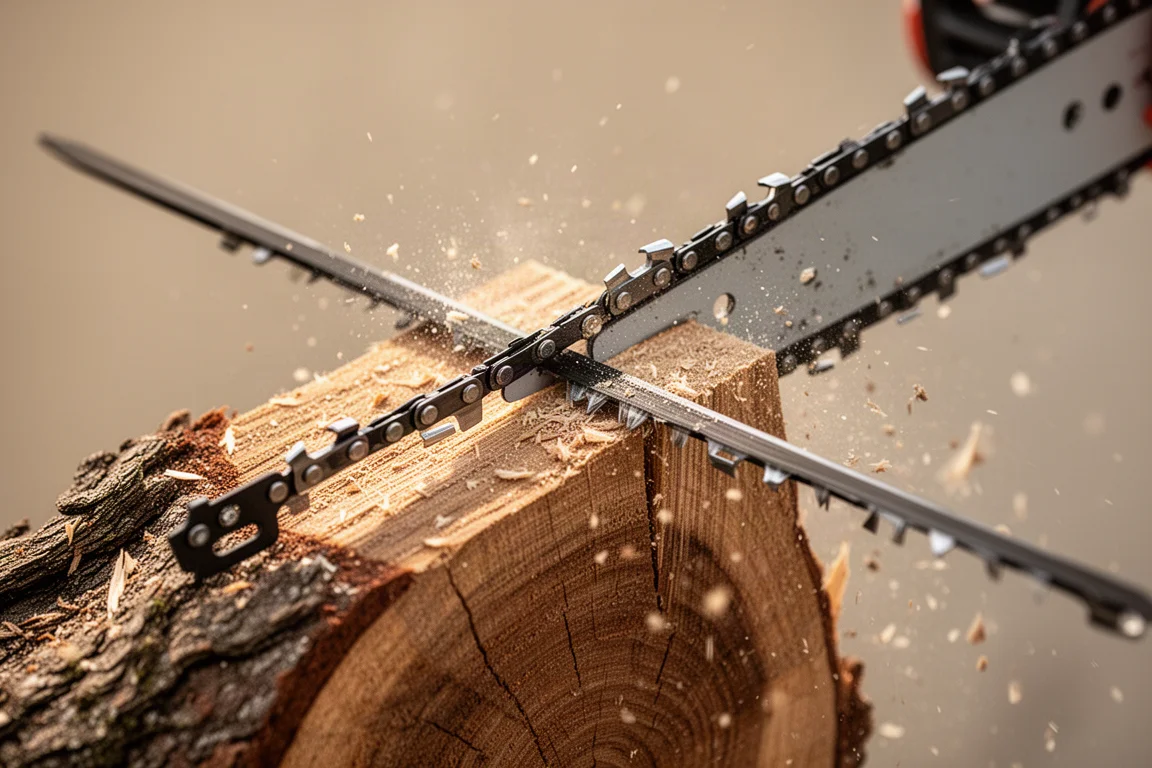
Smaller oak, interestingly, cut noticeably better than the ash, and the power felt significantly improved, which shows how much wood hardness matters with this class of saw. The saw clearly does better with smaller diameter limbs, making it well suited to limbing, brush cleanup, and general yard work.
The chain is a thin kerf design with reasonable chain speed, so keeping it sharp is very important. With sap and hardwood, you can feel the chain gumming up slightly and some vibration creep in, even when the chain is still reasonably sharp.
Battery Life and Charging
The saw runs on Stihl’s AK series batteries, and our AK 20 test pack is physically small at 36 volts. The battery fuel meter is useful, and it held at “fully charged” for a surprisingly long time before dropping.
Runtime was the biggest surprise here. The saw delivered nearly double the expected cutting time, working down through multiple bars of charge while cutting hardwood and oak storm debris. Even more impressive, the pack did not get warm at all, where many smaller battery packs get noticeably hot when run low under load.
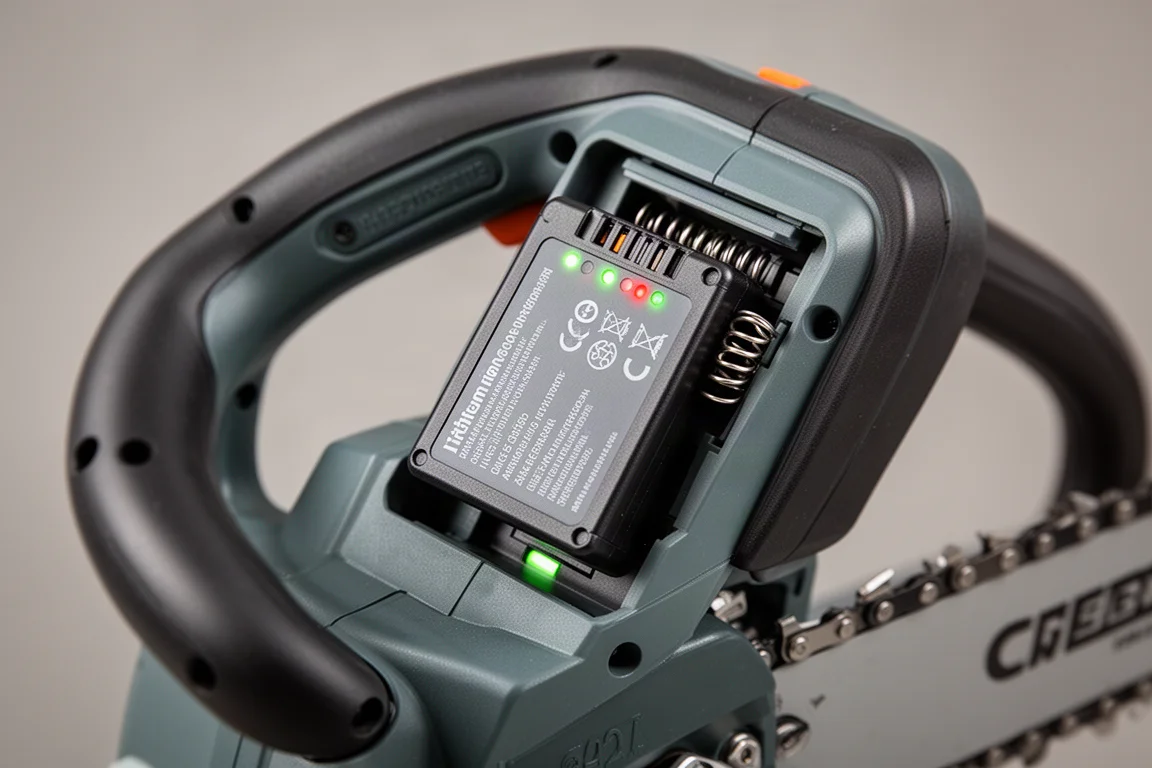
The battery pops out easily thanks to internal springs that push it up, though occasionally it seems reluctant to seat fully and just needs to be pushed in correctly. The saw still takes bar and chain oil, and use proper bar and chain oil, not motor oil. It is tacky, it sticks to the bar and chain, and it helps everything last longer. A transparent window lets you see when the oil level gets low, and the oiler throws plenty of lubrication where it should.
Pricing and Value Considerations
Pricing is where the buying decision gets interesting. The saw alone costs $279, while the kit with the battery and charger is $219. Nobody should buy this as a bare tool; it should always be bought as a kit.
The catch is what happens above it. Moving up the Stihl battery range to a saw with a 16-inch bar lands you in the $800 range, with $200 of that being just the battery. Stihl batteries keep climbing in price as they get bigger, and a fully kitted high-end Stihl battery saw can reach up to around $1,200. By comparison, a professional Stihl gas saw like the 362 or 370 sits around $800 and can often be found on deal.
So at $219 for the kit, you are paying for convenience: tool-free adjustments, simple operation, and enough battery life to handle real yard cleanup. The open question is battery replacement. If that battery ever needs replacing, you have to ask whether the saw becomes a throwaway item at that point.
Who Should Buy It
For limbing, brush cleanup, and cutting storm debris into burnable chunks, this saw is inexpensive, fairly high quality, and does the job well. It is comfortable, smooth, not overly heavy thanks to the small battery, and the runtime holds up through a serious cleanup session.
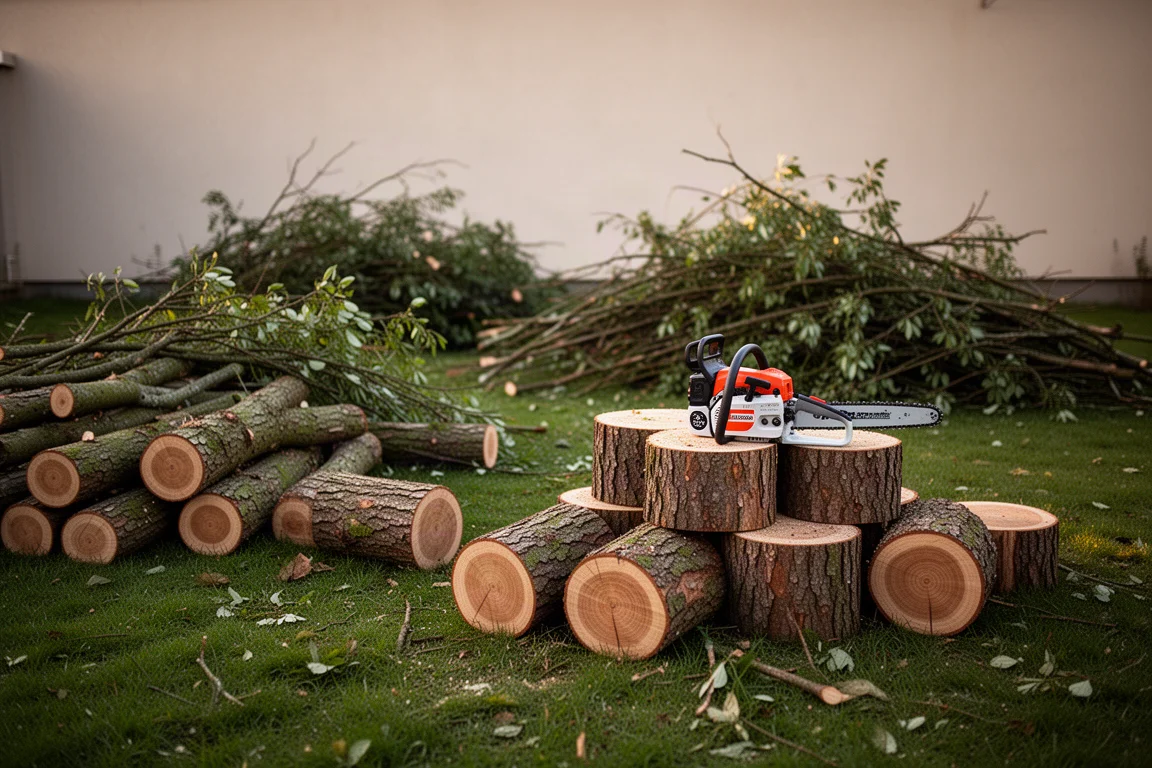
It handled an entire afternoon of ash and oak cutting on a single charge, still throwing good chips down to the last bar of power. If your work is mostly small-diameter limbs and yard debris, it will do everything you need with battery life to spare.
Buying Advice
Buy the kit, not the bare tool, and factor in the cost of future batteries before committing. Keep the chain sharp, use proper bar and chain oil, and let the saw cut at its own pace instead of forcing it. If you regularly face thick hardwood or large-diameter logs, this is not your saw, and Stihl’s higher-end battery models or a professional gas saw will serve you better.
Conclusion
The Stihl MSA 120 C turned out to be more than expected for an entry-level saw. The power is modest by design, trading muscle for runtime, but the battery endurance, smooth cutting feel, and safety features make it a genuinely capable cleanup tool for homeowners. As long as you match it to small-diameter work and buy it as a kit, it represents reasonable value in Stihl’s battery lineup.
Product link
View more details for STIHL MSA 120 C
This product is mentioned in the review. Check the specifications, options, and compatibility before buying.
View more details for STIHL MSA 120 CFurther reading
Related Reviews

Chainsaws
Best Gas Chainsaws 2026: Eight Saws Put to the Test
We tested eight 18-inch gas chainsaws from budget picks to premium models to find the best value, the fastest cutter, and the most refined option.
Chainsaws
Best Gas Chainsaws Tested: 8 Saws From Budget to Professional Grade
Eight 18-inch chainsaws tested on starting, cutting speed, torque, vibration, and noise, from a $96 budget saw to a $430 Stihl MS250.
Chainsaws
$100 Chainsaw vs $550 Stihl: Can Budget Saws Really Compete?
Two budget chainsaws face off against the Stihl MS 291 in torque, cutting speed, fuel efficiency, and cold-start tests to see where the money actually goes.