Chainsaws
$100 Chainsaw vs $550 Stihl: Can Budget Saws Really Compete?
Two budget chainsaws face off against the Stihl MS 291 in torque, cutting speed, fuel efficiency, and cold-start tests to see where the money actually goes.
Introduction
Budget tools keep surprising people. In recent comparisons, the cheapest products have sometimes outperformed far more expensive ones, which raises a fair question: can a chainsaw that costs around $100 genuinely compete with a $550 name-brand saw?
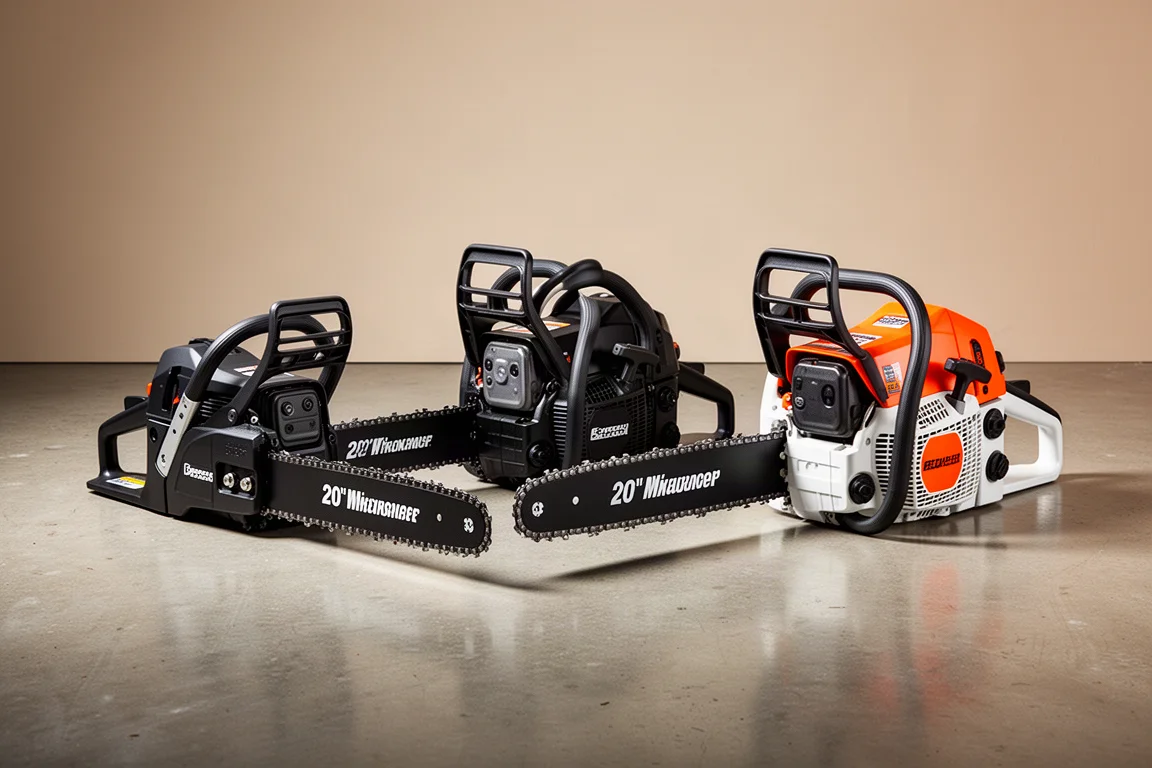
This showdown puts two budget saws against the Stihl MS 291, bought assembled from a dealership. All three saws share a 20-inch bar and a 0.325 pitch chain, which makes the comparison unusually direct. The tests cover torque, cutting speed, fuel efficiency, cold starting, and the force needed to pull the starter rope.
The Contenders
Top Teq 52cc (around $100): a 52cc engine with a claimed 2.7 horsepower and a 20-inch bar. It weighed 12.57 lb before fuel, and its tank holds close to 14.8 oz.
58cc budget saw (between $100 and $110): a 58cc engine claiming 3.2 horsepower and a 13,000 RPM maximum working speed, with the same 20-inch bar. It weighed 12.8 lb with a 14.4 oz tank.
Stihl MS 291 ($550): a 55.5cc engine, weighing 15.52 lb, with the smallest tank of the three at 12.9 oz.
First Impressions and Build Quality
The Top Teq 52cc shows its price in the details. The inward-facing sprocket makes bar and chain installation trickier, the bar mounts on two studs attached directly to the aluminum engine case, and the chain brake and bar adjustment screw are built into a light-duty plastic cover. The bar oil fill sits under the handle, where it is awkward to reach, though the fuel fill is easy to access. The stock air filter stops large debris but is too porous to block fine dust, and the SAP spark plug arrived with noticeable carbon deposits, suggesting the manufacturer ran the saw before shipping.
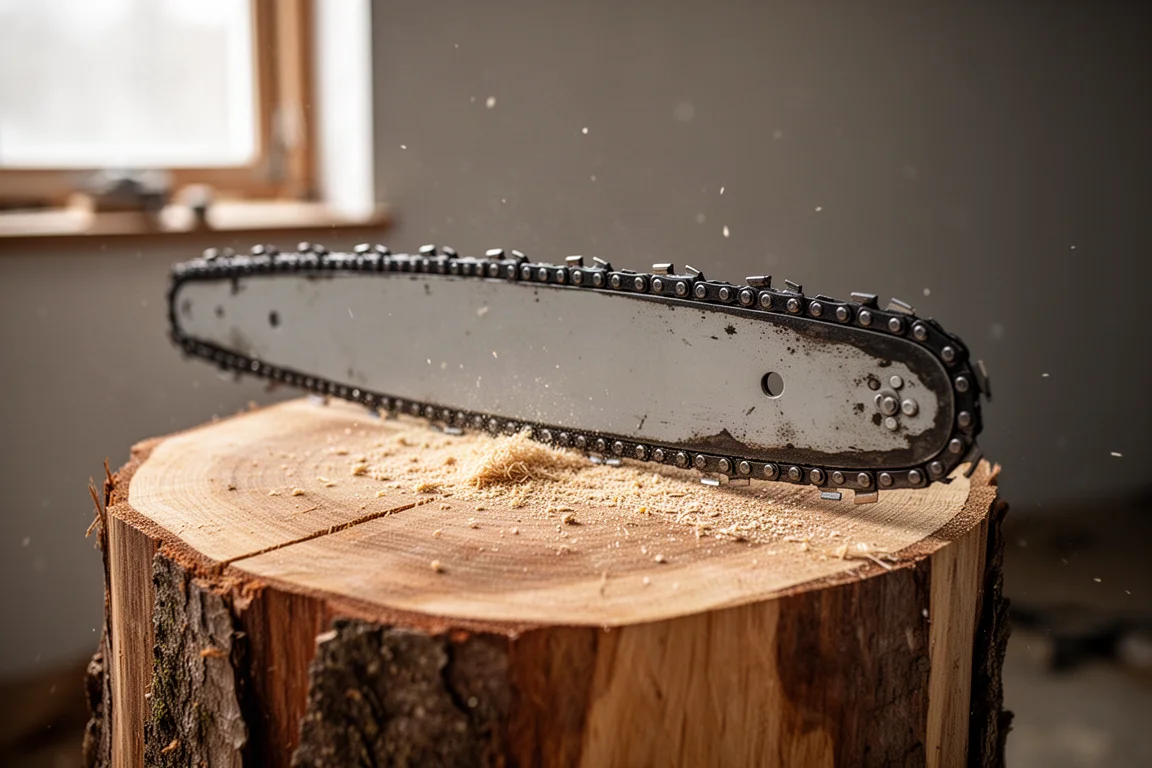
The 58cc saw shares much of the same construction but gets a few refinements: a gasket behind the air filter, a cleaner MYSP spark plug with fewer deposits, and a throttle lock intended to help with starting. The Stihl MS 291 is in a different league here. Its outward-facing sprocket makes bar changes straightforward, the chain adjustment screw sits on the side of the saw, the chain brake is built into the saw body with a handle mounted at two points for sturdiness, the felling spikes are far more aggressive, and the filter media does a much better job filtering the air.
Torque Test
Using a steel plate tester that registers downward force at the chain, each saw got three attempts:
- Top Teq 52cc: 22 lb on all three attempts, consistent and strong
- 58cc saw: 16, 17, and 17 lb, giving up early each time
- Stihl MS 291: 28 lb on all three attempts, by far the best
The 52cc saw makes substantially more usable power than the 58cc saw, which became the defining weakness of the mid-priced budget unit throughout every cutting test.
Speed Test: Cutting Through Nine 4x4s
Pushing each saw hard while avoiding stalls, cutting through stacked 4x4s told a similar story.
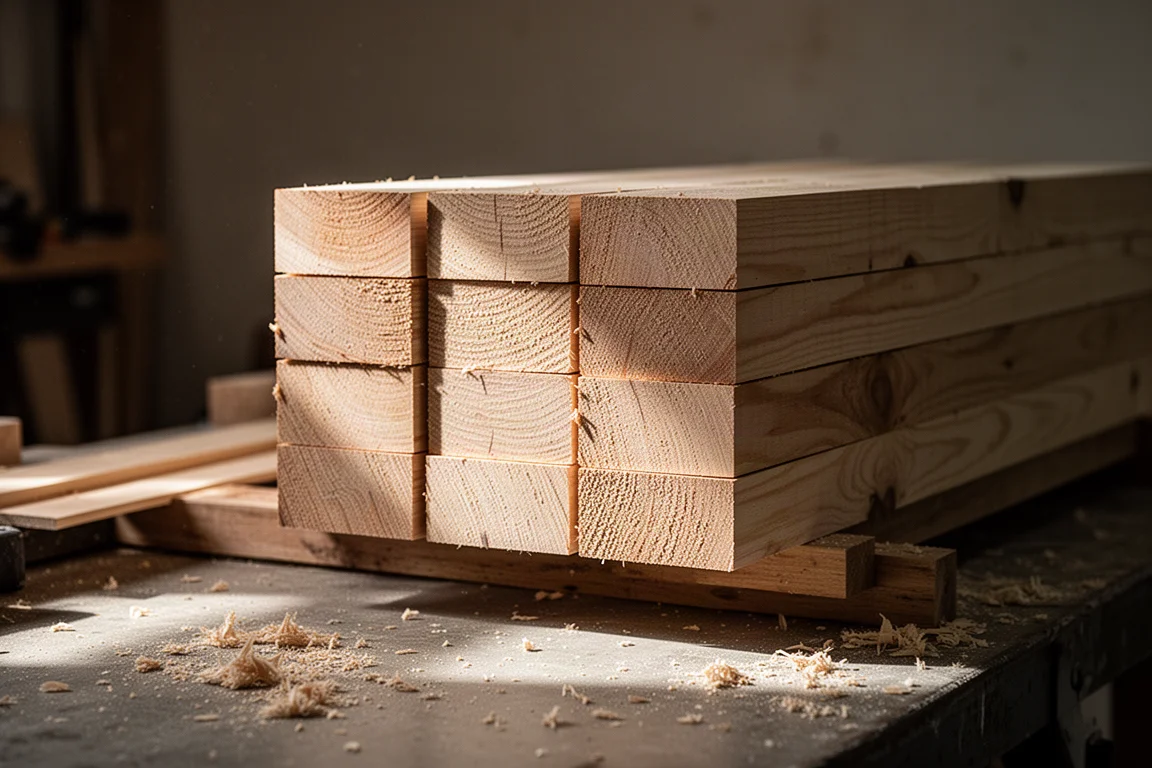
The Top Teq was faster than expected, with a best cut of 13.5 seconds. The 58cc saw stalled the chain once and managed only 25.2 seconds on its best pass, nearly twice as long. The Stihl, revving about 2,000 RPM higher than both budget saws at 13,137 RPM versus roughly 11,100 for the others, cut fastest at 9.6 seconds, about 30% quicker than the Top Teq.
With 5 lb of extra weight on the bar, the gap widened conceptually: the Top Teq cut in 18.8 seconds and the 58cc saw barely kept the chain moving at 19.3 seconds, while the Stihl finished in 12.7 seconds.
Does a Premium Bar and Chain Help the Budget Saws?
To make the test fairer, a genuine Stihl-spec bar and chain was swapped onto the budget saws, since all three use a 0.325 pitch chain. The sharp Stihl chain demands more torque to keep moving, and that hurt the weaker saw. The Top Teq matched its previous best at 13.5 seconds and cut 12.7 seconds with 5 lb added, a strong result. The 58cc saw managed 25.7 seconds and stalled a couple of times under the added weight. In short, better cutting hardware cannot compensate for a lack of torque.
Real-World Test: Cutting Through a Dead Tree
On a recently dead tree measuring roughly 14 by 18 inches, the pattern repeated. The Top Teq performed very well for its price with a best pass of 34.3 seconds. The 58cc saw needed more than a minute on its first cut and posted a best of 64 seconds, twice as slow as the Top Teq. The Stihl MS 291 cut in 22.3 seconds at its fastest, roughly 12 seconds quicker than the Top Teq.
Fuel Efficiency: Which Saw Does More Work Per Tank
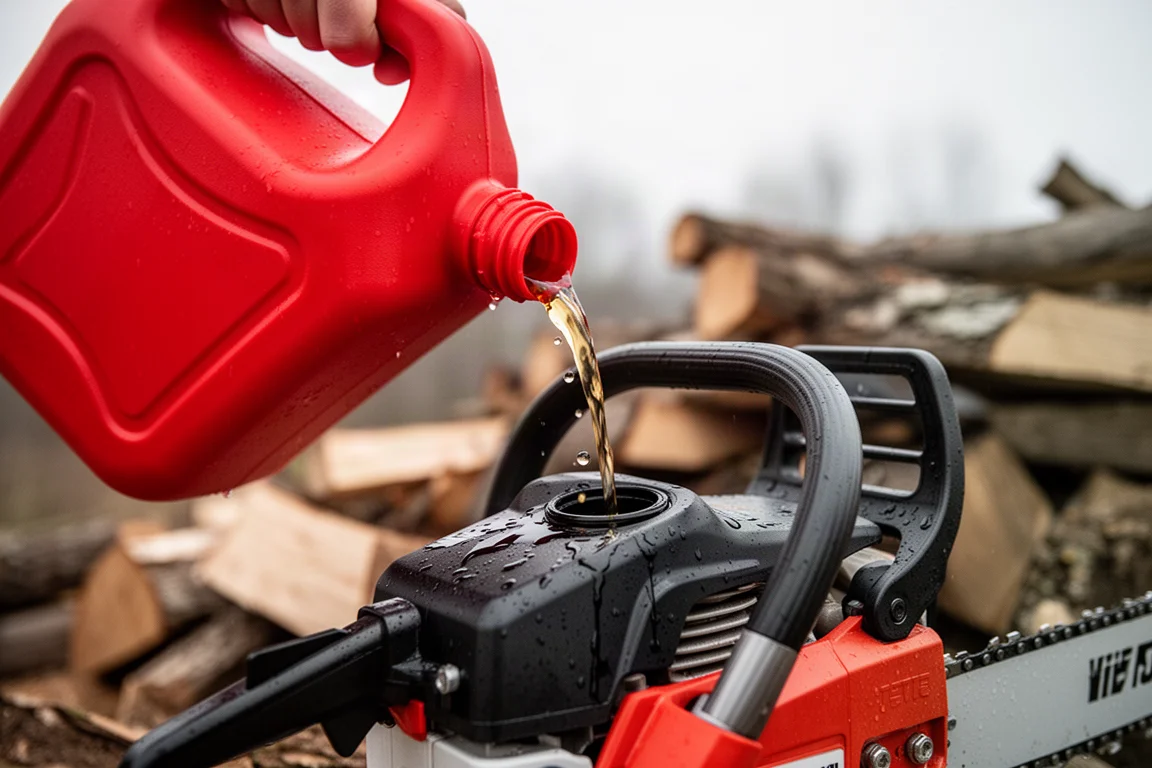
With all tanks topped off, each saw cut until dry. The Top Teq completed 31 passes in 17 minutes and 22 seconds. The 58cc saw ran slightly longer at just over 18 minutes but completed only about half the work. The Stihl, despite its smallest-in-class 12.9 oz tank, ran over 19 minutes and finished 41 cuts, 10 more than the Top Teq and 28.5 more than the 58cc saw. Fast cutting turned out to matter more than tank size.
Cold Starting and Starter Effort
After sitting outside overnight in temperatures in the low 30s, the results were mixed. The Top Teq needed 12 pulls, while the 58cc saw’s throttle lock finally proved useful and it started in 5 pulls, matching the Stihl’s 5 pulls. Peak pull force measured 33 lb for the Top Teq, 32 lb for the 58cc saw, and roughly 68 lb for the Stihl, more than double. Vibration is another clear differentiator: the budget saws shake heavily, while the Stihl runs noticeably smooth and comfortable.
Which Saw Should You Buy?
The verdict is unsurprising but still instructive. The $550 Stihl MS 291 won every performance category: torque, cutting speed, work done per tank, and comfort. If you cut regularly or need to fell trees, the premium saw earns its price. But the Top Teq 52cc performed remarkably well for around $100, consistently beating the 58cc saw despite its lower displacement, and it makes a strong case as a budget buy for occasional use. The 58cc saw, despite claiming more horsepower on paper, simply lacks the torque to keep pace in real cutting work.

Conclusion
Money does buy performance in this showdown, but not as linearly as expected. The Stihl MS 291 is the clear overall winner, while the cheapest saw of the three, the Top Teq 52cc, outperformed its pricier budget sibling and delivered genuinely usable cutting performance for around $100. If your budget is tight, the 52cc is the one to pick; if chainsaws are part of your regular workload, the Stihl remains worth the premium.
Product link
View more details for Top Teq 52cc Chainsaw
This product is mentioned in the review. Check the specifications, options, and compatibility before buying.
View more details for Top Teq 52cc ChainsawFurther reading
Related Reviews

Chainsaws
Best Gas Chainsaws 2026: Eight Saws Put to the Test
We tested eight 18-inch gas chainsaws from budget picks to premium models to find the best value, the fastest cutter, and the most refined option.
Chainsaws
Best Gas Chainsaws Tested: 8 Saws From Budget to Professional Grade
Eight 18-inch chainsaws tested on starting, cutting speed, torque, vibration, and noise, from a $96 budget saw to a $430 Stihl MS250.
Chainsaws
DeWalt FlexVolt 60V 20-Inch Chainsaw DCCS677 Review: Strong Performance, Limited Runtime
Four days of hardwood cutting reveal a powerful, well-built cordless chainsaw whose only real weakness is battery runtime.