Chainsaws
Best Gas Chainsaws Tested: 8 Saws From Budget to Professional Grade
Eight 18-inch chainsaws tested on starting, cutting speed, torque, vibration, and noise, from a $96 budget saw to a $430 Stihl MS250.
Introduction
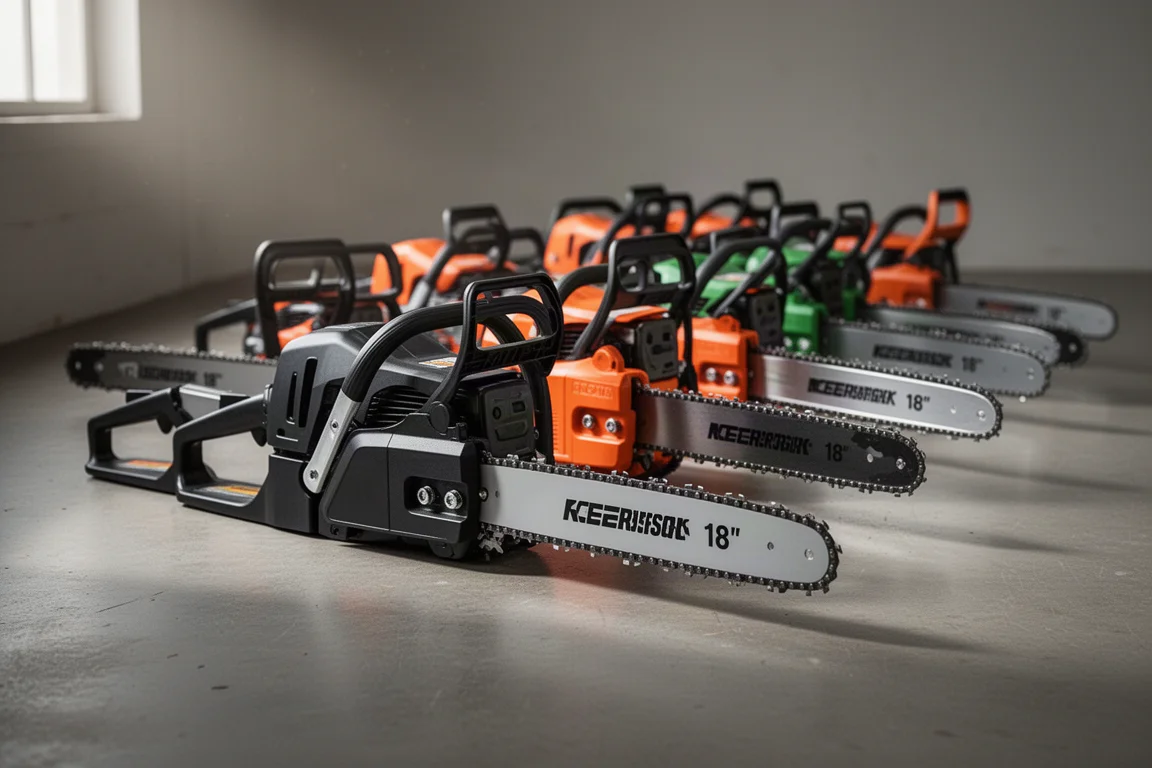
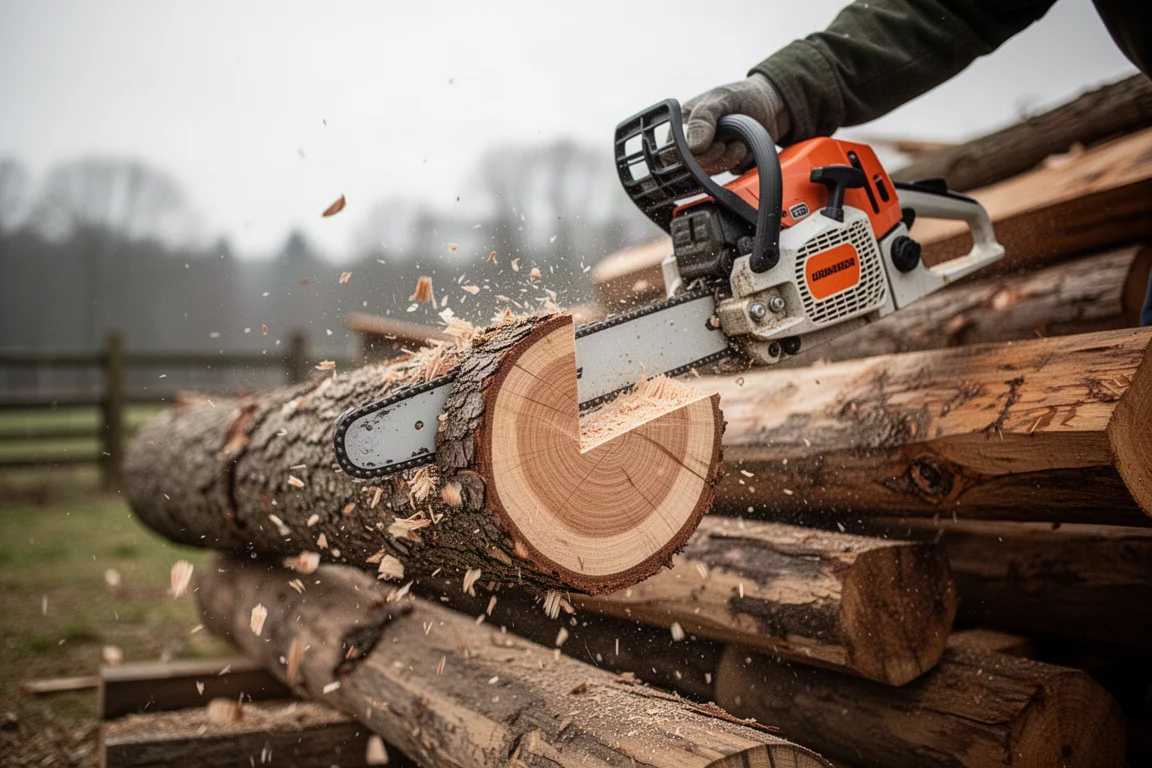
Battery-powered saws are great for small jobs, but for big jobs a gas-powered saw is still the only way to go. The real question for most buyers is whether a budget saw can keep up with a premium one. To find out, eight chainsaws were tested side by side, all fitted with an 18-inch bar and chain, ranging from a $96 Vaver to a $430 Stihl MS250, plus a battery-powered DeWalt thrown in for comparison. Each saw went through cold-start testing, noise and RPM measurements, a dyno-style torque test, timed cuts through a test log, weighted cuts, hardwood cuts, vibration readings, and pull-force measurements.
How We Evaluated Each Saw
Every saw was judged on the same criteria: ease of starting, weight, no-load sprocket speed, torque measured by how much downforce it takes to stop the chain, average cut time on a test log, performance with added bar weight, hardwood cutting, vibration in mm/s, and the peak force needed on the starter cord. Build quality details like chain tensioner placement, air filter access, and felling spikes were also noted.
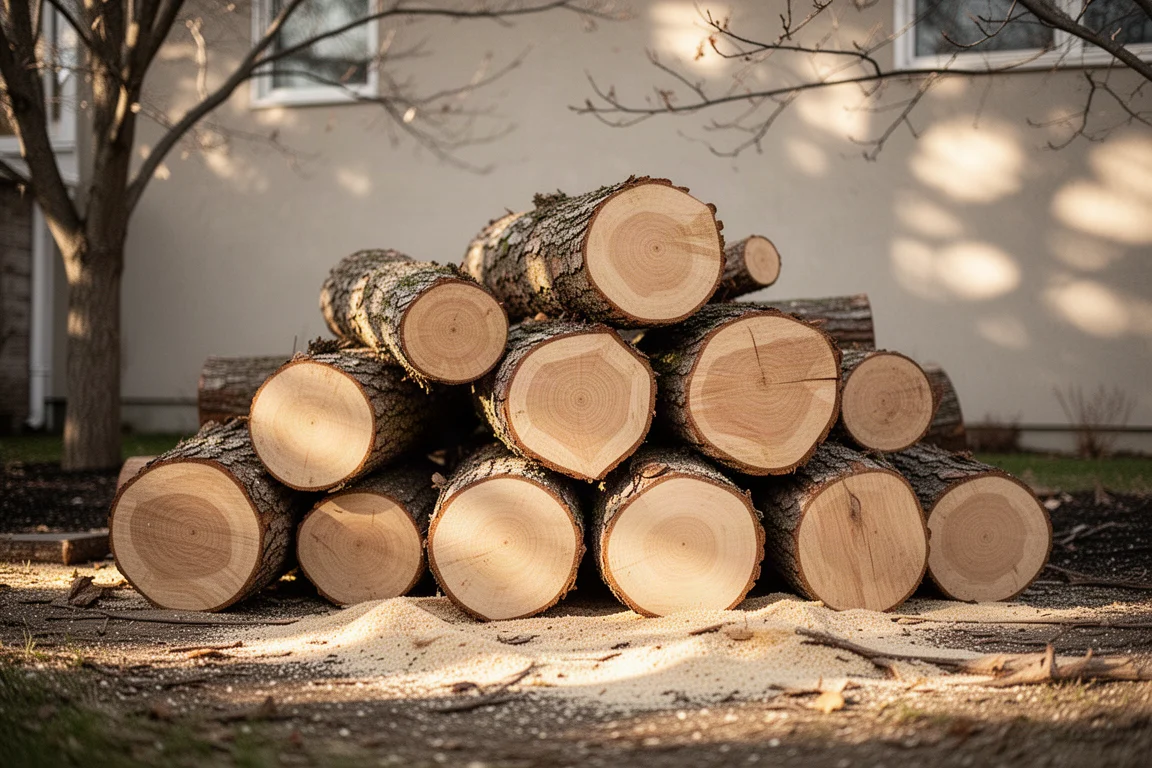
The price spread is wide, so value matters as much as raw performance. A saw that costs a fifth of the competition and still cuts respectably deserves serious attention.
Vaver 52cc Chainsaw
At $96, the Vaver is the least expensive saw in the lineup. It has a 52cc two-cycle engine with a claimed 2.55 horsepower and a claimed maximum of 12,000 RPM. It weighs 14.6 pounds without fuel and oil, and it is made in China.
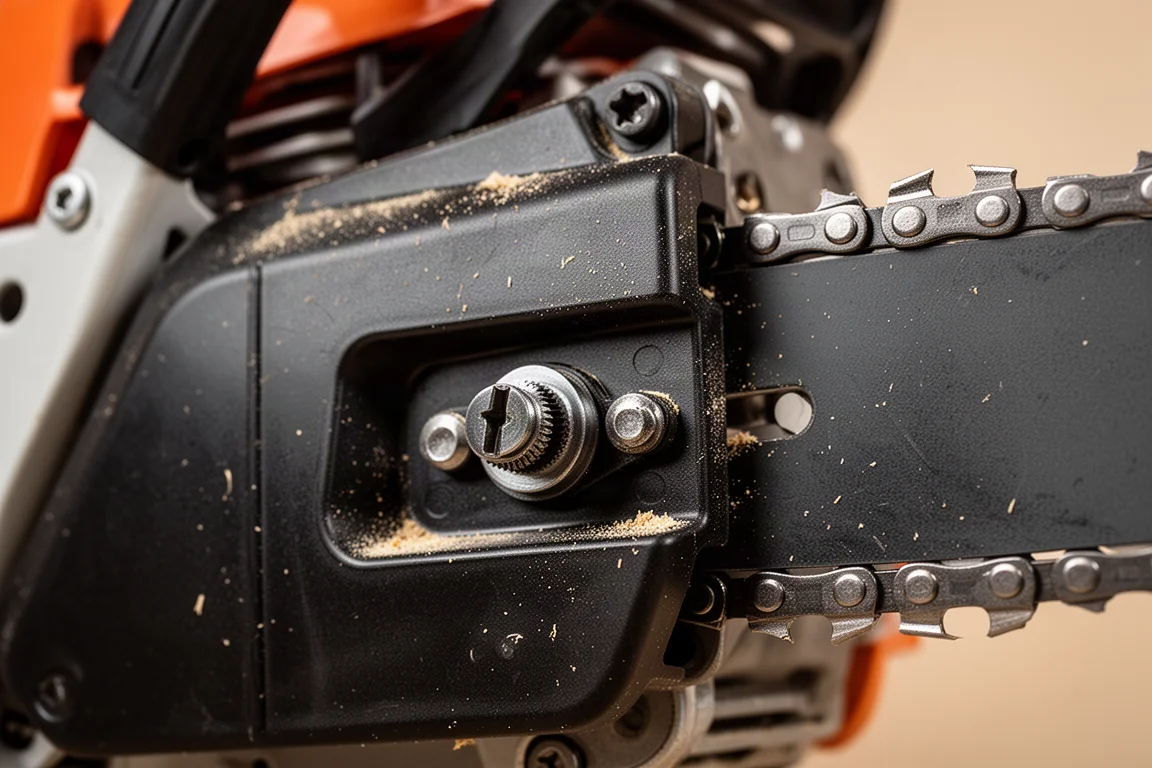
Its downsides are practical: the handle can get in the way when filling the bar oil reservoir, the chain tension screw sits on the front of the chain cover, and the plastic chain cover feels lightweight. The air filter must also be removed to reach the spark plug. First start took seven pulls, and at 114.6 dB it is one of the loudest saws tested.
Where it counts, though, the Vaver delivers. Measured sprocket speed was close to 10,000 no-load RPM, it took 23 pounds of force to stop the chain in the torque test (third best), and it averaged 15.43 seconds on the test log. On hardwood it averaged just under 22 seconds, finishing third overall in that test. Vibration is noticeable at 104.5 mm/s, and starting required 39.1 pounds of pull force. For under $100, it is very hard to beat on value.

Built Hard 46cc Chainsaw
The $110 Built Hard drops to a 46cc engine with a claimed 2.4 horsepower and a rated speed of 8,500 RPM. It weighs 14.57 pounds, also made in China. The chain tension screw is conveniently located on the side of the chain cover, which is genuinely user friendly, and the air filter is held by a wing nut.
There are compromises: the handle blocks the oil reservoir, the four bucking spikes are not very sharp, the chain cover feels light duty, and the air filter still has to come off for spark plug access. Starting is straightforward with a primer bulb, and it fired up in four total pulls. Noise measured 114.3 dB with sprocket speed near 11,700 no-load RPM.
Performance is where it slips. Torque was the weakest of the gas saws at 16 pounds, and the average cut time of 19.93 seconds was noticeably slower than the Vaver despite similar displacement. On hardwood it really struggled, averaging 36.42 seconds. Vibration measured 107.6 mm/s with 38.8 pounds of starting force. It starts easily, but the torque shortfall shows.

Robi 38cc Chainsaw
At $200, the Robi has a 38cc engine, an anti-vibration handle for comfort, and the lightest weight in the lineup at 11.93 pounds. It is made in China with further processing in Vietnam. Both the bar oil and fuel tanks sit at the rear for easy access, the chain tensioner is side-mounted, and it has a reusable foam air filter with spark plug access that does not require removing the filter.
Starting is the best in the test along with the Echo: it ran on the third pull. Noise measured 113.8 dB with about 11,780 peak RPM, roughly matching the Built Hard. Where the Robi truly shines is vibration, measuring only 24.6 mm/s, far better than every budget saw here, and it needed just 32 pounds of force to start, the lowest of the gas saws.
The small engine limits cutting. Torque was 17 pounds, and the slowest test-log average of the group at 23.1 seconds. Hardwood cutting was the worst overall at 39.64 seconds average. It is a comfortable, well-built, easy-starting saw, but it is underpowered for demanding work.

Troy-Bilt 42cc Chainsaw
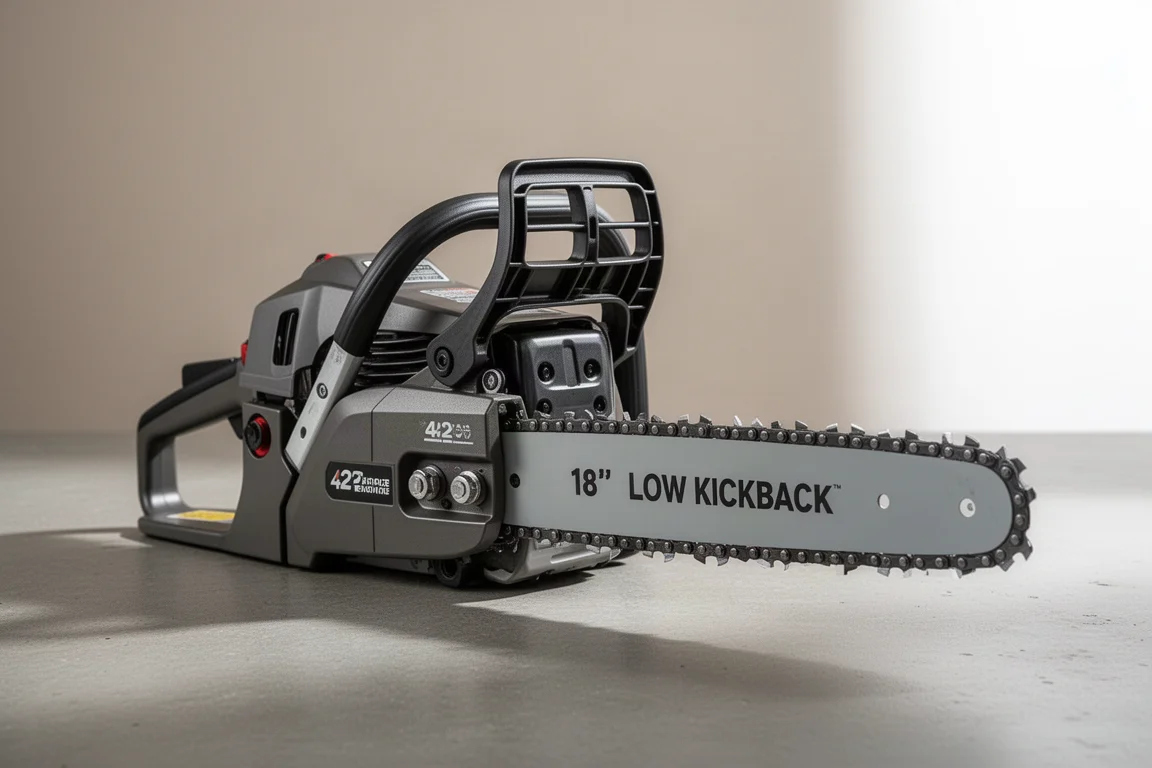
The $225 Troy-Bilt has an 18-inch bar and a 42cc engine, with claimed spring assist technology for easier pull starts, a low kickback bar and chain, and a lightweight design for easier handling. It weighs 12.51 pounds and is made in China with globally sourced materials. Rear-mounted fuel and oil tanks make filling easy, though the five felling spikes stick out excessively and reduce the usable bar length.
It started in four total pulls, showed signs of life on the second, and produced the most engine speed of the mid-pack saws at just under 12,000 RPM. It was also the quietest gas saw at 112.9 dB. Starting force was the easiest measured at only 21.9 pounds of peak force on the cord.
Cutting was mid-pack: 18.98 seconds average on the test log (second place among the gas saws at that stage), 21.27 seconds in the weighted test, and 32.44 seconds on hardwood, about 10 seconds slower than the Vaver. Vibration measured 51.4 mm/s. A reasonable all-rounder, but torque is its weak point.
Echo 45cc Chainsaw
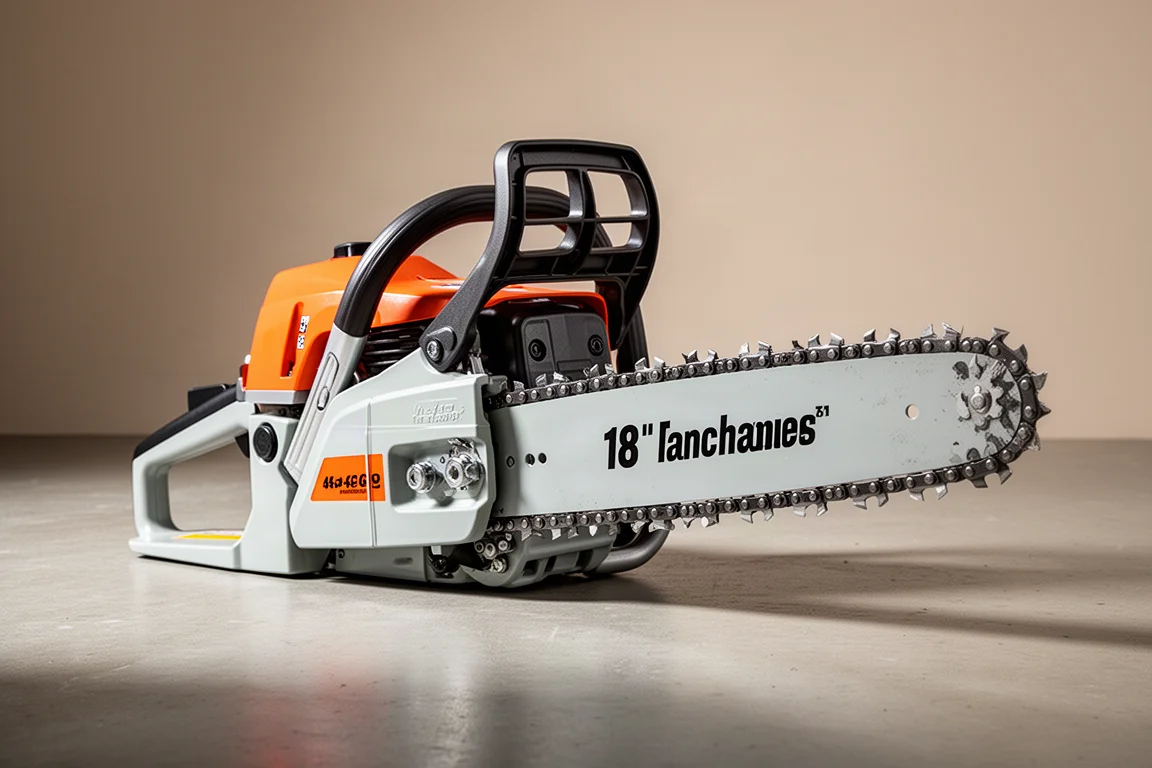
At $379, the Echo steps up to a claimed professional-grade 45cc two-stroke motor designed for 89 octane or higher fuel, and it is made in Japan. It weighs 13.53 pounds. The side cover is plastic but built the best so far, the felling spikes are the most aggressive yet, the bar oil port is large and easy to access, and the threaded air filter holds itself in place with spark plug access without filter removal.
Starting tied for best at three pulls, and noise measured 113.6 dB. The Echo produced the most RPM of the gas saws at the time of testing, just under 13,000. Torque of 24 pounds put it second overall, and it averaged 15.41 seconds on the test log, barely edging the Vaver for third. Hardwood cutting averaged 23.44 seconds, second best of the gas saws.
The standout figure is vibration: only 11.2 mm/s, second best overall and in a different league from the budget saws. Starting force is the highest of the gas saws at 39.4 pounds, but as a refined, low-vibration, fast-cutting package it is very impressive.

Husqvarna 440
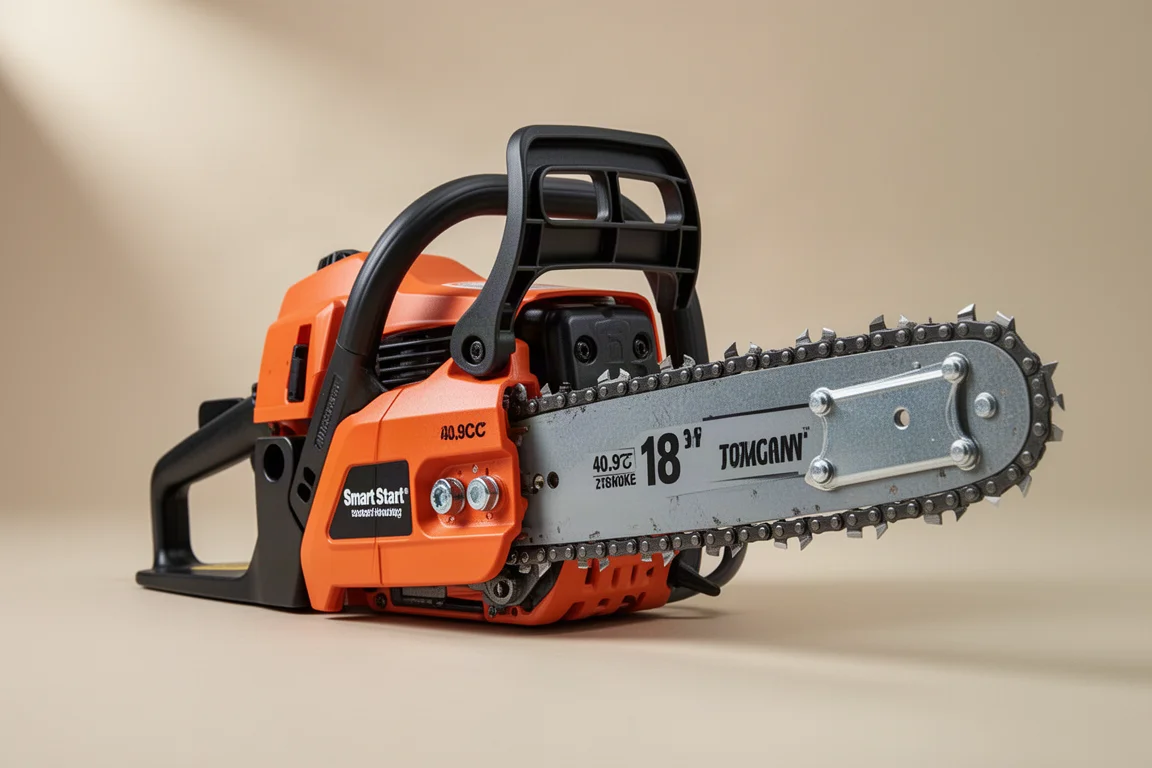
At $399, the Husqvarna 440 uses a 40.9cc two-stroke engine with a claimed 2.4 horsepower and Smart Start for easy startup with minimal effort. It is made in Sweden and is the lightest saw tested at 11.85 pounds. The fuel fill port has a large opening in a great location, the felling spikes match the Echo for aggression, the side cover seems very durable with two metal dowels and a threaded stud securing the bar and chain, and the spark plug is accessible without removing the snap-in air filter. The handle does partly block the bar oil port.
It started on the fifth pull, slightly behind most of the field. Noise was one of the loudest at 114.1 dB, but 12,514 RPM earned second place in sprocket speed behind the Echo. Torque matched the Robi at 17 pounds. On the test log it averaged 16.79 seconds after a slow warm-up, helped by strong chain speed, and 25.69 seconds on hardwood, third among gas saws.
Vibration was the best of the gas saws at 10.5 mm/s, and starting force was 37.3 pounds. A well-built, light, smooth saw that is well tuned but wants a bit more torque.
Stihl MS250
At $430, the Stihl MS250 is the most expensive saw tested, with a 45.4cc engine claimed to deliver three horsepower. It is made in the USA and weighs just 12.39 pounds. The inward-facing clutch and outward-facing sprocket make for the most user-friendly bar and chain installation of the whole test, the side-access chain tensioner is convenient, the felling spikes are the most aggressive looking of all, and the air filter cover removes quickly for service. The spark plug does require removing the air filter. There is no fuel primer bulb.
Starting is its weakest area: nine total pulls, the most of any saw, and it needed by far the most starter force at 44.8 pounds. It is also the loudest at 115.8 dB, and vibration is much higher than the premium Scandinavian rivals at 44.8 mm/s.
Everything else is dominant. Peak sprocket speed hit 15,378 RPM, well clear of the field. Torque led at 32 pounds. The test log average of 12.01 seconds was about 3.7 seconds faster than the Echo, the weighted cut led at 12.65 seconds, and hardwood cutting led at 18.09 seconds average. If you do not mind the starting effort and vibration, it simply outcuts everything here.
DeWalt 60V 20-Inch Battery Chainsaw
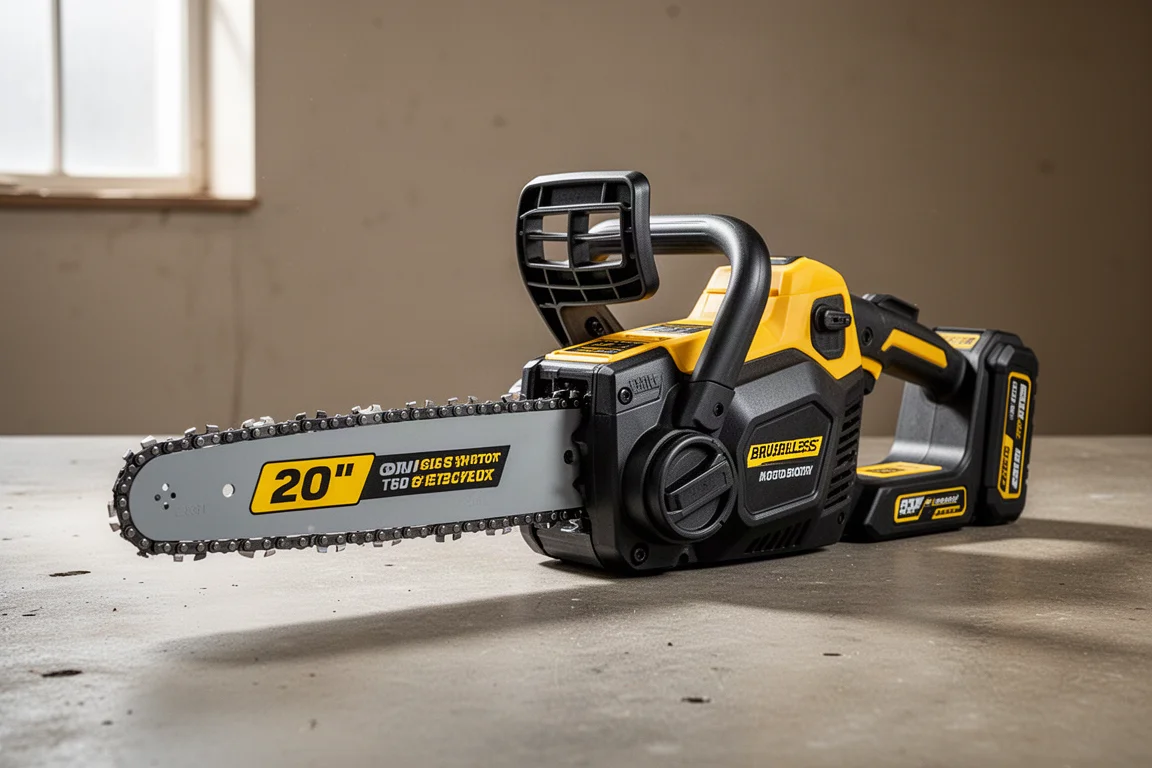
The DeWalt is a battery-powered saw with a 20-inch bar and a 60V system, run here with a fully charged 12Ah battery. At 15.71 pounds it is the heaviest saw tested, and it competes unfairly as a much bigger saw, but it is worth including. At only 96 dB it is by far the quietest by a wide margin.
It is a torque monster, very well designed for hardwood: 18.25 seconds average on hardwood, a very close second to the Stihl, and second place on the test log at 14.15 seconds and in the weighted cut at 16.52 seconds. Wood chips pour out of the discharge area during cuts.
Its limitation is chain speed. Without as much chain speed as the gas saws, it needs more downward force to move quickly through wood. On the plus side, it vibrates the least of everything tested at just 9 mm/s and starts instantly. For quiet, low-vibration cutting with serious torque, it is a compelling alternative.
Cutting Performance: The Numbers That Matter
Across all the timed tests, a clear pattern emerged. Displacement alone does not decide winners: the 52cc Vaver beat several larger-claiming rivals, while the well-tuned Stihl outran saws with more displacement. On the test log, the Stihl led at 12.01 seconds average, the DeWalt followed at 14.15, and the Echo edged the Vaver at 15.41 versus 15.43. The weighted test finished in the same order, and hardwood again went to the Stihl at 18.09, with the DeWalt second at 18.25 and the Vaver a surprise third at 21.97.
Torque told a similar story: Stihl 32 lb, Echo 24 lb, Vaver 23 lb at the top, with the Built Hard and Troy-Bilt at the bottom at 16 lb each.
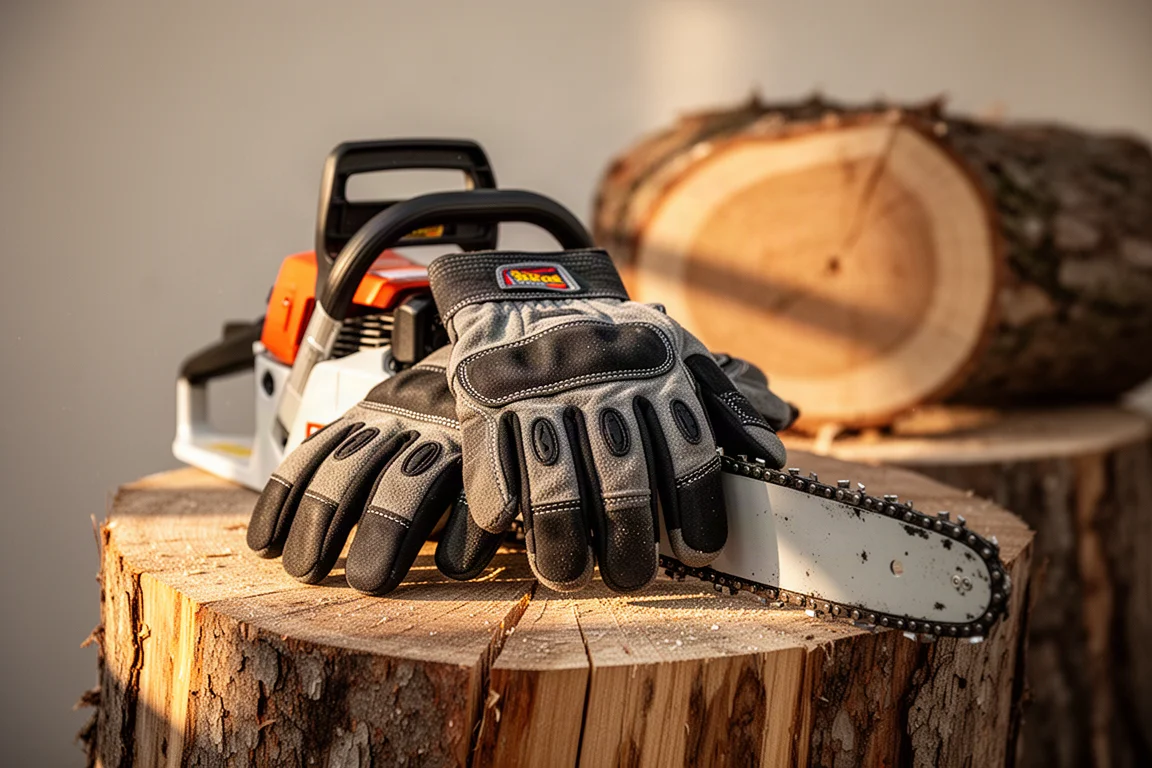
Which Chainsaw Should You Buy?
The scorecard rankings put the Stihl MS250 and the Echo in a two-way tie for first place. The Stihl runs circles around the Echo when actually cutting wood, but the Echo requires less arm and shoulder strength to start, typically fires up on the third pull, and vibrates far less. If you do not mind extra starting effort and vibration for maximum cutting performance, choose the Stihl. If you want a more refined saw that cuts nearly as fast with far less fatigue, the Echo is the better choice.
Conclusion
If it is all about value, the Vaver is where it is at: with a strong average finish across the tests and a price tag under $100, it offers decent build quality for the money and cuts surprisingly fast, making it the best value pick in the lineup. For quiet convenience, the DeWalt battery saw is a legitimate performer with the least vibration of all. Match the saw to your budget and workload, and any of the top picks will serve you well.
Further reading
Related Reviews

Chainsaws
Best Gas Chainsaws 2026: Eight Saws Put to the Test
We tested eight 18-inch gas chainsaws from budget picks to premium models to find the best value, the fastest cutter, and the most refined option.
Chainsaws
$100 Chainsaw vs $550 Stihl: Can Budget Saws Really Compete?
Two budget chainsaws face off against the Stihl MS 291 in torque, cutting speed, fuel efficiency, and cold-start tests to see where the money actually goes.
Chainsaws
DeWalt FlexVolt 60V 20-Inch Chainsaw DCCS677 Review: Strong Performance, Limited Runtime
Four days of hardwood cutting reveal a powerful, well-built cordless chainsaw whose only real weakness is battery runtime.