Planners & Stationery
Sterling Ink Common Planner B6: A Three-Month Review of What Works and What Doesn't
After a full quarter of daily use, here is an honest look at the B6 Common Planner's layout strengths, its weaker spreads, and who it suits best.
Introduction
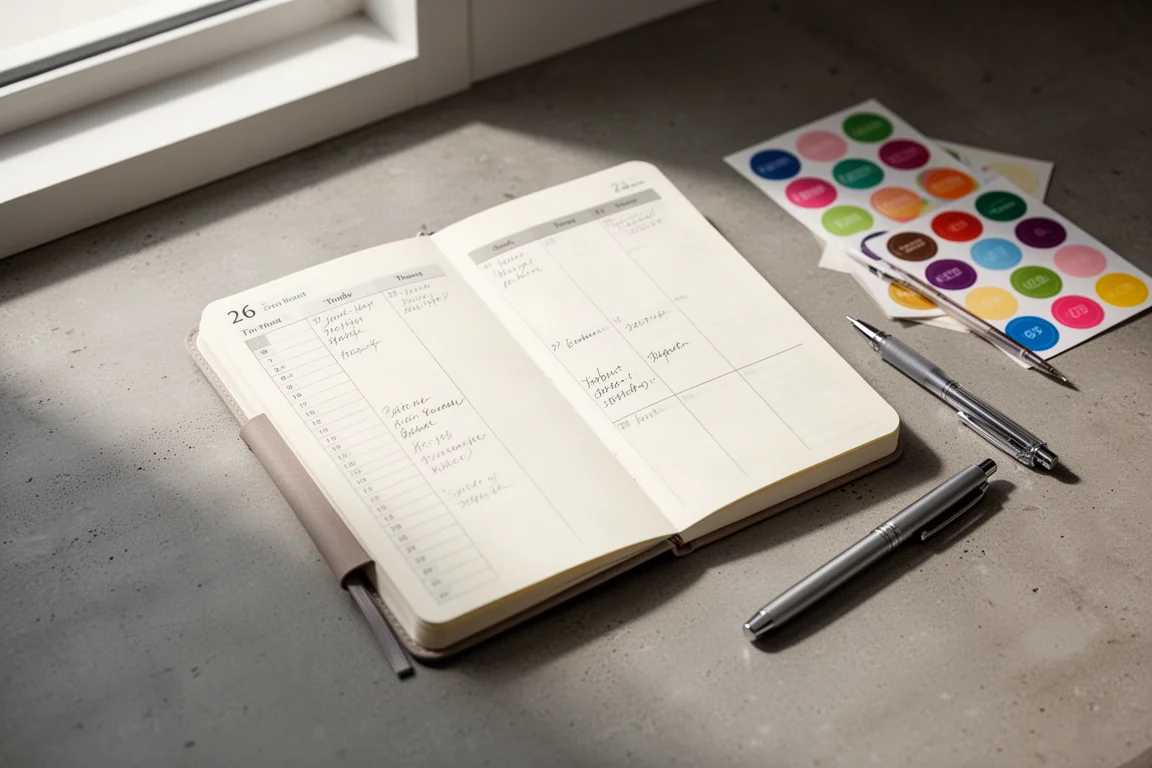
Returning to a dated planner after years of building your own layouts is a gamble. You trade total flexibility for structure, and the question is whether that structure earns its place on your desk. After three months of daily use, the Sterling Ink Common Planner in B6 has proven to be a mostly successful experiment, with a few spreads that simply do not fit how one long-time bullet journal user actually plans.
This review covers what fell flat, what was rescued with small adaptations, and what has genuinely earned a permanent spot in a daily routine.
What Didn’t Work: Goal and Quarterly Pages
The goal breakdown page at the front of the planner is designed as a place to dissect your goals at the start of the year. In practice, it turned out to be a page rarely revisited. Filling it out in January felt productive, but across three months it was consulted only once or twice. Goals tend to stay in the back of the mind anyway during regular planning, so a page meant for annual brainstorming adds bulk without adding utility unless you deliberately build a habit of returning to it.

The quarterly priorities spread tells a similar story. Each quarter offers a section for quarter-long priorities plus a rectangle for each month in that quarter. For planners who do not naturally think in three-month blocks, this page is hard to use. Committing to goals for February and March while still in January felt daunting, and the monthly priority boxes became redundant because the same handful of priorities, such as exercising more, eating better, and managing finances, repeat every month. If your planning horizon rarely extends beyond a month, these pages may sit as unused as they did here.
Monthly Spreads: Cluttered, Then Fixed
The monthly calendar spreads themselves are excellent. The day boxes are generous, easily fitting multiple events, bills, and tasks in a single date without cramming. For anyone whose calendar carries several commitments per day, this is a real advantage over planners with tighter boxes.
The friction came with the auxiliary sections. The default layout places an expense tracker at the bottom of the page, which quickly felt cluttered, and writing far down the page became a constant annoyance. The fix was simple: swap the sections. Moving expense tracking into the side column allows a comfortable vertical logging style, while the to-do list takes over the bottom area, needing only a checkmark when complete rather than repeated writing. After this adjustment, the monthly spreads became one of the strongest parts of the planner.
Weekly Spreads: The Sticker Experiment
The vertical weekly layout is a highlight. A timetable column along the side makes it easy to schedule tasks and events in chronological order, something free-form note taking never achieves. Blocking out work hours and social commitments has an outsized impact on how readable the week becomes, and the same column works well for tracking intermittent fasting windows.
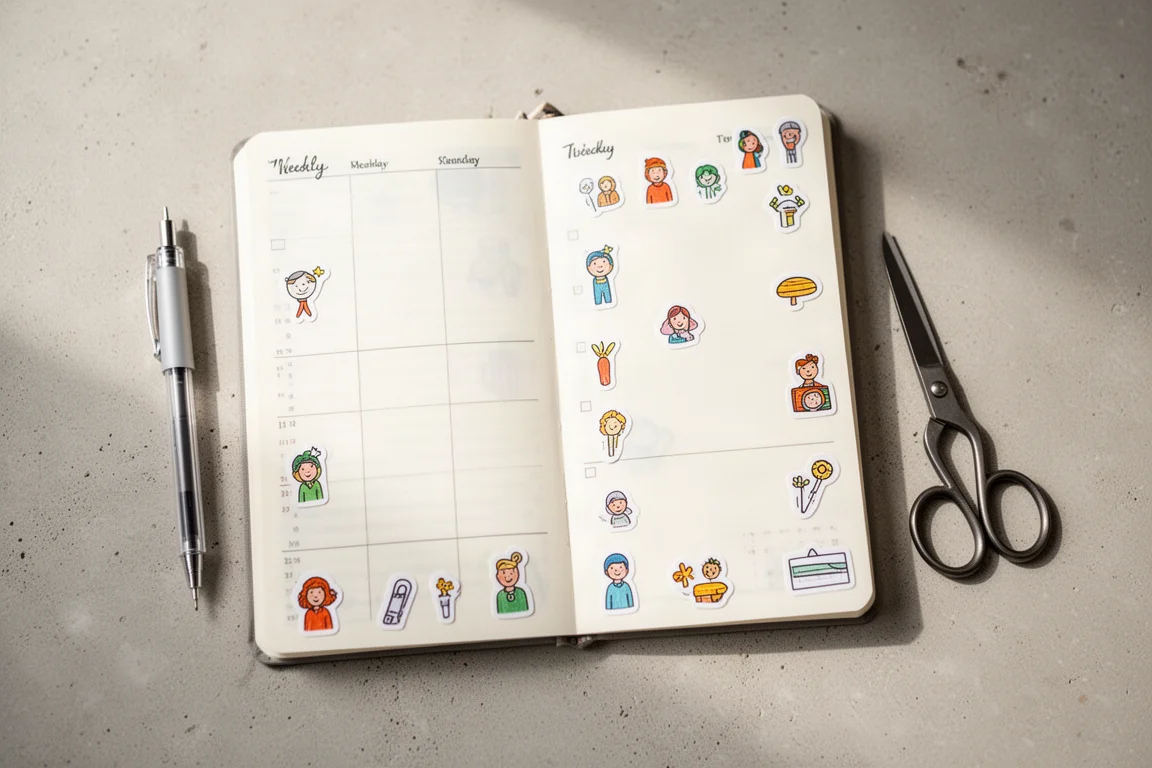
The struggle was decorative. Hand-drawing custom stickers every single day looked wonderful but proved unsustainable, leading to burnout within weeks. The workable compromise was pre-making sticker batches in one afternoon session, then combining those with drawings applied directly to the page. This preserves the visual memory-keeping value, where a glance at a week’s stickers recalls what happened, without the daily time cost.
Another adaptation: a small to-do list section in the weekly sidebar. Tasks without a fixed day previously floated as random notes; now they land in a dedicated list, get assigned as the week takes shape, and migrate forward with a simple arrow if unfinished.
What Works Well Out of the Box
The yearly tracker spread has been a quiet standout. Used for workouts, weight, and cycle tracking, it takes under ten seconds per day and delivers genuinely informative trends. Simplicity is its strength.
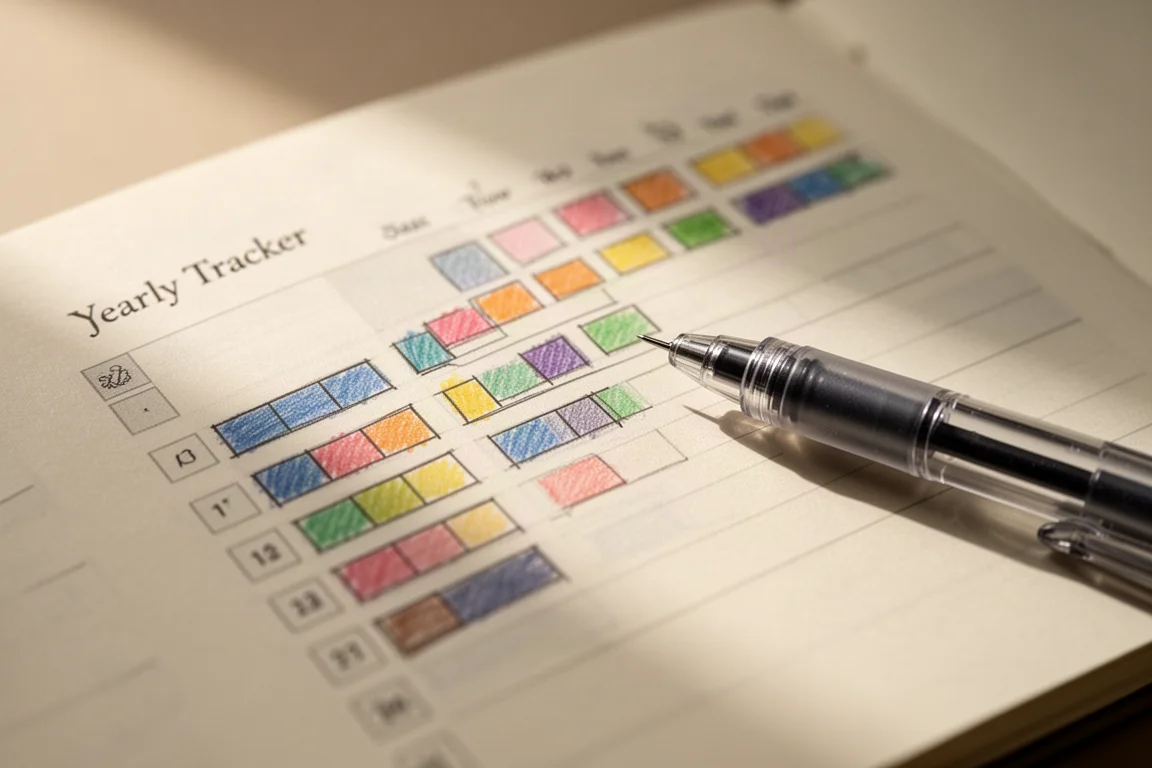
Habit tracking pairs naturally with the vertical monthly layout. Drawing habit icons across the top and filling a cell each day turns the grid into a motivating record. One borrowed technique elevates it further: at month’s end, highlight any habit completed every single day. Scanning back at the highlighted rows for January and February is genuinely encouraging, and knowing some habits, like daily workouts or a 7 a.m. wake-up, will never earn a highlight keeps expectations realistic.
The master bills list, future plans, and “when did I last” section at the front of the book also work well with light maintenance. It does not need to be touched monthly, only reviewed occasionally to keep recurring obligations visible.
The Back Pages: A Built-In Journal
The feature that sets this planner apart is the back section: a large block of blank pages usable for dailies, notes, or long-form journaling. Here it has effectively replaced a separate journal. Brain dumps, brainstorming, and long-form entries all live in the same book as the planning spreads, and the transition from scheduling at the front to free writing at the back is deeply satisfying.

Usage has been heavy enough that the blank section may run out before year’s end despite it being a very thick allotment. That is not a flaw; the practical answer is simply opening a separate notebook once these pages fill. There is little point in rationing pages that exist to be used.
Buying Advice
The Sterling Ink Common Planner B6 suits planners who want a dated structure with enough blank capacity to make the book their own. It works especially well if you like vertical weekly layouts with a timetable column, generous monthly calendar boxes, and integrated habit and health tracking. The goal and quarterly pages are the weakest links for month-scale planners, but they are easy to skip or repurpose. Small layout adaptations, like swapping the expense tracker and to-do list on monthly spreads, take minutes and solve most friction points.
Anyone who values decorative memory keeping should budget time for it deliberately: pre-made sticker sessions rather than daily drawing keep the hobby sustainable.
Conclusion
Three months in, the B6 Common Planner earns its place on the desk. The vertical weeklies, roomy monthly calendars, yearly tracker, and vast blank back section deliver consistent daily value, while the goal-setting pages matter far less than the marketing suggests. For planners who want structure at the front and freedom at the back, it is a strong choice, and a five-week workout challenge tracked entirely within its pages is proof that the format can hold accountability as well as appointments.
Product link
View more details for Sterling Ink Common Planner B6
This product is mentioned in the review. Check the specifications, options, and compatibility before buying.
View more details for Sterling Ink Common Planner B6Further reading
Related Reviews

Planners & Stationery
Sterling Ink Common Planner B6 vs Hobonichi Hon A6: A First-Year User's Verdict
Two beloved paper planners compared after a full year of daily use: build quality, paper performance, layout design, and who each one is really for.
Planners & Stationery
Best 2025 Planners and Diaries: 12 Formats Worth Considering
From the Hobonichi Techo to the Roterfaden Weekly Calendar, here are 12 dated planners and diaries for 2025, with layouts and features to help you choose.
Planners & Stationery
Hobonichi Techo Buying Guide: Six Planners and What to Know Before You Pick One
From the A6 Original to the Plain Notebook, here's how to choose the right Hobonichi Techo format, size, and paper setup before you invest.