Ski Resort Reviews
Steamboat Ski Resort Review: Is It Now Competitive in Colorado?
A detailed look at Steamboat's terrain, lift setup, snow quality, and overall experience after its recent wave of investments.
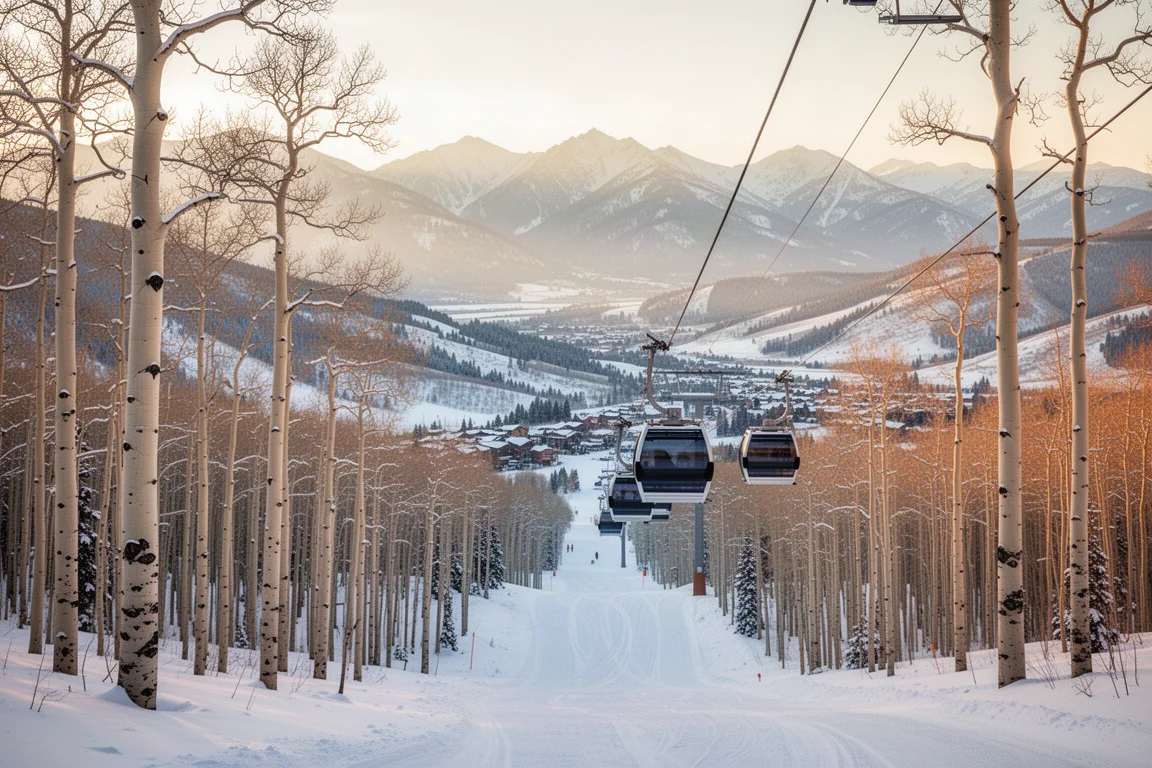
Introduction
Steamboat sits hours from Denver in the Continental Divide and has long been a go-to Alpine destination in Northern Colorado. It has historically stood out for its charming mountain town and extensive tree skiing, but in years past it was also bogged down by lift logistics and difficult access to expert terrain.
Recent years have brought a substantial series of investments that cut right at the heart of those biggest issues. So has the resort finally become competitive in the cutthroat Colorado destination market? Here is a full look at the Steamboat experience as it stands today, followed by how it stacks up in overall rankings.
Snow Quality and Elevation
When it comes to a Colorado Rocky Mountain ski vacation, snow is usually the first thing that comes to mind, and Steamboat tends to deliver. The resort averages the same amount of snow as the best resorts in Colorado and regularly sees powder each season. Because Steamboat sits northwest of most of the popular mountains in the state, it can get hit by storms that never even reach Central Colorado, though the opposite effect can happen as well.
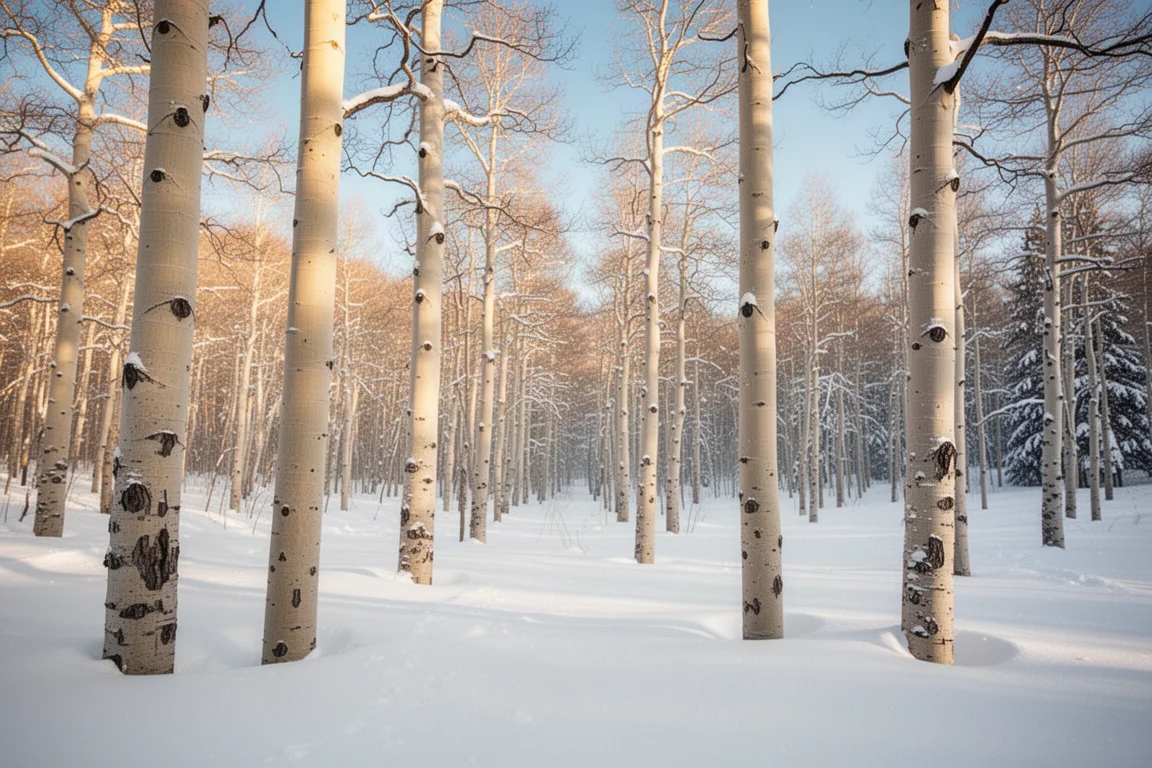
At 10,568 feet, Steamboat’s summit is lower than many Colorado competitors, which means quicker altitude adjustment for visitors than at most resorts further south. In fact, the resort’s 6,900-foot base elevation is the lowest of any major Colorado ski area. However, the lower elevation impacts snow quality on the bottom half of the resort, especially later in the season. Extensive snowmaking operations do ensure a resilient base layer throughout the season where it matters.
Tree Skiing: Steamboat’s Greatest Strength
Steamboat’s snowfall is the foundation of its greatest strength: world-class tree skiing. With the overwhelming majority of the resort sitting below the tree line, the vast wooded areas are well spaced, diverse in tree variety, and consistently snow covered, making them ideal for glade skiing and riding essentially all season long.
From moderately sloped blues to steep and challenging blacks, the variety of glades caters to skiers and riders of multiple abilities. Since most Steamboat visitors stay on the regular trails, these areas stay fresh for days after a storm, offering plenty of hidden powder stashes.
Steamboat’s iconic aspen trees set its terrain apart. Their light tan bark and wide spacing make them easier to navigate than the dense pines found at many other resorts, and they provide a uniquely scenic backdrop not just for tree skiing but for spending time on the slopes as a whole.
Beginner and Intermediate Terrain
Steamboat has always offered a strong beginner experience compared to other Colorado resorts, thanks in large part to Sunshine Peak’s upper mountain green terrain, a rarity among its destination competitors. The beginner experience has gotten even better in recent years, especially for first timers: the new Greenhorn Ranch learning area brings an isolated mid-mountain bunny hill zone served by a dedicated carpet lift and a brand new high-speed quad.
For intermediate skiers and riders, Steamboat offers an extensive selection of blue-rated trails across most of the mountain. These runs involve moderately steep pitches and often showcase some of the resort’s best views. Steamboat also uses a unique blue-black trail rating to identify runs steeper than typical blues but not quite at advanced difficulty, providing an ideal middle ground for progressing skiers and riders.
One caveat: grooming on Steamboat’s intermediate terrain can be inconsistent. Some days feature plenty of well-prepared groomers, while on others it is hard to avoid bumps altogether even on regular blue runs. Grooming tends to be most sparse after any degree of snowfall, and since this is hard to predict in advance, it can be frustrating for families and intermediates planning trips ahead. The most reliable cruiser runs are generally found off the Sunshine pod and in select lower mountain areas.
Advanced and Expert Terrain
In most cases, Steamboat is known for its moguls when it comes to advanced terrain. These trails are steep, demanding, and solid challenges for skiers and riders looking to test their endurance. Areas like Storm Peak, Sundown, and Pony Express offer some of the best black diamond runs at the resort, and many are conveniently adjacent to the resort’s top-tier glades. On occasion, Steamboat will groom select black runs off Sunshine Peak and the lower mountain, providing high-speed opportunities for advanced skiers who can handle that momentum.
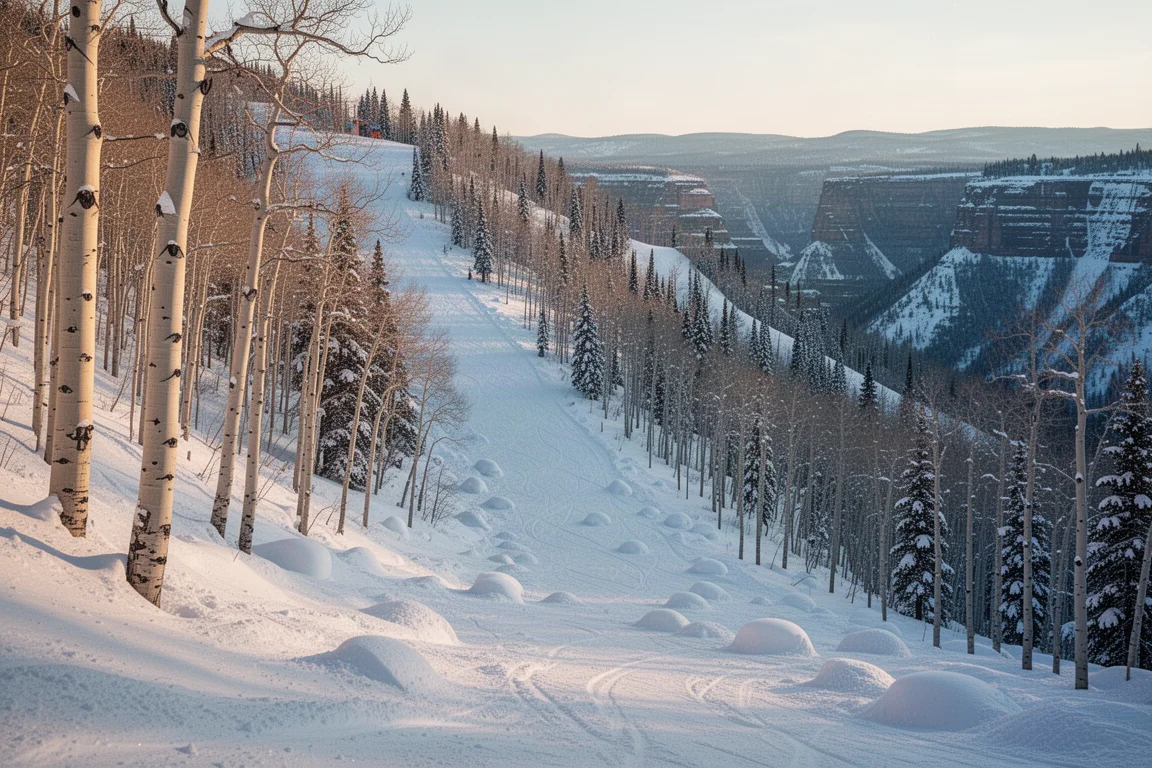
Freestyle enthusiasts will appreciate Steamboat’s decently robust terrain park offerings, all located off the lower mountain off the Christie Peak Express and Bashor lifts. The resort boasts three distinct parks with features for varying skill levels, including boxes, rails, jumps, and jibs. The large park often includes a halfpipe when snow conditions permit, rounding out a solid freestyle lineup.
The High Alpine Shortcoming
Despite its many strengths, Steamboat’s terrain footprint has some limitations, particularly in the high Alpine category. The resort’s low summit elevation doesn’t do it any favors here. The backsides at Morningside Park are underwhelming for a resort of this caliber: the area that could reasonably be construed as above treeline skiing is brief, with steep pitches lasting only a few turns before flattening out into terrain that often requires a catwalk on powder days. To make matters worse, the fixed-grip Morningside lift is the only way out, leading to long lines and a slower-than-ideal exit.
Mahogany Ridge and Fish Creek Canyon
In recent years, another one of Steamboat’s historical shortcomings, expert terrain, has been addressed in large part. The massive Mahogany Ridge and Fish Creek Canyon zones, which have added over 500 acres of skiable terrain, exclusively serve advanced and expert skiers and bring some of the best steep skiable terrain in the state.
The fully lift-served Mahogany Ridge brings a barrage of bump runs, aspen trees, and tighter glades that are barely even tree cut, making for some of the most natural-feeling slopes at the resort. For those who can handle it, Fish Creek Canyon may be the most exciting new piece of terrain at any Colorado ski resort in quite some time. This double-black terrain zone starts with a series of gates and some rather daunting warning signs. While not as truly extreme as some terrain at resorts like Crested Butte or Arapahoe Basin, the Fish Creek Canyon trails are experts only, with intensely steep gradients, distinctive fall lines, and unique obstacles including a rock garden if you can find it.
Perhaps the most pleasant Fish Creek Canyon surprise of all: the so-called 30 to 45 minute hike back is hilariously exaggerated, being pretty much a hike in name only. The journey out involves two to three sections of sidestepping and a few flat areas, but for a skier it is actually fairly lappable and much more so than the warnings suggest.
Outside of these zones, the Christmas Tree Shoots and a few hikable areas north of them are the only true expert terrain at the resort, including cliffs and some dangerously steep pitches. While technical and thrilling for experts, these runs are very difficult to find: you have to travel all the way to the top of Storm Peak or Sunshine, ski down the backside, and take the Morningside lift just to get there, even though they are on the front face of the mountain. This expert terrain also doesn’t last very long. Fish Creek Canyon is now the place to be at Steamboat for repeat expert laps, if you have the stamina for the lift and navigation logistics.
Lift Access and Getting Around
Lift logistics at Steamboat still aren’t perfect, but they have been addressed in large part by recent investments. Access to the resort still comes through one base area, but unlike in previous seasons there are now three lift routes rather than two to get up the mountain. This is thanks to the recently completed two-stage Wild Blue Gondola, which extends all the way to the summit of Sunshine Peak and finally provides a way to get up and down the resort without going through the Thunderhead Lodge midpoint.
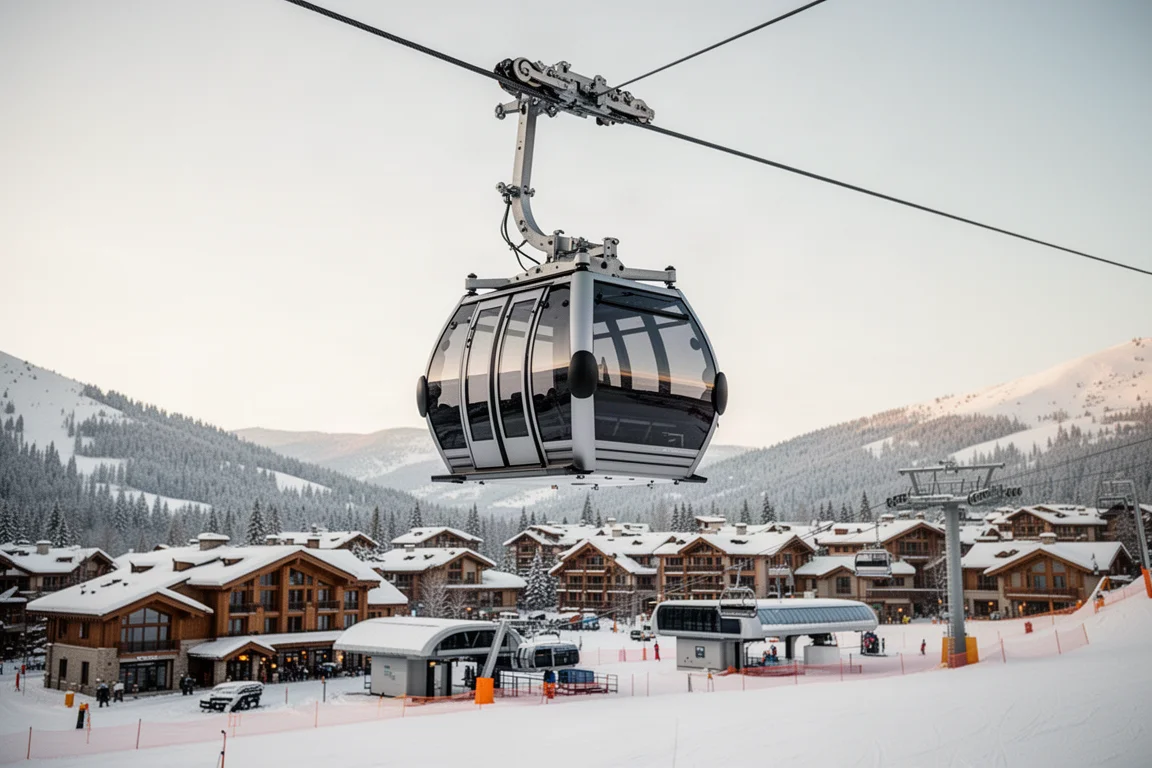
The new ten-passenger gondola complements the two pre-existing routes to mid-mountain: the eight-passenger original Steamboat Gondola and the more indirect combination of the Christie Peak six-pack to the Thunderhead high-speed quad. The Wild Blue Gondola has done wonders to reduce lines in the mornings, making it far less of a hassle to get up the mountain when you arrive. Lift lines do still build up on weekends and holidays, but they are far more manageable than they used to be.
Steamboat’s lower mountain lift setup causes some problems getting back to the base. If you are north of the Thunderhead Lodge, you either need to take a long, relatively flat green trail down or take the Burgess Creek lift to Thunderhead for a more enjoyable descent. If you are south of there in the Sunshine Peak area, there is no intuitive direct option to get down to the base unless you are an advanced-level skier who knows exactly what they’re doing; the main option is to take the Elkhead Express lift to terrain that can actually lead directly down. If you end up at Elkhead at the end of the day, you may need to wait in a very long line to leave the resort. At least the Wild Blue Gondola, which allows downloading from Sunshine Peak, now provides a much less crowded alternative to leave the resort.
Despite some quirks, getting around Steamboat isn’t all bad. It is easy to lap most of the resort’s signature tree terrain once you get to it, all of the mountain areas besides those served by the Morningside lift benefit from available high-speed lift service, and roughly 10 percent of Steamboat’s footprint requires hiking to reach or get out of. On-mountain facilities are generally well placed: in addition to the sizable Thunderhead Lodge, the resort boasts two upper mountain lodges, the Four Points Lodge along the Storm Peak lift line and the Rendezvous Lodge in the South Peak area. The Pony Express area is quite isolated from the nearest true restaurant, but there is a small hut at the top of the lift where people can warm up. One note: the indoor facilities at Greenhorn Ranch are reserved for ski school participants only.
Signage at Steamboat is generally clear and easy to read. However, at least as of early 2025, the resort had not done much to promote its new expert-oriented Mahogany Ridge and Fish Creek Canyon expansions, with signage for this area essentially nonexistent until you arrive at the top of the Pony Express lift. The difficult-to-find nature of this area has resulted in few and far between lift lines, even during peak time. For the 2025 season, Steamboat has refined its trail designations in Fish Creek Canyon, adding three new official trail names to better help guests distinguish where they are in this expert terrain zone.
Scenery and Night Skiing
Steamboat’s aesthetic is undeniably picturesque, though its flat summit areas lack the dramatic views found at many other Colorado resorts. The AB and Rainbow runs provide stunning backdrops of the Yampa Valley and surrounding mountains, while the resort’s signature aspen trees create a one-of-a-kind Alpine backdrop. Although Steamboat’s base village and a few lower mountain areas are heavily developed, the rest of the mountain retains a more natural and untouched feel, with minimal on-mountain infrastructure disrupting the scenery.
Steamboat also offers night skiing on a small portion of its terrain. While it is only available on five trails, it is better than nothing and a useful option for those wanting to hit the slopes later in the day.
Getting There and Getting In
Steamboat is quite a bit more remote than many prominent Colorado ski resorts, sitting well north of the popular Interstate 70 corridor. With no traffic, Steamboat Springs is about three and a half hours from Denver International Airport, roughly an hour further than places like Breckenridge, Copper, and Vail. For more convenient access, you can fly into the Yampa Valley Regional Airport in Hayden, Colorado, just half an hour west of the resort. The resort offers airport shuttles from both Denver and Hayden. Coming from the west, Steamboat is just within feasible driving distance of Salt Lake City, about a six and a half hour drive away.
Steamboat offers a wide range of lodging options, both slopeside and in town, catering to various budgets and preferences. At the base, most hotels and condos come equipped with hot tubs and pools. For groups big enough to rent out condos, there are some fairly reasonably priced accommodations within walking distance of the base village. For a more economical and charming stay, the town of Steamboat Springs is an excellent choice. Located just over a mile from the resort, it offers a vibrant atmosphere and proximity to nightlife. The town is too far to walk from the slopes, but regular bus service runs every 20 minutes during the day and every 30 minutes in the evening.
When it comes to parking, Steamboat provides some free public lots, though availability is limited on busy days. Most free lots require a short walk or a shuttle ride to the slopes. The Meadows lot includes access to the village through a pulse gondola, but its low capacity often results in long waits, typically making the shuttle the faster option. Weekend and holiday visitors will want to arrive early for a free spot; arriving after 10 a.m. usually means paid parking is the only way to go.
The Town, Lodging, and Nightlife
Beyond the slopes, Steamboat really stands out as a ski town destination. Steamboat Springs is a real town, not an artificial village built for tourists, and its vibrant downtown is packed with bars, breweries, and small clubs offering a mix of casual and lively venues. Live music and dancing are common, particularly on weekends when the nightlife is at its peak.
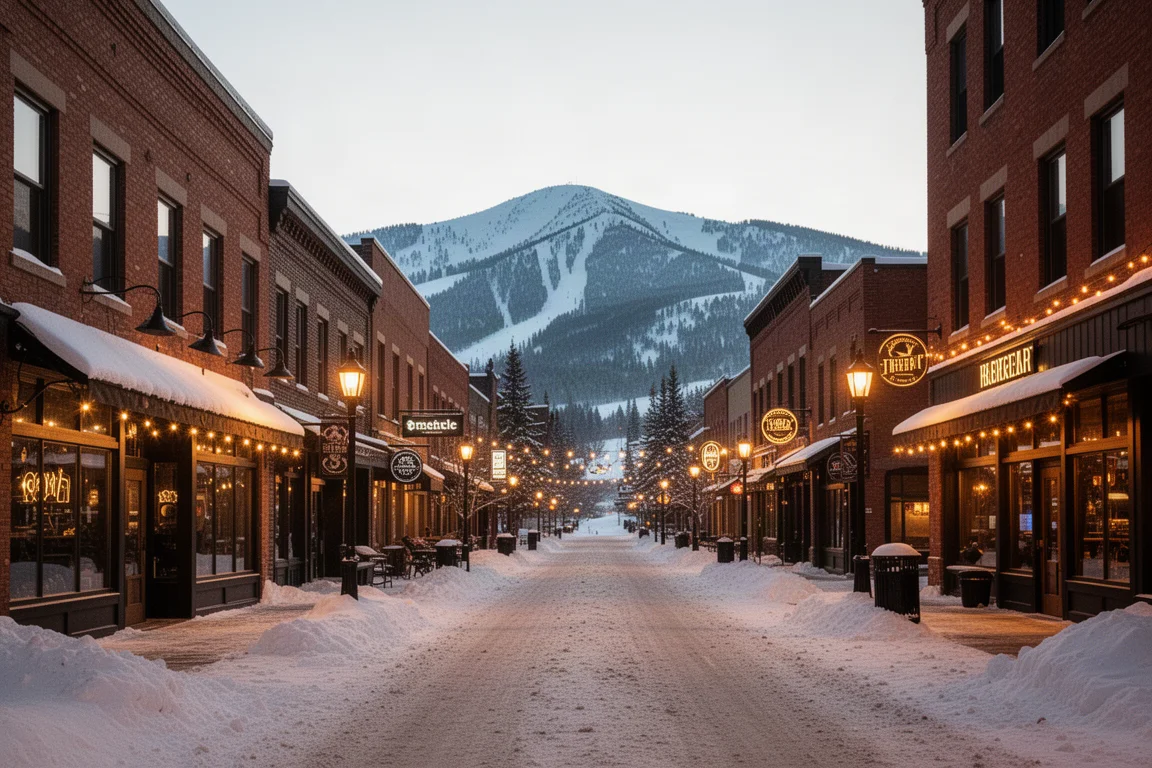
For entertainment closer to the resort, the base village isn’t a bad bet either. Slopeside bars offer happy hours with enticing food and drink deals, and live music performances are a regular feature, especially during the spring. The base village has recently received an extensive renovation with far more restaurant and shopping options than in years past. The newly renovated Gondola Square also serves as a prime venue for concerts, with both local and nationally recognized artists performing in the base area throughout the season.
Unsurprisingly, the town of Steamboat Springs does have real hot springs. The Strawberry Park Hot Springs offer incredible scenery just outside town, while the Old Town Hot Springs are more built up but conveniently located right in the city. Both venues stay open until at least 10 p.m. every night, making them a great relaxation option after a long day on the mountain. One quirk: Strawberry Park is clothing optional after dark, so maybe don’t bring your bathing suit.
Another unique feature of Steamboat Springs is its own town ski hill, Howelsen Hill, which happens to be the oldest continuously operating ski area in the US. It may be small, but it has a huge number of Olympic jumps worth checking out and offers its own night skiing, a handy option for evening laps without returning to the main resort.
Pricing and Pass Products
Steamboat still isn’t the most striking ski resort out there or the go-to for high Alpine bowl terrain, but so many of the fundamental issues that hurt the overall experience historically are now a thing of the past. The bustling town, enjoyable slopes, and world-class tree and mogul skiing make for a compelling proposition for those who don’t mind the extra drive from Denver.
Unfortunately, one big reason to hesitate is the resort’s ticket price. For the 2024-25 season, ticket rates topped out at $299, among the highest anywhere in North America. Tickets can be had for less if you buy well in advance for an off-peak weekday, but with a starting rate of around $200 they are by no means cheap no matter when you buy. Steamboat is an unlimited partner on the full Ikon Pass, a five-day partner with blackouts on the Ikon Base Pass, and a featured mountain on the two to four day Ikon Session Pass. These days, it is really only worth visiting with such a product, and those products always go off sale in the early December period prior to the season.
Rankings and Verdict
Steamboat’s category scores add up to an overall mountain score of 71, placing it 11th in Colorado and 25th in North America as of early 2025. Here is how the categories break down:
- Snow: 8. The resort still receives high-quality Colorado snow, with some better snow days than its Central Colorado competitors, but also a few days where it misses out on storms.
- Resiliency: 8. A less intense footprint allows for more reliable terrain openings, though south-facing slopes and a low base elevation count against conditions somewhat.
- Size: 8. Steamboat has expanded substantially and now offers a 3,400-acre skiable footprint.
- Terrain Diversity: 8. A strong range of terrain for all abilities, though bowl terrain remains a weak point.
- Challenge: 8. Expert terrain has improved substantially in both technicality and ease of access.
- Lifts: 7. A generally modern lift fleet, with really only the Morningside area truly needing attention.
- Crowd Flow: 6. Crowds build during peak times with a handful of choke points remaining, but the Wild Blue Gondola has been a game changer for out-of-base lines.
- Facilities: 7. Well-placed lodges for the most part, though a few remote areas are a trek from the nearest lodge.
- Navigation: 5. A big and complex mountain, with some parts unintuitive to reach or leave and others reasonably straightforward.
- Aesthetic: 6. The trees are stunning on a good day, but the flat top and mellow slopes don’t inspire the same awe as typical Colorado destinations.
Steamboat still faces a tough fight against a massive crop of other Colorado destinations, several of which have also seen upgrades in recent years. But unlike in previous years, the resort is now genuinely competitive in a number of new ways: a huge footprint size, tantalizing expert terrain, and much stronger lift logistics than before. For those who want top-tier tree terrain, it is still hard to find a better option. If bowls or a must-see footprint are your priority, other resorts might be better, but otherwise Steamboat could be a solid choice for your next destination ski trip.
Conclusion
Steamboat has spent recent years fixing its biggest historical problems: three lift routes out of the base, over 500 acres of new expert terrain, and a renovated base village. Combined with its signature aspen glades and a genuinely lively town, the resort is now a credible Colorado destination pick, provided you arrive with a pass product or a tolerance for its very high ticket prices.
Product link
View more details for Steamboat Ski Resort
This product is mentioned in the review. Check the specifications, options, and compatibility before buying.
View more details for Steamboat Ski ResortFurther reading
Related Reviews
Ski Resort Reviews
Cardrona Ski Resort Review: New Zealand's Most Well-Rounded Ski Field?
A detailed look at Cardrona's terrain, snow reliability, lift congestion, and logistics to help you decide if it deserves a spot on your next New Zealand ski trip.
Ski Resort Reviews
Cerro Catedral Review: Is Argentina's Biggest Ski Resort Worth the Hype?
A full look at Cerro Catedral near Bariloche, covering terrain, snow reliability, lifts, crowds, access, and how it ranks among South American ski resorts.
Ski Resort Reviews
June Mountain Ski Resort Review: California's Quirkiest Off-the-Beaten-Path Resort
A modest 925 skiable acres, stunning Eastern Sierra views, a 60-year-old double chair that everyone must ride, and free tickets for kids under 13. Here's what June Mountain really offers.