Ski Resort Reviews
Cardrona Ski Resort Review: New Zealand's Most Well-Rounded Ski Field?
A detailed look at Cardrona's terrain, snow reliability, lift congestion, and logistics to help you decide if it deserves a spot on your next New Zealand ski trip.
Introduction
Looking for the most well-rounded resort experience in New Zealand, Cardrona may be the first place that comes to mind. Following the massive 2025 expansion, the resort claims the biggest skiable footprint in the country, plus a significant quantity of slopes for a range of abilities. On paper, that makes it a no-brainer for a large chunk of visitors.
But Cardrona suffers from many of the same issues as other New Zealand ski resorts, and its reputation-driven popularity brings some unintended side effects. This review covers the overall mountain experience, how it stacks up in category-based rankings, and whether it is worth it for your next New Zealand ski trip.
Mountain Experience and Terrain
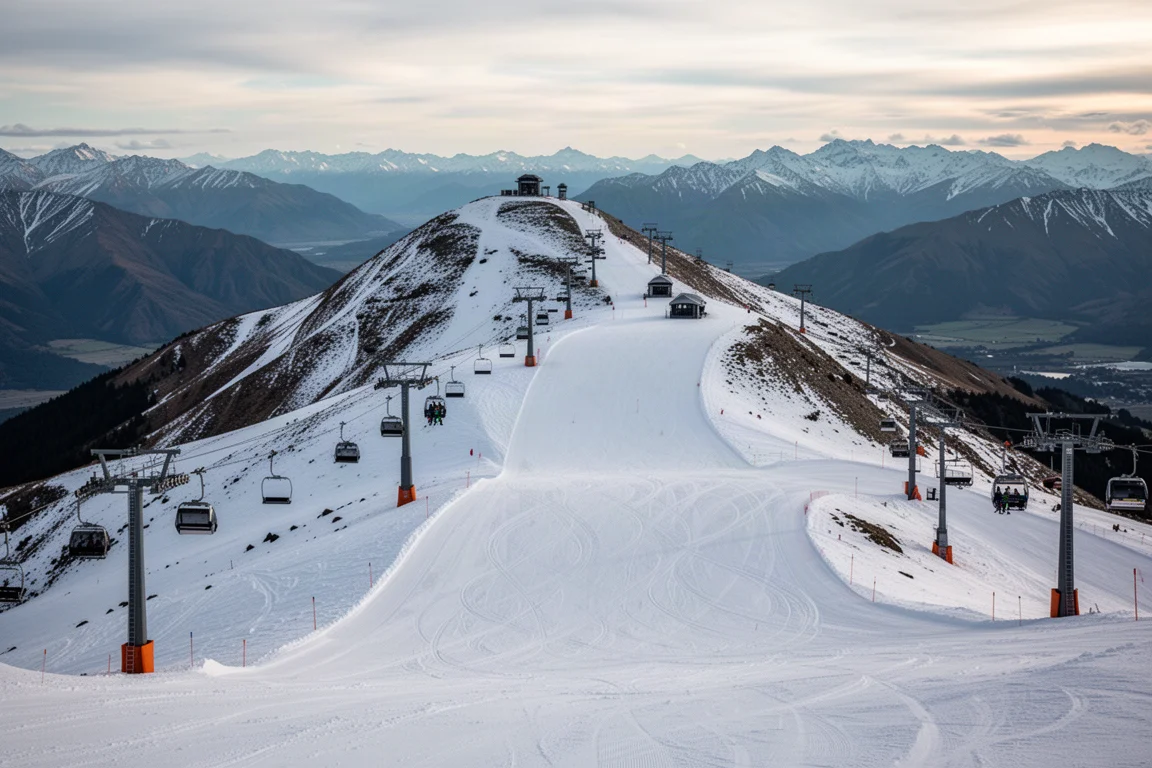
Following the 2025 addition of Soho Basin, Cardrona now claims 615 hectares, or just over 1,500 acres, of terrain, which would make it New Zealand’s largest ski resort by area by a significant margin. Based on independent measurements, however, only 939 of those acres, or 380 hectares, are skiable. That still makes Cardrona the biggest ski resort on the South Island, but not by much versus its closest competitors. Combined with a footprint that wraps around the shoulders of Mount Cardrona in a roughly cone-shaped layout, the resort doesn’t feel as sprawling as some might expect.
The good news is that from the top lifts, guests can descend just about anywhere. From this upper ridgeline, the zones in clockwise order are Captain’s, which hosts some strong cruising terrain; Valley View Basin, which offers access to the longest easily skiable continuous descent at the resort plus some pretty tough chutes; the main basin, which primarily serves learning terrain and an extensive terrain park setup; Willows, a handful of lower mountain blues and blacks; and finally Soho Basin, the newest zone, home to intermediate groomers and strong ungroomed advanced bowl terrain. Above the lifts, a short hike reaches the 1,936 m summit of Mount Cardrona and opens a limited amount of hike-to terrain.
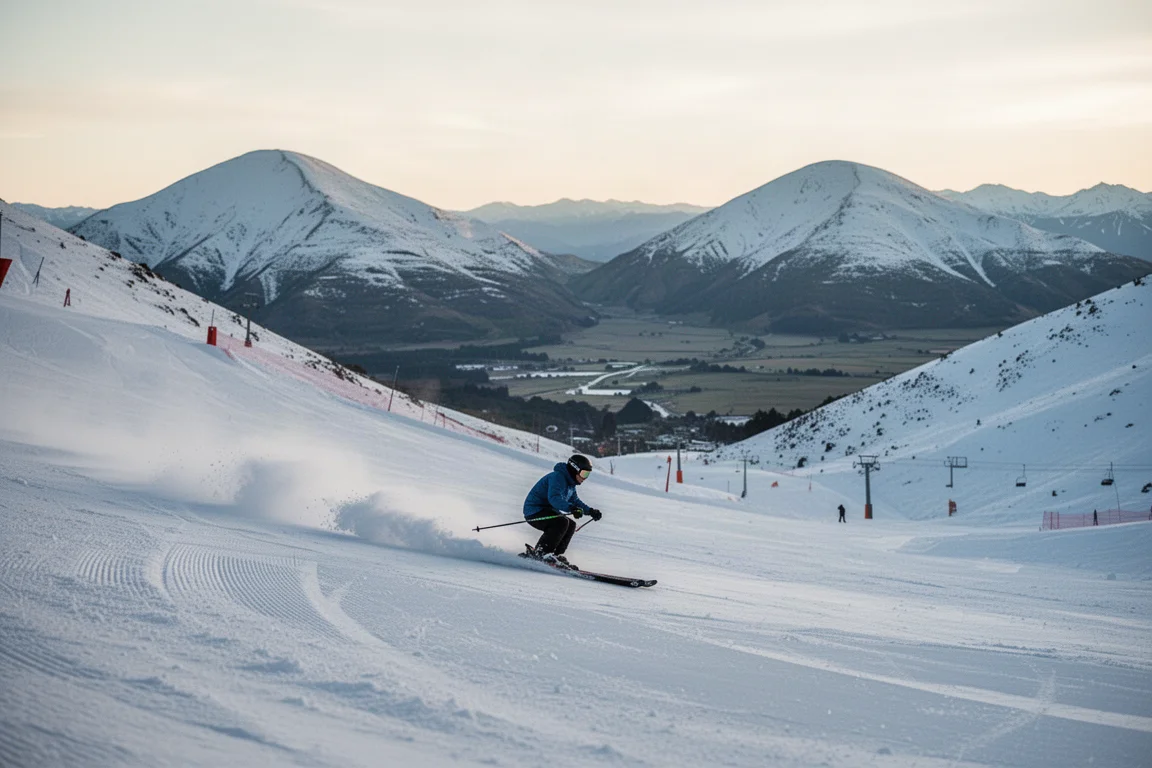
Beginner terrain is the weak point. Green-rated trails are almost exclusively confined to the main basin, and while there are some nice gentle cruisers there, they tend to get overcrowded since several double as route arteries linking other parts of the resort with the base. Many of these connector trails are also impossible to reach without first skiing a blue or harder run, so practically enjoyable terrain for less experienced guests is limited. At least the bunny hill is a nice place to learn, with a handful of surface lifts right outside the main base area.
Cardrona becomes far more enjoyable once guests reach intermediate proficiency. The resort is home to a range of long, wide groomers, with blue runs available across effectively every resort area, making it great for those who value repeat carving laps. Red runs, roughly equivalent in steepness to hard blues at a typical North American destination resort, are also spread across a good number of areas.
Terrain Parks and Advanced Terrain
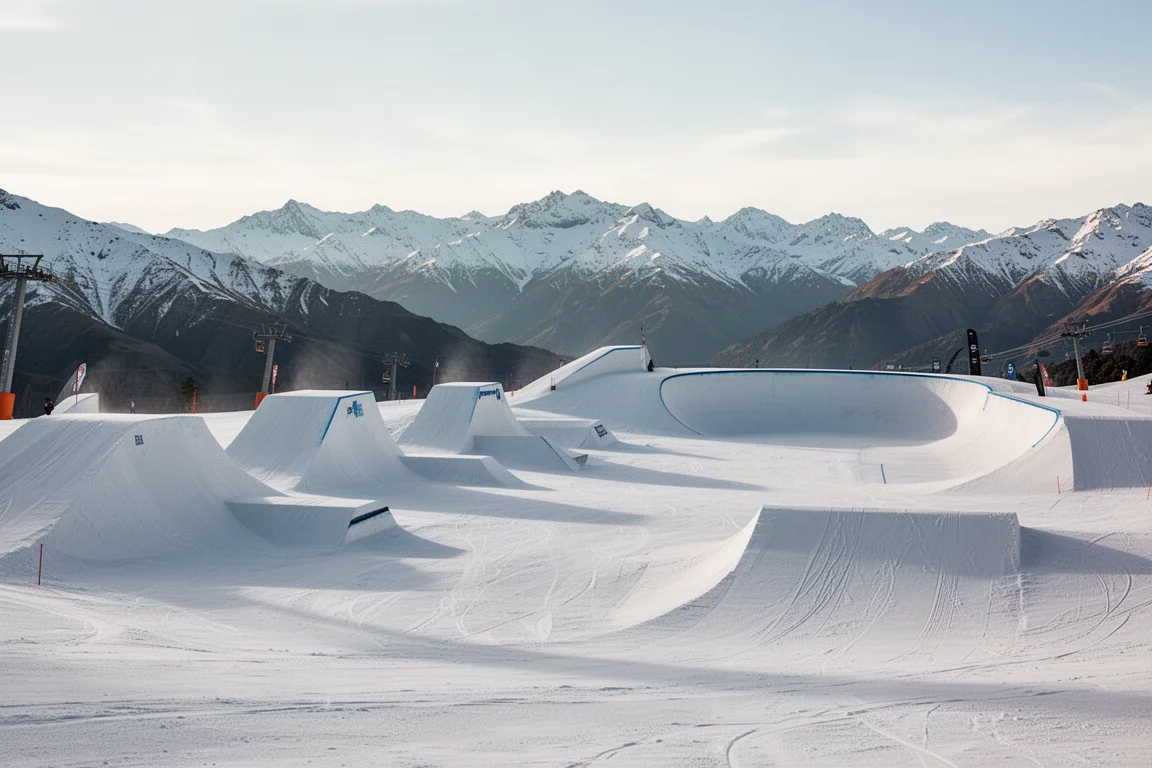
Cardrona stands out for one of the best terrain park setups in New Zealand, if not all of Oceania. It hosts solid small and medium features, but where it really excels is the large and extra-large offerings, including world-class jump lanes and one or even two half-pipes depending on the season. You will often see genuinely impressive athletes practicing as you ride the slopes, especially if you ride up the right lifts.
Advanced terrain is enjoyable but not spectacular. While some of the resort’s blacks can be groomed, the majority of areas at this proficiency are ungroomed bowls, with really nice expanses in both Captain’s and Soho Basin. For something more technical, experts can drop off cliffs within the Arcadia chutes, plus a few sporadic chutes elsewhere, but for truly sustained expert terrain with continuous technical obstacles, there are better New Zealand resorts.
For something likely to be untracked, a 15-to-20-minute bootpack from the top of the lift-served area reaches the peak of Mount Cardrona. This area holds snow much better than the rest of the resort, though it is not technically harder than the inbounds black bowls. From there, Cardrona also offers access to several backcountry areas, some funneling back into the resort and others requiring touring to explore. This terrain is not patrolled or maintained, so anyone heading out should carry proper avalanche equipment, including a beacon, shovel, and probe, as well as a guide if unfamiliar with the area.
Snow Conditions and Resiliency
Annual average snowfall tends to be around 100 inches, or 250 cm, a season. That is not huge compared to many Northern Hemisphere resorts, but the resort benefits from mostly southeast-facing slopes, which helps with snow retention once accumulation does come. A modern and extensive snowmaking system also helps keep critical terrain open even when natural conditions are not favorable.
However, like all other South Island resorts, Cardrona can see droughts between storm cycles, resulting in warm temperatures and, in less ideal seasons, coverage issues. The lower elevation Willows quad struggles to open in bad seasons, and to a lesser extent the Valley View area and many lower mountain trails, especially those that do not face directly south, regularly see thin cover or bare spots. When it does snow, storms are sometimes accompanied by substantial wind gusts, which can cause lift holds on the upper mountain and wind-swept slopes. The same wind can deposit pockets of snow in sheltered areas, creating nice powder stashes.
While the entire footprint is exposed, its multiple independently served lift pods, including several naturally sheltered lower mountain areas, give it somewhat greater operational reliability than especially wind-exposed competitors such as Mount Hutt and the North Island ski fields. The resort does tend to have at least something operating as long as wind levels are not truly horrific.
Lifts and Crowds
Most of the individual lifts are modern high-speed quads and six-packs. The flagship is the McDougall’s Chondola, which has gondola cabins after every four chairs, offering welcome isolation from the elements on cold weather days.
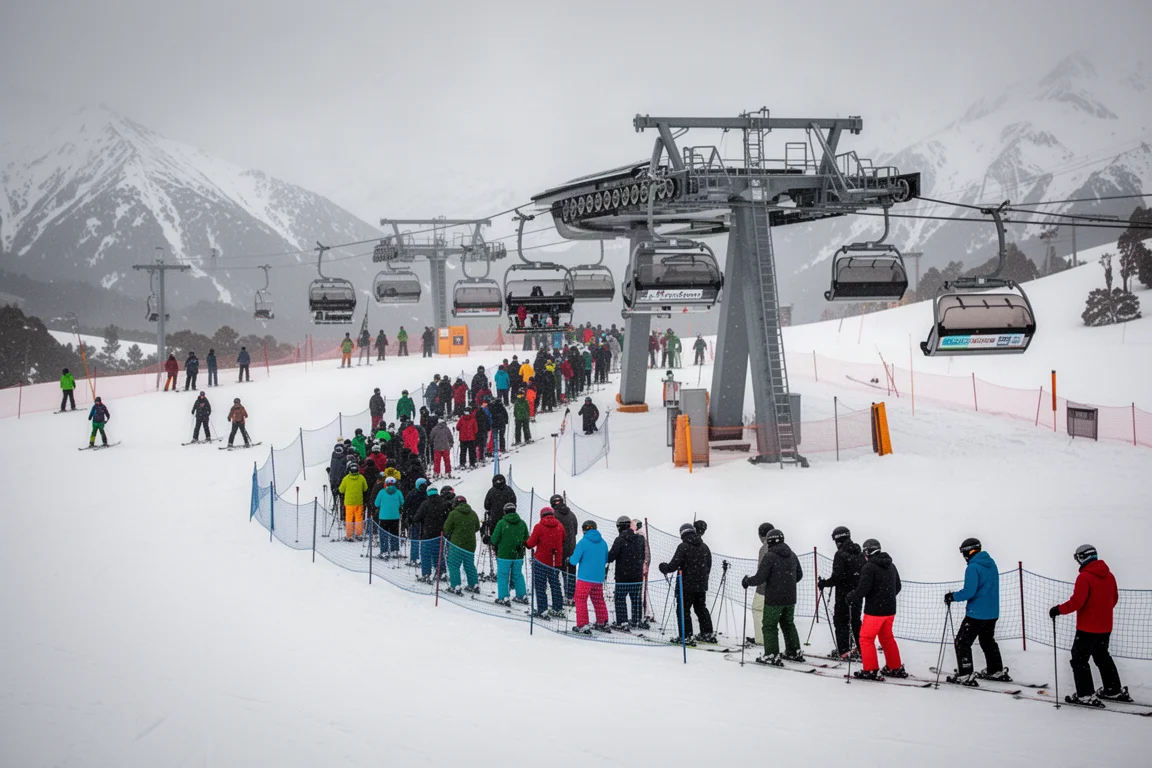
The problem is actually getting to the loading point. Even on moderately busy days, lift lines of at least 15 minutes are common at most detachable lifts. The White Star Express, which provides the only access out of many major front-side trails, is a significant choke point. Depending on the trail, guests can use either the Chondola or Captain’s Express before descending to Whitestar, but those lifts usually have lines themselves, so many guests simply continue down the mountain and end up at Whitestar anyway, exacerbating the issue.
The Valley View Quad looks like a good crowd-avoidance option at first glance, but this lower mountain area typically suffers from lackluster conditions and is held down by a slow fixed-grip quad. Since exiting Valley View requires going through Whitestar anyway, many find the effort not worth it. The Soho Basin expansion area still sees lines but tends to stay a bit less crowded than other zones.
On the positive side, Cardrona manages its lift lines efficiently, with a singles line moving at a sufficient pace and very few chairs departing with empty seats. One tip about the gondola: it has separate lines for cabins and chairs. The gondola line almost always looks shorter because cabins are only 20% as frequent as the chairs, but choosing that line typically does not save you any time.
On-Mountain Facilities and Navigation
Cardrona generally meets demand for on-mountain facilities, with a few minor issues. There are two main indoor lodge areas: one at the main base with several distinct venues ranging from a cafeteria to fancier sit-down meals, and another at the base of the Captain’s Chair. Both offer outdoor seating in addition to indoor space, with a food truck at the main base. Additional outdoor food joints sit at the base of Valley View and at the top of the gondola, the latter known as Vista Bar, which is more of an après spot with drinks and charcuterie than true lunch items.
Indoor seating can be hard to come by during peak times, which is tough on a stormy day. Another persistent annoyance is the water fountain line at Captain’s Cafe: the filling machine is super finicky and slow, and it is the only viable water station over there. The main base station is less finicky but in high demand too, so expect lines.
Getting around may seem easy thanks to the cone-shaped layout, and the resort has large trail map diagrams at major junctions plus handy markings for groomed versus ungroomed trail status. Outside of the Soho expansion area and zones near the main base, though, signage is a bit lacking. Trail difficulty markings are not entirely absent, but they are occasionally missing where they would be most needed, and gate-access chutes often have to be stumbled upon or learned first-hand. The layout helps orient guests from the top, but it is easier than expected to end up at the bottom of a different lift than planned.
Getting There, Lodging, and Après-Ski
Cardrona is fairly close to two major South Island towns. Wanaka is approximately 45 minutes away with no traffic, while Queenstown, home to the closest major airport, is a bit over an hour in the opposite direction. The drive from Wanaka is flat until the access road, whereas the Queenstown route adds a mountain pass with winding, high-gradient driving on top of the access road itself. That final approach is a 14-km unpaved road with steep gradients and sharp curves, and ice, snow, and rockfall can make it sketchy when present. Chains may be required depending on conditions, and all vehicles driving up are required to carry them. If you would rather skip the drive, the resort provides free parking at the base of the road with a shuttle bus up the final stretch, and paid bus services run from both Wanaka and Queenstown with advanced booking required.
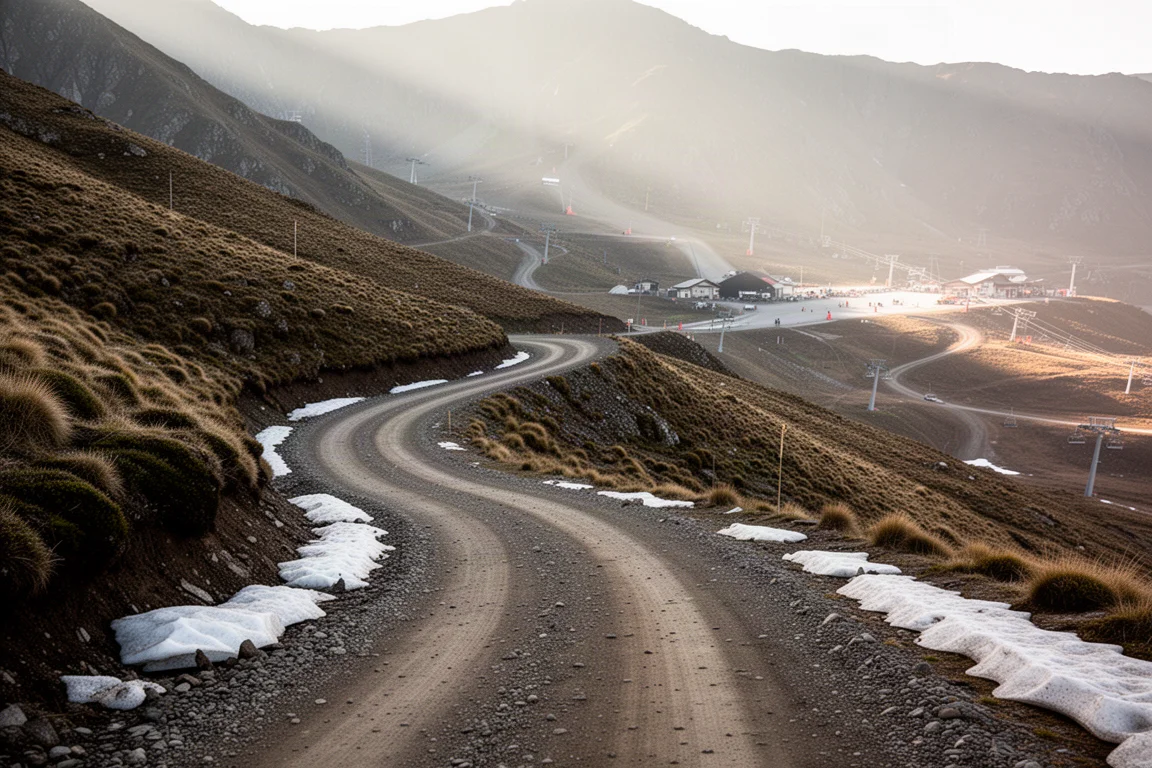
At the top of the road, a handful of primary car parks sit around the base area. Spots closest to the slopes fill quickly on busy days, but many other spots require only a short walk to the main base, and the lower mountain Valley View area has its own car park.
One thing that truly distinguishes Cardrona from New Zealand’s other South Island commercial ski fields is on-site lodging. The on-mountain apartments sit right at the main base and range from studio to four-bedroom, though there are only 15 on the entire premise and they tend to book up quickly. Options near the access road turnoff include a historic hotel and several vacation home rentals, though these are remote compared to Wanaka and Queenstown, which both offer extensive lodging from hostels to luxury hotels. Wanaka is the best base if you want to pair Cardrona with Treble Cone, while Queenstown works best for pairing it with Coronet Peak and/or The Remarkables.
The après-ski scene, like most other New Zealand ski fields, is relatively subdued. The main base complex, Captain’s Cafe, and Vista Bar offer opportunities to get lively on the slopes, but apart from some rotating evening dining at the main base, everything closes around the same time as the slopes. The bar and restaurant scenes are much more extensive in Wanaka and Queenstown, with Queenstown the clear choice for visitors prioritizing nightlife.
Pricing and Category Scores
One-day adult lift tickets run about 184 New Zealand dollars in advance and 209 New Zealand dollars at the window. They are not cheap, but discounts apply for multi-day bookings, and those days can notably be shared with nearby Treble Cone. Unlike some other South Island resorts, Cardrona is not part of any major North American mega pass.
On a 10-category mountain score, Cardrona earns a four for snow, reflecting its typical 250 cm average season accumulation; a four for resiliency, thanks to an extensive snowmaking arsenal and better wind tolerance than some competitors but continued snow droughts and storm shutdowns; a five for size, given that only 939 of the claimed 1,520 acres are skiable; a five for terrain diversity, with a solid mix of intermediate and advanced cruising and bowls but lacking options on either end of the ability range; and a five for challenge, offering a handful of chutes but limited truly steep, technical terrain.
It scores a seven for lifts thanks to a generally modern fleet with high-speed lifts in most major areas, but only a four for crowd flow: operations are efficient, yet unavoidable choke points produce significant waits even on moderately busy days. Facilities earn a seven, with easily accessible lodges offset by limited indoor seating and water stations that need work. Navigation gets a six, since the simple-looking layout can still land you somewhere unintended. Mountain aesthetic earns an eight, with the same dramatic views into lower elevations as other New Zealand resorts, though without quite as distinct landmarks such as lakes, vast plains, or oceans as some competitors.
Buying Advice
These categories add up to an overall score of 55, placing Cardrona a close fourth in New Zealand against competing Southern Hemisphere mountains. It has the largest footprint on the South Island, but other mountains offer more interesting technical terrain. It handles resiliency about as well as a New Zealand ski resort can, yet is still plagued by lower mountain cover issues and a not insignificant degree of wind holds. Its crowd flow issues are what really hurt it against the rest of the South Island competition, with longer and more unavoidable lift lines.
Choose Cardrona if you want a well-rounded, intermediate-friendly resort with a strong terrain park and reasonably reliable operations, and you are willing to accept queues. If sustained expert terrain and shorter choke points matter more to you, mountains higher up the ranking list have slightly more unique feels and more technical terrain.
Conclusion
Cardrona delivers the well-rounded terrain experience that makes it a strong choice for skiing New Zealand’s South Island, especially for intermediates and park riders. But its popularity brings significant crowds, and a few logistical issues, from lower mountain coverage to access-road driving, can complicate your day. For the right traveler, it remains one of the safest and most complete bets on the South Island.
Product link
View more details for Cardrona
This product is mentioned in the review. Check the specifications, options, and compatibility before buying.
View more details for CardronaFurther reading
Related Reviews
Ski Resort Reviews
Cerro Catedral Review: Is Argentina's Biggest Ski Resort Worth the Hype?
A full look at Cerro Catedral near Bariloche, covering terrain, snow reliability, lifts, crowds, access, and how it ranks among South American ski resorts.
Ski Resort Reviews
June Mountain Ski Resort Review: California's Quirkiest Off-the-Beaten-Path Resort
A modest 925 skiable acres, stunning Eastern Sierra views, a 60-year-old double chair that everyone must ride, and free tickets for kids under 13. Here's what June Mountain really offers.
Ski Resort Reviews
Steamboat Ski Resort Review: Is It Now Competitive in Colorado?
A detailed look at Steamboat's terrain, lift setup, snow quality, and overall experience after its recent wave of investments.