Cookbooks
Start Here by Sohla El-Waylly Review: We Cooked 23 Recipes in One Week
We cooked 23 of the 226 recipes in Start Here over six days. Here is what worked, what did not, and whether beginners should actually start here.
Introduction
We cooked 23 of the 226 recipes in Start Here by Sohla El-Waylly over six days: six mains, ten sides, six desserts, and one dependency. The average time per finished dish was about an hour and a half, each recipe typically serves four, and the average cost per serving came out to roughly $5.70.
Sohla self-describes as your friendly neighborhood food person. Many readers will know her from her time in a famous test kitchen, but today she is just as visible on TikTok, in The New York Times, on the History Channel, in Babish Culinary Universe, and as a judge on The Big Brunch. If there is food involved, she is probably nearby.
The book opens with an honest admission: Sohla always struggled to learn the way she was expected to. She could memorize details, but lessons never clicked without context. So she packed Start Here with context wherever possible to make those details stick. Importantly, this is not meant to be an all-encompassing book about cooking everything. She focuses on a few fundamental techniques to get you up and running, so you can explore on your own and, most importantly, get dinner on the table.
Cooking Through the Book: Six Days, 23 Recipes
Our goal for a proper cookbook review is to cook at least 10% of the recipes in a week. This book has more than twice the recipes of a standard cookbook, so it made us work for it. Planning was easier thanks to the menus tucked in the back of the book, which meant we were usually cooking today’s meal on top of prepping ingredients for the next couple of days. It was a real all-hands-on-deck situation.
One practical note: portions run modest. One recipe described as feeding one or two produced exactly one generous serving, so plan quantities carefully if you are cooking for a household.
Day One: Comfort Food You Can Cry Into
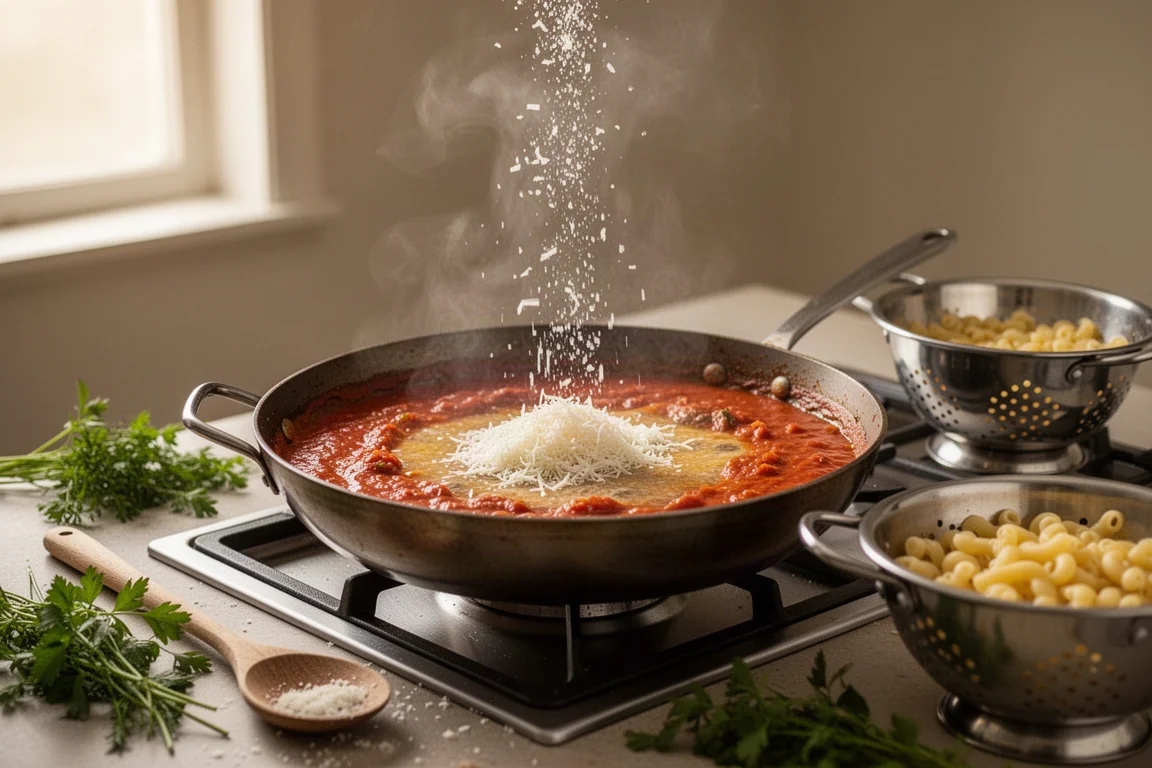
This menu included cheesy macaroni Pomodoro, a Waldorf salad with buttermilk honey mustard dressing, and chocolate pudding pie for grown-ups. The Waldorf was extremely crunchy, and the pops of grape and apple really helped; proper seasoning at the end took the edge off the bitterness. The macaroni Pomodoro is a mashup between classic red-sauce pasta and tomato soup. It is a basic sauce with lightly fried garlic and tomato, and there is a hint of garlic and decent salt, though we would not call it cheesy. The parm melted into the sauce left a gritty texture, so the better move is to grate parmesan finely at the table instead.
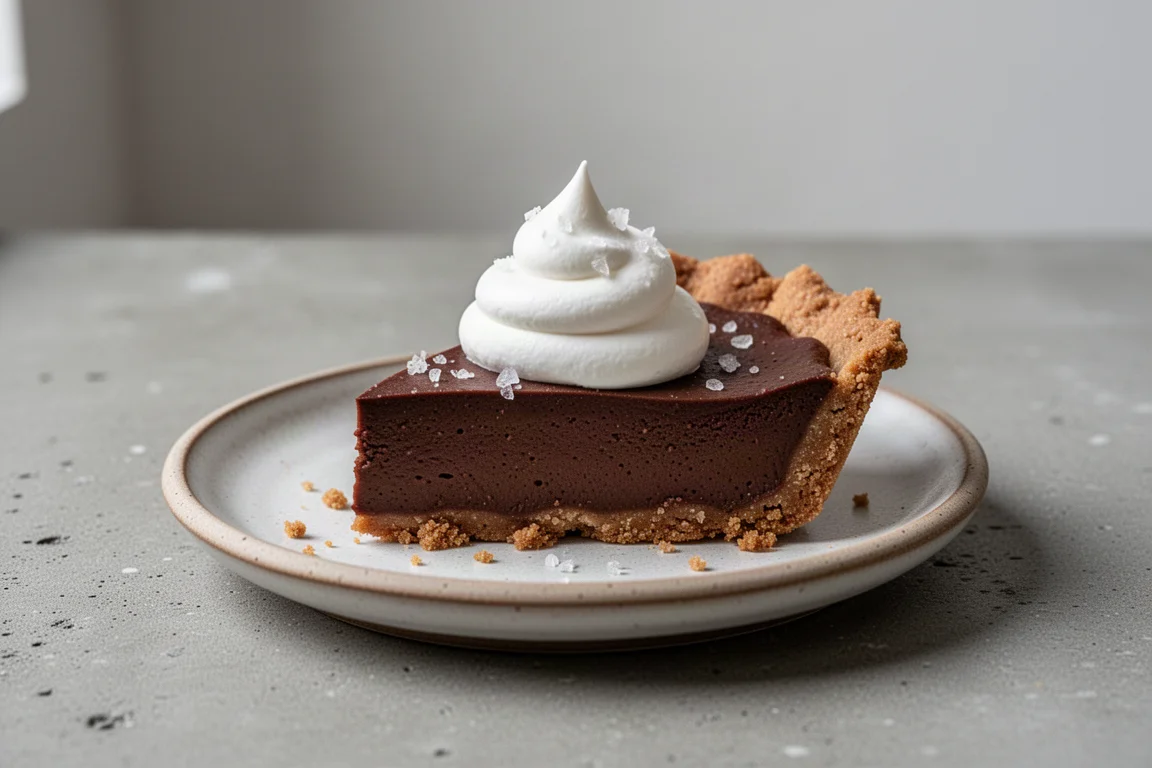
The chocolate pudding pie was the standout for a first-time pudding maker. If you can make a roux, you can make this. It tastes like the ganache layer in a diner ice cream cake, dressed with whipped cream, olive oil, and salt. It is very sweet and heavy, but the crust, made from just cookies and butter, is great on its own. This was the only dish from the menu we wanted to make again.
Day Two: Steamy Summer Nights
The four-dish menu covered watermelon chaat with lime, ginger, and cashew crumble; chilled green tahini soba; crispy skin salmon with radishes and nuoc cham; and a honey vanilla semifreddo.
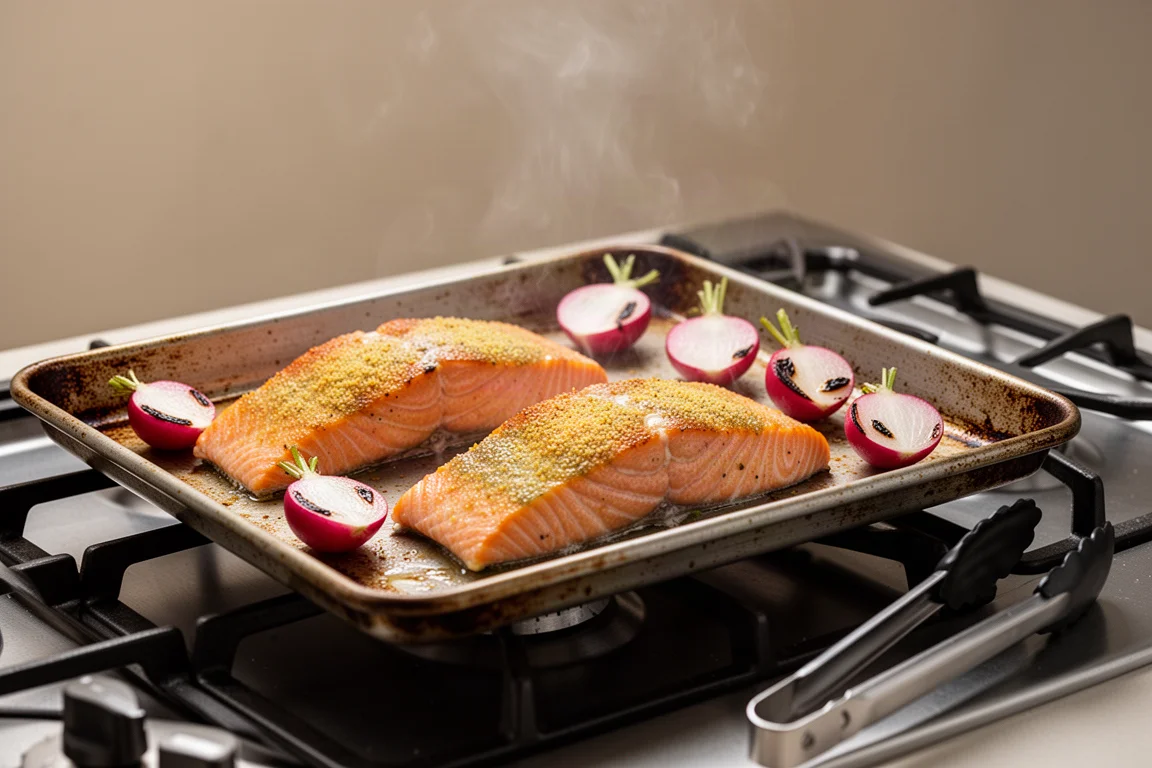
The salmon was successful, though the smoke alarm got a workout, and it came out slightly overcooked. The nuoc cham saved the whole plate: without it, the dish would have been essentially unflavored. Roasted radishes were a pleasant surprise, losing the watery bitterness raw radishes carry. The semifreddo has a nice texture, especially without needing an ice cream maker, but it is extremely sweet and honey-forward. The soba did not come together; every element arrived as its own separate burst of flavor rather than a coherent dish. The watermelon chaat has high potential, with cumin and coriander in the crumble, but the seasoning detail did not fully land for us.
Day Three: Movie Night on the Couch
This menu included a house salad, classic red sauce pizza, and almond toffee popcorn. The toffee was the story here. Making it felt bad in the moment, partly because an unreliable thermometer kept jumping around and caused unnecessary panic, but the result was annoyingly good: salty, sweet, glassy and crunchy rather than chewy, with almond slivers adding a second type of crunch and a lovely coconut note from popping the corn in coconut oil.
The pizza was the letdown. The dough was under-seasoned, the sauce was not strong enough, and the focaccia-style base tasted overwhelmingly of yeast with a texture one of us compared to a kitchen sponge. It is not offensive, just not something we would make again. The house salad, by contrast, is a genuinely useful teaching recipe: she gives you a list of lettuces and herbs, then olive oil, lemon juice, salt, and a dried spice of your choice. It is a great way to learn how to build a simple salad.
Day Four: Cozy Winter Nights and the Boring Roast
The menu was braised short ribs with anchovy and so much garlic, steamed vegetables with guidelines rather than a real recipe, and vanilla Pavlova with cocoa and citrus.
The short ribs do fall apart; you can cut them with a fork. But the flavor was the problem: 40 garlic cloves and a whole bottle of wine went in, and the result tasted only of beef, carrot, and salt. The garlic and lemon never came through. This is not really a fault of the book; it is the nature of roasts in general, which rarely reach exciting. Still, it is an expensive cut turned into something that tastes like chuck roast, and that is worth scrutinizing before you spend the money.
The Pavlova was the best thing we made all week. It tastes like angel food cake meets milk bread, dissolves in your mouth like cotton candy, and the cocoa whipped cream is incredible, with blood oranges cutting through everything with acid. Even our version, with slightly over-whipped cream, tasted amazing, and we knew exactly what to fix next time.
Day Five: Ham’s Favorite Meal
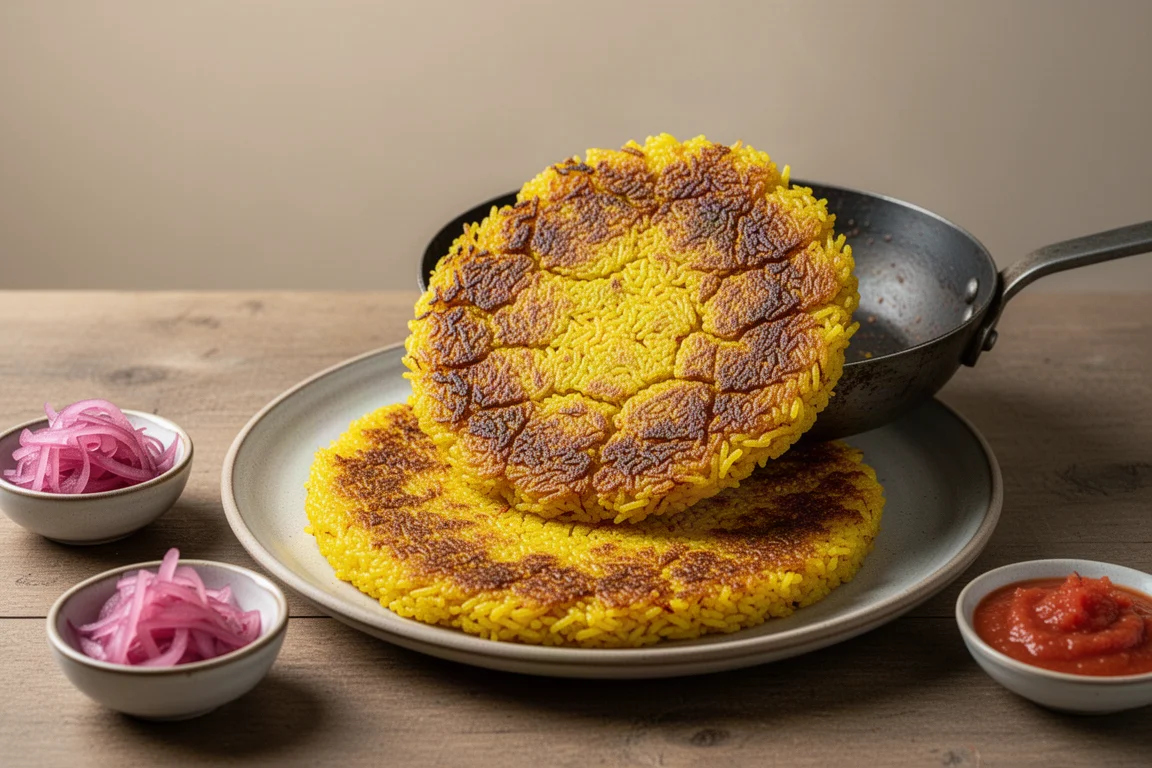
This was the first advanced menu: lamb kofte with all the fixings, dill pickle cucumber salad, saffron-stained tahdig, perfectly puffy pastries, and a fruit-on-the-bottom coconut mahalabia we had never heard of but adored.
The tahdig was intimidating. The cues around toasted rice are not obvious if you do not already know what it should smell like, and parts came out more charred than browned. Even so, it tasted great, with deep nuttiness, and the barberries cut through everything beautifully. With one or two more attempts using the described method, it would be nailable. The mahalabia was a revelation: deeply coconutty, not too sweet, with a welcome bitterness from marmalade on the bottom and great texture from orange coconut chips. The kofte itself was just meat flavor and a little dry, but the grated tomato sauce was the star, and the sumac onions deserve to be piled on generously.
Day Six: Breakfast for Dinner Finale
The ambitious Sunday morning spread included frizzled dahi omelets with onion and chilies, flaky brown butter paratha, citrus raita with pomegranate, and fruit custard.
The omelets are straightforward but impressive, with great onion crunch and a chili kick that carries the dish. The paratha is chewy, flaky, buttery, and light, and the process is more forgiving than you would expect: holes in the stretched dough are fine, the butter does not need to be cold, and you can use ghee, butter, or oil instead of making brown butter ghee. The dough also freezes well, which makes the effort easier to justify. The raita was too sweet for savory-breakfast tastes, though the way she structures the instructions, teaching you to build contrast by tasting and adjusting, is genuinely instructive. The custard is very sweet but feels intentionally so, and dipping the paratha in it works surprisingly well. A tip that stuck: the grated tomato sauce from the kofte menu is brilliant on the omelet.
The Desserts Were the Surprise
Going in, we expected Sohla’s desserts to run a little too sweet, based on her previous recipes. That happened in a few cases here, but the desserts overall took us by surprise. The Pavlova, the pudding pie, and the mahalabia are all desserts we would never have tried making ourselves without this book pushing us, and all three were excellent. Even the overly sweet ones handed us useful ideas to keep in our back pocket.
Design, Accessibility, and Writing
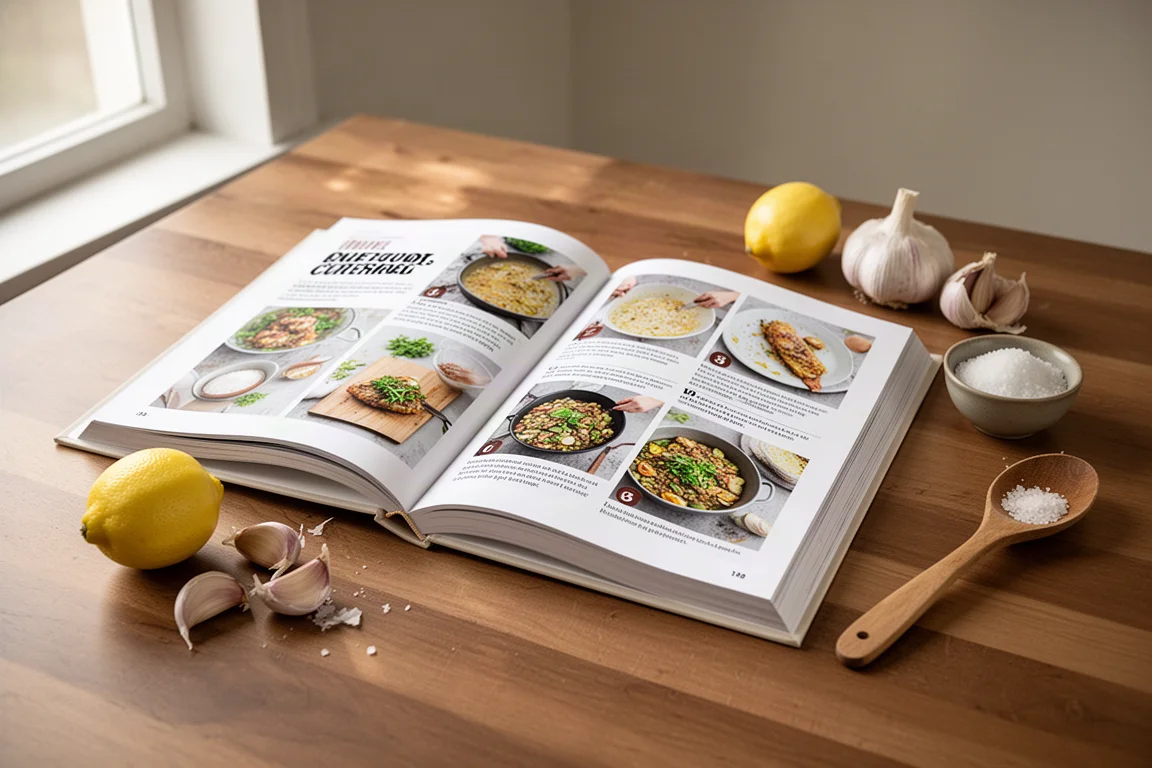
The book’s sheer size allows for a larger text size, which is welcome, and the step-by-step photo guides alongside the text make a handy translation when the words are not quite landing. The only tool we lacked was a nonstick pot for the tahdig, and the hardest ingredient to track down was barberries, which were still findable. There are 66 vegan and 149 gluten-free recipes, all marked with easily glanceable tags.
The difficulty labels make it easy to scan whether a recipe is easy, intermediate, or advanced, and bold text is used thoughtfully to keep you moving. The one small knock: that bold text and larger type occasionally push a photo guide onto the next page, where you can miss it. Our advice: if she describes a texture in words, double-check the photos for reference, because the written directions and photo captions do not always match.
The writing is the best part. Every word sounds like something Sohla would actually say, so it feels like she is talking to you. The tone is light yet informative and genuinely encouraging. She does not expect you to nail everything on the first try, and the book tells you that. The main frustrations are in the measurements: some quantities are awkward, such as needing a precise weight of coconut milk scooped from cans and then splitting the remainder across steps, which makes mise en place fiddly.
Final Scores
- Accessibility: 8. There is a lot of photo support, troubleshooting breakdowns, and sciency know-how, but the book makes you work, and bread especially is a heavy lift for beginners.
- Design: 9. Extremely well-designed compared to other books on the market, with only the occasional pushed photo guide as a flaw.
- Flavor: 7. The savory section had some misses, including dry kofte and sponge-textured pizza, but the desserts exceeded expectations.
- Writing: 8. Encouraging, personable, and clear, with occasional awkward measurements.
- Value: 9. We got 16 smashes out of 23 recipes, a 70% smash rate that comfortably clears our bar, driven by unexpectedly great desserts.
That puts Start Here at an overall score of 8.2.
Should You Actually Start Here?
For a complete beginner, the answer is maybe. As a first-time cook you would essentially have to cook everything sequentially and repeat many recipes multiple times to understand what is happening, and there are small gaps, like not warning you that milk can scorch if you walk away from it while heating. That is partly the nature of any physical book; it cannot include everything.
But if you are already an elementary-level cook looking for a proper Cooking 101 course so you can keep up with more confident home cooks, Start Here is an excellent book to add to your shelf. The technique teaching, the photo guides, and the genuinely great desserts make the effort worthwhile.
Conclusion
Start Here is a demanding but rewarding cookbook. It asks real effort from you, especially on bread and advanced menus, but it pays you back with context-rich teaching, forgiving processes, and some of the best desserts we have cooked in a long time. If you are past the very first steps of cooking and want to level up with a book that talks to you like a patient friend, this is an easy recommendation at a solid 8.2.
Product link
View more details for Start Here by Sohla El-Waylly
This product is mentioned in the review. Check the specifications, options, and compatibility before buying.
View more details for Start Here by Sohla El-WayllyFurther reading
Related Reviews
Cookbooks
Africana Cookbook Review: A Pan-African Journey Worth Cooking Through
We cooked 13 dishes from Africana by Llorado Umashayor over one week. Here is what worked, what stumbled, and who this beautiful cookbook is really for.
Cookbooks
By Heart by Haley Catalano: First Look at a Calm, Practical Cookbook
We cooked two recipes from By Heart by Haley Catalano, including a tomato-based sandwich and chicken fat mashed potatoes, to see if the book's calm, detail-first approach holds up in a real kitchen.
Cookbooks
Charred by Genevieve Taylor Review: Vegetable Grilling Beyond Corn and Halloumi
We cooked 11 recipes from Charred over four days. Here is what works, what falls flat, and whether the book earns a spot on your shelf.