Astronomy Gear
StarSense Review: Turn Any Dobsonian Into a Push-To Telescope
How StarSense uses your phone and a cleverly placed mirror to guide you to night-sky targets, plus what a head-to-head winter observing challenge revealed about its speed and reliability.
Introduction
There is a recurring question among telescope owners: can StarSense be pulled off one telescope and used on another? The short answer is yes. Mounted in place of a standard finder scope on a Dobsonian, StarSense turned an ordinary manual telescope into a push-to system that found every target thrown at it, even on a bitterly cold winter night.
This review looks at what the system actually does, how installation went, and how it held up in a real observing session racing against a full astrophotography rig.
Who This Product Is For
StarSense is aimed at anyone who owns a manual telescope, especially a Dobsonian, and wants to spend time observing rather than hunting. If you can find a few bright stars but struggle to hop from there to a dim galaxy or planetary nebula, this is the kind of accessory that changes the experience.
It is also a natural fit for families and beginners. Rather than learning star-hopping from scratch, the app tells you which way to push the telescope, and the sky becomes approachable from night one.
What StarSense Is and How It Works
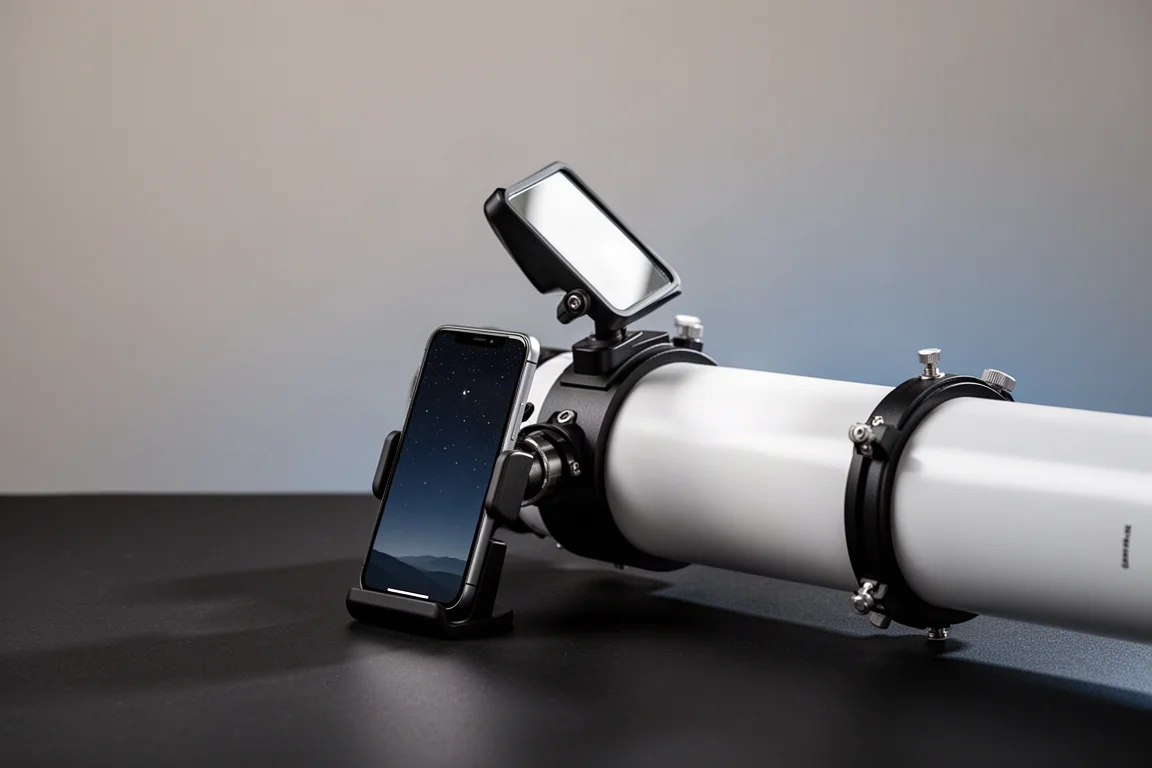
StarSense uses a smartphone and a cleverly placed mirror to tell the telescope exactly where it is pointed. The phone constantly takes pictures of the stars, matches the patterns it sees, and works out the telescope’s orientation. You tell the app which objects you want to see, and the app shows you which way to push the telescope. As you get closer to your target, the telescope takes more photos and helps you position it precisely over the target.
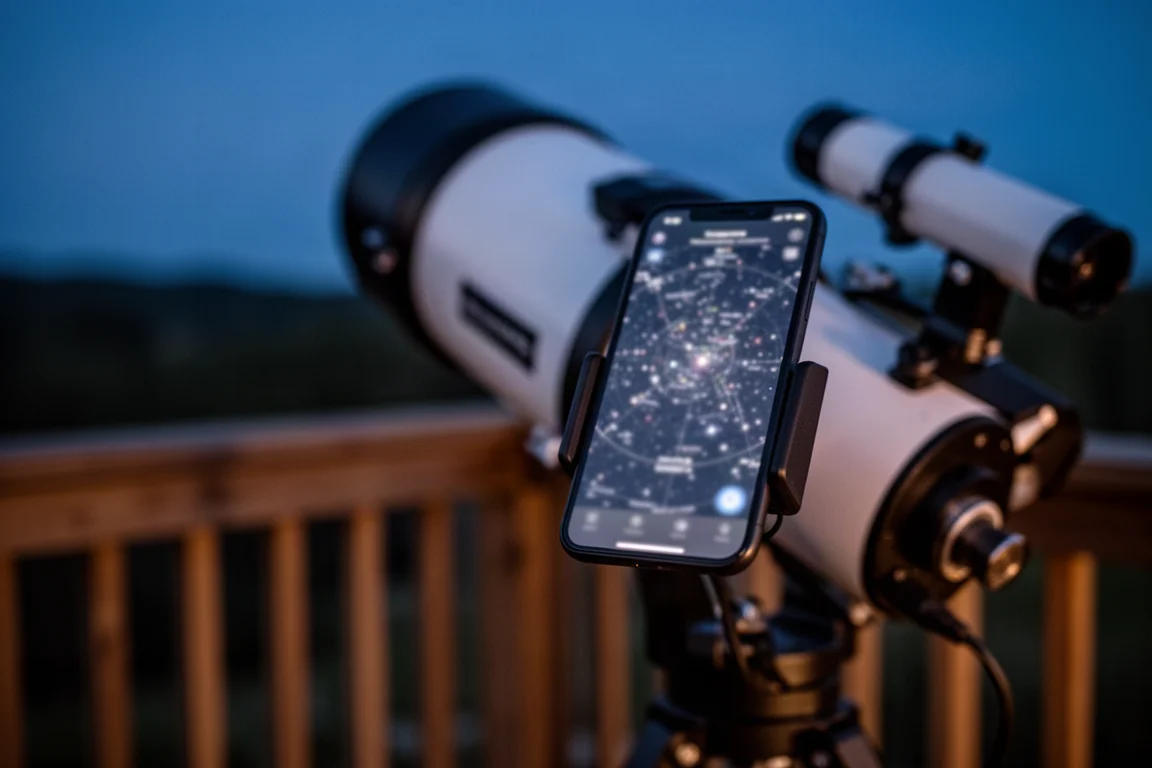
The important part is that no motors are involved. On a Dobsonian, the telescope stays fully manual; StarSense simply turns it into a push-to system. You provide the motion, the app provides the directions.
Installation: Swapping the Finder Scope
Mounting the system was refreshingly straightforward. The sensible placement is to remove the existing finder scope and put StarSense right in its place, which keeps the telescope’s balance and ergonomics intact. In this case, the last two long bolts in the toolbox were exactly the right hardware, and the unit seated cleanly.
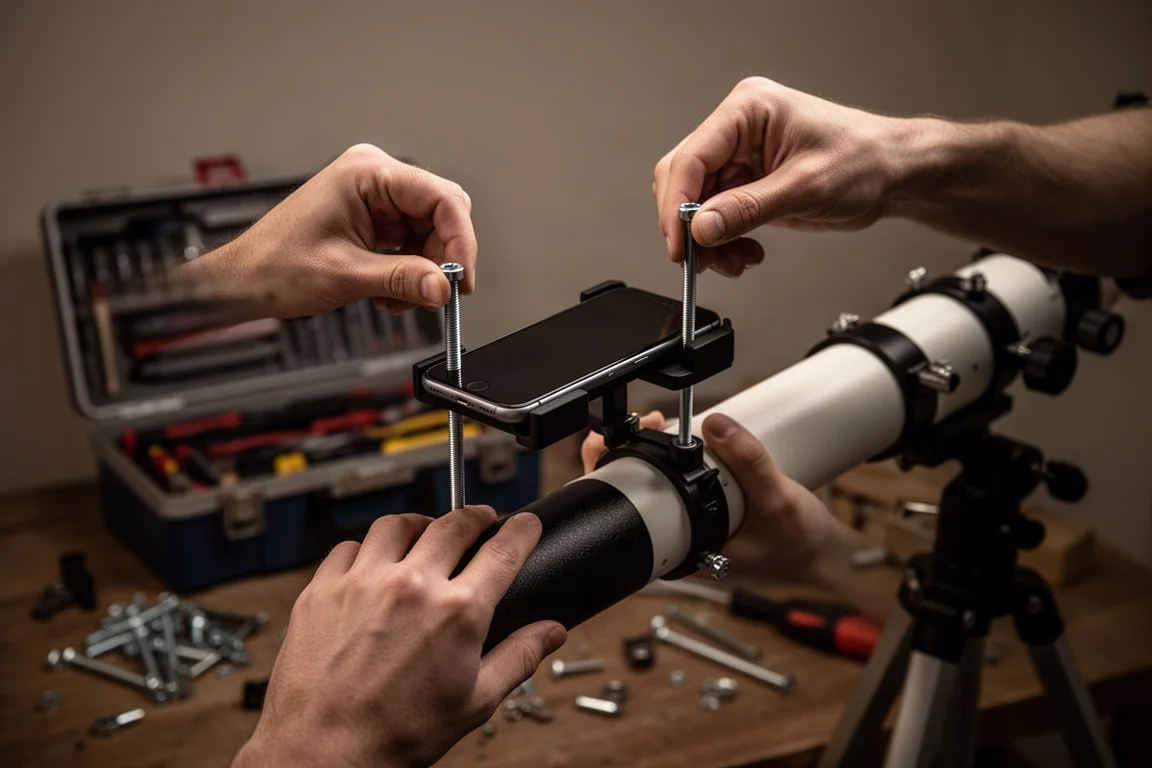
From unboxing to a fully installed, aligned system, this is not an afternoon project. It is a few minutes of work with basic tools, which matters if you are handing the telescope to less experienced family members who should not face a fiddly setup ritual.
How It Performed in a Winter Observing Challenge
The real test came outside the city on a cold winter night, in a head-to-head challenge: fifteen winter targets from an observing book, with StarSense guiding a Dobsonian on one side and a full astrophotography setup, complete with camera, controller, and tablet imaging, on the other. The rules were simple. One side had to observe and sketch each target; the other had to capture a one-minute exposure of each one.
The result was a genuinely close race, neck and neck for the whole session. The astrophotography rig was slowed by meridian flips and setup overhead, while the StarSense-equipped Dobsonian kept hopping from target to target: M45, the dim globular cluster M79 low on the horizon, M78, the Crab Nebula, winter Albireo, the winter butterfly cluster, and onward through the list.
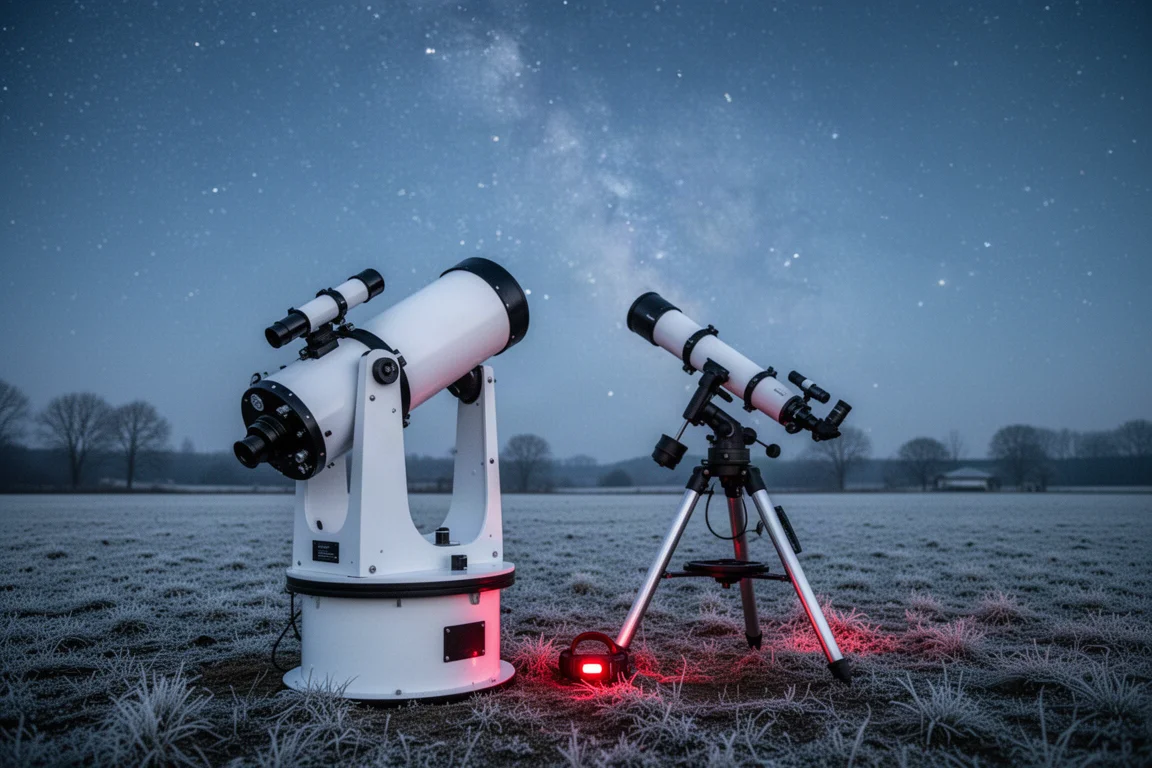
The notable finding was consistency. StarSense picked out every target and got close enough to find each one, with no technical issues across the entire night. In cold conditions, where phones and batteries are usually the first things to complain, that reliability stood out. The observing session finished all fifteen winter targets, and the push-to Dobsonian held its own against a far more complex and expensive imaging setup.
Main Strengths
The clearest strength is target acquisition speed. Instead of star-hopping in freezing temperatures, you push the telescope in the direction the app indicates and let the plate-solving photos refine the position. Dim objects that would otherwise take twenty minutes of frustration become a minute or two of work.
The second strength is portability across telescopes. Because the unit can be removed and remounted, one StarSense system can serve multiple scopes rather than being locked to a single tube. Combined with the simple bolt-on installation, that flexibility makes it easy to justify for households with more than one telescope.
Things to Consider Before Buying
StarSense is a navigation aid, not an imaging system. In the winter challenge, the visual observer using StarSense came out ahead of the astrophotography rig precisely because the manual telescope with smart guidance has far less overhead. If your goal is photographs of deep-sky objects, this is not the tool for that job.
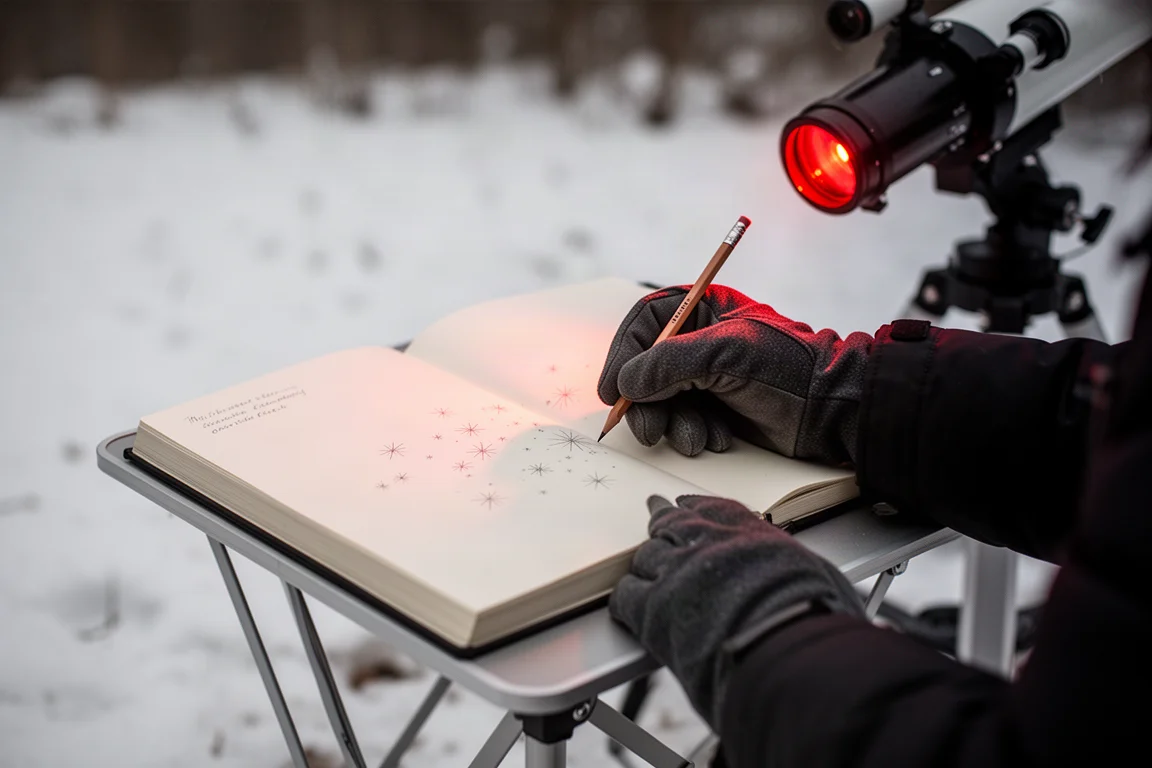
Also worth noting: sketching and observing still require patience, warm clothing, and realistic expectations about what faint targets look like through an eyepiece. StarSense removes the finding problem, not the observing one. Light pollution still matters, and dim objects still demand dark adaptation and a bit of inverted-vision technique.
Buying Advice
If you own a Dobsonian and find yourself spending more time searching than seeing, StarSense is one of the highest-impact upgrades available. It installed in minutes in place of a finder scope, survived a full winter session without a single technical issue, and kept pace with a professional astrophotography setup target for target.
For anyone starting out, or for a household telescope that mostly gathers dust because finding things is hard, this system makes the night sky genuinely navigable. The future is looking up.
Conclusion
StarSense does exactly what it promises: it uses your phone and a small mirror to know where the telescope is pointed and guide you to whatever you want to see. Mounted on a Dobsonian, it turns a manual scope into a fast, reliable push-to instrument, and it proved it on one of the toughest nights of the year to be outside observing.
Product link
View more details for StarSense
This product is mentioned in the review. Check the specifications, options, and compatibility before buying.
View more details for StarSenseFurther reading
Related Reviews
Astronomy Gear
Agena Astro Astro Suite Review: Plan, Build, and Share Your Astronomy Gear for Free
Astro Suite brings gear planning, compatibility checks, field of view tools, and community builds into one free platform for astronomers.
Astronomy Gear
Apertura Power Supply Review: A 518Wh Power Station Built for Astrophotography and Beyond
After nearly two years of weekly use, from imaging sessions at the observatory to powering a camper overnight, this lightweight power supply has proven itself in the field.
Astronomy Gear
Getting Started with H-Alpha Solar Imaging: Sky-Watcher Heliostar 76 and the Gear That Makes It Work
A hands-on look at the Sky-Watcher Heliostar 76 H-alpha solar telescope, the SolarQuest mount, and the cameras that turn the sun's surface into striking images.