Astronomy Gear
Apertura Power Supply Review: A 518Wh Power Station Built for Astrophotography and Beyond
After nearly two years of weekly use, from imaging sessions at the observatory to powering a camper overnight, this lightweight power supply has proven itself in the field.
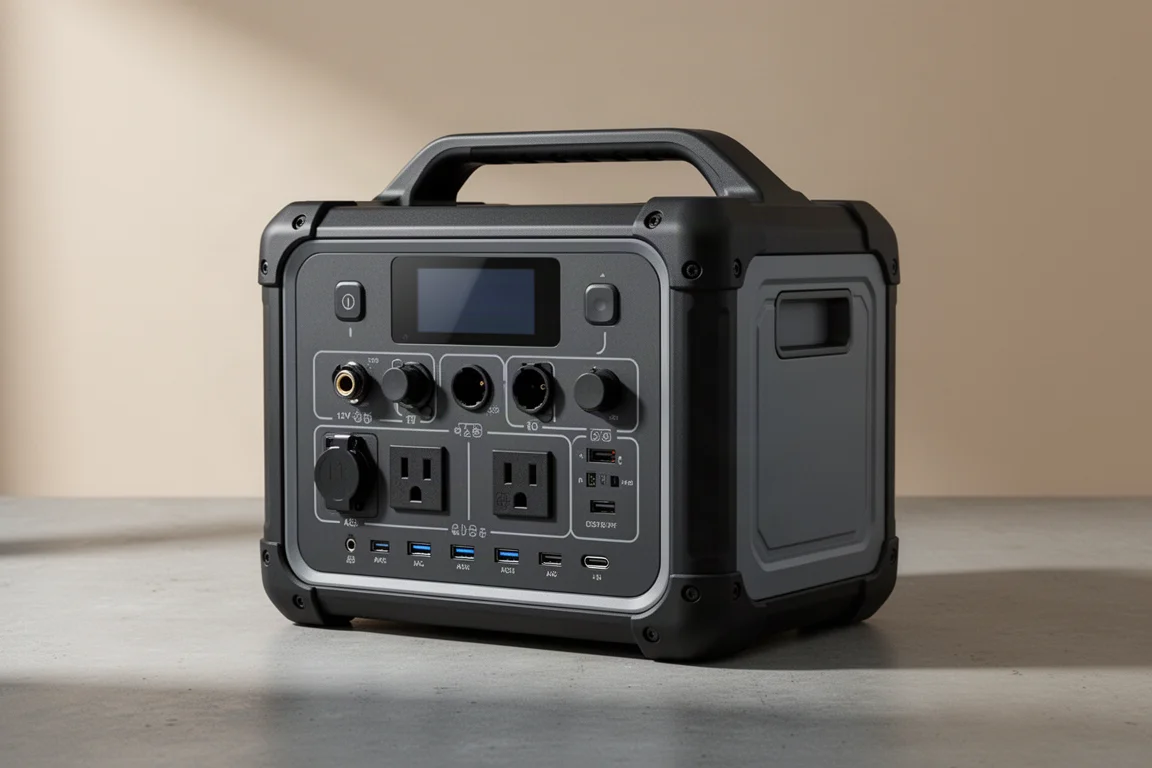
Introduction
Some pieces of gear sit in a closet between observing sessions. The Apertura Power Supply is not one of them. After using it almost weekly since late 2024, both for astrophotography and for everyday backup power around the house and camper, it has earned a permanent spot in the gear kit. Here is what makes it stand out, and a few quirks you should know about before buying.
What a 518 Watt-Hour Battery Actually Means
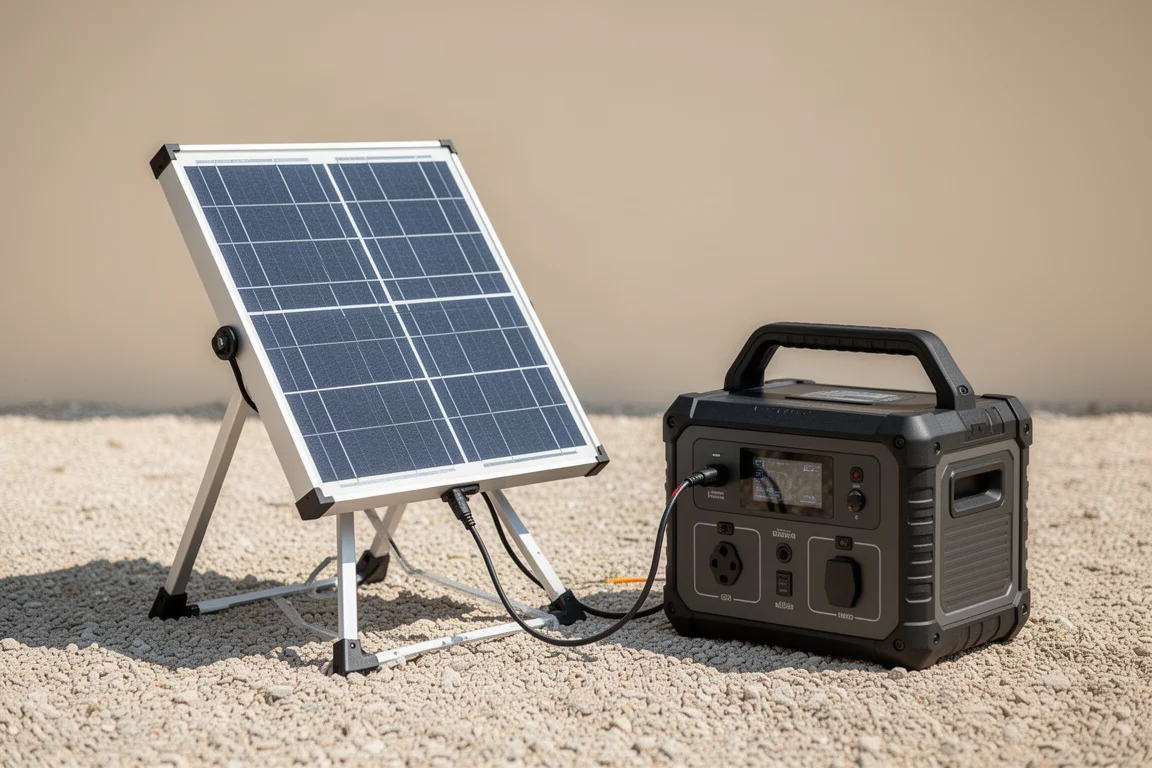
On paper, this is a 518 watt-hour battery. If your astrophotography rig draws an average of 50 watts, that translates to roughly 10 hours of runtime. In practice, most imaging setups draw well below 50 watts, so real-world endurance is likely to be even better than that simple math suggests.
Inside is a lithium-ion battery, which keeps the whole unit remarkably light for its capacity. For comparison, a typical 84 watt-hour power tank covers a night or two of visual observing, while a larger 396 watt-hour lead-acid power box can struggle with voltage stability. The Apertura holds about six times the energy of those smaller power tanks.
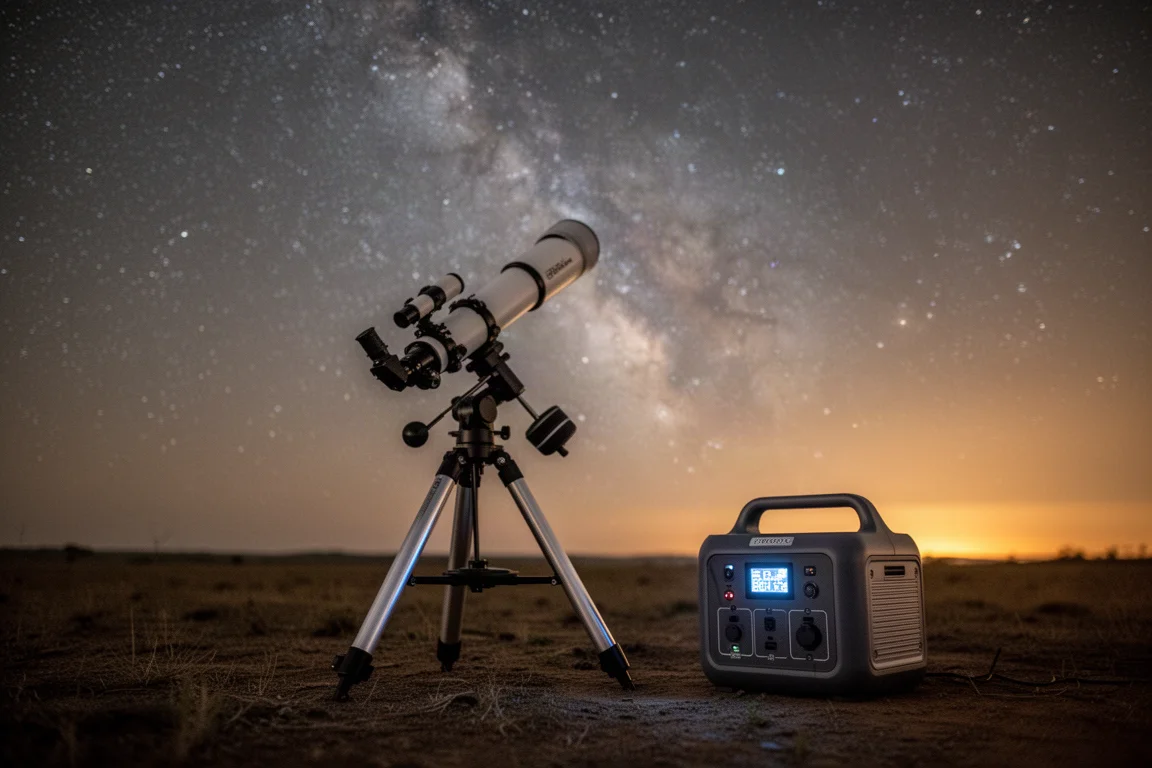
Ports and Outputs
The port selection covers nearly everything an astronomy setup needs. There are two standard 12-volt outputs, ideal for powering something like an ASI Air on one port and a mount on the other. Two AC outlets are included, and they are substantial enough that an entire observatory, including the dome, computers, and monitors, was run from this unit during testing.
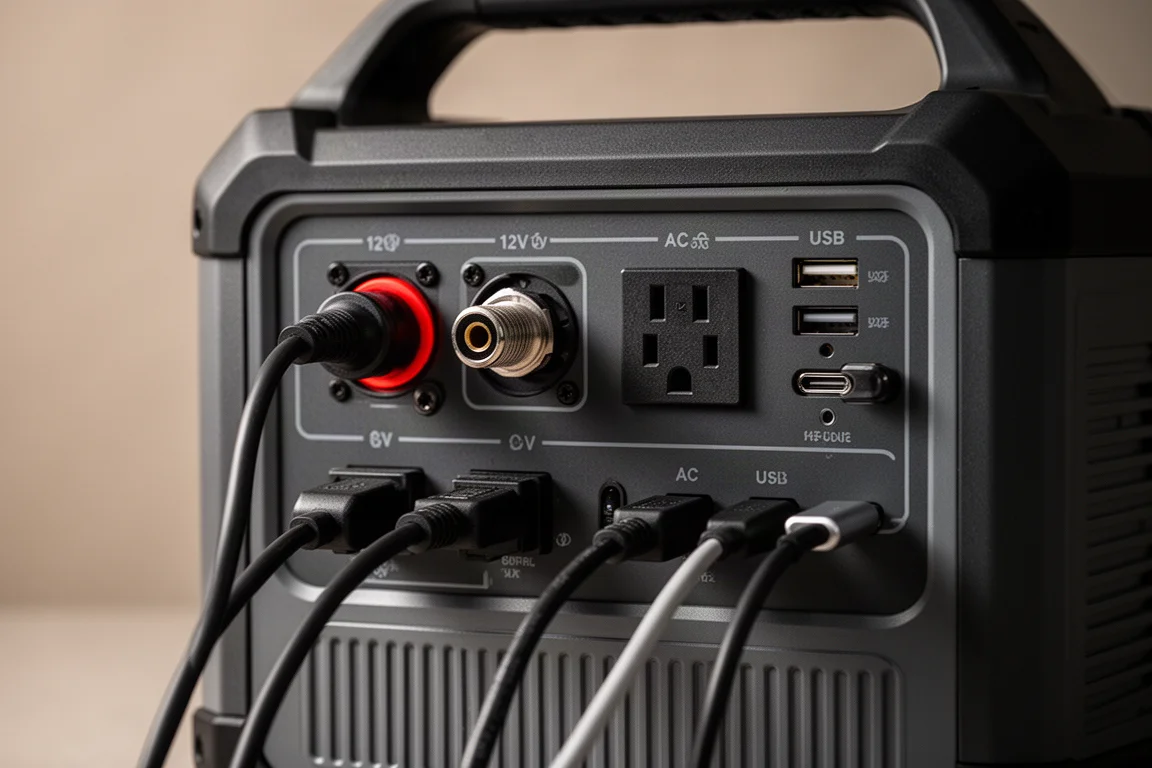
Four regular USB ports handle accessories like a flat panel, USB dew heaters, and phone charging. The USB-C port can deliver up to 100 watts, which is enough for modern laptops that charge over USB-C. There is also a port marked PV next to the charging slot, which turns out to behave like a direct connection to the battery terminals, meaning a solar panel with a charge controller can charge the unit successfully.
Stable Voltage: The Quiet Advantage
One detail sets this unit apart from the older lead-acid power box it replaced. The battery is a 24-volt pack that steps down to a 12-volt system internally, using electronics to hold a consistent 12 volts across the entire state of charge.
That matters more than it sounds. With a battery whose voltage sags as it discharges, a camera cooler or mount can start misbehaving even when the battery is nearly full, causing mysterious disconnects and erratic behavior that look like software problems. Because this unit regulates its output, those symptoms simply do not appear.
Real-World Use Beyond Astronomy
This is one of the rare astronomy accessories that earns its keep the rest of the week too. It has been used to run all the lights and the heater fan in a camper on overnight trips, and it has plugged in a gas oven during snowstorms and power outages.
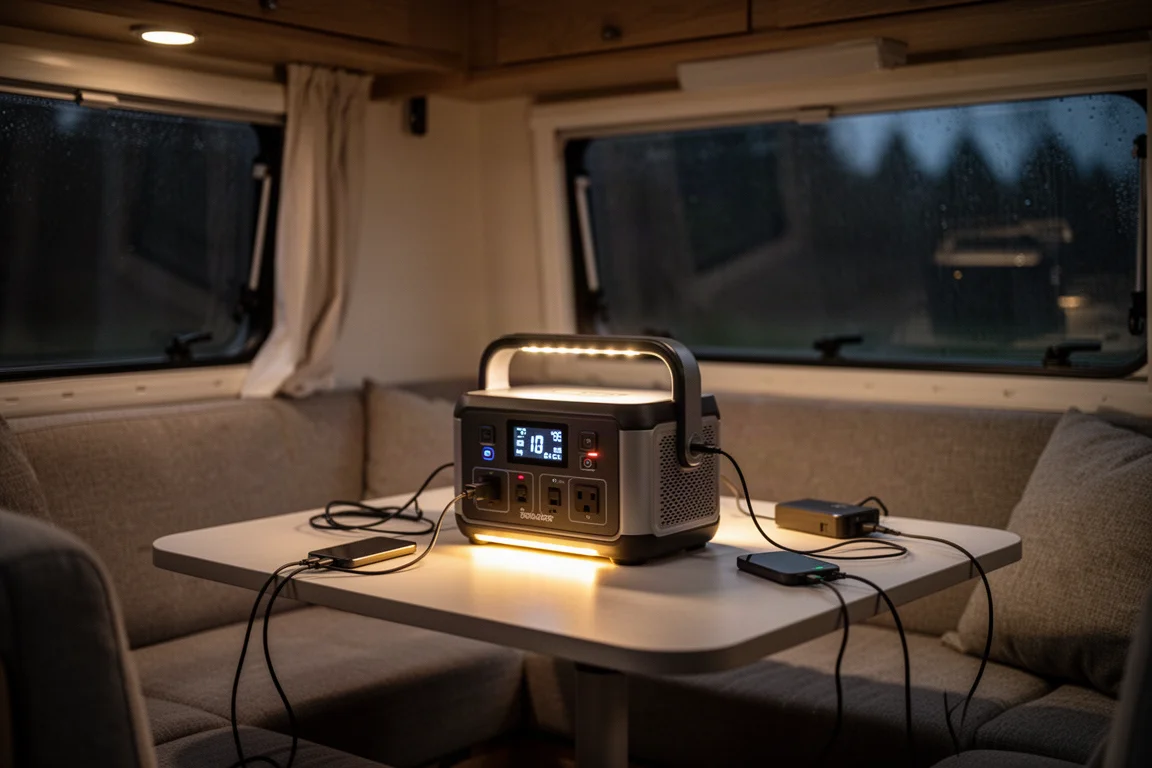
The combination of high capacity, low weight, and AC output makes it a genuine household backup rather than a single-purpose astronomy battery.
Quirks Worth Knowing Before You Buy
A few things are worth flagging. The 12-volt system activates with a DC button, but if the connected device stops drawing power, the outlets shut off automatically. With a dome controller that only occasionally rotates, that meant walking back over to press the button again.
The display is a mixed bag. Showing live watt draw is genuinely useful, but the brightness does not appear to be adjustable, and in certain ambient lighting the screen can be very hard to read. The unit also ships with a generous bundle of cables and adapters, more than most people will need at once.
Buying Advice
For astrophotographers tired of voltage-related gremlins, the regulated 12-volt output alone justifies the upgrade from a lead-acid power box. For anyone who wants one battery that handles an imaging rig, a camper, and emergency home backup, the 518 watt-hour capacity and AC outlets make a strong case. The main trade-offs are the auto-shutoff behavior on lightly loaded 12-volt ports and the display’s readability.
Conclusion
The Apertura Power Supply is a rare case of astronomy gear that works as well in a power outage as it does under a dark sky. Stable voltage, a huge capacity for its weight, and a full spread of outputs make it easy to recommend for serious imaging setups, with only minor quirks along the way.
Product link
View more details for Apertura Power Supply
This product is mentioned in the review. Check the specifications, options, and compatibility before buying.
View more details for Apertura Power SupplyFurther reading
Related Reviews
Astronomy Gear
Agena Astro Astro Suite Review: Plan, Build, and Share Your Astronomy Gear for Free
Astro Suite brings gear planning, compatibility checks, field of view tools, and community builds into one free platform for astronomers.
Astronomy Gear
Getting Started with H-Alpha Solar Imaging: Sky-Watcher Heliostar 76 and the Gear That Makes It Work
A hands-on look at the Sky-Watcher Heliostar 76 H-alpha solar telescope, the SolarQuest mount, and the cameras that turn the sun's surface into striking images.
Astronomy Gear
StarSense Review: Turn Any Dobsonian Into a Push-To Telescope
How StarSense uses your phone and a cleverly placed mirror to guide you to night-sky targets, plus what a head-to-head winter observing challenge revealed about its speed and reliability.