Cookware
Stainless Steel vs Non-Stick Cookware: Which Surface Performs Best
A detailed breakdown of cookware materials, construction methods, and why fully clad stainless steel outperforms most alternatives for long-term cooking performance.
Introduction
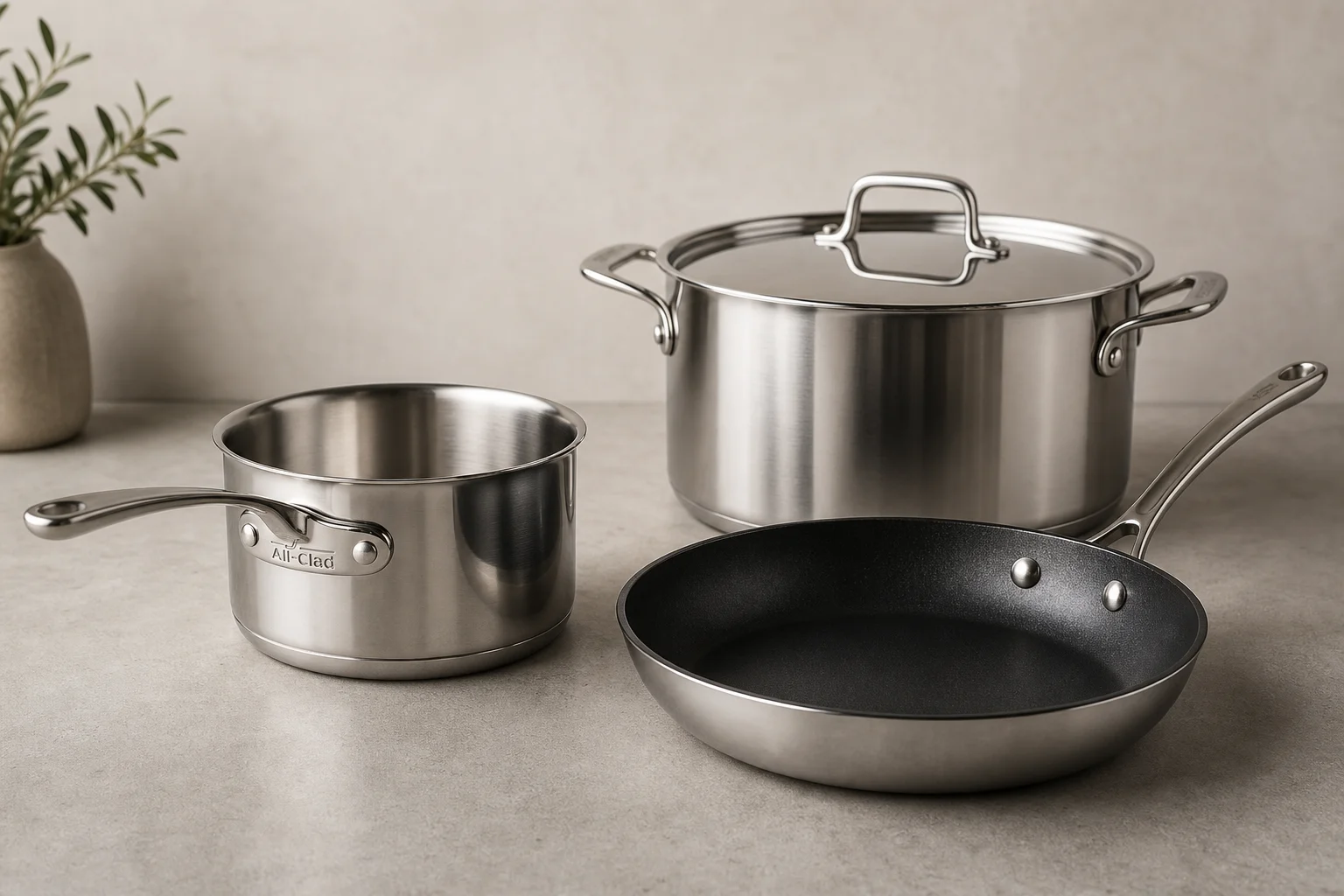
Choosing the right cookware surface shapes your cooking experience for years. The debate between stainless steel and non-stick often oversimplifies what actually matters: construction, durability, and how different materials perform under heat. This guide breaks down the science behind cookware materials and explains why fully clad stainless steel delivers superior long-term performance for most home cooks, with one specific exception where non-stick genuinely makes sense.
Understanding Cookware Construction
Every pot or pan consists of three basic parts: the cooking surface (top), the base (bottom), and the inner core. Most cookware is categorized by its cooking surface, but the real story lies in what’s underneath.
Single-material pans made from aluminum, cast iron, or carbon steel are straightforward and affordable, but each material carries inherent trade-offs. Aluminum heats quickly but warps easily. Cast iron and carbon steel hold heat well but react to acidic foods and require careful maintenance. Pure stainless steel, on its own, conducts heat poorly compared to carbon steel.
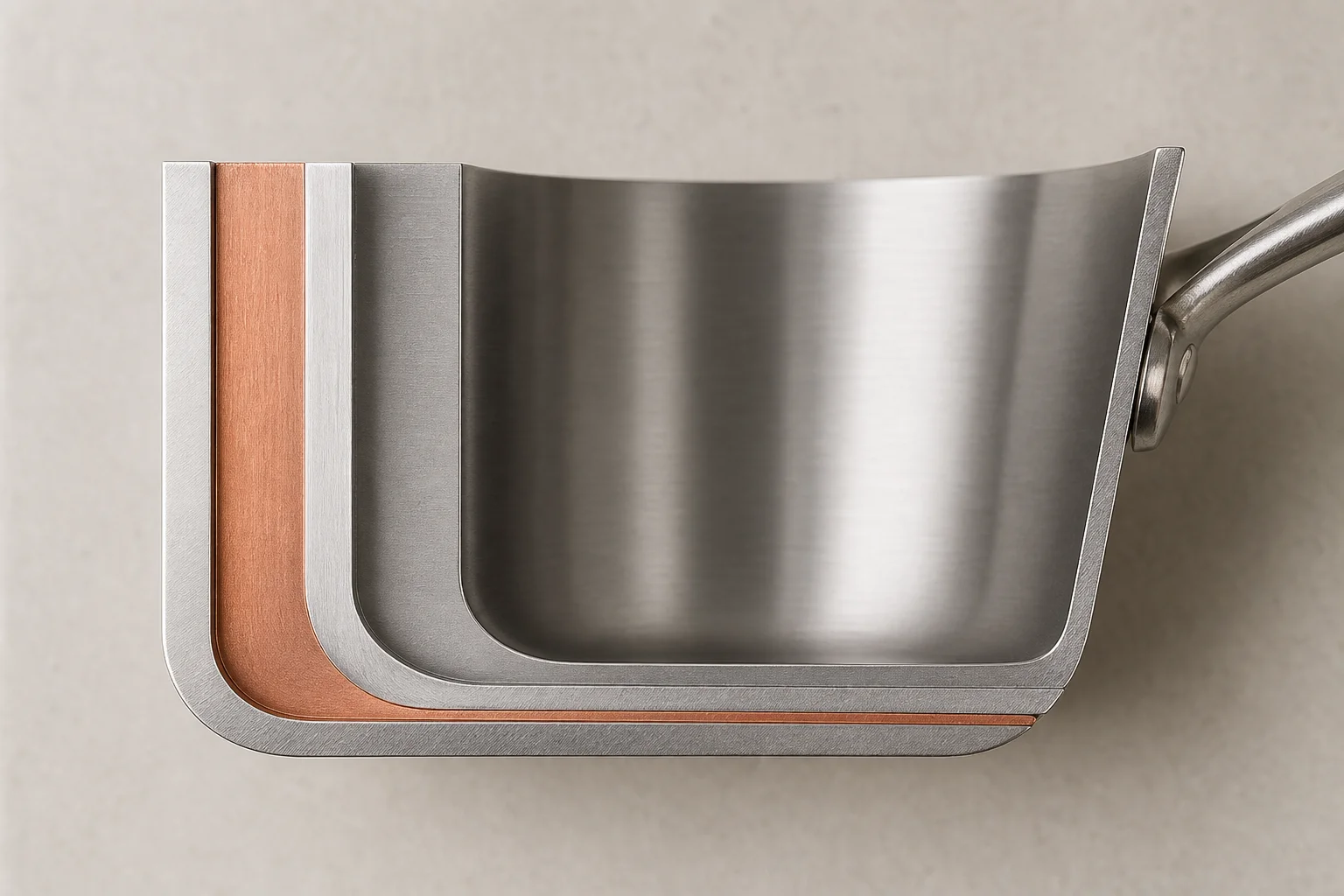
The best stainless steel cookware uses a fully clad or layered construction, combining materials strategically. A stainless steel exterior provides durability and easy cleaning, while an aluminum or copper core in the middle delivers even heat distribution. By adjusting the thickness and purity of an aluminum core, manufacturers can increase conductivity by up to 35 percent, matching the performance of solid copper cookware while maintaining superior durability and dishwasher compatibility.
Copper cores offer exceptional heat control, making them ideal for sauce work where precise temperature management prevents splitting sauces or burning caramel. However, pure copper requires regular polishing and cannot be used on induction cooktops. Layering copper between stainless steel solves both problems: the stainless exterior protects the copper and enables induction compatibility.
The Non-Stick Myth
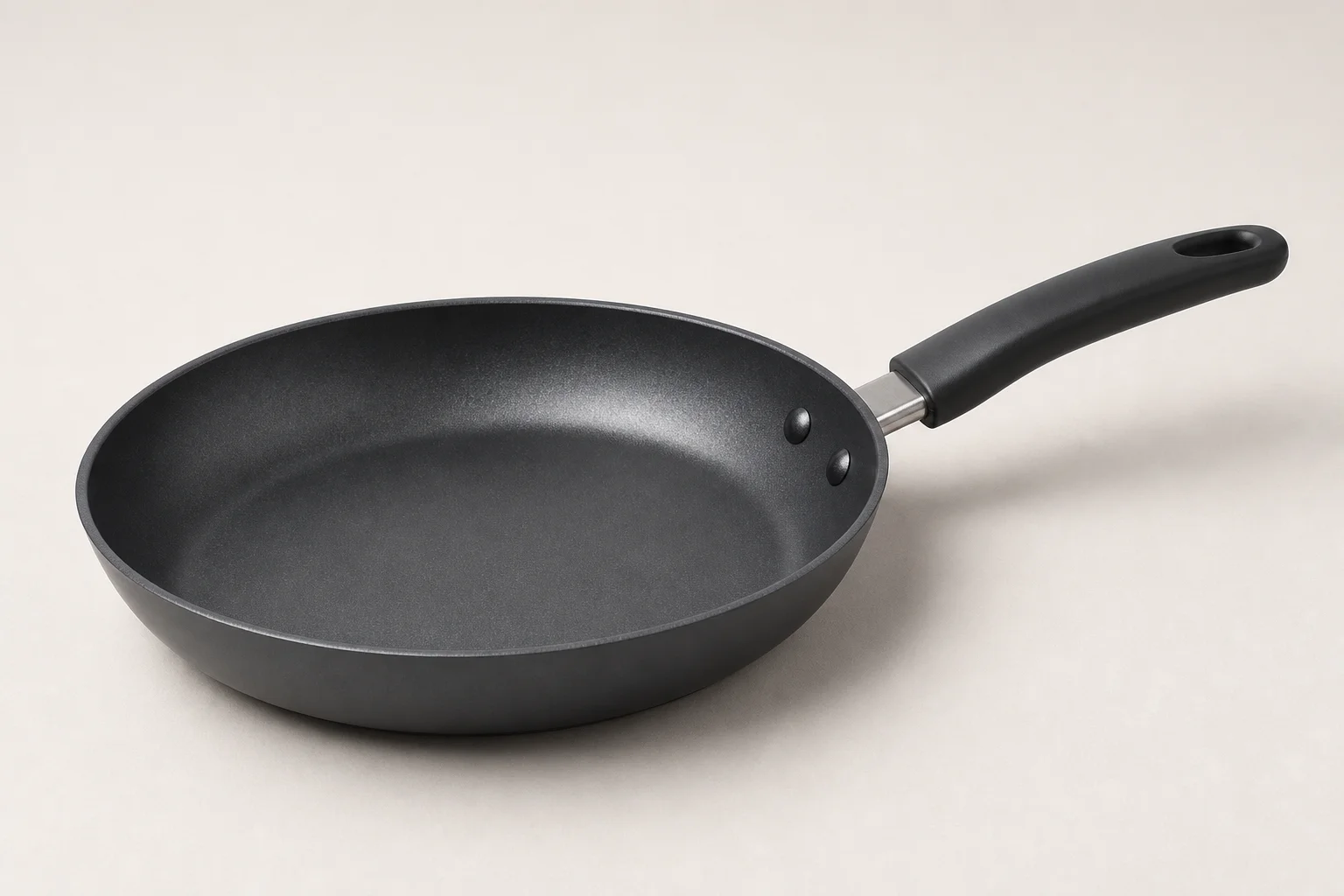
The term “non-stick” gets misused across the cookware industry. True non-stick surfaces release food without any oil or butter. Only PTFE (polytetrafluoroethylene) coatings are genuinely non-stick by this definition. Cast iron, ceramic, carbon steel, and hybrid surfaces all require oil to prevent sticking, which means the oil is non-stick, not the pan.
PTFE non-stick coatings have a fundamental weakness: they do not stick to the pan either. Over time, the coating naturally unsticks itself through normal wear and tear, eventually requiring replacement. This creates a cycle of disposal and repurchase that is neither economical nor environmentally sustainable.
Some manufacturers have developed innovations to extend non-stick coating life. Hestan’s titanium-enhanced non-stick uses plasma anchoring and layered coating technology to improve durability, backed by a lifetime warranty. However, even with these advances, non-stick surfaces eventually degrade and require replacement, whereas stainless steel surfaces remain functional indefinitely.
Why Fully Clad Stainless Steel Performs Best
Stainless steel’s durability comes from its resistance to corrosion and its ability to withstand metal utensils, high heat, and aggressive cleaning. The cooking surface itself will not be the first component to fail. Instead, smaller design details determine whether a pan lasts two years or a lifetime.
Handle Design and Attachment
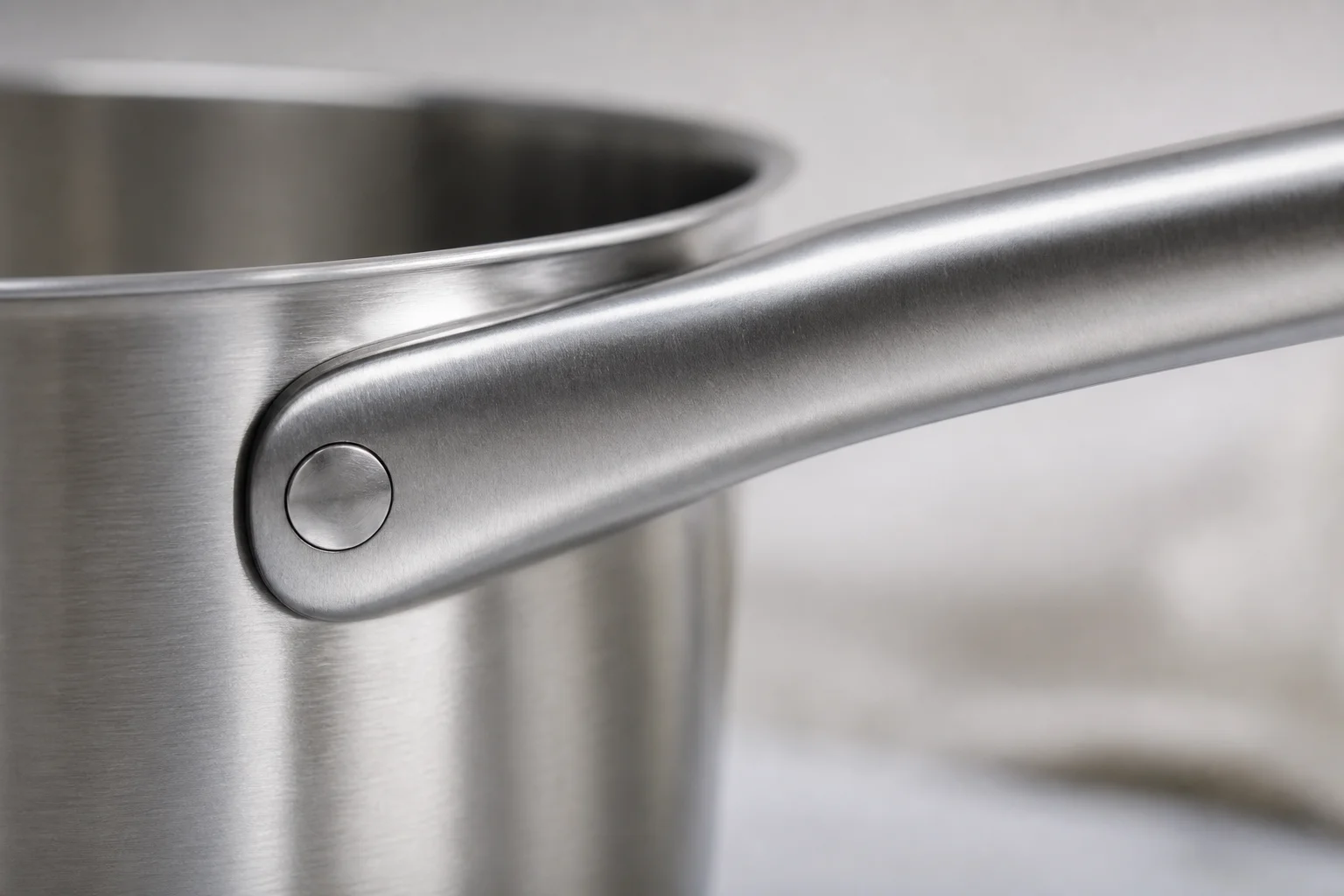
Screwed-on handles can loosen or detach over time. Riveted handles stay permanently secure. Flush rivets are preferable to protruding rivets because they are easier to clean and do not trap food particles. Handles designed with a heat-dispersing gap or a groove allow you to grip them safely with a towel or oven mitt when hot, preventing the handle from rotating in your hand.
Rim Construction
The rim is where most stainless steel pans fail first. Rolled rims trap food and oil, which slowly corrode the pan from the inside. Flush but unsealed rims expose the inner core layers, making them vulnerable to dishwasher chemicals and high temperatures. Only fully sealed rims protect the inner core and allow true dishwasher safety without fine-print caveats.
Stainless steel is called “stainless” rather than “stain-never” because it can still corrode under certain conditions. Exposed rims where the stainless exterior wears faster than the inner core can create sharp edges, a problem serious enough to have resulted in multi-million-dollar class action settlements.
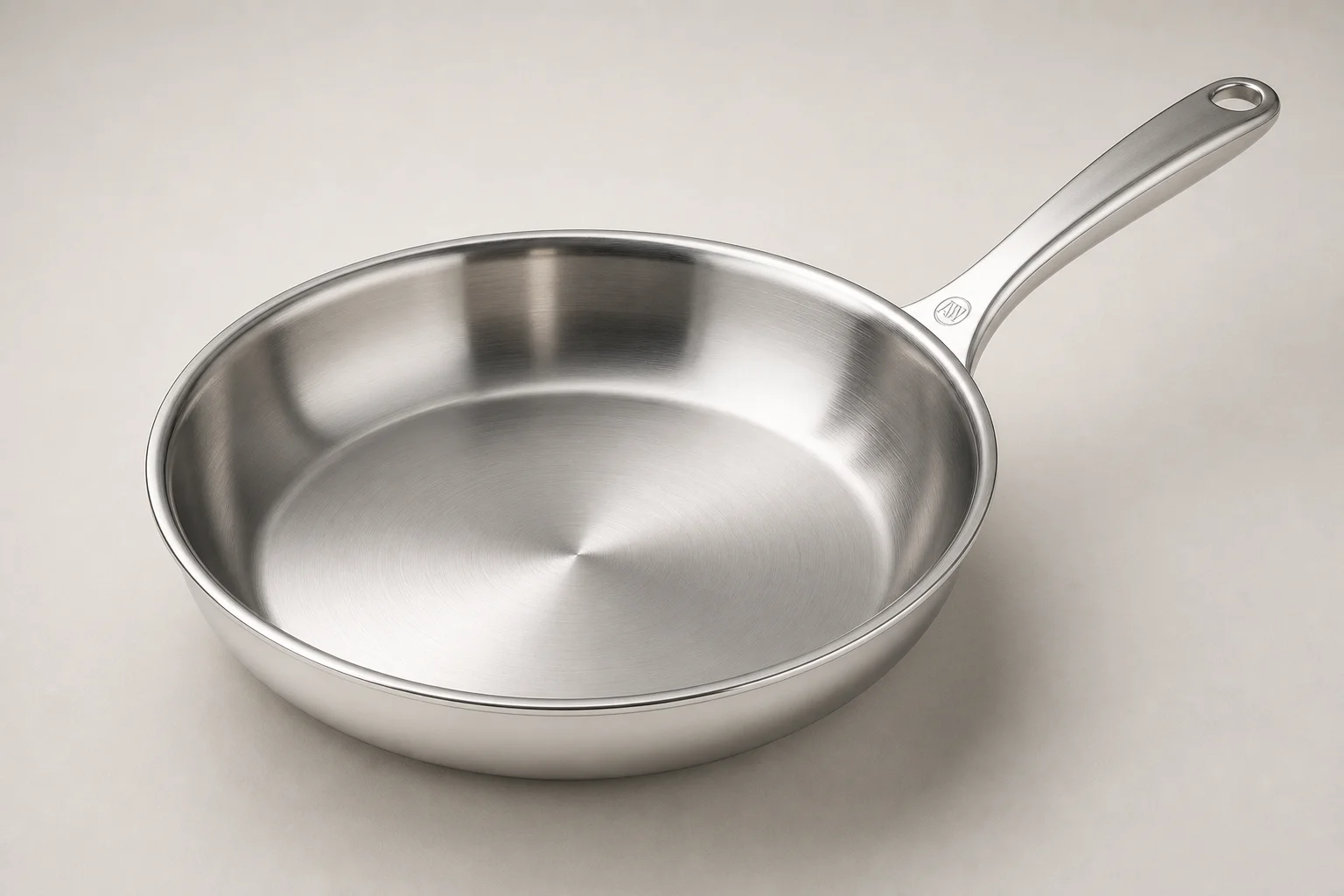
Cooking Eggs and Proteins Without Sticking
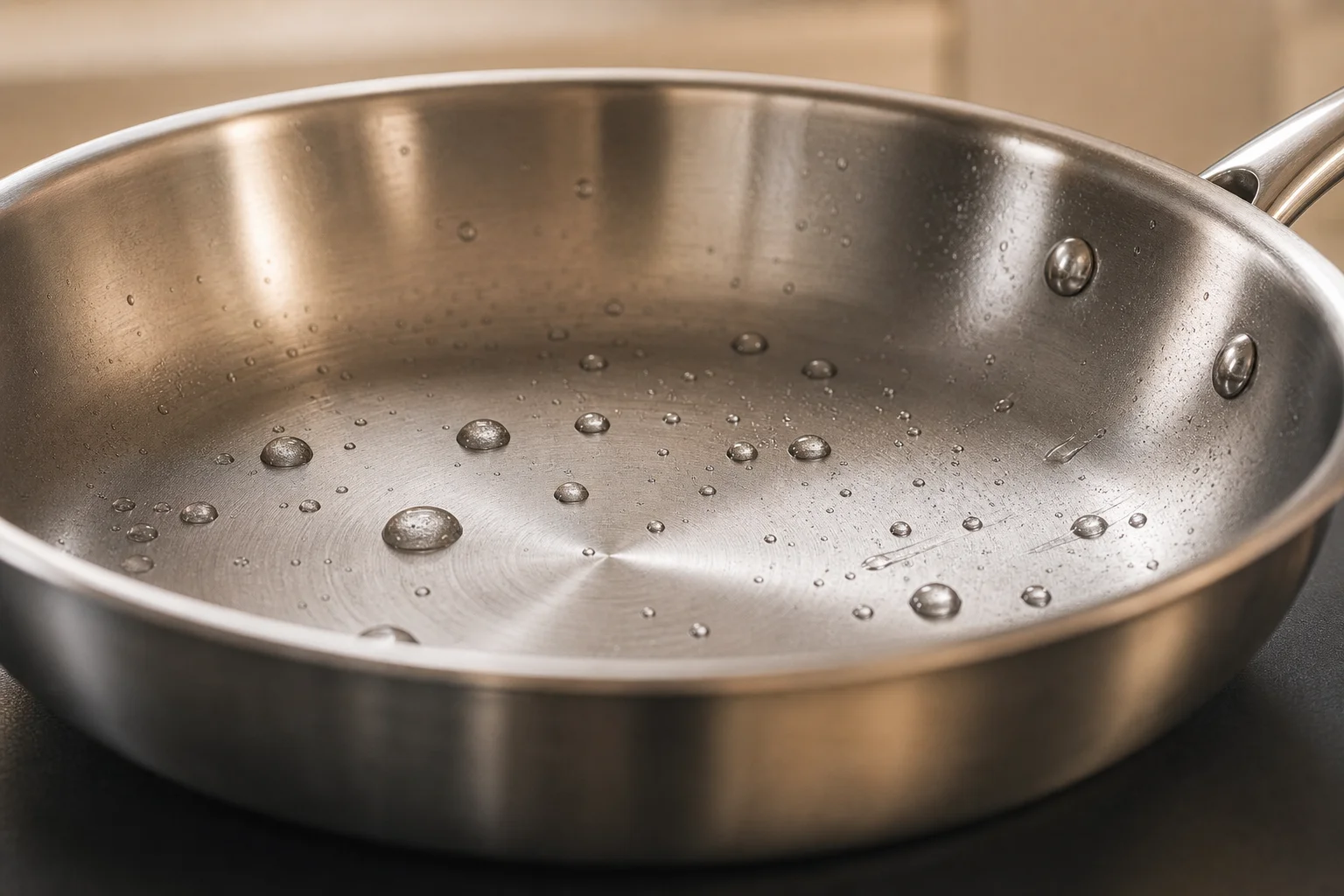
The key to cooking anything on stainless steel without sticking is controlling temperature. Oil should reach approximately 450 degrees Fahrenheit before food enters the pan. The easiest method uses a thermometer, but without one, heat the empty pan until water beads up on the surface. This beading indicates a steam layer has formed between the water and the pan.
When oil is added to a pan this hot, it forms another high-temperature layer. Eggs, which are mostly water, heat up the same way as the water bead, with a thin steam layer underneath separating the egg from the oil. Small areas of protein that initially bond with the steel will eventually steam free and release naturally as they reach temperature.
For other proteins, they release naturally as they develop a golden-brown crust. This fond (the browned bits left in the pan) is easily deglazed with liquid to create the base for exceptional pan sauces or braises.
Key Details That Determine Pan Longevity
When selecting stainless steel cookware, prioritize these details:
- Handle attachment: Look for riveted handles, preferably flush rivets that do not trap food.
- Handle design: Choose handles with a heat-dispersing gap or groove for safe gripping when hot.
- Rim construction: Fully sealed rims are essential for true dishwasher safety and long-term durability.
- Core material: Aluminum or copper cores provide superior heat distribution compared to stainless-only construction.
A single high-quality pan with solid handles and sealed rims will outlast multiple budget cookware sets. For beginners, one pot, one pan, and a universal lid represent the best value. As cooking frequency increases, a stainless steel set with one non-stick pan for specific tasks provides flexibility without excessive cost.
Cleaning and Maintenance
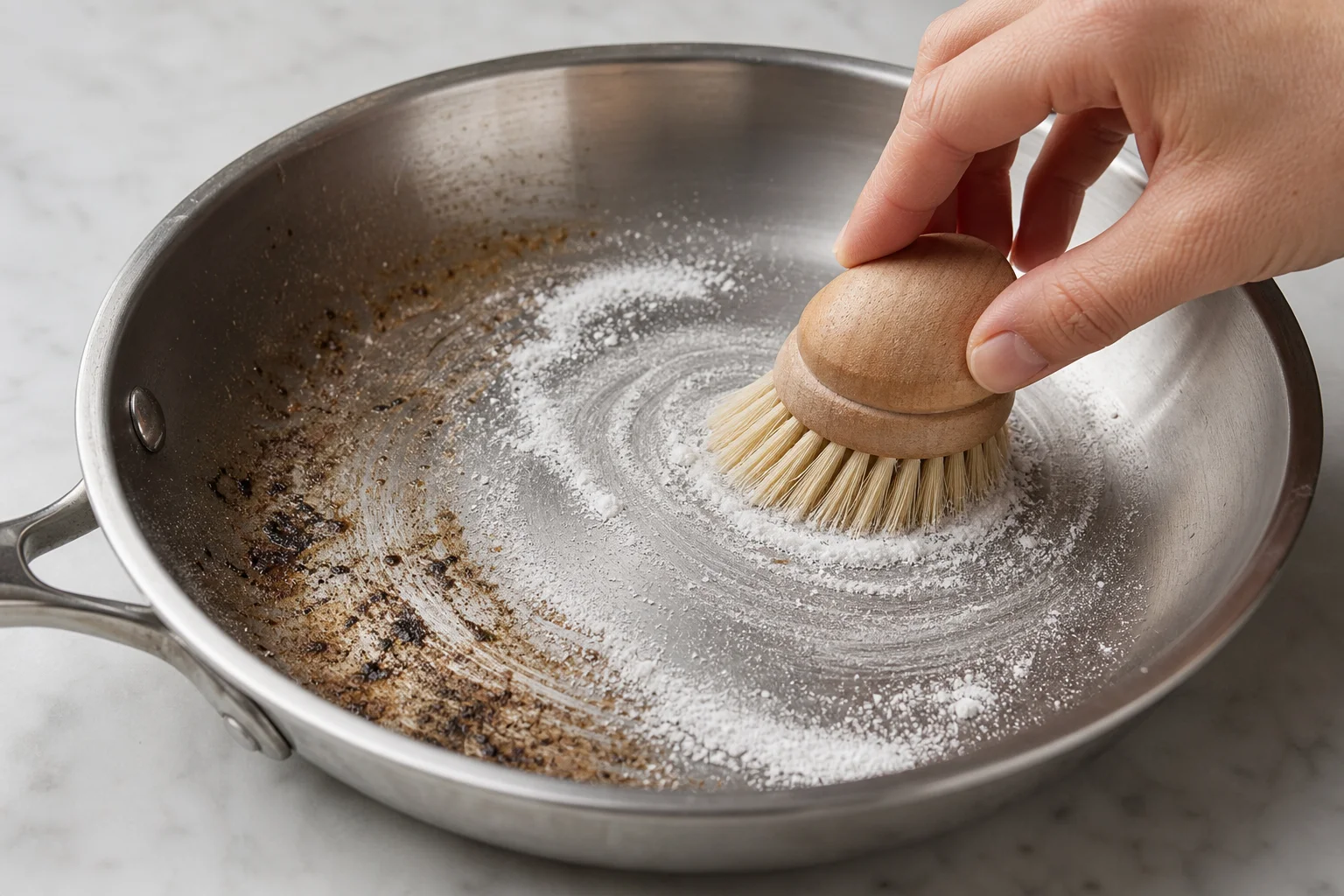
Stainless steel and titanium cookware lack coatings, so they can be cleaned aggressively without damage. Powdered abrasive cleaners remove burnt-on food, discoloration, and rainbow staining. Vinegar or lemon juice also removes rainbow discoloration caused by mineral deposits or heat oxidation.
For stubborn burnt food, add water to the hot pan and wipe immediately. For severely burnt residue, soak the pan and scrub with a powdered abrasive cleaner. Sealed-rim stainless steel cookware is truly dishwasher safe, though hand washing extends longevity.
When Non-Stick Actually Makes Sense
Non-stick cookware has one genuine advantage: reheating cold leftovers without oil. Because leftovers start at room temperature and need gentle reheating without added fat, a non-stick pan performs better than stainless steel for this specific task. For everything else—searing, sautéing, making sauces, or cooking proteins—stainless steel delivers superior results and longevity.
Conclusion
Fully clad stainless steel cookware with solid handles, flush rivets, and sealed rims represents the best overall investment for home cooks. The construction delivers even heat distribution, durability that spans decades, and surfaces that improve with use rather than degrade. While non-stick coatings offer convenience for specific tasks like reheating leftovers, their inevitable degradation makes them a poor long-term choice. By understanding how cookware is constructed and what details matter most, you can select pans that will serve you reliably for a lifetime of cooking.
Further reading
Related Reviews
Cookware
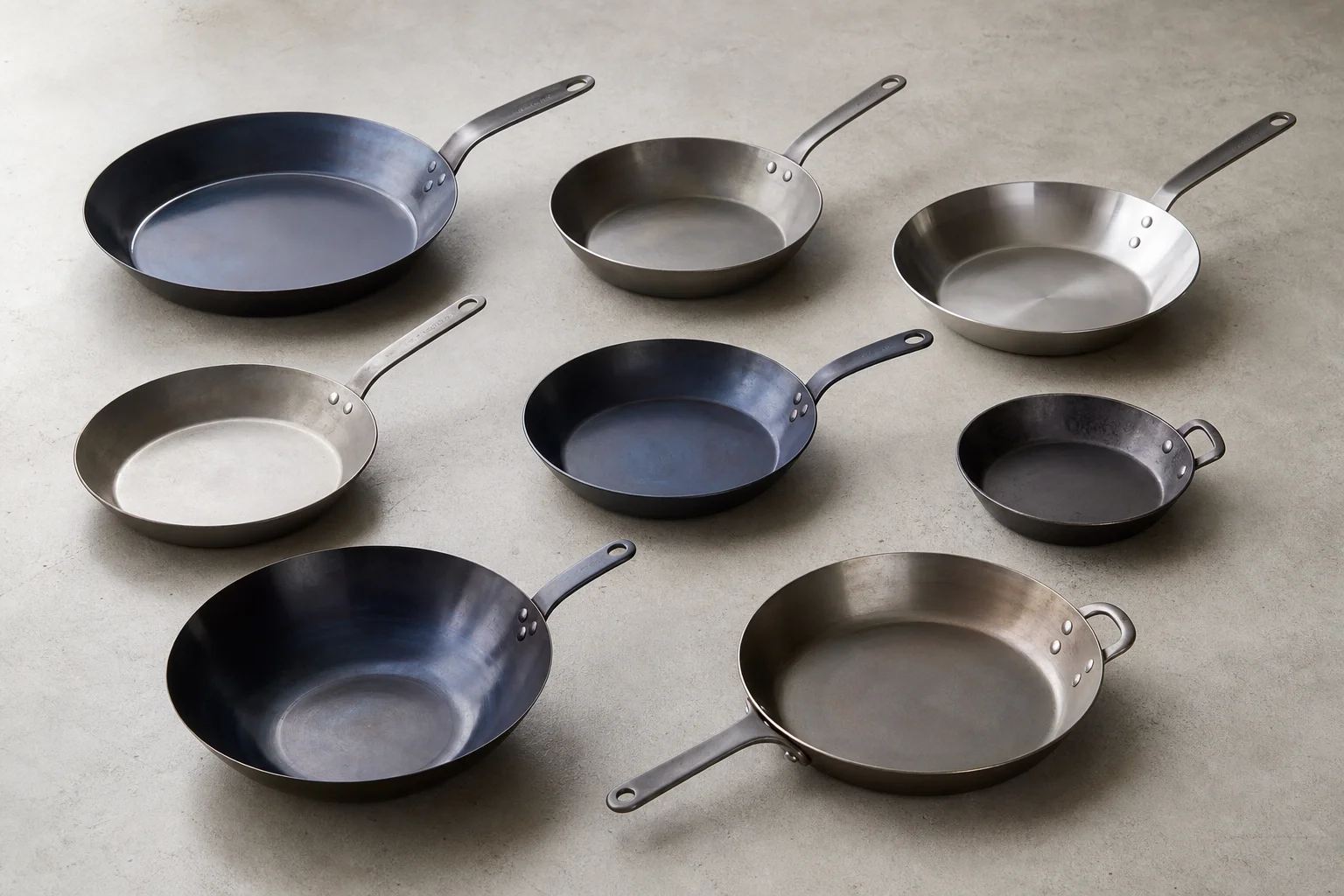
Best Carbon Steel Pans Tested: Which Brands Deliver Real Value
We tested eight popular carbon steel pans with controlled durability, heat, and cooking tests. Here's which ones perform best and which to avoid.
Cookware
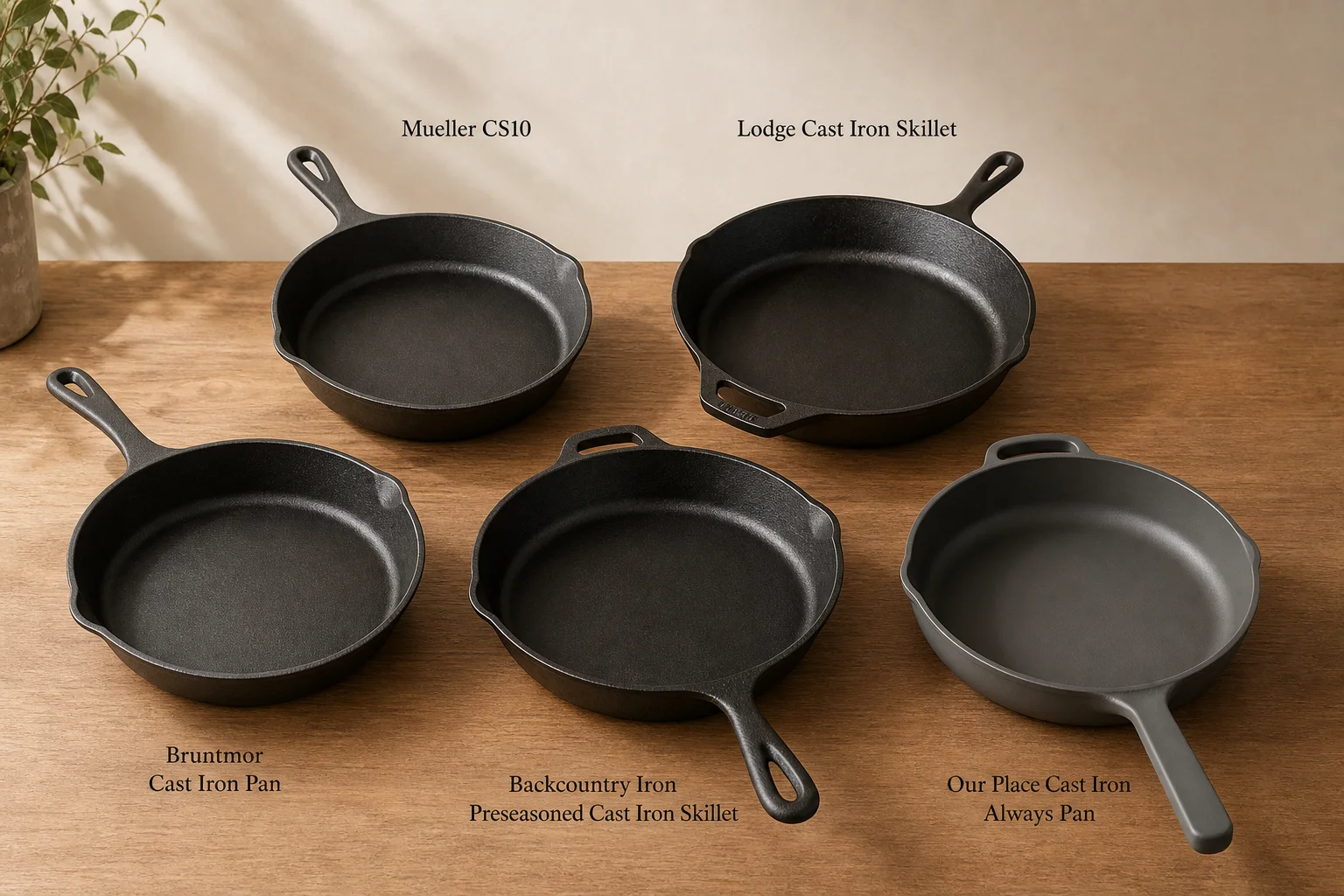
Best Cast Iron Pans 2026: Five Options from Budget to Premium
A practical breakdown of five cast iron skillets, from affordable Mueller to premium Our Place, with clear strengths and trade-offs for different cooking needs.
Cookware
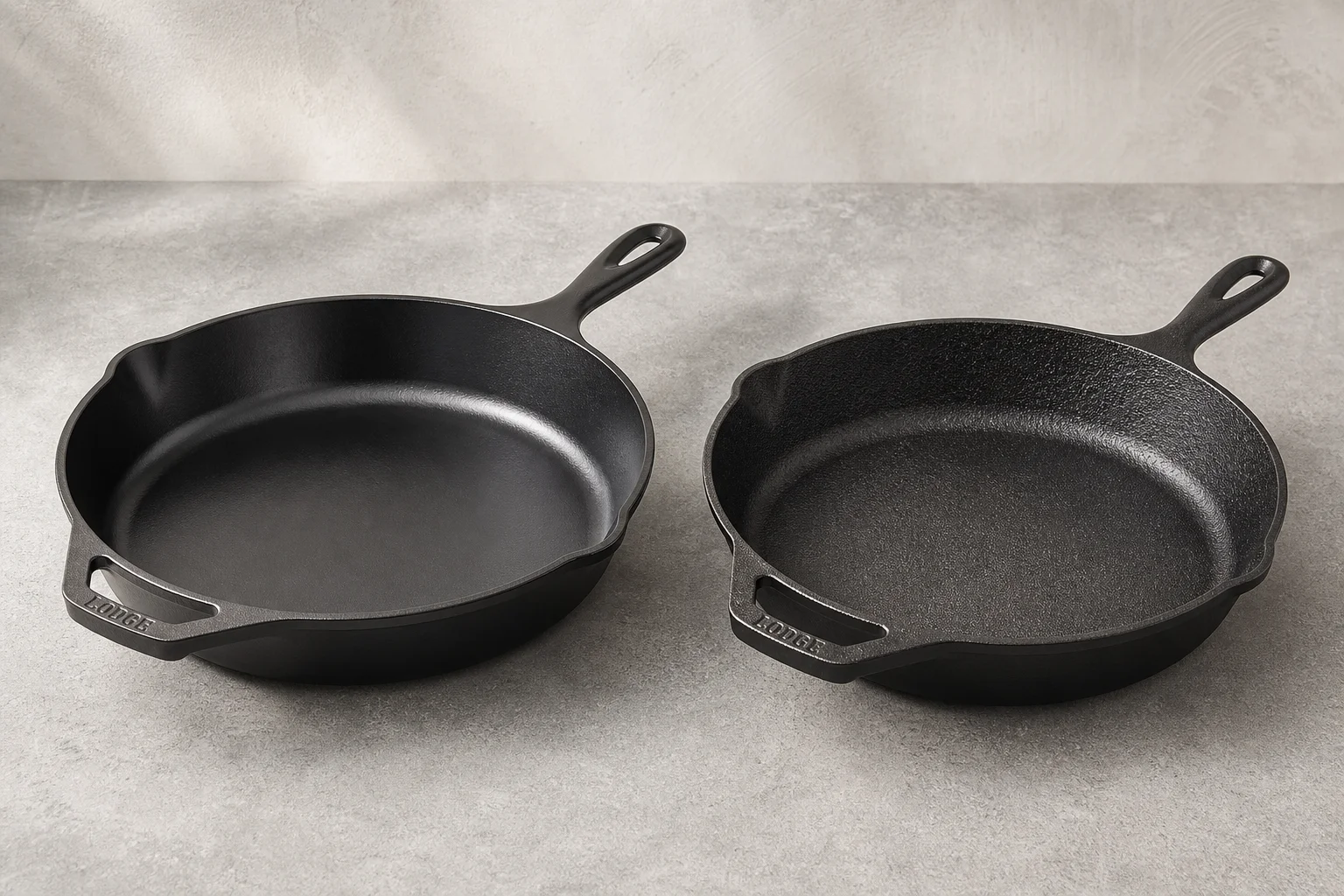
Best 12-Inch Cast Iron Skillets: Premium Craftsmanship vs. Reliable Budget Option
Two standout 12-inch cast iron skillets tested for heat retention, surface finish, and durability. One premium choice and one budget-friendly alternative that both deliver.