Indoor Cycling
Stages SB20 vs Zwift Hub: Which Indoor Smart Trainer Setup Is Worth It?
A complete smart bike and a wheel-off smart trainer compared on price, ride feel, noise, adjustability, and the practical realities of training indoors.
Introduction
Indoor training becomes far more appealing when the weather turns, and the hardware available today is better and considerably more affordable than it was only a few years ago. The question most riders actually face is simpler than it sounds: how much do you need to spend?
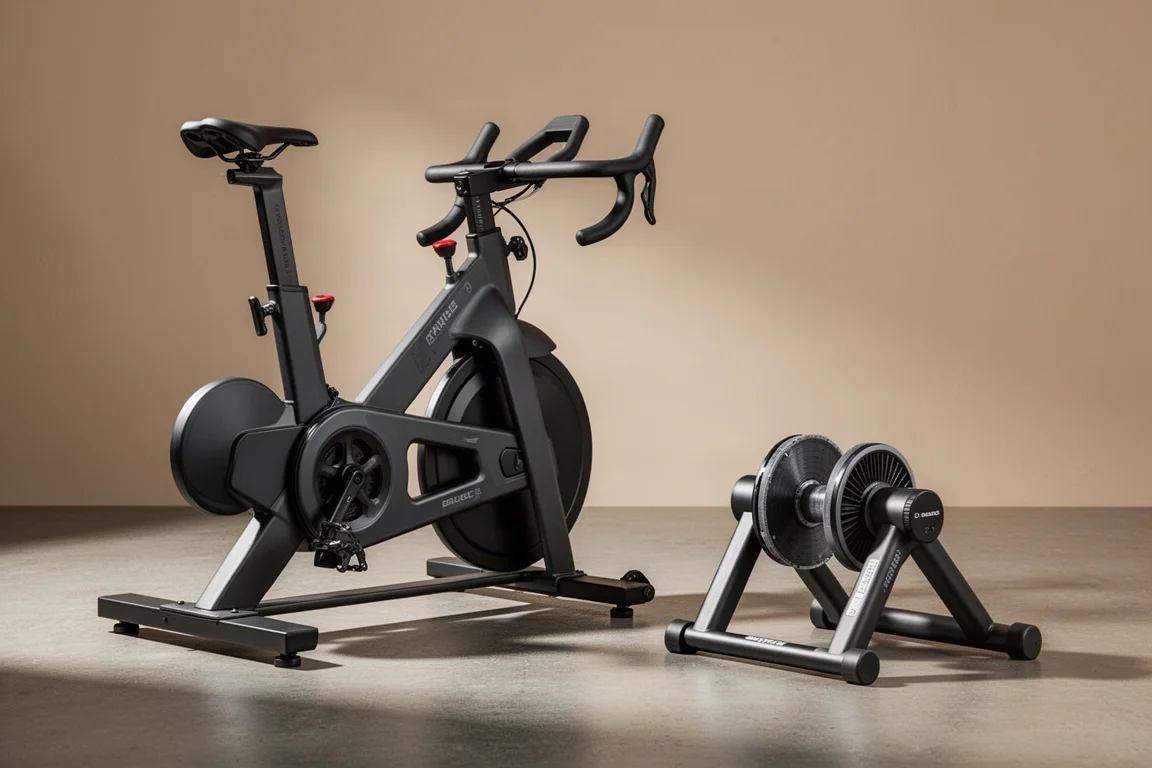
Two very different answers sit at opposite ends of the market. One is a complete smart bike that arrives as a finished indoor training machine. The other is a wheel-off smart trainer that turns an existing road bike into an indoor setup in minutes. This guide compares them on price, ride feel, noise, adjustability, and the practical realities of living with each one through a training season.
How These Two Indoor Training Setups Differ
The first option is a complete indoor bike. You add your own pedals, set the saddle height, connect to a training platform, and start riding. Nothing else is required, and your road bike stays exactly as it is.
The second option is a wheel-off smart trainer. You remove the rear wheel from your own bicycle, mount the frame on the trainer, choose the right axle system, and ride. It is a far cheaper route into indoor training, and the whole unit can be put away once the session is finished.
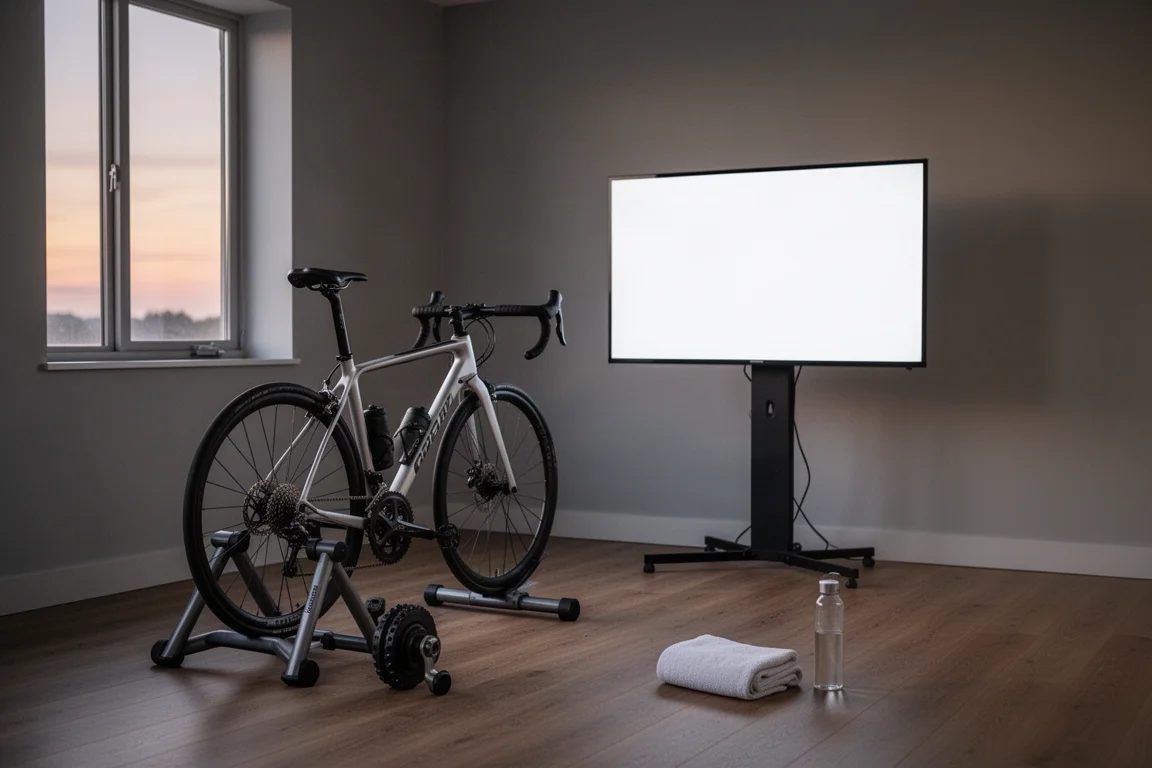
Those two approaches shape almost everything else that follows: how much space the setup demands, how much it costs, and how much wear your regular road bike accumulates over a winter of indoor miles.
Stages SB20: The Complete Smart Bike
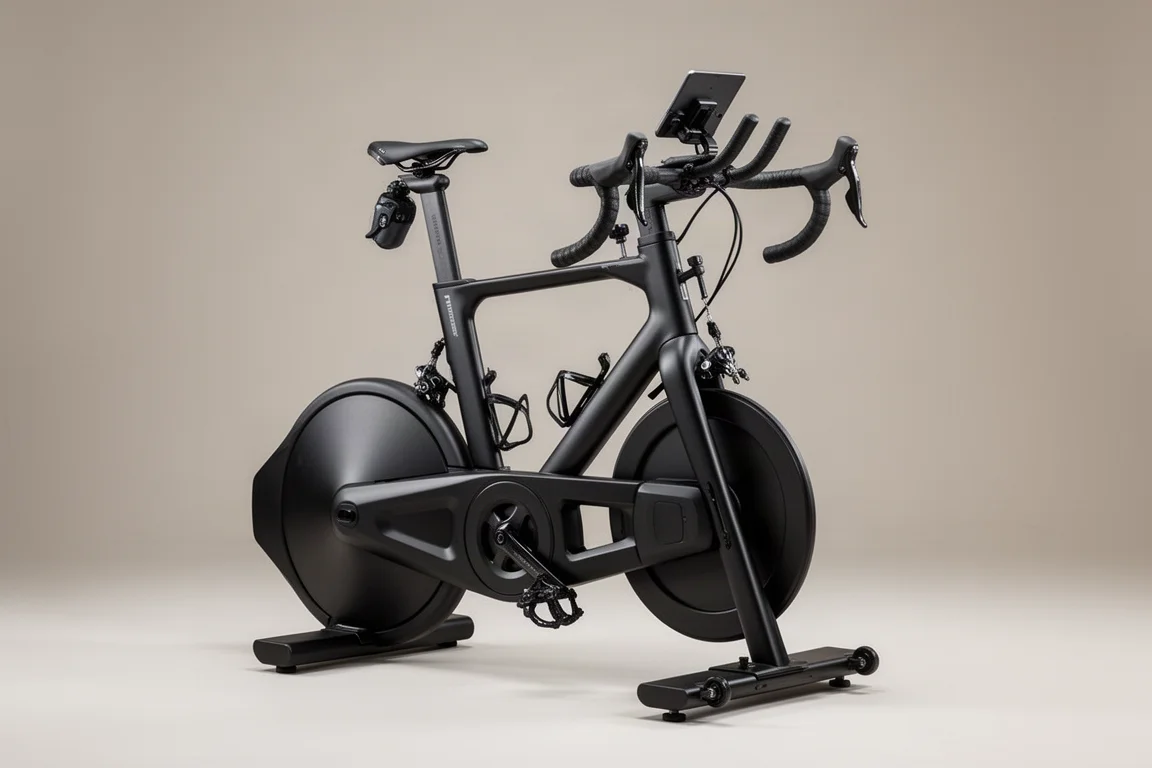
The Stages SB20 is a complete smart bike built around a large flywheel weighing 23 kg at the front. That mass supports a maximum power output of 2,200 W and a claimed accuracy of 1.5%. Rather than estimating power, it uses a dual-sided power meter of the same type found on the brand’s road bikes, so it measures power directly instead of calculating it.
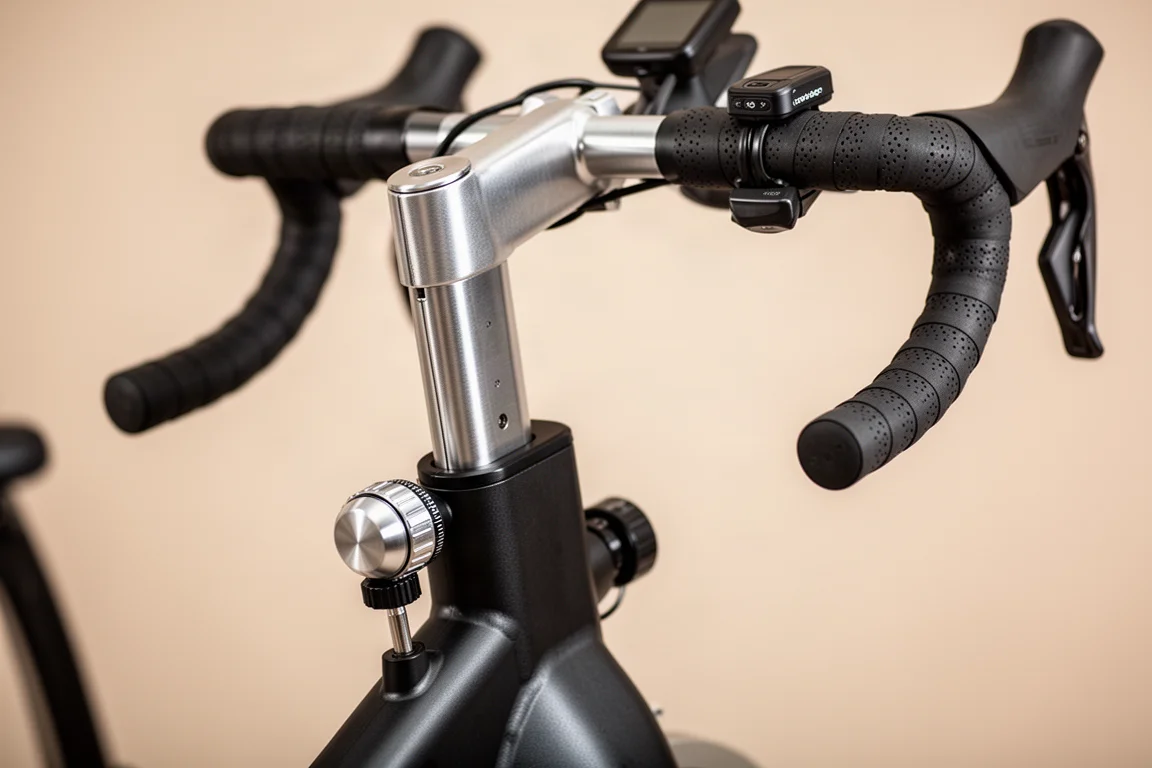
Adjustability is the headline feature. Simple dials change handlebar height, seat height, saddle setback, and handlebar position, and even the crank arm length can be set shorter or longer. Electronic shifting is built into the handlebars, alongside real brake levers and small hoods, and there are two bottle holders, a tablet holder, a smartphone holder, and two USB ports to keep devices charged while you ride.
The trade-off is weight and footprint. At roughly 70 kg the bike is exceptionally stable under hard efforts, but it is not something you move around casually. Two skateboard wheels at the front help with transport, which in practice is more about getting it into the room where it will live permanently.
Zwift Hub: The Wheel-Off Smart Trainer
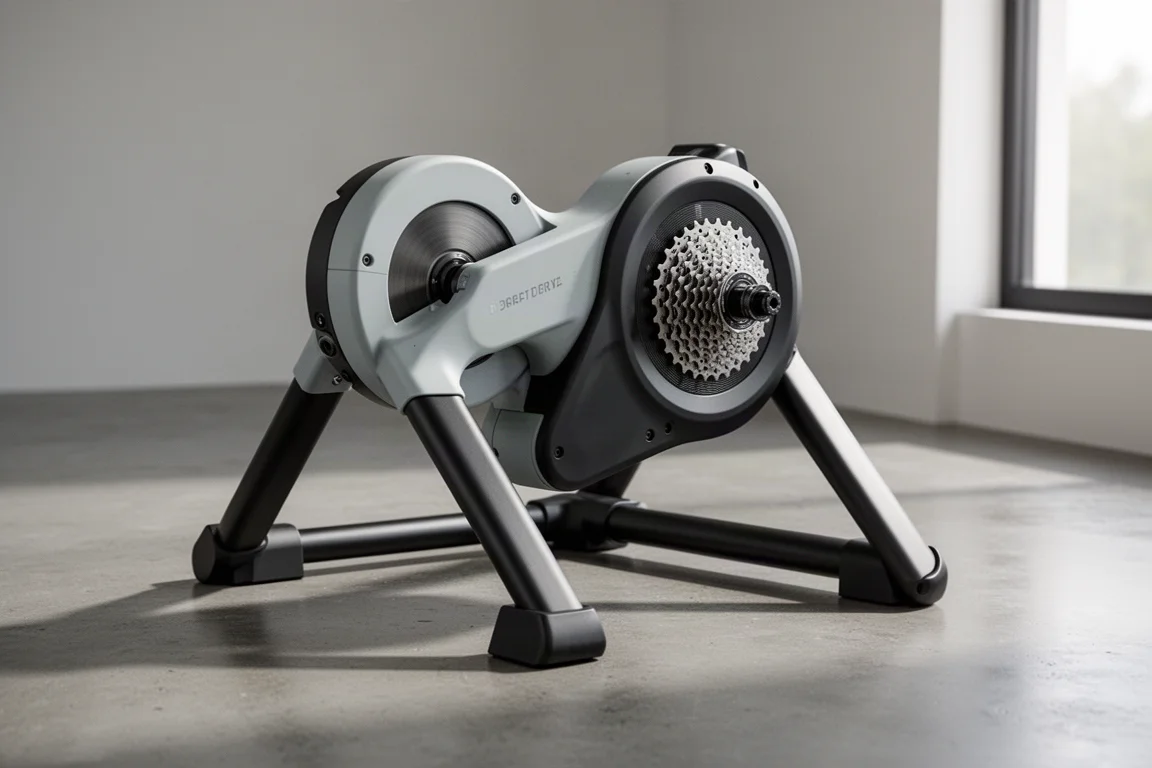
The Zwift Hub is a compact wheel-off smart trainer with a 4.7 kg flywheel, a maximum power output of 1,800 W, and a claimed accuracy of 2.5%. As the brand’s first smart trainer, it uses hardware developed in partnership with Jet Black, which gives it a proven and reliable foundation.
Setup is genuinely straightforward. You choose the cassette you need when buying, with several speed options available, including a 12-speed Shimano cassette. Assembly instructions are colour coded, and you select the correct axle system for your bike, either quick release or through axle. Remove the rear wheel, mount the frame, connect to your training software, and ride.
Ride Feel, Noise, and Responsiveness
The Stages SB20 is very quiet in use, close to silent apart from a little wear noise from the cranks, which makes it an easy neighbour in a flat or shared household. The large flywheel makes pedalling exceptionally smooth and delivers a realistic road feel. The one caveat is a slight sense of detachment, because there is no drivetrain feedback linking the pedals to what is happening on screen. The electronic shifters work well and can be customised through the app, although they are not especially tactile.
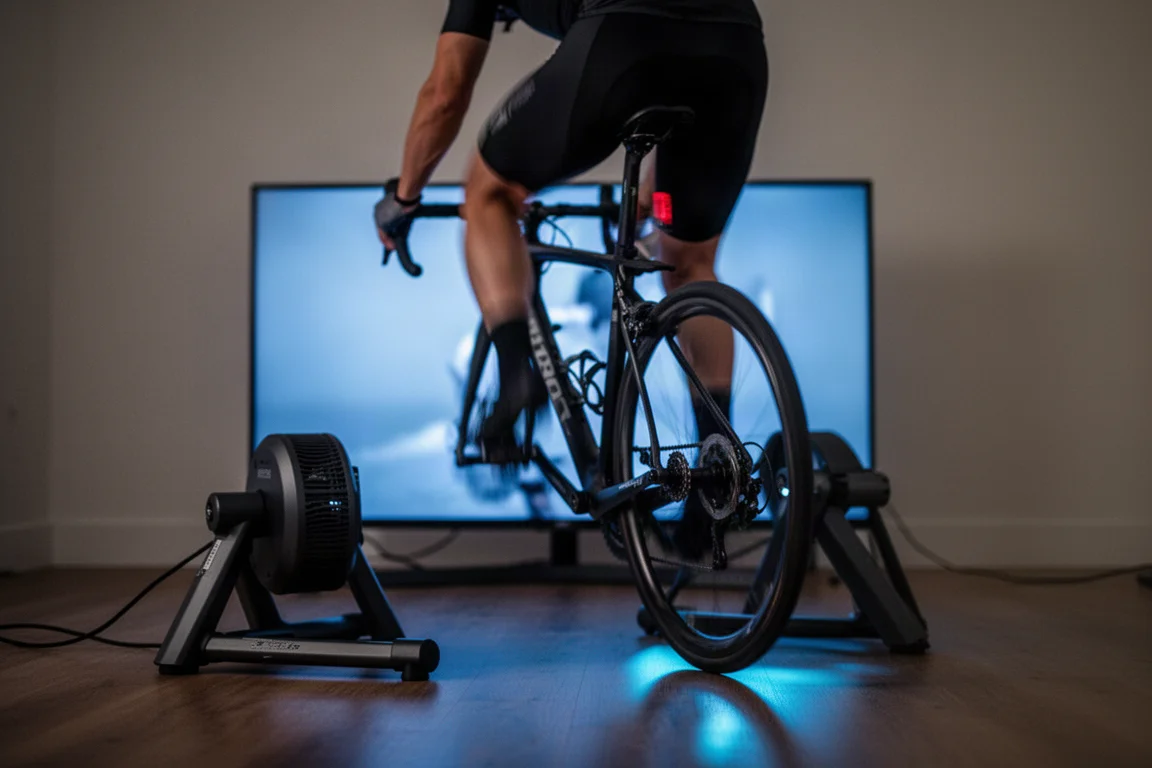
The Zwift Hub is also a quiet trainer, but you will hear the drivetrain of your own bicycle, and how much depends on how well maintained it is. Pedalling feel is smooth despite the smaller flywheel, and the platform sits planted on the floor. It is slightly less stable than the complete bike when sprinting out of the saddle or powering up a climb, but it responds quickly when the terrain changes, ramping power up without noticeable delay. Overall it ranks among the quieter smart trainers on the market.
Wear, Space, and Everyday Practicality
One of the clearest differences has nothing to do with performance. A wheel-off trainer routes every indoor mile through your road bike’s chain and drivetrain, so those components wear faster the more you ride inside. A complete smart bike takes that wear entirely out of the equation, which matters a great deal if your road bike is something you care about.
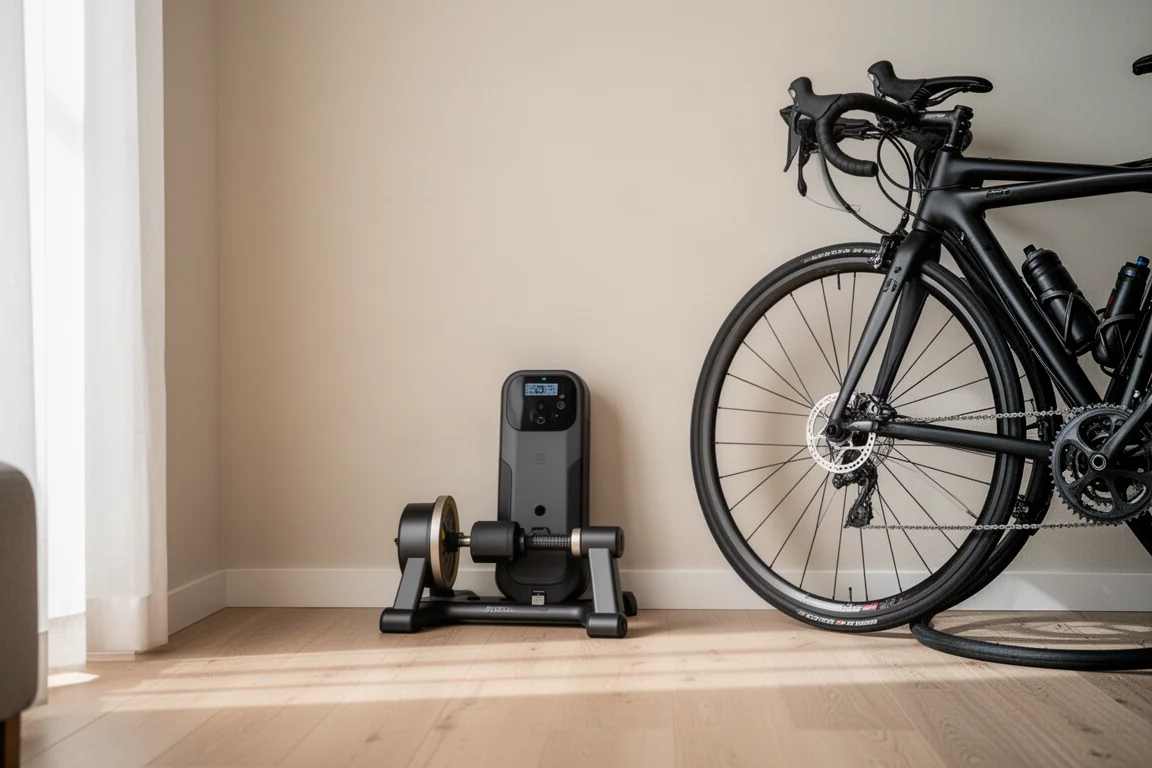
Space matters just as much. The complete bike needs a permanent home in a garage, shed, or living room and cannot be tucked away easily between sessions. The Zwift Hub is compact and simple to store when you are not riding. It does not fold and it has no carry handle, and while two bolts at the front allow it to be taken apart, those small conveniences are a missed opportunity rather than a deal-breaker.
Which Setup Is Right for You?
The honest answer is that it depends on how much indoor training you genuinely plan to do. If you are committed to a busy schedule of indoor sessions and online racing, want a system that will not compromise your training in any way, and would rather not put wear on your road bike, the Stages SB20 is the ultimate setup.
Its extensive adjustability also means several people in one household can change the fit in moments, which is a real advantage for a bike that lives in a shared space.
If you only want to dabble in online training, perhaps once a week or less, and you already own a good road bike that you intend to keep riding, the Zwift Hub is the easier and far more affordable route.
Cost is the deciding factor for most riders. High-end smart trainers sell for well over £1,000, and unless you need the best of the best and ride indoors constantly, there is little practical reason to spend beyond this level.
View more details for Stages SB20
A complete bike rewards frequent, serious indoor riders who have the space for a permanent setup and value a fit that changes instantly.
View more details for Zwift Hub
For riders who train indoors occasionally and want to keep their road bike at the centre of their riding, the wheel-off trainer remains the practical answer. It offers a strong mix of price, ride quality, and quiet operation, and simply does what a smart trainer needs to do.
Conclusion
Both setups are excellent at what they set out to do, and the right choice comes down to commitment rather than capability. The Stages SB20 is the ultimate indoor machine for riders who train seriously, want direct power measurement, and have room to keep it set up. The Zwift Hub delivers the essentials for a fraction of the cost, stores away easily, and suits riders who train indoors occasionally and want to keep using their own bike. Decide how many hours you will realistically spend inside, then let that answer settle the budget question.
Further reading
Related Reviews
Indoor Cycling
Best Budget Smart Indoor Trainer Setups: Six Options Worth Considering
Smart indoor trainers keep getting better while prices come down. Six setups and components worth considering, from the cheapest Zwift-ready option upward.
Indoor Cycling
Best Budget Smart Indoor Trainers for Immersive Cycling in 2026
A practical guide to affordable smart indoor trainer setups, including budget and mid-range options with virtual shifting.
Indoor Cycling
Best Indoor Cycling Apps and Smart Trainers: A Winter Buying Guide
A practical look at the indoor training platforms and smart trainers that matter this season, from a new challenger to Zwift to the entry-level trainer that stands out on value.