Mountain Bike Drivetrain
SRAM XX T-Type Eagle Transmission Review: Hangerless Shifting, Tested
A long-term look at SRAM's hangerless 12-speed mountain bike drivetrain, covering shifting under load, durability, setup, and the compatibility rules to check first.
Introduction
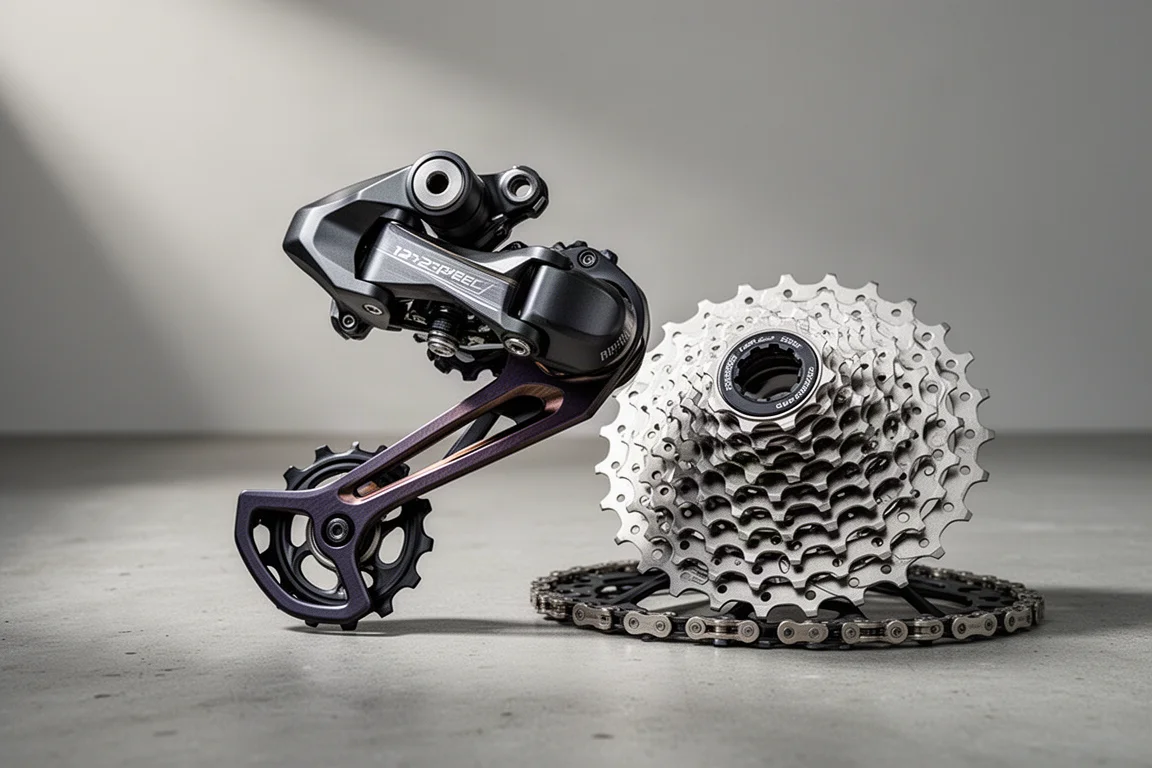
SRAM’s T-Type Eagle Transmission takes a different approach to the rear derailleur. Instead of bolting to a replaceable derailleur hanger, the derailleur clamps directly onto the frame at the rear axle using SRAM’s hangerless interface, a design the company calls Full Mount. The limit screw and the B-tension adjustment screw are gone as well. The result is a 12-speed mountain bike drivetrain that changes how a transmission is installed, adjusted, and ridden.
This review focuses on the XX group, the middle tier of three T-Type levels, after six months of riding that covered more than 1,000 kilometres and 35,000 metres of climbing and descending in cold, wet, and occasionally dusty conditions.
Who This Drivetrain Is For
T-Type is a complete system, and every part has been designed to work with the others. That means the new derailleur, cassette, chain, cranks, and chainring are not compatible with current-generation Eagle drivetrain parts. The exceptions are the current-generation AXS controller and battery, plus the new AXS Pod controller, which works with both generations.
The other hard requirement is the frame. T-Type needs a bike built around SRAM’s Universal Derailleur Hanger interface, so riders on frames without it cannot fit the system at all. For anyone who does have a compatible frame, the upgrade path runs through the whole drivetrain rather than a single component.

Riders who value simple setup, strong shifting under power, and a derailleur that can take a hit will get the most from it. Riders who want to keep their existing Eagle parts, or who ride a frame without the Universal Derailleur Hanger standard, are better served staying where they are.
Main Strengths
SRAM’s claims for T-Type are broad: better shifting under load, easier setup, and greater durability. Extended riding on the XX group supports most of them.
Shifting Performance Under Load
Shifts are quick, crisp, and remarkably consistent under power. The relationship between a button press on the Pod controller and the derailleur’s movement is immediate, and not a single missed or failed shift occurred during the test period. Instead of easing off the pedals, shifts land smoother and quieter when the rider keeps driving. That takes a little relearning, but it becomes natural quickly and lets riders hold pace on climbs and sprints.
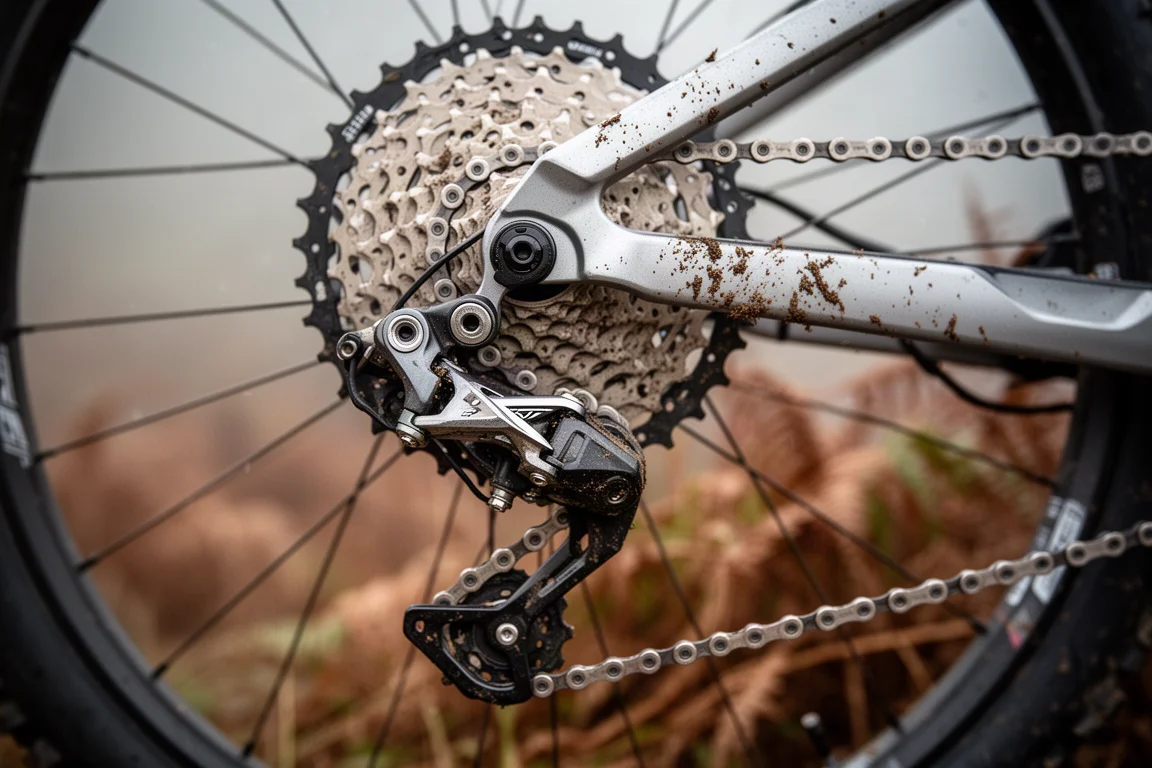
One limitation is worth knowing. Dumping most of the cassette in a single action is not possible, because the cassette shift ramps and the derailleur mapping only select the next gear when the system is ready. On the trail this is undetectable, and successive quick shifts still feel immediate rather than sluggish. In testing, the on-power and off-power shifting benchmark that Shimano’s 12-speed drivetrains previously held moved to T-Type.
Durability and Frame Mounting
The Full Mount design replaces the hanger with machined aluminium struts that clamp the frame from both sides. Removing the hanger raised an obvious question about crash protection, and the answer in practice is reassuring. After being bashed and dragged through rough terrain, the test derailleur kept its day-one performance. Cosmetic marks appeared, but the pulleys stayed free of slop and play and the teeth showed no significant wear.
SRAM also built in several layers of protection. An overload clutch guards the motor and gearbox during hard impacts, and a user-replaceable skid plate covers the widest part of the derailleur. The parallelogram’s lower and upper outer links can be replaced, and the cage unscrews from the P-knuckle without tools. Fail safes are designed to stop the chain dropping into the back wheel or jamming against the frame. The derailleur also sits 10 millimetres further inboard than previous Eagle AXS versions to reduce the chance of impact damage. The clutch itself is not adjustable, but it is now integrated into the cage so it can be removed or replaced together with it.
XX SL and XX groups add the Magic Wheel, a lower jockey wheel whose toothed outer portion rotates independently of its centre. If something blocks the pulley, the outer section keeps turning, which reduces the chance of a chain jam. The XO group uses a regular lower pulley instead.
Controller and Cassette Refinements
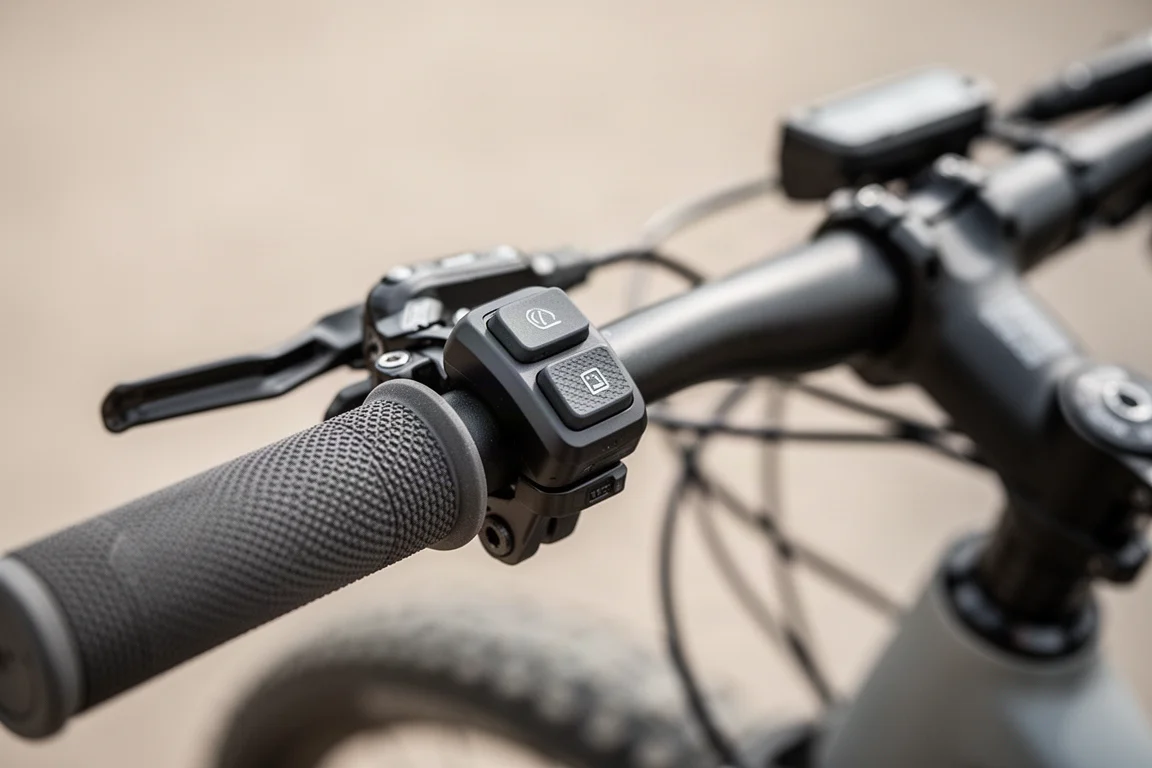
The AXS Pod controller replaces the rocker paddle of the previous generation with two stacked buttons. They are large and easy to find, with a higher click threshold that cuts down on accidental shifts over rough ground. Buttons can be reassigned in the AXS app, including control of a Reverb AXS dropper post or Flight Attendant suspension. The Ultimate version uses interchangeable concave or convex buttons. Pods are modular, so a broken clamp or electronic section can be replaced, and they mount either through the figure-of-eight Infinity clamp or the Bridge clamp, which replaces the Matchmaker X mount and slides side to side rather than sitting in two fixed positions.
Cassette ratios have been tightened where it matters most. The second and third largest sprockets grow by two teeth to 38 and 40, closing the gap to the biggest cog that made older Eagle cassettes awkward on climbs. The cassette uses SRAM’s alternating tooth thickness X-SYNC pattern with shift lanes that either permit or block the chain from moving to the next gear, and it is built around a 55 millimetre chainline, which should help wear life by reducing the angle between cassette and chainring. In testing, the cassette showed no scoring or damage from shifting, and the flat top chain measured no wear when compared with a new one.
Cranks, Chainrings and Power Meters
The cranks keep SRAM’s DUB bottom bracket standard but switch from a three-bolt direct mount chainring to the eight-bolt system used on the road range. The X-SYNC tooth profile is updated to work with the new flat top chain. XX and XO chainrings accept a removable two-position bash guard, and in testing the ring and guard shrugged off hard high-force stops on rocks and fallen trunks without damage or deformation. Crank arms took rock strikes without complaint, though the protective tape showed some wear on riders who tend to rub their cranks with their feet.
Every crank set is power meter compatible. XX SL uses a chainring-based power meter, while XX and XO use a Quarq power meter housed inside the crank axle spindle.
Things to Consider Before Buying
Price is the first thing to weigh. The XO group is the more affordable entry point, XX steps up, and XX SL sits at the top of the range. These are premium figures, and because T-Type is not backwards compatible with existing Eagle parts, most riders will be buying an entire drivetrain rather than a single component.
Frame compatibility is the second consideration. Without a Universal Derailleur Hanger interface the system will not fit, which may mean a new bike rather than a new groupset.
A few smaller points are worth noting. The clutch cannot be adjusted, though it can be replaced as part of the cage. The system will not let a rider dump most of the cassette at once. Crank protective tape can wear with heavy foot rub, although that is more about appearance than function.
Buying Advice
Choose T-Type if you have a compatible frame and want shifting that holds up under power, setup that skips limit and B-tension screws, and a derailleur built to survive contact with rocks. The XX group sits in the middle of the range and delivered on SRAM’s promises over a long, hard test period.

If budget is the deciding factor, XO offers the same core architecture without the Magic Wheel lower pulley. If lowest weight matters most, XX SL is the lightest and highest-performing option, and it brings a chainring-based power meter. Riders who want power data without moving to the top tier can look at the Quarq spindle-based meter on XX and XO. Whichever level you pick, confirm the frame uses the Universal Derailleur Hanger standard first, since that single detail decides whether the upgrade is possible at all.
Conclusion
T-Type does not rewrite the rulebook, since a derailleur, cassette, and chain still do the work. What SRAM has done is refine nearly every detail of how those parts interact, from the hangerless mount to the cassette ramps and the Pod controller. Shifting is class-leading whether or not the rider is on the power, and durability held up through a punishing winter of riding. The cost and the compatibility requirements are real barriers, but for riders who can meet them, the XX group is a genuine step forward.
Product link
View more details for SRAM XX T-Type Eagle Transmission
This product is mentioned in the review. Check the specifications, options, and compatibility before buying.
View more details for SRAM XX T-Type Eagle TransmissionFurther reading
Related Reviews
Cycling Components
7 Bike Fit Products Fitters Avoid: What to Check Before You Buy
Seven bike components that regularly cause knee, foot and saddle problems, with the specific concerns behind each one and what to look for instead.
Cycling Components
AliExpress Bike Parts: 8 Brands Worth Knowing Before You Order
A practical guide to buying bike parts from AliExpress, covering eight established brands, realistic shipping and tax expectations, customer service, and how to avoid counterfeit components.
Cycling Components
AliExpress Race Bike Build Review: What 20,000 Miles Revealed
A long-term look at a budget race bike build, covering an Elves Falath Pro frame, a Sensah Empire Pro groupset, Elite Wheels carbon rims, and Continental GP5000 tires.