Road Bike Groupsets
SRAM Rival AXS vs Shimano 105 Di2: Lighter, Cheaper and Closer Than Ever
SRAM's rebuilt Rival AXS is now lighter and cheaper than Shimano 105 Di2. Here is how the two electronic groupsets compare on weight, shifting, braking and running costs.
Introduction
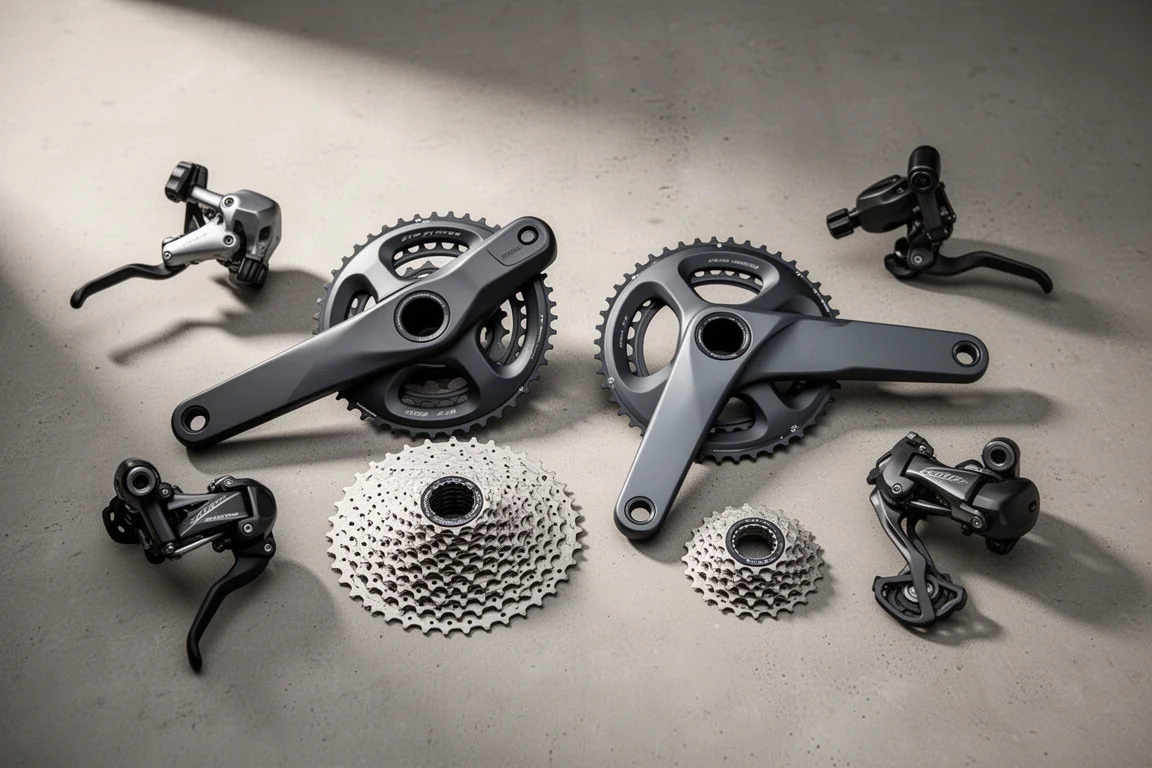
SRAM’s Rival AXS has been rebuilt from the ground up, and the changes go well beyond a fresh coat of paint. The previous generation was the odd one out at its price point: noticeably heavier than Shimano 105 Di2 and more expensive to buy, especially on complete bikes. That combination handed the advantage to Shimano for years.
The new Rival AXS flips that around. It arrives lighter than 105 Di2 on a like-for-like basis and cheaper in the same specification. For riders shopping in the upper mid-range of electronic groupsets, that is a meaningful shift, and it makes this comparison far more interesting than it used to be.
What Has Changed in the New SRAM Rival AXS
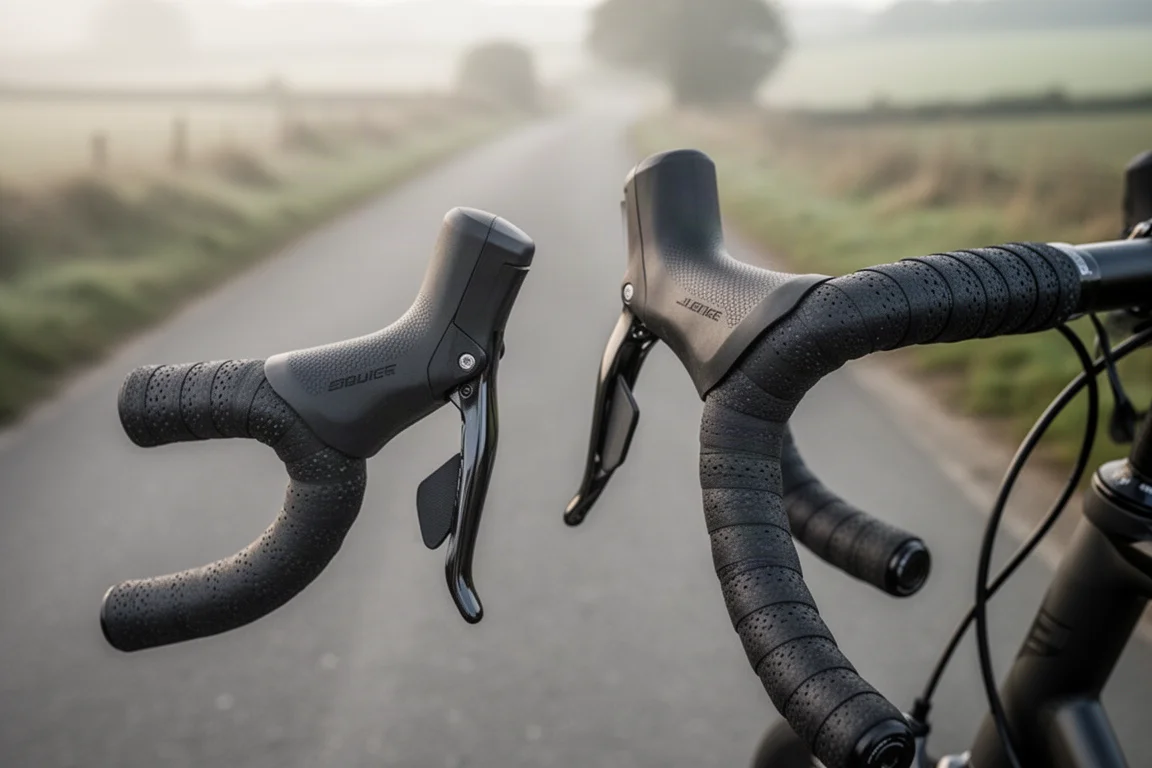
Almost everything. The most visible change is the shifter. The old tall hood and its vertical internal piston have gone, replaced by a much lower-profile design carried over from Force AXS, which in turn inherited it from Red AXS. Reorienting the piston horizontally let SRAM package the internals lower and reshape the hood around the hand.
The shift lever has been reprofiled too, with indents at the top that make one-finger braking easier both on top of the hoods and down in the drops. A slight outboard sweep brings the lever closer to the fingers. The levers themselves are now carbon, which is unusual at this tier.
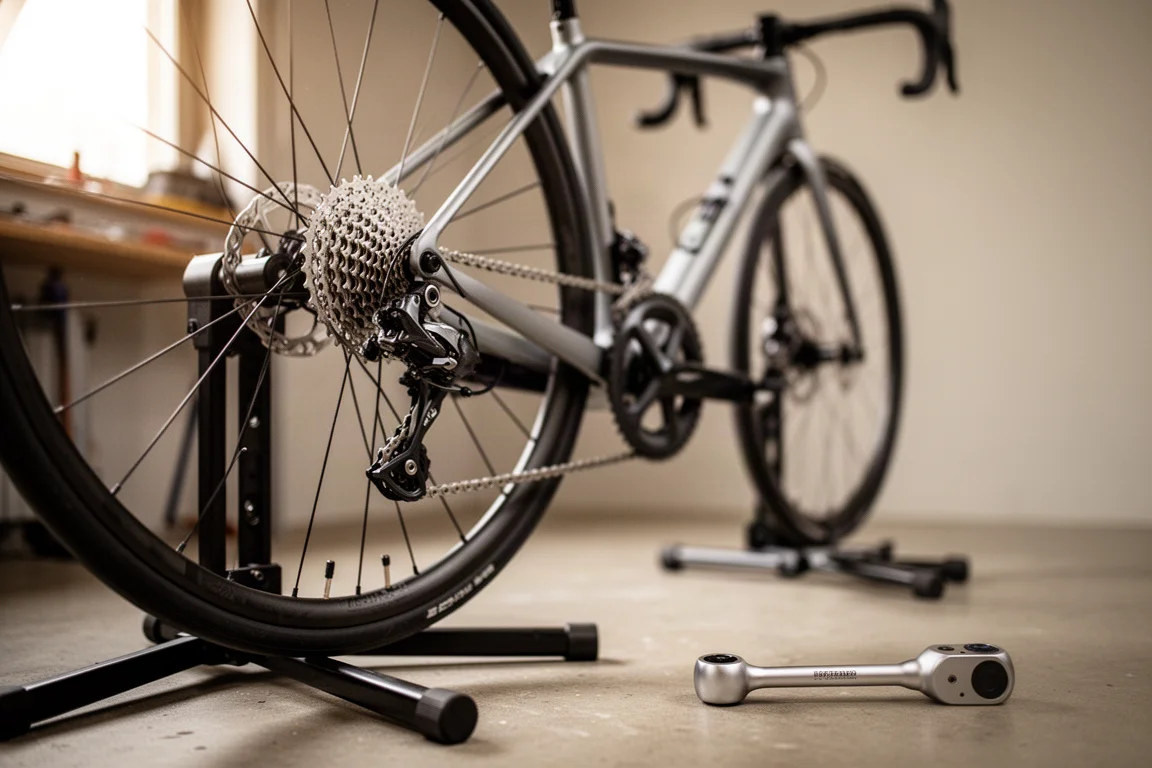
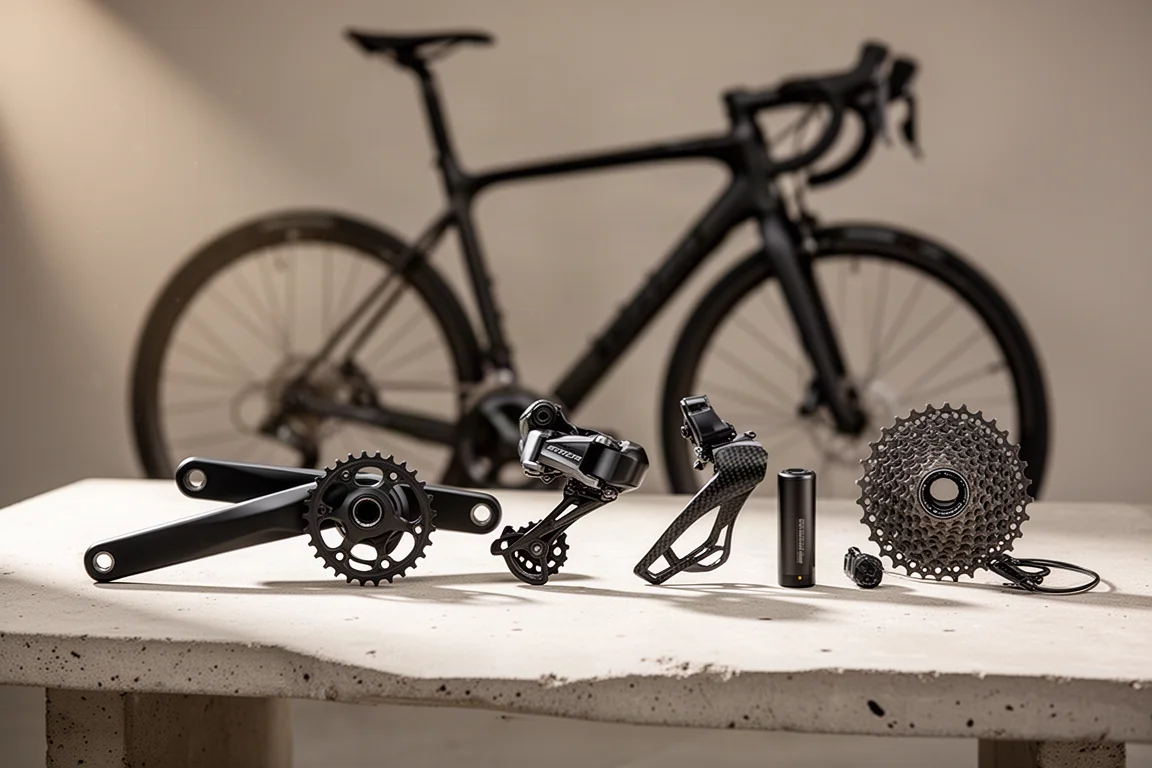
The chainset is the other big visual change. The old matte aluminium crank has been replaced with a machined, angular design with cutouts influenced by SRAM’s aluminium XO mountain bike crank. The chainring is a two-piece direct-mount unit that is stiffer and lighter than before, though it also means replacing both rings as a single part when they wear.
Brakes have been slimmed down as well, with a new two-piece caliper influenced by the Force and Red designs. The rear derailleur has seen the fewest changes: it keeps its spring clutch and gains a restyled cage, but unlike Force and Red it does not get an oversized lower pulley. The front derailleur is where the real engineering sits, with a slimmer body, a longer cage and a built-in auto trim function.
SRAM Rival AXS: Road Performance and Real-World Shifting
On the road, the new front derailleur does most of the talking. Auto trim keeps the cage clear of the chain across a wide range of gears, so cross-chaining no longer produces the rubbing that used to give the groupset away. Over a test period of 299 miles that included 2,469 rear shifts and 109 front shifts, there were no missed shifts, no dropped chains and no chain noise.
Braking has improved just as clearly. The indent at the top of the lever gives a solid purchase point for one-finger braking from the hoods, and the broad lever blade offers plenty of contact when braking from the drops. The result is more control at speed and less chance of over-braking into a corner.
Shimano 105 Di2: The Benchmark It Now Beats
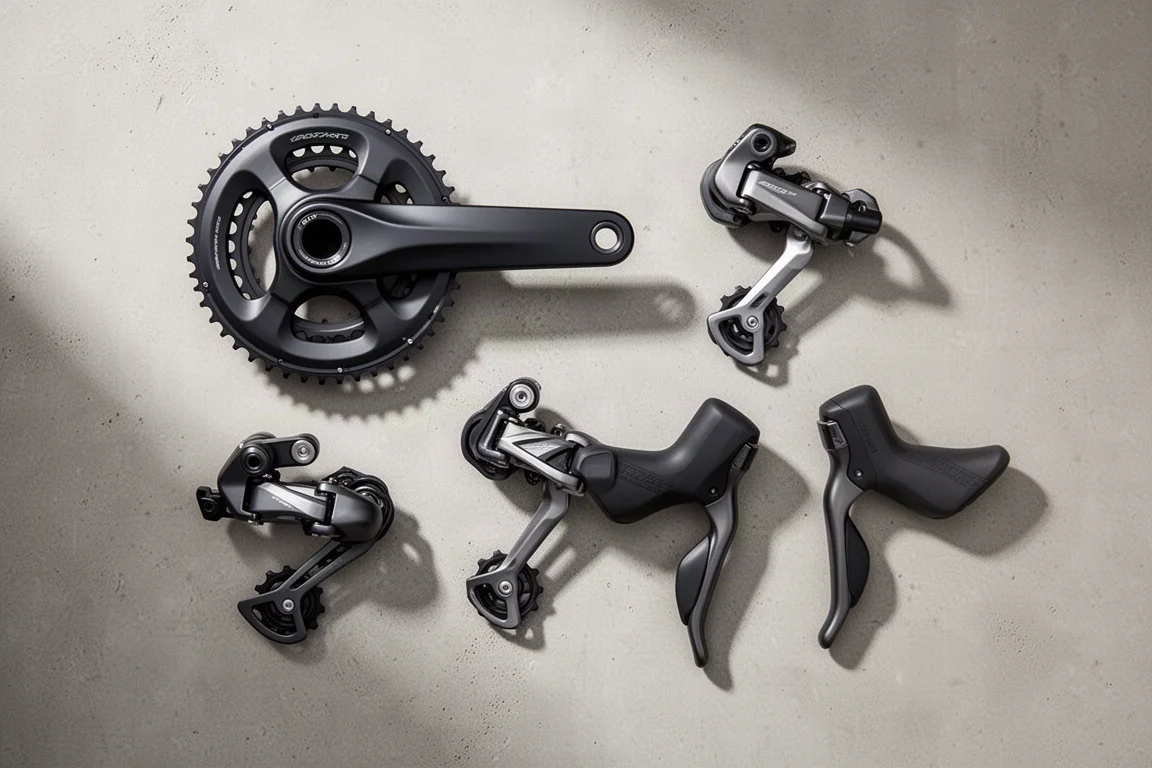
Shimano 105 Di2 has been the reference point at this level, and for good reason. It shifted cleanly, it weighed less than the old Rival, and it cost less on complete bikes. Its front shift is triggered by a single button press, which many riders find more intuitive than SRAM’s simultaneous two-button input.
It is not without its own compromises. Like the new Rival AXS, it has no hidden buttons in the hoods, so riders who like assigning extra functions to the lever body will not find them here. Where it does hold an advantage is long-term running cost: replacement chainrings are listed at $79.99 for the large ring and $19.99 for the small ring, against £120 / $140 for the SRAM two-piece chainring.
The gap that used to separate the two has largely closed. Weight and price, once clearly in Shimano’s favour, now sit on SRAM’s side of the table.
Weight and Ergonomics Compared
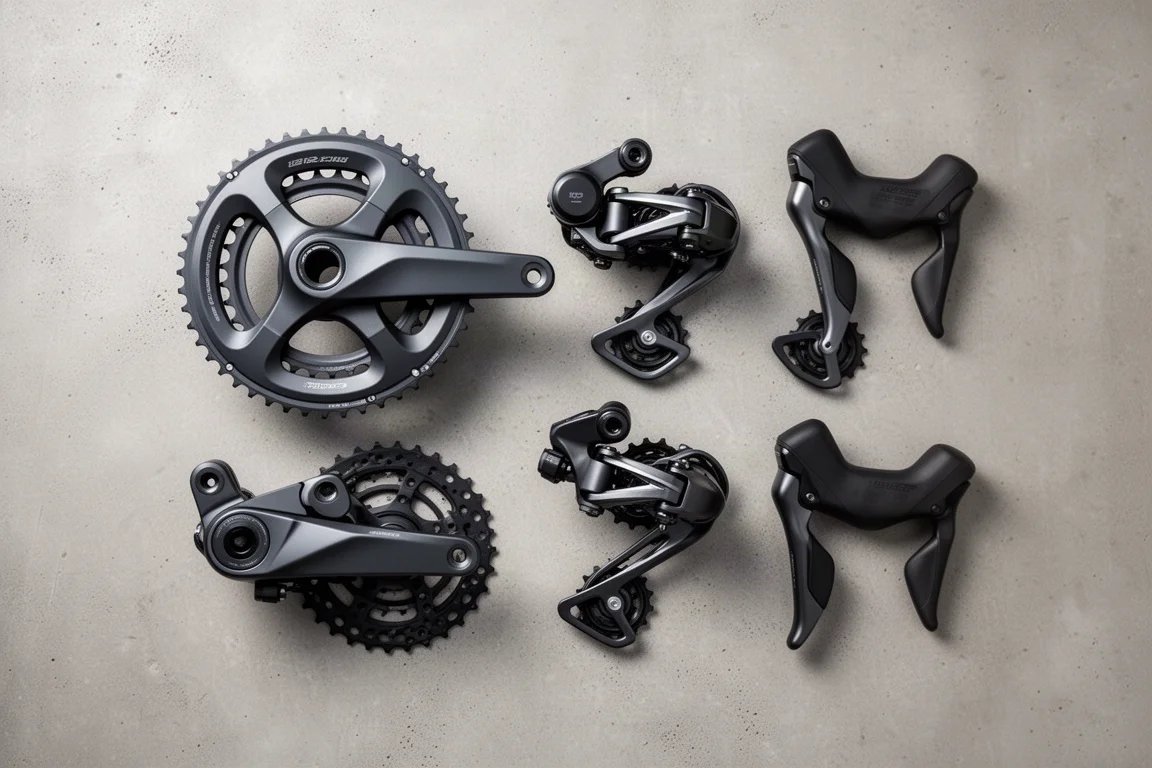
The old Rival was significantly heavier than 105 Di2, which is exactly why Shimano dominated this tier. The new groupset reverses that, coming in 32 g lighter than 105 Di2 on a like-for-like basis. A pair of the new levers including the brakes accounts for a 72 g saving over the previous version on its own.
Ergonomics matter as much as grams. The lower hood profile and reprofiled lever put the brake within easier reach, and the carbon lever construction keeps the whole assembly light without feeling fragile.
Shifting, Braking and Chain Management
SRAM’s front shift logic is unchanged: both buttons are pressed at the same time. That works, but it asks for a fraction more thought than Shimano’s single-button press, and it can feel a touch slower as a result. It is a small thing, and one that becomes second nature quickly.
What compensates is the front derailleur’s behaviour once the shift is made. The longer cage and auto trim keep the chain running quietly, and the system tolerates cross-chaining that would previously have produced noise. The rear derailleur keeps its spring clutch and a slightly reshaped cage, and it continues to do its job without drama.
Price and Value Compared
Price is where the new Rival AXS makes its strongest case. In the same specification it undercuts Shimano 105 Di2 by roughly $154 / £126. Add the optional power meter and the SRAM groupset is still around £9 / $39 cheaper than a 105 Di2 build without one.
The counter-argument is consumables. A replacement SRAM chainring set is listed at £120 / $140, while Shimano’s rings come in at $79.99 and $19.99. Over several seasons that difference narrows the initial saving, though it does not erase it.
Complete-bike pricing will be the real test, and that picture is still forming. One early example, a Boardman 9.4 SLR Limited Edition with carbon wheels, a full carbon cockpit and full SRAM Rival AXS, is priced at £3,100.
Who Should Choose Which Groupset
Riders who want electronic shifting with the lightest possible build at this price should look closely at the new SRAM Rival AXS. It also suits anyone who values a quiet, rub-free front end, since the auto trim is the standout functional improvement.
Shimano 105 Di2 remains the safer pick for riders who prefer single-button front shifts and cheaper chainring replacements over the life of the bike. It is no longer the automatic choice on weight or price, but it is still a proven, well-understood system.
Buying Advice
Cassette choice is worth planning before you commit. Rival AXS is offered with a 10-30 or a 10-36 cassette, so riders who want something in between, such as a 10-33, need to step up to a Force cassette. The good news is that the AXS ecosystem is designed so that everything works with everything else, and it is backwards compatible as well, which makes that kind of mix-and-match straightforward.

Also budget for the chainring. The two-piece SRAM design is stiffer and lighter than a traditional setup, but it has to be replaced as a complete unit, so the running cost is higher than a Shimano ring swap.
Beyond that, the decision comes down to fit and feel. Both groupsets shift electronically, both are reliable, and both will serve most riders well for years. The new Rival AXS simply removes the penalties that used to come with choosing it.
Conclusion
SRAM Rival AXS is no longer the heavier, more expensive alternative to Shimano 105 Di2. It is lighter, it is cheaper in the same specification, and its front derailleur is genuinely excellent. Rival was originally pitched as a rival to 105; on this evidence, it is now the groupset to beat at its price.
Further reading
Related Reviews
Road Bike Groupsets
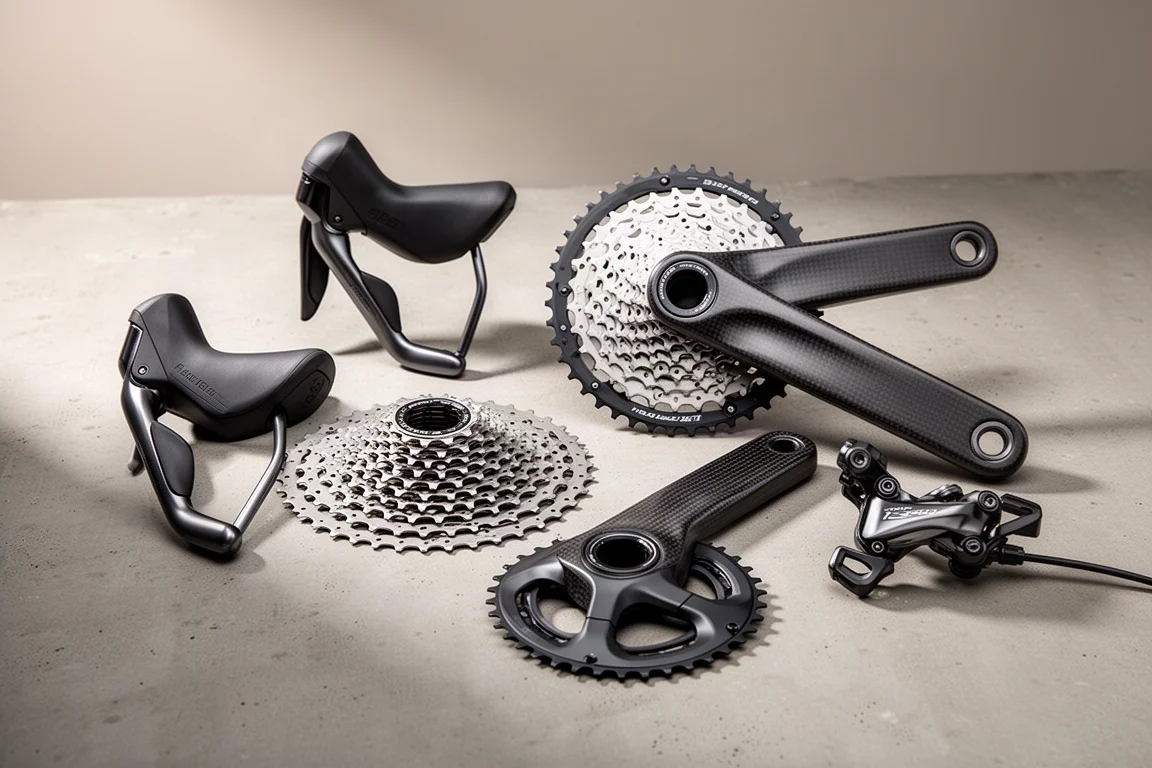
Campagnolo Record 13 and Super Record 13 Review: Wireless 13-Speed, Two Ways
Campagnolo's new wireless 13-speed groupsets answer the criticism of the previous generation. Here is how Record 13 and Super Record 13 differ, and which one suits your riding.
Road Bike Groupsets
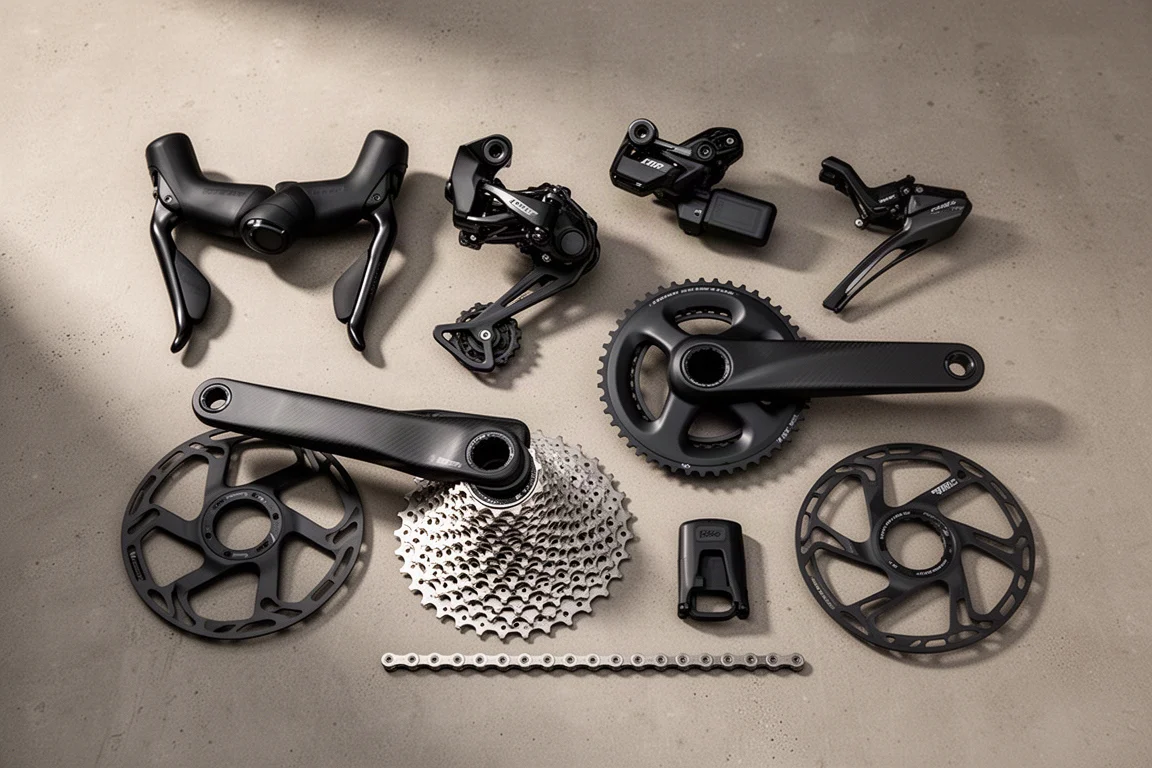
Campagnolo Record 13 vs Super Record 13: Which 13-Speed Wireless Groupset Is Worth It?
A practical look at Campagnolo's new 13-speed wireless groupsets, what separates Record 13 from Super Record 13, and which one suits your build.
Road Bike Groupsets
Campagnolo Super Record 13 Review: Wireless 2x13 With the Thumb Shifter Back
Campagnolo's first 2x13-speed wireless groupset brings back the thumb shifter, adds a wider gear range, and lands at a price that finally lines up with Shimano and SRAM.