Road Bike Groupsets
SRAM Rival AXS 1x on a Road Bike: What a Real-World Test Actually Shows
SRAM Rival AXS makes a single-chainring road setup genuinely usable, but gearing choices still decide whether 1x suits your terrain.
Introduction
SRAM has spent years making the case that a road bike does not need a front derailleur, and Rival AXS is the most accessible way to test that argument for yourself. It brings wireless electronic shifting and a wide-range cassette to a price point below the brand’s flagship road groups, which makes it the natural entry point for riders curious about a single-chainring setup.
The question is not whether 1x works on paper. It is whether it works on the roads most riders actually use, with real climbs, real descents, and real gearing compromises. To find out, the same 10 km loop through the Cotswolds was ridden twice at a matched effort: once on a conventional 2x Rival AXS setup with a 48/35 chainset and a 10-36 cassette, and once with a 46-tooth single chainring running the same cassette.
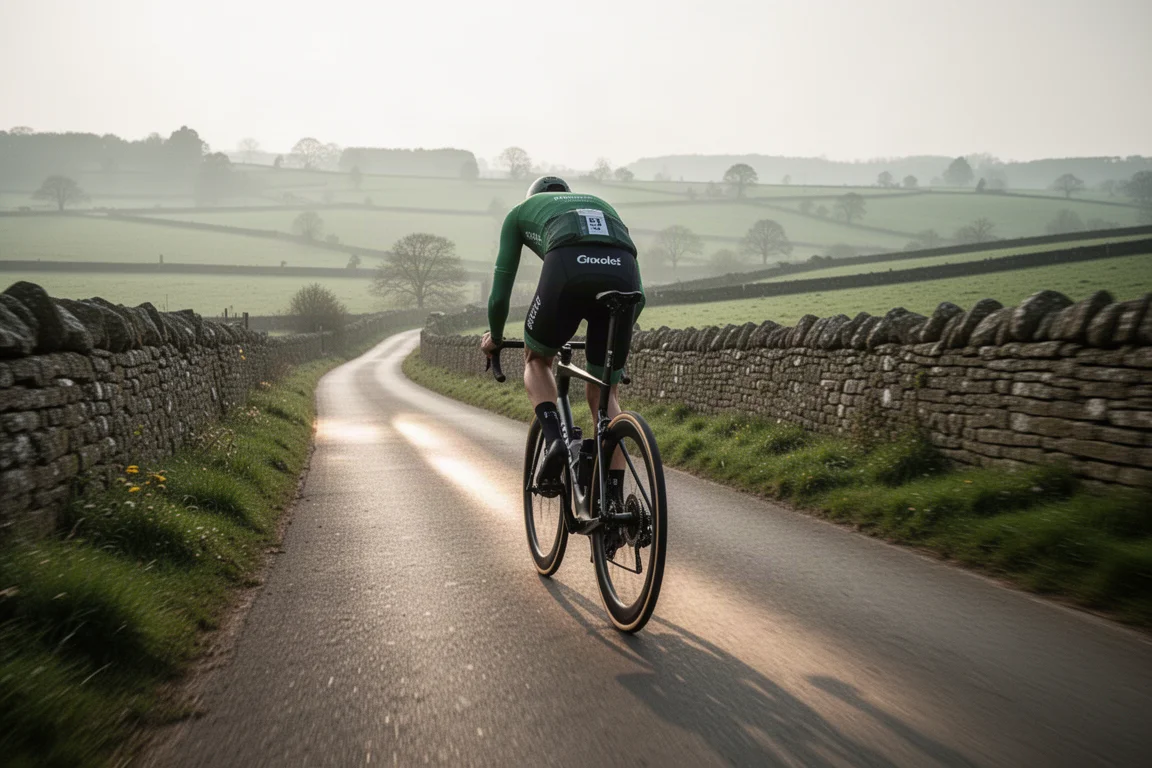
That loop was chosen deliberately. It bundles a steady climb, a fast descent, and a stretch of flowing, undulating road into roughly six miles, which is long enough to expose gearing weaknesses and short enough to keep the comparison honest. Average speed was held close to 30 km/h on both runs, with power and heart rate recorded throughout.
Who SRAM Rival AXS 1x Is For
Rival AXS in a 1x configuration suits riders who enjoy setting a bike up properly and are willing to think about gearing rather than accept whatever came in the box. The payoff is a drivetrain with fewer parts, fewer charging chores, and cleaner lines than a 2x equivalent.
It is also a realistic option for riders on flatter or gently rolling terrain, where the gaps between gears matter more than the extremes at either end of the range. On roads like these, shifting a 1x setup feels no different from shifting a 2x one, and the simplicity becomes an advantage rather than a compromise.
The case weakens for riders who live somewhere genuinely hilly and want both a very low climbing gear and a tall top gear without swapping components. A 2x chainset delivers that combination more readily, and it remains the easier recommendation for most people. Single-chainring road setups have appeared at the top level of professional racing in recent seasons, which shows the concept is viable, but a professional rider’s gear selection is chosen race by race around a known course.
Main Strengths
The most immediate benefit is simplicity. With no front derailleur there is one less component to fail, one less battery to charge, and a cleaner look across the whole bike. The airflow benefit is real but minor, and the small weight saving only matters to riders who count grams closely. What stands out in daily use is the reduced mental load.
Shift quality on the 10-36 cassette was smooth across the range, with the progression between sprockets feeling natural and predictable. Finding the right gear and the right cadence on the flowing sections of the route was straightforward, and the experience matched what a well-sorted 2x drivetrain offers.
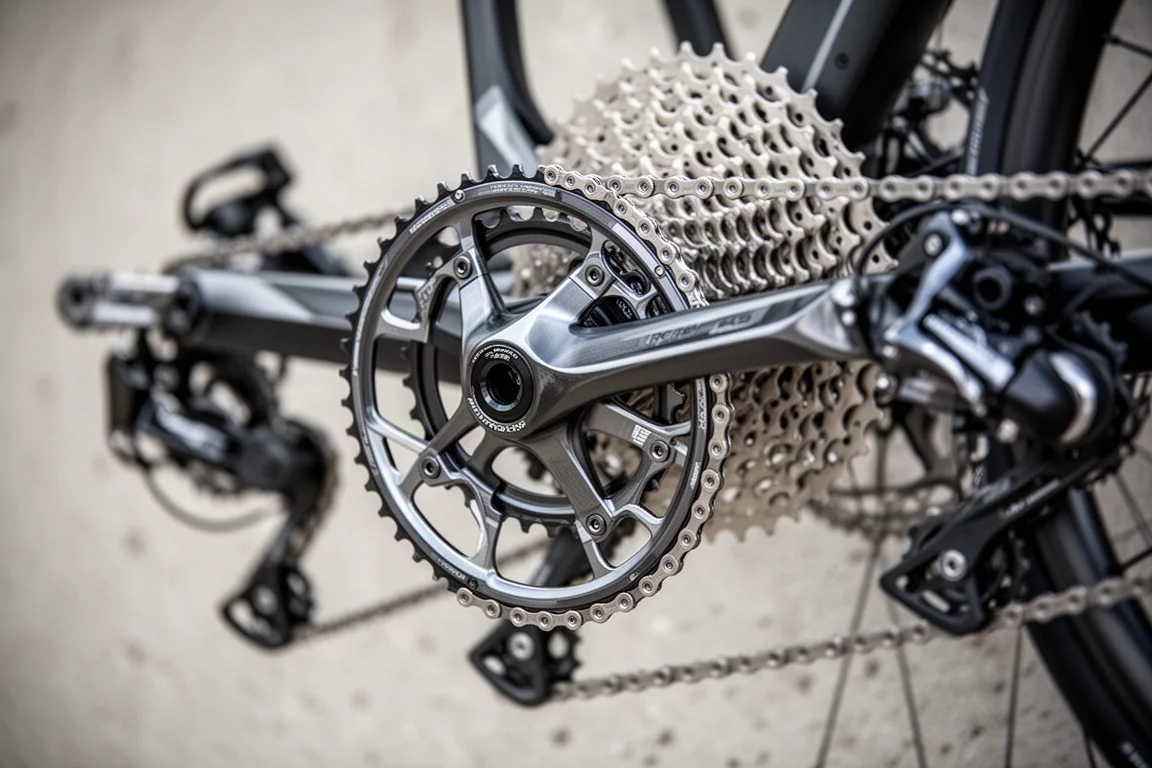
There is a broader point behind that. Today’s 1x road groupsets run wider cassettes and more speeds than the first attempts a decade ago, and that extra range is what turns 1x from a curiosity into a workable everyday option. This generation is a clear step beyond the 11-speed era in both gear coverage and shift consistency.
How the 1x Drivetrain Performed on the Road
The two runs were remarkably close. The 2x setup completed the loop in 22 minutes and 35 seconds, while the 1x setup came in at 22 minutes and 36 seconds. Average speed was 29.6 km/h on the 2x run and 29.4 km/h on the 1x run, a difference small enough to sit inside normal ride-to-ride variation.
Power told a slightly more interesting story. Normalised power was 256 watts on the 2x run and 233 watts on the 1x run, which is a meaningful gap for two runs at nearly identical speed. That is worth flagging rather than explaining away, and it is the kind of result that deserves more testing across repeated runs before drawing firm conclusions.
On efficiency, 1x drivetrains are generally regarded as less efficient than 2x because the chain runs at a more pronounced angle across the cassette. Independent laboratory testing has put the losses at two to three watts or more in some gear combinations, depending on cross-chaining. In this real-world comparison, away from controlled conditions, no efficiency difference was perceptible while riding.
Gearing, Range, and Climbing Trade-Offs
Chainring size is the decision that makes or breaks a 1x road setup. The 46-tooth ring used here was smaller than the 48-tooth outer ring of the 2x chainset, and a 44-tooth ring was the original preference but was unavailable at the time. That single choice shapes how the whole drivetrain behaves on a climb.
On the main climb of the route, the 1x setup ran out of easiest gear early, with nothing left in reserve and cadence dropping to around 75 rpm. The climb was not steep enough to force a stop, but anything steeper would have been a genuine struggle. On the descent, top-end gearing was never an issue, because a tucked aerodynamic position was enough to reach high speeds without needing a bigger gear.
Gear usage data from the SRAM AXS app supports the same conclusion. The 15-tooth sprocket was the most used on both setups, with an even spread of use between the 13 and 19-tooth sprockets. On the 2x setup both chainrings saw significant use, and the smaller ring was used heavily. Together, that pattern points toward a smaller chainring being the right call for this kind of terrain. A wider cassette is the alternative route: SRAM offers a 10-44 option that would add the range the climb demanded, but it also requires a different rear derailleur, making it an expensive change.
Things to Consider Before Buying
Plan your gearing before you buy, not after. Working out the right chainring size for your terrain and fitness is straightforward with the online calculators that take your current setup, speed, and cadence into account, and getting it wrong is the single most common reason a 1x road bike feels undergeared.
Factor in the cost of changing your mind. A chainring swap is manageable with basic tools and a torque wrench, but moving to a substantially wider cassette can also mean a new rear derailleur. That turns a modest experiment into a significant outlay.
Be realistic about where you ride. The 2x drivetrain was easier to live with across the whole test, and it remains the more forgiving choice for hilly terrain where you want both a low climbing gear and a tall top gear with smooth steps in between. A 1x setup rewards riders who are prepared to tune it, and it is genuinely better than it has ever been, but it asks more of you up front.
Buying Advice
If your local roads roll rather than bite, and you like the idea of a simpler bike with fewer components to maintain, Rival AXS in a 1x configuration is a credible and enjoyable choice. Match the chainring to your terrain carefully and the drivetrain asks for very little attention afterwards.
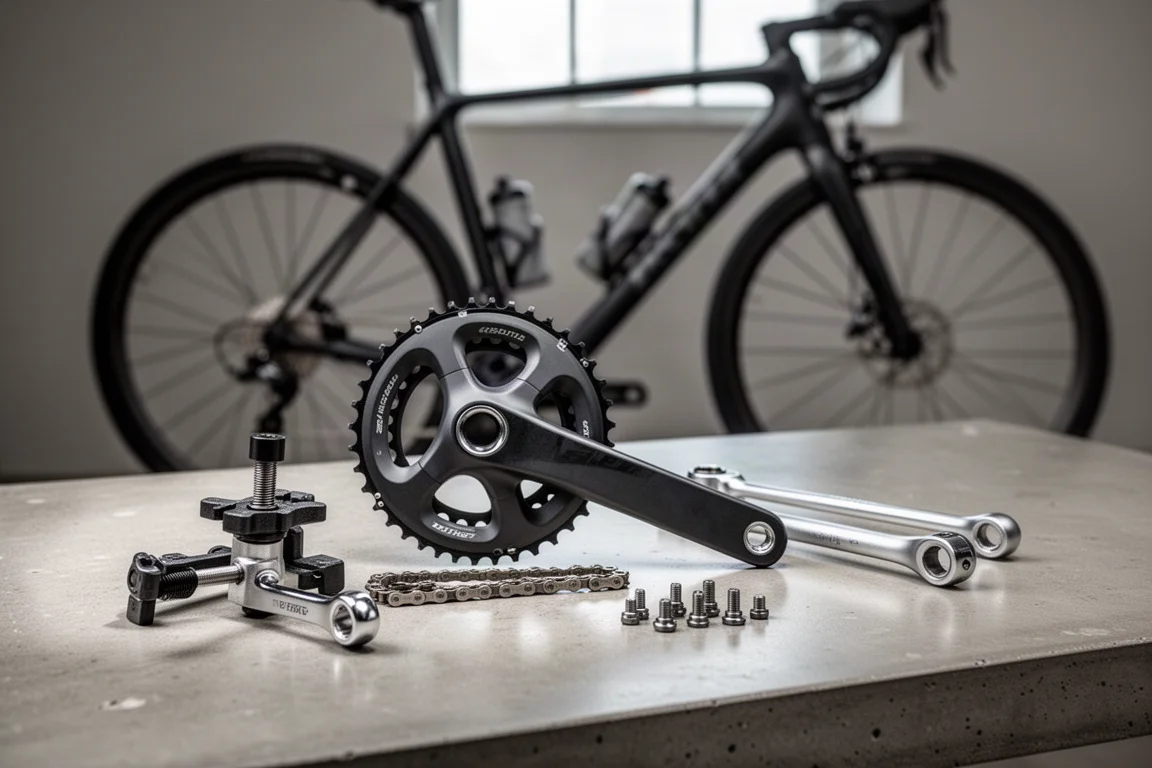
If your rides regularly include long or steep climbs, either choose a smaller chainring than you think you need or budget for a wider cassette and the rear derailleur that goes with it. Riders who want a single purchase that works everywhere without further thought are still better served by the 2x version of the same groupset, which handled the full range of the test route without compromise.
The honest position after two matched runs is that 1x is closer to 2x than it has ever been, but the outcome depends almost entirely on your terrain and your willingness to fine-tune. Buy it as a system you intend to dial in rather than a plug-and-play replacement, and it delivers on its promises.
Conclusion
SRAM Rival AXS makes a single-chainring road setup feel normal rather than experimental. Shifting is smooth, the cassette progression is predictable, and the simplicity of one fewer component and one fewer battery is a genuine day-to-day benefit.
The catch is gearing. With a 46-tooth chainring and a 10-36 cassette, the setup ran out of range on the climb, and steeper terrain would expose that limit faster. A smaller chainring or a wider cassette solves it, at the cost of extra spend and, in the case of a bigger cassette, an additional rear derailleur.
For riders on rolling roads who enjoy setting up their bike properly, Rival AXS 1x is worth exploring. For riders facing proper hills who want one drivetrain to do everything without tinkering, the 2x version remains the safer and easier answer.
Product link
View more details for SRAM Rival AXS
This product is mentioned in the review. Check the specifications, options, and compatibility before buying.
View more details for SRAM Rival AXSFurther reading
Related Reviews
Road Bike Groupsets
Campagnolo Record 13 and Super Record 13 Review: Wireless 13-Speed, Two Ways
Campagnolo's new wireless 13-speed groupsets answer the criticism of the previous generation. Here is how Record 13 and Super Record 13 differ, and which one suits your riding.
Road Bike Groupsets
Campagnolo Record 13 vs Super Record 13: Which 13-Speed Wireless Groupset Is Worth It?
A practical look at Campagnolo's new 13-speed wireless groupsets, what separates Record 13 from Super Record 13, and which one suits your build.
Road Bike Groupsets
Campagnolo Super Record 13 Review: Wireless 2x13 With the Thumb Shifter Back
Campagnolo's first 2x13-speed wireless groupset brings back the thumb shifter, adds a wider gear range, and lands at a price that finally lines up with Shimano and SRAM.