Road Bike Groupsets
SRAM Force Review: Nearly Red Performance for Less Money
SRAM Force brings wireless 12-speed shifting and one-finger hydraulic braking close to flagship level, with lever reach, adjustability, and price trade-offs worth checking first.
Introduction
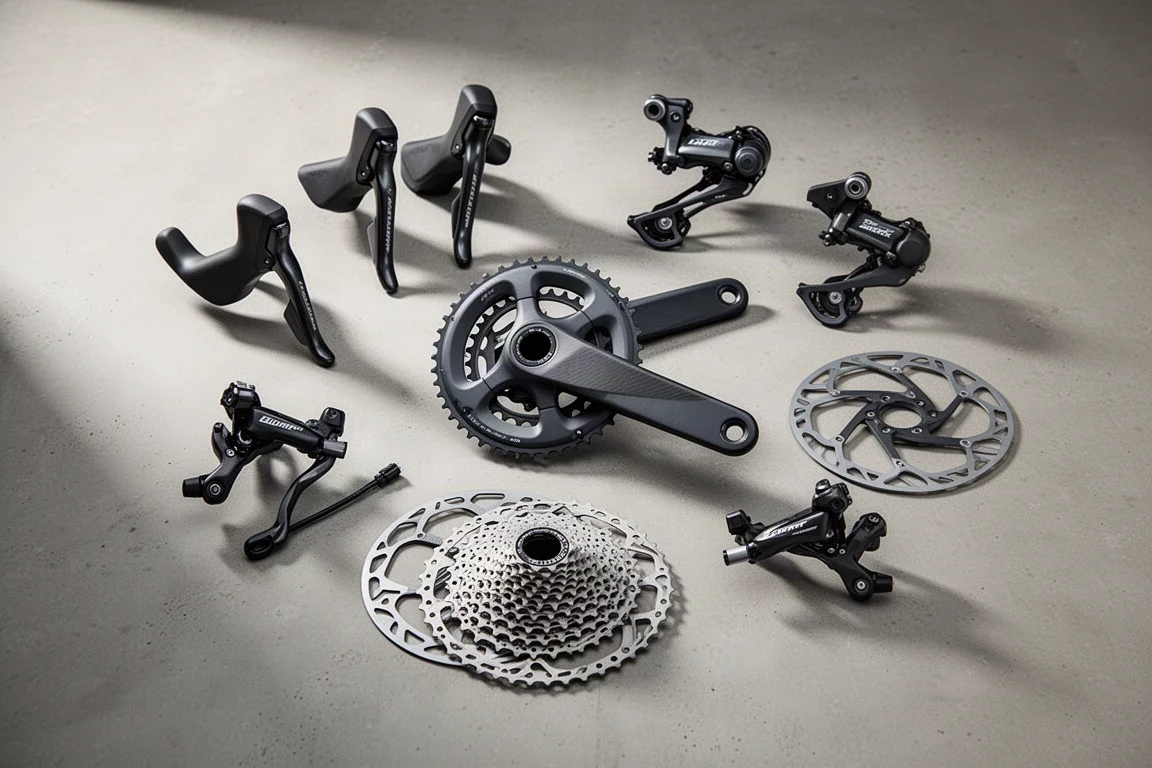
SRAM Force sits second from the top in SRAM’s road groupset range, below Red and above Rival and Apex. It is wireless, hydraulic, and 12-speed, and it carries over almost every feature from the flagship Red groupset while costing meaningfully less. For riders who want the character of a top-tier groupset without paying flagship money, Force is the version worth examining closely.
This article covers what Force does well, where it differs from Red, and which details are worth checking before you commit, especially around bike fit.
Who this product is for
Force is aimed at road riders who want nearly all of Red’s features without the price. It is a serious groupset rather than a compromise: nothing about the specification prevents it from being raced at a high level, even though it is slightly heavier and less ornate than Red.
The most important consideration is lever reach. The new levers are 1.5 cm longer than the previous generation, which is a substantial change in bike-fit terms. On some frames, 1.5 cm of reach is the difference between three sizes, so riders who already sit at the limit of their comfortable reach should look carefully at this before buying.

Riders who spend their time in a long, tucked position will likely appreciate the shape, which is shared with Red and designed around fast riding. Riders who prefer a more upright, relaxed fit may find it a stretch.
Main strengths
Force covers the essentials in a way that is hard to fault: fully wireless shifting, hydraulic disc braking, a 12-speed drivetrain, and a wide spread of chainring and cassette options for road use.
Braking has been upgraded to the same generation of hardware as the latest Red, with noticeably lower lever resistance. Front shifting has also been reworked and is far more dependable than earlier SRAM road groupsets, which had a reputation for dropping chains. Compatibility is generous too: components mix across the range, and the 12-speed chains work with older 12-speed SRAM road groupsets.
Braking Performance and Lever Feel
Braking is the standout improvement. The updated hydraulic system can genuinely be operated with a single finger, and the levers feel more precise than the previous generation, with less resistance through the stroke. The lever body also offers good purchase in a range of hand positions, which makes the bike feel easier to throw around.
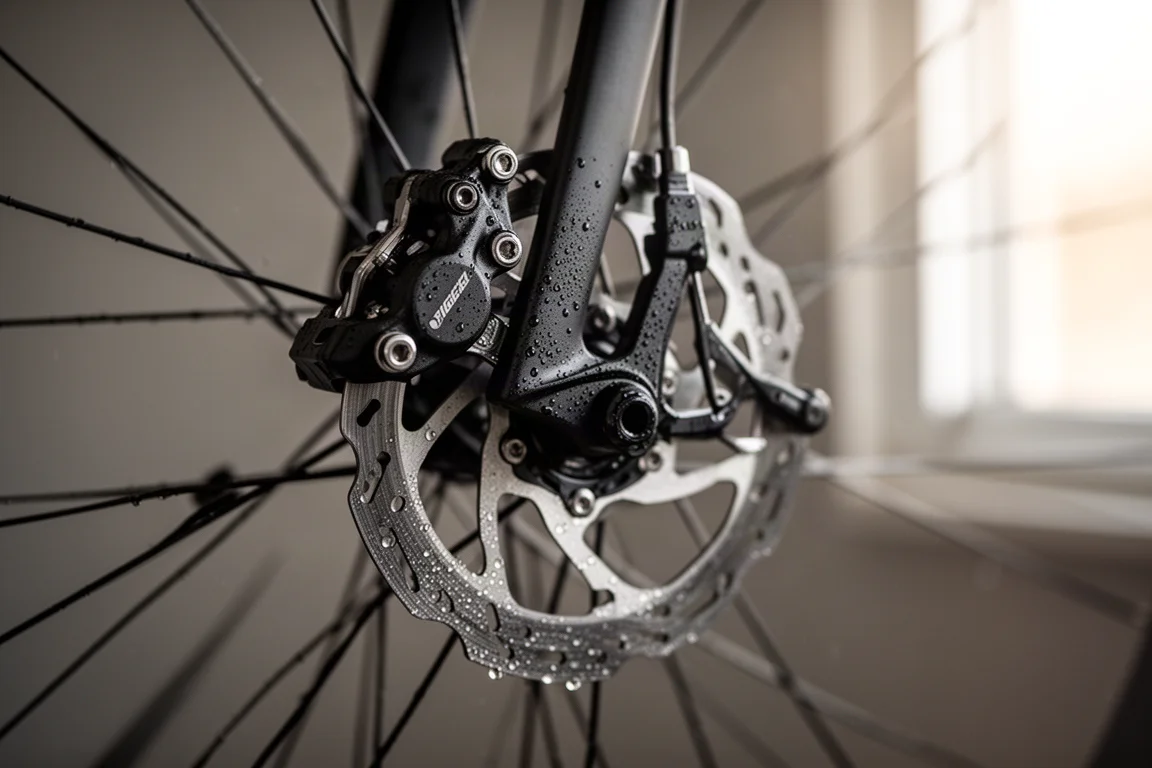
Lever reach is adjustable, which matters if you have smaller or larger hands and need the levers closer to or further from the bar. What you do not get compared with Red is contact adjustment, so the point at which the pads meet the rotor and how quickly they bite cannot be tuned.
Shifting, Wireless Setup, and Customization
By default, the right paddle shifts down the cassette, the left paddle shifts up, and pressing both paddles together moves the front derailleur. Using both hands for a front shift is a small annoyance, and the programmable bonus buttons solve it: they can be assigned to almost any function through the companion app, including front shifts, and can also drive accessories such as a dropper post.
The system can also shift the front derailleur automatically as you work through the cassette, although that behaviour can be switched off if you prefer full manual control. For riders with limited use of one hand, the programmable buttons open up a way to run the drivetrain from a single side, which is a meaningful accessibility benefit.
Shifting itself is entirely wireless, with coin cells in the shifters and clip-on batteries in each derailleur. Installation and parts replacement are as simple as it gets for a high-end groupset, though hydraulic brake bleeds are still part of the job. Charging is the weak point: the derailleur batteries use a proprietary dock rather than USB-C, and losing the dock means buying another one.
Crank lengths come in 160, 165, 170, 172.5, and 175 mm, which may be limiting at both extremes of rider size. An oversized pulley wheel is fitted as standard, so riders who would otherwise retrofit one get the look without risking the shifting problems that aftermarket conversions can introduce.
Things to Consider Before Buying
The longer lever reach is the single biggest practical question, and it affects bike fit more than any other change here. It also makes the groupset less suitable for riders who need a shorter, more upright position.
Brake pad contact adjustment is absent, so if you rely on tuning bite point, Red remains the option that offers it. Charging relies on a proprietary dock instead of a universal connector, which is worth factoring in if you dislike carrying brand-specific cables.
Crank length availability stops at 160 mm and 175 mm, which will not suit every rider at the extremes.
None of these points are deal-breakers on their own, but together they define who the groupset suits best: riders with a reach that tolerates the longer levers, and riders who do not need to tune brake bite.
Weight and Price Breakdown
Component weights add up to 2,520 g in total: a 714 g crankset, 408 g shifters, a 180 g front derailleur with battery, a 310 g rear derailleur with battery, a 301 g 10-36 12-speed cassette, 278 g for 160 mm front and rear rotors, and 329 g for the calipers and brake hoses. That is a modest increase over Red rather than a dramatic one.
Pricing reflects the tier below flagship. The groupset retails at just over £2,800 in the UK and $2,842 in the US, which is more than £1,000 below Red’s recommended price. Dropping the power meter cuts more than £700 from the total. If you only want the new lever shape, the levers alone are around £680, compared with roughly £500 for the Rival equivalents.
Power meter options are flexible. A dual-sided, spider-based power meter is available with the groupset, though it requires a special tool when changing chainrings. Riders who start without a power meter can add a single-sided, spindle-based unit later.
Buying Advice
Force makes the most sense for riders who want wireless shifting, hydraulic braking, and the newest lever and brake design without paying flagship prices. The braking and front shifting improvements are the parts that matter most in everyday riding, and they are the same generation of hardware found higher up the range.

If you are unsure, weigh two things: whether you can comfortably accommodate the longer reach, and whether you need brake pad contact adjustment. If the first answer is yes and the second is no, Force delivers nearly everything Red offers for a good deal less. Riders who want the absolute lightest build or full adjustability should stay with Red, while those who mainly want the new lever shape at a lower cost can consider Rival levers instead.
Conclusion
SRAM Force is a well-rounded road groupset that borrows heavily from the flagship tier. Its braking is excellent, its front shifting is finally dependable, and its wireless setup is easy to live with. The longer lever reach, the absence of contact adjustment, and the proprietary charging dock are the details to accept going in. Get those right for your fit and preferences, and Force is an easy groupset to recommend.
Product link
View more details for SRAM Force
This product is mentioned in the review. Check the specifications, options, and compatibility before buying.
View more details for SRAM ForceFurther reading
Related Reviews
Road Bike Groupsets
Campagnolo Record 13 and Super Record 13 Review: Wireless 13-Speed, Two Ways
Campagnolo's new wireless 13-speed groupsets answer the criticism of the previous generation. Here is how Record 13 and Super Record 13 differ, and which one suits your riding.
Road Bike Groupsets
Campagnolo Record 13 vs Super Record 13: Which 13-Speed Wireless Groupset Is Worth It?
A practical look at Campagnolo's new 13-speed wireless groupsets, what separates Record 13 from Super Record 13, and which one suits your build.
Road Bike Groupsets
Campagnolo Super Record 13 Review: Wireless 2x13 With the Thumb Shifter Back
Campagnolo's first 2x13-speed wireless groupset brings back the thumb shifter, adds a wider gear range, and lands at a price that finally lines up with Shimano and SRAM.