Road Bikes
Specialized SL4 Review: Riding Alberto Contador's 2016 Tour de France Race Bike
A close look at Alberto Contador's 2016 Tour de France Specialized SL4, a 6.7 kg rim-brake race machine that still feels remarkably quick on short, steep climbs.
Introduction
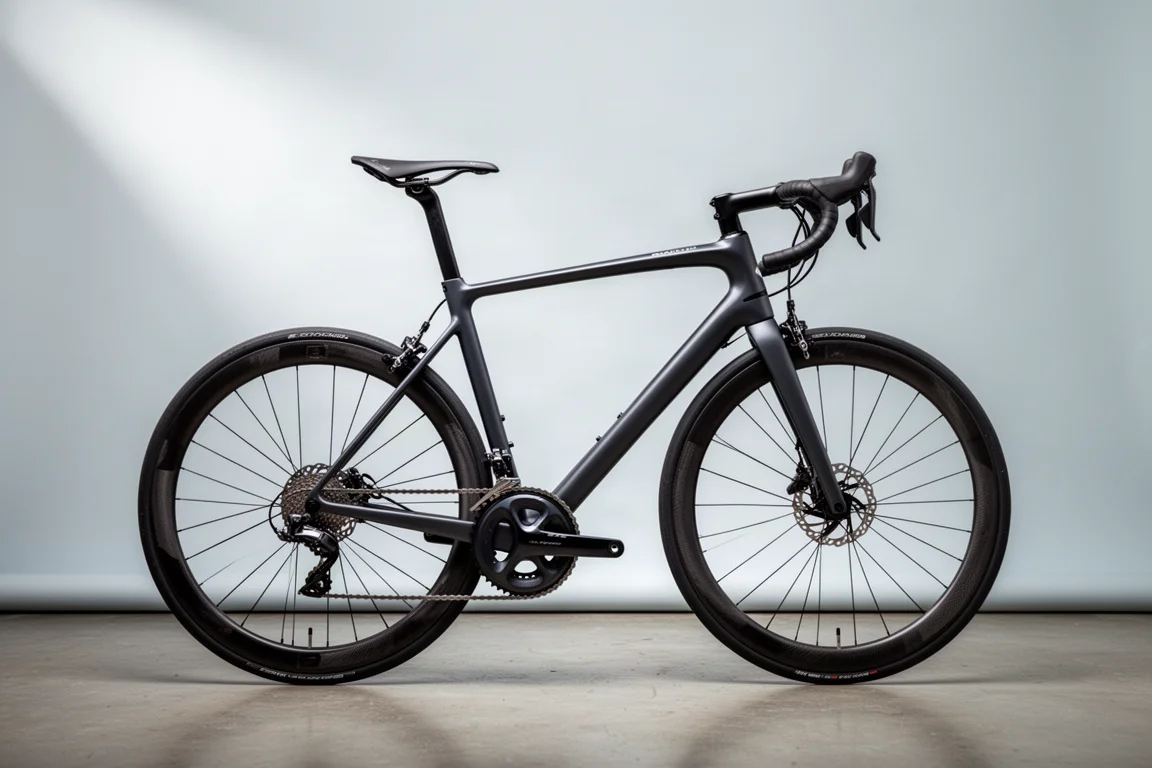
Some race bikes carry history in their paintwork, and this Specialized SL4 carries more than most. It is one of Alberto Contador’s actual race bikes from the 2016 Tour de France, still wearing his name sticker on the frame, still carrying its race transponder, and still showing a small signature scratched into the carbon of each wheel. Contador crashed twice at that Tour and abandoned, so the bike’s racing story is short. What makes it interesting now is that it survived essentially unchanged, which offers a rare chance to judge how a top-level climbing machine from that era actually behaves.
The context matters. Contador won seven Grand Tour titles in all: two Tours de France, two editions of the Giro d’Italia and three Vuelta a España victories, alongside a reputation as one of the fastest climbers of his generation, with a rate of ascent once measured at the equivalent of 1,900 metres of climbing per hour. His bikes were built around one priority, and the number on the workshop scale tells you what that priority was.
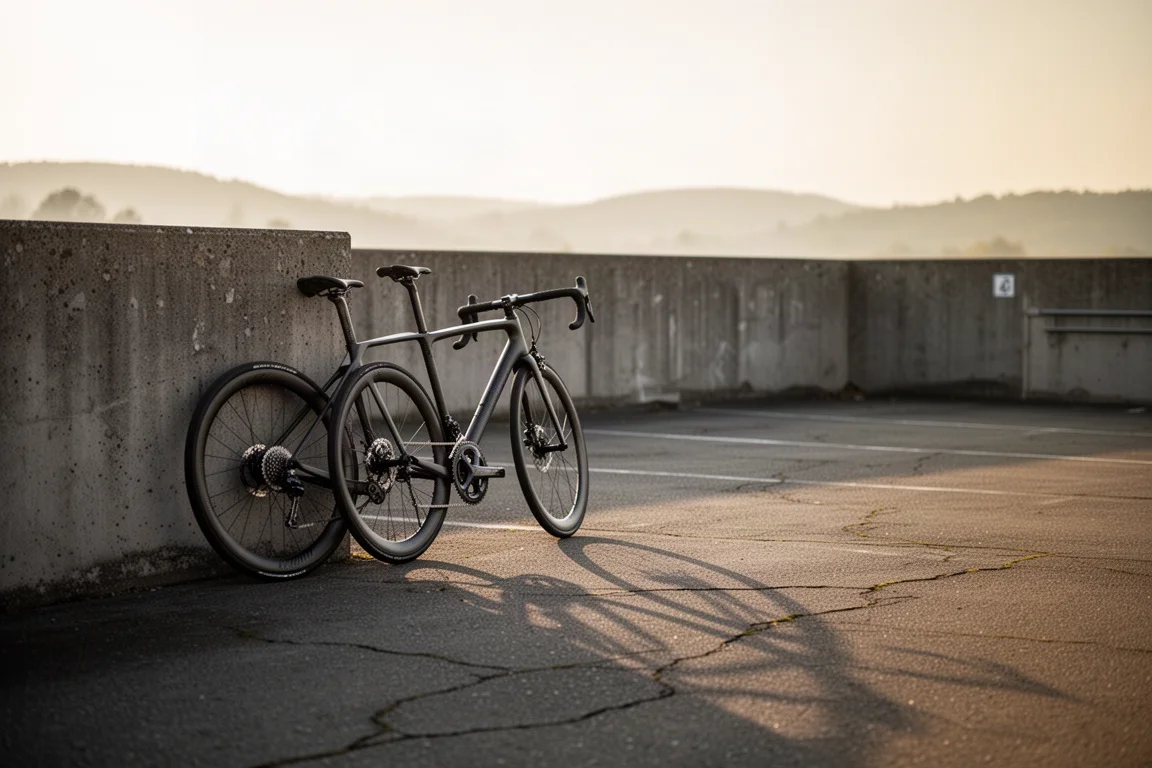
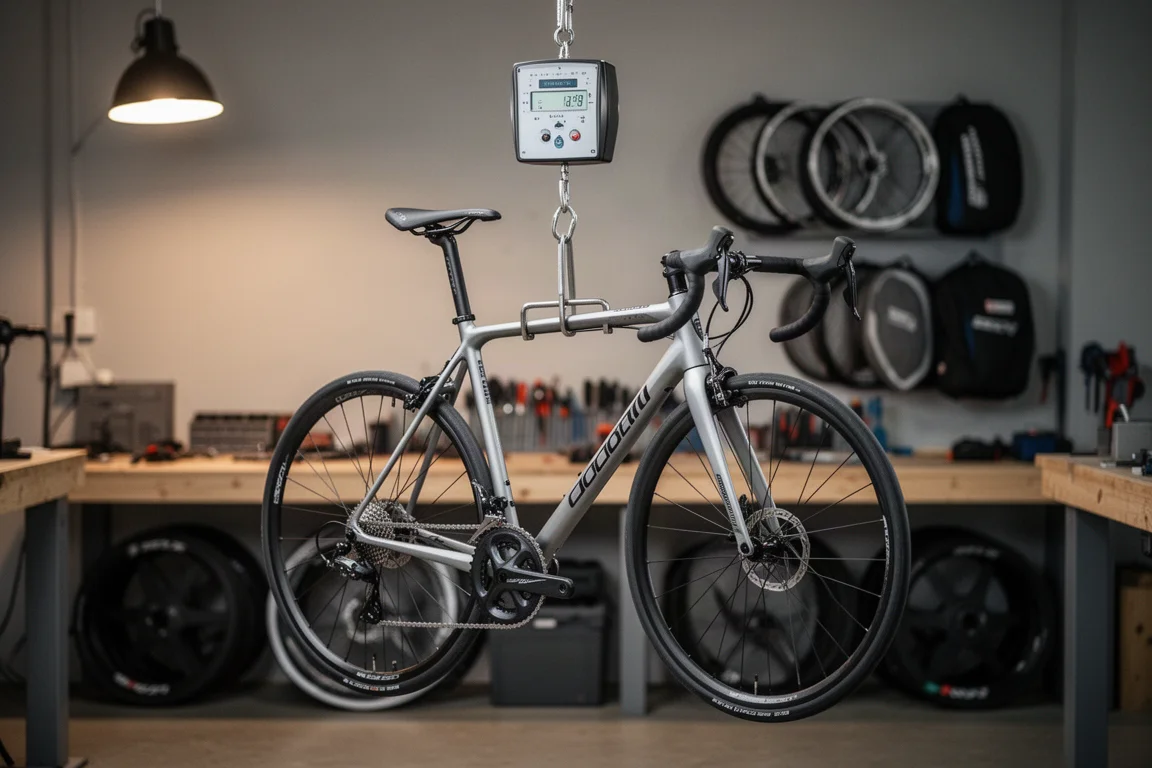
At 6.7 kg this SL4 sits just below the 6.8 kg weight limit that governed racing at the time, and the missing 100 grams is easily explained. The SRM power meter and its head unit were removed at some point after that Tour. Even in 2016 Contador was not riding with GPS, so there is no computer on the bars and no ride data to go with the bike today.
Who This Bike Is For
This is a machine for riders who value feel over specification sheets. It suits anyone who still prefers the direct, mechanical connection of rim brakes and cable-operated gears, and who enjoys a light, stiff climbing frame with traditional race geometry. It is also a natural fit for collectors and enthusiasts drawn to race-used equipment with a documented history.
It is not aimed at riders who want aerodynamic tube shapes, disc brakes, wide tyre clearance or integrated cockpit designs. Those priorities belong to a later generation of road bikes, and this frame deliberately sits on the other side of that divide.
One practical note: this particular frame is a size too small for a taller rider, so its fit is not representative of the SL4 as a model. Anyone considering the same generation should treat sizing as an individual question rather than reading anything into this build.
Main Strengths
A Frameset That Still Feels Light
The headline number is 6.7 kg, and it holds up in the hand. Contador was known as a weight-focused rider whose bikes were always built up to sit right at the 6.8 kg limit, and this one still does that job convincingly even with a power meter and head unit removed. Lifting it off the ground is genuinely surprising the first time.
That lightness translates into a specific kind of speed. On steep gradients the bike accelerates with very little encouragement, and the effort required to keep it moving feels lower than the scale alone would suggest. For a frame of this age, it remains a serious climbing tool.
The build is also carefully considered rather than simply light. Personal branding runs through the details, from the saddle to the pedals, and every component has clearly been chosen to serve the same goal. It reads as a machine assembled by someone who knew exactly what they wanted.
Stiff Where It Matters
Light frames from this era are often assumed to be flexible, and that assumption does not survive a ride. The front end is notably stiff, and the bottom bracket holds firm under hard efforts out of the saddle. The handlebars are comparatively wide at 400 mm by modern standards, yet the frame still feels direct when you pull on them.
The interesting conclusion is about progress rather than this bike specifically. Every new generation is presented as fractionally stiffer than the last, yet going back eight years makes those gains very hard to detect from the saddle. Whatever the measurements say, a rider is unlikely to feel short-changed here.
Mechanical Shifting Done Properly
By 2016 almost the entire professional peloton had moved to electronic shifting, with only two riders still racing on mechanical groupsets. This bike is one of them, and the setup shows how much can be extracted from cables when someone cares about the details.
The cable outers are a metal segmented design rather than the usual housing, which makes them compressionless. When you pull the brake lever or press the shifter, nothing flexes, so braking and gear changes feel unusually precise. It is the kind of upgrade most riders never consider, and it transforms the feel of a mechanical system.
The finishing details are equally deliberate. The bar tape is double-layered and wrapped in reverse, so no electrical tape is needed at the centre of the bars, with the tape secured by the end plugs instead. It is not the most durable way to wrap a bar, but with a personal mechanic it is a neat solution, and it is part of what makes the bike feel like a preserved race machine.
Things to Consider Before Buying
A Frameset on the Cusp of a Technology Shift
Nothing about this frame is aerodynamic to any meaningful degree. The handlebars are wide at 400 mm, the tyres are narrow at 24 mm, and there is essentially zero clearance in the frameset for anything wider. Rim brakes are the only option, and there is no provision for the disc brake standard that followed.
That combination dates the bike quickly, even though it is only around eight years old, and it looked old-fashioned at the time as well. It arrived at a moment when road bike technology was changing fast, and it deliberately carried none of those changes.
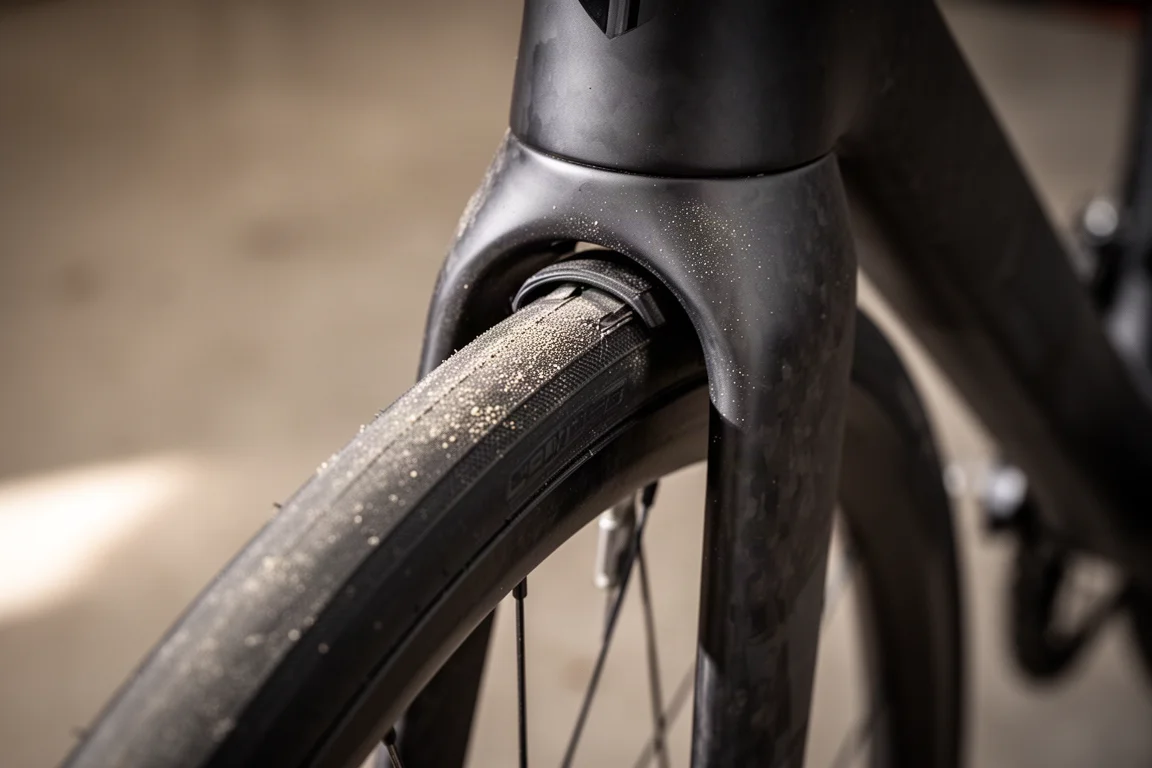
It is worth being honest about what that means for speed. The research and testing that followed this era showed that wider tyres can have lower rolling resistance and that lower tyre pressures reduce impedance losses, while a heavier bike with aerodynamic shaping will usually be faster in almost every situation apart from a short, steep climb. This SL4 is best understood as a specialist for exactly that kind of terrain rather than an all-round performance choice.
Rim Brakes and Carbon Wheel Noise
The brakes and gears on this bike still perform flawlessly, which says a great deal about how it has been maintained. Stopping power is strong, and the shifting is genuinely a pleasure to use, with the compressionless cable outers doing much of the work.
The one adjustment is noise. Rim brakes on carbon rims produce a slightly disconcerting sound under braking, and while riders get used to it within moments, it is worth knowing before a first ride. It is a characteristic of the setup rather than a fault.
No Power Meter, No Head Unit, No GPS
The SRM power meter and its display were removed from this bike at some point, which accounts for it sitting under the weight limit. For anyone buying into this generation, that means no power data and no head unit, and the frame’s era predates the GPS-based ride recording that most riders now take for granted.
One final detail worth understanding before any workshop time: the bottom bracket is a press-fit shell that has threaded cups fitted inside it. It is an unusual combination, and it is the sort of thing worth investigating before committing to service work or a component swap.
Buying Advice
This specific bike is a race-used machine with a documented history, so it is not the kind of thing that appears in a normal retail listing. The practical question for most readers is the SL4 generation more broadly, and the points above are the ones to check: frame condition, tyre clearance, the bottom bracket arrangement, and whether the cable outers and braking setup have been maintained to the standard shown here.
If a bike like this crosses your path, the ride quality is the reason to consider it. It is light, it is stiff, and it delivers a level of mechanical precision that is genuinely enjoyable on steep roads.
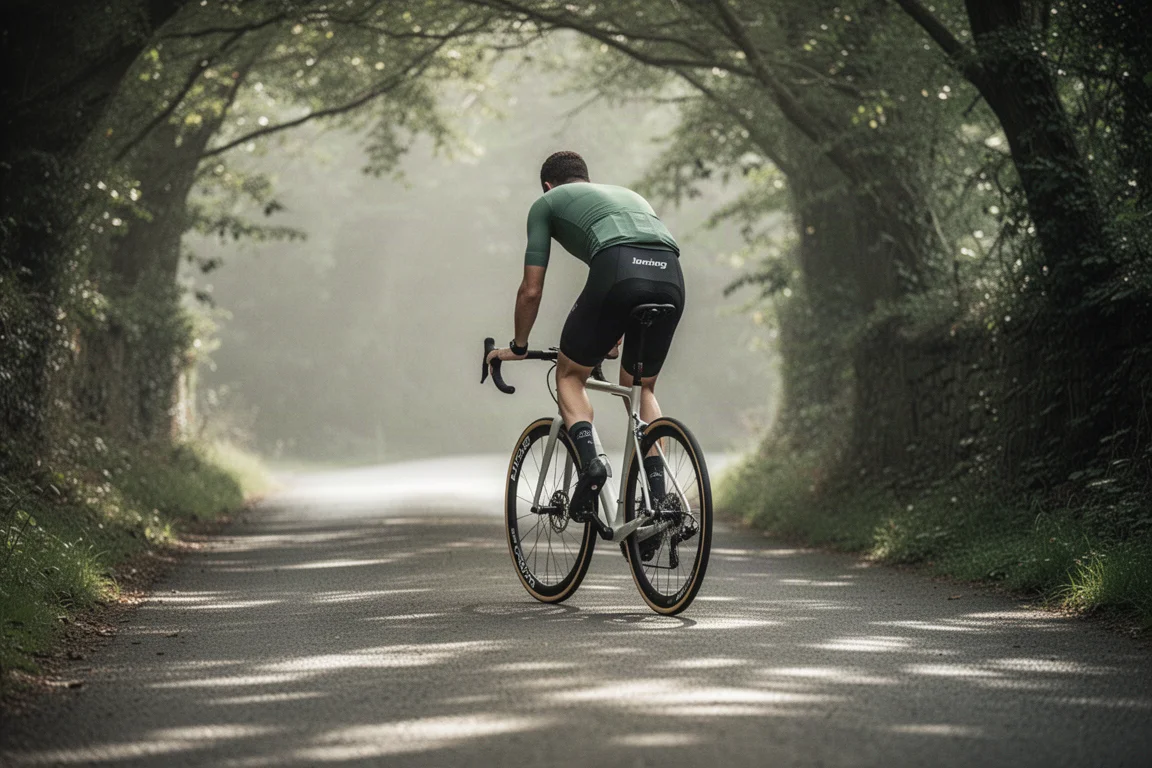
On outright pace, a hill climb specialist took this bike up a short, steep local segment of around 650 metres at an average gradient of 11 percent and finished within a couple of seconds of the fastest recorded time. That is exactly the terrain where a 6.7 kg rim-brake climbing bike is at its best, and it suggests the frame has not lost its edge. On longer, flatter or faster roads, a modern aerodynamic bike will usually come out ahead.
Conclusion
The Specialized SL4 in this build is a reminder that a race bike does not stop being fast when it stops being current. It is light, stiff and beautifully assembled, and its mechanical shifting and rim brakes still work flawlessly.
It is also a slower bike than a modern equivalent across most riding, and it is honest about that. What it offers instead is feel, history and a very specific kind of speed on short, steep gradients. For riders who value those things, and who understand the trade-offs, it remains a genuinely rewarding machine to ride.
Product link
View more details for Specialized SL4
This product is mentioned in the review. Check the specifications, options, and compatibility before buying.
View more details for Specialized SL4Further reading
Related Reviews

Road Bikes
10 New Road Bikes Worth Watching: Aero, Titanium, Steel and Endurance Standouts
A practical roundup of 10 new road bikes, from aero flagships chasing single-watt gains to titanium, steel and endurance platforms built for real roads.
Road Bikes
2026 Tour de France Road Bikes: Six Race Machines Worth a Closer Look
Six race bikes from the 2026 Tour de France grid, reviewed for paint, silhouette, wheels and the specification details that matter to buyers.
Road Bikes
3T Strada Italia Review: A Radical Aero Road Bike That Rides Smooth
A made in Italy carbon aero road bike with a deep head tube, wide tire clearance and a genuinely comfortable ride. Here is what to know before buying.