Headphones
Sony WH-1000XM5 vs Bowers & Wilkins PX7 S2 vs AirPods Max: Which Noise-Cancelling Headphone Fits You?
A practical comparison of three premium noise-cancelling headphones, covering sound quality, comfort, controls, noise cancelling, call quality, connectivity, and price positioning.
Introduction
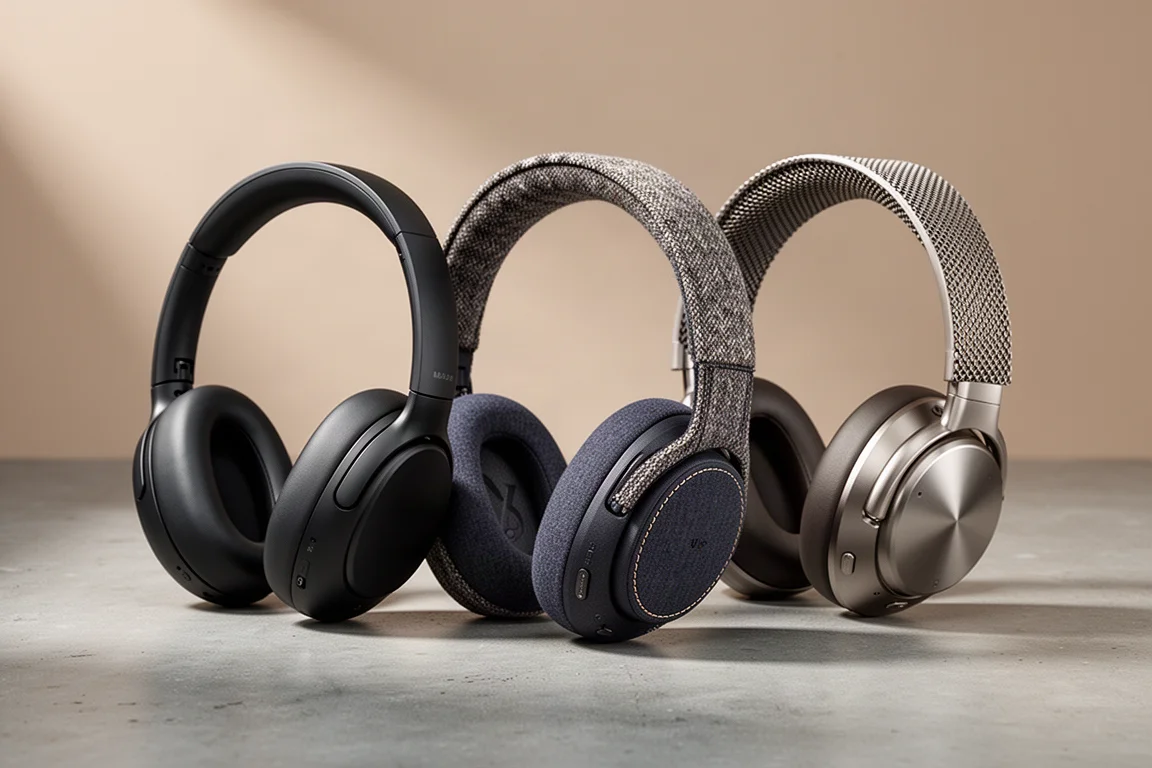
Three premium over-ear headphones dominate the conversation about noise cancelling at the moment: the Sony WH-1000XM5, the Bowers & Wilkins PX7 S2, and the Apple AirPods Max. They solve the same problem in noticeably different ways, and those differences show up in daily use rather than on a specification sheet.
The Sony and the Bowers & Wilkins sit in the same price bracket, while the AirPods Max asks for more. That makes the decision less about which model is objectively best and more about which set of strengths you actually need: the most comfortable pair, the best-sounding pair, or the one that balances both.
What Matters Most in a Noise-Cancelling Headphone
Sound quality is where most buying decisions start, and it is worth being precise about it. The gap between the two same-price headphones here is not subtle once you switch between them on the same track, and the third option sits further up the scale again.
Comfort comes second, and in practice it often decides which pair actually gets used. Weight, clamping force, and the softness of the ear cups determine whether a headphone survives a long flight or a full working day. For anyone who wears glasses, side pressure matters even more, because a firm clamp starts pressing on the arms of the frames after an hour or so.
Controls, wear sensing, noise cancelling behaviour, call quality, and app support fill out the rest of the picture. Each of these headphones handles some of those areas better than the others.
Two of the three share a price bracket, so the practical question becomes which strengths you are paying for and which compromises you can live with.
Sony WH-1000XM5: Comfort, Control, and Everyday Reliability
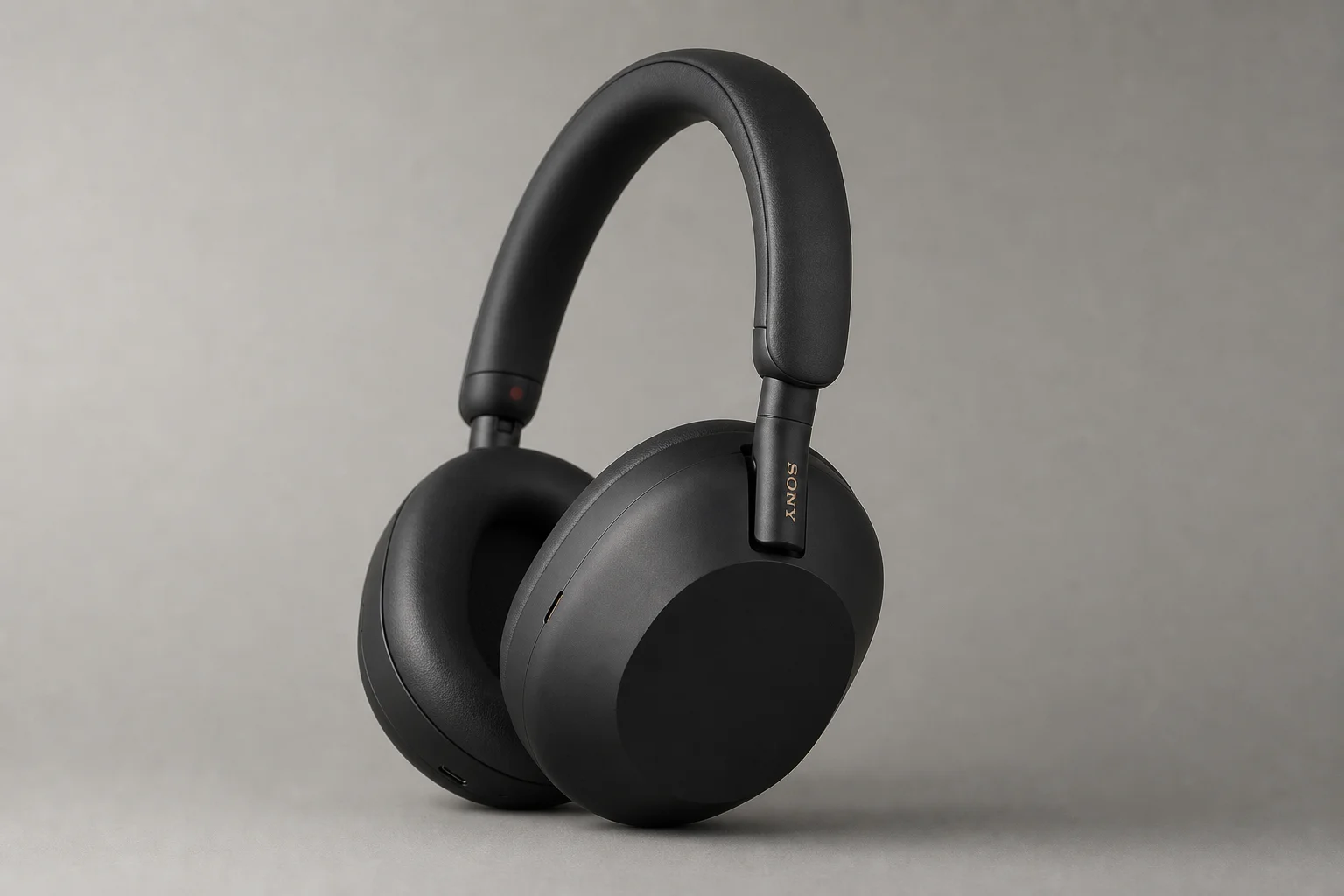
At roughly 250 g, the Sony WH-1000XM5 is the lighter of the two same-price headphones, and it clamps less firmly than the Bowers & Wilkins. The ear cups are soft, with a vegan leather finish, and the overall build is plastic. It does not feel as premium as the PX7 S2 in the hand, but it is well assembled, and the low weight pays off over long sessions. For glasses wearers, the gentler side pressure is a real advantage after the first hour.
Control is where the Sony pulls ahead. The right ear cup is touch sensitive, so a double tap pauses or resumes playback, and resting a hand on the cup temporarily switches on transparency mode. The wear sensor is just as dependable: music pauses when the headphones come off and resumes when they go back on, without fail.
In sound quality the Sony is good, though slightly veiled next to the PX7 S2, with a touch of crispness in the lower treble. A 30 mm driver sits behind each cup, and while the companion app includes an equaliser, no amount of adjustment closes the clarity gap to the Bowers & Wilkins.
Noise cancelling is strong where it counts. On the street the Sony handles traffic noise and sudden, startling sounds well, and it engages faster than the PX7 S2. Bluetooth stability was never an issue. The headphone uses Sony’s LDAC codec and does not offer aptX, and it does not fold, so the supplied carry case is the practical storage option.
Call quality is a genuine strength. During a call taken beside a busy road, the person on the other end could barely tell there was traffic nearby.

The trade-off is clear: a little less outright sound quality in exchange for a lighter, more comfortable, easier-to-live-with headphone.
Bowers & Wilkins PX7 S2: The Sound-First Choice
Sound is the reason to choose the PX7 S2. Each cup houses a 40 mm driver angled towards the ear and made from a bio-cellulose material, and the result is deeper bass extension with more low-end punch, plus better clarity from top to bottom. It is not a bright or harsh sound, just a clearer one, and the difference is obvious the moment you switch over from the Sony on the same track.
That advantage comes with a firmer fit. The PX7 S2 weighs around 307 g and clamps more tightly than the Sony. The pressure eases over time, but it can still press on the arms of glasses after roughly an hour of wear. The build feels more like a premium accessory, with soft ear cups that are slightly less plush than the Sony’s. The arms are plastic, where the earlier PX7 used carbon fibre, and the carry case takes a more traditional approach.
Controls are physical buttons. A button on the rear of the left cup cycles through noise cancelling, transparency, and off, while the right cup carries play, pause, volume, and power controls. The play and pause button is ribbed, but it is still easy to hit volume up by mistake. The wear sensor is less reliable: music sometimes keeps playing when the headphones are around your neck, and the feature can be switched off in the app.
Wireless performance brings aptX Adaptive on Android and AAC on iPhone, and the connection occasionally dropped out when the phone was tucked into a jeans pocket, roughly once a week. Noise cancelling is slightly better than the Sony at the high-frequency clutter of a cafe, such as cups and cutlery being moved around, but the Sony handles street traffic better.
Call quality is the weak point. On a comparison call from a busy road, the person on the other end struggled to follow some words, as though processing were truncating the speech.
The companion app asks for a sign-in the first time it is used, which is mildly annoying, but it looks more elegant than the Sony app, is designed to work with other products from the same brand, and offers a more basic equaliser.
Apple AirPods Max: The Premium Reference
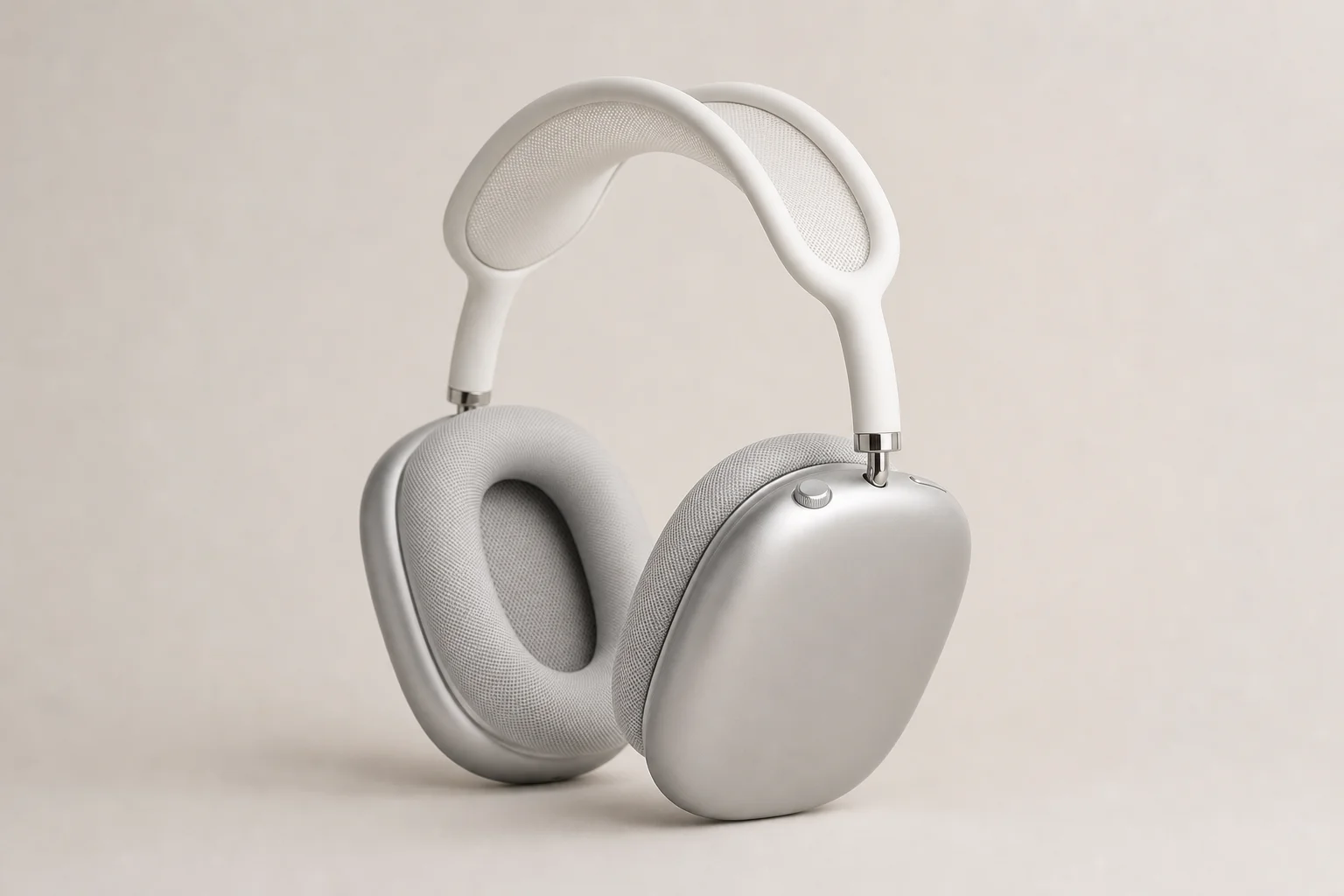
The AirPods Max sits above the other two on price, at roughly 649 euros in Europe against around 419 euros for the Sony and the Bowers & Wilkins. In sound quality it is the strongest of the three by a clear margin, and the PX7 S2 gets closer to that level than the Sony does.

Comfort is where it gives ground: it is not the most comfortable of the three, and the Sony remains the easier pair to wear for hours at a time. Buyers who put sound quality above everything else, and who are not constrained by budget, will find it the most rewarding of the three.
Noise Cancelling, Calls, and Connectivity in Practice
Judged side by side in a coffee shop queue, the Sony and the PX7 S2 are close, with the Bowers & Wilkins slightly ahead at blocking the higher-frequency chatter of crockery and conversation. Out on the street, the Sony takes the lead, particularly with traffic noise and unexpected sounds, which it appears to suppress a little faster.
Transparency mode is very good on both, and the difference is marginal, but the Sony is slightly ahead and far easier to trigger with a hand over the right ear cup.
Call quality separates them clearly. The Sony came out ahead on a call made from a busy road, while the Bowers & Wilkins left some words hard to follow.
On codecs, the Sony relies on LDAC and the Bowers & Wilkins on aptX Adaptive, which only benefits Android phones. iPhones fall back to AAC on both. In practice the difference is hard to pin down, and the hardware has a much greater effect on sound than the codec does. Bluetooth stability, however, is a clear win for the Sony.
App support rounds out the picture. The Sony app is more capable but busier to navigate, and firmware updates feel slightly clunky. The Bowers & Wilkins app is prettier and simpler, with more limited equaliser options.
Overall Buying Advice
Start with the factor you cannot compromise on. If sound quality comes first, the Bowers & Wilkins PX7 S2 is the better of the two same-price headphones, and the AirPods Max goes further still if the higher price is acceptable. If comfort, controls, wear sensing, and call quality matter more, the Sony WH-1000XM5 is the pair you will reach for most often, especially if you wear glasses or take calls on the move.

For anyone who wants a balance of the two, the PX7 S2 remains the compromise pick: it gives up some comfort and call quality, but it keeps the sound advantage that most listeners notice first.
One development worth noting is the announcement of the Bowers & Wilkins PX8, a larger noise-cancelling headphone with a different driver and a revised microphone array. If call quality is a priority, that model may be worth watching. Hardwired listening was deliberately left out of this comparison, since it is not a factor for most buyers of noise-cancelling Bluetooth headphones.
Conclusion
There is no single winner here, only the right match. The Sony WH-1000XM5 wins on comfort, controls, and calls; the Bowers & Wilkins PX7 S2 wins on sound within the same price bracket; and the Apple AirPods Max wins on sound overall at a higher price. Decide which of those three priorities describes you, and the choice becomes straightforward.
Further reading
Related Reviews
Headphones
Apos Audio Caspian Review: Warm Bass, Solid Build, and a Detail Trade-Off
The Apos Audio Caspian is an easy-to-drive open-back headphone with standout bass and a warm, relaxed tuning, though mid-range and treble detail trail the competition.
Headphones
Audeze LCD-X vs LCD-XC vs LCD-3: Which High-End Headphone Fits Your Setup
A practical comparison of three Audeze planar magnetic headphones under $2,000, covering the open-back LCD-X, the closed-back LCD-XC, and the wood-ringed LCD-3.
Headphones
Audeze LCD-X vs HiFiMan Edition XS: Two Open-Back Headphones Compared
A practical comparison of the Audeze LCD-X and the HiFiMan Edition XS, covering build quality, comfort, sound signature, and which listener each one suits.