Home Theater Projectors
Sony VPL-XW6000 Review: A 4K Laser Projector Built for Big Screens
A close look at Sony's mid-range 4K laser projector, from its new SXRD panels and X1 Ultimate processing to widescreen lens memory and low-lag gaming.
Introduction
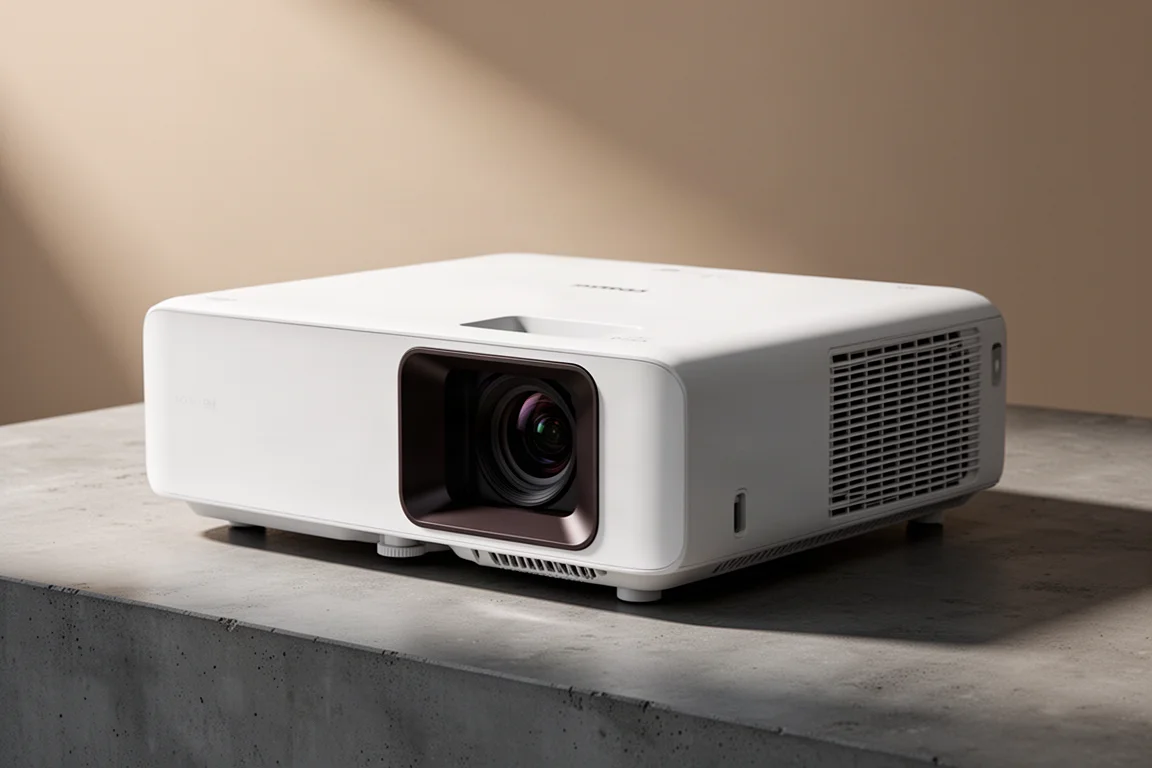
Sony has spent decades working across almost every stage of film production, from the cameras that capture a scene to the post-production tools that shape it to the commercial projectors that put it on a cinema screen. That breadth is one reason its home theater projectors tend to feel unusually polished. The VPL-XW6000 is the middle model in the company’s 2022 front projector line, and for most buyers it is the one worth understanding first. It sits within reach of a serious home theater budget while carrying a meaningful amount of technology down from the flagship model above it.
Who the Sony VPL-XW6000 Is For
The XW6000 makes the most sense for someone building a first dedicated projection room, or for anyone considering Sony for the first time. Its laser light engine and high brightness suit large screens where a dimmer projector would look washed out, and the widescreen capability appeals to viewers who dislike black bars and want a cinema-like presentation. Gamers and sports fans are also well served, since a dedicated gaming mode keeps input lag low and the brightness holds up when room lights are left partially on.
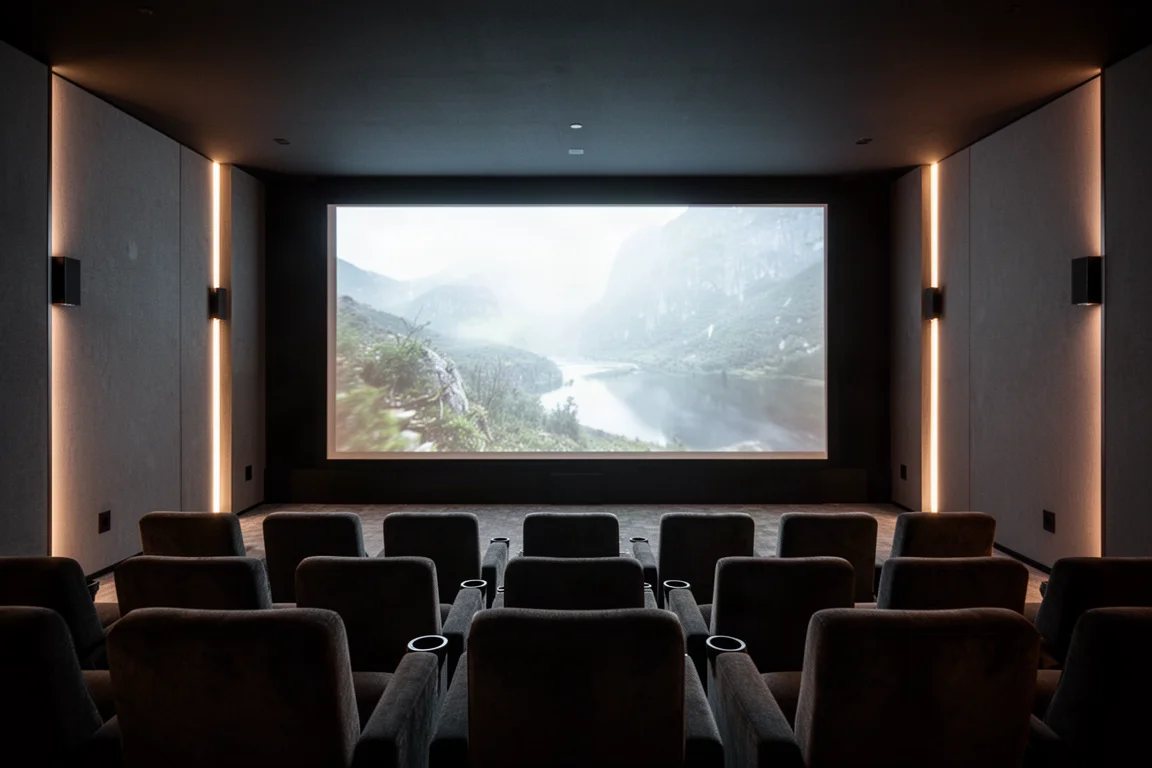
If your room is small or your screen is modest, you are paying for headroom you may not need. If your goal is a big, bright, immersive image, this is the model in the range that lines up with that goal.
Main Strengths: Laser Light Engine and New SXRD Panels
The move to a laser light engine is the headline change for this generation. The XW6000 is rated at 2,500 lumens, which supports noticeably larger screens than the lamp-based model it replaces, and the laser is rated for a 20,000 hour lifespan. Put another way, that is roughly two movies every day for almost 14 years. A well-implemented laser engine also tends to produce colors that look especially vivid.
The panels behind that light are new as well. Sony uses 0.61 inch native 4K SXRD (silicon X-tal reflective display) panels with a flatter reflective surface, about 10 percent more light reflectance, and a 50 percent improvement in light resistance. Those changes feed directly into contrast and brightness, which matter enormously for HDR. The result is an image that looks smooth and dimensional rather than merely sharp, with a sense of depth that feels closer to looking through a window than at a screen.
Sony also reworked how the panels interact with the laser. A new optical design called Wide Dynamic Range Optics positions the three panels inside the optical block for better light control, the laser diodes are arranged more densely, and a new cooling system keeps everything in check. Together these changes raise brightness and contrast.
Picture Processing and HDR Performance
Sony’s video processors have long been a large part of why its projectors look the way they do, and the XW6000 uses the X1 Ultimate for Projector chip. It works faster and with better algorithms than earlier generations, improving clarity, expanding dynamic range, and delivering a larger volume of colors.
The processor carries two databases of reference images drawn from Sony’s film industry experience. It compares each frame against those references for noise reduction and upscaling, while a digital contrast optimizer identifies the dark areas of a frame and determines how best to deepen them. The outcome is richer blacks and cleaner detail.
HDR handling gets similar attention. The Dynamic HDR Enhancer examines every frame to balance contrast, keeping dark scenes dark while preserving detail in shadow, and it can control the laser output power to support that. The strength of the effect is adjustable, and larger screens generally benefit from a higher setting. An object-based HDR remaster then analyzes individual objects within a scene to add finer contrast and a greater sense of depth and texture.
Color coverage also improves. TRILUMINOS PRO processing, first introduced on Sony’s flagship projector, gives the system a billion possible colors, which means subtler gradations and more believable transitions across skin tones and gradients.
One practical note: with default settings, some video noise was visible during evaluation. Once the picture controls were tuned, the HDR image became genuinely striking. Budget a little time for setup rather than judging the projector straight out of the box.
Lens Design and Widescreen Flexibility
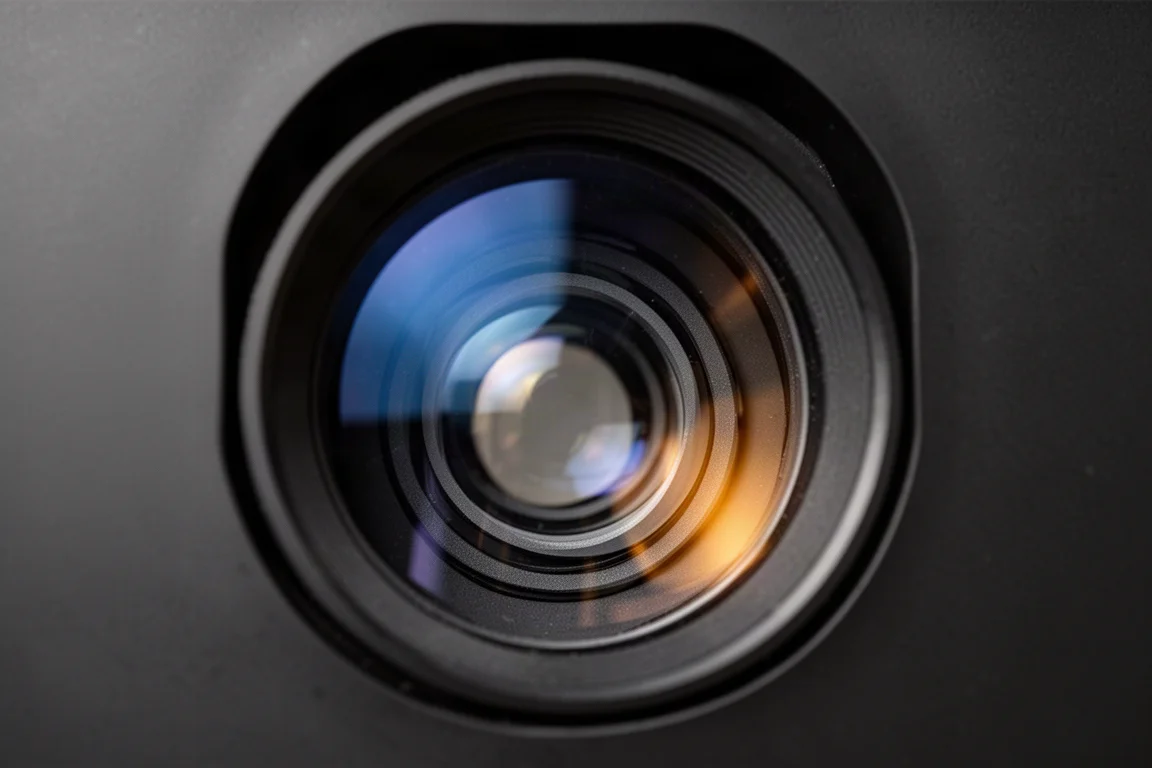
The XW6000 introduces a new lens system Sony calls the ACF lens, short for Advanced Crisp Focus. It uses a 70 millimeter spherical lens with 13 glass elements behind the primary lens, and it holds very little distortion at the edges, so the corners of the image stay sharp rather than softening.
Most projector lenses move a single element group when you zoom to match a different throw distance, which can introduce distortion. This design uses a floating group and a fixed group that move together as the zoom changes, keeping the image free of distortion across the range. Extra low dispersion glass is used to prevent color deviation between red, green, and blue when zooming.
The payoff for everyday use is motorized zoom with memory presets. You can store separate settings for different aspect ratios and switch between them, which is what makes a full widescreen presentation possible without black bars at the top and bottom of the frame. For anyone who wants the room to feel like a commercial cinema, this is the feature that delivers it, and it is one of the clearest differences between this model and the step-down option in the line.
Gaming, Fan Noise, and Measured Performance
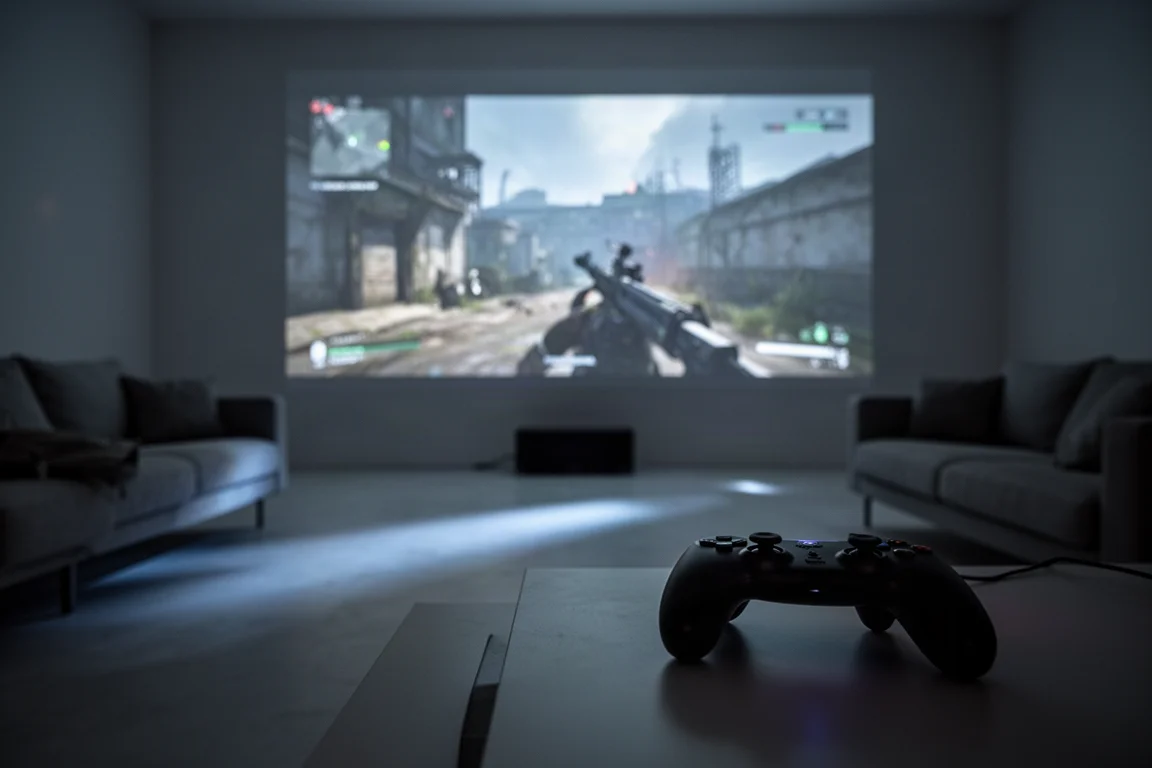
Gaming performance is a genuine strength. In the projector’s gaming mode, input lag measures about 21 milliseconds at 4K 60p and roughly 13 milliseconds at HD 120p, among the lowest figures you will find in a projector.
Noise was a fair concern given the powerful light engine, so it was measured directly. At the fan output, the projector registered about 53 dB at three feet, dropping to roughly 34 dB at six feet and about 31 dB further away. Those lower figures sit below the noise floor of some rooms, and because the vents on this model point to the rear rather than the front, it tends to seem quieter in a real installation than the numbers alone suggest.
Light output across the zoom range is another area where this projector behaves better than most. Measured from the shortest to the longest throw position on the same screen, brightness fell only about 22 percent, compared with 40 to 50 percent on many projectors and 20 to 30 percent on earlier Sony models. That means placing the projector further back for aesthetic reasons costs far less brightness than usual.
In direct viewing against the previous generation model it replaces in many home theaters, the newer processor made a clearly visible difference with compressed streaming content, and the gap widened with lower-quality online clips. Motion handling improved too: fast action sequences looked smoother, rolling credits stayed legible, and sports took on the brightness and punch of a good flat-panel television, even with some room lighting left on.
Things to Consider Before Buying
This is not an inexpensive projector. It is, however, the most technology Sony has packed into this price range, so the value question comes down to how much of that capability you will actually use.
Setup matters more than the spec sheet suggests. Stated lumen output is typically a theoretical maximum, and real brightness changes once colors are calibrated and the zoom is set for your throw distance. Sony’s published figures tend to sit closer to real-world results than those of cheaper projectors, which is worth remembering when comparing models on paper.
Plan for picture tuning as well. The HDR enhancer and related controls need adjustment to look their best, and the larger your screen, the more you will want the enhancer engaged. Throw distance and screen width also need to be calculated before purchase, and widescreen lens memory adds a step to that planning.
Buying Advice
Start with the screen. Decide on the size and aspect ratio you want, then work back to the projector position, because throw distance and brightness are linked. If widescreen is the goal, make sure you are comfortable using lens memory presets to switch between aspect ratios.
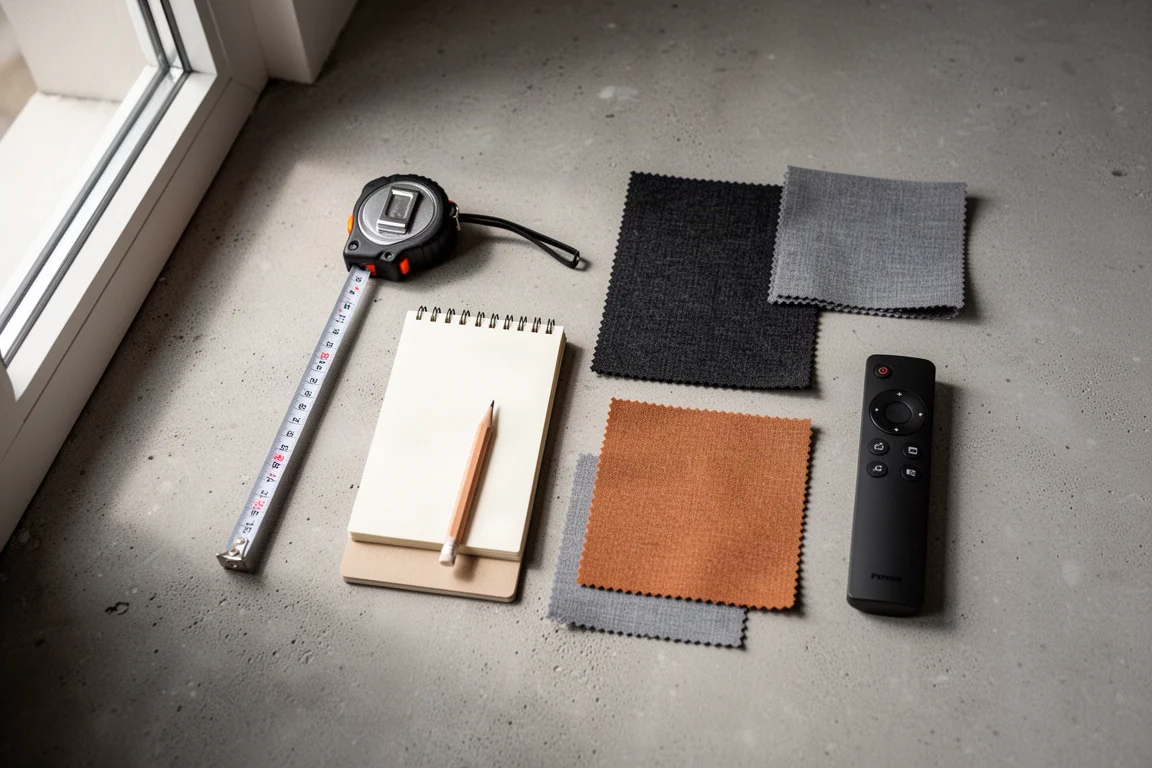
From there, weigh how you actually watch. If most of your viewing is streaming, the improved processing on this model is a meaningful step up over the previous generation. If gaming matters, the low input lag in gaming mode is a strong argument. If your room has some ambient light or your screen is large, the laser light engine and its brightness headroom are the features that will justify the purchase night after night.
Conclusion
The Sony VPL-XW6000 brings together a 2,500 lumen laser light engine, new native 4K SXRD panels, the X1 Ultimate for Projector processor, refined HDR handling, and a new ACF lens system with widescreen lens memory. Each of those improvements is substantial on its own. Together they make this the most compelling model in Sony’s 2022 lineup for anyone who wants a big, bright, immersive image.
Product link
View more details for Sony VPL-XW6000
This product is mentioned in the review. Check the specifications, options, and compatibility before buying.
View more details for Sony VPL-XW6000Further reading
Related Reviews
Home Theater Projectors
Barco Heimdoll Family Guide: Choosing a Native 4K RGB Laser Projector
A practical guide to the Barco Heimdoll, Heimdoll Cinemascope, Heimdoll Plus, and Heimdoll Plus Cinemascope for large-format home theaters.
Home Theater Projectors
Best Home Theater Projectors 2026: Five Models Ranked by Performance and Value
A comprehensive ranking of five home theater projectors, from budget-friendly to premium options, evaluated on brightness, resolution, color accuracy, and gaming performance.
Home Theater Projectors
Epson EpiqVision LS800 Review: A Super Ultra Short Throw 4K Laser Projector for Bright Living Rooms
A practical look at the Epson EpiqVision LS800 and the SilverFlex Ultra ALR screen, covering brightness, throw distance, gaming performance, and the setup trade-offs worth knowing.