Home Theater Projectors
Epson EpiqVision LS800 Review: A Super Ultra Short Throw 4K Laser Projector for Bright Living Rooms
A practical look at the Epson EpiqVision LS800 and the SilverFlex Ultra ALR screen, covering brightness, throw distance, gaming performance, and the setup trade-offs worth knowing.
Introduction
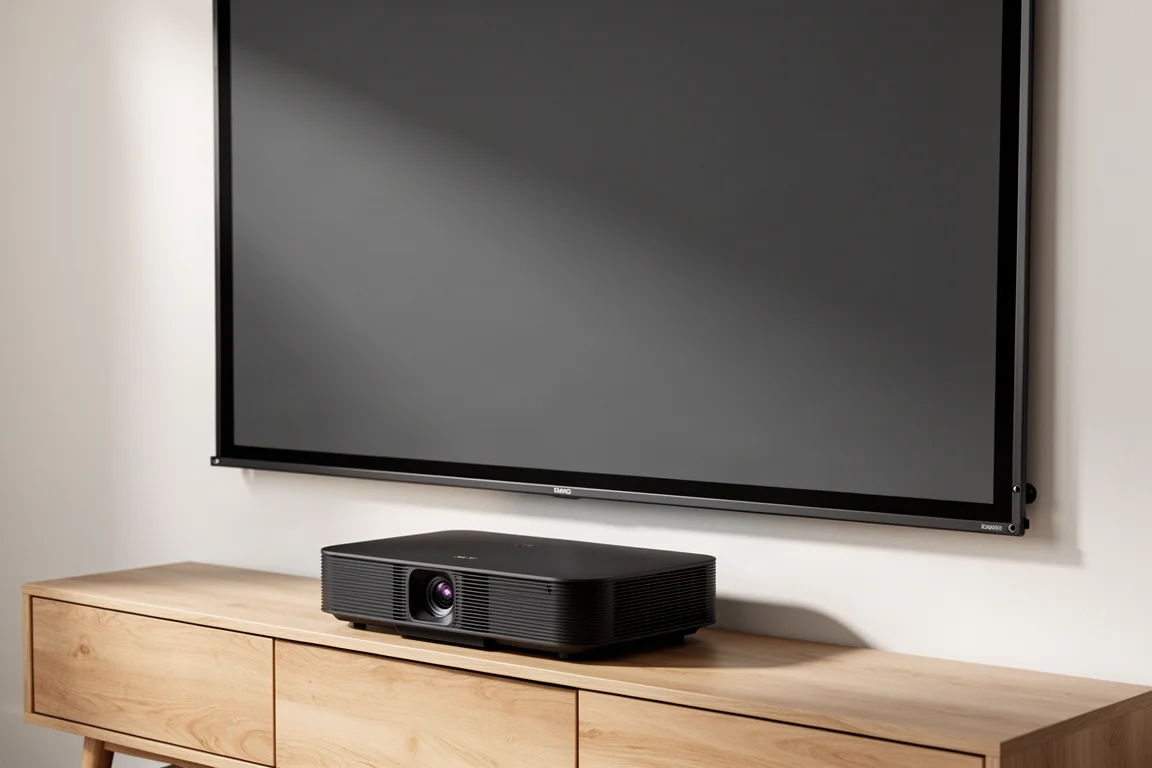
The Epson EpiqVision LS800 is a front-facing super ultra short throw laser projector built to replace a television with a very large 4K HDR image. It is a laser projector and projection screen solution, and it pairs with the Epson SilverFlex Ultra ambient light rejecting screen in 100-inch or 120-inch sizes, which is the configuration most buyers will want for a living room.
The logic behind the pairing is straightforward: a bright laser light engine that never requires a lamp replacement, plus a screen designed specifically to reject ambient light, so the picture holds up in a room that is not a dedicated, light-controlled theater.
Who the Epson EpiqVision LS800 Is For
This system is aimed at viewers who want a dramatically larger image than a flat panel can deliver but cannot dedicate a room to a traditional front projector. Because the LS800 is a super ultra short throw design, it sits on an existing media console instead of hanging from the ceiling, and it does not require cables run through walls or across the room.
That makes it a strong fit for renters, for family rooms that have to serve as living spaces during the day, and for anyone who wants to keep the furniture they already own. It is also a natural choice for game day, where a screen this large can show four games at once with the blinds open and the lights on.
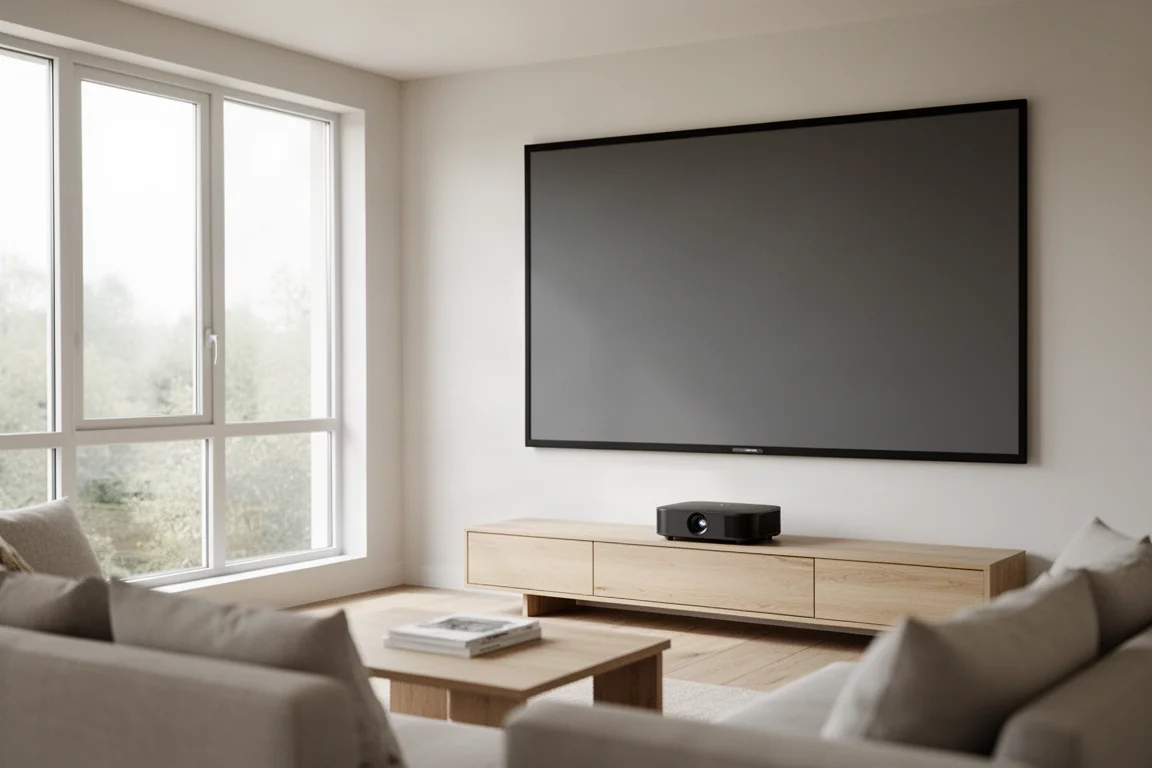
If your priority is a bright, colorful, sharp 4K image in a room with ordinary daylight rather than a blacked-out theater, this is the scenario the LS800 and its ALR screen were designed around.
Main Strengths of the LS800
The most practical upgrade over the previous generation is throw distance. Producing a 120-inch image requires only about 20.2 inches from the wall to the lens, compared with roughly 35 inches on the Epson LS500. That is one of the shortest throw distances for any projector on the market right now, and it means the LS800 can live on a standard media console without forcing you to rearrange the room or buy an unusually deep piece of furniture.
Brightness is the other headline. The LS800 is rated at a maximum of 4,000 lumens, which places it among the brightest ultra short throw projectors available, and it is complemented by a 2,500,000:1 dynamic contrast ratio. The laser light source has a life expectancy of up to 20,000 hours, which works out to roughly eight hours a day, five days a week, for ten years before you would need to worry about the light engine.
Epson uses a 3LCD projector chipset with one chip for each primary color. Because there is no color wheel, you avoid the rainbow effect that some DLP-based ultra short throw projectors produce, and the configuration gives strong white balance, brightness, and contrast for a sharp, natural 4K picture. Resolution comes from 4K PRO-UHD enhancement, an advanced pixel shifting and imaging process that doubles the number of on-screen pixels per frame and doubles full HD resolution on the screen. It is not native 4K imaging hardware, but at a normal viewing distance the difference is very difficult to detect, and the image is up to four times larger than a 60-inch television.
HDR handling is thorough. Full 10-bit HDR color processing accepts 100 percent of an HDR source, and real-time 10-bit analog-to-digital video processing creates smooth tonal transitions while helping to eliminate banding, blocking, and other compression artifacts. That processing shows up most clearly with fast-moving sports, where motion stays clean without any compromise in quality. HDR content is supported across most popular streaming platforms.
Gaming gets its own attention. A dedicated high performance gaming mode lowers input lag to under 17 milliseconds at 4K and 60 frames per second, and you can drop to 1080p for 120Hz and higher frame rates when you want the quickest possible response. The projector is capped at 60Hz in 4K, so the absence of HDMI 2.1 inputs is not a meaningful limitation here.
Four picture modes, Dynamic, Vivid, Cinema, and Natural, along with four color modes, make it easy to switch between daytime viewing and a darker movie session. A 2.1-channel speaker system sits behind the front grille cloth and delivers sound that is clearly better than typical television speakers, which is a useful starting point if you do not yet own an audio system.
Connections are tucked behind a removable side panel that stays attached by a wire so it cannot be dropped or misplaced. The panel hides the focus controls and the ports: three HDMI 2.0 inputs, two USB Type-A ports, an optical output, a 3.5mm headphone jack, a USB DC out, and a USB Type-B port for servicing the unit. The remote includes voice search with built-in Google Assistant and Chromecast support for casting photos, videos, and music from a phone or computer, and the projector runs an Android-based operating system, though many owners will connect a Roku, Apple TV, or Fire TV stick instead.
The projector measures about 27 inches wide, almost 14 inches deep, and about 6 inches tall, with a modern low-profile design that suits an existing media console, and it is available in white or black to match your room.
Why the SilverFlex Ultra ALR Screen Matters
The SilverFlex Ultra screen is not a generic projection surface. It is an ambient light rejecting screen intended specifically for ultra short throw projectors, with a thin bezel design and a dark gray surface that reads much like a modern flat panel when it is switched off.
What makes it work is a sawtooth light-absorbing optical pattern layered into the screen material. That structure rejects ambient light hitting the surface and focuses the picture toward the viewing area instead of scattering it. The result is less washout from room light, excellent contrast in brightly lit rooms, and a picture that still looks good when you are viewing from off to the side.
Because of that design, the LS800 and screen combination can be placed in any room in the home, including a well-lit living room, without needing to draw the curtains or dim the lights. The image is naturally brighter when the lights are low, but daytime viewing remains completely usable, which is exactly what makes a four-game split screen with the blinds open look so good.
The screen does need care. Do not touch the surface with bare hands, since oils from your fingers can leave a smear. Handle it only by the black metal edges, or wear gloves if you have to move it. When cleaning, work left to right only, never in circles or up and down, using the lightest pressure you can manage with a high quality microfiber cloth.
Things to Consider Before Buying
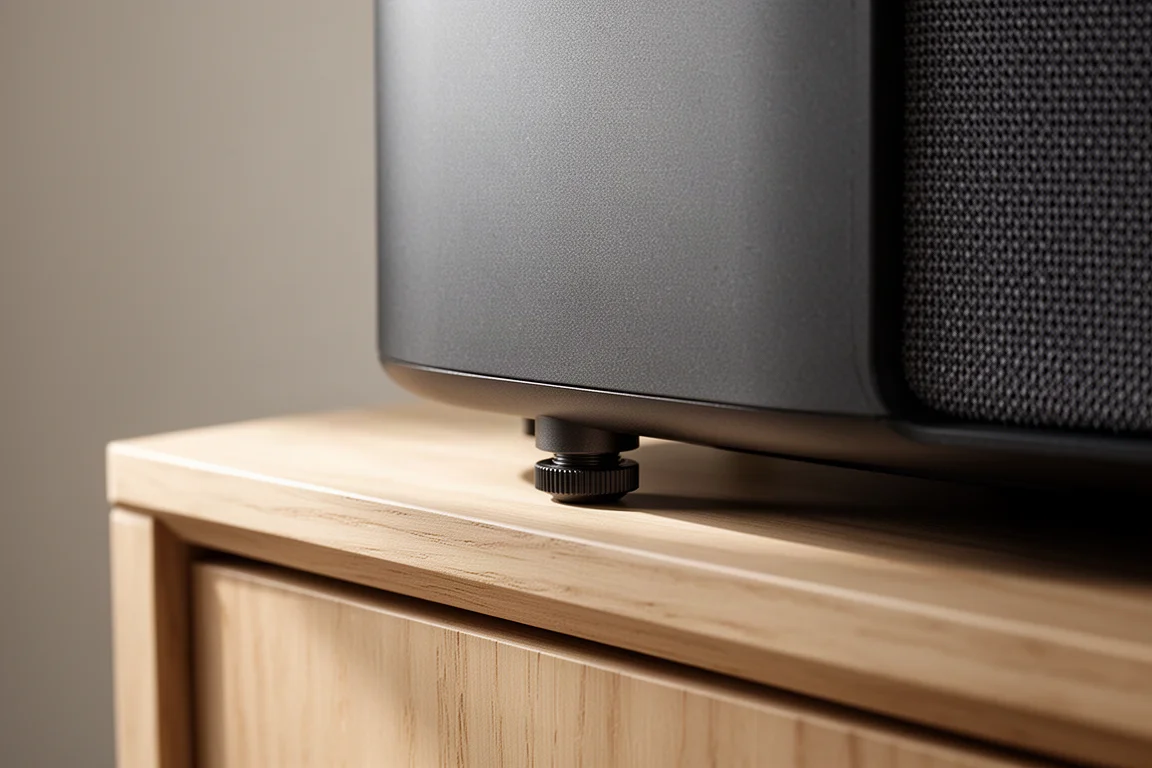
An exposed ultra short throw projector sits within reach, and that is a genuine trade-off. If a child, a dog, or a guest bumps the unit even slightly, the image can shift off the screen and lose its calibration. Marking where the adjustable feet sit, or adding a small amount of adhesive underneath, helps keep the unit steady. If it does get knocked out of position, you will need to return it to its original spot and calibrate again, though the process is quick once you know what you are doing.
The LS800 relies on pixel shifting rather than native 4K imaging chips, a deliberate trade-off that keeps the price well below projectors that use native 4K hardware. The 4K input is capped at 60Hz, so there are no HDMI 2.1 inputs, and the built-in 2.1-channel speakers, while better than television speakers, will not match a dedicated surround system for immersive movie watching.
Setup is a project rather than a plug-and-play task. Assembling the screen, mounting it, aligning it, and calibrating the projector took roughly a couple of hours with two people. Fine adjustment is handled by small threaded feet that spin to raise and lower the unit, plus corner adjustments in the settings menu so the image fits the screen precisely. Placing the projector optically close to correct before those fine adjustments makes the whole process easier.
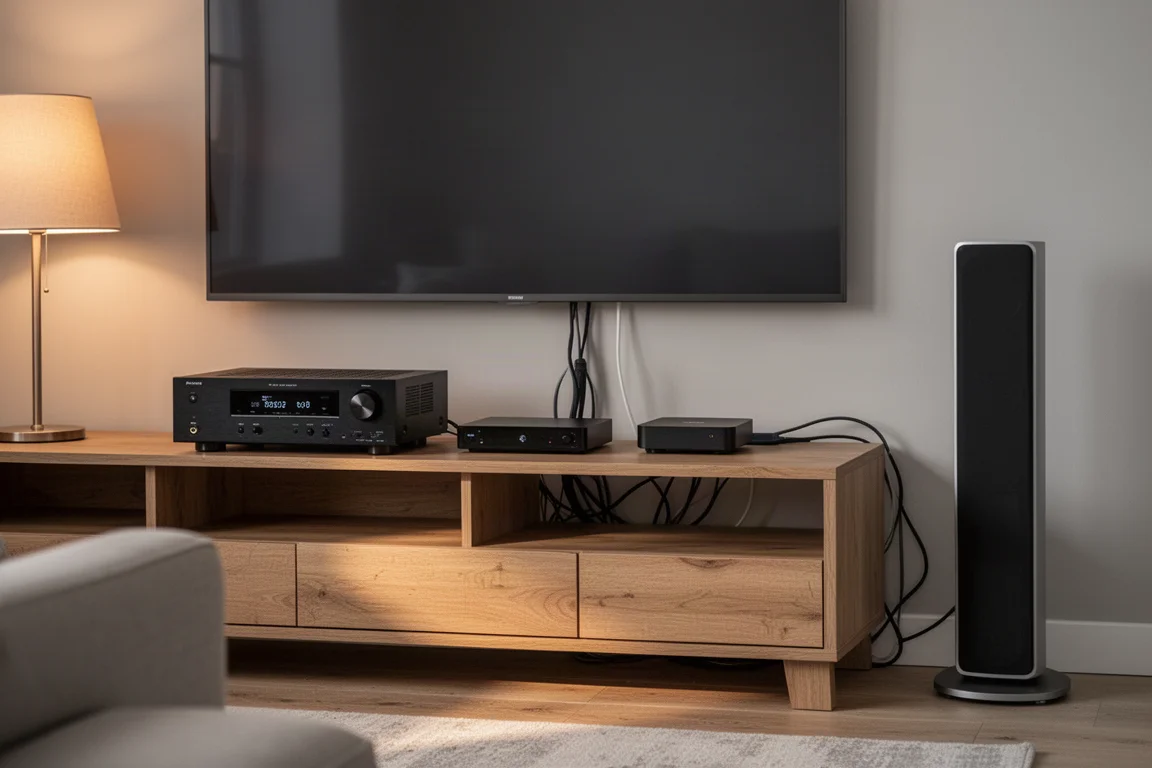
It is also worth setting expectations about picture character. An OLED television will still look more vivid, with deep silky blacks and an incredible dynamic range. What the LS800 offers instead is screen size at a price that large 4K televisions cannot match: the best 4K TVs above 65 inches can climb toward $8,000, and even then they do not provide the sheer scale of a 120-inch projected image.
For serious movie watching, the picture looks its best with the lights off, the blinds closed, and Cinema mode selected. That is how most films are watched in the evening anyway, so it is a small compromise rather than a limitation.
Buying Advice
Start with the screen size question. Epson offers a 100-inch display for a super wide 16:9 image, and a 120-inch display if you have the wall space for it. The 120-inch option is the more immersive of the two, and the short throw distance means you do not need a deep room or an oversized console to accommodate it.
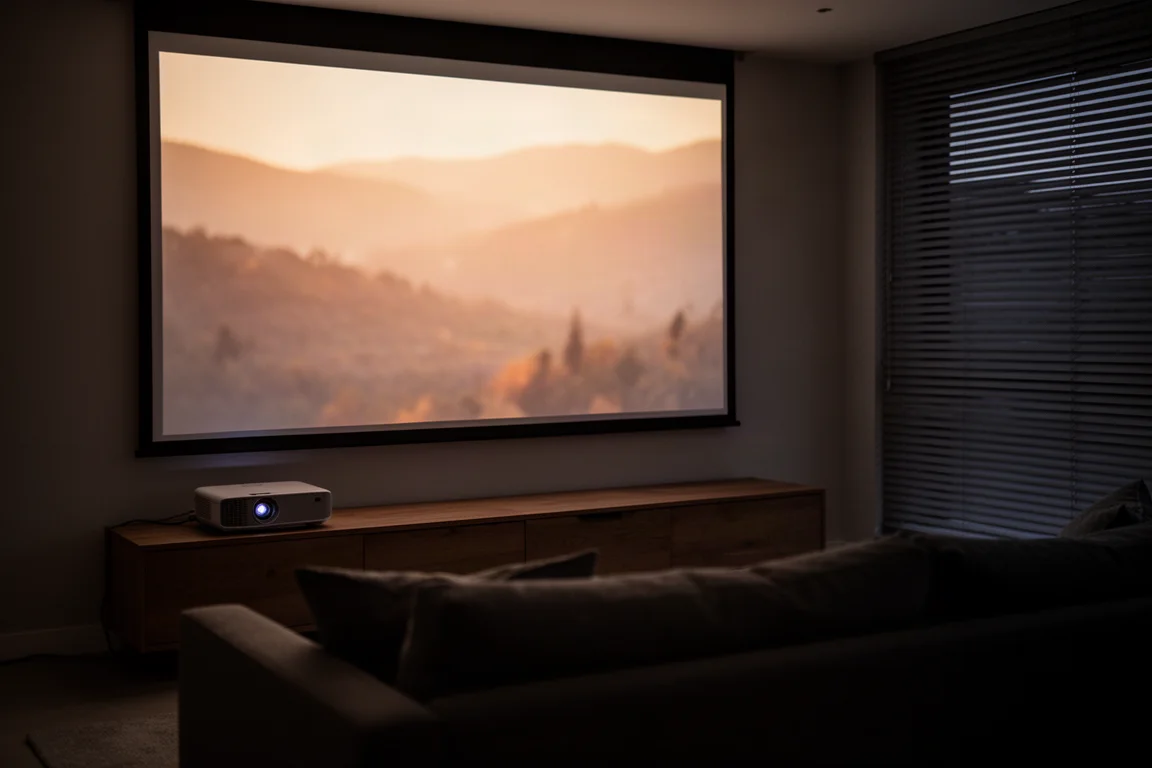
Think about the light in your room and how you actually watch. If your living room has a lot of sunlight and overhead lighting, the LS800 and SilverFlex Ultra combination is built for exactly that environment, and it will handle news, sports, prime time shows, and HDR movies without the image washing out. If your main goal is critical movie watching in a dark room, the system still performs well, but it makes sense to plan for an external audio system at the same time, since the picture deserves more than built-in speakers.
Finally, budget for care and stability. Give the screen the handling it requires, and secure the projector’s position on the console so the calibration holds. Those two habits are the difference between a system that always looks right and one that needs constant readjustment.
Conclusion
The Epson EpiqVision LS800 and the SilverFlex Ultra ALR screen make a compelling pairing for anyone who wants a very large 4K image in a room that is not a dedicated theater. The short throw distance keeps the projector on your existing furniture, the 4,000-lumen laser light engine and 3LCD chipset keep colors bright and free of rainbow artifacts, and the ambient light rejecting screen keeps the picture clean even with the lights on.
It is not a replacement for OLED in absolute contrast terms, and it asks for careful placement and setup. As a day-to-day television replacement for a bright, multi-purpose living room, though, it is one of the more convincing options in its class.
Product link
View more details for Epson EpiqVision LS800
This product is mentioned in the review. Check the specifications, options, and compatibility before buying.
View more details for Epson EpiqVision LS800Further reading
Related Reviews
Home Theater Projectors
Barco Heimdoll Family Guide: Choosing a Native 4K RGB Laser Projector
A practical guide to the Barco Heimdoll, Heimdoll Cinemascope, Heimdoll Plus, and Heimdoll Plus Cinemascope for large-format home theaters.
Home Theater Projectors
Best Home Theater Projectors 2026: Five Models Ranked by Performance and Value
A comprehensive ranking of five home theater projectors, from budget-friendly to premium options, evaluated on brightness, resolution, color accuracy, and gaming performance.
Home Theater Projectors
Epson LS500 Review: An Ultra Short Throw Projector for Rooms With Light
A practical look at the Epson LS500 ultra short throw projector, covering who it suits, where it performs best, and what to plan for before buying.