Home Theater Projectors
Barco Heimdoll Family Guide: Choosing a Native 4K RGB Laser Projector
A practical guide to the Barco Heimdoll, Heimdoll Cinemascope, Heimdoll Plus, and Heimdoll Plus Cinemascope for large-format home theaters.
Introduction
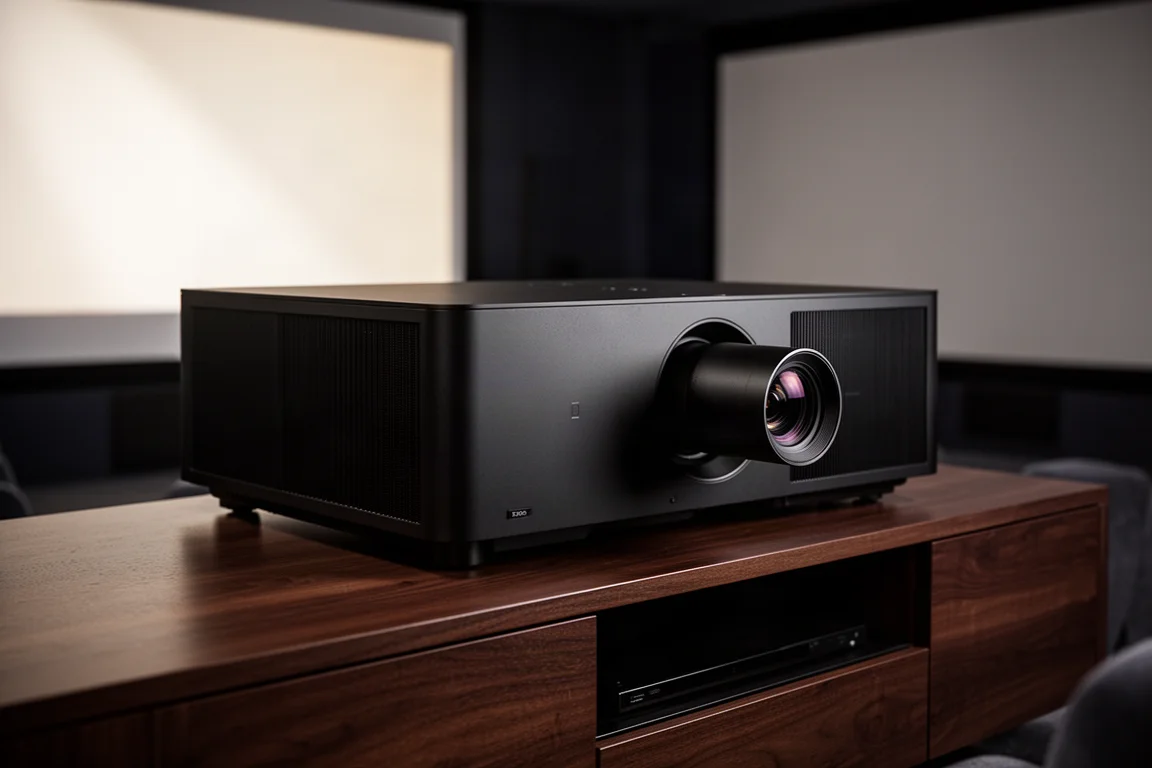
Barco has built its reputation on projection systems for commercial cinemas, command and control visualization, and medical displays, where accuracy is everything. The Heimdoll family carries that same engineering DNA into private theaters, and it arrives with a rare combination of technologies: a single-chip native 4K DLP platform driven by a pure RGB laser light engine.
The lineup includes four models. The Heimdoll and Heimdoll Plus are built for 16:9 screens, while the Heimdoll Cinemascope and Heimdoll Plus Cinemascope are designed for constant image height theaters. All four are designed and developed in Norway and Belgium, and all four share the same sealed optical architecture, Pulse processing platform, and interchangeable lens system.
This guide walks through what the platform delivers, how the four models differ, and which one fits a given room and screen.
Native 4K DLP Meets a Pure RGB Laser Engine
The core of every Heimdoll is a native 4K 0.98-inch DLP chip paired with a solid-state RGB laser light source that uses separate banks of red, green, and blue lasers. This is not a blue laser shining through a phosphor wheel, and there is no spinning color wheel. The discrete primaries are modulated directly, which is the foundation for both the color range and the brightness consistency across the lineup.
That combination is what separates the Heimdoll from the usual single-chip DLP trade-offs. You get the sharpness, motion clarity, and punch that DLP is known for, along with the color range and dynamic contrast needed to sit alongside the best three-panel home theater projectors. Because the light engine uses fixed laser primaries rather than three separate panels, the projector needs calibration only once during setup, and there is no panel alignment to drift over time.
The build is equally serious. The DMDs and optical assembly are sealed to protect against dust, and the cabinet measures roughly 19 inches wide, 22 inches deep, and 12 inches tall without the lens attached, at around 68 pounds. That is substantial, but still manageable for ceiling mounts and soffits. Perhaps the most surprising measurement is acoustic: the Heimdoll runs at close to 29 dB at full power, which is quiet enough to mount directly in the room rather than in a hush box or a separate projection room.
Contrast, HDR Tone Mapping, and the Pulse Platform
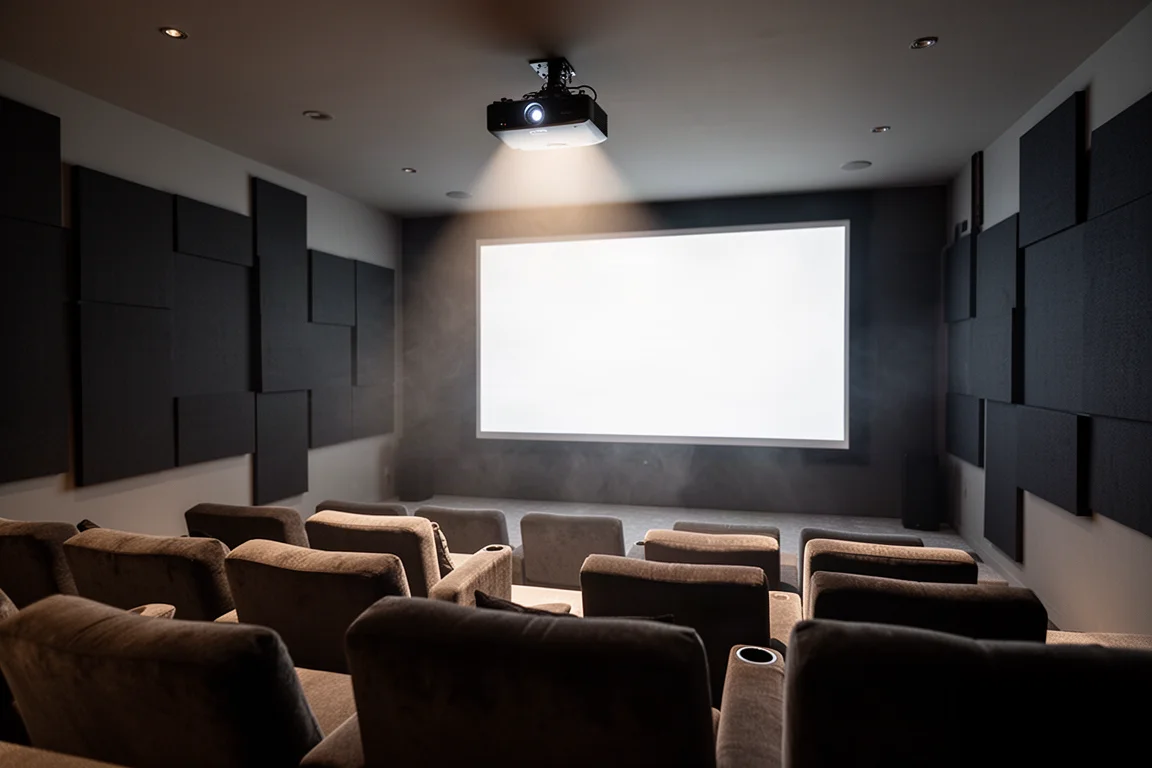
Contrast is handled in several layers. Dual aperture elements in the optical path reduce stray light and raise native on/off performance compared with older single-chip engines, and the 0.98-inch DMD architecture itself has been tuned for higher native contrast. On top of that, Barco’s DynaBlack system analyzes each frame and uses ultrafast laser pulsing to deepen dark scenes and lift bright ones.
Processing comes from Barco’s Pulse platform, which is built around a short, efficient signal path with advanced processing that avoids artifacts and keeps latency low. Pulse also handles single-step processing for geometry correction, warping, and blending, so setup adjustments do not have to be traded against response time.
HDR is where the cinema heritage shows most clearly. Projectors cannot throw thousands of nits at highlights the way a television can, so tone mapping is the difference between an HDR image that feels dimensional and one that looks flat. Barco’s HDR engine uses the headroom of the pure RGB laser light source to preserve highlight sparkle without crushing shadows or washing out color. Bright sequences feel energetic, and low-light scenes hold onto shadow detail instead of turning muddy.
Color coverage is another headline. The RGB engine covers roughly 98% of REC 2020, with full support for REC 709 and DCI-P3. That is a very wide palette for a projector, and it matters most with HDR material, where rich reds, saturated greens, and clean blues need to stay clean at high brightness. Skin tones stay natural and lifelike, which is the harder test.
Connectivity keeps pace with the rest of the package. HDMI 2.1 brings 4K120 support and low latency, which makes the Heimdoll a credible option for high frame rate gaming on a very large screen, not only for film.
Barco Heimdoll
The standard Heimdoll is the 16:9 entry point to the family, rated at about 4,500 lumens. That output is enough to drive a large screen while keeping the image punch and contrast intact, and it gives the projector headroom to absorb the things that normally cost light: large screens, acoustically transparent materials, lower gain surfaces, calibration adjustments, and port glass. HDR also demands more light for proper highlight detail, particularly in rooms that are not fully darkened.
For a reference-grade theater or a luxury media room built around a 16:9 screen, this is the model that delivers the core Heimdoll experience: native 4K resolution, pure RGB laser color, DynaBlack contrast control, and Pulse processing.
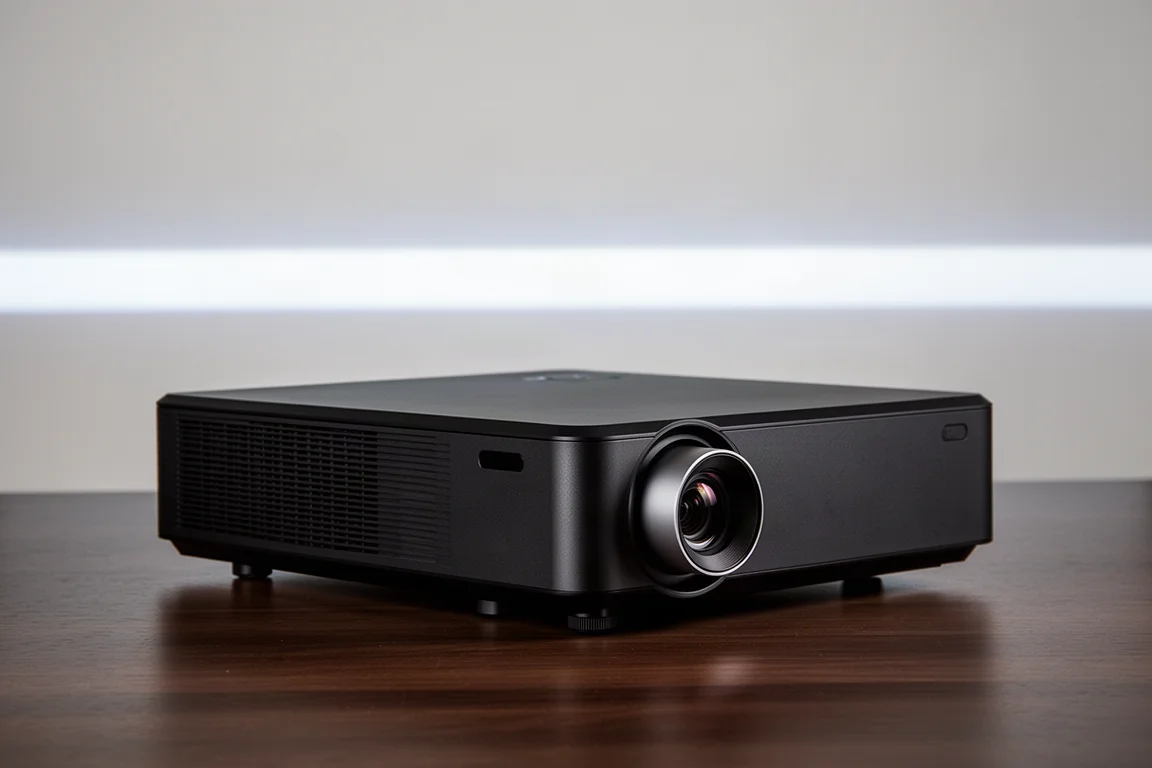
Barco Heimdoll Cinemascope
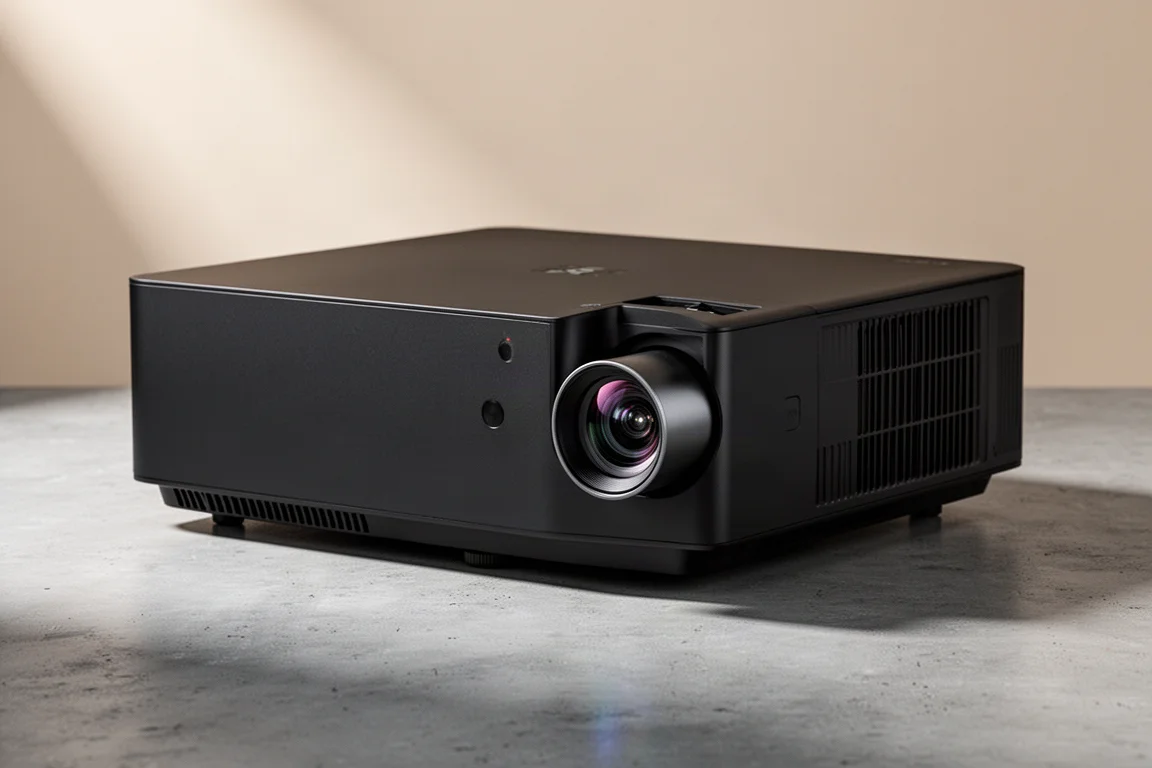
The Cinemascope models are built for constant image height theaters. On a 2.35 or 2.4 screen, a scope film fills the full width without giving up pixels, and it does so natively. Other approaches to scope screens typically rely on an anamorphic lens to stretch the image, which adds an optical element and its own compromises. The Heimdoll Cinemascope avoids that entirely.
The difference is not a different lens or a different chip. The lens and the chip are the same as the standard models. What changes is the integrator rod inside the light engine, which focuses and funnels light onto the specific shape of the screen, along with a move to 6K resolution on the Cinemascope versions and a different software layer.
That software is where a lot of the practical value lives. The projector recognizes when content switches between 16:9 and scope, so menus stay in their native aspect instead of being stretched or cropped, and a scope film snaps to full screen width almost instantly. There is also a nonlinear stretch feature, appearing for the first time in the Heimdoll family, with three degrees of nonlinearity to control how much stretch is applied and how evenly it is distributed across the image, plus a crop control. The result can be tuned to a specific viewer’s preference rather than locked to a single preset.
Barco Heimdoll Plus
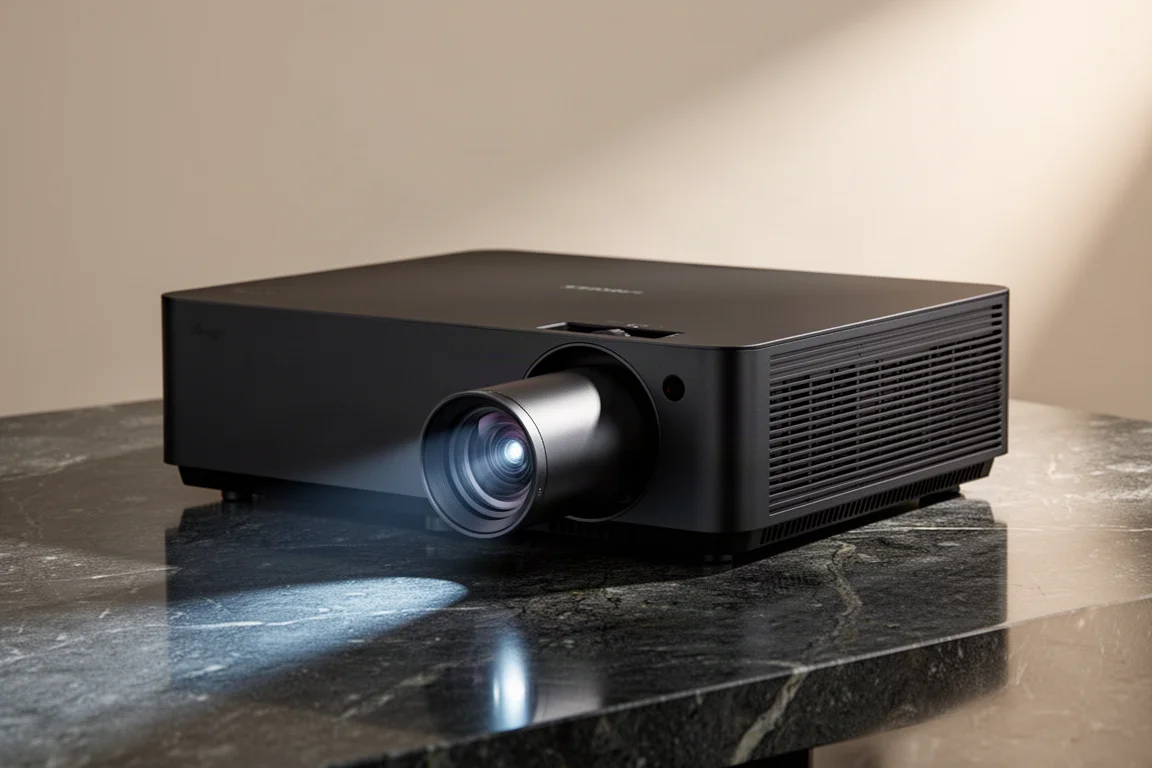
The Heimdoll Plus raises light output to about 6,000 lumens while keeping the 16:9 format. That extra brightness is what allows the Plus models to light up screens up to 16 feet wide at 1.0 gain, and it is the difference between a projector that handles HDR highlights gracefully and one that has to compromise.
For a room with a very large 16:9 screen, or a theater where some ambient light is unavoidable, the Plus is the more comfortable choice. The additional output also protects image quality when the screen material itself absorbs light, which is common with acoustically transparent fabrics and low gain surfaces.
Barco Heimdoll Plus Cinemascope
The Heimdoll Plus Cinemascope combines the two upgrades: the higher 6,000-lumen output and the constant image height architecture, with the 6K resolution and scope software of the Cinemascope versions. It is the model aimed at the largest and most demanding scope theaters.
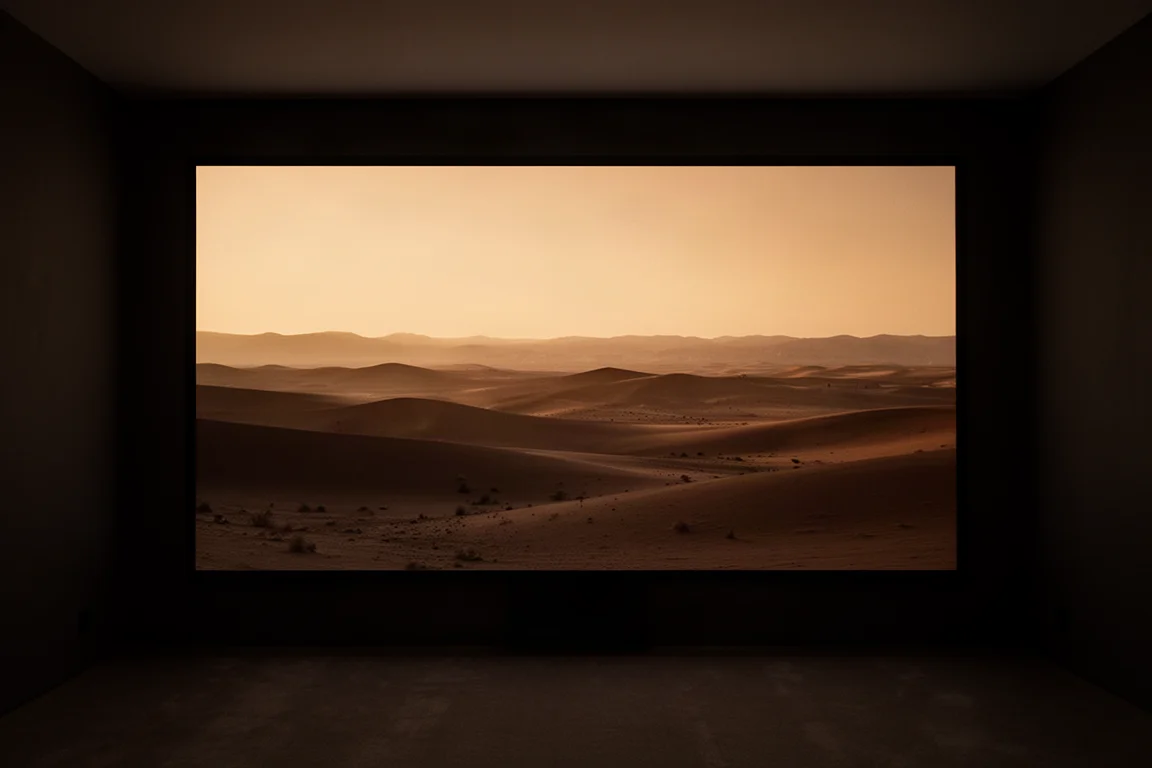
Performance on a 186-inch screen shows what that combination buys. In Dune: Part One, desert landscapes came through radiant and layered, with warm amber tones that held together even in the brightest sunlit shots. Palace interiors kept deep, detailed shadows rather than turning gray, and textures in fabric, armor, and stonework stayed clearly resolved. Color balance felt natural and cinematic rather than oversaturated, motion stayed razor sharp through fast action, and DynaBlack kept contrast strong even in quick transitions. Across everything, the image read more like a professional cinema projector than a residential one.
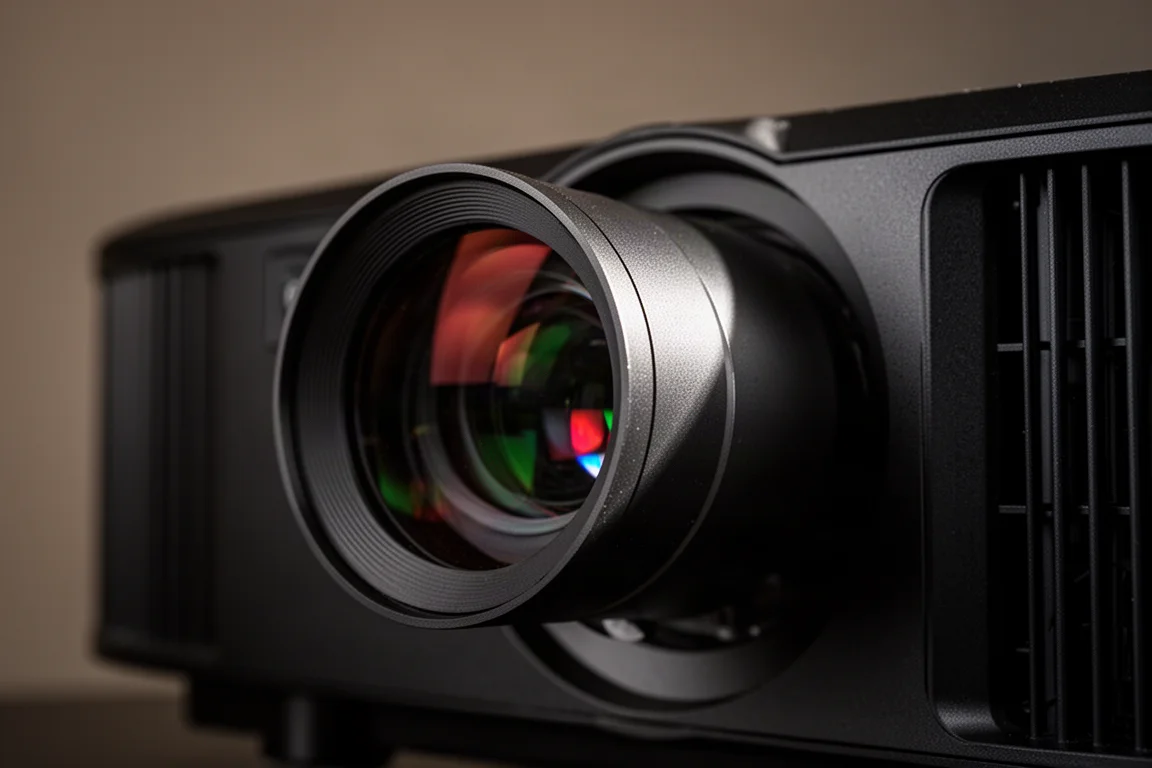
At this scale, brightness headroom matters most. A scope screen of that size combined with HDR content asks a great deal of a light engine, and the Plus Cinemascope is the model with the least need to compromise between highlight detail and shadow depth.
Installation, Lenses, and Control
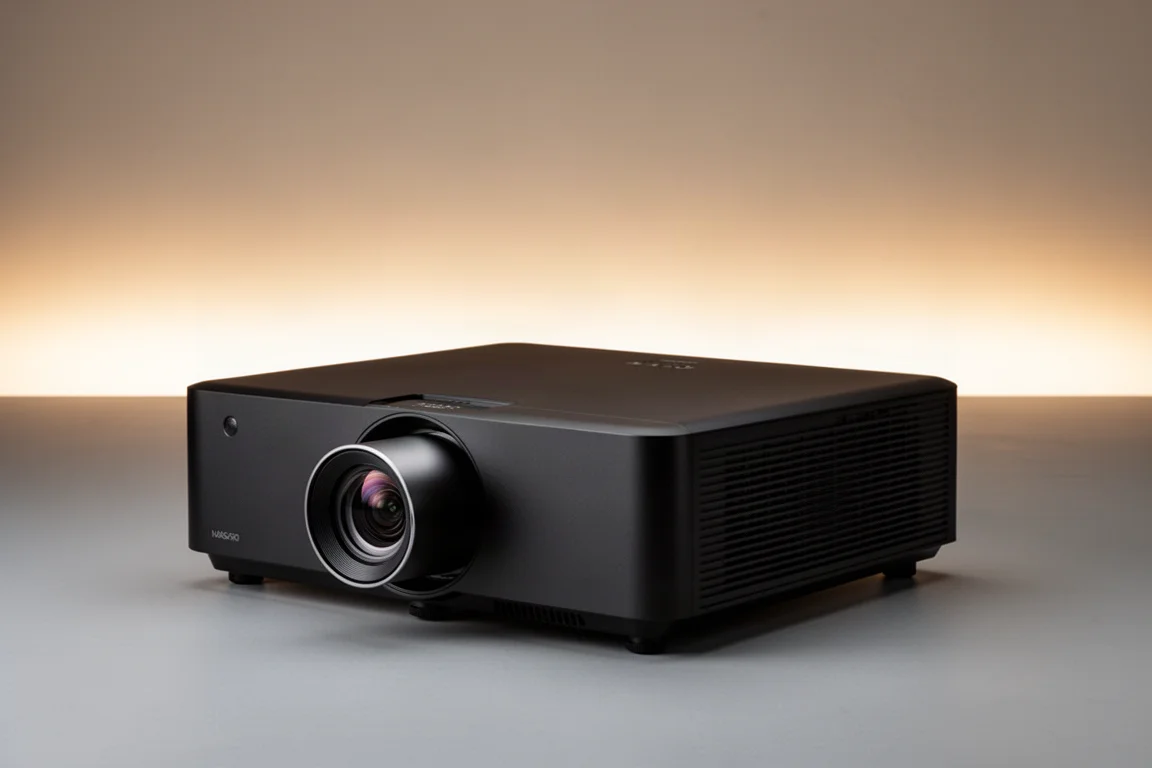
Lens flexibility is a major part of why the Heimdoll fits so many theater designs. Barco offers seven different lenses, from short throw options to long throw designs and standard sizes for projection booths and rear rooms, and some use Barco’s yoke adapter for the FLDX and FLD Plus lens families. Each lens has its own throw range and shift characteristics that affect brightness uniformity, geometry, and placement flexibility, so the right pairing depends on the room as much as on the projector.
Control is handled two ways. There is a touch screen on the projector itself, and there is Prospector, a browser-based interface you reach by logging into the IP address shown on that screen. Prospector works from any device on the network, whether that is a laptop, a tablet, or a phone, and its tabbed layout makes it easy to find and adjust a setting.
Geometry correction is unusually capable. Barco’s simulation-grade warp engine includes four corner warp, which allows the projector to be placed off-center, even in a corner, with each corner adjusted until the geometry is perfect. In those setups, a screen with a lambertian surface is recommended so illumination stays even and no hot spot appears on one side. With the right screen, most viewers would never know the projector is not in the center of the room. Importantly, using four corner warp does not affect latency, so gaming performance is preserved.
One practical note applies to any large, bright projector: plan for ventilation. Whether the unit is mounted in the room or in a separate projection room, proper airflow keeps it running cool and efficient, and the installation should be designed with that in mind from the start.
Overall Buying Advice
Choosing within the family comes down to two questions: what shape is your screen, and how much light does it need.
If your theater is built around a 16:9 screen, the Heimdoll and Heimdoll Plus are the relevant models, with the Plus preferred for screens approaching the 16-foot mark, for lower gain or acoustically transparent materials, and for rooms where HDR highlights need extra headroom. If your theater is built around a constant image height 2.35 or 2.4 screen, the Cinemascope versions deliver the scope experience natively, with 6K resolution and no anamorphic lens required. The Heimdoll Plus Cinemascope is the choice when the screen is very large and the content is demanding.
Two long-term considerations support the decision. The laser light source is rated at around 25,000 hours, so picture quality stays consistent for years without lamp replacements. And because the optical assembly is sealed and there is no panel alignment to drift, the projector needs calibration only once during setup.
Conclusion
The Heimdoll family is a meaningful step forward for high-end home theater because it brings together qualities that rarely appear in the same projector: native 4K resolution, a pure RGB laser light engine, wide color coverage, dynamic contrast control, low-latency processing, and genuinely quiet operation. With four models split across 16:9 and Cinemascope formats and two brightness tiers, the lineup covers everything from a reference-grade media room to a very large constant image height theater, and it does so without asking you to accept an anamorphic lens or a noisy projector room as part of the deal.
Further reading
Related Reviews
Home Theater Projectors
Best Home Theater Projectors 2026: Five Models Ranked by Performance and Value
A comprehensive ranking of five home theater projectors, from budget-friendly to premium options, evaluated on brightness, resolution, color accuracy, and gaming performance.
Home Theater Projectors
Epson EpiqVision LS800 Review: A Super Ultra Short Throw 4K Laser Projector for Bright Living Rooms
A practical look at the Epson EpiqVision LS800 and the SilverFlex Ultra ALR screen, covering brightness, throw distance, gaming performance, and the setup trade-offs worth knowing.
Home Theater Projectors
Epson LS500 Review: An Ultra Short Throw Projector for Rooms With Light
A practical look at the Epson LS500 ultra short throw projector, covering who it suits, where it performs best, and what to plan for before buying.