Tower Speakers
Sony SS-CS3 Review: A Budget Tower Speaker With a Difficult Midrange
The Sony SS-CS3 tower speaker delivers plenty of output for the money, but measured resonances and an uneven radiation pattern make its midrange hard to tame.
Introduction
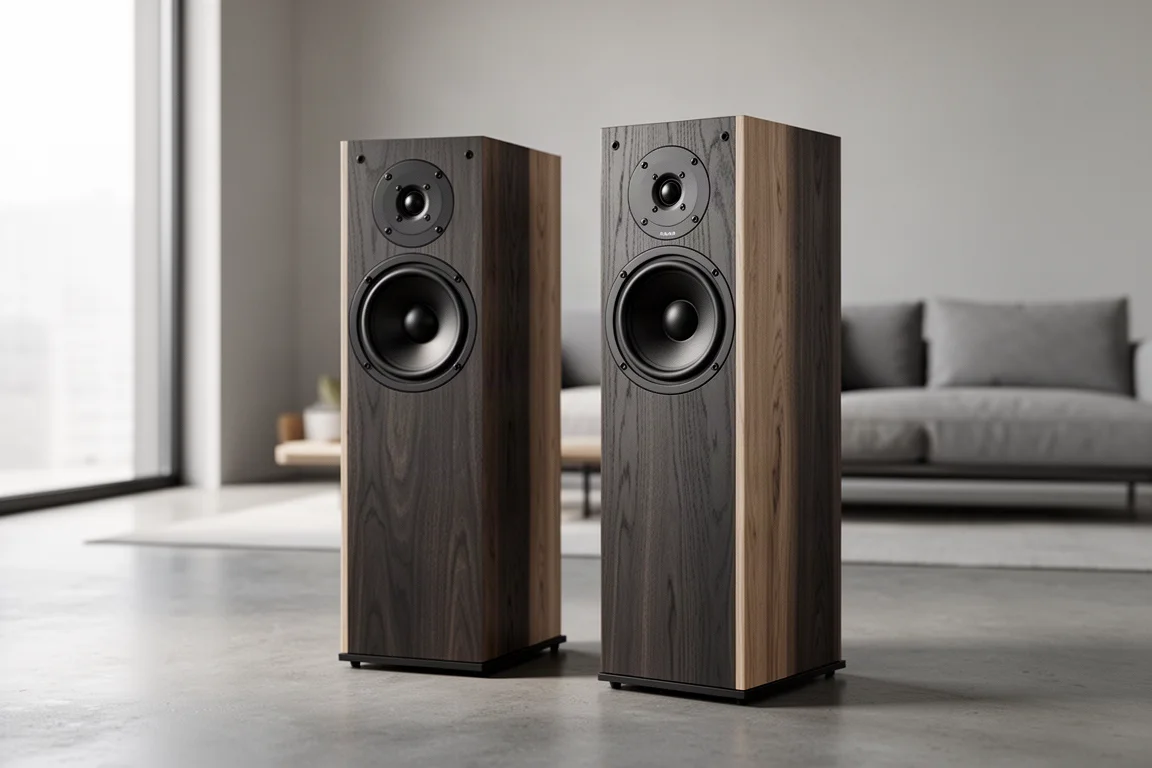
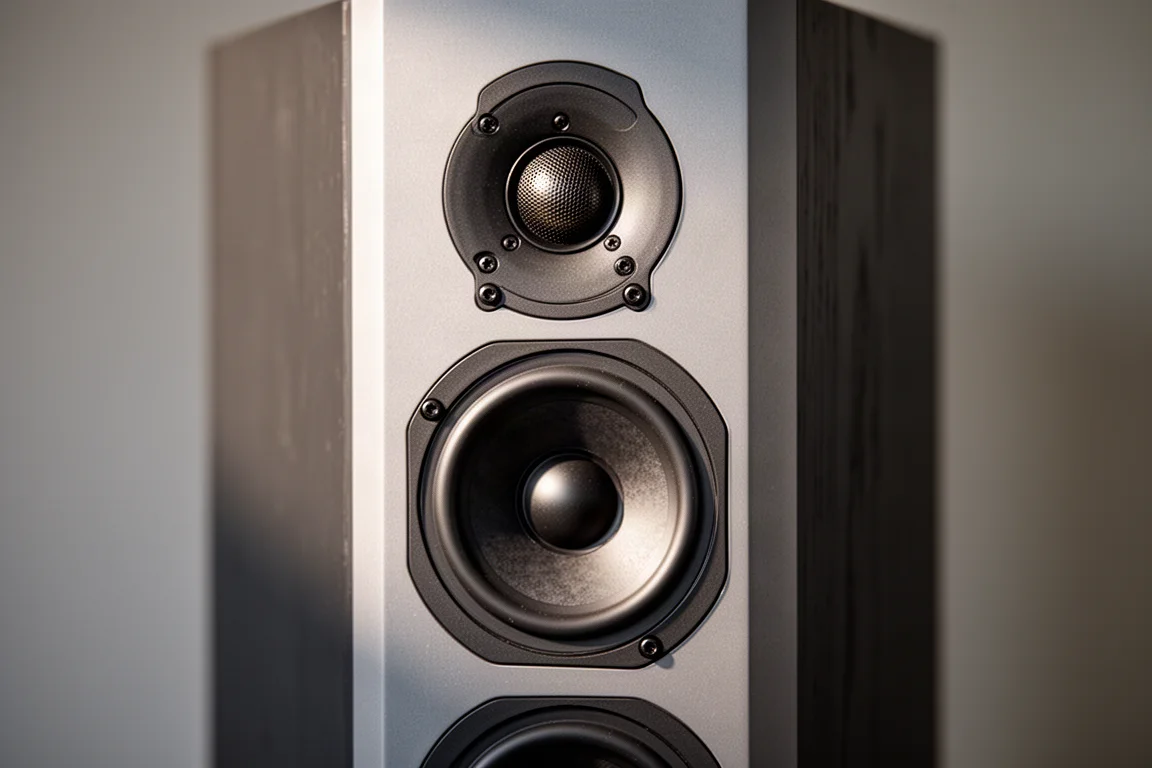
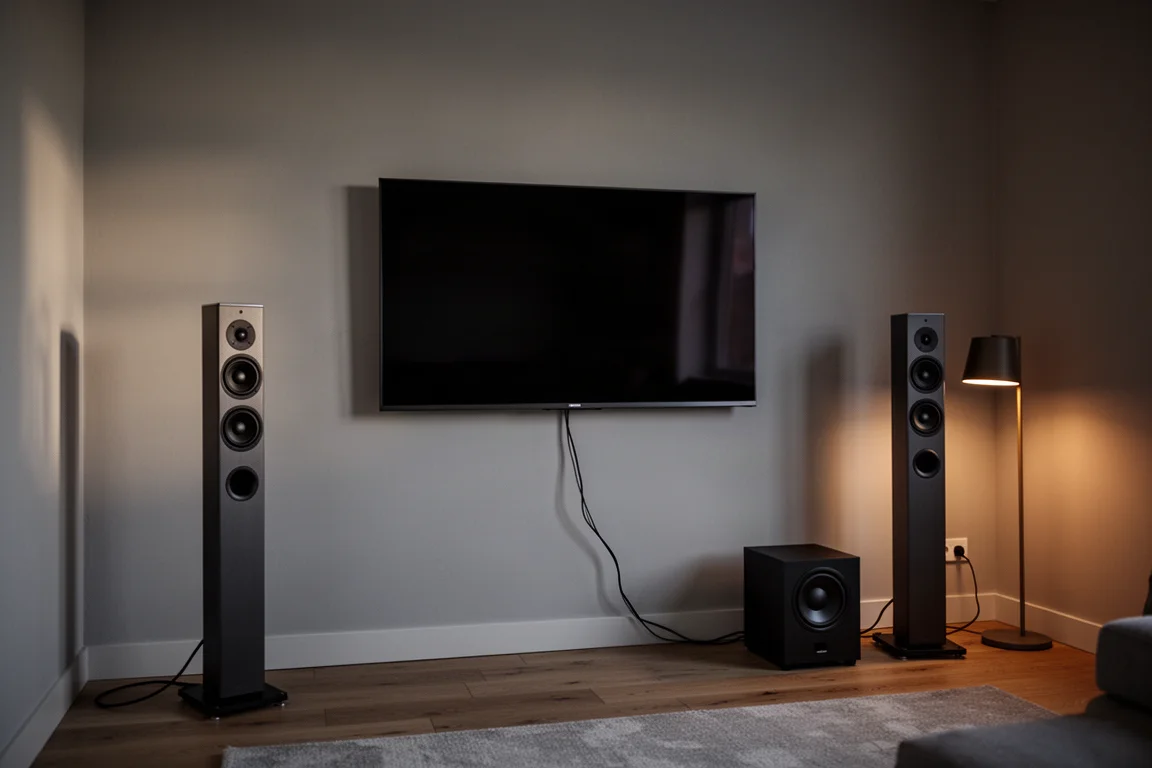
The Sony SS-CS3 is a three-way floorstanding tower speaker that generally sells for about $400 to $500 per pair. It is stocked widely enough that buyers can find it at a large electronics retailer or order it online without much effort. For that money, you get a 3/4-inch super tweeter, a 1-inch tweeter, and two 5-inch midwoofers in a tall, slim cabinet.
Published detail from the manufacturer is limited. Beyond the driver types and sizes, there is little information about the crossover, the cabinet construction, or recommended placement, so buyers are mostly relying on how the speaker behaves in a real room.
That behaviour is genuinely mixed. Above roughly 2 kHz, the SS-CS3 is reasonably smooth and takes well to equalization. Below that, in the midrange and upper bass, the enclosure produces a dense cluster of resonances that colour vocals and make the speaker sound boomy in one passage and hollow in the next.
That split is worth understanding before you buy. Plenty of budget towers fail because they cannot play loud or because they distort when pushed. The SS-CS3 does neither. Its weakness is tonal rather than dynamic, and that shapes everything else about the recommendation.
Who This Speaker Is For
The SS-CS3 makes the most sense for listeners who want a big, loud, inexpensive tower pair and are not chasing studio-grade neutrality. If your priority is volume and scale for movies and casual music, the speaker delivers that without strain, and it will get loud in a way that small bookshelf models in the same price bracket will not.
It is a harder sell for anyone who listens critically to acoustic music, jazz, or dialogue-heavy film and television. Those are the situations where a coloured midrange becomes obvious, and where a smaller, more accurate speaker paired with a subwoofer often ends up more satisfying.
It also suits buyers who are willing to do a little work. If you already own a measurement microphone or a standalone equalizer and enjoy tuning a system, the SS-CS3 gives you something to tune. If you would rather set a speaker up once and forget it, this is not the easiest partner.
Main Strengths
Output is the first thing to note. Measured average sensitivity is about 88.6 dB at 2.83 volts at one meter, so the speaker reaches high volume with modest amplification. Run alongside a large, high-powered amplifier with 500 watts on tap, it stayed composed, and it also ran acceptably from a more ordinary AV receiver.
Distortion performance is better than the price suggests. At 86 dB and at 96 dB, measured distortion stayed below a 3 percent threshold, and multi-tone distortion, which is closer to how real music behaves, also looked solid. Compression in the midrange stayed within roughly a decibel even at the highest output levels. That is a good result, and it means the speaker’s problems are not about strain or harshness under load.
The upper frequencies are the most cooperative part of the design. Above roughly 2 kHz the response is smoother, and it responds reasonably to equalization. If you can address the midrange separately, there is a usable speaker hiding above it.
Low-frequency extension is modest but predictable. F3 sits around 72 Hz and F10 around 39 Hz, which confirms what most listeners will discover quickly: the SS-CS3 does not reach subwoofer territory. Pairing it with a proper subwoofer and crossing over at 80 Hz, or even 100 Hz, both fills in the bottom octaves and reduces midrange distortion.
Things to Consider Before Buying
The core issue is a series of resonances in the 100 Hz to 600 Hz range. Impedance measurements show six distinct resonances below 1 kHz once the tuned port resonance is set aside, and the frequency response shows matching peaks and dips stacked back to back rather than a couple of isolated bumps. That pattern points to an enclosure that has not been braced or damped as thoroughly as it should be.
The audible result is a midrange that shifts character from track to track. It sounds resonant and boomy in some vocals and hollow in others, and it does so consistently across genres and across film soundtracks rather than in a few unlucky passages. This is not a small coloration that a listener adapts to; it is the dominant characteristic of the speaker.
Radiation is uneven as well. Beam width swings by roughly 10 degrees between 1 and 2 kHz, by about 20 degrees between 2 and 3 kHz, and by another 20 to 30 degrees between 4 and 5 kHz. The practical consequence is that different instruments arrive from different apparent positions once room reflections are included, so a mix can lose its sense of a shared acoustic space.
Vertical placement is unusually sensitive for a tower. The tweeter and super tweeter sit close together in a fairly short cabinet, so sitting well above or below the tweeter axis narrows the usable listening window considerably. Getting your ears level with that driver region matters more here than with many floorstanders, and it directly affects how intelligible speech sounds.
Finally, budget for a subwoofer. The SS-CS3 does not produce subwoofer frequencies at all, so a two-channel purchase is really a two-channel plus subwoofer purchase if you want full-range sound.
Placement, Boundary Reinforcement, and Room Interaction
Placement changes how severe the midrange problems become. Moving a speaker closer to a wall reinforces low frequencies, which helps some designs but works against this one. The SS-CS3 already has several resonances inside its passband, and boundary reinforcement adds a delayed reflection that creates further peaks and dips across the same region.
In a room of roughly 17 by 17 feet, tested with the speakers placed near a wall, out into the room, and around 10 feet away, the resonances in the lower midrange and upper bass became more troublesome the closer the cabinet sat to a boundary. Aiming the speakers directly at the listening position or toed away changed the presentation but did not remove the underlying colouration.
The practical takeaway is to give the SS-CS3 as much space behind it as your room allows, and to avoid corner placement entirely. That reduces the boundary contribution, though it will not eliminate the cabinet resonances themselves. Sitting on the tweeter axis, with the speaker toed in slightly, gives the most coherent result.
Equalization Options in Practice
Correction is possible, but it is demanding. Using a standalone processor with fine filter control, the response between 150 Hz and 10 kHz can be flattened to a reasonable degree, with target matching above 80 percent of the band and a maximum boost limited to 3 dB. That result required a stack of fairly narrow filters, with Q values around 5 to 7, aimed at individual peaks at approximately 209 Hz, 299 Hz, 349 Hz, 385 Hz, and 488 Hz.
Automatic room correction built into a typical AV receiver is a different story. In testing with an AV receiver running a common auto-calibration system, the correction could not resolve the chain of resonances, leaving the boomy and hollow character largely intact. Narrow filters placed back to back are simply beyond what most auto-equalization routines will attempt.
That leaves buyers with an awkward choice. A dedicated digital signal processor and the extra amplification to run each speaker on its own channel can tame the SS-CS3, but the cost of that hardware can rival the price of the speakers themselves. Most people shopping in this bracket will not go that route.
Buying Advice
Buy the SS-CS3 if you want a loud, affordable tower pair for movies and background listening, and you accept that accuracy is not the goal. It will fill a room, it handles power well, and it will not fall apart at high volumes. Pair it with a subwoofer crossed at 80 Hz or 100 Hz, keep it away from walls, and sit level with the tweeter.
Think twice if you listen closely to vocals, acoustic instruments, or dialogue, or if you want a speaker that sounds right without extra processing. A compact soundbar setup costing considerably less proved clearer for dialogue in side-by-side listening, and a smaller bookshelf pair with a subwoofer is a more reliable path to balanced sound at this budget.
There is one more consideration worth weighing. The manufacturer does not publish much supporting detail for this model, so there is little to fall back on if you want specifications beyond driver sizes and sensitivity. What you hear in your own room is effectively the whole story.
Conclusion
The Sony SS-CS3 is a capable loudspeaker in the areas that are easy to measure in isolation: sensitivity, distortion, compression, and upper-frequency response are all reasonable for the price. Its problem is the midrange, where multiple enclosure resonances create a boomy, hollow character that standard AV receiver correction cannot fix and that near-wall placement makes worse.
For buyers who want scale and volume on a tight budget and who plan to add a subwoofer, it is a workable choice. For buyers who want tonal accuracy without extra hardware, the money is better spent elsewhere.
Product link
View more details for Sony SS-CS3
This product is mentioned in the review. Check the specifications, options, and compatibility before buying.
View more details for Sony SS-CS3Further reading
Related Reviews
Tower Speakers
Arendal 1610 Tower 8 vs MoFi SourcePoint 888 vs MoFi V10: Three Tower Speakers Compared
A close look at three large tower speakers in a similar price bracket, from the punchy, heavy-built Arendal 1610 Tower 8 to the coaxial MoFi SourcePoint 888 and the high-output MoFi V10.
Tower Speakers
Definitive Technology BP9020 Review: A Powered Tower With Real Bass and a Few Quirks
A slim tower speaker that hides a powered 8-inch subwoofer inside the cabinet, delivering deep bass and a wide stage alongside some clearly defined trade-offs.
Tower Speakers
Emotiva XT1 Tower Speakers Review: Serious Clarity Under $1,000
The Emotiva XT1 brings three woofers, a dedicated midrange and an AMT tweeter to the sub-$1,000 tower market. Here is where it delivers and what to weigh first.