Tower Speakers
Arendal 1610 Tower 8 vs MoFi SourcePoint 888 vs MoFi V10: Three Tower Speakers Compared
A close look at three large tower speakers in a similar price bracket, from the punchy, heavy-built Arendal 1610 Tower 8 to the coaxial MoFi SourcePoint 888 and the high-output MoFi V10.
Introduction
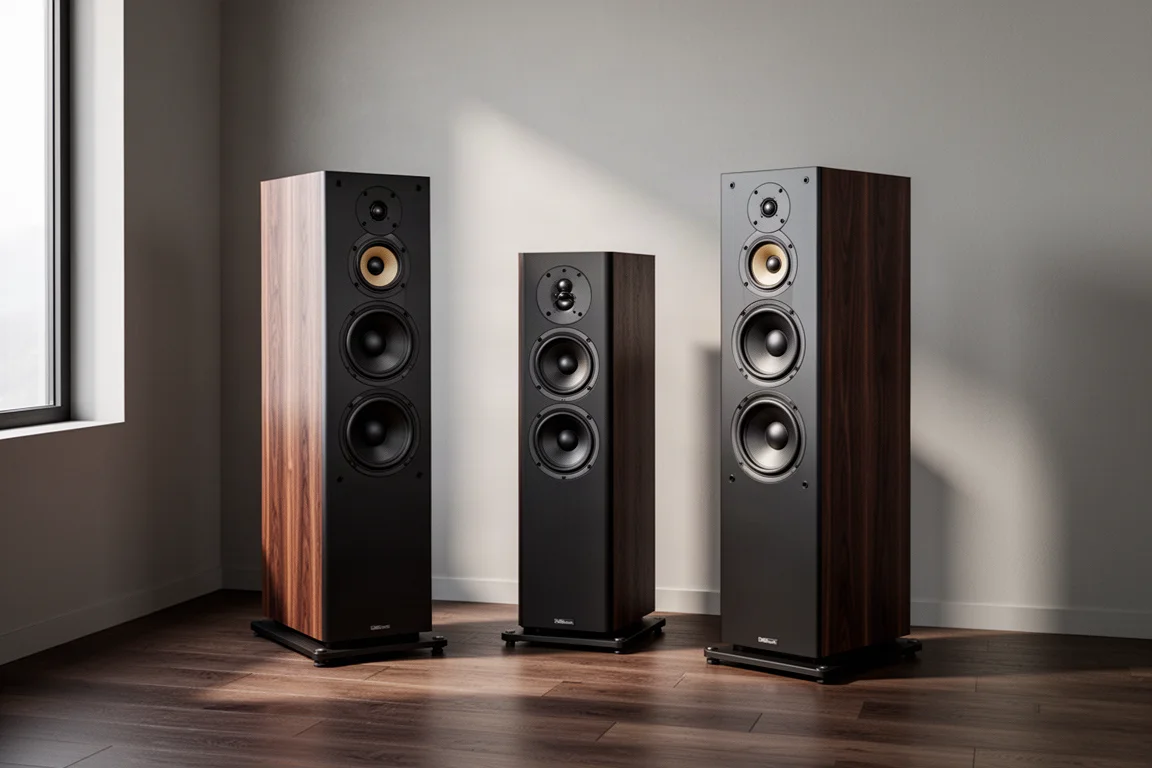
Three large tower speakers, one similar price bracket, and three genuinely different design philosophies. The Arendal 1610 Tower 8 is a three-way floorstander priced at $7,600 per pair, with a cabinet that weighs roughly 100 lb (about 45 kg) per speaker and stands close to 4 ft tall once its feet are installed. The MoFi SourcePoint 888 takes a coaxial approach, and the MoFi V10 is the largest and most output-focused of the three at roughly 160 lb per speaker.
All three play extremely loud without strain, and all three keep multi-tone distortion low. The meaningful differences sit in bass tuning, directivity, the vertical listening window, and how much low-frequency output you can expect before you need to add a subwoofer. This comparison walks through each speaker in turn, then explains which one makes sense for which kind of room.
How These Tower Speakers Compare
The three speakers were assessed on the same set of criteria: on-axis frequency response, bass extension and tuning, directivity and radiation width, vertical lobing, multi-tone distortion, output capability, and physical size.
Measured data matters here because the same speaker can produce a noticeably different sound profile in five different rooms, especially in the bass. Anechoic-style measurements give a baseline that is comparable across designs, which is useful when you cannot listen to every speaker in the world before spending your money. The practical questions the data answers are straightforward: will the speaker work in a reflective room, will it need side-wall absorption, will it need a subwoofer, and how much output can it take.
For tall speakers with drivers spread across a large baffle and a port at the far end of the cabinet, outdoor ground-plane measurements are also used as a sanity check on the main measurement set. It is an extra step, but it confirms that the numbers make sense for a design of this size.
Arendal 1610 Tower 8: Build Quality and Setup
Build quality is the first thing that stands out. At roughly 100 lb per speaker, turning the cabinet over feels like handling something much denser than a typical floorstander, and the finish looks the part as well. Physical appearance is subjective, but it is worth acknowledging, because how a speaker looks in a room shapes how you feel about listening to it.
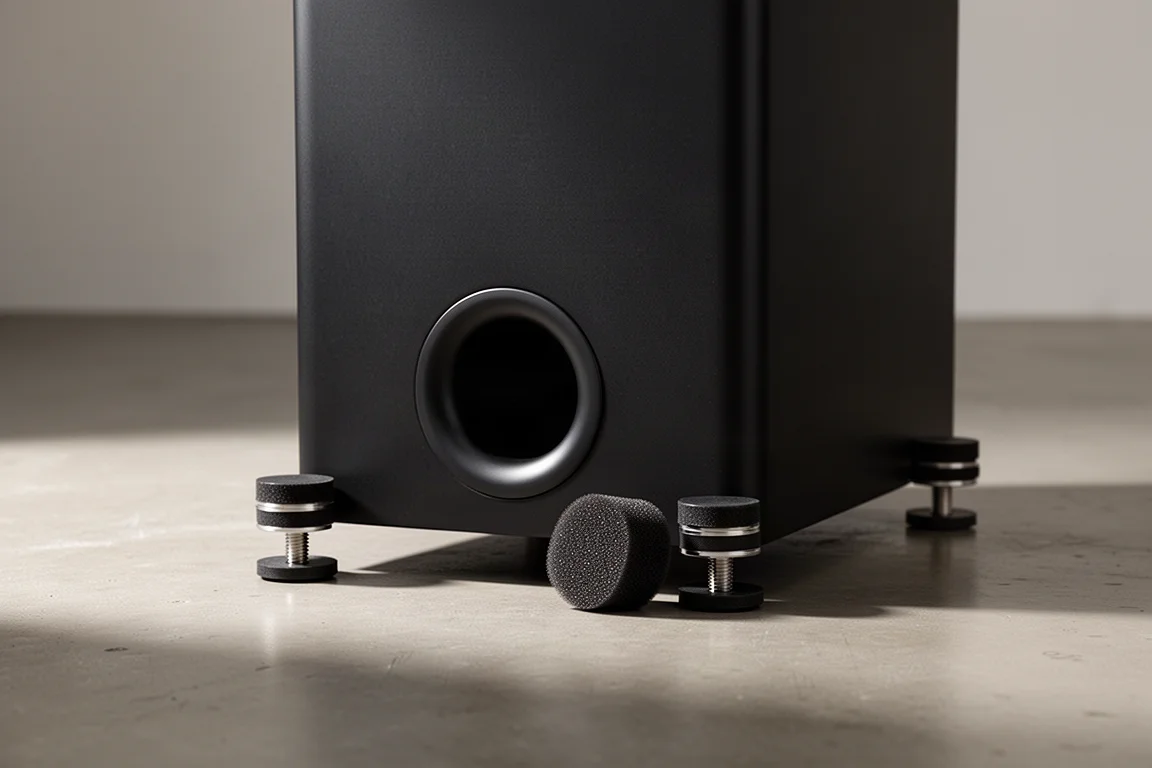
Setup has one important quirk. The port sits at the very bottom of the cabinet, so the feet must be installed, otherwise the port stays sealed. That means turning the speaker upside down. The foam plug that ships in the port should stay in place while the feet go on. Removing it first opens a path into the cabinet interior, and anything dropped in there has to be retrieved. Once the feet are fitted, the speaker stands close to 4 ft tall.
Arendal 1610 Tower 8: Sound and Measured Performance
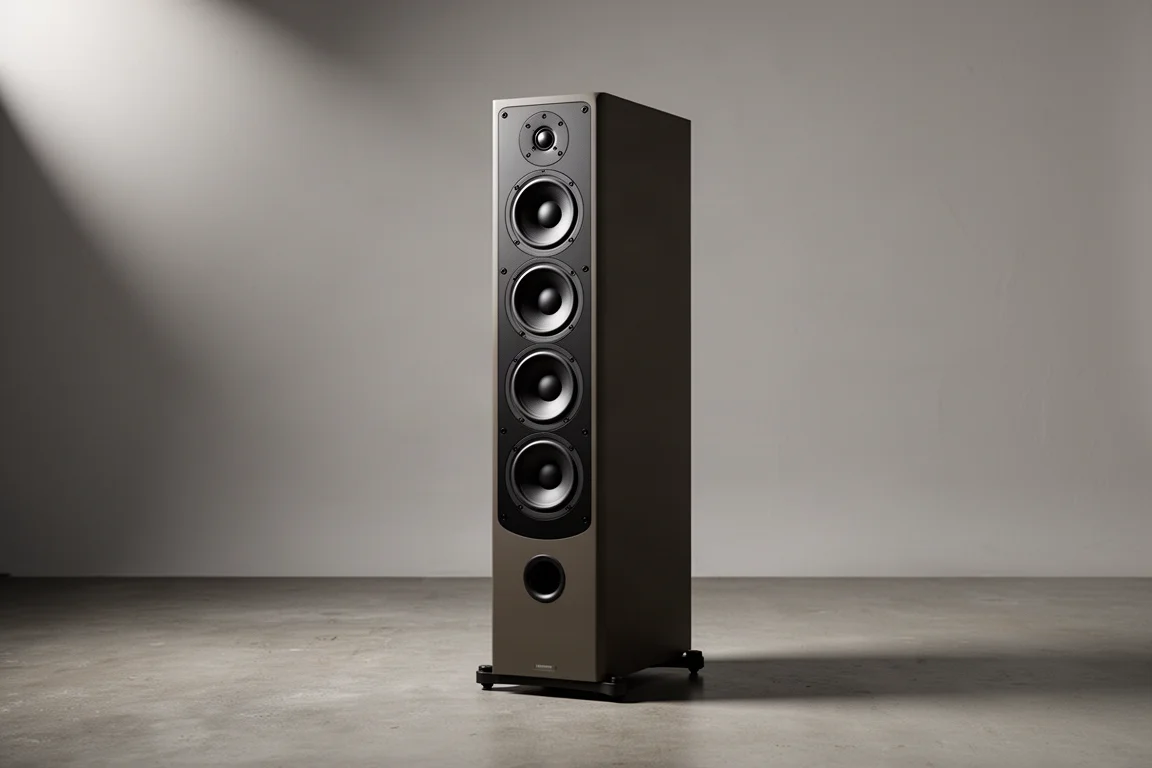
The 1610 Tower 8 is a three-way design: a tweeter, a midrange driver, and three woofers. Its most distinctive trait is a lift of roughly 2 to 3 dB around 80 Hz. That extra mid-bass output adds punch and weight, and it can be genuinely useful, because many rooms have a null somewhere between 70 Hz and 90 Hz.
The flip side is a dip through the upper midrange and lower treble crossover region. That takes some edge off brass and other instruments with a sharp attack, and for listeners who are sensitive around 2 kHz, a dip is generally easier to live with than a peak. The midrange also carries a little extra weight, which adds body to certain vocals rather than a harder, more guttural character.
Measured sensitivity is about 88 dB at 2.83 volts at 1 m, with F3 at 41 Hz and F10 at 27 Hz. The mid-bass lift shapes those figures: a flatter response with a more gradual roll-off would extend lower on paper but would lose the punch. In-room, the speaker reaches down to about 40 Hz, so a subwoofer is advisable if your music or films have meaningful content below that point. Arendal recommends a seating distance of around 4 m.
Two other measured behaviors are worth knowing. Driver spacing creates vertical lobing with a hole in the response around 3 kHz, which matters most in multi-row home theaters where listeners sit at different heights. Radiation sits at about plus or minus 60 degrees, a good balance between sharp imaging and an enveloping stage, and multi-tone distortion is lower in the higher frequencies than on the comparison models here.
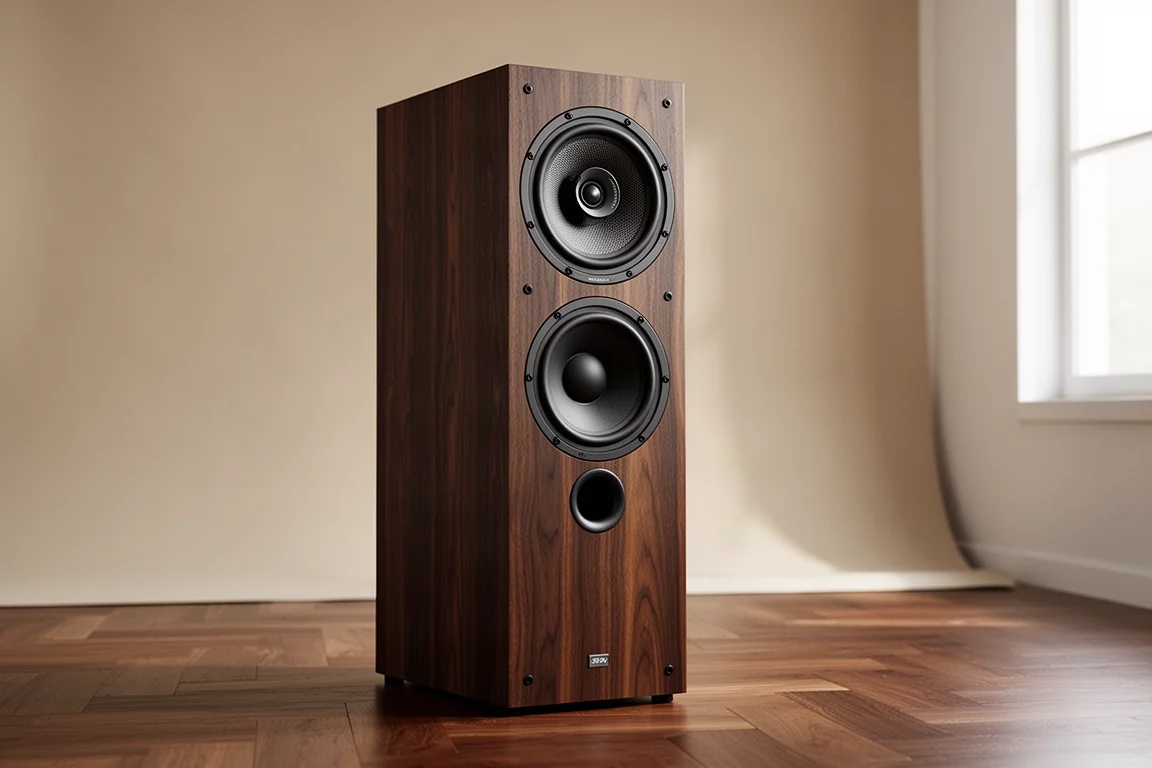
MoFi SourcePoint 888: Coaxial Design and Smooth Directivity
The SourcePoint 888 uses a coaxial driver layout, and the benefit shows up in directivity. Its radiation is smoother overall and a little wider than the Arendal’s, narrowing only at the very top of the treble range. On-axis response is smooth as well, with some jaggedness rather than large swings.
Because the drivers are arranged coaxially, the upper midrange does not show the vertical suck-out that a separate tweeter and midrange produce. Response through that region stays more consistent, which helps in rooms where seating sits at different heights. In-room extension reaches about 35 Hz, with a dip in the midrange around 400 Hz and another in the upper midrange and lower treble. Sensitivity is roughly 2 dB lower than the Arendal. At 94 lb per speaker it is still a heavy cabinet, and its low-frequency extension means most owners will not need to add a subwoofer.
MoFi V10: Output Capability and Voicing
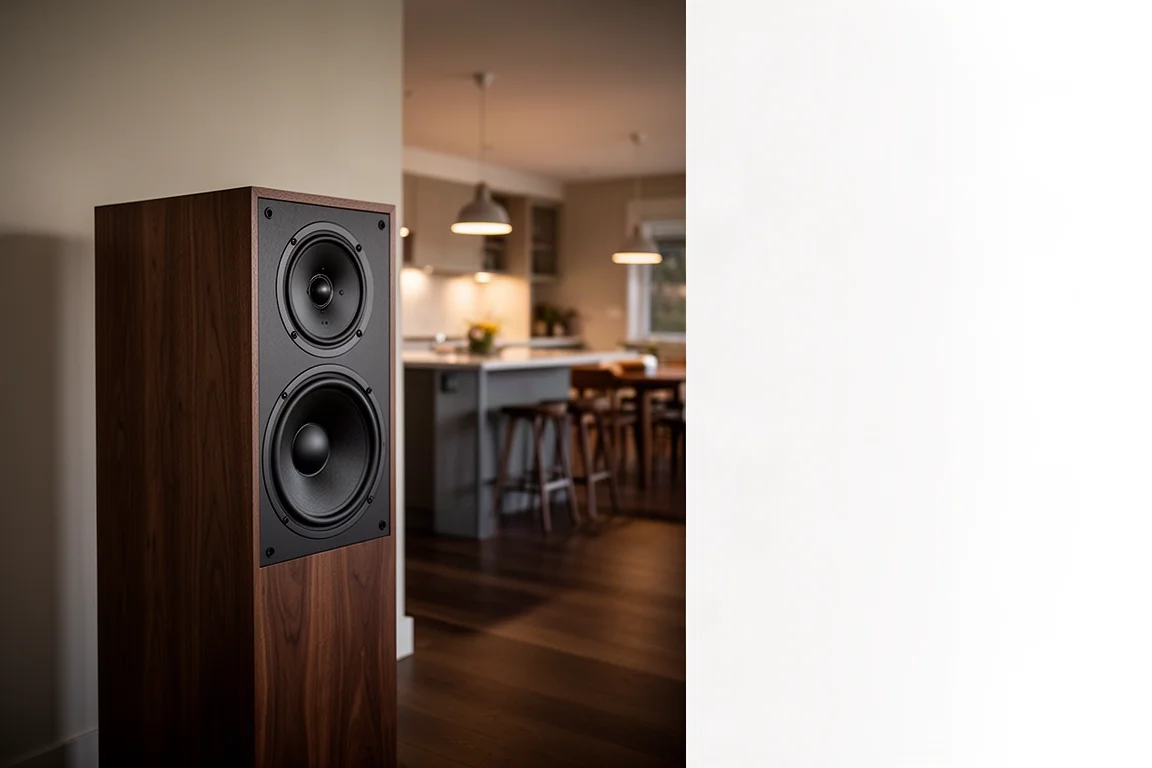
The V10 is the largest speaker in this group at roughly 160 lb each, and output capability is its headline strength. It has significant dynamic range and a very imposing physical presence. Its measured response is less linear than the other two, with more raggedness across the range.
Sensitivity is roughly the same as the Arendal, and low-frequency extension goes a little lower, reaching about 35 Hz in-room. The voicing differs from the Arendal in where the extra weight sits: less emphasis in the upper mid-bass and more in the lower midrange, with a laid-back upper midrange and lower treble. Radiation is around plus or minus 60 degrees, similar to the Arendal. A wood grain finish is available for listeners who prefer a warmer look.
Like the SourcePoint 888, the V10 reaches low enough that a subwoofer is not strictly necessary, unless you want additional subwoofers to help spread modal issues around the room.
Where the Three Designs Diverge
Bass tuning is the clearest split. The Arendal adds output around 80 Hz for punch, while the MoFi models stay flatter through that region and extend a little lower. If you plan to run subwoofers, the Arendal’s tuning is a benefit rather than a limitation. If you want the towers to stand on their own, the MoFi designs are the easier choice.
Directivity and vertical behavior separate the coaxial design from the three-way. The SourcePoint 888 holds its response together across a wider listening window and does not suffer the upper-midrange lobing of a separate tweeter and midrange. The Arendal’s lobing around 3 kHz is a non-issue for a single listener at a fixed height and a real consideration in a multi-row theater.
Output and distortion are close across all three. None of them struggles with dynamic range, and all three keep multi-tone distortion low, with the Arendal measuring lower in the higher frequencies.
Which Tower Speaker Should You Buy?
Choose the Arendal 1610 Tower 8 if your system centers on home theater with subwoofers and you want a heavy, well-built cabinet with extra mid-bass punch and a relaxed upper midrange. Plan for a subwoofer if your content goes below 40 Hz, and be ready for a two-person, upside-down installation to fit the feet.
Choose the MoFi SourcePoint 888 if you want smooth directivity, consistent sound as you move around an open-plan room, and bass that reaches about 35 Hz without a subwoofer. Its coaxial layout makes it the most forgiving of the three when seating positions vary.
Choose the MoFi V10 if scale and output capability matter more than linearity. It is the biggest and heaviest option here, it reaches low without help, and it will fill a large room without strain.
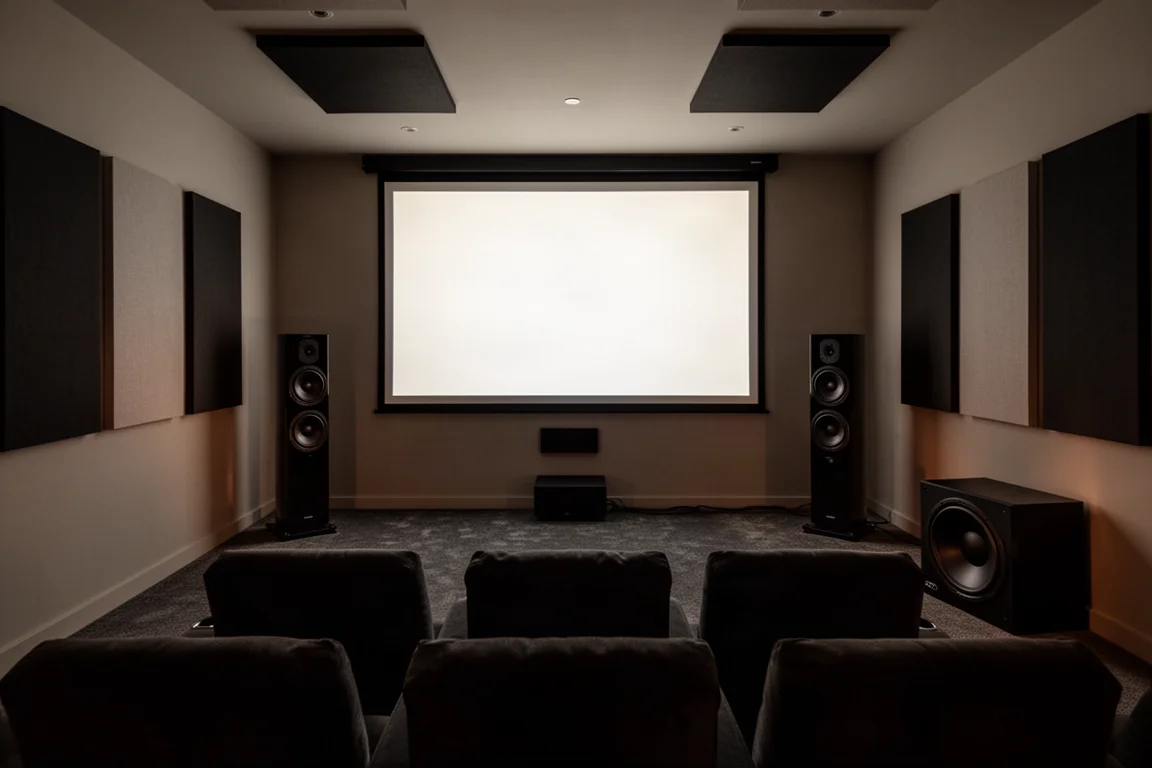
One practical note applies to all three: placement and room treatment affect the bass more than any specification sheet can capture. Pulling the speakers well clear of the wall behind them, and aiming them slightly outward rather than directly at the listening position, is a useful starting point for a large cabinet that visually dominates a room.
Conclusion
The Arendal 1610 Tower 8, MoFi SourcePoint 888, and MoFi V10 are all high-output tower speakers with low distortion and enough dynamic range to fill a room. They simply prioritize different things. The Arendal leans on a dense cabinet and an 80 Hz lift for punch, and it pairs best with subwoofers. The SourcePoint 888 trades a little sensitivity for smooth coaxial directivity and bass that stands on its own. The V10 is the output specialist, with the largest cabinet and the deepest reach of the group. Match the tuning to your room and your subwoofer plans, and any of the three will deliver the scale these speakers are built for.
Further reading
Related Reviews
Tower Speakers
Definitive Technology BP9020 Review: A Powered Tower With Real Bass and a Few Quirks
A slim tower speaker that hides a powered 8-inch subwoofer inside the cabinet, delivering deep bass and a wide stage alongside some clearly defined trade-offs.
Tower Speakers
Emotiva XT1 Tower Speakers Review: Serious Clarity Under $1,000
The Emotiva XT1 brings three woofers, a dedicated midrange and an AMT tweeter to the sub-$1,000 tower market. Here is where it delivers and what to weigh first.
Tower Speakers
Heco Aurora 1000 Review: A German Tower That Outperforms Its Parts List
Heco's flagship Aurora tower pairs a modest parts list with genuinely strong measured performance. Here is what $1,600 a pair buys, and where the compromises sit.