Portable Audio
Sony NW-A306 Review: A Tiny Android Walkman for Wired Listening
A compact Android Walkman with a 3.5 mm output, microSD storage and long battery life, plus the trade-offs to weigh before buying.
Introduction
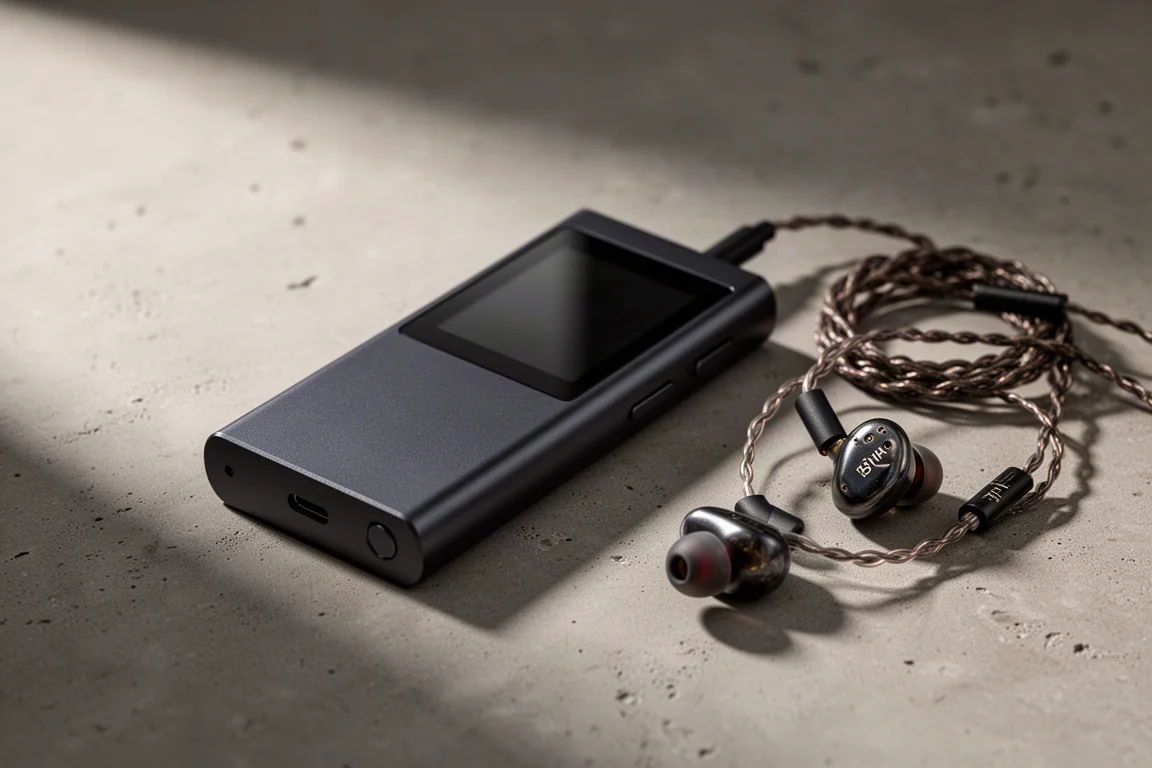
The Sony NW-A306 is the smallest Walkman Sony has built around Android, and that single fact shapes almost everything about it. It measures smaller than an iPhone 13 mini and weighs 113 grams, so it drops into a shirt pocket without dragging the fabric down. What it gives back is a dedicated place for wired listening: a 3.5 mm headphone output, a microSD slot for a local library, and access to the Google Play Store for streaming apps.
It is not trying to replace a phone. It is aimed at listeners who still prefer plugging in, and who want their music player to be a separate, deliberately limited device.
Who the Sony NW-A306 Is For
This player makes the most sense for people who keep their own files. A microSD card slots into the underside of the chassis and the built-in music player app reads from it directly, so a large library travels with the device. Android and the Play Store mean streaming apps can be installed alongside that local collection, although the software side is where the player shows its compromises.
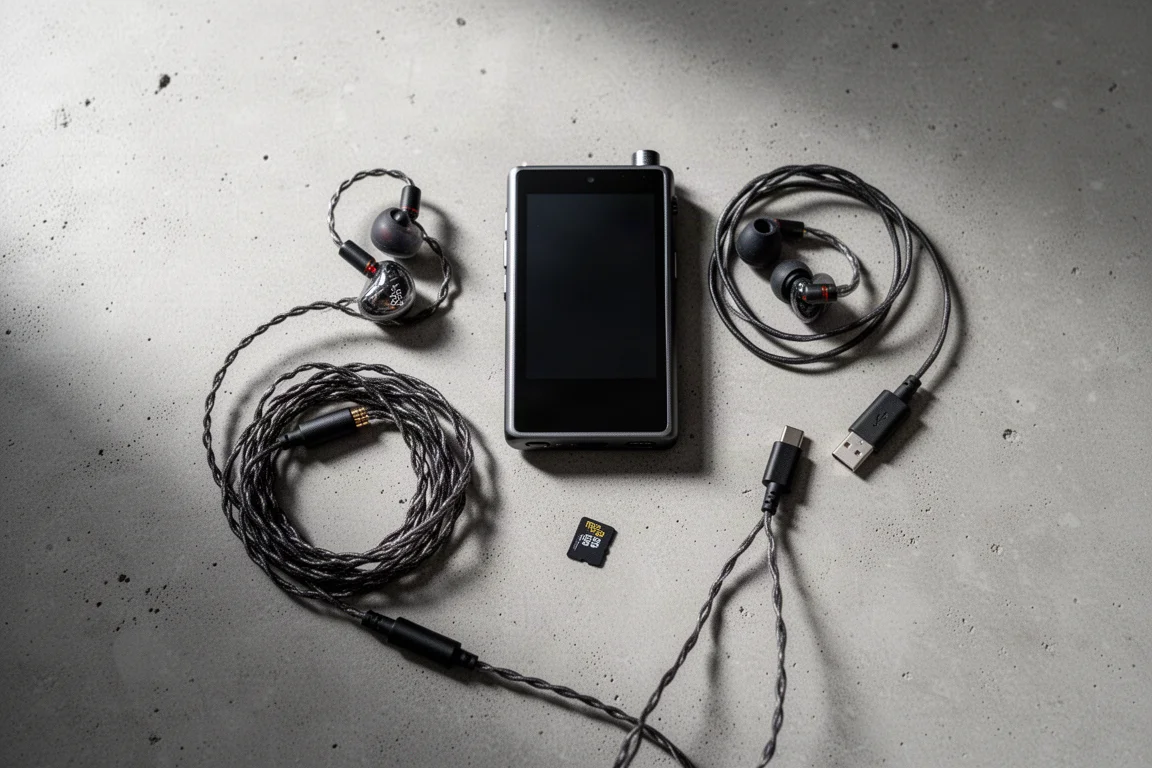
The physical design supports the pocketable brief well. The body has a contoured back panel that sits comfortably in the hand, and the finish feels substantial rather than cheap. Along the bottom edge there is the 3.5 mm output, a lanyard loop and a USB-C charging socket. Up the side runs a full set of hardware controls: power, volume up and down, previous track, play and pause, and next track, plus a hold switch that locks the buttons so they cannot be triggered accidentally in a pocket. Two of the buttons carry small tactile bumps, one of them on play and pause, so they can be found by feel alone.
Bluetooth is supported as well, but the wired output is the reason to choose this device over a phone.
Main Strengths
Three things stand out: the tone the player aims for, the amount of time it runs between charges, and one small piece of software that has nothing to do with sound quality at all.
Crisp, Clean Sound and a Lean Low End
Against a Lightning-to-3.5 mm adapter on an iPhone 13 mini, the Sony pulls ahead on detail retrieval and top-end extension. The midrange in particular arrives with a crispness and clarity that makes acoustic material and vocal-led recordings sound fresh, and there is real delicacy and finesse in the way it handles quieter passages.
The architecture behind that is unusual: there is no separate DAC chip inside. A digital amplifier, Sony’s S-Master HX, routes the digital signal through the internal circuitry and drives the output stage directly, which is one of the reasons the player can run as long as it does. The 3.5 mm jack is the only output, and there is no balanced connection.
Tonally, the presentation is more monochromatic than richer-sounding players, and the top end is crisp in a slightly steely way rather than smooth. Bass is the clear weak point. On bass-forward rock and electronic records the low end feels lean, and a firmware update released for the player later addressed a fault that made that leanness worse on some units. After the update the bottom end filled out considerably and macro dynamics became more vivid, although the tuning still leans bright rather than full.
Battery Life, Size, and Build
Sony rates the battery well beyond 30 hours, and the low-power design supports that claim. In one full day of listening to CD-quality files, the player ran for roughly 15 hours from a full charge, which is still a comfortable margin over most phones doing the same job through an adapter.
Size is the other headline. At 113 grams it is lighter than an iPhone 13 mini, and the modest 3.6 inch screen keeps the footprint down. Nothing about the build feels like a compromise: the frame is solid, the buttons are well placed, and the whole package is designed to disappear into a pocket until it is needed.
The Cassette Tape Display
There is a detail here that has nothing to do with specifications. When local files play through Sony’s music player app, the screen switches after a few seconds from cover art to an animated cassette tape turning in its shell. The tape shown changes with the quality of the file being played: a low-bitrate MP3 brings up a basic cassette, a DSD file brings up a metal tape, and a high-resolution download produces another deck entirely.
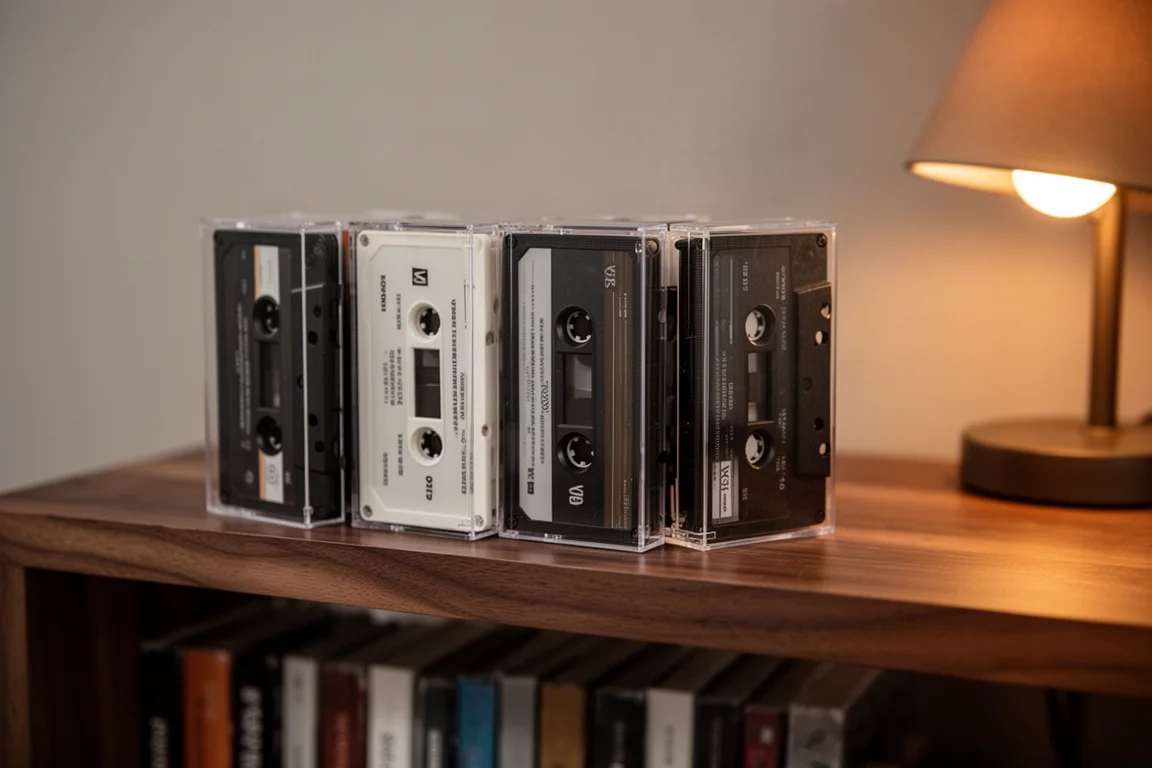
It is a purely local-file feature. Streaming apps do not trigger it, so it only appears when playing music stored on the microSD card. For anyone with a shelf of physical media behind them, it is a genuinely charming touch, and it makes a local library feel like more than a folder of files.
Things to Consider Before Buying
Two practical points are worth checking against your own habits and your own earphones before buying.
Output Power and Earphone Matching
The 3.5 mm output is not powerful. The published figure is very low, and the real-world effect is easy to feel: with less sensitive in-ear monitors, the volume has to sit close to 100 out of 120 to reach a robust listening level, with the volume limiter switched off and direct sound enabled. More sensitive earphones fare much better and need roughly half that setting.
That sensitivity comes with its own trade-off. Very sensitive in-ear monitors can pick up circuit noise from the player, which becomes audible in quiet passages. Matching the player to efficient earphones is the single biggest factor in how enjoyable it will be.
Interface Speed and Firmware
The Android interface is not quick. Swipes occasionally stall halfway and need a second attempt, and taps can take longer than expected to register. Mid-range Android phones feel considerably more responsive, which is part of the trade-off Sony made to keep battery life and size where they are.
The 1.01 firmware update is worth installing immediately. It addresses a bass roll-off reported on some units, where output gradually declined below roughly 200 Hz by as much as 10 dB, and it appears to reduce the circuit noise heard with highly sensitive earphones. It does not change the gain structure, so volume demands stay exactly the same.
Buying Advice
The NW-A306 is easy to recommend to a specific listener and easy to pass over for everyone else. Buy it if you want a genuinely pocketable player for wired earphones, you keep your music as files on a microSD card, and you value battery life over interface speed. Pair it with efficient, sensitive earphones, install the firmware update, and the experience holds together well.
Skip it if you want weight and drive in the low end, or if a fast touch interface matters more than a long stretch between charges. Compared with the Shanling M3 Ultra, which sells for 480 Euros and costs roughly 80 Euros more, the Sony is smaller, lighter and lasts around twice as long between charges, while the Shanling counters with a larger 4.2 inch screen, a balanced output and a fuller, richer tone. Neither is universally better; they suit different priorities.
Conclusion
The Sony NW-A306 succeeds at a narrow brief. It is tiny, light, well made, and built around wired earphones and a local music library, with a cassette tape display that gives file playback a personality most players lack. Its compromises are just as clear: modest output power, a bass-light tuning that only a firmware update partly corrected, and an Android interface that never feels fast.
If those trade-offs match how you listen, it is a rewarding little player. If they do not, the sound signature alone is reason enough to look elsewhere.
Product link
View more details for Sony NW-A306
This product is mentioned in the review. Check the specifications, options, and compatibility before buying.
View more details for Sony NW-A306Further reading
Related Reviews
Portable Audio
Best USB DAC Dongles Compared: DragonFly Cobalt, Fosi Audio DS1 and Hidizs S9 Pro
Five portable USB dongle DACs compared on sound signature, outputs, connectivity, build quality and value, from the $77 Fosi Audio DS1 to the $350 DragonFly Cobalt.
Portable Audio
Cayin RU6 Review: A Discrete R2R Dongle DAC That Sounds Bigger Than It Looks
A pocket-sized R2R ladder DAC with balanced output, tactile controls, and a spacious, dynamic sound, plus the power limits worth knowing before you buy.
Portable Audio
Chord Mojo 2 Review: A Pocketable DAC and Headphone Amp for Serious Listening
A practical look at the Chord Mojo 2, a portable DAC and headphone amplifier with a custom FPGA design, dual headphone outputs, USB-C input, and a battery-friendly desktop mode.