Portable Audio
Cayin RU6 Review: A Discrete R2R Dongle DAC That Sounds Bigger Than It Looks
A pocket-sized R2R ladder DAC with balanced output, tactile controls, and a spacious, dynamic sound, plus the power limits worth knowing before you buy.
Introduction
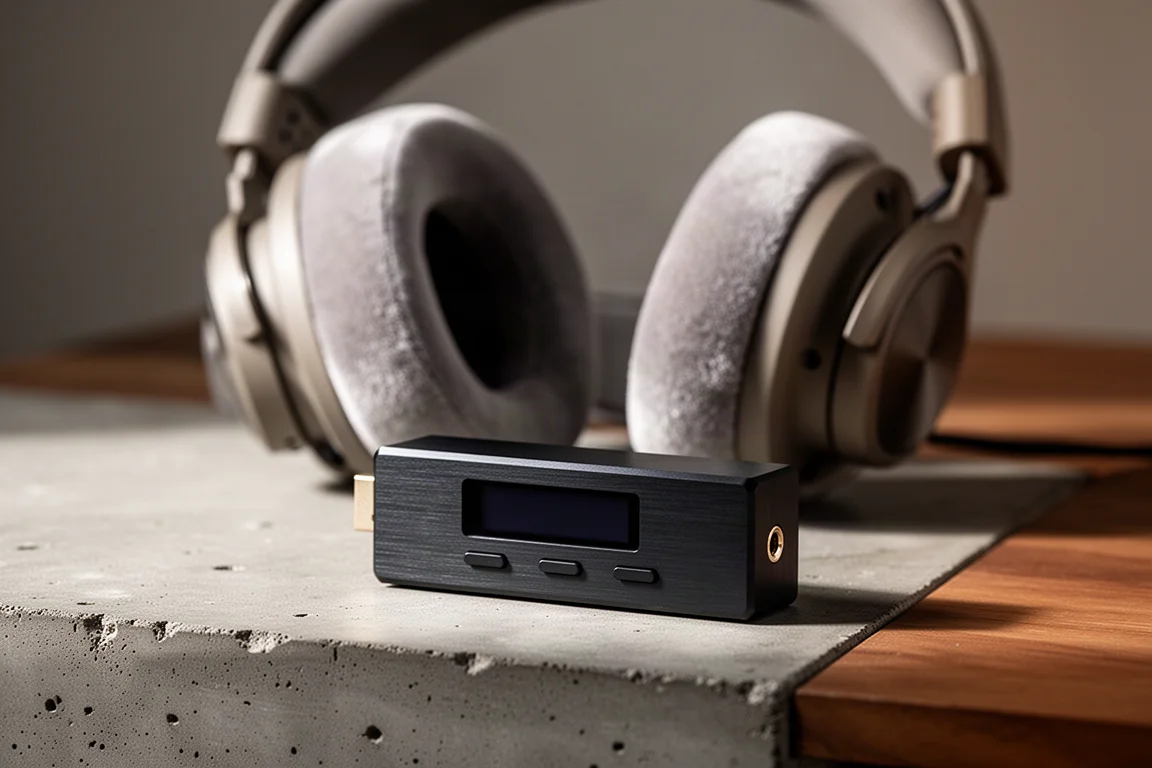
The Cayin RU6 is a small USB dongle DAC with a genuinely unusual approach under the hood. Most dongle DACs convert digital audio using a delta-sigma chip, a method that has been refined for years and is cheaper and simpler to implement. The RU6 instead uses a fully discrete R2R resistor ladder, the same fundamental approach found in full-size desktop converters. It measures roughly the size of a cigarette lighter and sits in the $250 to $300 range, which is well above the budget dongles most people start with.
That price makes sense for a particular kind of listener: someone who does a lot of listening at a desk, travels often, or wants a compact path to better sound from a laptop, phone, or tablet.

The appeal is not only the conversion method. The RU6 delivers the kind of spatial presentation and dynamic bass that usually comes from larger, more expensive hardware. It supports PCM resolutions up to 384 kHz and handles DSD as well. This review covers what it does well, where its limits sit, and who should consider it.
Who This Product Is For
Three groups get the most out of the RU6.
Desk listeners and office workers come first. If you spend your day in a cubicle or an open-plan office, a good dongle DAC and a closed-back headphone can block out the surroundings and give you a far better musical experience than a laptop headphone jack provides.
Travellers come second. Planes, trains, and long trips are where a compact dongle earns its place in a bag, and the RU6 is small enough to travel easily while being built solidly enough to survive it.
The third group is hi-fi owners who want a second use case. With a 3.5 mm to RCA cable, or a 4.4 mm Pentaconn to dual XLR balanced cables, the RU6 can feed a home system directly, so the same device works at a desk and in a main rig.
It is less obviously suited to listeners who own genuinely hard-to-drive headphones. More on that below.
Design, Build, and Controls
The RU6 is made of metal and feels premium for a dongle DAC. It offers both single-ended 3.5 mm and balanced 4.4 mm Pentaconn outputs, which is unusual flexibility at this size and gives you a path to balanced connection without a separate adapter.
The controls are one of its better details. There are three physical buttons: mode, volume up, and volume down. They are real buttons that depress with a tactile click rather than touch-sensitive surfaces, so you can feel what you are pressing without looking. Using them you can switch the headphone amp between high gain and low gain, adjust volume, and choose between oversampling and non-oversampling modes.
A long press on the mode button brings up the small display, which is clean and readable. Oversampling sounded better in practice; non-oversampling is there if you want the track reproduced exactly as it was mastered. Connected to a source, the RU6 tracked resolution changes without fuss.
Sound Quality and Main Strengths
Sonically the RU6 is punchy and detailed. The midrange is clear without being harsh, and there is no fatiguing edge anywhere in the presentation. The bass is dynamic and almost punchy in character. The overall impression is of something open and big rather than small and closed in.
Imaging and soundstage are the standout quality. On a slow, building track the sense of space was strong enough that the sound was briefly mistaken for speakers in the room rather than headphones. That is rare for headphone listening, where instruments usually stay pinned inside the head.
It also shares a quality with the Denafrips Ares II, a full-size R2R ladder DAC: it made everything downstream sound better, and it could take slightly harsh material and calm it down a little. There comes a point where the latest DAC chip specification stops mattering, and discrete designs like this one are a good reminder of that.
Headphone Pairings That Work Best
Pairings matter more than usual here, because the RU6 has a specific power ceiling.
With the Meze Liric, a neutral closed-back headphone, the RU6 made the sound bigger and noticeably punchier, which suits a closed-back design that already performs well.

With the Sennheiser HD 560S, the combination was excellent and ended up as the favourite match of the group. The neutral signature and velour pads paired naturally with the RU6’s open, spacious character, and the whole setup comes in under $450.
With the Sennheiser 6XX, the result was less convincing. The RU6 could be pushed to its maximum without the headphone sounding its best, which points squarely at available power rather than tuning.
Things to Consider Before Buying
Power is the main limitation. The RU6 puts out roughly 140 mW into a 32 ohm load over the single-ended output, with about 100 mW more available from the balanced 4.4 mm connection. That is enough for most headphones, but it is not a lot compared with desktop headphone amps rated at 1 W or more into the same load.
If you own particularly demanding headphones, the RU6 can still serve as the DAC in the chain. Adding a compact headphone amplifier such as the Topping NX7, which costs around $200, creates a small stack that is far more powerful for roughly $450 in total.
Tethering is the other practical point. Used with a home system, the RU6 needs a long cable, so you are physically attached to the rack or console unless you place a small network streamer in front of it and free yourself from the cable.
There is also a gain-staging note worth remembering: for home system use, set the volume close to maximum and control level downstream, so you are not throwing away resolution.
Buying Advice
At $250 to $300 the RU6 sits in the same territory as other premium dongle DACs, so the decision comes down to what you value. If you want the discrete R2R character, the tactile controls, and balanced output in something the size of a lighter, it delivers a lot for the money.

The strongest overall combination was the RU6 with the HD 560S, which comes in under $450 as a complete setup. That is a sensible target for anyone building a desk or travel system from scratch.
For very hard-to-drive headphones, budget for a separate amplifier or choose a more powerful dongle instead. For everything else, the RU6 is a straightforward upgrade over laptop and phone outputs, and it works just as well feeding a home system as it does driving headphones.
Conclusion
The Cayin RU6 is an unusual product: a discrete R2R ladder DAC in a pocket-sized dongle. It brings real spatial depth, dynamic bass, and a clean, non-fatiguing midrange to headphone listening, and it doubles as a compact source for a home system. Power output is the trade-off, and the most demanding headphones will want more. For most listeners, though, it turns ordinary laptop or phone listening into something considerably better.
Product link
View more details for Cayin RU6
This product is mentioned in the review. Check the specifications, options, and compatibility before buying.
View more details for Cayin RU6Further reading
Related Reviews
Portable Audio
Best USB DAC Dongles Compared: DragonFly Cobalt, Fosi Audio DS1 and Hidizs S9 Pro
Five portable USB dongle DACs compared on sound signature, outputs, connectivity, build quality and value, from the $77 Fosi Audio DS1 to the $350 DragonFly Cobalt.
Portable Audio
Chord Mojo 2 Review: A Pocketable DAC and Headphone Amp for Serious Listening
A practical look at the Chord Mojo 2, a portable DAC and headphone amplifier with a custom FPGA design, dual headphone outputs, USB-C input, and a battery-friendly desktop mode.
Portable Audio
DUNU Concept R Review: A Portable CD Player With an R-2R DAC
A compact CD player, R-2R DAC and headphone amplifier in one machined aluminium chassis, with the strengths and trade-offs worth knowing before you buy.