Science & Safety
Do Solar Eclipse Glasses Really Block UV? A Simple Bead Test with Two Products
We put trusted Rainbow Symphony eclipse glasses and a questionable pair to the test using UV color-changing beads, and explain why the results are not as complete as they look.
Introduction
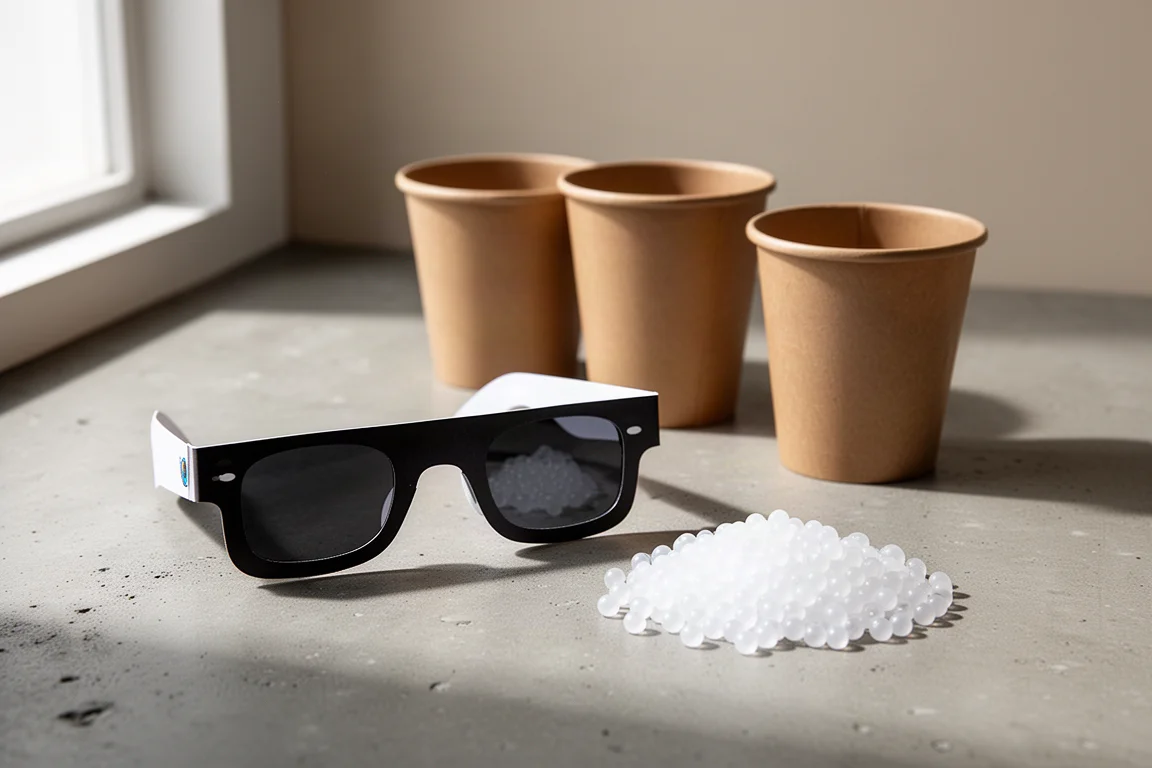
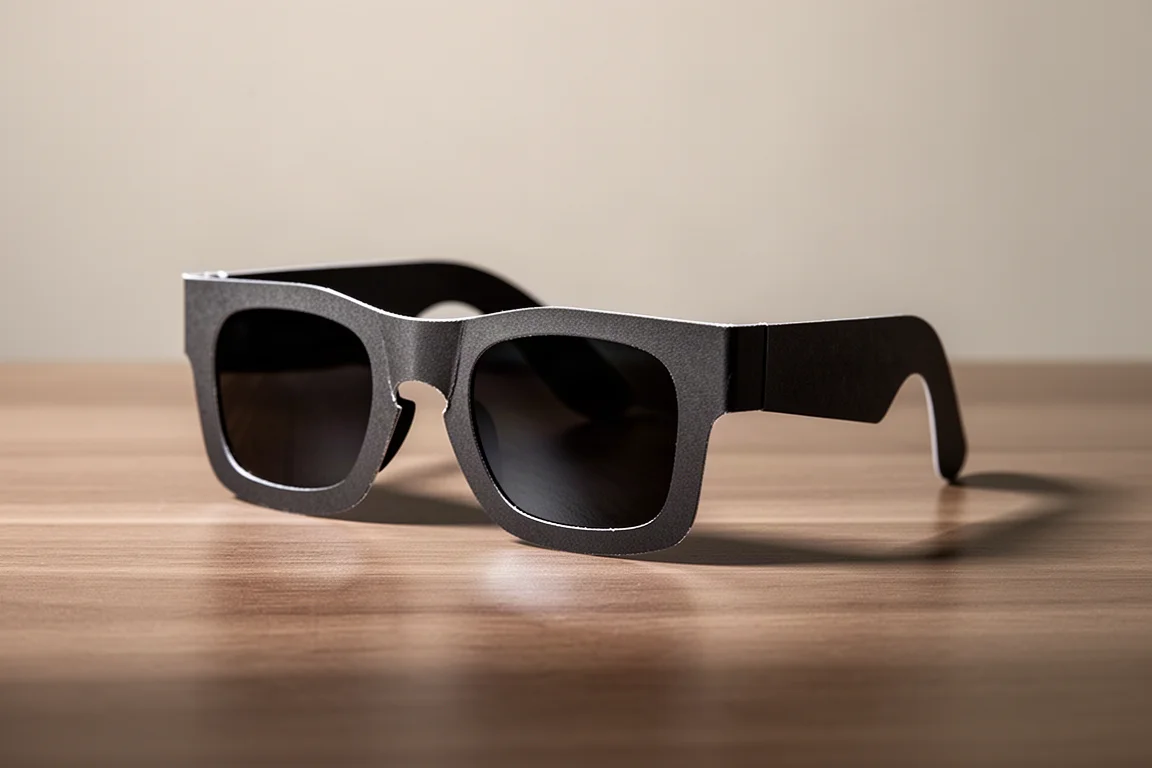
Solar eclipse glasses are supposed to block all but the brightest light source, the sun, and they are also supposed to block ultraviolet light. A pair of eclipse glasses that lets through too much visible light is easy to spot, but UV is invisible, so the question is trickier: does a bad pair block any ultraviolet light at all?
We set out to answer that using two accessible products: a trusted pair of Rainbow Symphony solar eclipse glasses and a bag of UV color-changing beads from Educational Innovations. The results were more nuanced than expected.
A Quick Primer on Ultraviolet Light
The sun produces many kinds of light, including ultraviolet. UV plays a role in vitamin D synthesis in our bodies, but it also causes sunburn, skin cancer, cataracts, photoaging, and sun bleaching. That is why sunblock exists: it acts as a protective layer that absorbs ultraviolet light before it can penetrate the skin.
Scientists divide UV into three groups. UVC, with the shortest wavelengths from 1 to 280 nanometers, is the most dangerous, but the ozone layer blocks it. UVB sits between 280 and 315 nm and is the primary concern for humans: it is needed for vitamin D synthesis, but it also causes sunburn, skin cancer, and cataracts. UVA runs from 315 to 400 nm and causes similar effects to UVB, just to a slightly lesser extent.
This matters for eclipse glasses because part of the ISO 12312-2 standard requires that they block or at least mitigate UVB between 280 and 315 nm and UVA between 315 and 380 nm, which covers most of the UV band.
The Test Setup
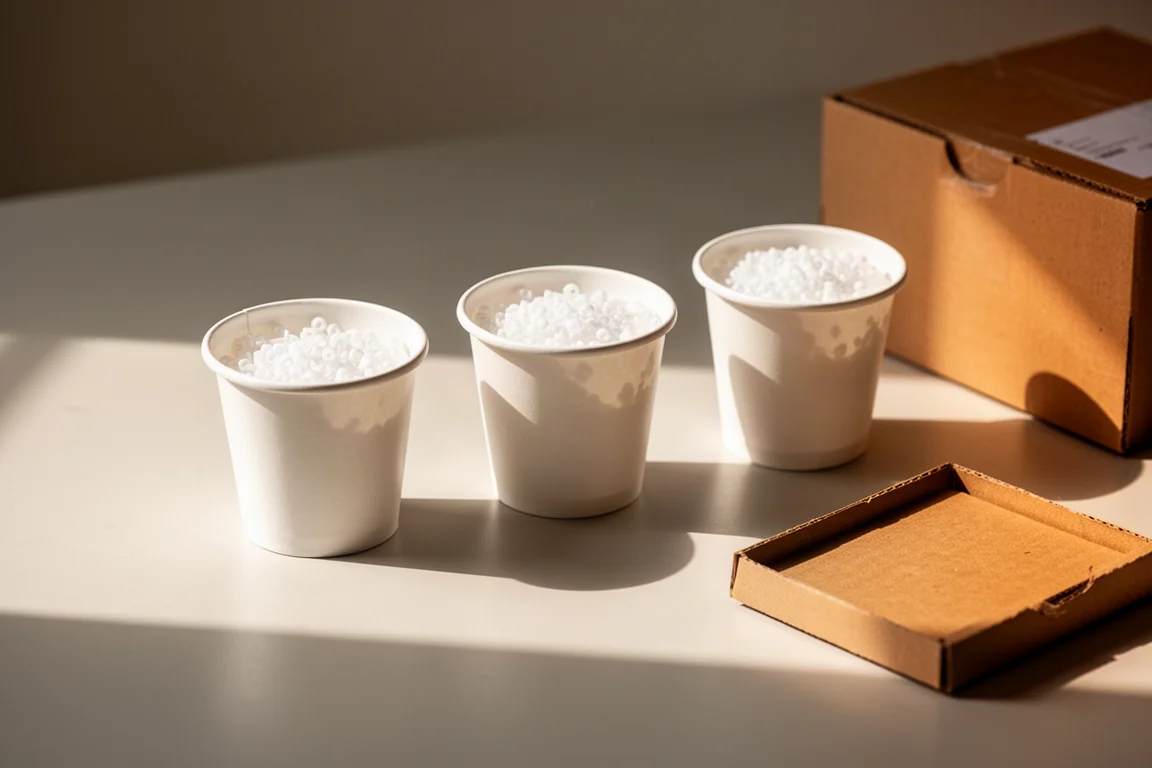
The test used three identical cups with identical numbers of UV detection beads, coated on the outside with metal tape to prevent light from entering through the sides or bottom. The cups sat inside a cardboard box with cut-out circles, one open to the sky as a control, one covered by the Rainbow Symphony glasses, and one covered by the questionable pair, taped down where the lenses did not fully cover the opening.
Taken outside into sunlight, the control beads changed color almost immediately. After five minutes indoors, the comparison was clear: the beads under the Rainbow Symphony glasses were still white, and the beads under the questionable glasses were still white too.
What the Beads Actually Reveal
At first glance, it looks like both pairs of eclipse glasses blocked UV light entirely. But there is a catch. These UV beads react to ultraviolet light between 300 and 360 nm, which leaves gaps in coverage: anything between 280 and 300 nm, and anything above 360 nm, is simply not detected by the beads.
So while the Rainbow Symphony pair, which passes all the standard eclipse glass tests, can reasonably be trusted, the unverified pair cannot be fully cleared. Because there was no way to test those missing bands, it cannot be said with certainty that the questionable glasses satisfy the ISO 12312-2 requirements.
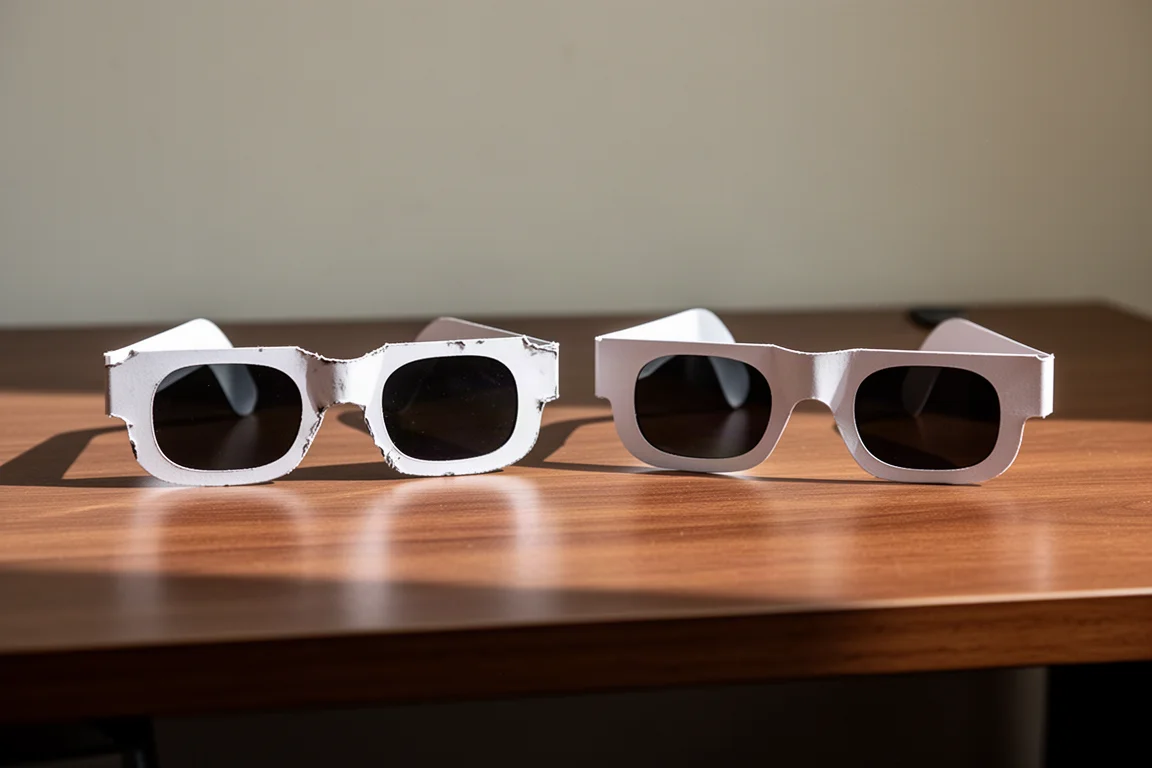
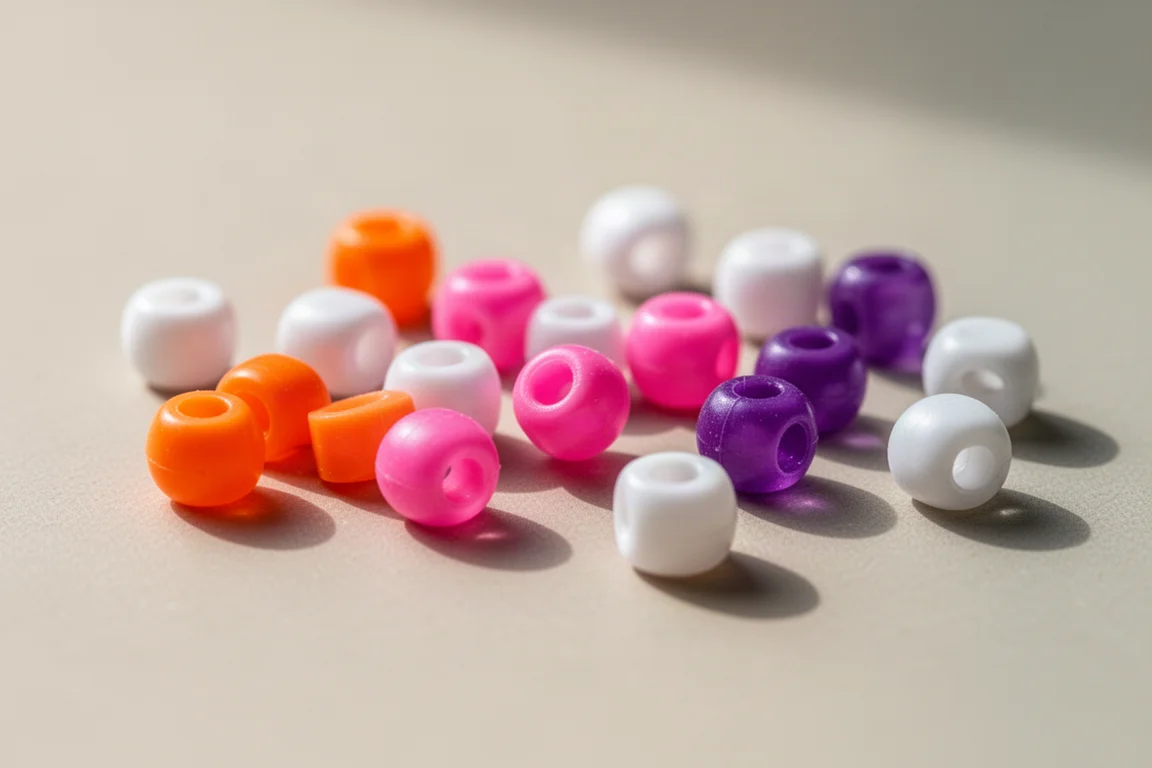
That leaves a personal safety decision. If a pair of eclipse glasses is failing several standard tests, the safest choice is to replace it. In our testing, we continued using the Rainbow Symphony pair because it passed every check. As a bonus, the bag of UV beads even contains a hidden message if you look closely.
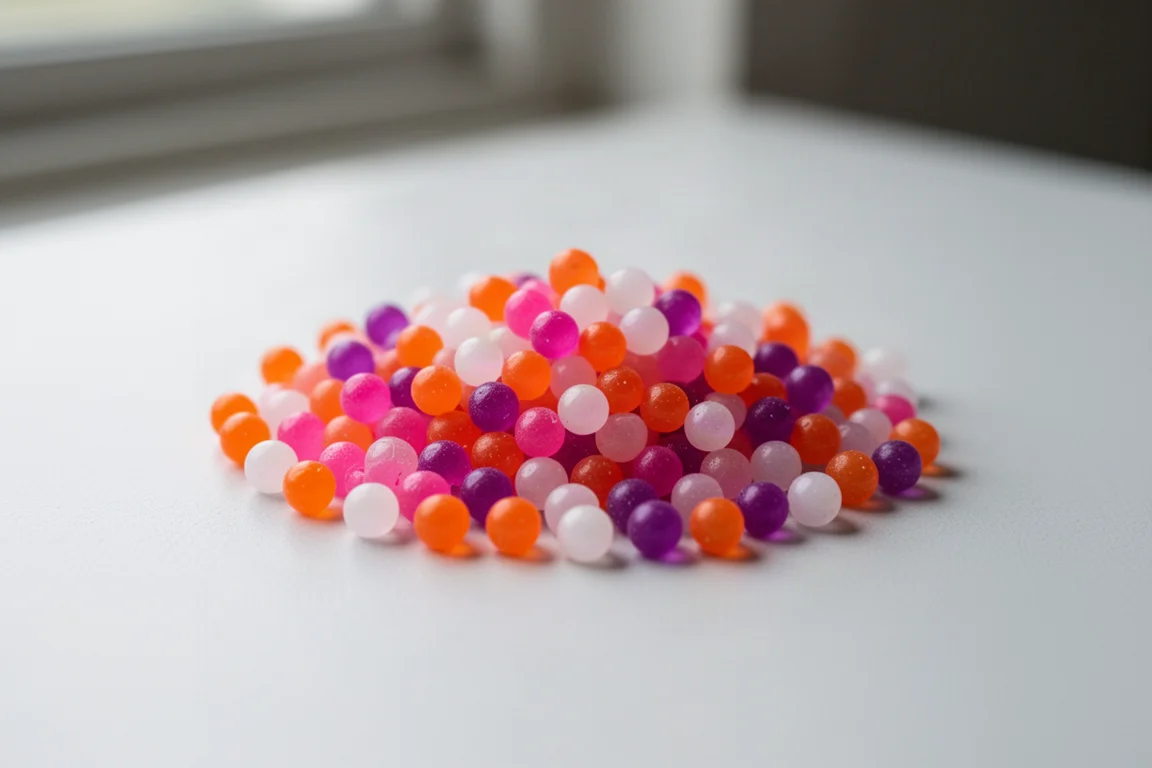
Educational Innovations UV Detection Beads
These color-changing beads are an inexpensive and surprisingly scientific tool. Exposure to ultraviolet light makes them shift into a range of colors, which makes UV visible to the naked eye without any fancy equipment. Educational Innovations was chosen specifically because the company states the ultraviolet wavelengths that activate the beads, which is what made interpreting the results possible.
Beyond eclipse glasses testing, they are a fun and practical way to demonstrate that UV light penetrates through cloudy skies, a fact that surprises many people and matters for everyday sun safety.
Practical Safety Advice Before You Look Up
If your solar eclipse glasses are folded, creased, scratched, or have small holes, consider replacing them. Tiny pinholes can let a dangerous amount of light through when you are viewing the sun.
If your glasses carry the ISO logo and appear on the AAS list but seem to fail the camera flash test, your camera flash may simply be brighter than the one used in the test. A useful additional check is to go outside and look through the glasses away from the sun, toward the horizon. You really should not be able to see much. Glasses that let you see far more than expected are a red flag.
And if looking at the sun or the eclipse through your glasses ever feels uncomfortable or painful, err on the side of safety and turn away.
Conclusion
Both featured products earned their place in this test. The Rainbow Symphony eclipse glasses passed every standard check, including this UV bead experiment, and remain a reliable choice for viewing an eclipse. The Educational Innovations UV beads turned an invisible safety question into something anyone can see, which is exactly what a good science tool should do. Just remember the limitation: bead tests cover only part of the UV spectrum, so they confirm a good pair far better than they can fully clear a questionable one.
Further reading
Related Reviews
Smart Telescopes
Smart Telescopes for the Total Solar Eclipse: DWARF II vs Seestar S50 vs Vaonis Hestia
Three smart telescopes tested for eclipse photography, with practical tips on filters, tracking, exposure, and what each does best on April 8, 2024.
Smart Telescopes
Smart Telescopes for a Total Solar Eclipse: Dwarf, Seestar and Hestia Compared
Three portable smart telescopes put to work during a total solar eclipse, covering time-lapse modes, tracking behaviour, filters and storage quirks.