Speaker Amplifiers
SMSL SA400 Review: A High-Power Class D Speaker Amplifier Worth the Money?
A practical look at the SMSL SA400, a 230W class D speaker amplifier with balanced inputs, nine EQ presets and a variable subwoofer output, and whether it justifies its price.
Introduction
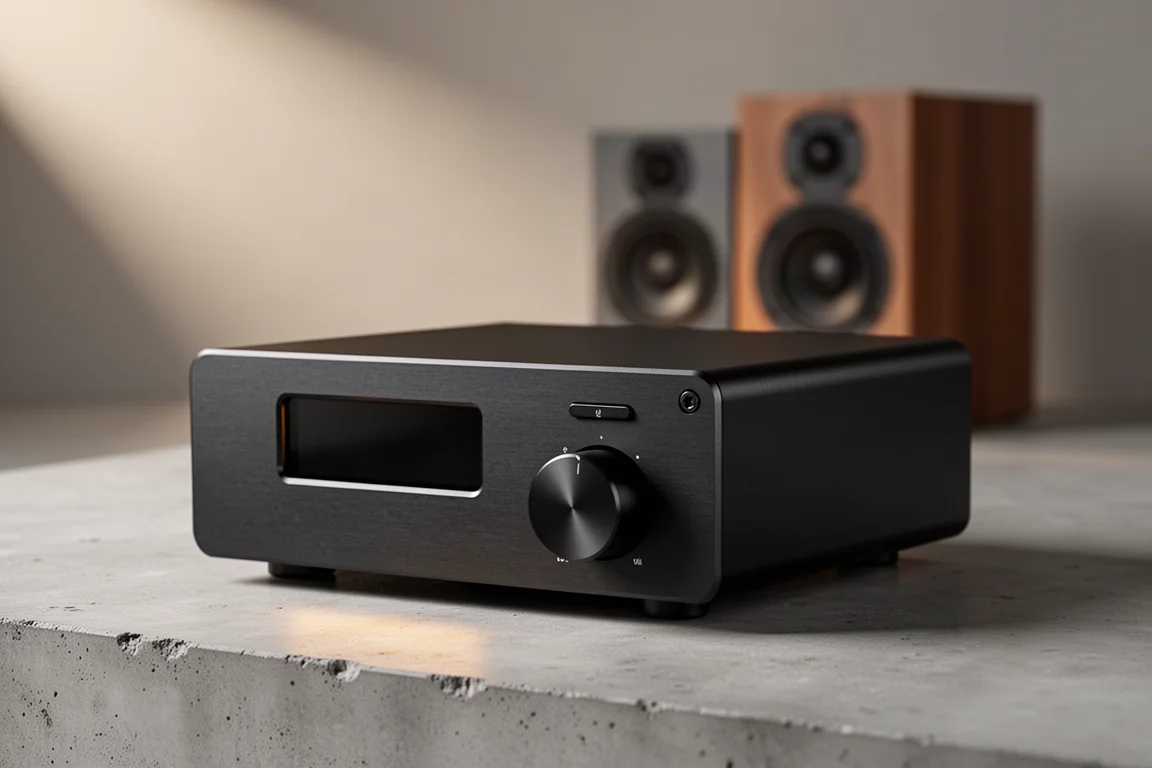
The SMSL SA400 is a class D speaker amplifier rated at 230 watts into 4 ohms and 110 watts into 8 ohms. It sells for around $650, which places it well above the entry-level class D amplifiers that have shaped SMSL’s reputation so far.
Connectivity is generous for a pure amplifier. The rear panel carries balanced and single-ended inputs, a Bluetooth connection and a subwoofer output, alongside an IEC power inlet and a master power switch. A front-panel button handles everyday power, and a remote control is included in the box.
Under the hood sits an STA516BE amplifier chip, a departure from the Infineon chips SMSL has typically used. Independent measurement work has confirmed that the amplifier delivers its rated power output.
Who This Amplifier Is For
The SA400 makes the most sense for listeners who want headroom and current delivery rather than a long list of streaming features. It was tested with the ELAC Uni-Fi and the ELAC Uni-Fi 2.0, two standmount speakers that are not especially easy to drive, and the amplifier produced a full, composed sound with both generations.
If your speakers are inefficient or your room is on the larger side, the extra power is the main argument for choosing this model over a cheaper class D design. It also suits a desktop system where you already own a separate DAC or streamer and simply need a clean, powerful amplifier stage.
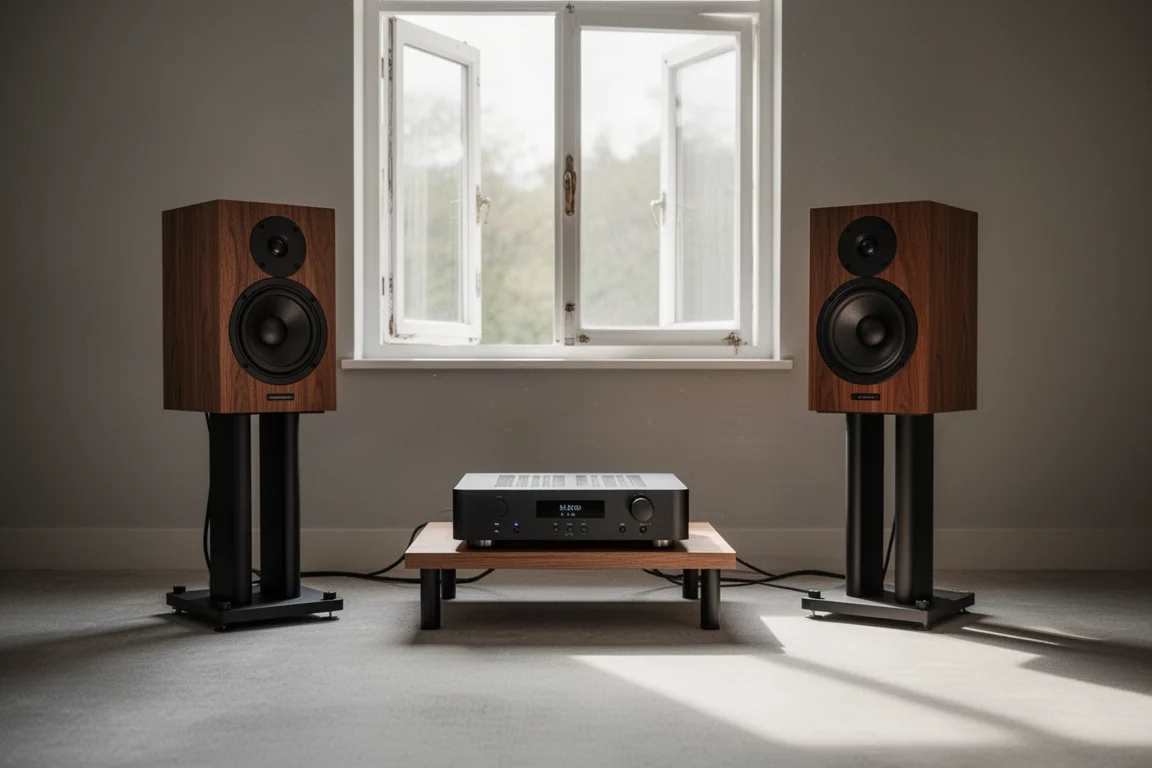
Three gain settings, low, mid and high, let you match the amplifier to your source. The low setting was sufficient in every listening situation, and switching to the mid setting showed just how much power the amplifier has in reserve.
Main Strengths
Power and headroom are the headline. Even at the low gain setting, listening stayed in the bottom portion of the volume range. Bass is handled effortlessly, which is typical of higher-power designs and a genuine advantage with demanding speakers.
The menu system is unusually practical. There are nine EQ presets, including SDB, Tababuya, Bass, Super Bass, Rock, Soft and Clear, plus a direct mode and traditional bass, middle and treble tone controls. Most of the presets are usable rather than heavy-handed. Soft trims the hardness that class D amplifiers are sometimes known for, while Clear lifts the mids and upper mids for dialogue, podcasts and television use.
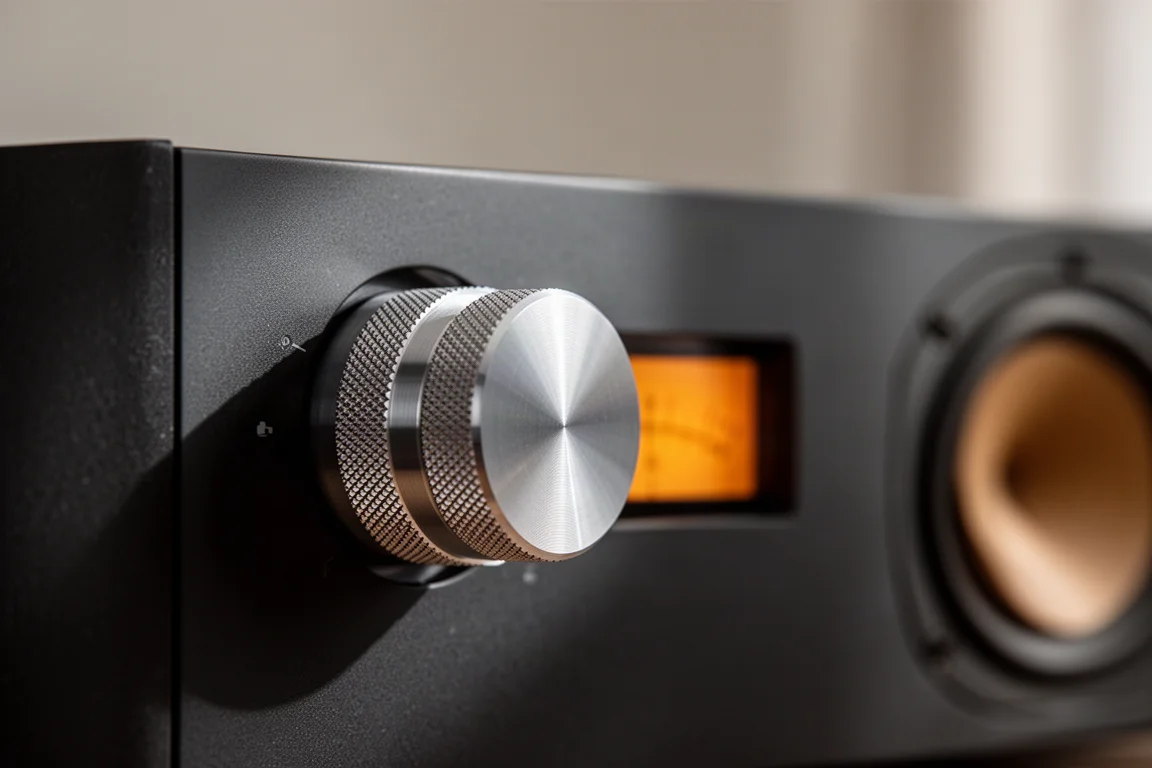
The variable subwoofer output is the standout feature. Once the level is set on the subwoofer itself, output can be trimmed directly from the amplifier, which is rare among class D amplifiers in this range.
On sound, the SA400 pulls ahead of cheaper designs on separation, reverb, air and cleanliness. It smears less, so one instrument is less likely to cover another, and its layering and sense of three-dimensional space are on par with some very good class A/B amplifiers.
The display can be switched to show real-time temperature, with dimmer and brightness controls available. An internal fan can be configured to switch on at a chosen temperature.
Things to Consider Before Buying
There is no balance control, so the left and right channel levels cannot be adjusted independently.
The middle tone control does not behave as expected. Rather than lifting vocals, it appears to boost a region around 300 to 500 Hz, which brings forward the body of electric guitars and can slightly cover the mids instead of opening them up.
The amplifier runs warm and produces a noticeable amount of heat. That is manageable, and the configurable fan helps, but it deserves ventilation space.
The volume knob feels slightly flimsy compared with the rest of the chassis.
Finally, this is an amplifier and nothing more. There is no built-in streaming, no Chromecast and no other network functionality, so a separate source is required.
How the SA400 Compares
The closest reference point is the SMSL DA9, which sells for around $250 and offers balanced inputs, RCA inputs, Bluetooth and a subwoofer output. The SA400 can be thought of as a larger, more expensive version of the same formula. The differences are audible: the SA400 pulls ahead on separation, reverb, air and overall cleanliness, and it does not smear the way less expensive class D designs can.
Beyond SMSL, the competition includes NAD, Marantz, SVS, Denon models such as the PMA-600NE and PMA-800NE, Cambridge, Emotiva with the A2 mini at around $300, and designs such as the Akitika and the Vidar. Those alternatives often add streaming, Chromecast or other features, and several have longer established histories. On pure sound, the SA400 holds its own, and its layering and sense of three-dimensional space are competitive with very good class A/B amplifiers.
The trade-off is as much about perception as it is about hardware. Several established brands now use class D amplification in their higher-end models, so the technology itself is no longer the dividing line. What remains is how buyers view a $650 amplifier from a brand long associated with budget components.
Buying Advice
At $650, the SA400 is expensive for a class D amplifier from SMSL, and that is the only real reservation. At $450 to $500 it would be very difficult to argue against. At the current price, buyers are likely to weigh it against more traditional class A/B integrated amplifiers from Denon, Marantz and Cambridge, even though those deliver less power.
The practical way to decide is to look at what you already own. If you have a DAC, a streamer or a television feeding a fixed source, and your speakers benefit from real power, the SA400 delivers where it matters. If you want one box that also streams, the money is better spent elsewhere.
Conclusion
The SMSL SA400 is a genuinely impressive amplifier. It has power, headroom, a useful set of EQ presets and a variable subwoofer output that few rivals offer. Its sound is clean, layered and largely free of the hardness that cheaper class D designs sometimes show.
The reservations are small: no balance control, a mid control that boosts a lower region than expected, a warm-running chassis and a volume knob that does not match the feel of the rest. The larger question is price and perception. For listeners who already have their sources sorted and simply want a strong, high-value power amplifier, the SA400 is easy to recommend.
Product link
View more details for SMSL SA400
This product is mentioned in the review. Check the specifications, options, and compatibility before buying.
View more details for SMSL SA400Further reading
Related Reviews
Speaker Amplifiers
Best Budget Speaker Amplifiers: Seven High-Value Picks Under About $350
Seven affordable speaker amplifiers, from an $80 starter amp to a $330 component design, with the strengths and trade-offs that matter before you buy.
Speaker Amplifiers
Best Speaker Amplifiers From Budget to Premium: 13 Options Worth Considering
A practical guide to speaker amplifiers from around $60 to $600, covering compact Class D models, full-size stereo receivers, and analog integrated amplifiers.
Hi-Fi Audio
Accuphase C-57 vs Allnic H-7000V: Two High-End Phono Stages Compared
A fully balanced solid-state phono stage with a pitch-black noise floor meets a tube design built for well-loved records. Here is how to choose between them.