Camping Air Mattresses
Skymac Air Mattress After a Year: One-Person and Two-Person Review
A long-term look at the Skymac one-person and two-person self-inflating air mattresses, covering comfort, setup, packability, durability, and value.
Introduction
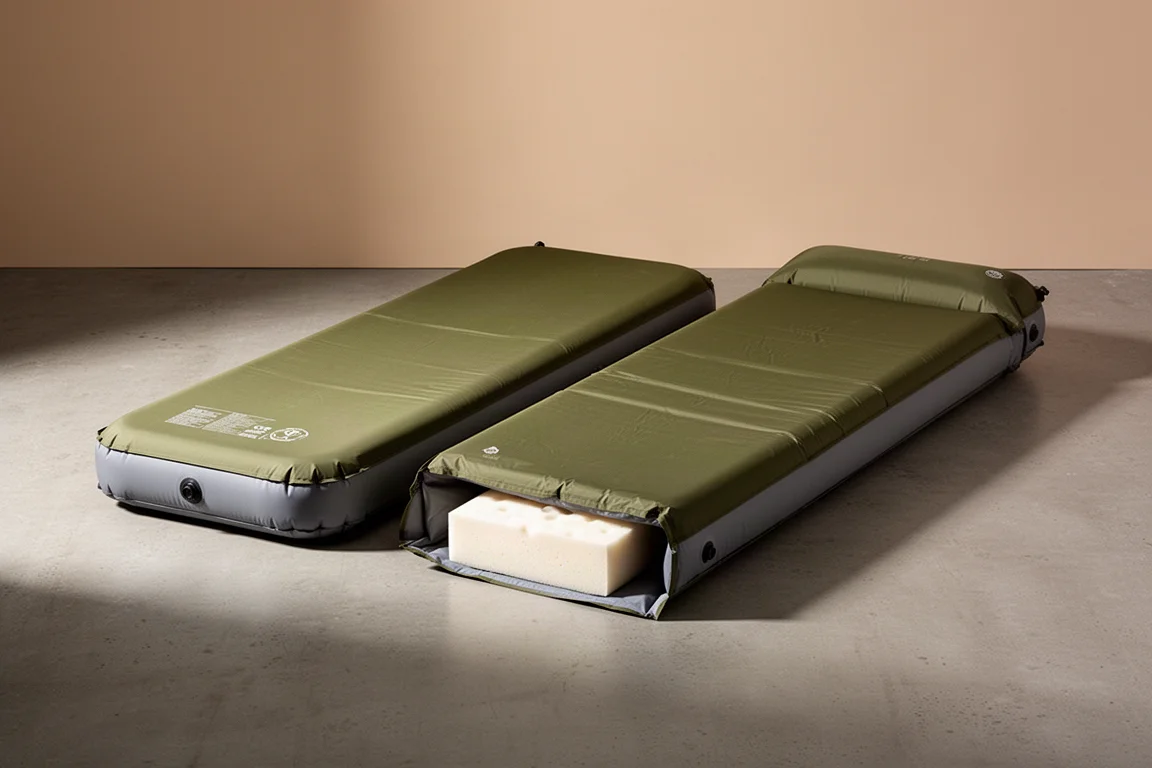
The Skymac self-inflating air mattress is sold in two sizes: a single-width pad and a two-person version that is roughly twice as wide. Both are aimed at car camping, truck and SUV sleeping setups, trailer use, and indoor guest sleeping rather than backpacking.
After a year of regular use with the one-person pad and about a dozen outings with the two-person pad, the overall picture is straightforward. These mattresses are comfortable, quick to set up, and priced well below comparable premium self-inflating pads. The open question has always been durability, because the manufacturer does not publish the materials used. That question is now easier to answer.
How These Mats Were Evaluated
Four things matter most with a pad like this: how it feels under body weight, how well it blocks cold from below, how simple it is to inflate and pack away, and whether it survives repeated trips without leaks or punctures.
Comfort was assessed across full nights rather than quick tests, including side sleeping, which is where thinner pads usually fail. Insulation was judged by using both versions in cold weather inside a vehicle and in a tent. Packability was judged by the effort required to deflate, roll, and store each pad. Durability was judged by the absence of leaks, holes, or loss of firmness over a full year.
Price also sits inside the evaluation, because the value case here is central. These are not the cheapest inflatable mattresses on the market, and they are not meant to be. They sit in the space between basic air mattresses and premium insulated pads, and the comparison only makes sense with that positioning in mind.
Skymac One-Person Air Mattress
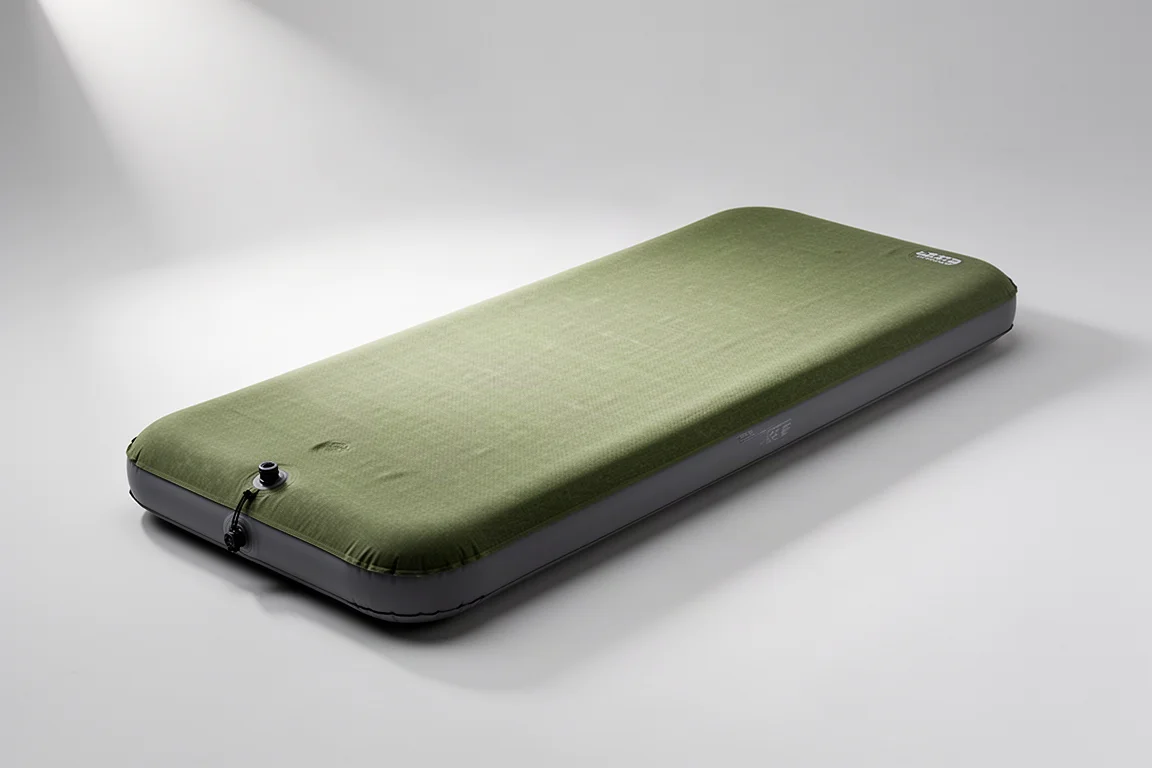
The one-person version measures 79 inches long, 28 inches wide, and 4 inches thick, and weighs 7 pounds. The sleeping surface is green with a grey base. It self-inflates to roughly 70 percent in three to four minutes once the valve is opened, after which the valve lock lets you top it up by mouth to reach the firmness you want.
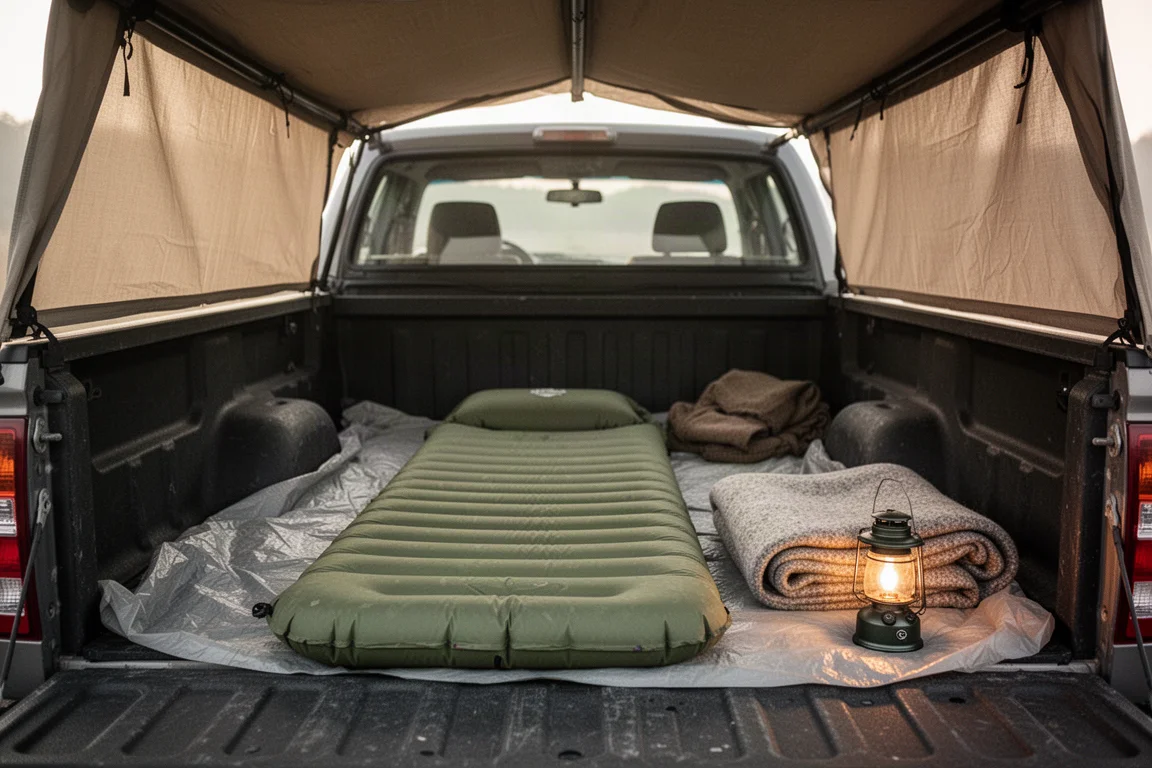
On comfort, the thickness is the key detail. Side sleepers do not push through to the ground and do not feel pressure points, which is unusual at this price. The same thickness helps block cold rising from a truck bed, a vehicle floor, or cold ground, so the pad works in winter conditions as well as in summer.
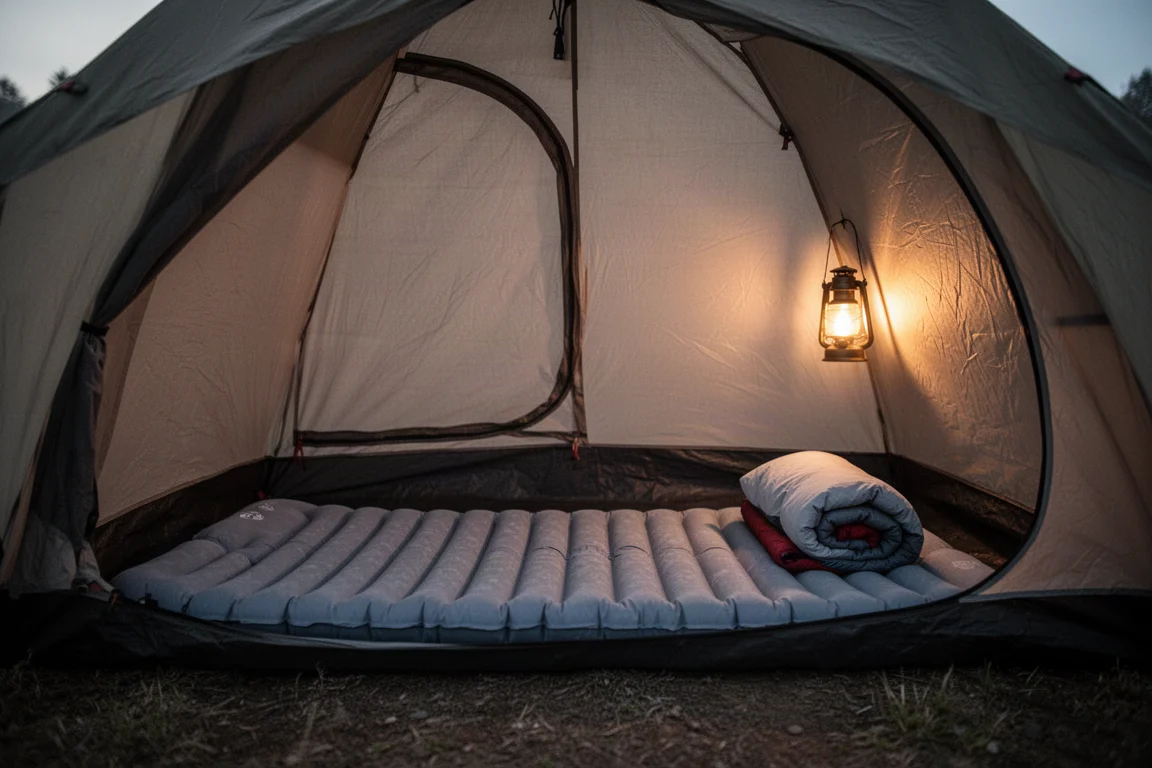
In practice it suits truck beds, SUV cargo areas, trailers, tents, and spare beds at a friend’s or family member’s house. It is too large and too heavy to carry in a backpack, so it belongs firmly in the car camping category. The one-person version is priced at around $116 to $120, which is where the value argument becomes hard to ignore.
Skymac Two-Person Air Mattress
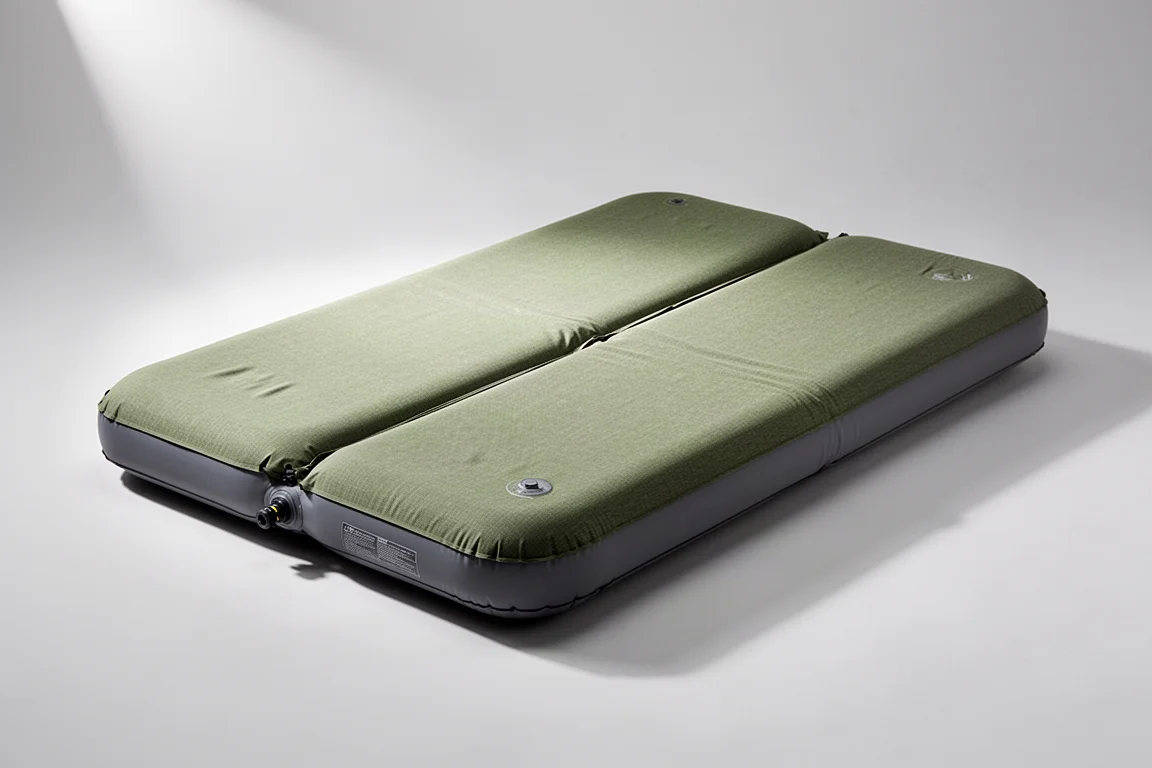
The two-person version is essentially two pads joined together, which makes it about twice as wide as the single. It weighs 14 pounds and is priced at around $165. Like the single, it self-inflates in a few minutes and then accepts additional air through the valve to fine-tune firmness.
The main benefit beyond the extra width is stability. The foam is thick enough that the pad stays rigid under load, so one person getting up in the night does not disturb the other. For couples and for family trips, that alone justifies the larger size. The trade-off is weight and bulk: at 14 pounds it is a vehicle-only proposition.
Setup, Firmness, and Comfort in Real Use
Setup is about as simple as it gets. Open the valve, let the pad self-inflate for three to four minutes, lock the valve to stop air escaping, then add a few breaths until the surface feels right. Deflating follows the same logic in reverse: open the valve, let the air out, and close it before rolling.
Firmness is genuinely adjustable rather than fixed. A softer surface is possible with less added air, and a firmer one with more, which makes the pad adaptable for different sleepers and different nights. The thick foam core is what makes that range possible, and it is also what gives the pad its insulating character.
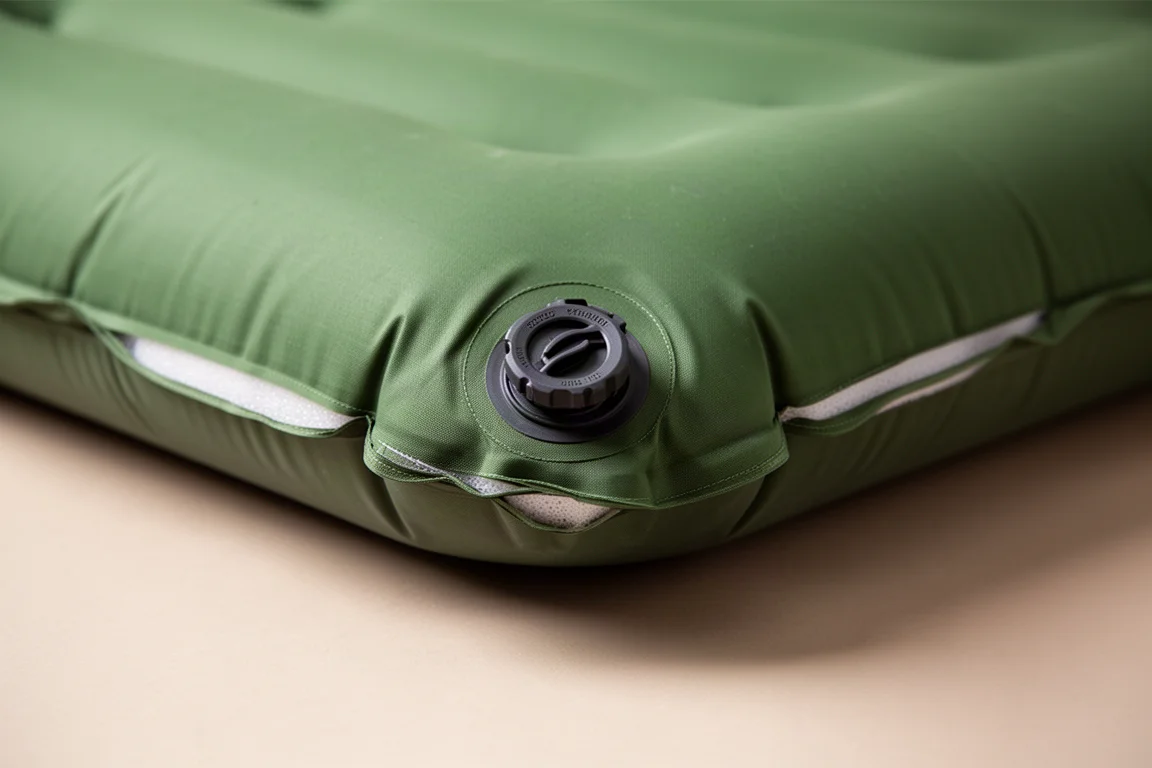
Real-world comfort holds up over full nights rather than just the first hour. The surface feels more like a mattress than a thin inflatable, and the 4-inch profile keeps hips and shoulders clear of the ground in side sleeping positions. Waking up without stiffness has been the consistent result across a year of use.
Durability After a Year of Use
Durability was the original concern, and it is the area where the year of testing says the most. Both the one-person and two-person versions have come through dozens of trips and about a dozen outings respectively with no leaks, no punctures, and no loss of firmness.
The manufacturer still does not state which materials are used. The most reasonable assumption is a polyester shell around a foam core, but that remains an assumption rather than a published specification. What can be said is that the construction has behaved like a much more expensive pad, and that the fabric and seams have shown no signs of weakness.
As with any air mattress, some common sense applies. It is trapped air inside two layers of fabric, so sharp objects, rough ground, and careless handling will shorten its life. Used with a ground sheet and reasonable care, there has been nothing to report.
Buying Advice: Which Skymac Mattress Is Right for You
Choose the one-person version if you sleep alone, want a pad that fits neatly in a truck bed, an SUV, or a tent, and want the lighter and easier-to-pack option of the two. It is the better choice for solo campers and for anyone who needs a spare bed that stores compactly.
Choose the two-person version if you camp as a couple or with family, and if the pad will live in a vehicle, a trailer, or a guest room rather than on your back. The extra width and the stability under two sleepers are the reasons to accept the 14-pound weight.
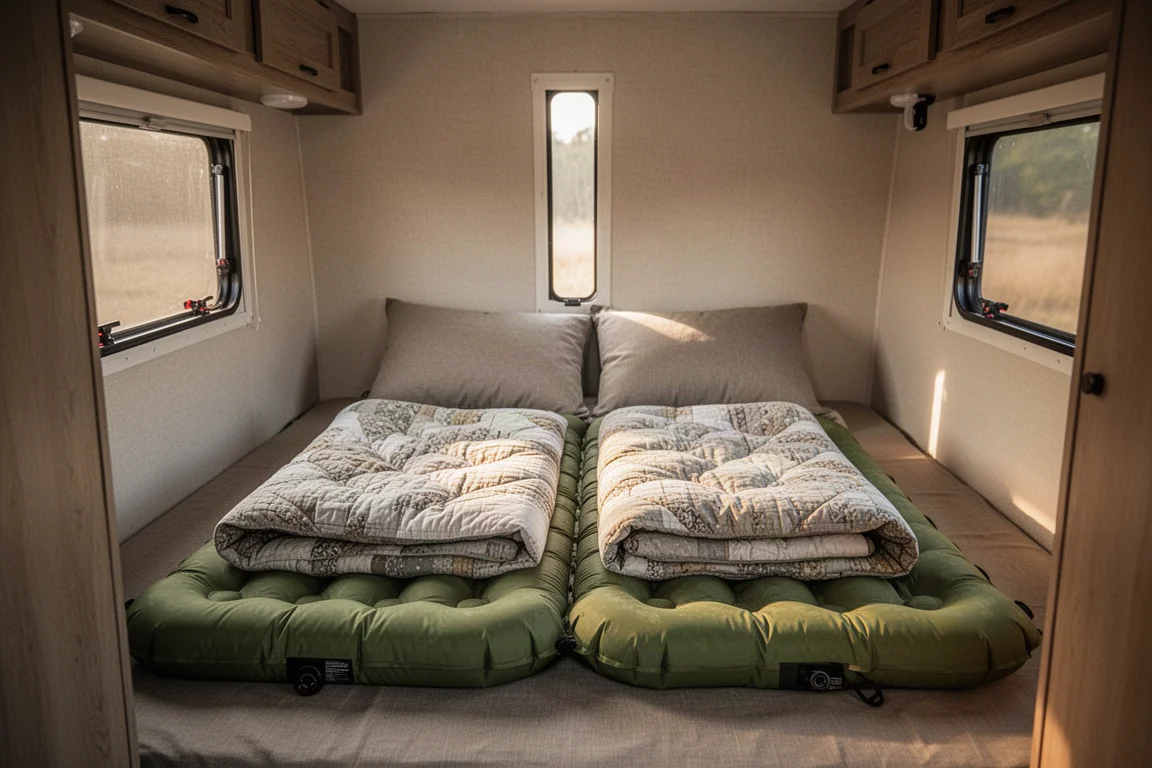
Value is the strongest argument for both. Comparable premium insulated pads from specialist brands can run $300 to $350, while these come in at roughly $116 to $120 and around $165. Availability is worth checking before you commit to a trip, because stock has a habit of disappearing quickly. On packability, be realistic: the one-person pad takes a little effort to roll up, and the two-person version is a genuine struggle for one person, with a storage bag that leaves very little margin. Two people make the job noticeably easier.
Conclusion
The Skymac air mattresses deliver what matters most in a car camping pad: comfort for side sleepers, useful insulation from below, simple self-inflation, and firmness you can tune. A year of use has produced no leaks and no punctures, which answers the durability question that mattered most.
The one-person version is the practical solo choice, and the two-person version is the better pick for couples despite being harder to roll up and store. If you want a pad that feels closer to a mattress than a basic inflatable, and you want it at a fair price, both sizes are worth a serious look.
Further reading
Related Reviews
Camping Air Mattresses
Alps Mountaineering Vertex Air Bed Review: A Nearly Queen-Size Camping Mattress
A detailed look at the Alps Mountaineering Vertex Air Bed, covering comfort, air retention, inflation, packed size, tent fit, and overall value.
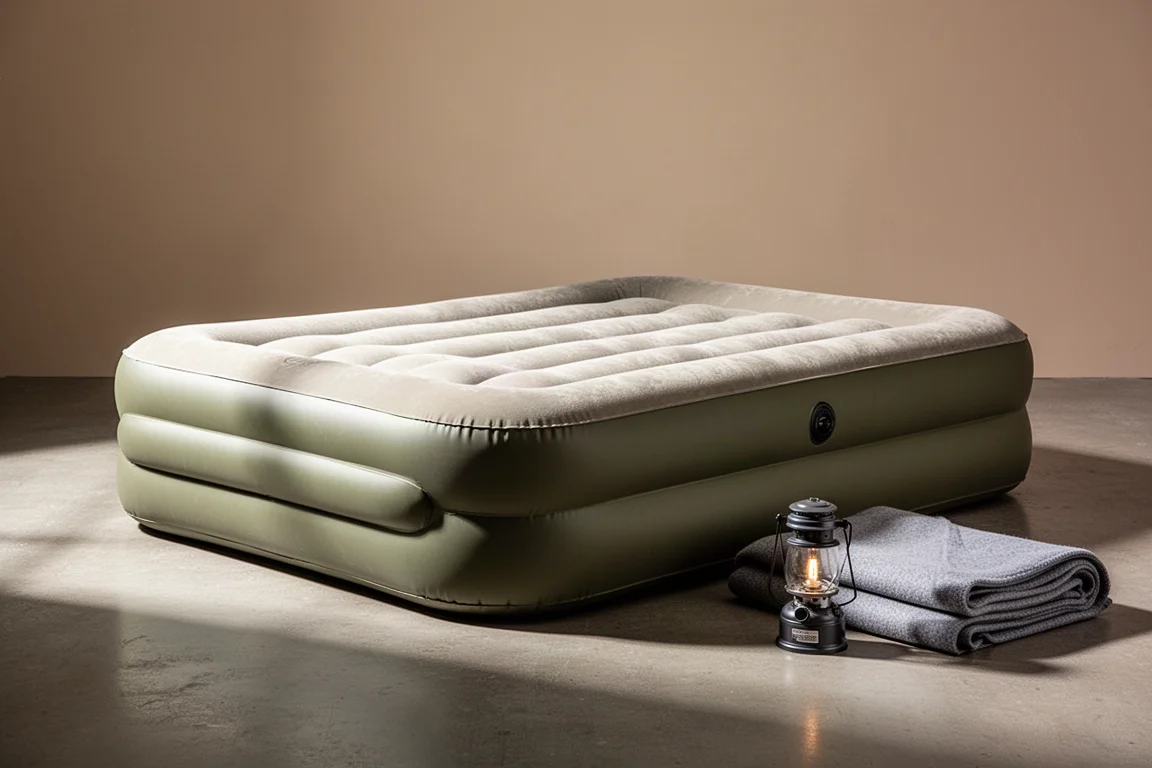
Camping Air Mattresses
Coleman Quickbed Air Mattress Review: An Inexpensive Full-Size Option for Occasional Camping
A practical look at the Coleman Quickbed Full air mattress, covering comfort, inflation, air retention, packed size, and the situations where it genuinely makes sense.
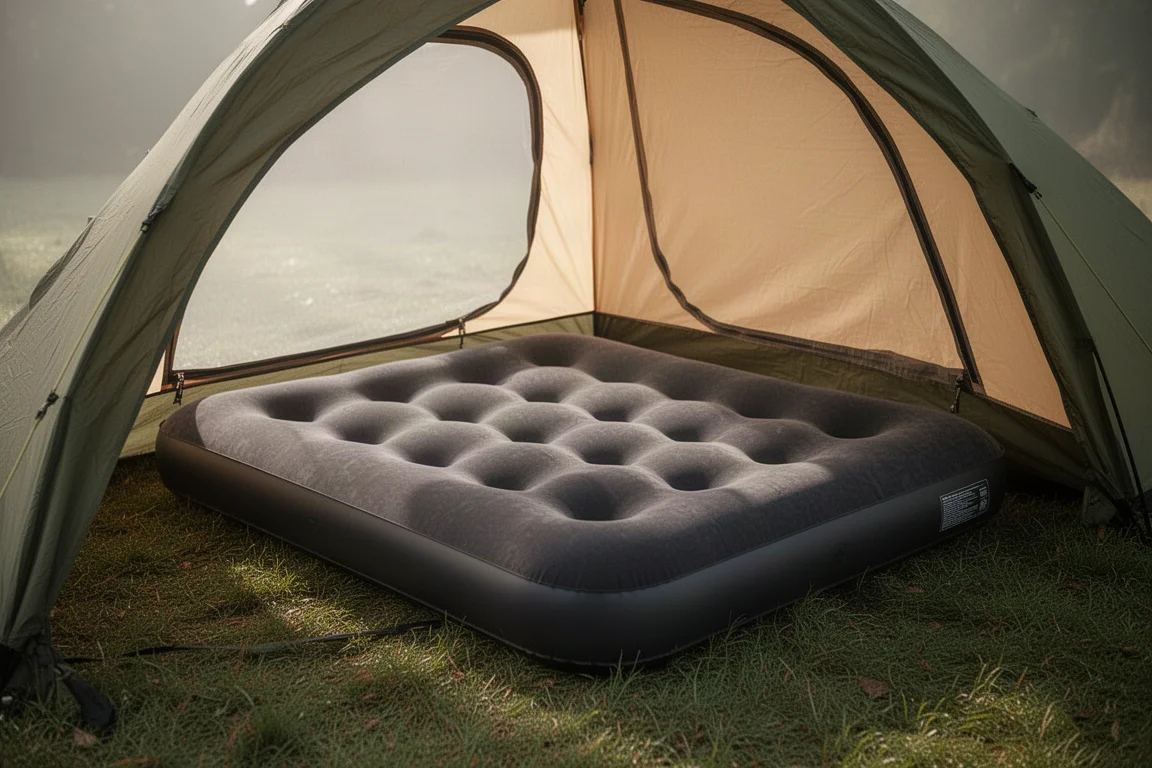
Camping Air Mattresses
Lightspeed Outdoors 2-Person Camping Air Mattress Review: Comfortable Car Camping, One Fiddly Valve
A practical look at the Lightspeed Outdoors 2-Person Camping Air Mattress, covering comfort, inflation and deflation, packed size, tent fit, and the valve and pump trade-offs worth knowing before you buy.